
Game review
Tezzel: The Tilemaker's Tale Review
8 / 10
- Developer
- Old Mayor Studios
- Publisher
- Old Mayor Studios
- Released
- 10 April 2026
- Platforms
- ["Windows", "macOS", "Linux"]
- Genre
- Puzzle
A Cozy-Looking Puzzle Game That Bites Much Harder Than It Looks
Tezzel: The Tilemaker's Tale, from developer and publisher Old Mayor Studios, released on Steam on April 10, 2026, at $14.99. It's a grid-based puzzle game that casts players as Mateu, an aging tilemaker in 1910 Barcelona whose reputation is destroyed when a jealous rival shatters his masterwork during its grand unveiling, and who gets one last chance to restore his name by filling a blank wall, one 9x9 tile puzzle at a time, for the great Gaudí himself. Across the 15 English reviews read in full here, past this review's minimum sample, out of an all-language pool of 23 reviews sitting at 100% positive, "Positive" on Steam's own scale, a clear and consistent pattern emerges: reviewers love the game's warm, mosaic-inspired presentation, and are almost unanimous in warning that its "Difficult" tag is not a joke.
Gaudí's Barcelona As A Puzzle Board, And Reviewers Notice The Care
The game's aesthetic hook, a mosaic wall built one puzzle-piece tile at a time in tribute to Gaudí's real architectural mosaics, lands with reviewers as more than set dressing. "The game is inspired by Gaudi's mosaic works. Not only the visuals are a reference to that; the many mechanics also are represented by workshop tools, and it's a joy to discover and experiment with them," wrote one reviewer who reviews for the Thinky Games Database. Another described the feel directly: "It is also gorgeous looking with Barcelona's modernism aesthetic," while a third called the retro 8-bit-inspired style and progressive difficulty "very satisfying to play." Reviewers consistently treat the visual theme and the puzzle mechanics as working in service of the same idea rather than as separate layers, watching the wall fill in tile by tile is repeatedly described as its own quiet reward independent of how hard any individual puzzle was to crack.
The "Difficult" Tag Is Doing Honest Work, According To Nearly Everyone Who Played
Steam's own difficulty tag on Tezzel's store page turns out to be the single most corroborated data point in this review pool. "Thought it'd be a chill little tile puzzler but it's got way more bite than I expected. Starts easy, then some of the later tiles really make you sit there and think," wrote one reviewer. Another admitted the game was "sort of out of my league" despite enjoying the ideas behind it, adding, "So uh, this game is sort of out of my league. But I still got the impression that it deserves more attention... that tag is there for a reason." A third reviewer rated the puzzle difficulty four stars out of five and explicitly pushed back on any notion that the tag should scare people off: "Yes, the puzzles do get quite hard, but they are not mind-bendingly difficult. Identify which pieces should end up where, and the execution will come naturally if you focus, experiment a bit and put in some brainpower." The consistent shape of this thread, easy start, escalating difficulty, and a design built around 10 series of 10 levels that each layer a new mechanic onto every mechanic unlocked before it, suggests the challenge is a deliberate structural choice rather than an accident of scope.
A Story Told Through Rows You Unlock By Solving, Not By Cutscenes
Tezzel wraps its puzzles in a light narrative frame that several reviewers specifically called out as an unusually well-integrated touch for the genre. "Although puzzles usually don't come with a story, this one places you in the shoes of a tile maker whose life takes a disastrous turn," wrote one reviewer, describing how Mateu's public humiliation and subsequent redemption arc unfolds as the wall's rows unlock in sequence, you don't need to solve every puzzle in strict order within a row, but a new row only opens once enough of the one above it is complete. Reviewers treat this structure as functional rather than decorative: it gives players room to skip a puzzle that's stumping them and return later, a design several specifically praised for reducing frustration without removing the challenge itself, "when one puzzle stumps me you can go do another and come back to it later," as one reviewer put it.
A Hint System's Absence Is The Pool's Clearest, Most Specific Complaint
Set against the otherwise glowing consensus is a specific, recurring gap: Tezzel offers no in-game hint system, and multiple reviewers flagged getting stuck on early puzzles with no built-in way to nudge themselves forward. "I actually got stuck in the early levels and was wishing there was a hint button for when you're not sure what to do next... I think a bit more guidance would make the experience smoother," wrote one reviewer who otherwise called the game "very pretty and creative." A separate, more pointed accessibility concern came from a reviewer who specifically flagged the game as "not recommended to colorblind people due to lack of accessibility options" despite rating the puzzle design itself highly. Neither complaint stopped either reviewer from recommending the game overall, but both are specific, actionable gaps rather than vague dissatisfaction, and worth flagging plainly for anyone who relies on hint systems or colorblind-accessible palettes in puzzle games.
Reviewers With Genre Pedigree Treat It As A Meaningful Sokoban Contribution
Beyond the general puzzle-game audience, reviewers who specifically identify as sokoban and puzzle-genre enthusiasts singled out Tezzel as a notable entry in that specific lineage. "A provocative breath of fresh air. Prickly at times, but well worth checking out. A reminder of just how much sokoban is left to discover in this world," wrote one such reviewer, linking to a longer feature calling the game "hypnotic" and "outsider art." Another, writing specifically for a puzzle-focused curation database, called the reality of the game better than the tile-based premise suggested: "EXPECTATIONS: a tile-based puzzle game. REALITY: a varied and well designed puzzle game." That kind of engagement, reviewers who clearly play a great deal of this specific genre and still come away impressed by what's structurally new here, carries more weight than a purely enthusiastic but genre-casual response would.
Verdict
Tezzel: The Tilemaker's Tale pairs a genuinely lovely Gaudí-inspired mosaic aesthetic with a puzzle structure that earns its "Difficult" tag honestly, ramping from a gentle, story-driven introduction into genuinely demanding late-game tile logic across 100 handcrafted levels. Its narrative framing and row-unlock progression are unusually well-suited to the puzzle format rather than bolted onto it, and specialists in the sokoban and tile-puzzle space treat it as a real contribution to the genre rather than a pretty-looking retread. The lack of an in-game hint system and a specific, credible colorblind-accessibility gap are real, fixable shortcomings that several otherwise-enthusiastic reviewers took the time to flag. At $14.99, it's a strong recommendation for puzzle players who want a genuine mental workout wrapped in a warm historical setting, and a game worth going in prepared for, rather than expecting a purely cozy time.
Screenshots
-
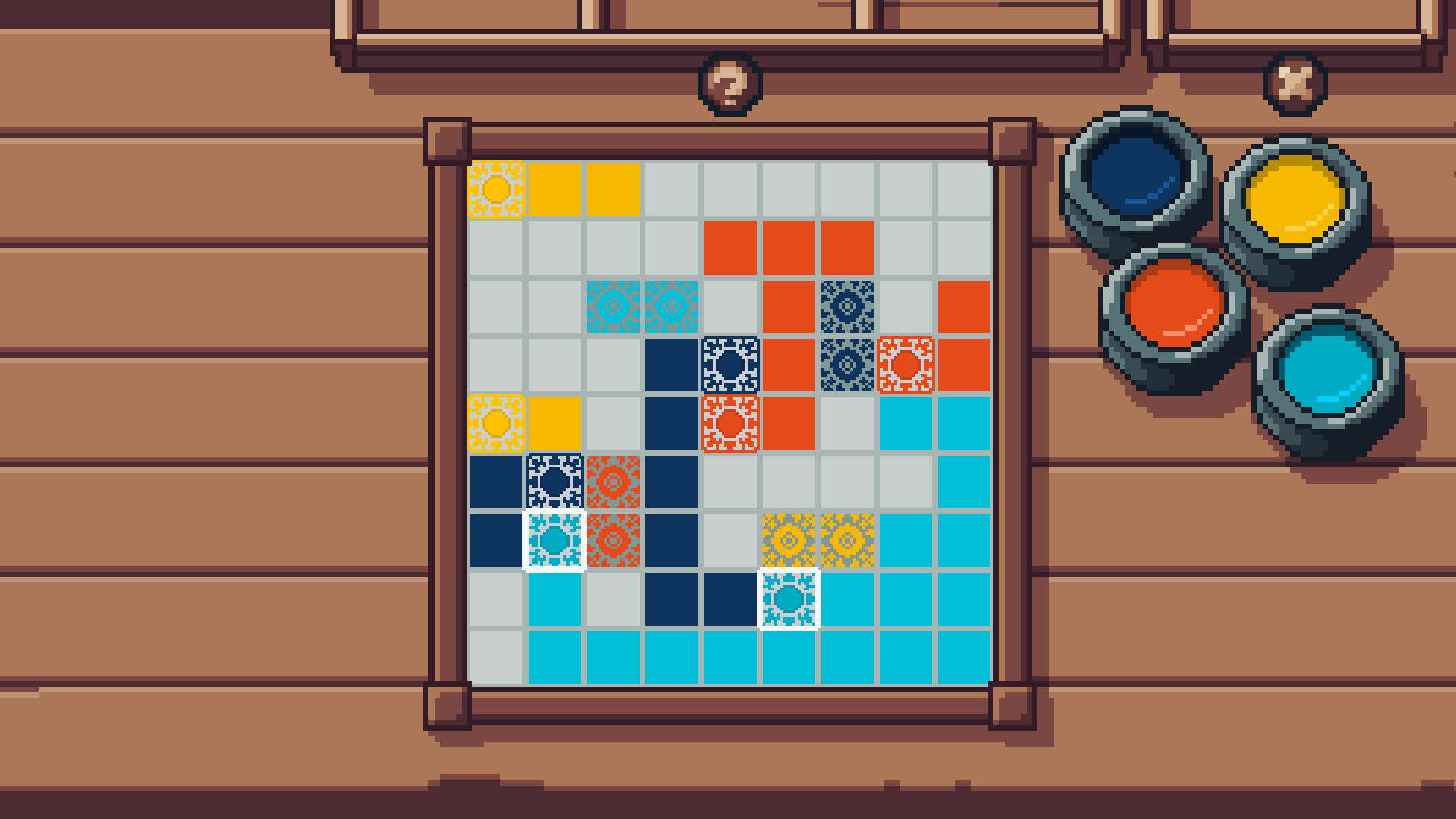
An early puzzle on Tezzel's 9x9 grid, where colored tiles must be dragged into place to complete the pattern.Image: Old Mayor Studios via Steam -
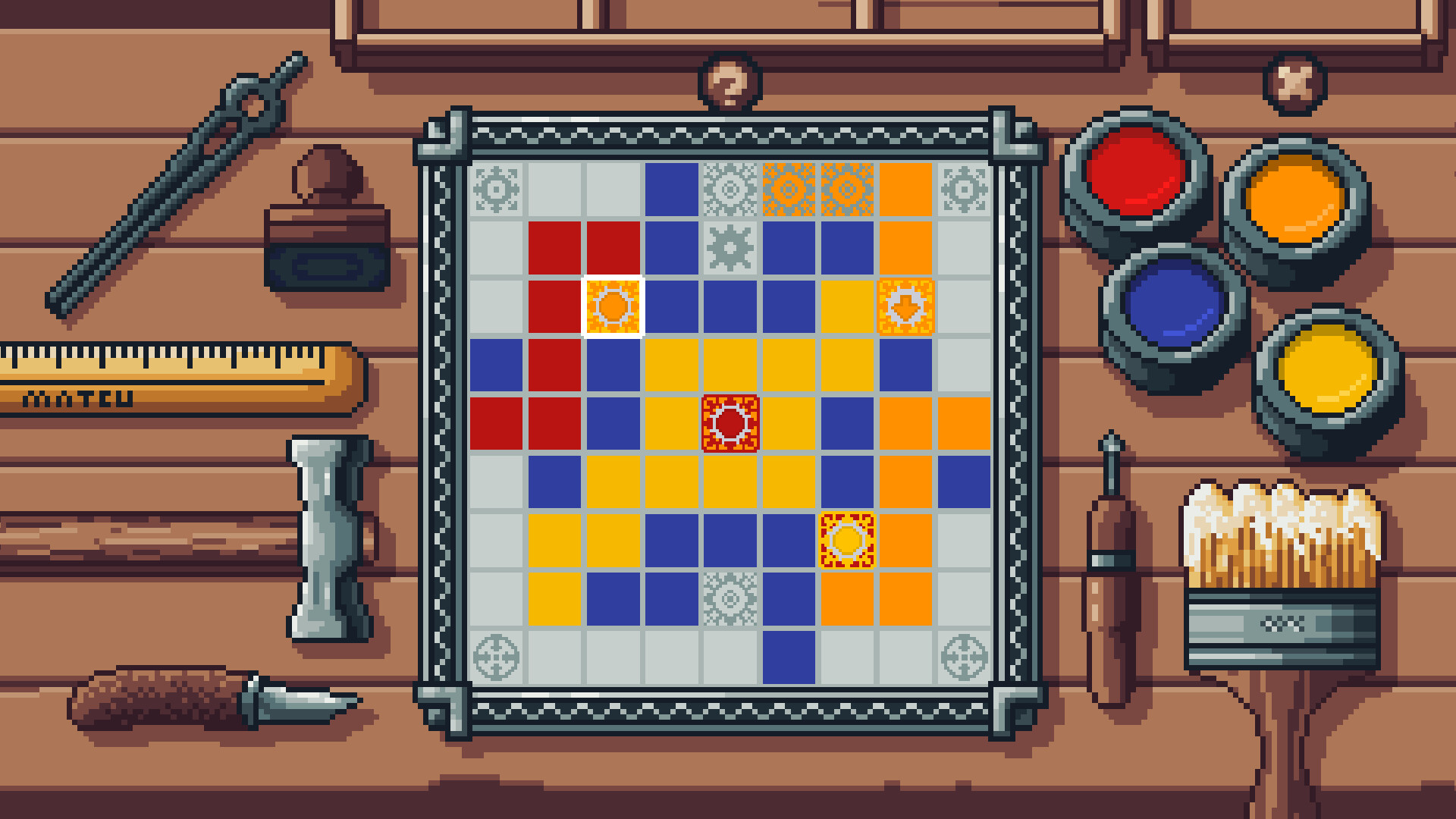
One of the later puzzles reviewers say marks the point where the difficulty stops being gentle, the ruler bearing protagonist Mateu's name a quiet detail in the workshop clutter.Image: Old Mayor Studios via Steam -
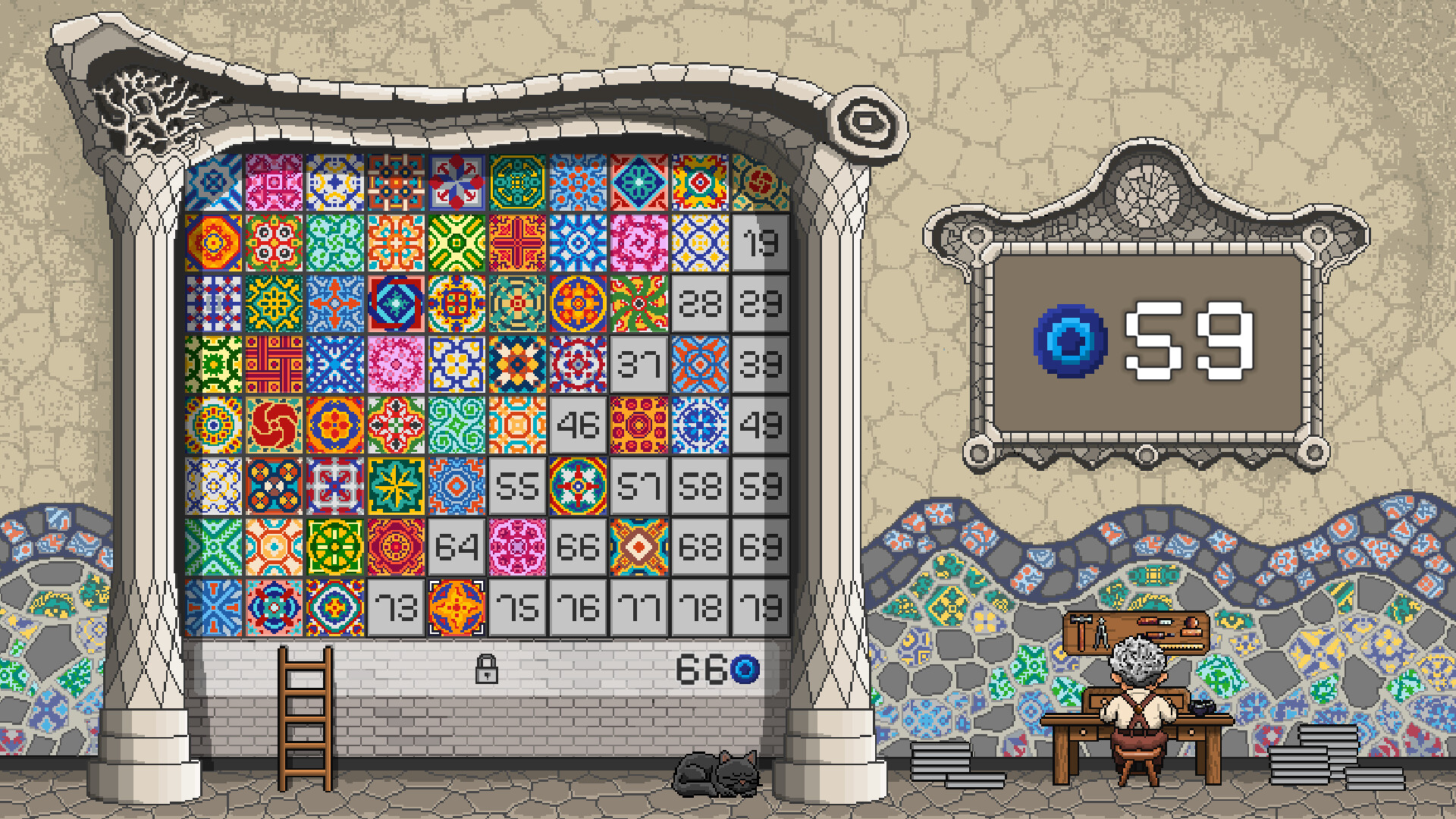
The mosaic Wall itself, filling in tile by tile as puzzles are solved, with numbered squares marking rows still waiting to be unlocked.Image: Old Mayor Studios via Steam