Game review
Tactics Ogre: Reborn
7.5 / 10
- Developer
- Square Enix
- Publisher
- Square Enix
- Released
- 11 November 2022
- Platforms
- Windows
- Genre
- Tactical RPG
- Monetisation
- One-time purchase, no DLC or in-game currency
- Players
- Single-player
The short version
Tactics Ogre: Reborn remasters a 1995 tactical RPG the genre still measures itself against — mature, morally complicated storytelling wrapped around deep turn-based battles — with new orchestral music, full voice acting and quality-of-life fixes nearly everyone credits as improvements. What divides its Mostly Positive 77.3% score, across 2,530 reviews, isn't the remaster's production values; it's specific, deliberate gameplay changes from the beloved PSP version — a stricter level cap, altered permadeath rules, a new card-based skill system replacing the old one — that a large, detailed slice of veteran players argue actively worsened the combat they came back for. Recent sentiment (67 of the last 100 English reviews positive) sits notably below the lifetime figure, suggesting this argument is still live rather than settled.
Biggest strengths
- Story, character writing and world design are close to unanimously praised, including by the harshest gameplay critics — this remains one of the tactical RPG genre's most respected narratives
- New orchestral music and a full English voice cast draw consistent, specific praise, including from reviewers who are otherwise negative about the mechanical changes
- Genuine quality-of-life improvements land well across the board: a battlefield "Scout" preview feature, visible spell/arrow trajectories, streamlined crafting, and working mouse-and-keyboard controls all get specific credit even from critical reviews
Biggest weaknesses
- The single most detailed, most-upvoted negative review (657 votes) makes a careful, specific case that gameplay changes "made in the name of streamlining and game balance" leave combat worse than the PSP version despite crediting several individual changes as improvements
- A stricter level cap system draws particularly sharp, repeated criticism from veteran players, several calling it an "arbitrary" restriction that prevents the kind of unit training and experimentation the original series was known for
- The replacement of the old skill system with a new card-based mechanic is described by multiple reviewers as filling the battlefield with visual clutter and removing systemic depth rather than adding it
Who it's for: Newcomers to Tactics Ogre specifically, and returning fans who are curious rather than precious about the original's exact systems, will likely find a genuinely great tactical RPG here. Longtime PSP "Let Us Cling Together" veterans attached to that version's specific balance and systems should read the detailed negative reviews before buying — this is a meaningfully different game in ways that matter to exactly that audience.
Our recommendation: Strongly recommended for anyone who hasn't played Tactics Ogre before. Worth a slower, more cautious look for longtime fans of the PSP version specifically, since the changes reviewers object to are systemic rather than cosmetic, and no amount of new voice acting fixes a levelling or permadeath system you don't like.
7.5 / 10
Tactics Ogre has a legitimate claim to being one of the tactical RPG genre's foundational texts — a mature, morally grey civil-war story wrapped around deep turn-based battles, first released in 1995 and beloved in its PSP incarnation, "Let Us Cling Together." Square Enix's Reborn remaster, out 11 November 2022, brings new orchestral music, a full English voice cast and a genuine PC port on top of the original game. Reviewers agree almost unanimously that those additions are excellent. What they disagree about, in detail and at length, is what Square Enix did to the game underneath them.
The presentation isn't the argument
Read even the harshest negative reviews and the praise for the new material is consistent and specific: the voice acting for the main trio is "really solid," the new music is repeatedly singled out, and quality-of-life additions — a Scout feature to preview the battlefield before committing, visible spell and arrow trajectories, streamlined crafting that auto-buys missing materials — get credited by name across reviews that otherwise recommend against buying. This isn't a remaster reviewers think looked cheap or lazy. The 657-vote top negative review, the most detailed in the entire corpus, opens by calling several of these changes exactly what it wanted from a remaster before pivoting to its actual argument.
What the argument is actually about
That argument is specific: a stricter unit-by-unit level cap, a new card-based skill system replacing the old one, and — flagged by at least one reviewer who returned to their own review to add it after further play — a changed permadeath and revival system. "I hate how this game cripples you, constantly," reads one detailed negative. "You can't recruit non-humans outside of combat. You're arbitrarily level-capped so training doesn't matter." Another, comparing directly to the PSP version: "It's this philosophy of making things difficult through restrictions and I am not a fan." A third calls the new skill system's card mechanic overwhelming, filling "every slot of the battlefield" with what feels like clutter rather than depth.
Crucially, this isn't one-sided. Several of the game's most-upvoted positive reviews engage directly with the level-cap criticism rather than ignoring it: "Frankly it makes me sad that one of the most visible reviews of this game is a negative review that complains about the level cap. In this version it's there for a reason," reads a 276-vote positive, going on to explain the design intent behind the change. This is a genuine, two-sided, ongoing community argument about specific systems — not a launch-week overreaction that settled down, which the recent sentiment figure backs up: 67 of the last 100 English reviews are positive, a real step down from the 77.3% lifetime figure, meaning the debate hasn't cooled.
Final verdict
Tactics Ogre: Reborn is a genuinely well-made remaster of a genuinely great tactical RPG, and for anyone coming to the story and world for the first time, the systemic disagreements above will likely read as ordinary tactical-RPG difficulty rather than a betrayal of anything. For the specific audience of longtime PSP-version veterans, though, the complaints in this corpus are detailed, specific and argued by people who clearly know the original systems intimately — this is exactly the audience whose expectations matter most for a remaster, and it's exactly the audience split roughly down the middle here. Buy it without hesitation if you're new to the series. If you loved the PSP version specifically, read a few of the detailed negative reviews before you do.
Pros and cons
Pros
- Story, character writing and world design are close to unanimously praised, including by the harshest gameplay critics — this remains one of the tactical RPG genre's most respected narratives
- New orchestral music and a full English voice cast draw consistent, specific praise, including from reviewers who are otherwise negative about the mechanical changes
- Genuine quality-of-life improvements land well across the board: a battlefield "Scout" preview feature, visible spell/arrow trajectories, streamlined crafting, and working mouse-and-keyboard controls all get specific credit even from critical reviews
- A real, functioning PC port with native controller support (Dualsense haptics/adaptive triggers confirmed working by reviewers with a specific setup tip) and Steam Cloud
- For newcomers with no attachment to the PSP version's specific systems, several detailed reviews describe an excellent, if demanding, tactical RPG with no reference point needed
Cons
- The single most detailed, most-upvoted negative review (657 votes) makes a careful, specific case that gameplay changes "made in the name of streamlining and game balance" leave combat worse than the PSP version despite crediting several individual changes as improvements
- A stricter level cap system draws particularly sharp, repeated criticism from veteran players, several calling it an "arbitrary" restriction that prevents the kind of unit training and experimentation the original series was known for
- The replacement of the old skill system with a new card-based mechanic is described by multiple reviewers as filling the battlefield with visual clutter and removing systemic depth rather than adding it
- A change to the permadeath/revival system is flagged as a significant, unwelcome surprise by at least one detailed reviewer who returned to the review after further play specifically to add it as a new complaint
- At NZ$79.95, several reviewers explicitly call the asking price steep for a remaster of a nearly 30-year-old game, especially set against the scale of the systemic changes they say were made without necessarily improving the experience
- Recent English-language sentiment (67 of the last 100 reviews positive) is a real, measurable step down from the 77.3% lifetime figure, indicating the gameplay-changes debate is ongoing rather than a settled launch-week disagreement
Screenshots
-
Tactics Ogre: RebornImage: Square Enix via Steam -
Tactics Ogre: RebornImage: Square Enix via Steam -
Tactics Ogre: RebornImage: Square Enix via Steam -
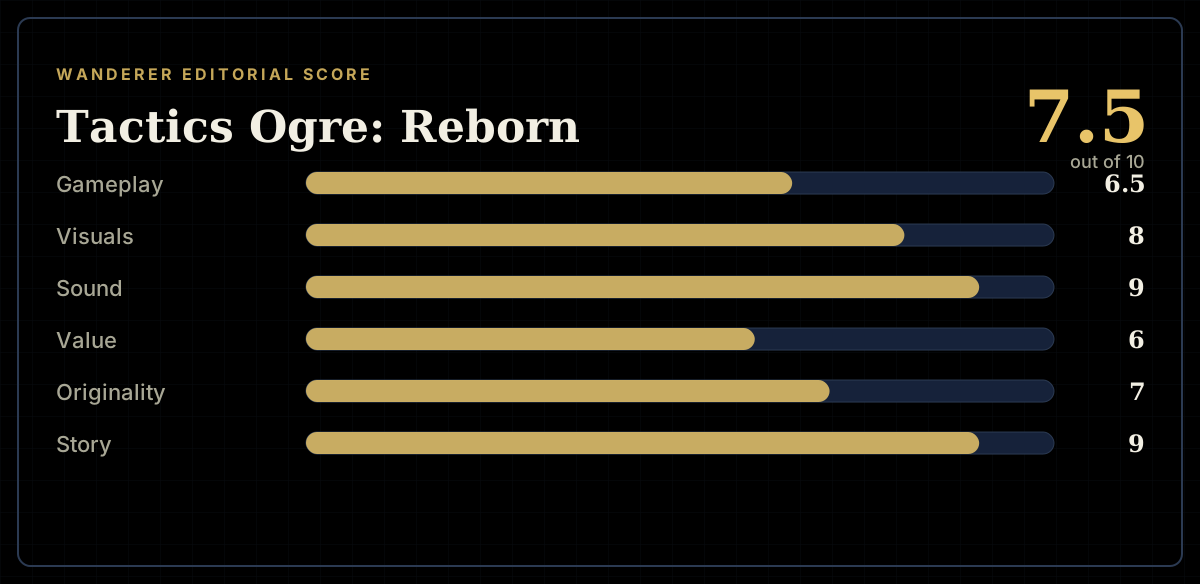
How the review scores each part of the gameWanderer Editorial -
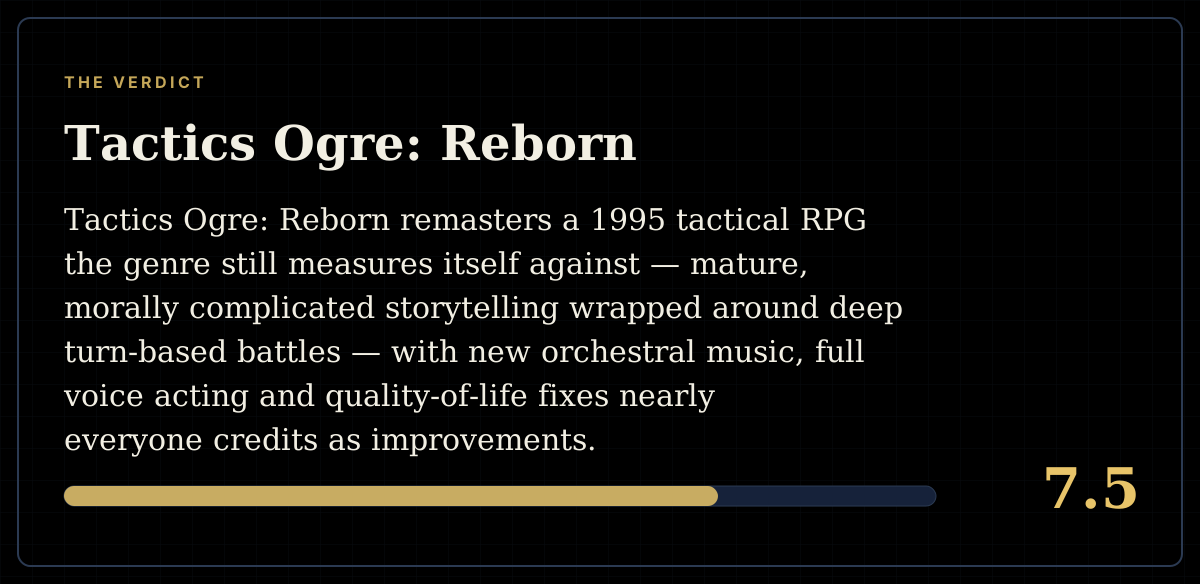
The short versionWanderer Editorial