
Game review
HEXSTORM: Tears of Arcadia
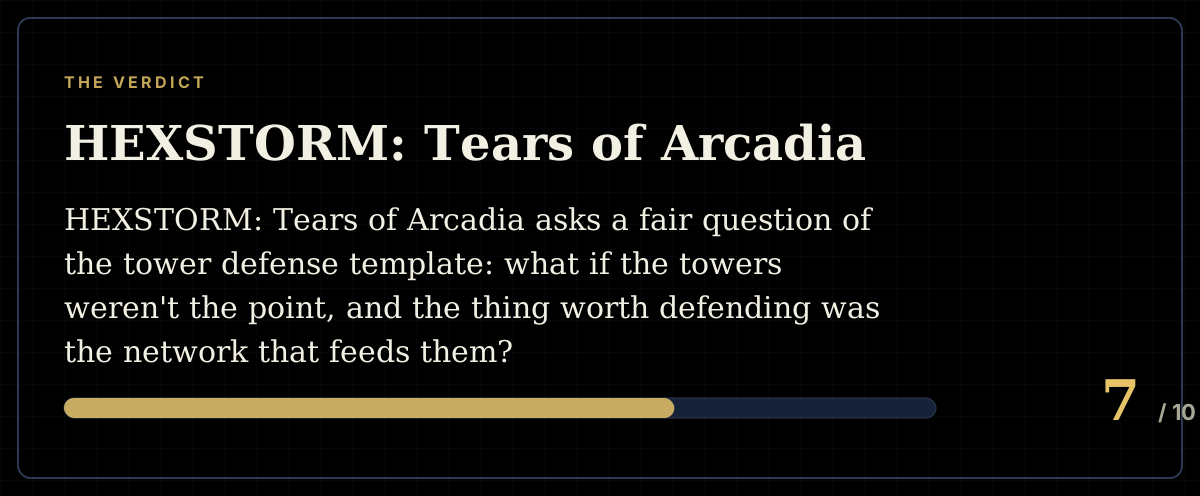
7 / 10
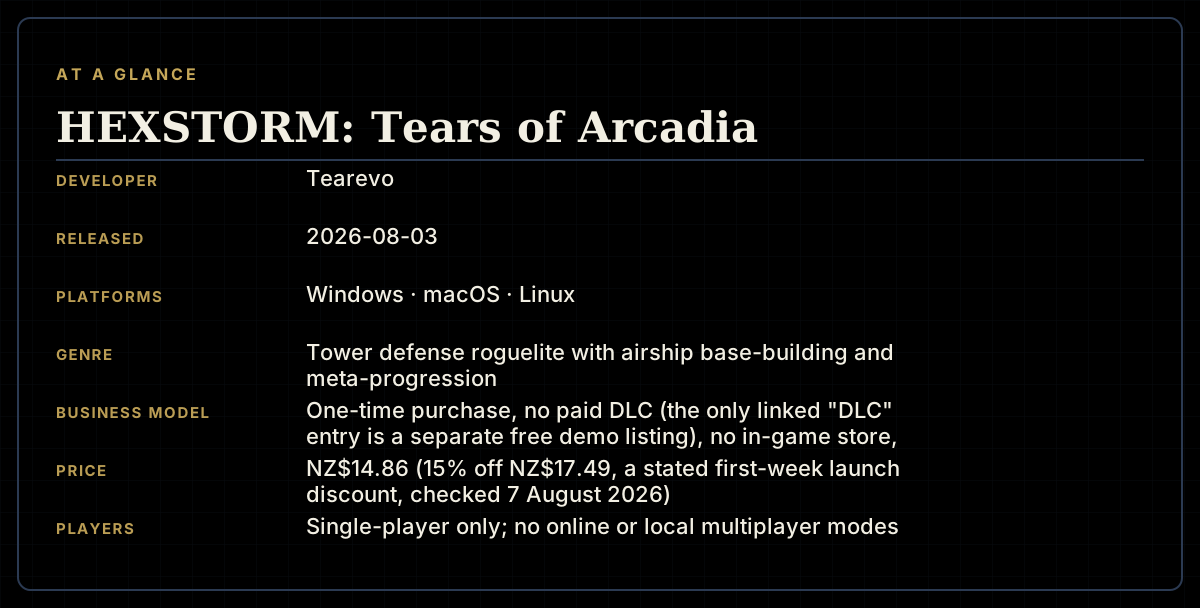
- Developer
- Tearevo
- Publisher
- Tearevo
- Released
- 3 August 2026
- Platforms
- Windows, macOS, Linux
- Genre
- Tower defense roguelite with airship base-building and meta-progression
- Monetisation
- One-time purchase, no paid DLC (the only linked "DLC" entry is a separate free demo listing), no in-game store, premium currency, ads or battle pass, and Steam tracks no achievements for the game
- Players
- Single-player only; no online or local multiplayer modes
The short version
HEXSTORM: Tears of Arcadia asks a fair question of the tower defense template: what if the towers weren't the point, and the thing worth defending was the network that feeds them? Turrets, resource collectors and support modules all share one power grid around the flying fortress Arcadia, enemies come from every direction rather than down one lane, and the campaign alternates grounded sieges with scrolling air battles across four biomes. It's a sharp idea from a solo developer, built on a clean one-time NZ$14.86 purchase with nothing else to buy. Four days after launch it's also a game still finding its footing: auto-targeting turrets that ignore obvious priority targets were the loudest early complaint, key mechanics go unexplained in the base tutorial, and the between-mission currency can wall off progress until you grind an earlier level again. The developer has already shipped two patches, including a manual-aiming system that answers the targeting complaint directly — worth knowing before the launch-week reviews scare you off something with real tactical bones.
Biggest strengths
- Turrets, resource collectors and support modules all draw from one shared power grid around Arcadia, so a single lost sector can cascade into losing the whole defense rather than just one lane
- Hand-drawn steampunk art for the flying fortress and its hex-grid battlefields draws praise even from reviewers who otherwise marked the game down
- A genuinely clean one-time NZ$14.86 purchase with no DLC, premium currency, ads or energy timers, in a genre that leans on all four
Biggest weaknesses
- Auto-targeting turrets that can't be told to prioritize a target were the single loudest launch-week complaint, including a freeze turret firing its area attack at an enemy already about to die
- Core mechanics — how to target ground units, which boosts a top mission score actually requires — go unexplained in the base tutorial, which a second patch is already trying to expand
- The between-mission Tears economy can wall a level behind currency you don't have yet, pushing you to replay an earlier mission for points rather than get better at the one in front of you
Who it's for: Tower defense players who want more to manage than lane placement — resource nodes to protect, a shared power grid that can fail in sectors, and enough roguelite variance between runs to reward experimentation — and who don't mind a launch-week build still smoothing its rough edges.
Our recommendation: At NZ$14.86 for a one-time purchase with no DLC, no premium currency and no ads, the price is reasonable for a 30-mission campaign plus four challenge modes, provided you go in knowing the tutorial under-explains itself and the auto-targeting has only just been given a manual override. Wait a patch or two if launch jank bothers you; the underlying system is worth the price either way.
7 / 10
The flying fortress at the center of HEXSTORM: Tears of Arcadia isn't just what you're defending — it's also the reason the defense can fail all at once. Every turret, resource collector and support module you build ties into one shared power network radiating out from the ship Arcadia, and solo developer Tearevo's whole design rests on that single decision: lose the wrong hex, and you don't just lose a tower, you can lose the sector's power along with it. That's a sharper premise than most tower defense games bother with, and four days after launch it's still a game working out the gap between that premise and the tutorial that's supposed to teach it.
A network, not a lane
HEXSTORM drops the genre's usual fixed path in favor of a hex grid radiating outward from Arcadia, with enemies arriving from every direction rather than one predictable route. Structures fall into three families — turrets that cover a threatened arc, collectors that extend your territory and harvest the crystal currency called Tears, and support modules that reinforce whatever's nearby — and the store page's own framing of the design is exactly right: you're not placing isolated towers, you're building infrastructure, and infrastructure can be starved. Losing a collector doesn't just cost you income, it can cost you the ability to expand into the hex it was covering at all. The developer's own screenshots show this playing out directly, with a "Tear deposits depleted" banner mid-mission as a resource node runs dry and the surrounding towers lose their upkeep.
Enemies are built to punish specific failures rather than just soak damage: some rush and detonate on contact, others hang back and fire from range, saboteurs disable structures outright, and armored units shrug off the wrong tower type entirely. The store page is blunt about what that's meant to reward — "victory does not belong to the player who builds the most turrets, it belongs to the one who reads the battlefield" — and the one long, high-playtime review in the sample (nearly 18 hours, the most of anyone in the corpus) backs that framing up in its own words: towers affecting other towers, upgrades that "combine and create different synergies" rather than simply stacking, and a game that "starts showing a surprising amount of tactical depth" after the first hour once the systems click.
Two fights, one ship
The campaign splits missions into two rhythms. Ground missions land Arcadia on the surface for a static siege — the classic tower defense shape, just built around the hex network instead of a lane — while air missions keep the ship moving, scrolling the world beneath it as resources drift past, missile batteries fire from off-screen, and depot containers occasionally offer a mid-battle chance to reshape your loadout entirely. It's a real difference in pacing rather than a cosmetic one: the developer's own screenshots show a speed control (All Stop / Slow Ahead / Full Ahead) sitting permanently in the corner of air missions, something ground missions don't need at all. Across a 30-mission campaign spanning four biomes — sandswept wastes, overgrown ruins, ice peaks and at least one storm-wracked dark biome — with weather hazards like meteor showers and sandstorms layered on top, the two mission types do real work keeping thirty short battles from blurring into one long one.
Layered over both is a roguelite boost draw: depot pickups and mid-mission choices offer a pick of upgrades, some immediate and some that stack into a build, echoed by a separate permanent Boosts screen between missions where you spend Tears to add abilities like Drone Swarm or the game's namesake Hexstorm — a lightning-strike ability — to a fixed loadout you carry into every run. It's a reasonable structure on paper: pick a build in the moment, then bank the best finds for next time. In practice, one of the sharper English-language reviews in the sample pointed out the seam in it — Simplified Chinese reviewers made the same complaint independently — that the pool of useful boosts collapses fast once you've found the one or two that clearly outperform the rest, and unlocking real variety costs more out-of-run currency than the early game hands you.
The currency wall
The between-mission side of progression is a proper tech tree — hull, weapon systems, generators, battery capacity, drone repair, all branching and gated behind two currencies, one for common upgrades and a rarer one for the good stuff. That's more structure than the genre usually bothers with, and it's also where the sharpest negative review in the sample lands its complaint: once you hit a mission you can't clear, the fix isn't to get better at that mission, it's to grind an earlier one again for enough Tears to afford the next upgrade tier. One English reviewer illustrated exactly how that plays out in practice — reaching mission 22 at 3.4 hours in with nothing left to upgrade, clearing the level only "with pure luck and 1 hp," and concluding there's "nothing else to be seen in this game now" for a price that felt steep against how short the climb to that wall turned out to be. A Russian-language review made the identical structural argument in different words: once the story runs out, the meta-progression becomes "a mine you have to defuse," forcing repeat runs of earlier content that the reviewer found simply not fun. Neither reviewer disputes that the tech tree itself is well built. Both are describing the same failure mode a resource-gated progression system risks whenever the gate outpaces the content behind it.
What launch week is actually saying
Twenty-one Steam reviews four days after release is a genuinely small sample, and this review reads all of it rather than a filtered slice — 19 returned across English, Russian and Simplified Chinese, plus a stable count of exactly 5 negative reviews confirmed on two separate pulls. Sixteen of twenty-one are positive, which lands the store badge on Mostly Positive, and the shape of the split is consistent across languages rather than concentrated in one: praise for the art and the tactical depth once it clicks, friction over specific, nameable mechanics rather than a game people dislike outright.
The one complaint that shows up almost everywhere, worded differently in every language, is that turrets pick their own targets and can't be redirected — a freeze turret firing its area attack at an enemy that's already almost dead, wasting the whole hit, was the detail the top-voted negative review led with. That review is dated the afternoon of 3 August, launch day itself. Two days later, the 5 August patch notes list a new manual aiming system as the headline change — a fast, specific answer to a complaint that had barely had time to accumulate votes before it was addressed. The same patch wave also expanded the tutorial, which matters because two entirely separate reviews — one English, one Simplified Chinese — independently flagged mechanics the game never explains: how to target ground units at all, and which boosts are actually required to hit a mission's top score. A Russian reviewer put a number on the goodwill that buys the developer: after listing several complaints in detail, they closed by noting that "the developer reads everything carefully and makes changes right away" — not a promise this review can verify going forward, but a pattern already visible in the 48 hours after launch.
Steam's own listing doesn't currently carry a controller-support category, worth flagging since the pre-launch marketing specifically promised "full gamepad and Steam Deck support" — whether that's a listing oversight or a feature still catching up to the announcement isn't something the store page resolves either way.
The AI question, briefly
HEXSTORM carries a Steam AI Generated Content Disclosure stating that "AI tools were used in various stages of development, including prototyping, localization and the creation of some visual assets," while adding that "all gameplay systems and implementation are authored and controlled by the developer" and that no generative AI runs at runtime. That's a narrower and more specific disclosure than the blanket "everything was AI-assisted" statements this library has seen on other launches, and it's consistent with what the game actually looks like — the hand-painted airship and hex-grid art reads as a cohesive, deliberate style rather than something assembled wholesale, and it's one of the only elements every reviewer in the sample praised regardless of how they scored the rest. One Russian reviewer did single out the story's comic-panel illustrations specifically as looking AI-touched, a narrower and more specific complaint than the disclosure itself concedes — worth knowing, though it's one voice in a sample of 21 rather than a pattern.
Final verdict
HEXSTORM: Tears of Arcadia earns a 7.0 for a tower defense that actually rethinks what's worth defending — a shared power network instead of a lane, two mission rhythms that keep a 30-mission campaign varied, and a tech tree with real branching choices underneath a roguelite boost draw. It doesn't score higher because launch week caught real, specific problems: auto-targeting that ignored obvious priorities until a patch fixed it, a tutorial that skips mechanics players need on mission one, and a currency-gated progression system that at least two reviewers hit as a wall rather than a curve. None of that is uncommon for a solo developer's launch week, and the pace of the fixes so far — two patches and a manual-aiming system inside 48 hours — is a better signal than the score alone can capture. If a tower defense that punishes you for thinking in single lanes sounds worth NZ$14.86, this delivers that, with the understanding that you're buying a system still being sanded down in public rather than a finished one.
Pros and cons
Pros
- Turrets, resource collectors and support modules all draw from one shared power grid around Arcadia, so a single lost sector can cascade into losing the whole defense rather than just one lane
- Hand-drawn steampunk art for the flying fortress and its hex-grid battlefields draws praise even from reviewers who otherwise marked the game down
- A genuinely clean one-time NZ$14.86 purchase with no DLC, premium currency, ads or energy timers, in a genre that leans on all four
- The solo developer shipped two patches inside 48 hours of launch, including a manual-aiming system that directly answers the auto-targeting complaint dominating early reviews
- Two mission rhythms — grounded siege and scrolling air combat — across four biomes with distinct weather hazards keep a 30-mission campaign from repeating the same fight
Cons
- Auto-targeting turrets that can't be told to prioritize a target were the single loudest launch-week complaint, including a freeze turret firing its area attack at an enemy already about to die
- Core mechanics — how to target ground units, which boosts a top mission score actually requires — go unexplained in the base tutorial, which a second patch is already trying to expand
- The between-mission Tears economy can wall a level behind currency you don't have yet, pushing you to replay an earlier mission for points rather than get better at the one in front of you
- Two Simplified Chinese reviews independently flagged fragile resource collectors and no way to reset spent upgrade points, and a UI issue where selecting a grid cell and selecting a building are easy to confuse
- Across roughly 30 short missions, more than one reviewer felt the campaign runs out of new upgrades to chase well before it runs out of missions
Screenshots
-
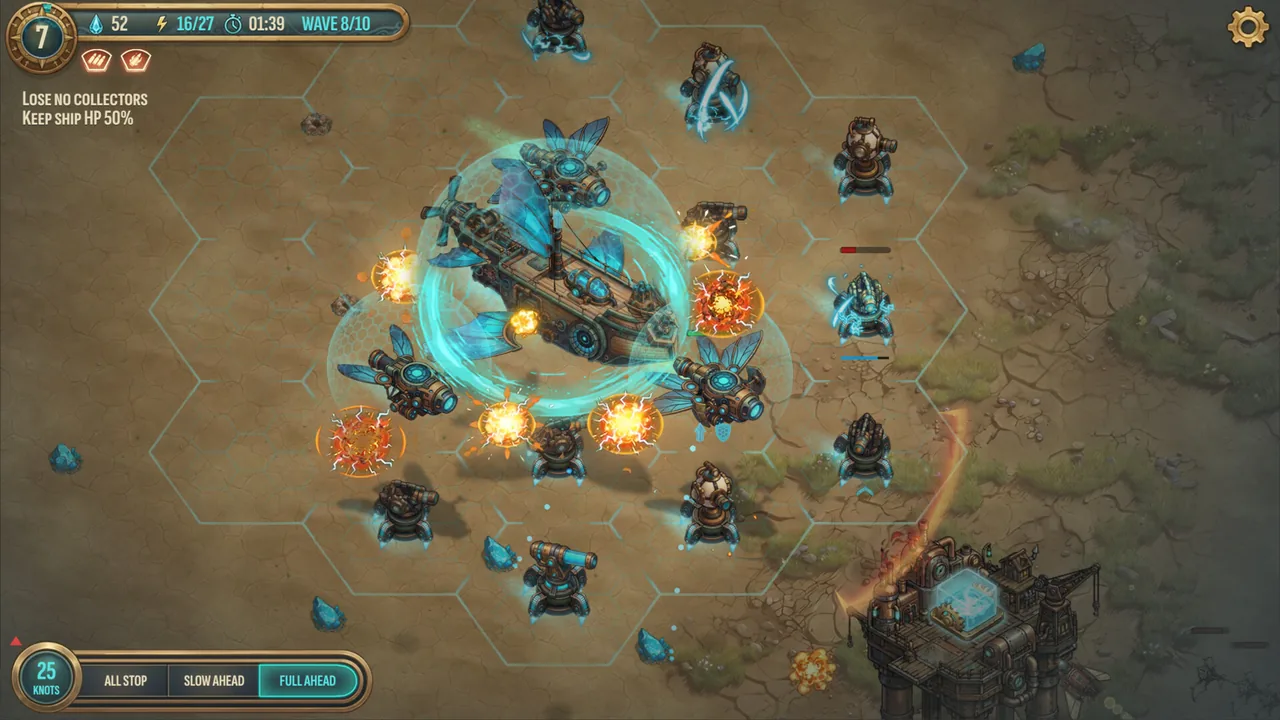
HEXSTORM: Tears of ArcadiaImage: Tearevo via Steam -
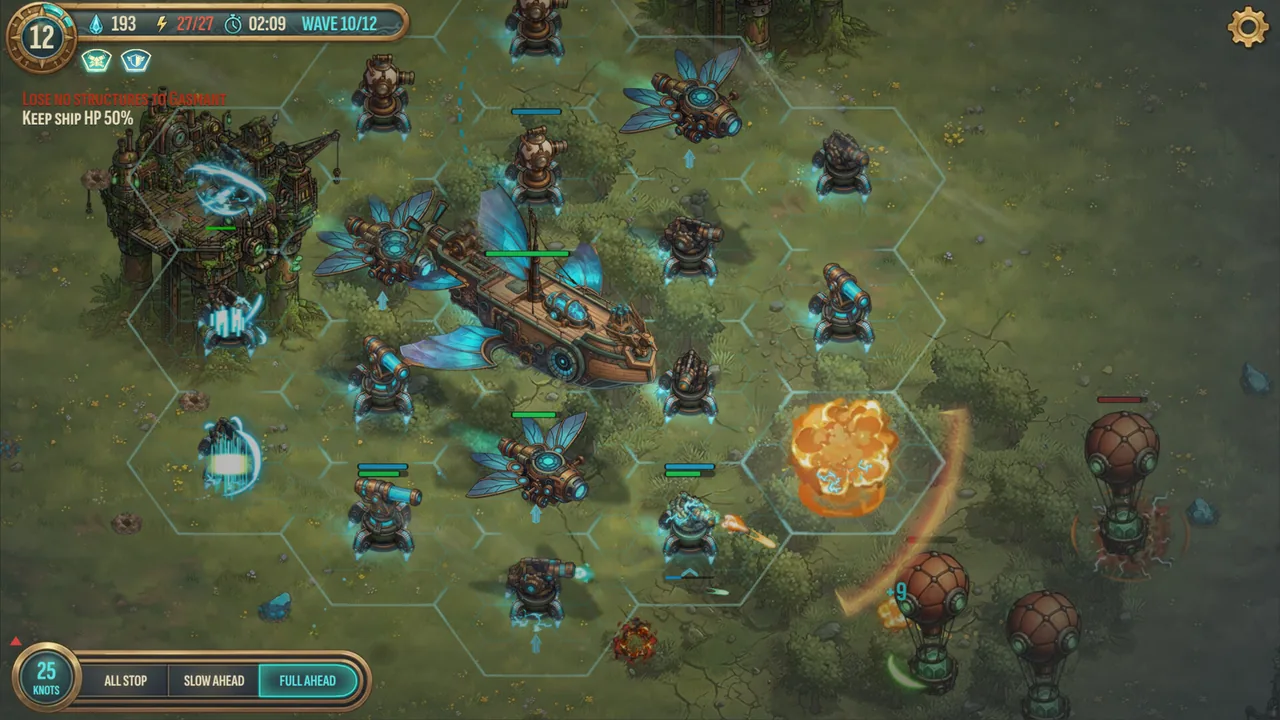
HEXSTORM: Tears of ArcadiaImage: Tearevo via Steam -
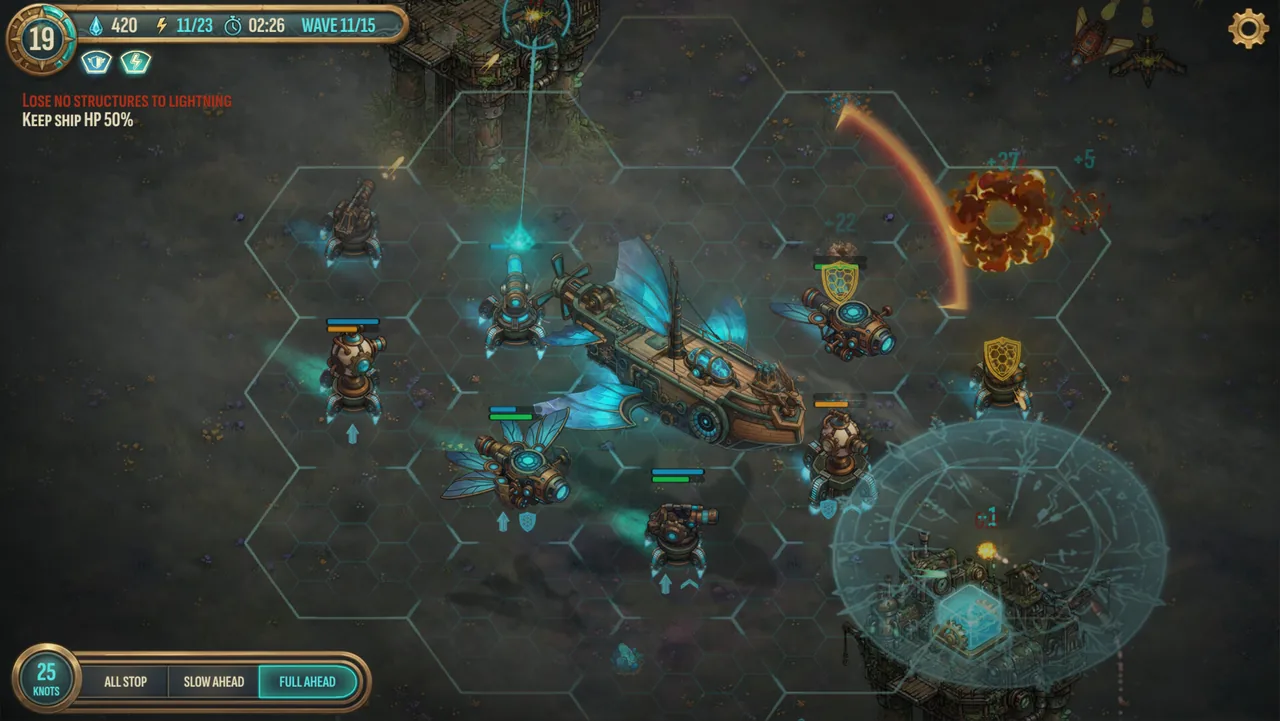
HEXSTORM: Tears of ArcadiaImage: Tearevo via Steam -
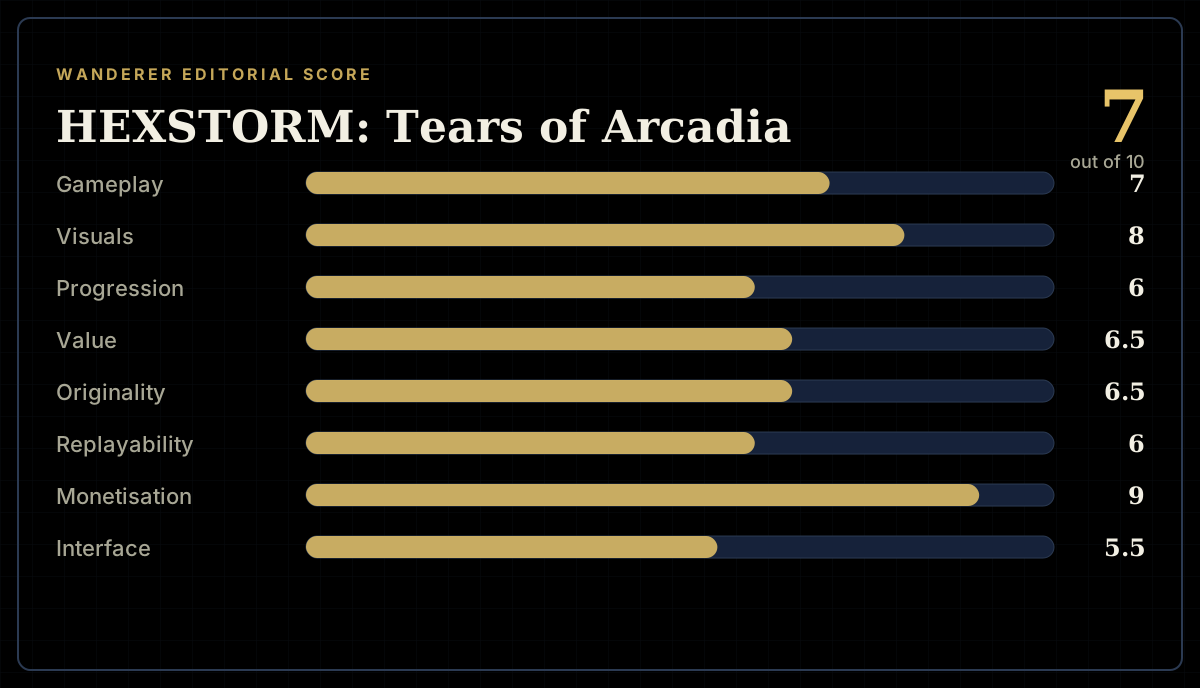
How the review scores each part of the gameWanderer Editorial -
The game at a glanceWanderer Editorial -
The short versionWanderer Editorial