Game review
Axom: Conquest
7 / 10
- Developer
- Hairy Penguin
- Publisher
- Hairy Penguin
- Released
- 9 June 2026
- Platforms
- Windows
- Genre
- Indie, Strategy
- Monetisation
- paid
- Players
- false
The short version
Biggest strengths
- A genuinely fresh sci-fi take on tower defense that multiple reviewers, including self-described genre veterans, called a standout departure from the endless medieval/fantasy TD glut on Steam
- Freeform, physics-driven enemy pathing where creatures attack whichever structure is in their way rather than beelining a single core, praised as a meaningfully different tactical layer
- Deep, roguelite-style run variety through randomized towers, upgrades, and procedurally generated maps that reviewers said kept dozens of hours feeling fresh
Biggest weaknesses
- Reported balance problems, some upgrades and towers described by reviewers as wildly overtuned or nearly useless, undermining the roguelite's build variety
- Real performance degradation in longer runs, with more than one reviewer reporting frame rates collapsing at higher waves, particularly on certain hardware
- Multiple bug reports, including enemies glitching through terrain and cliffs, and at least one reviewer unable to play more than a handful of rounds without crashing
Who it's for: Tower-defense veterans looking for genuine mechanical novelty (sci-fi setting, freeform 3D pathing, roguelite runs) who can tolerate real balance and performance rough edges in exchange for a fresh take on a crowded genre
Our recommendation: recommended
7 / 10
Axom: Conquest released on Steam on June 9, 2026, a hold-out tower-defense roguelite from solo studio Hairy Penguin that drops players onto a procedurally generated alien homeworld to build and defend a drill-powered fortress against physics-driven, corrupted wildlife swarms. Its 45-review English pool lands at a Positive 82% (37 up, 8 down), and it's one of the more genuinely divided pools this lane has covered this month, not because reviewers disagree about the game's ideas, but because they largely agree on both its real strengths and its real, still-unresolved problems.
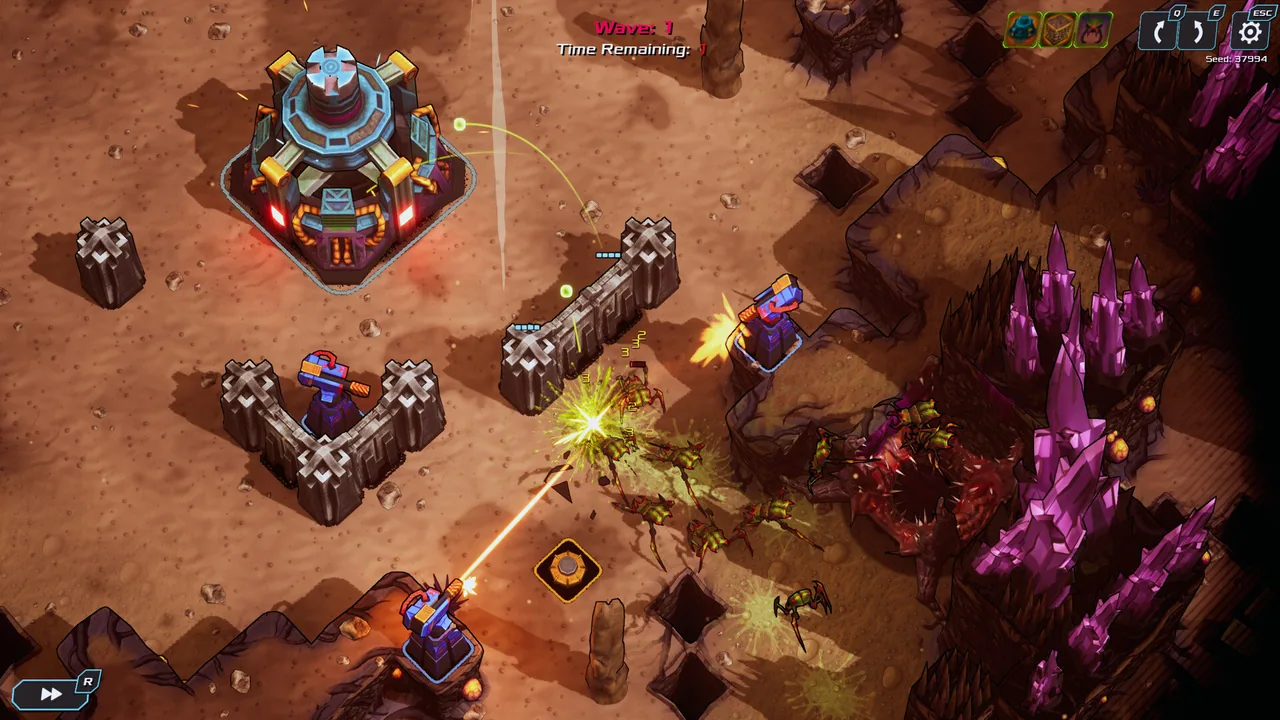
The genre novelty draws the strongest and most specific praise. One long, detailed review opened by explicitly ruling out AI-usage discourse and engine choice as distractions, focusing instead on what the reviewer actually wanted from the genre: "A Tower Defense game that isn't medieval/magic themed, but sci-fi, and pulls it off nicely," expressing exhaustion with the "uncountable amounts" of interchangeable fantasy-themed tower defense games flooding Steam. Multiple other reviewers echoed the same relief at a genre entry with real mechanical identity. One self-described genre veteran who claimed to have "played just about every Tower Defense on Steam" praised how "the enemy is constantly changing its attacking positions, forcing you to make fresh, hard decisions each run," and noted being "extremely impressed with the balance for such a young game" ten hours in. Another reviewer specifically highlighted the freeform pathing system, enemies attacking whichever structure blocks their path rather than beelining a fixed core, as a meaningful departure from genre convention that forces careful expansion planning around buildings that heal between waves.
Depth and replayability came up frequently as a genuine strength as well. One reviewer called it "a hidden gem," praising the thought put into towers, enemies, and upgrades for an indie release, and noting that even after 20 hours they hadn't unlocked everything, calling it good value for the price. Another reviewer who'd played both the pre-release demo and the full game praised the base-building layer alongside classic tower-defense fundamentals, while noting uncertainty about long-term content given the main structure is essentially four difficulty tiers across randomly generated maps, a real but modest scope limitation rather than a dealbreaker.
Set against that enthusiasm, the pool's critical reviews (and several nominally positive ones) converge on a consistent set of real problems. The most detailed critical review, from a reviewer who still recommended the game to genre fans despite scoring it "only a 5/10" personally, laid out three specific, unresolved issues: upgrade and tower balance that leaves "some upgrades ridiculously strong, while others are useless or even counterproductive"; map generation that can produce layouts the reviewer called "completely unplayable due to the layout of the high ground and resource spots"; and bugs causing lost runs when enemies "simply glitched over cliffs." A separate reviewer independently corroborated the pathing bugs, describing mobs jumping around erratically near cliff edges and noting that combining this with knockback-heavy weapons can make encounters feel cheap rather than challenging, while still calling the underlying ideas ones future tower-defense games might want to borrow.
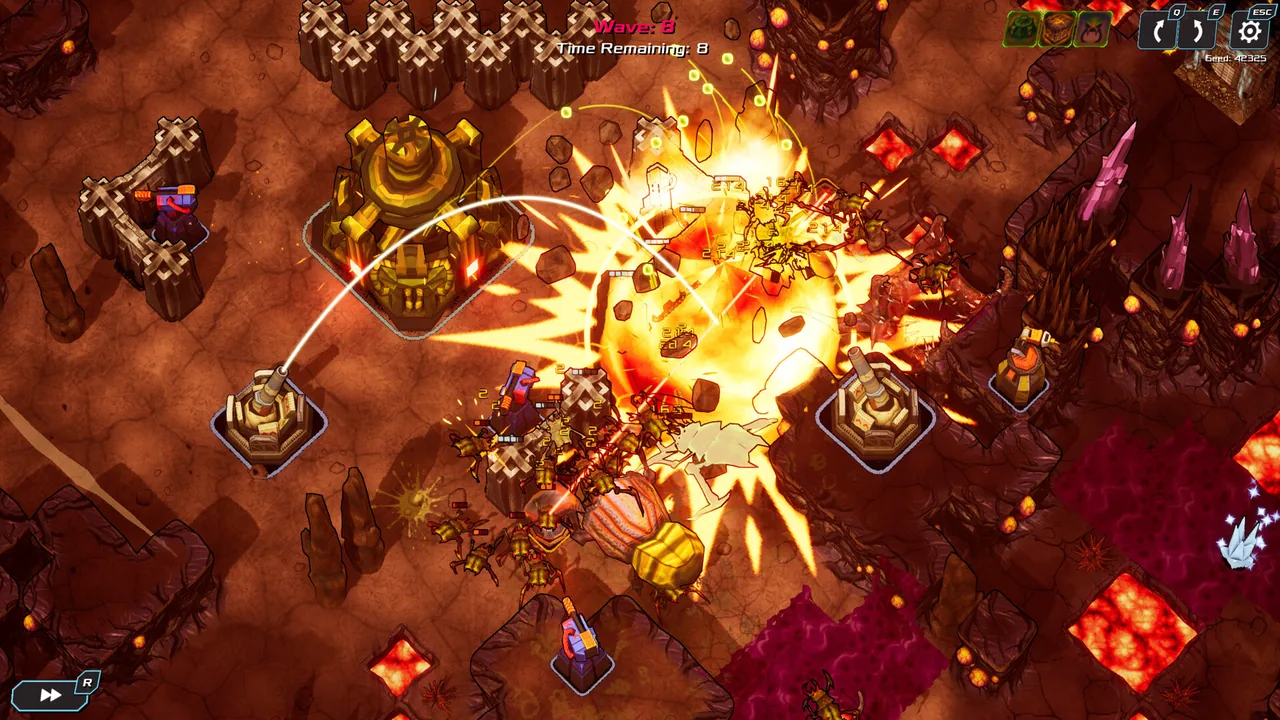
Performance is a specific, recurring sore point once runs go long. One reviewer who praised the game's polish and addictive meta-progression still flagged that "once you get past wave 30 or so performance may start taking a serious hit due to the sheer number of bugs you ha[ve]" on screen, while a separate, shorter review reported frame rates collapsing to around 8 FPS by stage 30 after initially enjoying the game's progression. A third reviewer attributed reported crashes specifically to AMD graphics cards, claiming the game runs smoothly with large enemy and projectile counts on other hardware, a useful data point for prospective buyers to weigh against their own setup, though not something this pool of reviews can fully confirm as a hardware-specific issue rather than a broader optimization gap.
The pool's most pointed negative review focuses not on the core tower-defense loop but on the settings menu, calling out non-functional resolution options, a "fake" fullscreen mode that merely stretches a fixed preset to the desktop resolution, and a windowed mode the reviewer called "terrible." That same reviewer went further, speculating the settings implementation reflected AI-assisted code generation given its dated, non-functional structure, a claim we report here as the reviewer's own attributed allegation rather than a confirmed fact, since nothing in the available review pool or store listing independently substantiates it. It's included because it reflects a real, specific technical complaint (broken display settings) that stands on its own regardless of the reviewer's speculation about its cause, and because at least one other reviewer independently flagged crashes and rough technical edges without making the same AI claim.
It's also worth noting how many reviewers, across both sides of the recommendation split, explicitly framed their criticism as coming from a place of wanting the game to succeed rather than writing it off. The reviewer who scored it a personal 5/10 still recommended it to genre fans; the reviewer who catalogued its bugs still called it "a fixable game with a good core" and noted the developer "hasn't abando[ned]" it. That pattern, harsh on specifics but optimistic about trajectory, is a meaningfully different signal than a pool full of reviewers simply walking away disappointed, and it suggests the underlying design is strong enough that most of these complaints read as fixable execution gaps rather than fundamental flaws in the concept.
Taken together, Axom: Conquest earns its Positive rating on the strength of genuinely novel ideas executed with real care in a genre that badly needs them, sci-fi setting, freeform physics-driven pathing, and roguelite run variety that reviewers with deep genre experience found refreshing rather than gimmicky. But the balance, performance, and bug complaints running through even the pool's more critical positive reviews are consistent enough, and specific enough, that they shouldn't be waved off as isolated hardware issues or launch jitters. At $9.99, it's a reasonable bet for tower-defense fans hungry for something structurally different, so long as they go in expecting a game whose ambition currently outpaces its polish.
Pros and cons
Pros
- A genuinely fresh sci-fi take on tower defense that multiple reviewers, including self-described genre veterans, called a standout departure from the endless medieval/fantasy TD glut on Steam
- Freeform, physics-driven enemy pathing where creatures attack whichever structure is in their way rather than beelining a single core, praised as a meaningfully different tactical layer
- Deep, roguelite-style run variety through randomized towers, upgrades, and procedurally generated maps that reviewers said kept dozens of hours feeling fresh
- Strong difficulty scaling that multiple reviewers described as tough but fair, rewarding adaptation over a single go-to strategy
Cons
- Reported balance problems, some upgrades and towers described by reviewers as wildly overtuned or nearly useless, undermining the roguelite's build variety
- Real performance degradation in longer runs, with more than one reviewer reporting frame rates collapsing at higher waves, particularly on certain hardware
- Multiple bug reports, including enemies glitching through terrain and cliffs, and at least one reviewer unable to play more than a handful of rounds without crashing
- Widely criticized settings menu, with resolution and fullscreen options reviewers called broken or non-functional, and one detailed reviewer speculating the implementation reflected AI-assisted coding, a claim reported here as an attributed, unverified reviewer allegation
Screenshots
-
Axom: ConquestImage: Hairy Penguin via Steam -
Axom: ConquestImage: Hairy Penguin via Steam -

Axom: ConquestImage: Hairy Penguin via Steam