Game review
Successor
6 / 10
- Developer
- Playwood Project
- Publisher
- Playwood Project
- Released
- 24 October 2025
- Platforms
- Windows
- Genre
- Tactical RPG
- Monetisation
- One-time purchase, no in-game store
- Players
- Single-player only
The short version
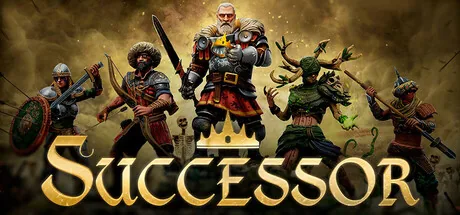
Successor is a miniature tabletop-diorama tactics RPG from Playwood Project, sending a chosen Lord and their heroes across procedurally explored kingdoms in short, real-time-with-pause battles on a hex board. It spent roughly five months in Early Access, from 29 May to its 1.0 full release on 24 October 2025, priced at NZ$35.99. It holds a Mixed rating — 64.9% positive across 37 English-language reviews and 69% across its wider 55-review all-language corpus. This review reads all 13 English negative reviews and finds a game whose combat design earns real, specific credit — several reviewers who also played the developer's earlier Wartile call this an improvement — undercut by mouse and unit-selection bugs several reviewers describe as game-breaking, along with crashes reported as late as a month after the 1.0 launch. The developer's update history shows genuine, sustained effort across the whole Early Access period and into 1.0, which distinguishes this from a simply-abandoned release, but as of this review's check the specific bugs its critics describe hadn't been resolved.
Biggest strengths
- Combat draws specific, direct praise as an improvement over Wartile, the developer's earlier, similarly-styled game, with reviewers crediting decision-making around positioning and tactics as "easy to learn and thoughtful" without becoming needlessly complex
- The miniature diorama presentation and tabletop framing earn consistent praise for charm and visual appeal across both positive and negative reviews
- A genuinely long, active Early Access period — roughly five months, from late May through October 2025 — with regular dev logs, hotfixes and content updates, continuing with further hotfixes after the 1.0 launch
Biggest weaknesses
- Mouse and unit-selection bugs are this review's most-repeated specific complaint — reviewers describe left-click intermittently failing to register for character movement, in some cases requiring a full game restart to recover
- Crashes were reported both at launch and as late as a month into the 1.0 release, including one reviewer whose newly built PC crashed within the first five minutes of play
- Several reviewers describe the tactical depth as shallower than it first appears once a dominant strategy — luring enemies onto favourable terrain, then letting positioning do the work — becomes clear, reducing repeat encounters to a familiar routine
Who it's for: Fans of Wartile or lightweight tactical RPGs who can tolerate real interface bugs for a short, tabletop-flavoured combat loop; a poor fit for anyone who needs a polished, crash-free experience out of the box.
Our recommendation: A game with real tactical promise and combat several players call an improvement on its spiritual predecessor, let down by control bugs serious enough that this review can't recommend it without that caveat front and centre. Worth watching for further patches.
6 / 10
Introduction
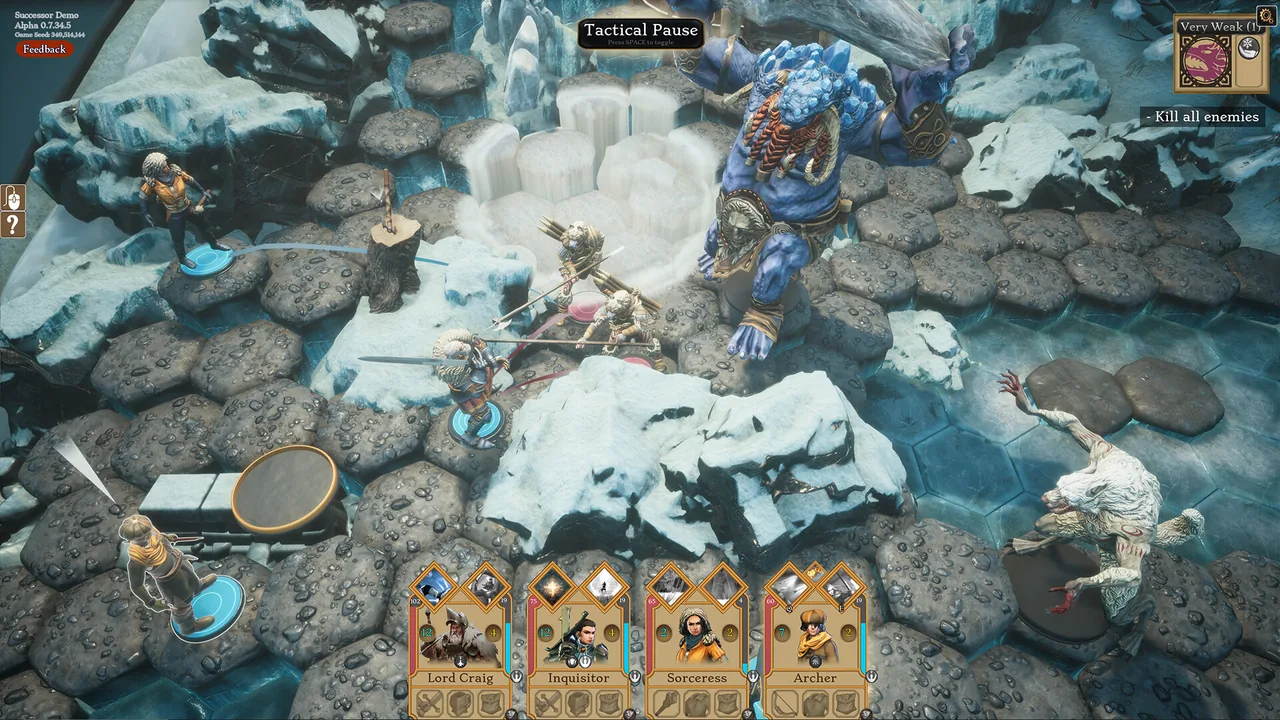
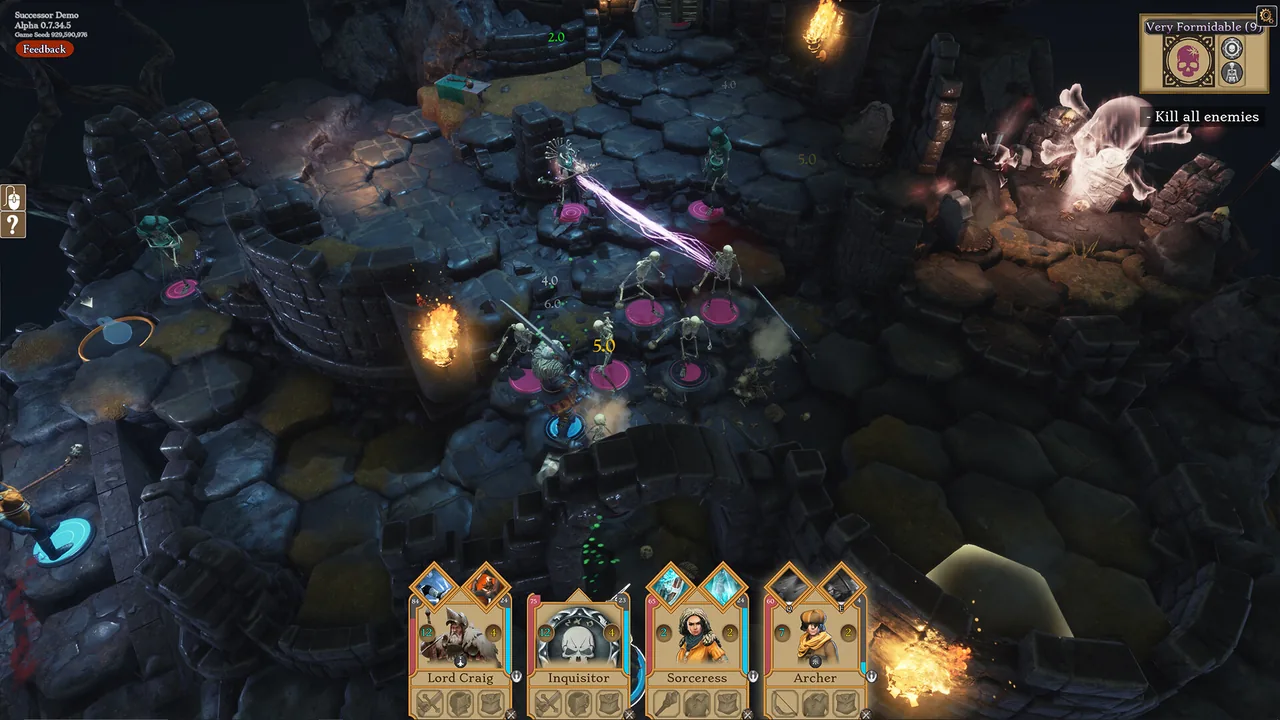
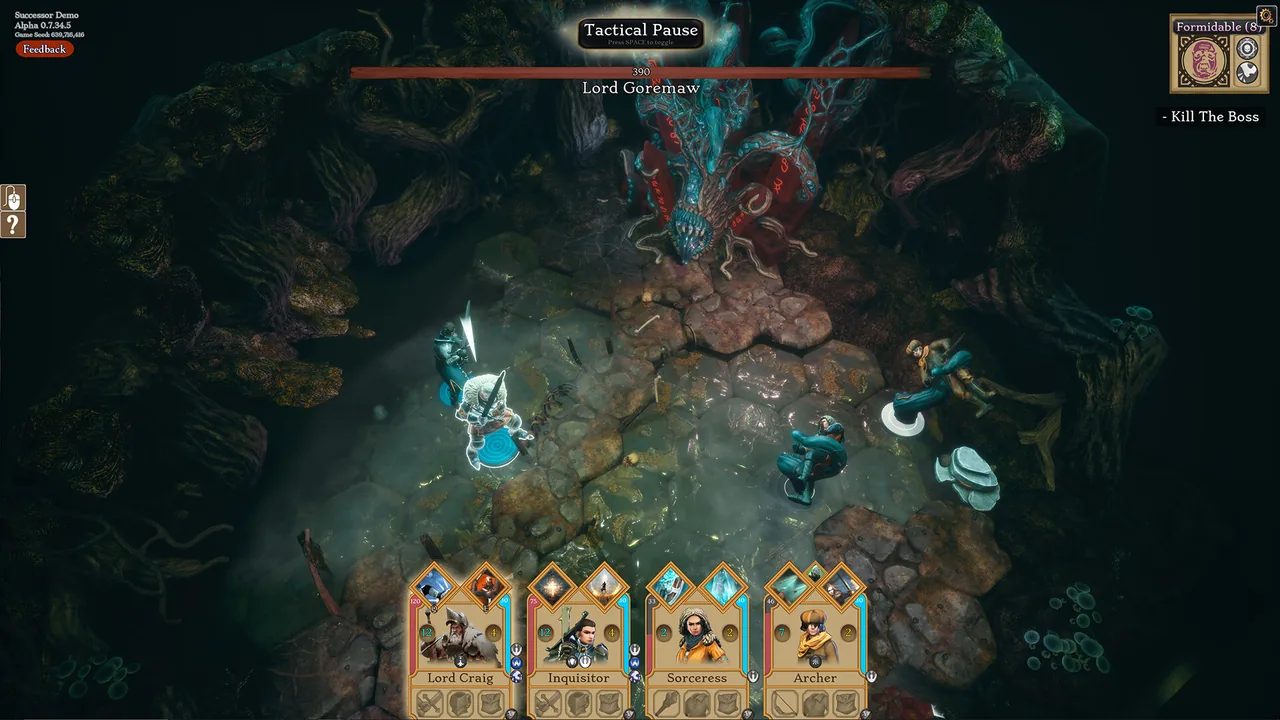
Successor puts a chosen Lord and their small band of heroes onto a miniature, diorama-style battlefield, fighting short, real-time-with-pause tactical encounters across procedurally explored kingdoms. Developed and published by Playwood Project, it followed a substantial Early Access run — roughly five months, from 29 May 2025 through a full 1.0 release on 24 October 2025 — before settling into its current price of NZ$35.99. It holds a Mixed rating today: 64.9% positive across 37 English-language Steam reviews, 69% across its wider 55-review all-language corpus. This review reads all 13 of the game's English negative reviews in full, alongside its highest-voted positive reviews, and finds a game whose combat design earns genuine credit undercut by control problems this review's sample raises specifically and repeatedly.
Combat that improves on a genre touchstone
The clearest point of agreement across this review's sample concerns the fighting itself. Several reviewers who also played Playwood Project's earlier, visually similar Wartile make the comparison directly and favourably: "Really great combat system, much improved compared to WARTILE," reads one, crediting decisions around tactics and positioning as thoughtful without becoming needlessly complex — "it's not super advanced," in that reviewer's words, which they mean as praise for accessibility rather than a knock on depth. Another reviewer, deep enough into a run to speak with real authority, credits big maps, many scenarios, and a wide range of companions and gear across different playstyles with keeping the loop interesting across multiple sessions. The miniature diorama presentation itself draws consistent, warm praise across both positive and negative reviews — nobody in this review's sample disputes that the game looks and feels charming, whatever else they say about it.
Bugs specific enough to take seriously
Set against that praise, this review's negative sample raises a genuinely specific, repeated technical complaint rather than vague dissatisfaction: mouse and unit-selection failing intermittently. "Left click responds for selections and menu options but works when it wants to for character movement," reads one representative review, and another describes selection simply stopping altogether, requiring a full restart of the game to recover. That's a serious usability problem for a tactics game built entirely around precise unit placement, and it recurs across enough independent reviews to treat as a real, reproducible issue rather than an isolated hardware quirk. Crashes compound the picture — one reviewer reports a brand-new PC crashing within five minutes of first launching the game, and another, writing a full week into November 2025, more than a month after the 1.0 release, still describes the game as crashing "all the time." Whatever the developer's other priorities, this review's sample suggests these specific complaints hadn't been resolved as of when they were written.
Once you've learned the trick
A second, quieter thread of criticism concerns depth rather than stability. A handful of reviewers describe the tactical layer as shallower than its presentation suggests once a dominant strategy becomes clear — luring enemies onto favourable terrain, typically high ground, and letting positioning do most of the work rather than requiring varied tactics fight to fight. "The strategy is the same every combat," reads one review, recommending the game only to players specifically looking for something "simple, casual, strategy-lite." A related complaint concerns progression: one detailed review, at nine hours in, describes character advancement resetting at the end of "frustratingly short" campaign episodes, and compares the overall experience unfavourably to more developed genre peers like Wildermyth and Wartales, suggesting those games as better purchases for a similar itch.
Genuine ongoing support, not abandonment
It's worth stating plainly what distinguishes Successor from some of its rougher-edged genre peers: this isn't a game the developer walked away from. Steam's news feed shows a substantial, active Early Access period with regular dev logs and content drops — new heroes, quests and campaign content added steadily from February through the October 1.0 launch — followed by three further hotfixes in the weeks after release. That's a genuine, sustained development effort, even though the specific selection and crash bugs raised in this review's negative sample appear to have persisted through at least some of that post-launch patching. Readers weighing whether to buy now versus waiting should take some comfort from that pattern: a developer still actively patching a year-plus project is a reasonable bet for continued improvement, even if this review can't say with confidence the reported bugs are resolved as of today.
Final Verdict
Successor earns real, specific credit for combat design that improves on its own spiritual predecessor by its most experienced reviewers' own account, wrapped in a genuinely charming miniature-diorama presentation. What holds it back from a stronger recommendation is equally specific: mouse and selection bugs serious enough to require restarts, crashes reported as late as a month after its full release, and a tactical layer some reviewers found shallower than expected once its dominant strategy became clear. None of that describes an abandoned or careless project — the developer's update history through Early Access and into 1.0 shows real, sustained effort — but it does mean this is a game to watch for further stability patches rather than one to recommend without reservation today.
Pros and cons
Pros
- Combat draws specific, direct praise as an improvement over Wartile, the developer's earlier, similarly-styled game, with reviewers crediting decision-making around positioning and tactics as "easy to learn and thoughtful" without becoming needlessly complex
- The miniature diorama presentation and tabletop framing earn consistent praise for charm and visual appeal across both positive and negative reviews
- A genuinely long, active Early Access period — roughly five months, from late May through October 2025 — with regular dev logs, hotfixes and content updates, continuing with further hotfixes after the 1.0 launch
- Structural variety is real: reviewers cite big maps, many scenarios and a range of companions and gear across different playstyles as reasons the core loop holds up over multiple runs
Cons
- Mouse and unit-selection bugs are this review's most-repeated specific complaint — reviewers describe left-click intermittently failing to register for character movement, in some cases requiring a full game restart to recover
- Crashes were reported both at launch and as late as a month into the 1.0 release, including one reviewer whose newly built PC crashed within the first five minutes of play
- Several reviewers describe the tactical depth as shallower than it first appears once a dominant strategy — luring enemies onto favourable terrain, then letting positioning do the work — becomes clear, reducing repeat encounters to a familiar routine
- A cluster of complaints raise unbalanced difficulty and thin character progression, including one detailed review describing character advancement as resetting at the end of "frustratingly short" campaign episodes
Screenshots
-
SuccessorImage: Playwood Project via Steam -
SuccessorImage: Playwood Project via Steam -
SuccessorImage: Playwood Project via Steam -
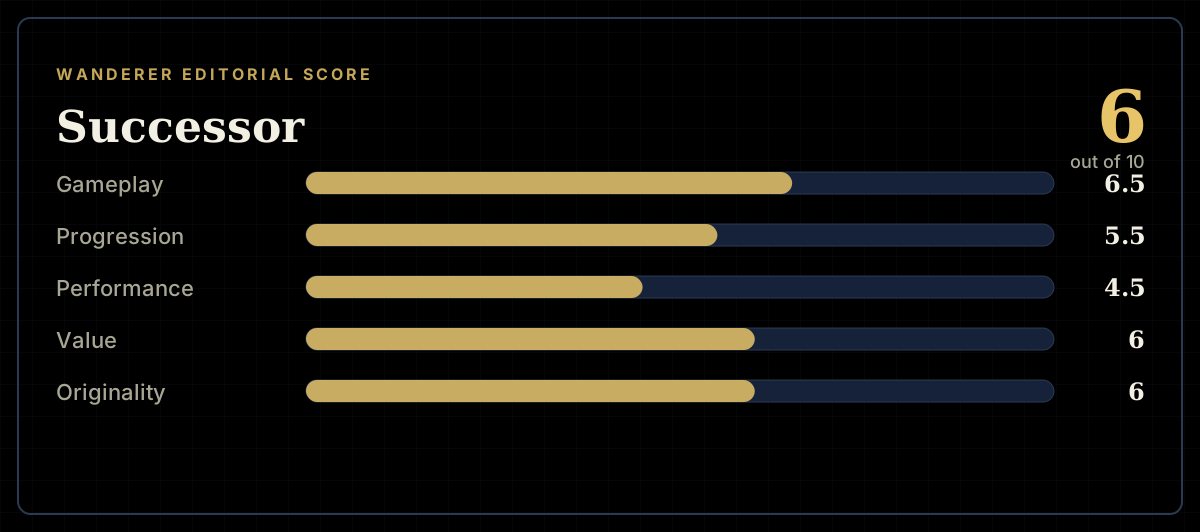
How the review scores each part of the gameWanderer Editorial -
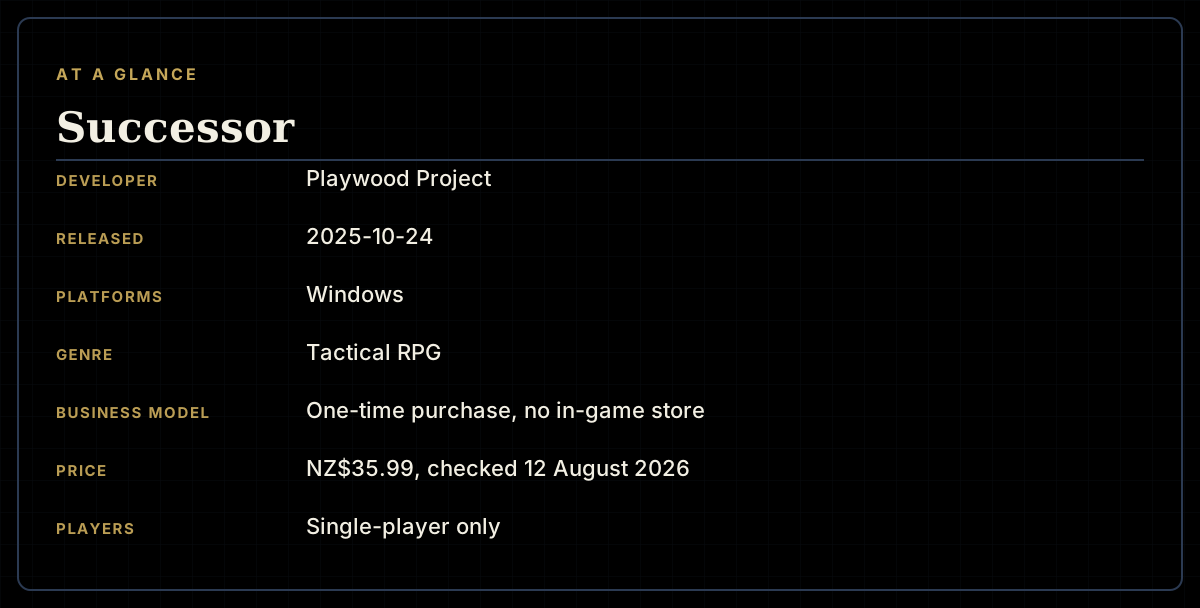
The essentials at a glanceWanderer Editorial -
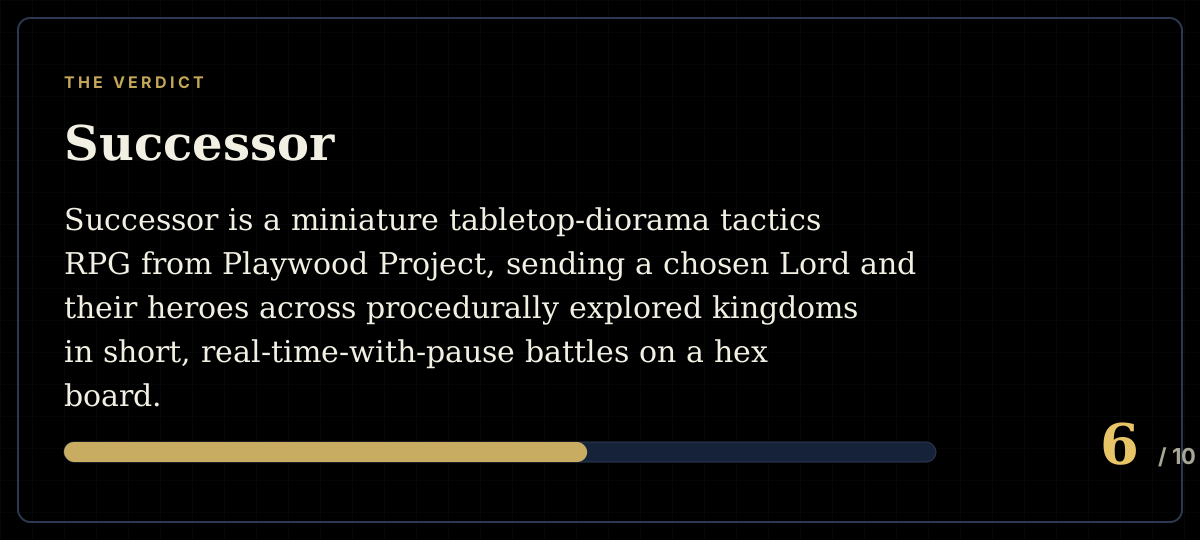
The short versionWanderer Editorial