
Game review
STRATA Review
6 / 10
- Developer
- Gamesforgames
- Publisher
- Gamesforgames
- Released
- 18 September 2026
- Platforms
- ["Windows"]
- Genre
- Action
A Game With No Art Files On Disk
STRATA arrives with one of the stranger elevator pitches on Steam this year: it's an arcade mining roguelike, built entirely by a solo developer credited only as Gamesforgames, that ships with zero art assets of any kind. No sprites, no fonts, no audio files — the entire font, sky, planets, nebulae, drilling capsule, and every sound effect are generated procedurally the moment the game launches, which is why the actual download weighs in at a few megabytes despite everything you see and hear being unique to that session. The premise underneath that technical flex is simple to state and immediately tense in practice: you pilot a drilling capsule down through procedurally generated rock strata — dirt, clay, stone, shale, granite, basalt, obsidian, ironstone, each layer harder than the last — while a surface dome you've left undefended gets attacked by waves that come whether you're there to stop them or not. Depth is the score, and depth is also the bill, as the game's own pitch puts it, and that tension is the entire design in miniature.
One Heat Bar, Two Jobs
The single mechanical idea holding STRATA together is that drilling and shooting draw from the exact same heat resource. There's no separate mana pool for offense and a separate fuel gauge for digging — cutting ten more meters of rock and surviving the next wave against the dome are quite literally the same number, split two ways, and every decision to push one layer deeper is a decision about what the surface loses in the meantime. That's a clean, legible core loop for a genre that often drowns players in overlapping systems, and it gives even a two-or-three-minute run real stakes without needing a wall of tutorial text to explain why. Layered onto that is a genuinely thoughtful sense of persistence: the world isn't a backdrop with a tunnel drawn through it, but a literal record of your choices — the shaft dug on a previous run stays dug, cave-ins can bury your own way home, gas pockets telegraph before blowing a room open, water pools and lava flows downhill through tunnels the player themselves opened. Ore glows through stone as the headlamp narrows with depth, meaning players learn to navigate by what shines through the rock rather than by sight-lines alone — a small detail that ties the game's procedural-lighting gimmick directly into how it's meant to be played, rather than leaving it as a cosmetic flourish.
A Long Meta-Game for a Very Short Run
Outside of individual descents, STRATA leans hard into permanent progression: credits earned from runs buy a permanent rig covering hull, fuel, cooling, cargo, and five distinct drill heads that each open access to a new class of rock, with the full upgrade tree reportedly running to fifty thousand credits before the bottom of the world is even reachable. On top of that baseline there are run contracts that only pay out if you make it back to the surface, dome specializations that reshape what each run is even for, plus relics, fossils, and a depth log tracking your best descents — and, per the developer's own description, a core waiting at the bottom of the map that marks the start of a second half of the game rather than an ending. It's an ambitious structure for a genre entry built by one person, and on paper it gives short, tense two-to-three-minute runs a reason to accumulate into something larger. Ten Steam achievements track milestones from a first delivered ore sample to a third core sample, and the game supports saving and resuming mid-descent, which matters given how punishing a single run's heat-management tension can get.
Small Reviews, Big Price Tag
STRATA's review base is barely a day old and correspondingly tiny — three total reviews, all positive, all English, all short and consistent with each other. One reviewer calls it "as addictive as any idle game," another describes the loop plainly as controlling a drilling machine to extract ore and upgrade components to go deeper, and a third praises the heat-sharing trade-off directly, calling the choice between ten more meters and surviving the next wave "a constant, stressful trade-off." None of the three reviewers logged more than 90 minutes of playtime, which is exactly what you'd expect three days after launch, and it's far too small a sample to draw firm conclusions from — but the consistency across all three, each independently zeroing in on the same heat-sharing mechanic as the highlight, is a genuinely good sign for the core design. What's harder to reconcile against that tiny, positive-but-shallow sample is the price: STRATA launches at $49.99, a full-priced ask for a solo developer's debut-scale arcade roguelike with no prior news posts, no demo history, no marketing runway, and a review base that hasn't yet had time to stress-test whether fifty thousand credits' worth of progression actually earns its keep across dozens of hours, or whether the loop's stark simplicity wears thin well before that. A "no assets, everything generated" pitch is a fascinating technical achievement, but it's also an unusual thing to charge AAA-adjacent pricing for sight unseen, and buyers should weigh that gap carefully rather than assume that a small download size and a striking premise guarantee dozens of hours of content behind it.
Verdict
STRATA is a genuinely inventive piece of solo-developer engineering — a fully procedurally generated arcade mining roguelike whose central heat-sharing mechanic gives every run real, legible tension between greed and survival, and whose persistent, scarred world is a smarter piece of systems design than its brief runtime per session might suggest. The three reviews on record so far are unanimous and specific about what works, which is a promising sign for a launch this fresh. What keeps this from an easy recommendation is the mismatch between its untested, single-day review history and its $49.99 asking price — a bet that pays off if the fifty-thousand-credit meta-game holds up over many hours, and one that looks considerably shakier if it doesn't. Curious players with patience for a short, stressful loop and genuine interest in its from-scratch generative approach should watch the review count climb before deciding whether this is a launch-day buy or a wait-for-more-data one.
Screenshots
-
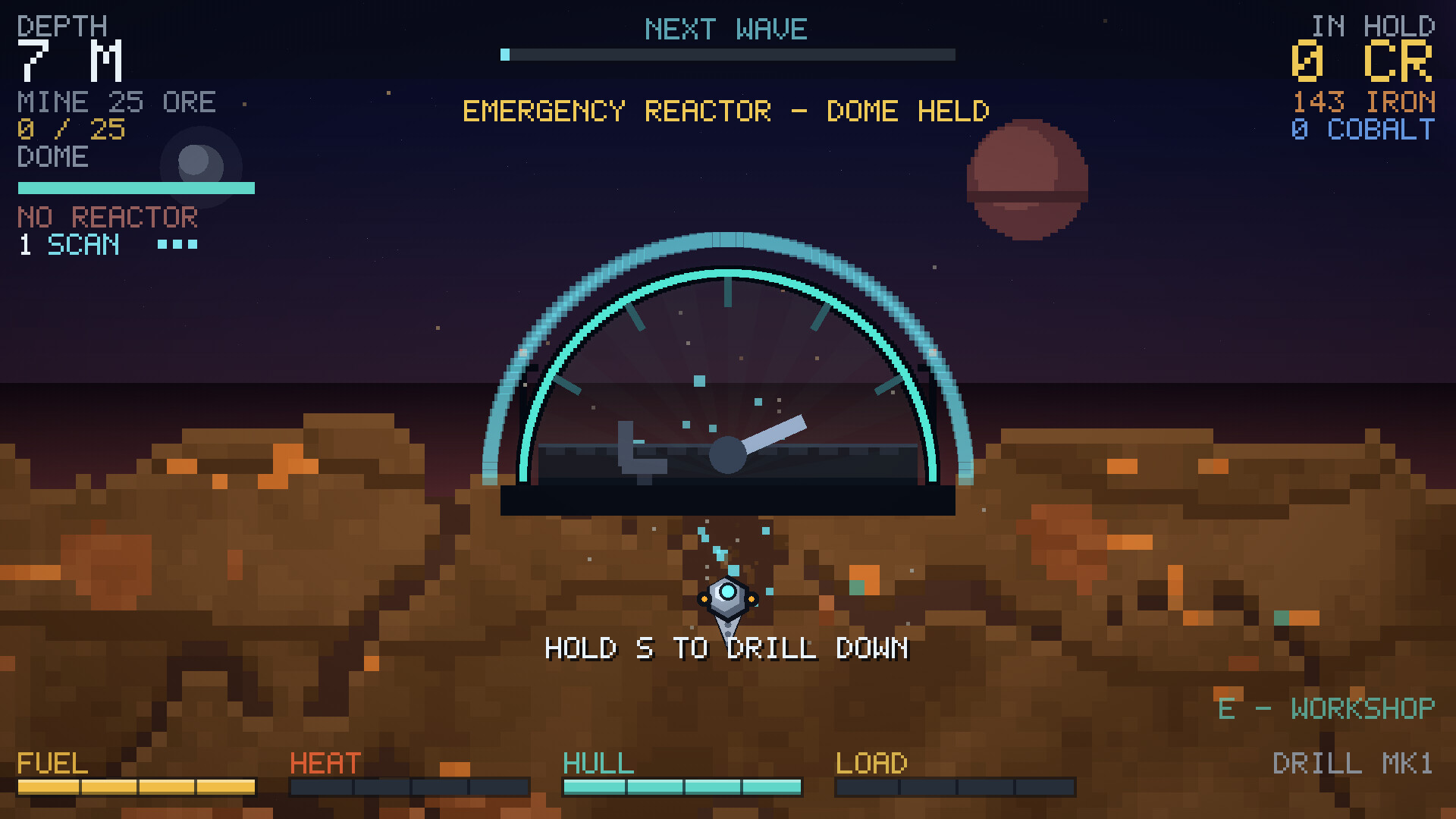
Every reading on screen — depth, ore quota, dome health, fuel, heat, hull — comes from the same generated interface, not a hand-drawn HUD.Image: Gamesforgames via Steam -
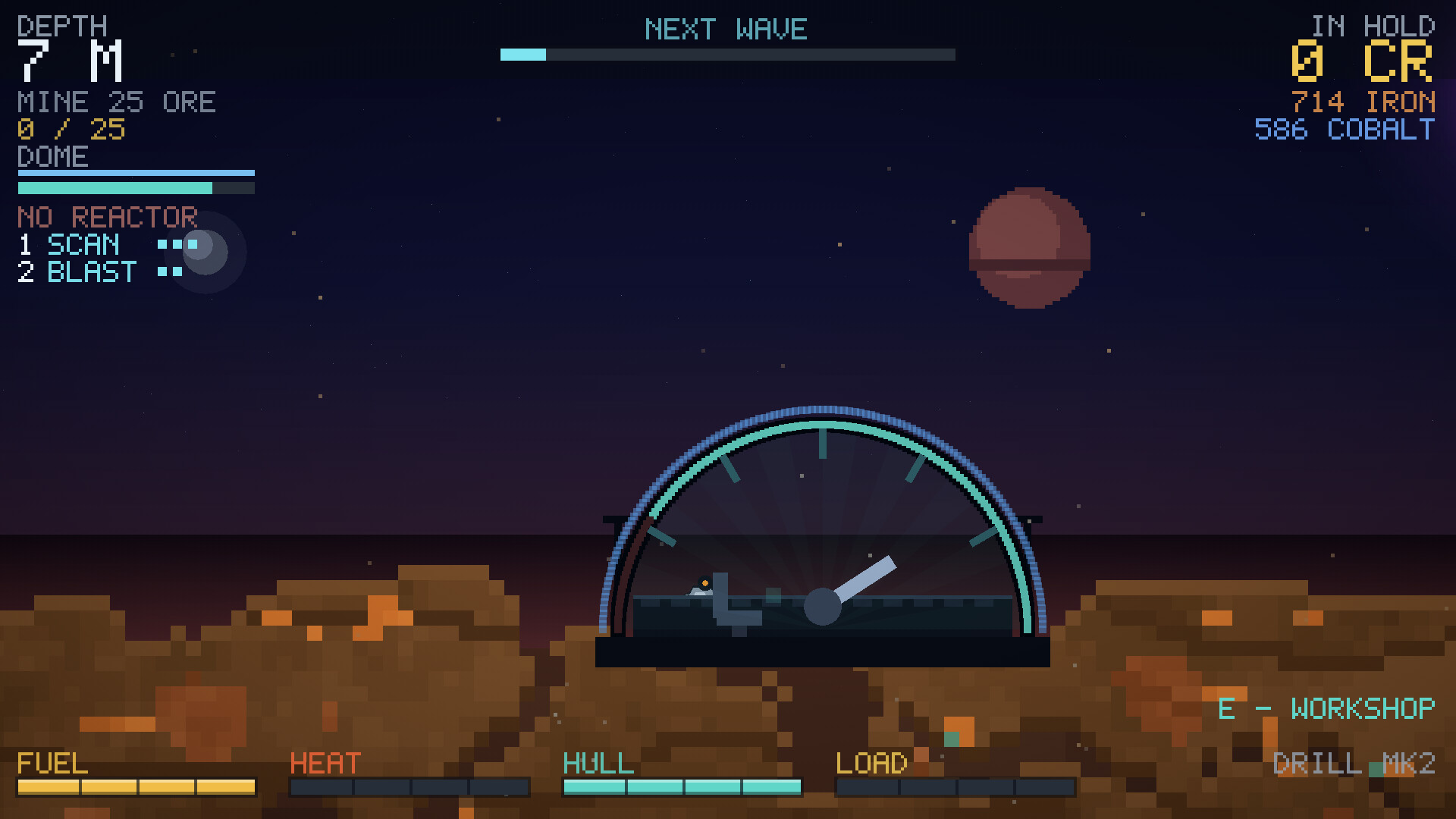
Credits and ore banked between runs feed the permanent upgrade tree — hull, fuel, cooling, cargo, and drill heads.Image: Gamesforgames via Steam -
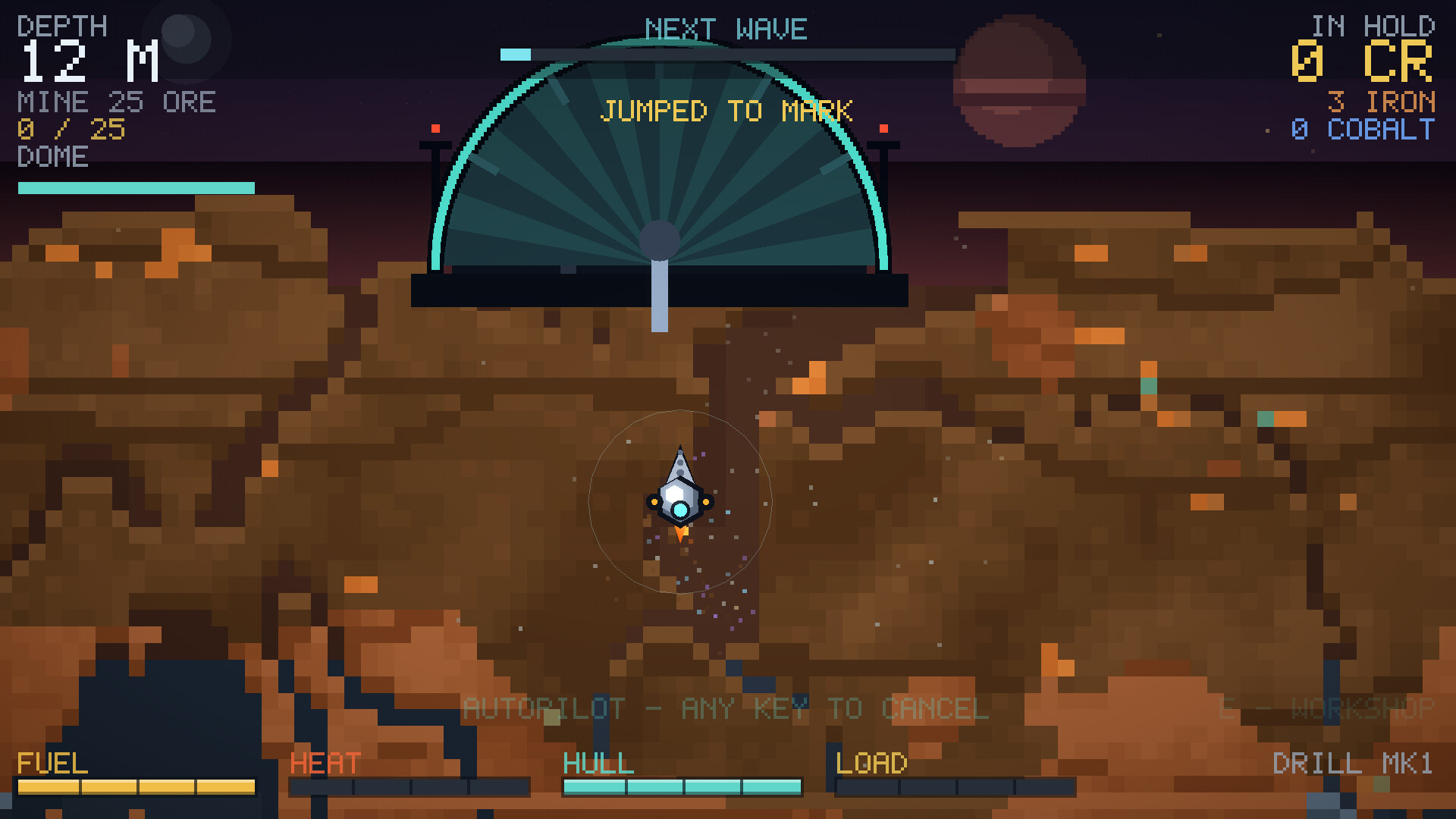
Every cell of rock you cut stays cut — the shaft dug on an earlier run is still there to navigate on the next one.Image: Gamesforgames via Steam