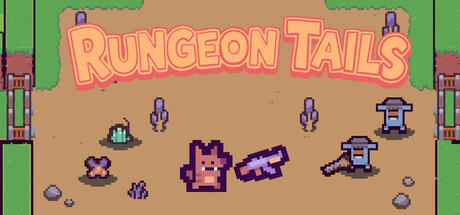
Game review
Rungeon Tails Review
5.6 / 10
- Developer
- Yazan ili pika
- Publisher
- QuanticXero
- Released
- 11 September 2026
- Platforms
- ["Windows"]
- Genre
- Action
A Bunny, a Cat, a Dog, and a Mouse Shoot Their Way Through Five Worlds
Rungeon Tails is a top-down roguelike shooter about a small critter fighting through randomly generated pixel dungeons. Pick one of four playable heroes — bunny, cat, dog, or mouse, each carrying different base stats — arm them with one of nine guns, and clear a chain of procedurally assembled rooms and corridors across five themed dungeon worlds. Enemies guard each chamber, treasure chests scatter coins and upgrades along the way, and hidden shops let you spend your haul on potions and power boosts before pressing on toward the escape portal at the end of each floor.
The systems underneath are deliberately simple: rather than magic points, your "mana" bar is functionally an ammo meter that refills as you explore, upgradeable so you're rarely forced to melee an enemy out of desperation. There's no persistent meta-progression to speak of beyond what you carry into a given run and the skill you build up between attempts — Rungeon Tails is closer in spirit to an arcade high-score chaser than to a modern roguelite with a deep unlock tree, and it wears that arcade lineage openly, down to a reviewer-noted absence of any save button mid-run.
A Tiny, Unanimously Positive Launch for a Solo Developer's Steam Debut
Rungeon Tails launched September 11, 2026 from solo developer Yazan ili pika, published through QuanticXero, and drew a small but completely one-sided reception: nine English-language reviews, all positive, several explicitly disclosing that the reviewer received a free code from the developer to stream or cover the game — a common and transparent practice for a tiny indie launch, not a hidden one, since every such reviewer says so up front. One reviewer confirms the game began life as a mobile title before being converted to Steam, which lines up with the game's straightforward touch-friendly control scheme and short, bite-sized run structure. Comparisons volunteered by reviewers range from "Binding of Isaac meets cozy" to a "mini-game from Stardew Valley," both gesturing at the same idea: familiar roguelike shooter mechanics wrapped in an intentionally soft, cute pixel-art package rather than anything horror-adjacent or punishing. That framing matters for how the small review pool reads: nobody in it is grading Rungeon Tails against genre heavyweights, and several are explicit that they don't normally play top-down shooters at all, yet still came away recommending it — a signal that the game's approachability is landing with exactly the casual audience it seems built for, even if it means the sample skews toward players predisposed to be charmed rather than a broad cross-section of the roguelike crowd.
The Core Loop Is Genuinely Comfy, and the Price Matches the Scope
What reviewers consistently praise is exactly what the game sets out to be: a short, replayable, low-stakes dungeon crawler that's forgiving enough for players who normally bounce off roguelikes. Multiple reviews single out the wall-bouncing gun as a standout pick once upgraded, and the general verdict is that the run-based structure — die, keep your account-level familiarity if not your items, try again with a freshly generated layout — hits a comfortable rhythm rather than a frustrating one. At $2.99, several reviewers frame the price as remarkably fair for the amount of variety on offer between four heroes, nine weapons, and five distinct dungeon worlds, explicitly encouraging support for a small solo developer's first Steam release. The pixel art draws consistent "cute" and "nostalgic" praise, landing the tone somewhere between a classic arcade cabinet and a modern cozy-game palette. The shop layer adds just enough of a decision point to keep runs from feeling purely reflexive — spending coins on a potion or a power-up mid-dungeon instead of banking them for the next attempt is a small but real tradeoff reviewers mention weighing on the fly, and it's the closest thing the game has to a strategic layer beyond aim and movement.
Loud, Slider-less Audio, a Copyright Strike, and Some Rough Collision Edges
The most detailed review in the pool — written specifically as a heads-up to prospective buyers — flags a cluster of small but real rough edges. The soundtrack has no volume sliders, only on/off toggles, and is loud enough by default that the same reviewer recommends turning your headphones down before launching the game at all. A separate reviewer reports the game was hit with a copyright claim over one of its music tracks, a production misstep for a commercial release rather than a design complaint, but one that affected at least one player's experience directly. The same detailed review also notes that Rungeon Tails' hand-built room layouts can catch the player on collision geometry while strafing along walls — the game's own most natural movement pattern — and that touching an enemy directly deals dramatically more damage than taking one of their bullets, an imbalance worth knowing before you instinctively try to tank a hit. None of this reads as severe to the reviewers reporting it, but taken together it paints a game that shipped with the kind of small, unpolished seams typical of a compact solo project rather than one that's been extensively play-tested for edge cases.
Verdict
Rungeon Tails is a small, unpretentious roguelike shooter that knows exactly what it's trying to be — a cute, comfy, arcade-flavored dungeon crawl you can pick up for a few dollars and enjoy in short bursts — and its unanimous, detailed praise suggests it delivers on that modest promise. The four-hero, nine-weapon, five-world spread gives it more variety than its price tag implies, and the mobile-to-Steam conversion shows in a control scheme built for approachability over depth. But it's rough in small, telling ways: no audio sliders, a music-licensing misstep, collision snags along its own preferred movement pattern, and damage balance that punishes the wrong instinct. None of that sinks a $2.99 arcade throwback, but it keeps this comfortably in "charming small-team debut" territory rather than anywhere near essential.
Screenshots
-
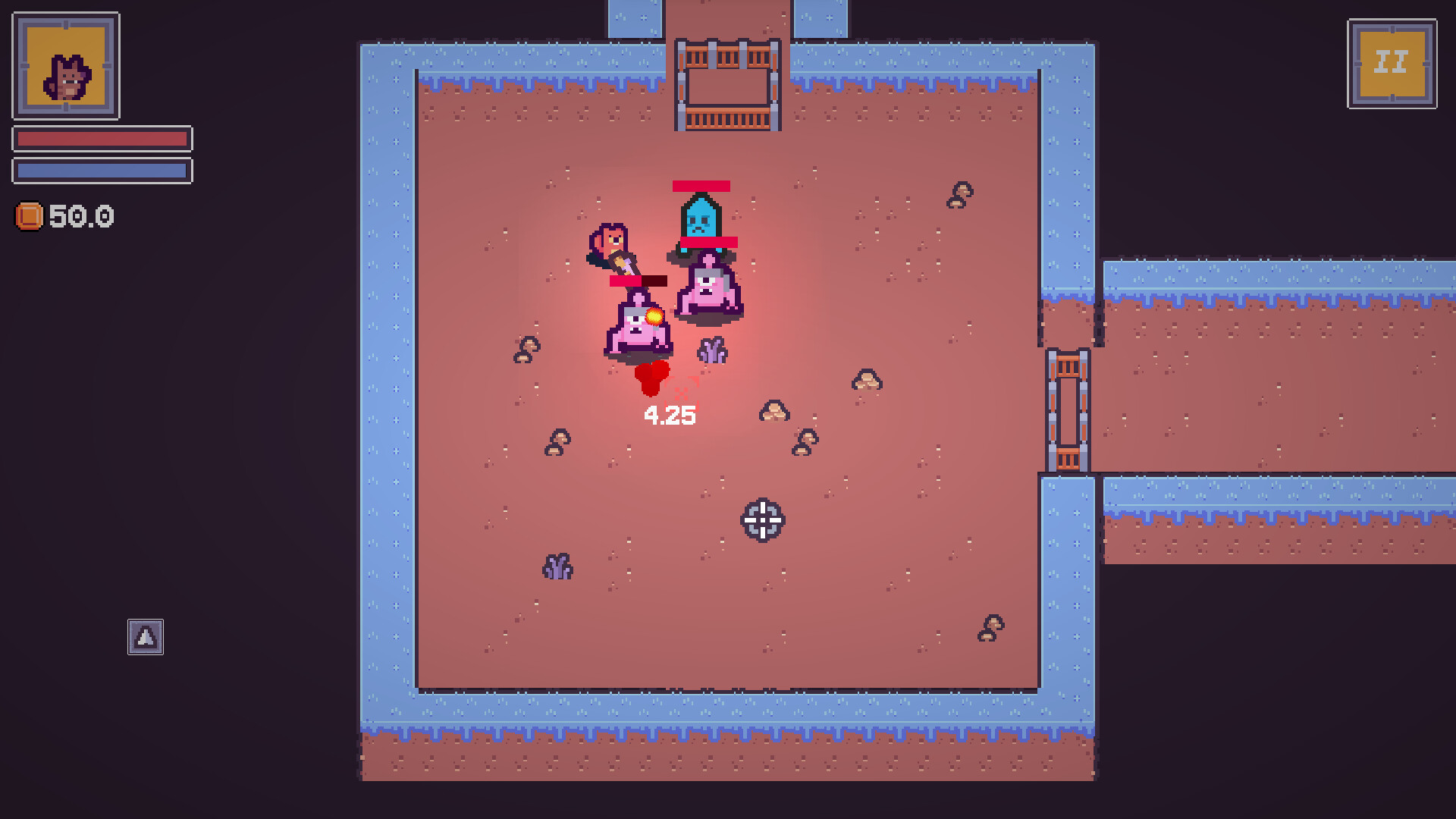
A typical room fight: enemies with visible health bars, a running coin total, and the health/mana readout doubling as the game's only real resource management.Image: Yazan ili pika via Steam -
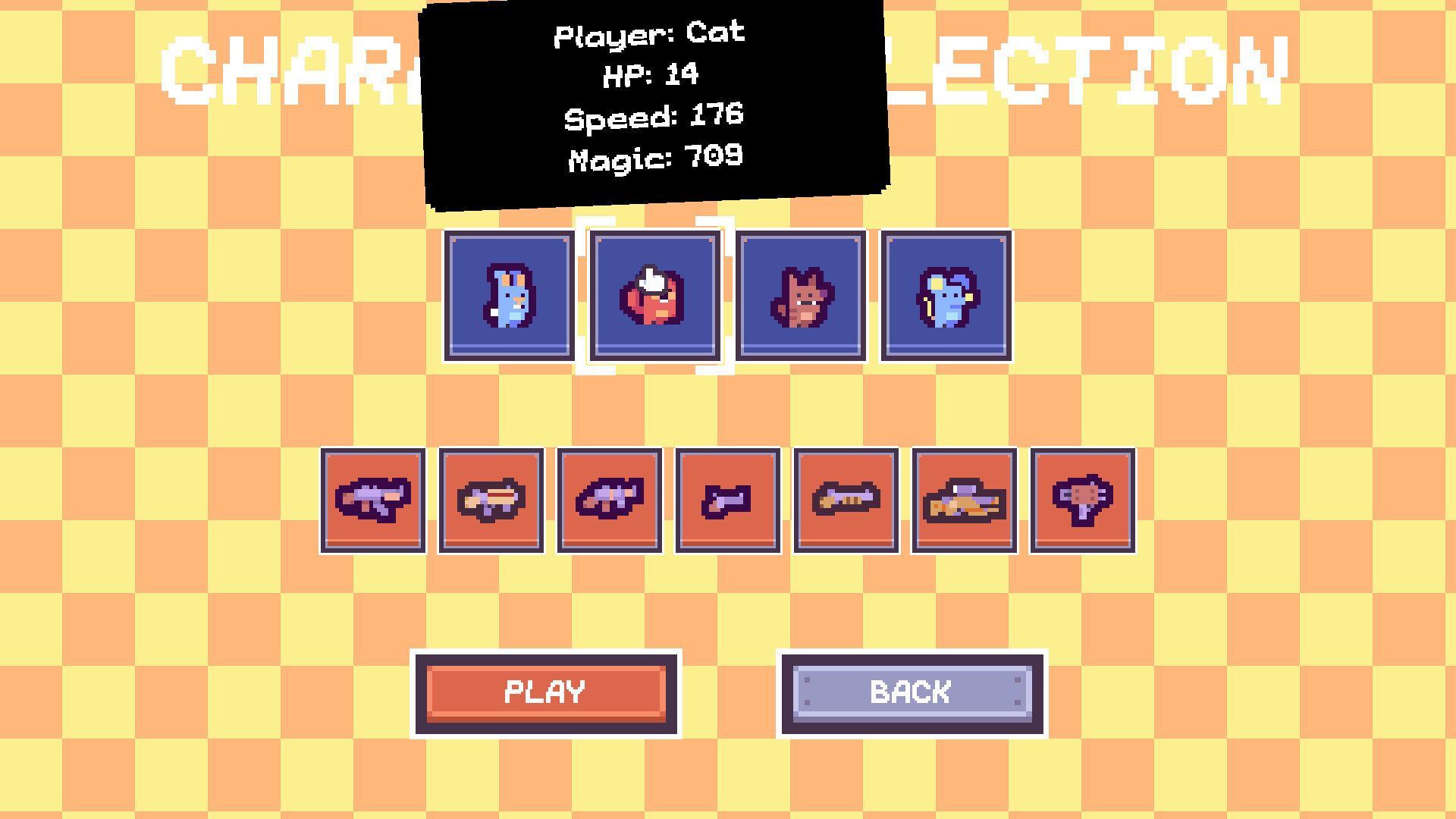
Before each run: pick from four heroes with different HP/Speed/Magic stats and one of seven-plus weapons, the game's main source of build variety.Image: Yazan ili pika via Steam -
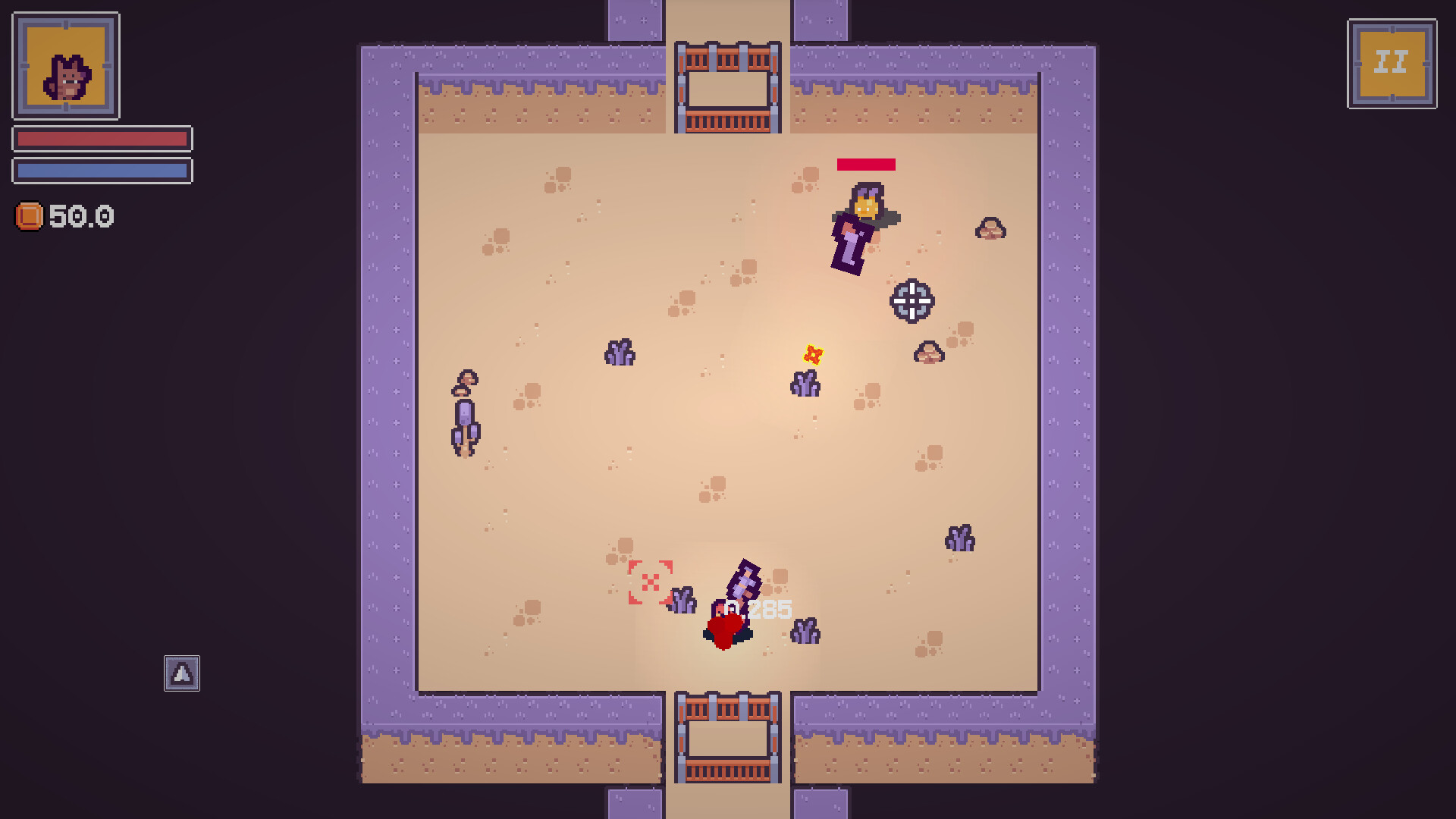
Each of the five worlds reskins the same room-and-corridor structure in a new palette and enemy set, seen here in the game's purple-tinted second area.Image: Yazan ili pika via Steam