Game review
S.T.O.R.M.
4 / 10
- Developer
- Visual Studio
- Publisher
- Piko Interactive, Bleem.net
- Released
- 6 August 2026
- Platforms
- Windows
- Genre
- Action / Shoot 'em Up
- Monetisation
- One-time purchase, no in-app purchases, no premium currency
- Players
- None. Single-player only.
The short version
S.T.O.R.M. is not a new game dressed up as one — it's Virtual Studio's 1996 DOS shoot 'em up, credited on Steam under the near-identical name "Visual Studio," reissued by Piko Interactive and its Bleem.net storefront exactly as it shipped three decades ago. The pitch is preservation, not reinvention: pilot the submersible S.T.O.R.M. through a side-scrolling shooter that mixes a claw-arm item grabber, a deployable scuba diver and prerendered rail-shooter interludes, all wrapped in a mystery about a fictional energy crystal called praxillium.
That mixture was unusual for 1996 and still reads as unusual now, which is the one thing genuinely working in the game's favour. Everything else is a straight import of a title contemporary critics called mediocre — drab, repetitive blue corridors, enemies with almost no threat, and a weapon-switch system players still trip over in modern playthrough footage — arriving with no achievements, no controller support and nothing in the store page or patch history to suggest any of that has been addressed.
Biggest strengths
- The claw arm, deployable scuba diver and prerendered rail-shooter interludes are a genuinely unusual combination for a 90s side-scrolling shooter, and still aren't a combination many games have repeated since
- Runs natively on modern Windows 7/10/11 without the buyer needing to configure DOSBox or hunt down an abandonware copy themselves
- A clean one-time purchase with no in-app purchases, premium currency or live-service trappings of any kind
Biggest weaknesses
- Contemporary reviews of the original called it mediocre — flat, repeated blue-corridor level design, enemies with almost no bite, and a weapon-switching scheme that documented playthroughs still find confusing thirty years later
- No achievements are listed on the Steam page at all, and the store's category list shows no controller support, so there is no evidence of any modernisation beyond making the executable run on current Windows
- Launches with zero Steam user reviews, zero news posts and no patch history, so there is nothing beyond the original 1996 critical record to weigh the game against
Who it's for: Retro-shooter collectors and Piko Interactive completionists curious about an obscure mid-90s DOS oddity, and players specifically interested in the claw-arm/diver/rail-shooter mixture as a piece of shoot 'em up history. A poor fit for anyone wanting a good shooter on its own terms — contemporary critics didn't rate the underlying game highly, and nothing about this release changes that assessment.
Our recommendation: Worth a look only if the novelty of the mechanic mix or the Piko/Bleem.net preservation angle is the actual draw. As a shooter judged on its own terms, the asking price buys a game critics called a deserved commercial flop in 1996, now running on modern Windows with none of the quality-of-life additions — achievements, controller support, documented fixes — that would normally justify a legacy re-release at this price.
4 / 10
S.T.O.R.M. is not a new game wearing a 2026 release date. It's Virtual Studio's 1996 DOS shoot 'em up — Steam's own credits page lists the developer as "Visual Studio," a name close enough to the historical record that it reads like a transcription slip rather than a different studio — reissued unchanged by Piko Interactive and its retro storefront Bleem.net, thirty years after the original shipped for MS-DOS and Windows 3.x in France and Germany. The premise hasn't aged a day, for better and worse: it's still 1996's idea of 2055, when a newly discovered element called praxillium promises to solve the world's energy crisis until the mining facility extracting it blows up. You're Andy Steale, piloting the submersible S.T.O.R.M. — Submersible Tactical Operational Reconnaissance Module — down into the wreckage to find out why.
The claw, the diver, and the rail sections
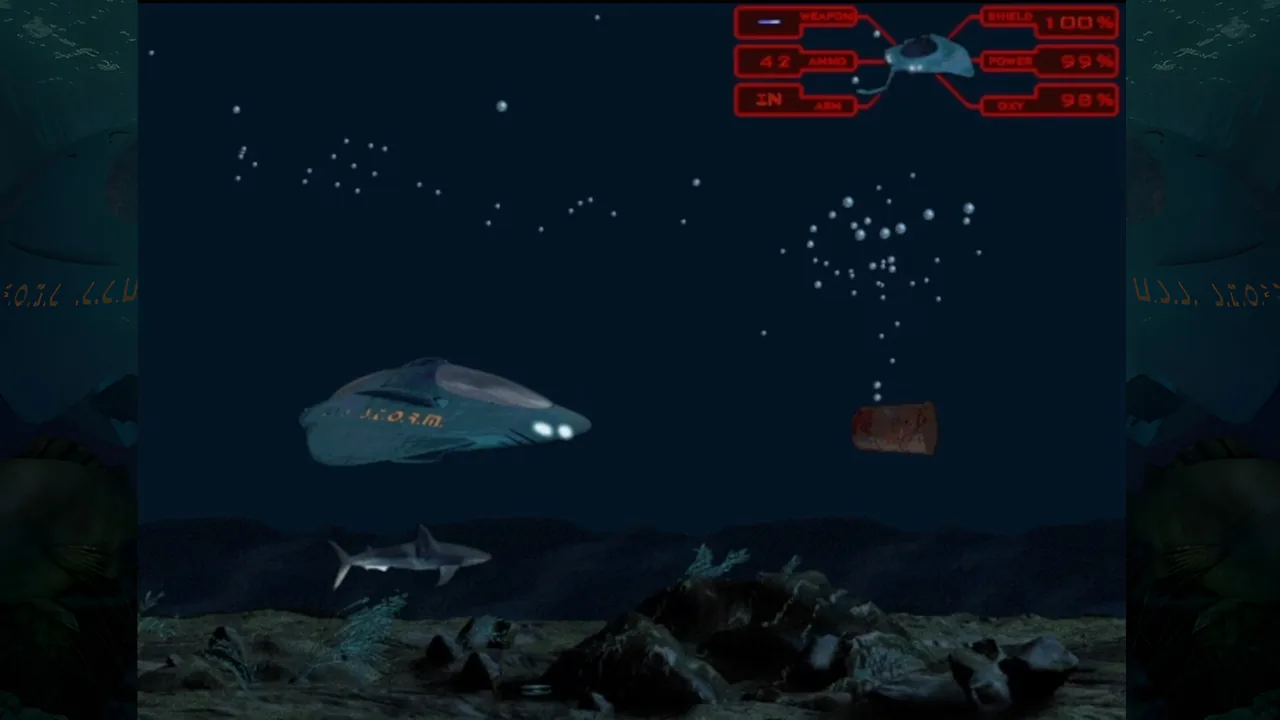
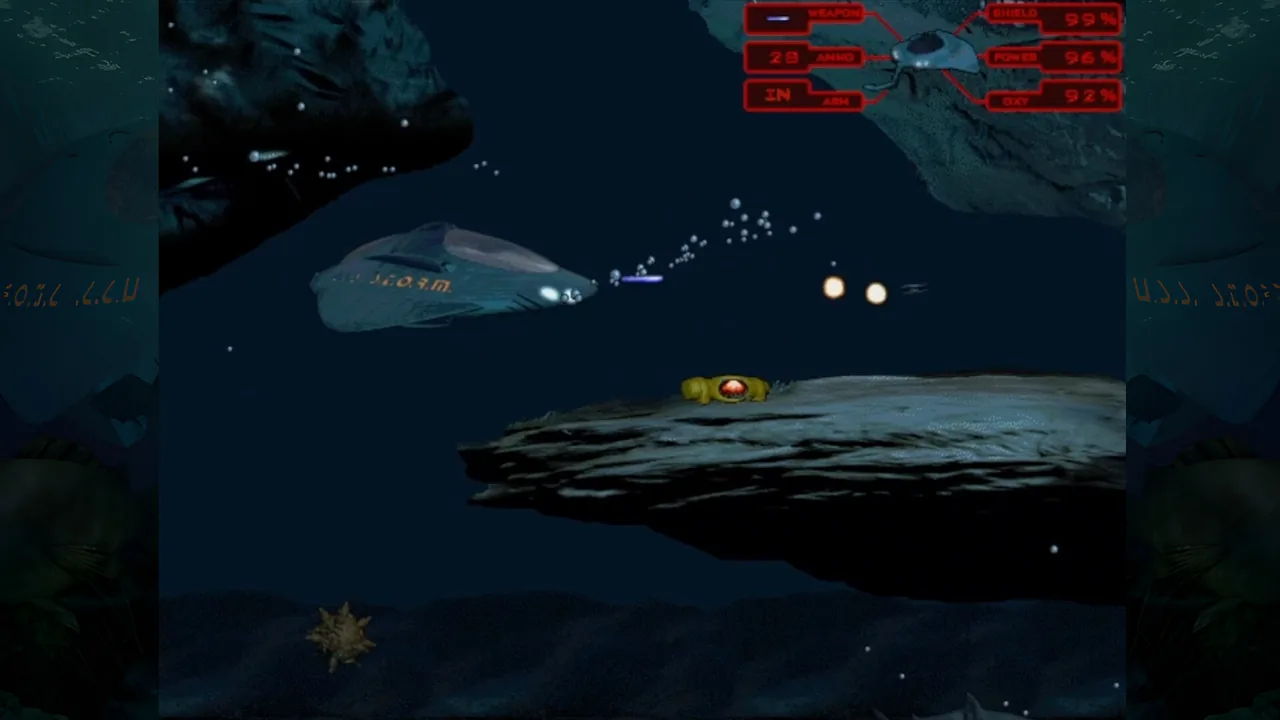
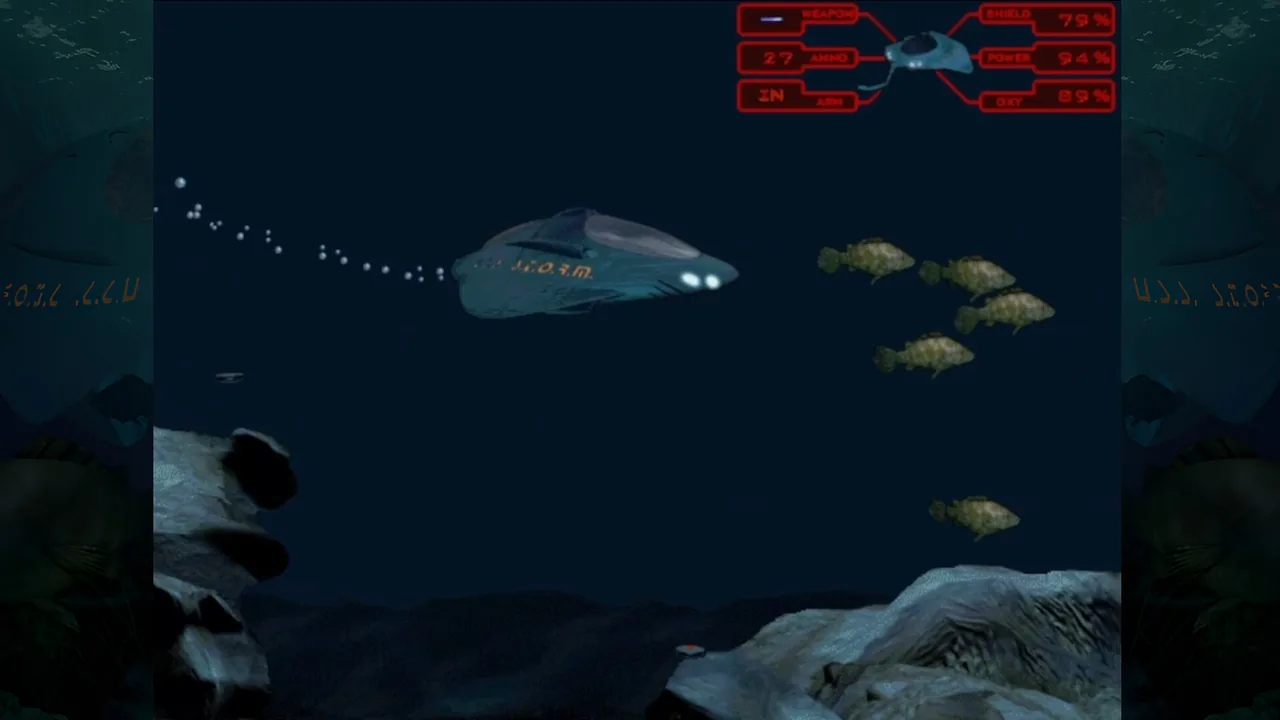
What made the original worth noting in 1996, and still makes it a mild curiosity now, is the way it stacks several different shooter ideas into one submarine. The core is a side-view horizontal shoot 'em up, but S.T.O.R.M. also carries a robotic claw arm for grabbing pods and devices out of the environment, and can deploy a scuba diver to squeeze through passages too narrow for the sub itself. Layered on top of that are "interactive shooting" interludes — rail-shooter sequences set against prerendered cinematic backgrounds, a presentation trick that was genuinely showy for a mid-90s PC release. It's an unusual amount of mechanical variety for the genre and the era, and nothing about that mixture has become common since; most shoot 'em ups from any decade pick one idea and commit to it.
The trouble, documented consistently across period reviews and more recent retrospective playthroughs, is execution. The claw and the diver are neat ideas that don't get much depth beyond "use this specific tool in this specific spot," the diver in particular is described as dying almost immediately to any nearby enemy the moment it's sent outside the hull, and the weapon-switching system is confusing enough that a 2011 retrospective playthrough of the original DOS release got stuck unable to switch back to a forward-firing weapon after cycling past it. None of that is a new problem introduced by the re-release — it's the original game, working exactly as it always did.
What critics said the first time, and why it still applies
Piko Interactive specialises in reviving games that would otherwise stay buried in abandonware archives, and S.T.O.R.M. is a legitimate example of the kind of title that fits that mission — genuinely obscure, genuinely hard to track down a working copy of before this release. But the original's critical reception was not kind. Contemporary and retrospective write-ups describe "decent graphics and plenty of weapons" undercut by "mediocrity," level design that repeats the same drab blue palette across the whole game, and enemies with almost no threat behind them. One retrospective called it a "commercial flop that is well deserved," explicitly steering players toward contemporaries like Sub Culture and Subwar 2050 instead. The one accolade attached to the original is a curious footnote rather than a critical vindication: it won the International Festival of Underwater Movie's first prize at Cannes in 1996 — a film-festival award for its prerendered underwater cinematics, not a verdict on the game underneath them.
None of that reception is something this release can inherit blame for creating. But a straight re-release inherits the game exactly as reviewed, and there's nothing in the Steam listing — no changelog, no "remastered" or "enhanced" language in the store description, no mention of rebalancing — to suggest the mediocre parts got addressed on the way to 2026.
Thirty years, and nothing else changed
What's more notable than the game itself is how little the re-release adds around it. The Steam page lists no achievements at all — the global achievement stats endpoint for this app returns an empty set — and the store's category list shows only "Single-player" and "Family Sharing," with no controller support, no Steam Cloud, no trading cards. The minimum spec asks for a Celeron-class processor and 1GB of RAM, which reads less like a modern port and more like the original executable running through a compatibility layer on current Windows. That's a legitimate way to preserve an old game, and there's real value in not making a buyer hunt down installers and configure DOSBox themselves. But it also means none of the usual reasons to prefer a legacy re-release over the free abandonware version — quality-of-life fixes, control remapping, achievement support, a widescreen option — appear to be present here.
The game launches with zero Steam user reviews in any language and no news posts, which is the expected state for anything a day old, but it also means there is nothing current to weigh against the thirty-year-old critical record. On a re-release with no documented changes, that old record is the most relevant evidence available, and it wasn't flattering.
Who this is actually for
The honest audience for S.T.O.R.M. is narrow: collectors working through Piko Interactive's catalogue, Bleem.net's retro-storefront regulars, and shoot 'em up historians curious about the claw-arm-and-diver mixture specifically as a design footnote. For that audience, having a legitimate, working copy on modern Windows without chasing down old installers has real value regardless of how the underlying game plays. For anyone shopping for a good side-scrolling shooter on its own merits, the recommendation is the same one written about it in 1996: there are better games of the same type, several of them mentioned by name in the game's own contemporary reviews.
Final verdict
S.T.O.R.M. is an honest re-release of an unusual but poorly-received 1996 shooter, with an interesting mechanical mixture — claw arm, deployable diver, prerendered rail sections — that never quite earned the reputation its ambition suggested it should. Piko Interactive and Bleem.net deserve credit for the preservation instinct; games this obscure are exactly the kind of thing that otherwise disappears. But a re-release with no achievements, no controller support, and no documented changes beyond running on current Windows offers nothing to reconsider the original verdict by, and it's priced closer to a legacy commercial release than an abandonware curiosity. Four out of ten reflects a genuinely distinctive design idea from three decades ago, undercut then and now by the drab, repetitive execution period critics already identified, arriving today with none of the modern conveniences that would make revisiting it an easier sell.
Price, platform and review-corpus details checked 7 August 2026.
Pros and cons
Pros
- The claw arm, deployable scuba diver and prerendered rail-shooter interludes are a genuinely unusual combination for a 90s side-scrolling shooter, and still aren't a combination many games have repeated since
- Runs natively on modern Windows 7/10/11 without the buyer needing to configure DOSBox or hunt down an abandonware copy themselves
- A clean one-time purchase with no in-app purchases, premium currency or live-service trappings of any kind
- The praxillium energy-crisis setup gives the shooting a specific sci-fi hook rather than a generic "aliens are bad" framing
Cons
- Contemporary reviews of the original called it mediocre — flat, repeated blue-corridor level design, enemies with almost no bite, and a weapon-switching scheme that documented playthroughs still find confusing thirty years later
- No achievements are listed on the Steam page at all, and the store's category list shows no controller support, so there is no evidence of any modernisation beyond making the executable run on current Windows
- Launches with zero Steam user reviews, zero news posts and no patch history, so there is nothing beyond the original 1996 critical record to weigh the game against
- Priced as a legacy re-release rather than an abandonware curiosity, which is a harder ask for a game whose core design was never well regarded to begin with
Screenshots
-
S.T.O.R.M.Image: Piko Interactive via Steam -
S.T.O.R.M.Image: Piko Interactive via Steam -
S.T.O.R.M.Image: Piko Interactive via Steam -
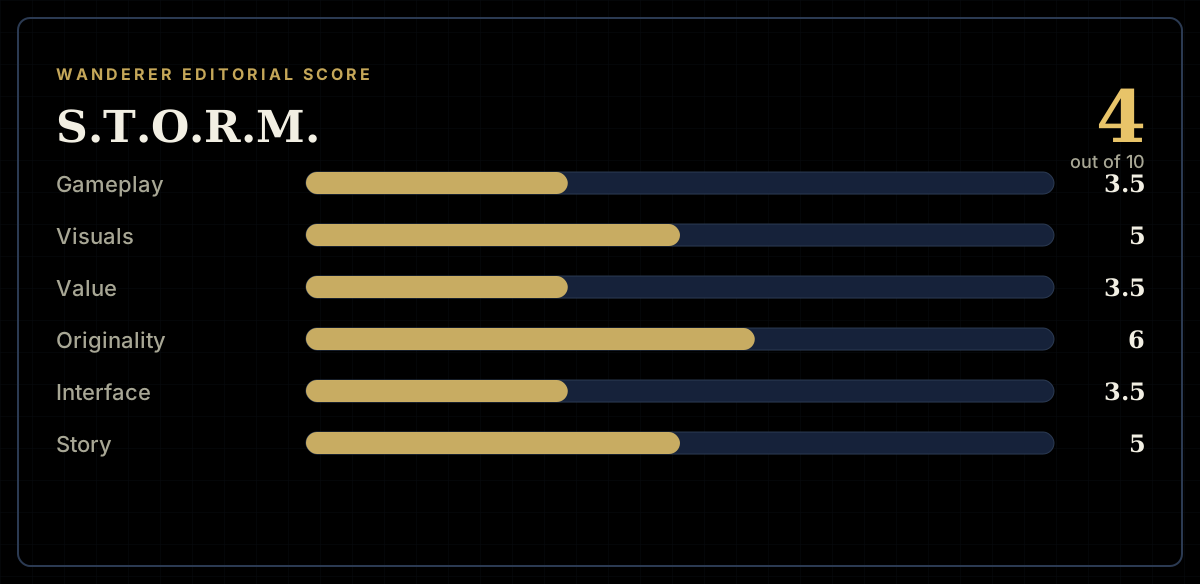
How the review scores each part of the gameWanderer Editorial -
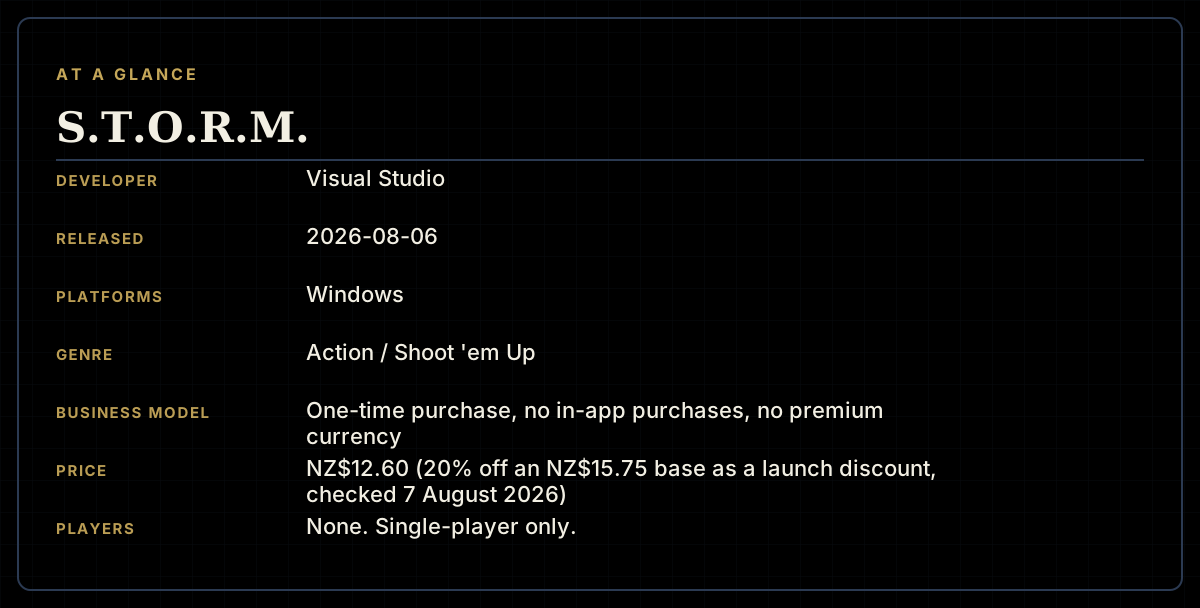
The game at a glanceWanderer Editorial -
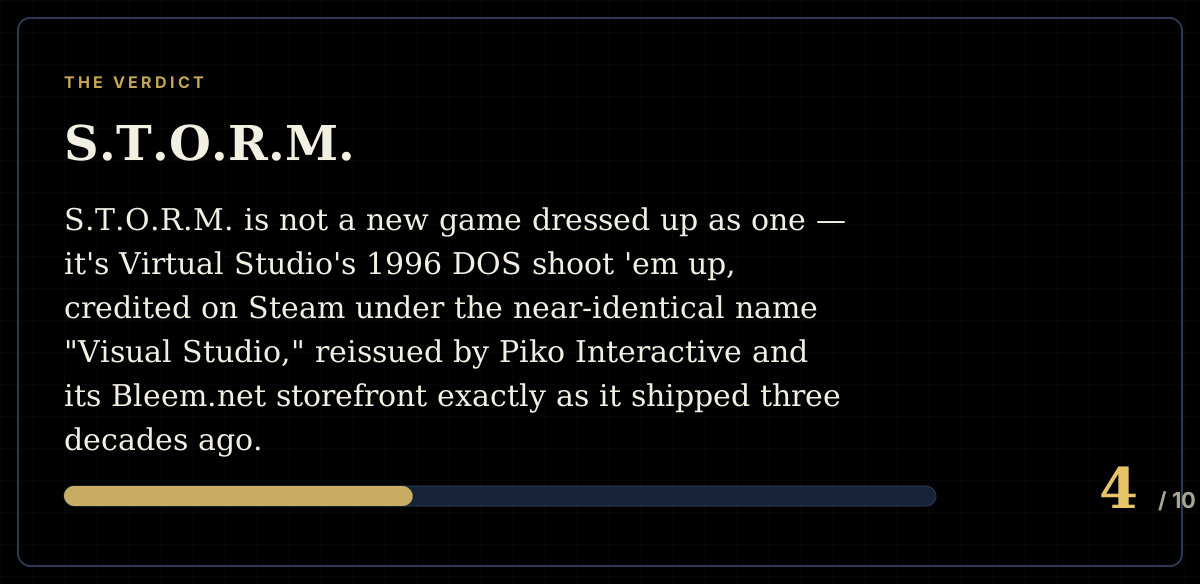
The short versionWanderer Editorial