Game review
Bullet Heaven 2
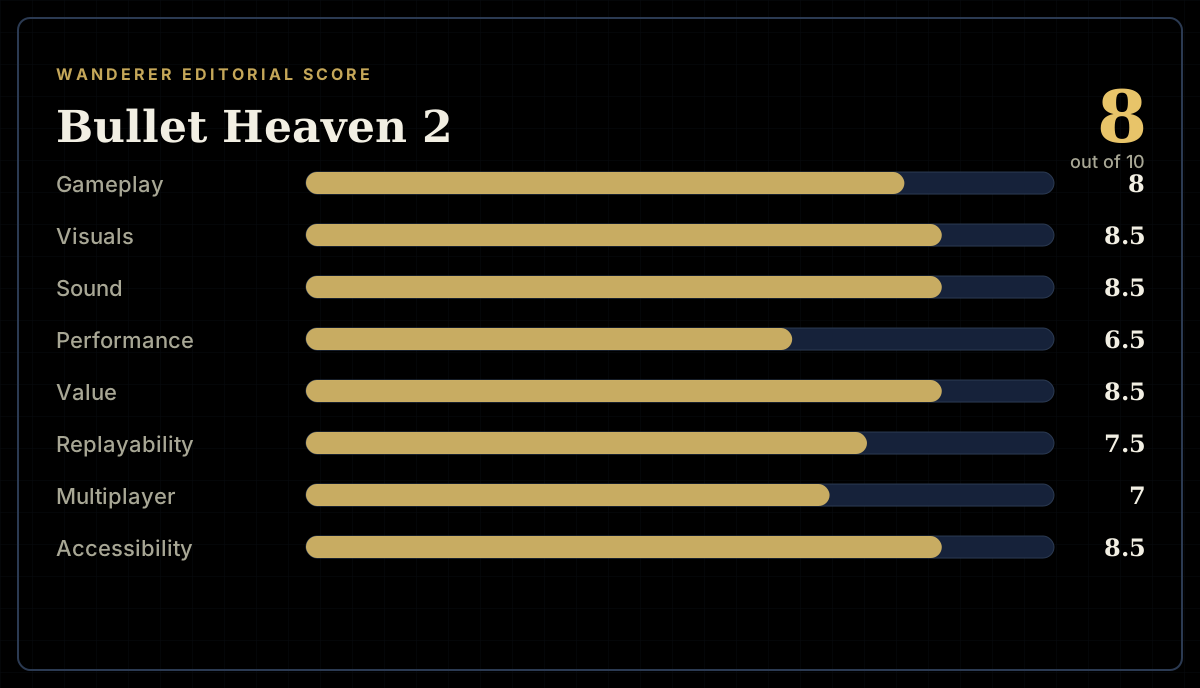
8 / 10
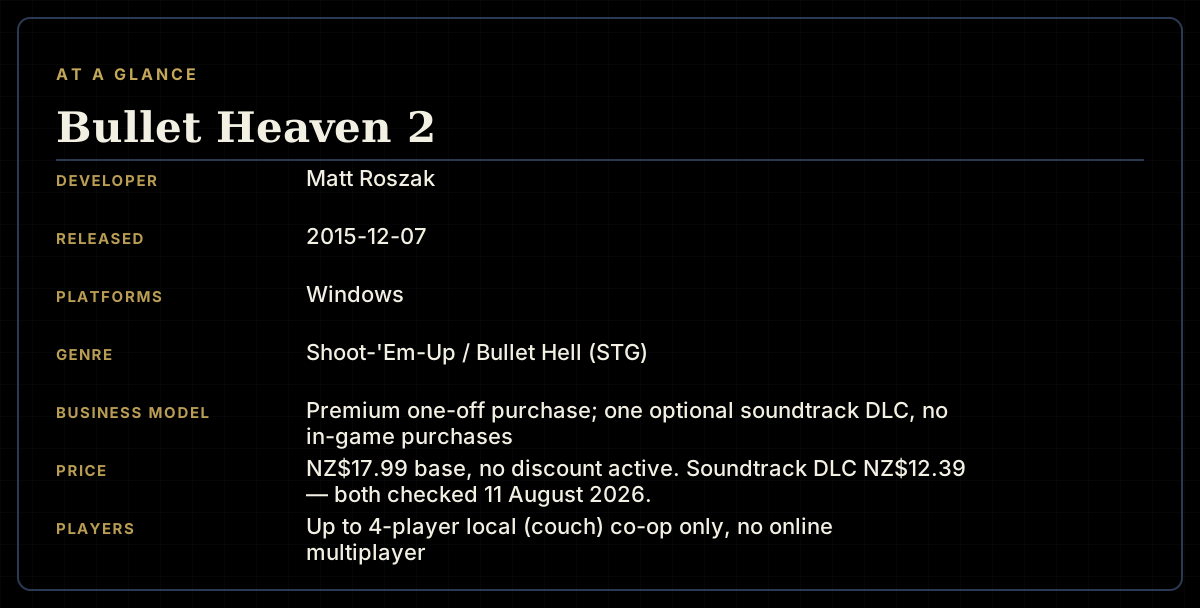
- Developer
- Matt Roszak
- Publisher
- Matt Roszak
- Released
- 7 December 2015
- Platforms
- Windows
- Genre
- Shoot-'Em-Up / Bullet Hell (STG)
- Monetisation
- Premium one-off purchase; one optional soundtrack DLC, no in-game purchases
- Players
- Up to 4-player local (couch) co-op only, no online multiplayer
The short version
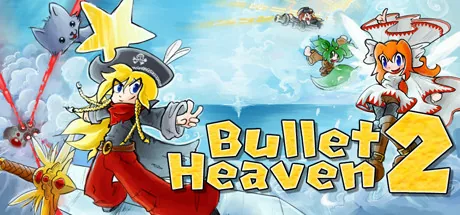
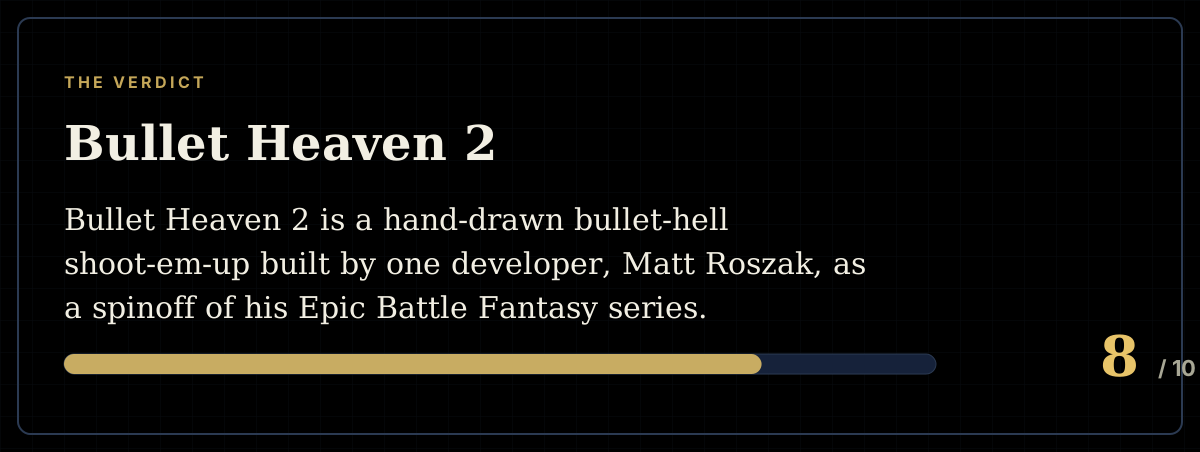
Bullet Heaven 2 is a hand-drawn bullet-hell shoot-em-up built by one developer, Matt Roszak, as a spinoff of his Epic Battle Fantasy series. Across seventy stages it asks you to dodge screen-filling bullet patterns with a pixel-wide hitbox while shooting back, and it wraps that in genuinely generous difficulty tooling — three named tiers, a bullet-density slider, and unlockable cheats and handicaps — that makes the genre's usual wall of entry much shorter than normal. Phyrnna's soundtrack and Roszak's own bright, cartoonish art carry the presentation further than the budget suggests.
Its age shows in specific places: the game is built on Flash-era tooling, ships Windows-only, and a chunk of its seventy stages are less interesting "trash" waves stitched between the genuinely excellent boss fights. Co-op tops out at four players on one couch, with no online option at all. None of that erases what's a well-made, cheaply priced entry point into a genre that usually assumes you already love it.
Biggest strengths
- Three named difficulty tiers plus a granular bullet-density option and unlockable cheats and handicaps make it one of the more welcoming bullet-hell games for newcomers to the genre
- Seventy stages, eight playable characters with distinct weapons and costumes, and a deep achievement and rank ladder give it real content for a low asking price
- Phyrnna's 18-track soundtrack is repeatedly singled out by players as one of the best things about the game
Biggest weaknesses
- Many of the non-boss "trash" stages between set-piece boss fights lean on the same spawn-and-shoot pattern and have been described by longtime bullet-hell players as a slog next to the boss fights
- Built on Flash-era tooling: Windows-only with no native Mac or Linux build, and at least one player has reported mouse-and-keyboard input dropping out mid-run
- No online multiplayer at all — co-op is couch-only, which rules out the game for anyone without a second controller in the room
Who it's for: Bullet-hell newcomers who want a genuinely welcoming on-ramp into the genre, existing fans of Matt Roszak's Epic Battle Fantasy games, and anyone after a cheap, content-dense local co-op shooter for a couch session.
Our recommendation: Worth buying at full price, let alone on a sale — seventy stages, eight characters and a soundtrack players single out unprompted add up to real value at NZ$17.99. Go in expecting a classic bullet-hell shooter, not the Vampire Survivors-style genre that later borrowed its title's other half.
8 / 10
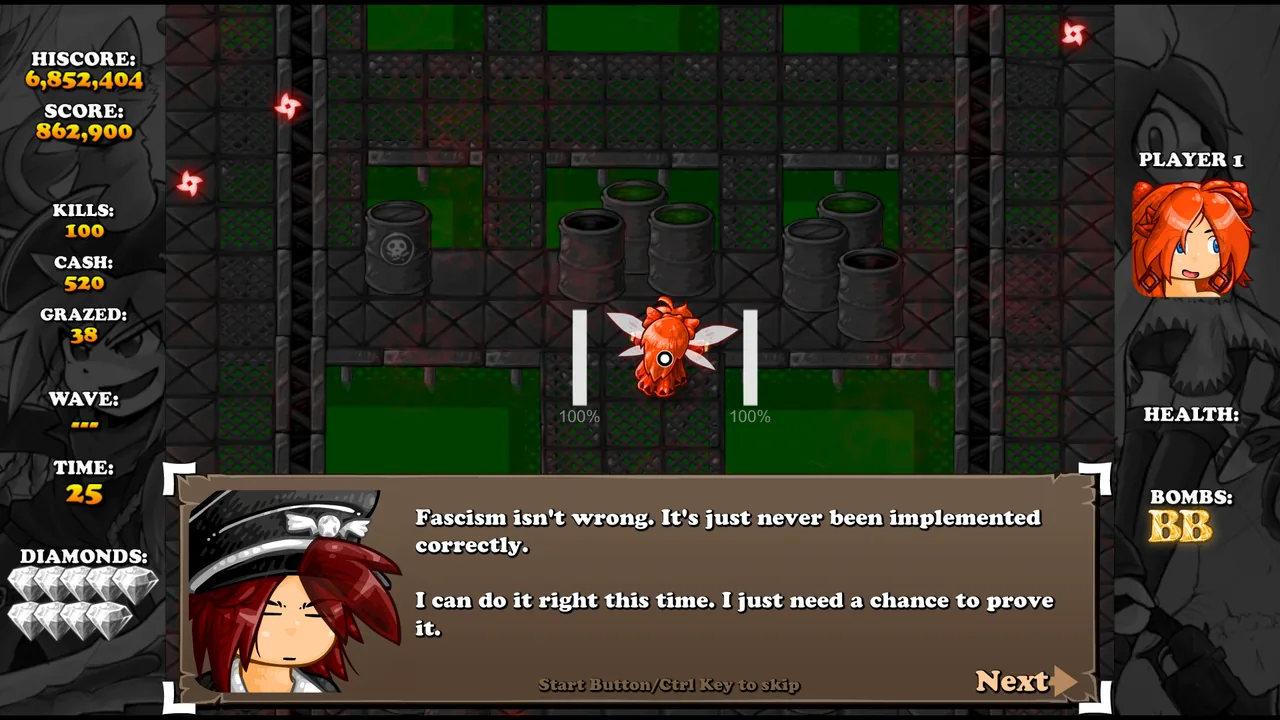
Seven years before "bullet heaven" became shorthand for a genre of screen-filling auto-battlers, Matt Roszak used the phrase for something much older: a bullet-hell shoot-em-up, the kind of game where the bullets belong to your enemies and your job is to not get hit by any of the hundreds of them currently on screen. Bullet Heaven 2, released on Steam on 7 December 2015 as a spinoff of Roszak's Epic Battle Fantasy series, is a solo-developer STG in the tradition of Touhou and Jamestown, dressed in the same bright, hand-drawn art that made Epic Battle Fantasy's RPGs recognisable. It has nothing to do with Vampire Survivors, which wouldn't exist for another six years — this is worth saying plainly up front, because the title alone now points a lot of searches at the wrong genre.
The pun in the title
The name isn't an accident, and knowing the joke helps explain what kind of game this is. Bullet Heaven 2 ships three named difficulty tiers — Normal runs at 25% bullet density, Hard at 50%, and the top tier, cheekily called Heavenly, cranks it to 100%. The "heaven" in the title is the hardest setting, not a softer one: turning the dial down doesn't make the game less of a bullet hell, it just makes it less of one for you specifically. That's a clean piece of genre-savvy naming for a series whose dialogue is, by its own store description, packed with "juvenile dialogue" and "video game references" — and it's a good early signal that this is the classic STG lineage (dodge patterns, shoot back, chase a score) rather than the auto-battling horde-clearing loop that later claimed the same two words.
The loop: seventy stages of dodge and shoot
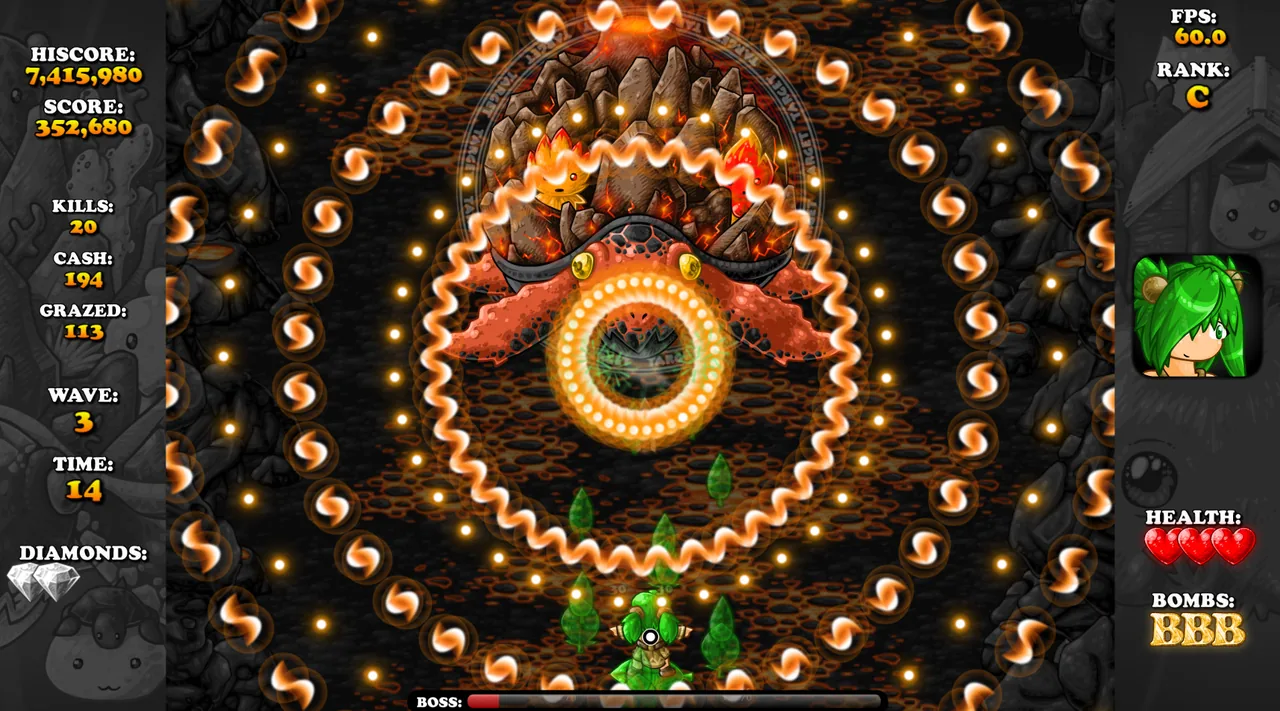
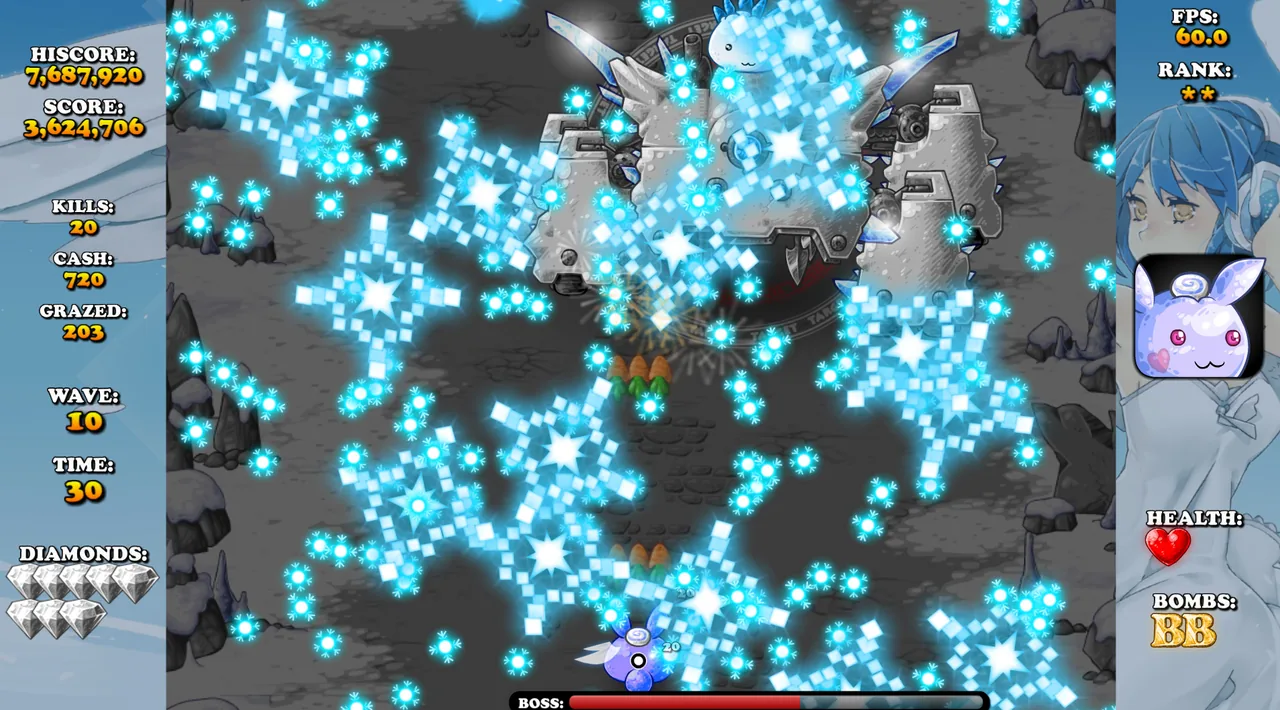
Structurally, Bullet Heaven 2 is a straightforward shoot-em-up: your character occupies a tiny, clearly marked hitbox, enemies and bosses fill the screen with bullet patterns, and your job is to weave through the gaps while returning fire with a mouse, keyboard or controller. Seventy stages carry that loop across the whole game, including dedicated boss encounters and endless survival levels for players chasing a score rather than a clear. Player feedback is consistent on where the highlights sit: the boss fights are the strongest material in the game, built around readable, escalating attack patterns that reward learning a pattern rather than memorising a maze. The stages in between — described in the game's own marketing as filled with "tons of cute monsters to shoot in the face" — get a more mixed reception. More than one experienced bullet-hell player has pointed out that these non-boss waves tend to spawn enemies in blocks that either die instantly or soak damage without much resistance, which flattens the offensive side of the loop even as the defensive dodging stays sharp throughout.
Difficulty built to bend, not break
What sets Bullet Heaven 2 apart from harder-edged genre peers like Cave's shooters or the deeper Touhou games isn't its combat design — it's how openly it accommodates players who don't already love this genre. Beyond the three named difficulty tiers and their bullet-density percentages, the game ships an entire system of unlockable cheats and handicaps that let a player fine-tune the challenge further, functioning as an arcade-less substitute for the continues a coin-op STG would once have offered. That's a genuinely thoughtful piece of design: bullet-hell games have a reputation for assuming a level of pattern-reading skill new players simply don't have yet, and Bullet Heaven 2's answer is to make the entry ramp adjustable rather than fixed. Reviewers who say they don't normally enjoy the genre — including several citing Touhou by name as something they'd bounced off before — single this out as the reason the game worked for them anyway.
Eight characters, deep unlocks, real content
Content-wise, the seventy-stage campaign is backed by eight playable characters, each with several distinct weapons and unlockable costumes, plus a rank and achievement system with 75 achievements on Steam. The completion curve on those achievements tells its own story about how the game is actually played: the easiest sits around 75% of players, while the hardest — tied to top ranks across every stage — clears only a few percent, which is the shape of a game with a soft, generous floor and a genuinely high ceiling for players chasing mastery rather than just a clear. None of that is meta-progression in the sense a roguelite player would recognise — nothing here carries power between runs — but as unlockable content gating cosmetic and character variety behind skill and completion, it gives the seventy stages real reasons to revisit them.
Art and music that carry the Epic Battle Fantasy pedigree
Roszak's own art is doing a lot of work here, and it's the single most consistently praised part of the game across player reviews: bright, cartoonish, hand-drawn enemies and bosses that read instantly as belonging to the same universe as Epic Battle Fantasy, even in a completely different genre. The soundtrack, 18 tracks composed by Phyrnna, comes up unprompted in review after review as one of the best things about the game, catchy enough that several players specifically recommend picking up the separate soundtrack DLC rather than treating the music as incidental background noise. For a game whose core loop lives or dies on how readable its screen stays under bullet density, having a genuinely distinctive, high-contrast art style isn't just decoration — it's doing real functional work keeping enemy and player bullets visually distinct from the background.
Where the tech shows its age
Bullet Heaven 2 began life as a Flash game, and that history hasn't fully disappeared from the Steam release. The build is Windows-only, with no native Mac or Linux version, and at least one player report describes needing more processing headroom than the low system requirements suggest to keep a bullet-hell shooter running smoothly — a genre where frame-time consistency matters more than almost any other. A separate player report describes mouse-and-keyboard input occasionally dropping out mid-session, which is a much more serious complaint in a game built entirely around split-second dodging. Full controller support is a reasonable workaround for the input issue specifically, and most feedback doesn't mention either problem, but both are consistent enough with the game's Flash origins to flag rather than dismiss as one-off reports.
Co-op, but only on the couch
Up to four players can drop into local co-op, which is a genuinely uncommon feature in a genre that's almost always built around a single dodging hitbox. There's no online multiplayer option at all, which was a more forgivable omission on a 2015 Flash-turned-Steam release than it is eleven years later — anyone hoping to play this with a friend who isn't in the same room will be out of luck, and that's worth knowing before buying it specifically for the co-op billing.
Value and DLC
At NZ$17.99 with no discount currently active, Bullet Heaven 2 undercuts most premium indie shooters while offering seventy stages, eight characters and one of the more generous difficulty systems in its genre — that's a strong value case on its own. The only DLC is an optional soundtrack release (NZ$12.39, first listed 2 March 2020), and it's exactly what it says: no content, characters or difficulty options are gated behind it. A free, lighter version without the bonus content is also playable on Kongregate for anyone who wants to sample the core loop before paying for the full Steam release — a rare bit of try-before-you-buy honesty from a genre that doesn't usually offer one.
Verdict
Eight out of ten. Bullet Heaven 2 is a well-made, generous entry point into a genre that has a reputation for punishing newcomers, built by a solo developer whose art and music sensibilities carry over cleanly from a completely different franchise. The difficulty tooling is the standout: three named tiers, a bullet-density slider and a menu of cheats and handicaps mean this is a bullet-hell shooter that will actually meet a first-timer somewhere reasonable, not just veterans chasing a Heavenly-difficulty clear.
What holds it back from higher is concrete rather than a matter of taste: a real chunk of its seventy stages are less interesting filler between genuinely good boss fights, its Flash-era technical foundation shows in Windows-only support and at least one reported input bug, and co-op tops out at four players on one couch with no online option at all. None of that undoes a cheap, content-dense, unusually welcoming shooter — it just means the ceiling on this particular score is set by the game's age and scope rather than its craft.
Players chasing a genre-defining Vampire Survivors-style "bullet heaven" should look elsewhere; that's a different game wearing a similar name. Players who actually want to dodge bullets for a few dozen hours, at a price that respects their wallet, are well served here.
Price and Steam review figures checked 11 August 2026.
Pros and cons
Pros
- Three named difficulty tiers plus a granular bullet-density option and unlockable cheats and handicaps make it one of the more welcoming bullet-hell games for newcomers to the genre
- Seventy stages, eight playable characters with distinct weapons and costumes, and a deep achievement and rank ladder give it real content for a low asking price
- Phyrnna's 18-track soundtrack is repeatedly singled out by players as one of the best things about the game
- Roszak's bright, hand-drawn art carries the Epic Battle Fantasy series' visual identity into a completely different genre without losing its charm
- Up to 4-player local co-op is a genuinely rare feature in this genre
- The only DLC is an optional soundtrack purchase — nothing gates content behind extra spending
Cons
- Many of the non-boss "trash" stages between set-piece boss fights lean on the same spawn-and-shoot pattern and have been described by longtime bullet-hell players as a slog next to the boss fights
- Built on Flash-era tooling: Windows-only with no native Mac or Linux build, and at least one player has reported mouse-and-keyboard input dropping out mid-run
- No online multiplayer at all — co-op is couch-only, which rules out the game for anyone without a second controller in the room
- There's no in-run character growth or build-crafting; power stays static within a stage, so anyone expecting the modern "bullet heaven" genre that Vampire Survivors popularised years later will find a completely different kind of game here
- Support has been effectively dormant for years — this is a finished, static package rather than a live-serviced one
Screenshots
-
Bullet Heaven 2Image: Matt Roszak via Steam -
Bullet Heaven 2Image: Matt Roszak via Steam -
Bullet Heaven 2Image: Matt Roszak via Steam -
The specs, at a glanceWanderer Editorial -
How the review scores each part of the gameWanderer Editorial -
The short versionWanderer Editorial