Game review
Soulflow
3.5 / 10
- Developer
- Bluespy Studios
- Publisher
- Next in Game
- Released
- 18 March 2022
- Platforms
- Windows
- Genre
- Adventure
- Monetisation
- One-time premium purchase; no ads or premium currency found, though the store listing flags in-app purchase support
- Players
- Single-player only; no online, co-op or PvP modes
The short version
Soulflow's premise is the best thing about it: you're a soul that must occupy a different body each day, gathering information from townspeople to work out who's going to die in a coming murder, then make sure you're in the right body when it happens. Reviewers across four years consistently call the concept genuinely interesting, and more than one specifically praises the moment they got to control the neighbourhood dog. That's about where the goodwill runs out.
Soulflow launched into Early Access in March 2022 as its first of an implied multi-chapter story. Only that first chapter, completable in under an hour according to most reviewers, was ever released. No second chapter followed; the game's own public update history shows nothing beyond a walking-speed tweak and a localisation pass within its first two weeks, then total silence except for sale promotions. Reviewers report a genuinely broken tutorial that resets unpredictably, incoherent dialogue and text, and at least one achievement that multiple players independently say won't unlock no matter how the stated condition is met. A reviewer's 2026 update to their own review states it plainly: an abandoned game with unobtainable achievements.
Biggest strengths
- A genuinely creative core concept — inhabiting a different body each day to investigate an impending murder — that reviewers across the entire four-year review history consistently single out as interesting even when panning everything built around it
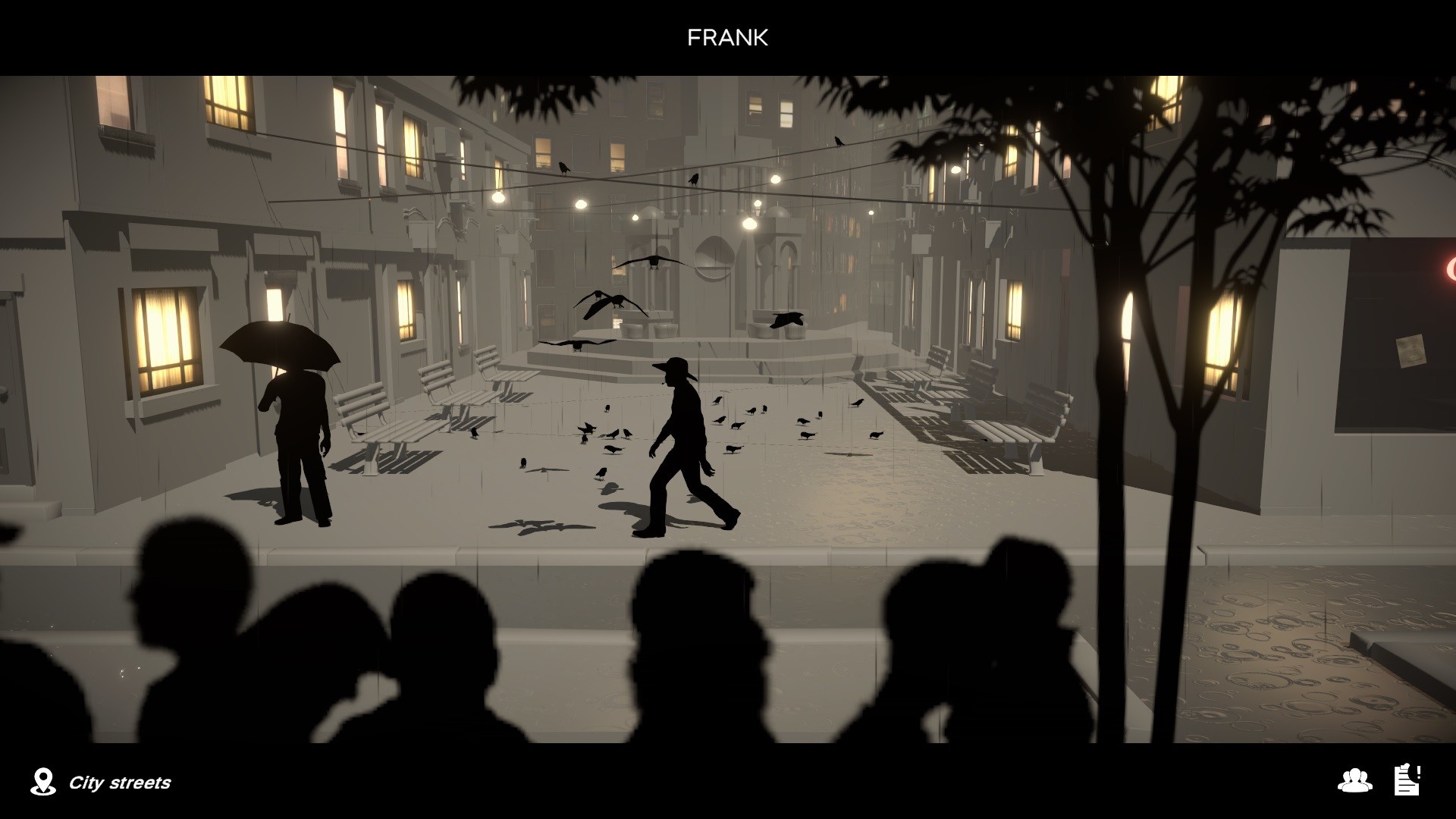
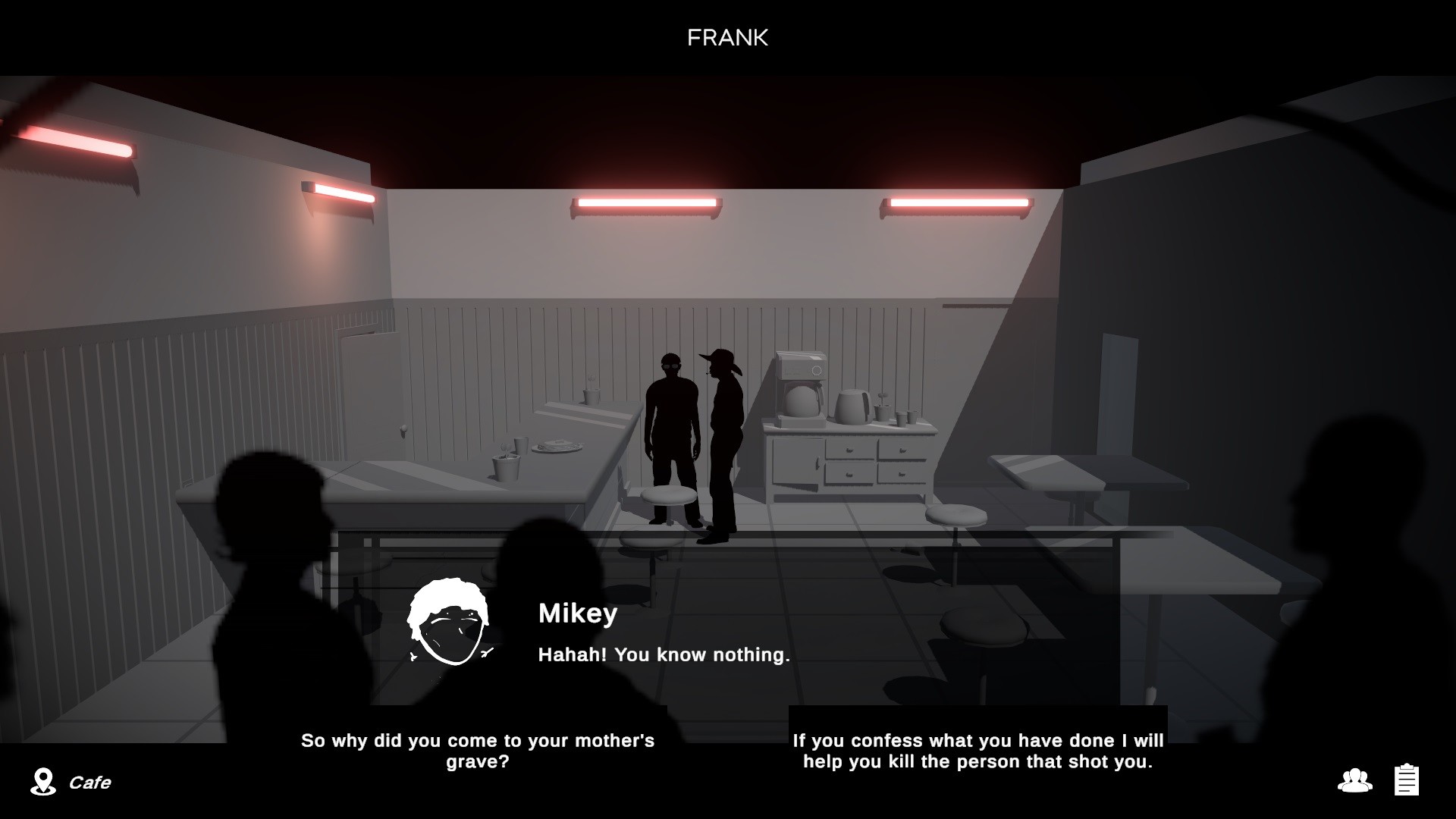
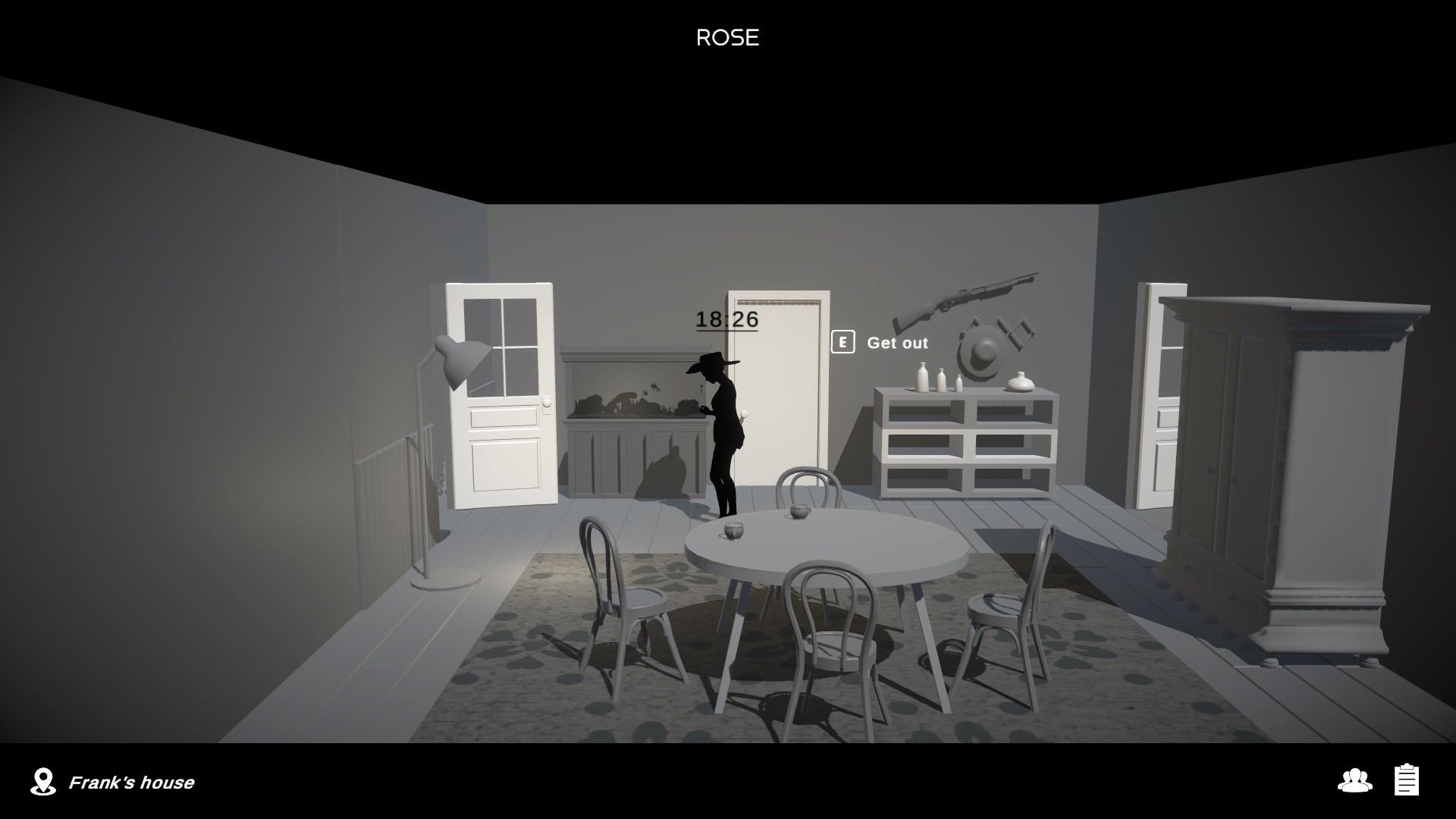
- A distinctive black-and-white, silhouette-figure art style that multiple reviewers praise even in otherwise negative reviews
- Cheap enough, at under four New Zealand dollars, that the financial risk of trying it is genuinely low
Biggest weaknesses
- The game launched in Early Access implying further chapters to come; only the first chapter was ever released, and the game's own public update history shows no further content was ever added after the first two weeks
- Movement is widely and consistently described as slow and tedious, undermining a structure that already requires walking the same small town repeatedly across in-game days
- Multiple independent reviewers report a broken tutorial that resets unpredictably, incoherent or poorly translated dialogue, and glitching animations
Who it's for: Nobody who wants a complete experience. Only worth a look for players specifically curious about the concept and willing to treat it as a free-feeling tech demo rather than a finished game, given the price is close to negligible.
Our recommendation: Skip it. The idea deserved a real game built around it; what shipped is a single incomplete chapter that was never finished and has visible bugs that were never fixed.
3.5 / 10
Soulflow has one of the more inventive premises this fleet has come across: you play a soul without a body of its own, forced to inhabit a different townsperson each day, walking around gathering information and eavesdropping on conversations to piece together the social web of a small neighbourhood ahead of a murder that's coming. The goal isn't to stop it — it's to work out who the victim will be and make sure you're occupying that person's body when it happens, or you fail the loop and start again. Reviewers across the entire four-year span of this game's review history agree on one thing consistently: the idea is genuinely interesting, and more than one specifically calls out getting to briefly control the neighbourhood dog as a highlight. That's close to where the consensus ends.
A first chapter, and nothing after it
Soulflow launched into Early Access on 18 March 2022, its own announcement post treating the release as the start of something, implying the multi-chapter structure common to episodic Early Access narrative games. What actually exists, four years later, is that same first chapter — completable in under an hour according to most reviewers who finished it — and nothing else. The game's own public update history backs this up precisely: a walking-speed increase and a Chinese/French localisation pass landed within the first two weeks, and the only entries since are Steam sale promotions, with no content update of any kind ever following. One reviewer's review, originally posted enthusiastically and then edited in 2026, states the situation as plainly as this review can: "An abandoned game with unobtainable achievements. Do not buy." Checked against the visible public record, nothing contradicts that characterisation.
The jank that was never addressed
Even judged only on the single chapter that exists, reviewers report real, specific technical problems that were never fixed. Multiple independent reviews describe a tutorial that resets unpredictably mid-playthrough, dialogue and narrative text that reads as garbled or grammatically incoherent in ways that actively undermine a game whose core loop depends on parsing social information correctly, and animation glitches during basic movement and interaction. At least one specific achievement is reported as unobtainable by more than one independent reviewer regardless of how its stated condition is met — Steam's own global completion data shows all seven achievements sit between roughly 12% and 47% completion, consistent with a playerbase that mostly can finish the one available chapter, but doesn't resolve which specific achievement the "unobtainable" complaints refer to, since this review can't map the reviewers' description directly onto one of the seven listed achievement names.
The writing quality itself is worth illustrating rather than just summarising. One reviewer quotes a line of in-game text directly to make the point: a sentence describing a character's reaction to a death that reads as grammatically broken and barely parseable in context, cited as representative rather than a cherry-picked worst example. For a game whose entire mechanical hook depends on players correctly parsing social and narrative information from dialogue, text this incoherent isn't a cosmetic flaw — it undermines the one thing the game is actually asking players to do.
A checked, but unconfirmed, monetisation flag
Steam's own store categories list "In-App Purchases" for Soulflow, despite this review finding no reviewer mention of any in-game purchase, premium currency or paid content beyond the base price. That's worth flagging honestly rather than ignoring: either the category is a leftover from an early-development plan that was never implemented, or a purchase system exists that simply isn't prominent enough for reviewers to mention across four years of feedback. This review can't resolve which explanation is correct from the sources available, and doesn't want to either assert a hidden monetisation scheme exists or wave the flag away as certainly meaningless.
A structural disappointment on top of the technical one
Even setting aside the incompleteness and the bugs, more than one detailed reviewer raises a separate, structural complaint about what the finished chapter actually delivers: you can only ever identify who's going to die, never prevent it, which one reviewer calls an unsatisfying way to resolve an otherwise interesting premise about moving between people's lives and perspectives. That's a fair critique of the one chapter that does exist, independent of everything the missing later chapters might have added — a game about occupying other people's bodies and learning their relationships arguably has more to say than "here's who dies," and the shipped content doesn't attempt to say it.
Where it lands
Soulflow's premise deserved a finished game built around it, and what actually shipped is a single, short, buggy first chapter that the developer implied was the beginning of something larger before going silent within weeks of launch. The concept and the art style are real, specific strengths this review is glad to credit, but a permanently incomplete Early Access game with unresolved bugs and no further content in over four years earns a genuinely harsh score rather than a generous one. A 3.5 reflects a good idea that was never allowed to become a real game. The low price makes it a low-risk curiosity for anyone specifically fascinated by the premise, but it shouldn't be mistaken for a purchase that will be rewarded with more content, a fix, or a resolution down the line — four years of silence is about as clear a signal as this fleet has seen that none of those things are coming.
Pros and cons
Pros
- A genuinely creative core concept — inhabiting a different body each day to investigate an impending murder — that reviewers across the entire four-year review history consistently single out as interesting even when panning everything built around it
- A distinctive black-and-white, silhouette-figure art style that multiple reviewers praise even in otherwise negative reviews
- Cheap enough, at under four New Zealand dollars, that the financial risk of trying it is genuinely low
Cons
- The game launched in Early Access implying further chapters to come; only the first chapter was ever released, and the game's own public update history shows no further content was ever added after the first two weeks
- Movement is widely and consistently described as slow and tedious, undermining a structure that already requires walking the same small town repeatedly across in-game days
- Multiple independent reviewers report a broken tutorial that resets unpredictably, incoherent or poorly translated dialogue, and glitching animations
- At least one specific achievement is reported by multiple reviewers as unobtainable regardless of how the stated unlock condition is met, with no fix ever issued
- The murder-mystery structure itself is criticised as offering no real agency: reviewers note you can only identify who will die, never prevent it, which more than one detailed review calls an unsatisfying conclusion to an otherwise interesting premise
Screenshots
-
SoulflowImage: Next in Game via Steam -
SoulflowImage: Next in Game via Steam -
SoulflowImage: Next in Game via Steam -
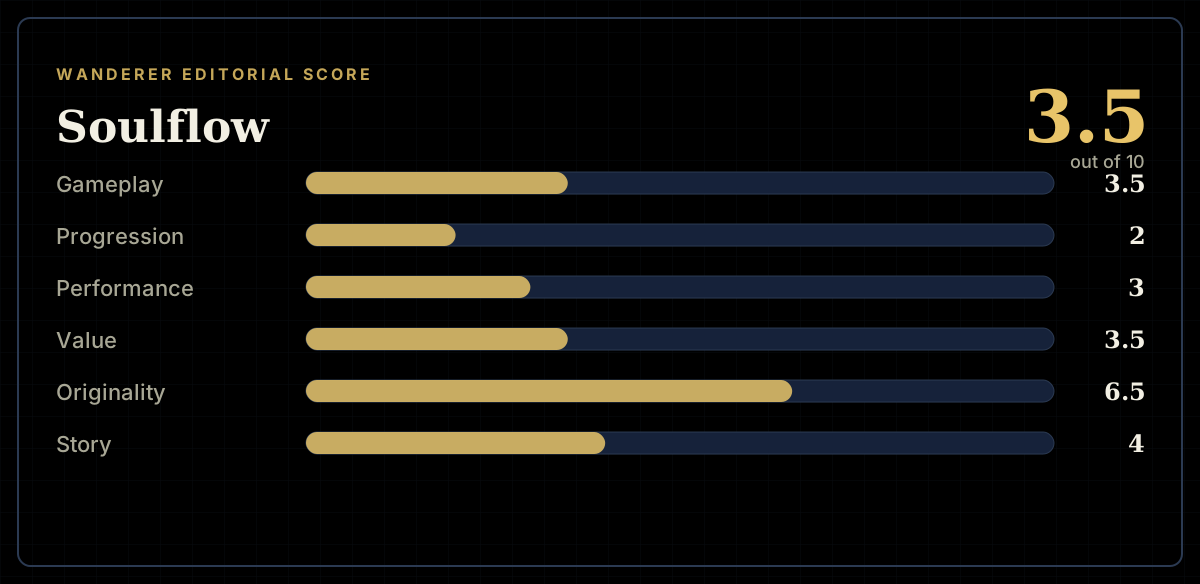
How the review scores each part of the gameWanderer Editorial -
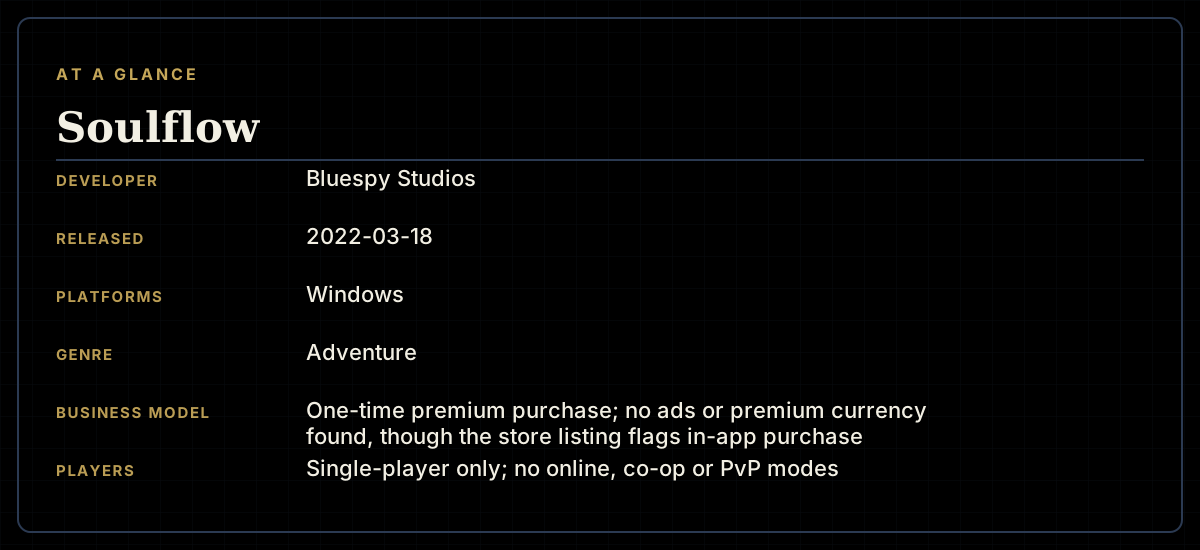
The specsWanderer Editorial -
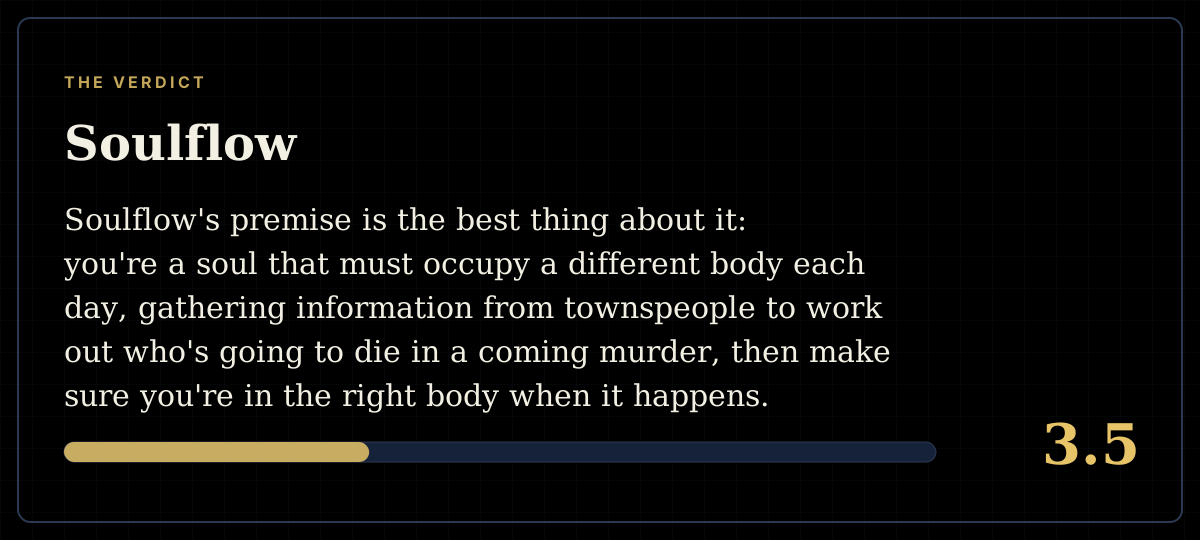
The short versionWanderer Editorial