Game review
Slime Trader Review
4.5 / 10
- Developer
- Lonely Knight
- Publisher
- Enter the Game Studios
- Released
- 19 September 2026
- Platforms
- ["Windows"]
- Genre
- Simulation
A Free Merge-Idler Built Around a Simple Loop
Slime Trader is a free-to-play merge and horde-defense game from developer Lonely Knight, published by Enter the Game Studios and released September 19, 2026. The pitch is straightforward: summon random slimes, drag them into a fenced pen, merge two of the same grade into something stronger, and let them auto-attack a swarm of larvae pouring in from outside the fence. There are 111 individually illustrated slimes across 12 grades from F to XXX, seven attack styles that unlock as grades climb, and a rune-and-rebirth system layered on top for long-term progression. It launched to a "Mostly Negative" reception on Steam — roughly 38% positive across 61 reviews at time of writing — which is worth stating up front rather than burying, since the negative reception is specific and consistent rather than scattered.
The Core Loop: Summon, Merge, Rebirth
The moment-to-moment loop is genuinely simple and, according to several reviewers, satisfying in short bursts: pull a slime, drag it next to a matching grade, watch it merge upward, and repeat while the auto-battle plays out behind the pen. One reviewer described "a thrill in chaining and successfully evolving into a stronger slime," while another summed the whole appeal up in three words: "Number go up." On top of that loop sits a rebirth system — resetting stage progress back to round 1-1 in exchange for points that buy runes, while slimes, gold, and summon cost carry over — plus a 4x4, 16-slot rune grid covering eight effect types including damage, crit, range, and rebirth-point gain. On paper it's a complete, reasonably ambitious structure for a free merge game.
A Forced-Online Design That Reviewers Say Breaks the "Idle" Promise
The single most repeated complaint in the review corpus isn't about balance or content — it's that the game requires a permanent online connection to function at all, including for basic actions like drawing slimes, because of its Steam Inventory trading and leaderboard integration. One reviewer wrote plainly that the game "cant check game version" and stopped working entirely, calling it "a classic idle gacha where everything means nothing," and explicitly asked for an offline mode so it could "run in the background" the way idle games are typically expected to. A separate reviewer cited surviving "the great server crash of 9-19-26" — the game's own launch day — as a notable achievement rather than a joke. For a game built around an idle-adjacent merge loop, a hard online requirement that can crash on launch day is a real design tension the store page doesn't foreground.
Gacha Pulls and RNG Reviewers Call Unfair
Summoning slimes and drawing runes both run through a gacha-style pull system, and it draws some of the sharpest criticism in the review set. One detailed negative review complained that "each fusion takes about 5 seconds, and you have to buy slimes and runes with a gacha like pull system, which also takes about 5 seconds EVERY pull," with no bulk-pull option, all gated behind server round-trips. Another reviewer laid out specific rune-upgrade odds that failed repeatedly — "SS 65% success chance, then fails 6x of 8 times" — and called the underlying random-number generation "really bad." Whether the RNG is actually miscalibrated or simply unlucky streaks reported by frustrated players, the volume and specificity of the complaints — multiple reviewers independently citing failed high-percentage rolls — suggest the pull system is a genuine friction point rather than a one-off grievance.
Performance and Interface Complaints Pile Up
Beyond the online requirement and gacha pacing, a cluster of technical complaints target how the game behaves as a piece of software running on a PC. One reviewer listed several issues in sequence: "framerate dictates gamespeed," "uses way too much cpu," a "seemingly pointless widget mode" that forces itself always-on-top even when that isn't the stated behavior, the process automatically setting itself to high CPU priority, and forced world chat that slows the game down further when its window is resized to be readable. A separate reviewer flagged the core UI directly, noting the slime pen sits low on screen while a persistent overlay blocks the view of slimes at the top. None of these are subjective taste complaints — they're specific, technical, and repeated across more than one reviewer.
Where the Positive Reviews Land
The positive side of the ledger is real but more modest in scope. Several reviewers frame their recommendation around price rather than polish — "its a free game with marketplace upside... more of a merge game than idler - but decent for free" — while others simply enjoy the moment-to-moment merging and are willing to look past the rest. One reviewer with nearly 1,800 minutes logged reported still enjoying the slimes despite server instability, and another described starting with a friend and finding a real "thrill" in the merge-and-evolve loop. The throughline in positive reviews is tempered expectations: nobody is calling it a standout, but a meaningful number of players are getting genuine short-session enjoyment out of it for zero cost.
Trading, Leaderboards, and the Social Layer
Slime Trader leans into Steam-specific integration more than most merge games: eligible high-grade slimes and runes can be moved to a player's actual Steam Inventory and traded with other players, stage-and-round progress is tracked on a Steam leaderboard, and global or language-based lobby chats let players talk while playing. This is the feature set that explains the forced-online requirement rather than excusing it — trading and leaderboards genuinely need a server, but summoning a slime arguably shouldn't. It's also the area with the least reviewer commentary so far, likely because the game is only days old and the trading economy hasn't had time to develop one way or the other.
Verdict
Slime Trader has a real, if unoriginal, merge-and-defend hook buried inside it, and the reviewers who click with the moment-to-moment loop say so plainly. But the review corpus is unusually consistent about what's holding it back at launch: a forced-online architecture that undermines the idle genre's basic promise of running unattended, a slow single-pull gacha system with RNG specific enough to draw repeated complaint, and a list of PC-performance sins — high CPU use, game speed tied to framerate, an intrusive always-on-top widget mode — that go well beyond typical launch jank. None of that is invented; it's reported directly and repeatedly across the game's own review section. Free is free, and there's a real audience getting short-session enjoyment out of the core merge loop, but anyone expecting a low-maintenance background idler should read the "forced online" complaints closely before installing it.
Screenshots
-

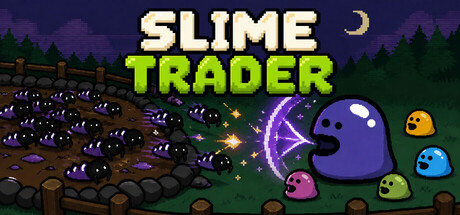
The title screen, previewing the fenced defense pen at the heart of the loopImage: Enter the Game Studios via Steam -
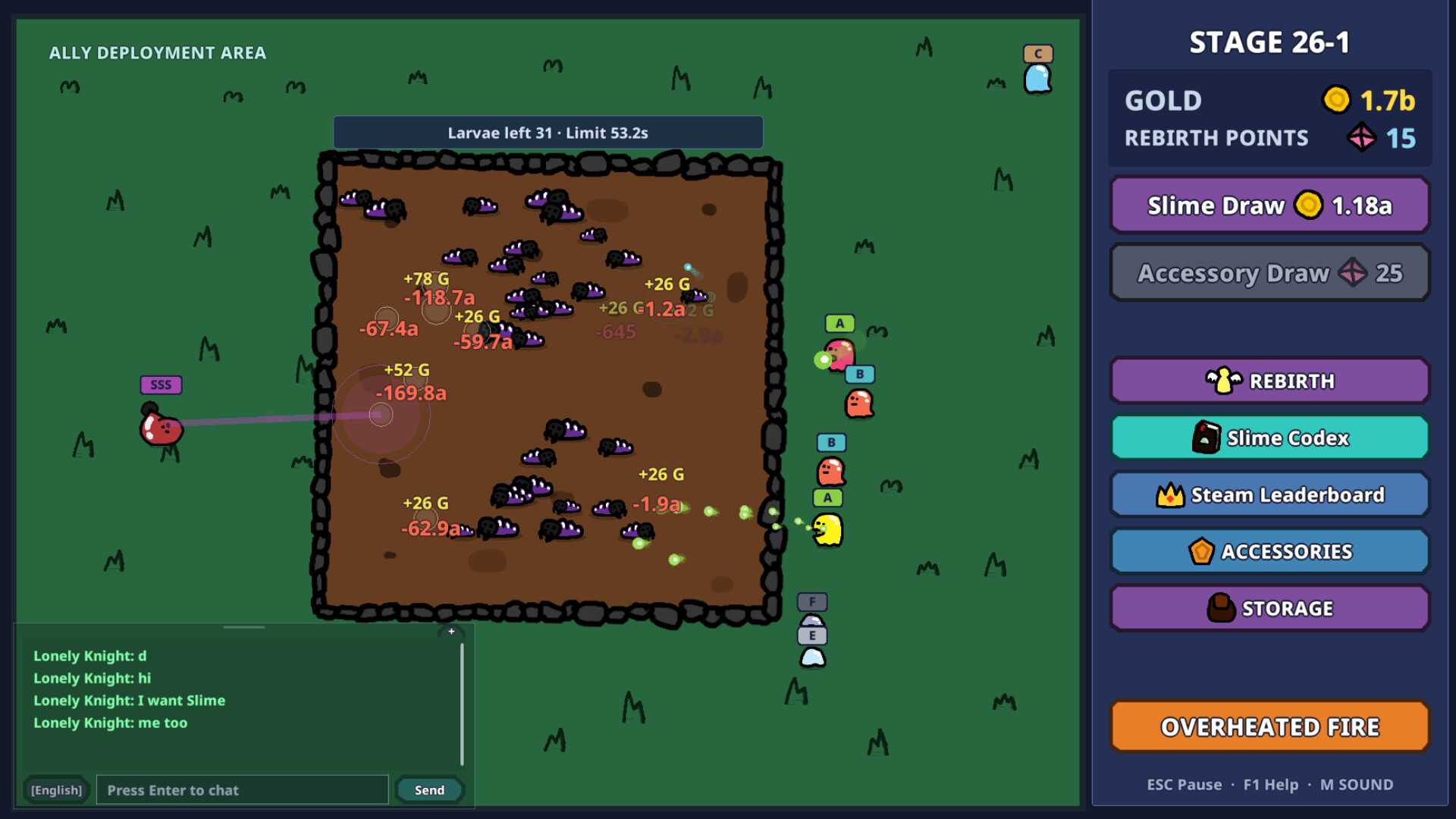
An early stage, with gold, rebirth points, and the global chat all visible at onceImage: Enter the Game Studios via Steam -
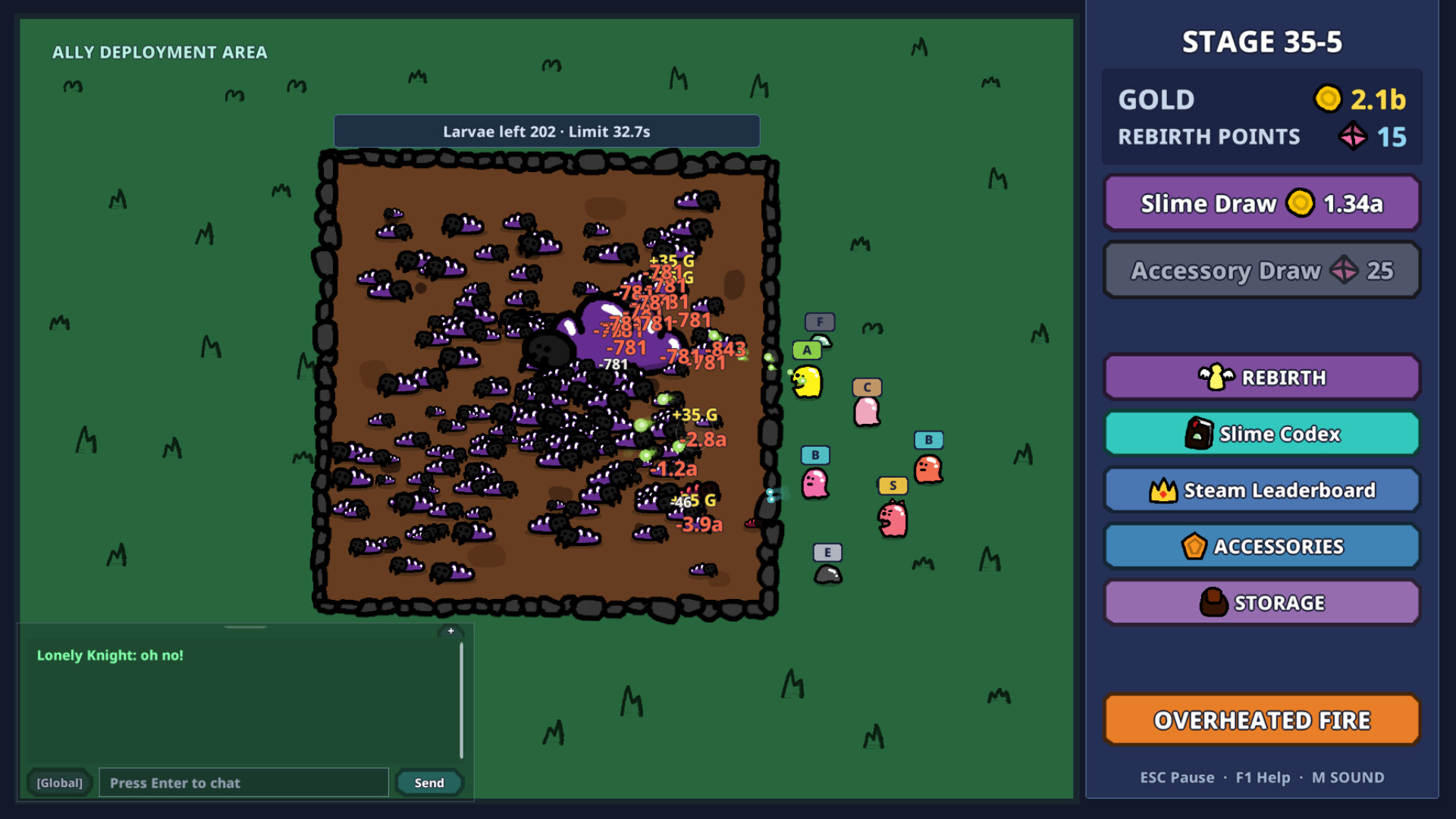
A late-stage swarm at Stage 35-5, the point several reviewers say performance starts to sufferImage: Enter the Game Studios via Steam