Game review
Sintopia
7 / 10
- Developer
- Piraknights Games
- Publisher
- Team17
- Released
- 16 April 2026
- Platforms
- Windows
- Genre
- Indie, Simulation, Strategy
- Monetisation
- One-time purchase
- Players
- Single-player only
The short version
Sintopia puts players in charge of Hell's bureaucratic back office: souls arrive from the mortal world, get judged, processed, and routed through torture-chamber production lines that reward the same circuit-building, bottleneck-solving instincts as a factory game, while a secondary "overworld" layer lets players nudge human civilisation toward saintliness, sin, or outright collapse from a cartoonish top-down god's-eye view. Developed by Piraknights Games and published by Team17, it wears its Dungeon Keeper and Black & White influences openly and mostly earns the comparison, landing a Very Positive rating built on sharp presentation, genuine wit, and a satisfying automation loop. But the review sample is far from unanimous: a substantial minority describes the overworld as chaotic and under-explained once players step outside the hand-tuned campaign missions, with progression gating, difficulty balance, and a handful of persistent bugs cited repeatedly enough by independent reviewers to be more than isolated complaints.
Biggest strengths
- A distinctive dual-layer structure, an automation-focused Hell-management sim paired with a lighter-touch overworld god game, that reviewers repeatedly compare favourably to Dungeon Keeper, Theme Hospital, and Black & White without feeling like a straight clone of any of them
- Dense, detailed art direction that multiple reviewers single out by name, with readable in-world signage, expressive demon animations, and visual gags that reward zooming in
- Writing that leans into bureaucratic and corporate satire alongside the infernal theming, praised across several detailed reviews as genuinely funny rather than merely edgy
Biggest weaknesses
- Multiple independent reviewers describe the overworld as unpredictable and poorly telegraphed once players leave the scripted campaign, citing random events that swing between drought and flood in soul supply with little warning or player agency to correct course
- Several reviewers report the tech and meta-progression systems are explained badly enough that committing to the wrong early unlock can quietly end a run, with no in-game signal that a choice was a trap
- More than one reviewer flags a bug where automation logic gates can silently break mid-run, stalling soul processing until the player notices and manually intervenes
Who it's for: Fans of Bullfrog-era management and god games, and of automation-driven builders like Dungeon Keeper or Evil Genius, who don't mind a campaign that leans on trial and error to teach its systems.
Our recommendation: A strong recommendation for genre fans willing to tolerate real rough edges outside the scripted campaign, and worth checking user reviews on sale for anyone sensitive to unexplained difficulty spikes.
7 / 10
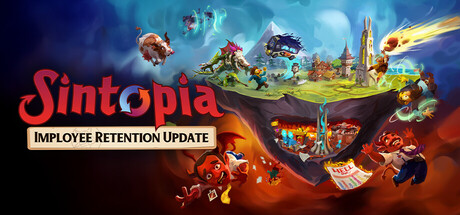
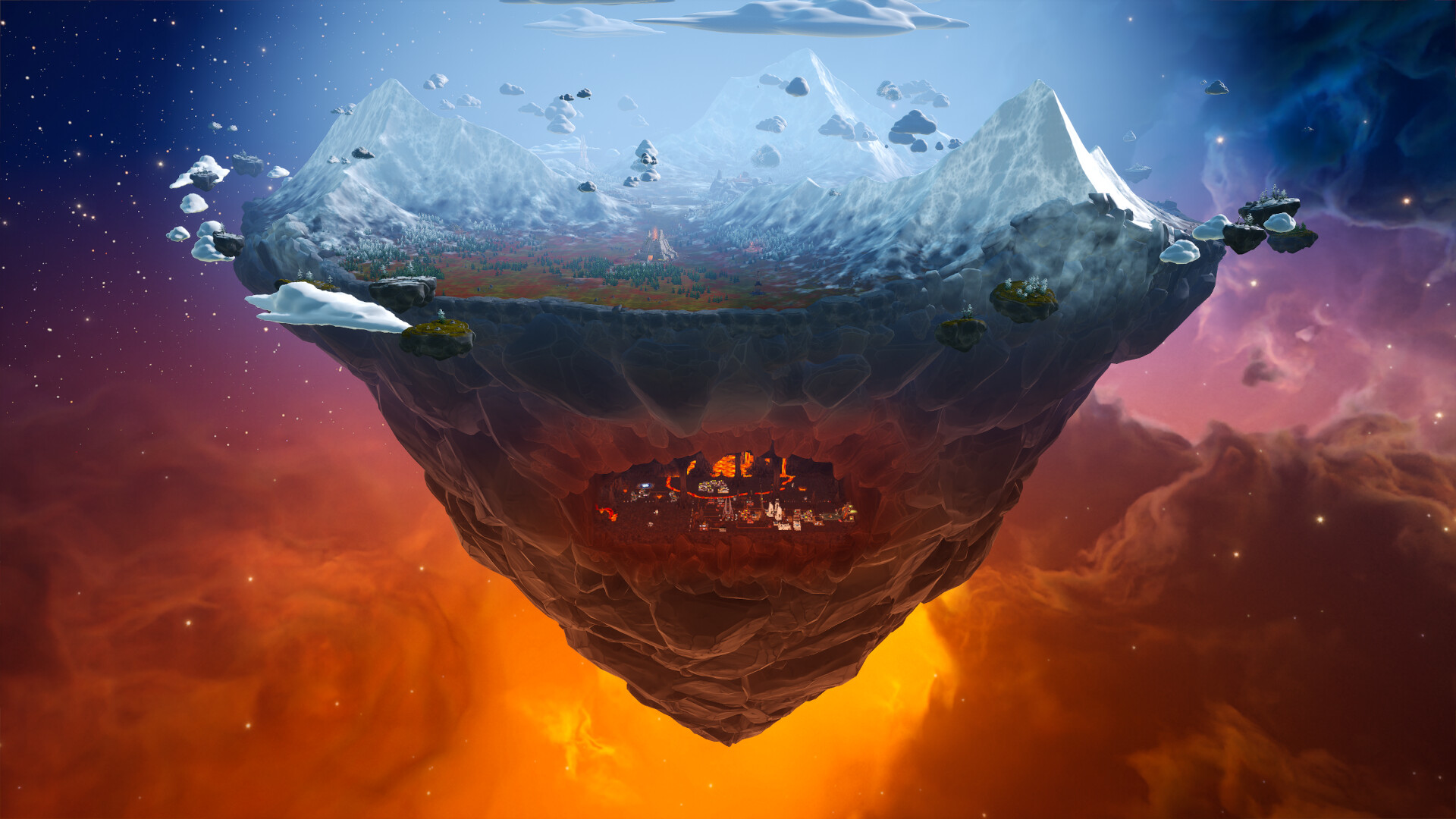
Sintopia casts players as middle management for the afterlife: souls arrive fresh from death, get sorted by sin, and are routed through torture-chamber production lines that double as an economic engine for Hell's ongoing operations. Developed by Piraknights Games and published by Team17, it splits its time between that ground-level automation puzzle and a second, zoomed-out "overworld" layer where players nudge human civilisation toward sainthood, cultism, or ruin, feeding the underworld's soul supply in the process. Landing Very Positive across 949 reviews, it draws constant, mostly earned comparisons to Dungeon Keeper, Theme Hospital, and Black & White, while carving out enough of its own identity, and its own rough edges, to be worth examining on its own terms.
Hell as a factory floor
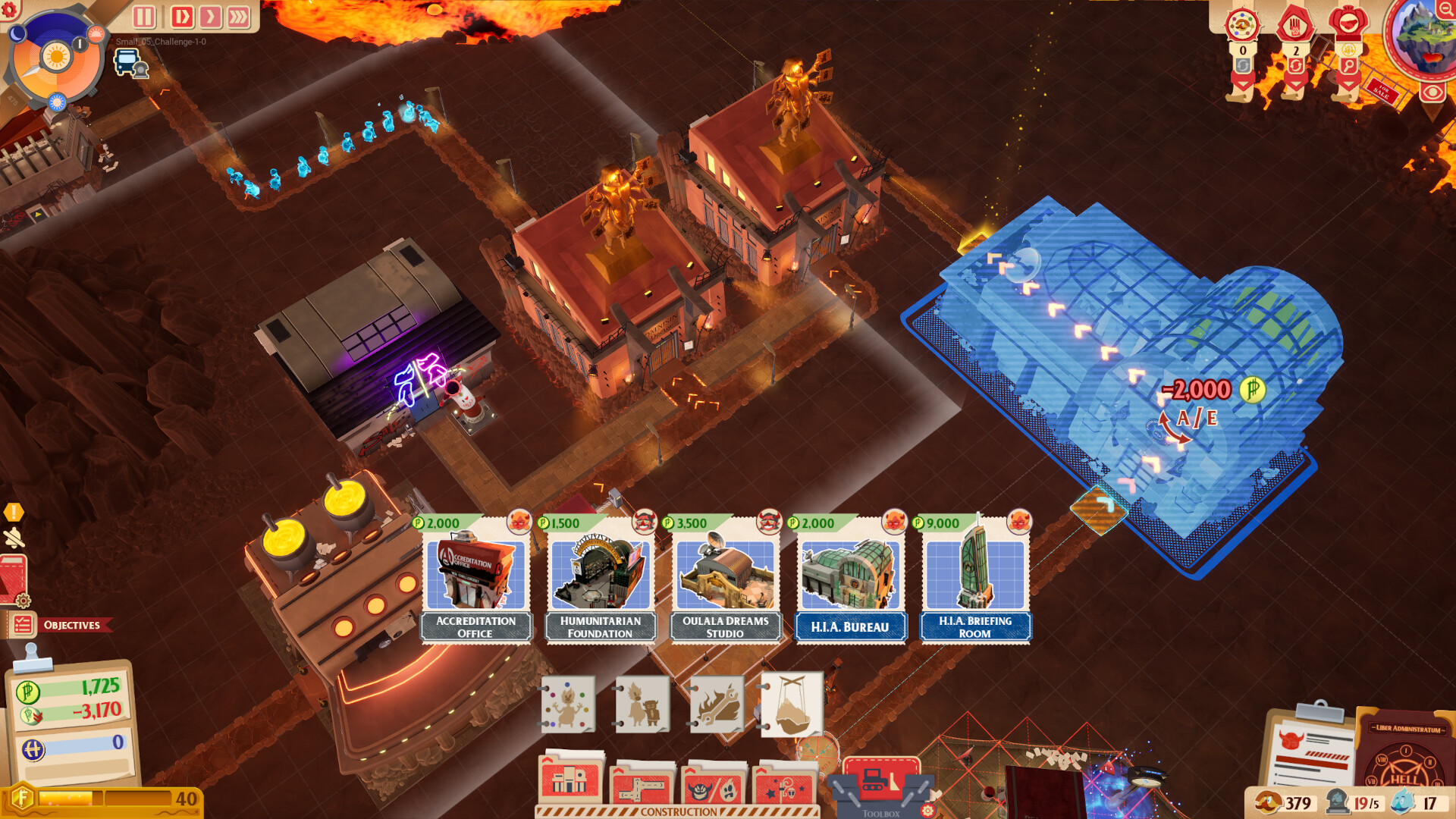
The strongest, most consistently praised part of Sintopia isn't the god-game half at all, it's the underworld management. Reviewers repeatedly describe the core loop less as city-building and more as circuit-building: souls move along programmable paths, get filtered and processed by function, and the player's job is chiefly about solving bottlenecks rather than aesthetic city planning. One detailed review put it plainly: this is "a game about automation and setting up pathways and circuits and filters and optimizing," and that framing shows up again and again across the sample. Players who come in expecting a conventional Two Point Hospital-style management sim get something closer to a factory-optimisation puzzle wearing infernal skin, and the reviewers who clicked with that framing tend to be the most enthusiastic in the entire sample.
The overworld is a harder sell
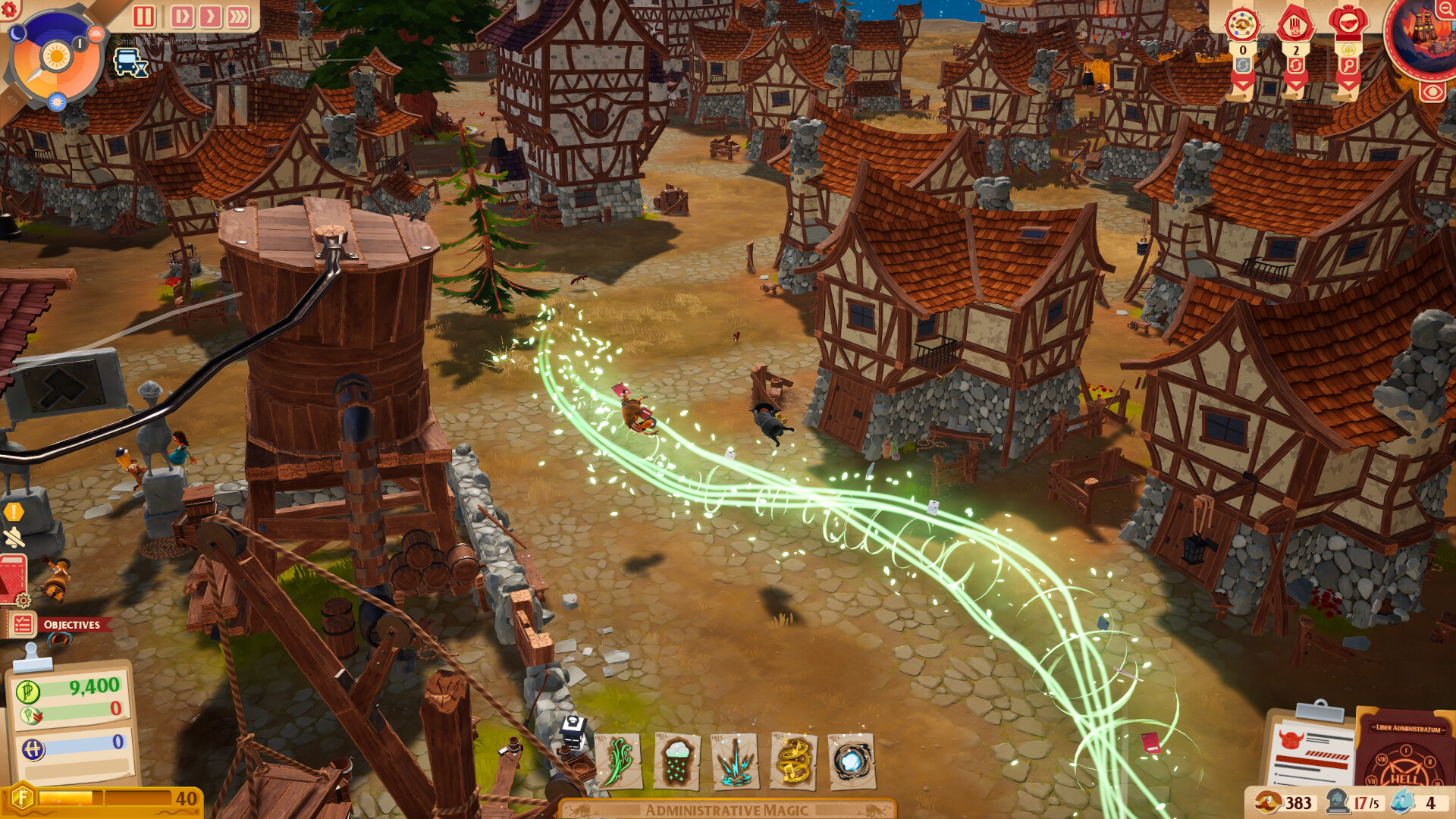
The second layer, the top-down human world where players can't build directly but can manipulate events, rulers, and belief systems, is far more divisive. Several of the sample's most detailed reviews, including more than one explicit "Not Recommended," single out the overworld as the game's weak point: random events that swing wildly between famine and surplus in the souls reaching Hell, kings and rulers whose priorities can only be influenced indirectly through killing and rerolling them, and a general sense of babysitting a civilisation that's constantly teetering rather than meaningfully steering one. One reviewer summarised the frustration precisely: the overworld doesn't feel like influence so much as damage control on a system that's actively working against the player. This isn't a fringe complaint; it's echoed across reviews with wildly different playtimes, from under two hours to over 250, suggesting it's a structural design tension rather than something players simply grow out of.
A campaign that under-explains its own traps
A second recurring thread, distinct from the overworld complaints but often raised by the same reviewers, concerns how poorly the game communicates its meta-progression. Several reviews describe committing to the wrong early tech or worker upgrade and only discovering much later that the choice had effectively locked them out of completing a mission, with no clear in-game warning that the decision mattered. One reviewer called this out directly as a design failure rather than a difficulty spike: the mechanic isn't hard so much as unexplained, and the game offers little help distinguishing a safe choice from a run-ending one. That's compounded, per another detailed review, by logic gates that can silently break mid-session, quietly halting soul processing until the player notices something has gone wrong. None of these are dealbreakers on their own, but stacked together they paint a picture of a game whose systems are frequently smarter than its tutorialisation.
Presentation and writing carry real weight
Where the sample is close to unanimous is on craft: the art direction, the writing, and the overall tone land consistently well even among reviewers otherwise critical of the systems underneath. Multiple reviews single out the sheer density of detail, readable signage, background gags, and expressive demon animation that reward zooming in rather than just clicking through menus. The satire, aimed as much at corporate bureaucracy and paperwork as at traditional Hell imagery, is repeatedly described as genuinely funny rather than merely shock-value edgy, and the soundtrack gets specific praise for shifting tone smoothly between calm management and moments of crisis. It's the kind of polish that suggests a team more confident in its art and comedic voice than in its systems documentation, and it's very likely doing real work to soften the balance complaints raised elsewhere in the sample.
Bugs, performance, and an active developer
A handful of technical complaints round out the negative side of the sample: at least one reviewer reports a memory leak that eventually crashes long single-session saves, and a separate review flags RAM usage running noticeably above the game's stated minimum requirement. These read as the kind of issues a post-launch patch cycle can plausibly address, and there's at least one visible sign that's already happening, a developer response attached directly to one of the more detailed critical reviews in the sample, which is a reasonably good signal for a studio still actively engaging with its early feedback rather than treating the Steam launch as a finish line.
Final Verdict
Sintopia's underworld half is a genuinely inventive automation puzzle dressed up as infernal management, sharp enough in its writing and art direction to justify the Dungeon Keeper and Theme Hospital comparisons its own reviewers keep reaching for. The overworld half is a rockier proposition: multiple independent, detailed reviews describe it as chaotic, under-explained, and frustratingly indirect once the hand-tuned campaign missions stop holding the player's hand, and progression traps and the occasional broken logic gate compound that frustration rather than existing in isolation. None of that undoes what works here, the core loop is distinctive and the presentation is a genuine strength, but it does mean Sintopia rewards patience with an unforgiving learning curve more than it welcomes players in gently. For genre fans willing to push through that friction, there's a very good management game on the other side of it.
Pros and cons
Pros
- A distinctive dual-layer structure, an automation-focused Hell-management sim paired with a lighter-touch overworld god game, that reviewers repeatedly compare favourably to Dungeon Keeper, Theme Hospital, and Black & White without feeling like a straight clone of any of them
- Dense, detailed art direction that multiple reviewers single out by name, with readable in-world signage, expressive demon animations, and visual gags that reward zooming in
- Writing that leans into bureaucratic and corporate satire alongside the infernal theming, praised across several detailed reviews as genuinely funny rather than merely edgy
- A hell-management loop built around logic gates, sorting, and optimising soul throughput that several reviewers describe as closer to a satisfying puzzle or automation game than a typical city builder
- An active developer presence, including at least one direct response to a critical review visible in the sample, suggesting ongoing post-launch attention to the issues being raised
Cons
- Multiple independent reviewers describe the overworld as unpredictable and poorly telegraphed once players leave the scripted campaign, citing random events that swing between drought and flood in soul supply with little warning or player agency to correct course
- Several reviewers report the tech and meta-progression systems are explained badly enough that committing to the wrong early unlock can quietly end a run, with no in-game signal that a choice was a trap
- More than one reviewer flags a bug where automation logic gates can silently break mid-run, stalling soul processing until the player notices and manually intervenes
- A recurring complaint that overworld influence is too indirect: players can't directly command human rulers or armies, only nudge and reroll them, which several reviewers found frustrating rather than strategic
- At least one reviewer reports a memory leak that causes long single-session saves to eventually crash, and another notes RAM usage running meaningfully above the game's stated system requirements
Screenshots
-
SintopiaImage: Piraknights Games via Steam -
SintopiaImage: Piraknights Games via Steam -
SintopiaImage: Piraknights Games via Steam