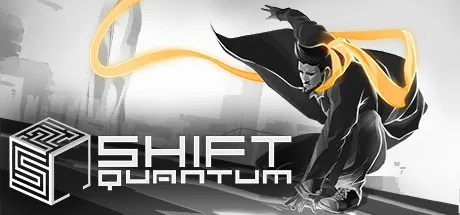
Game review
Shift Quantum
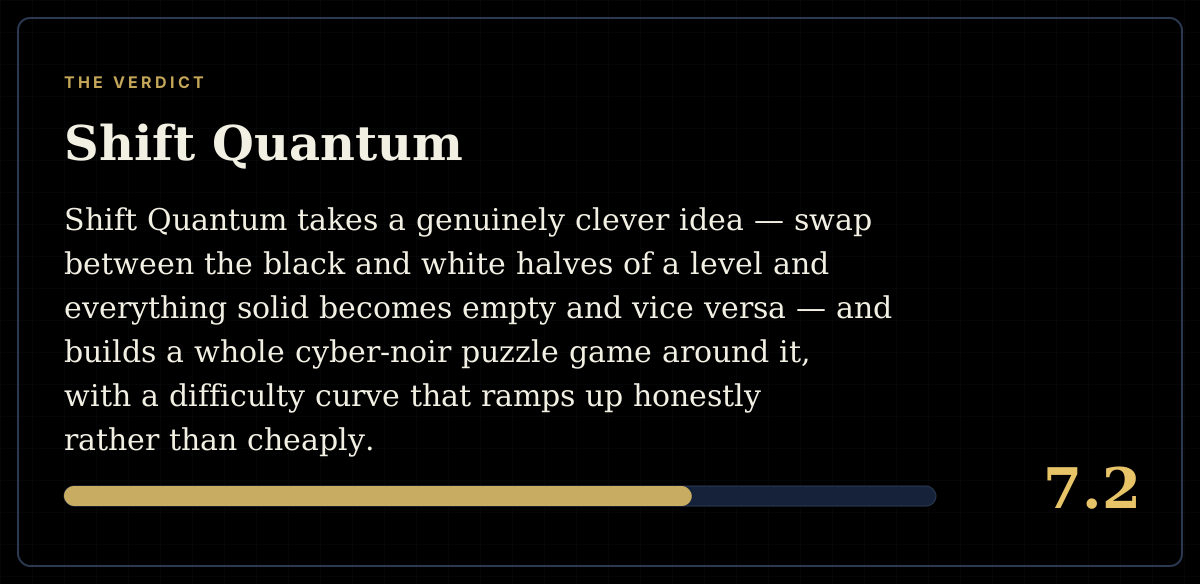
7.2 / 10
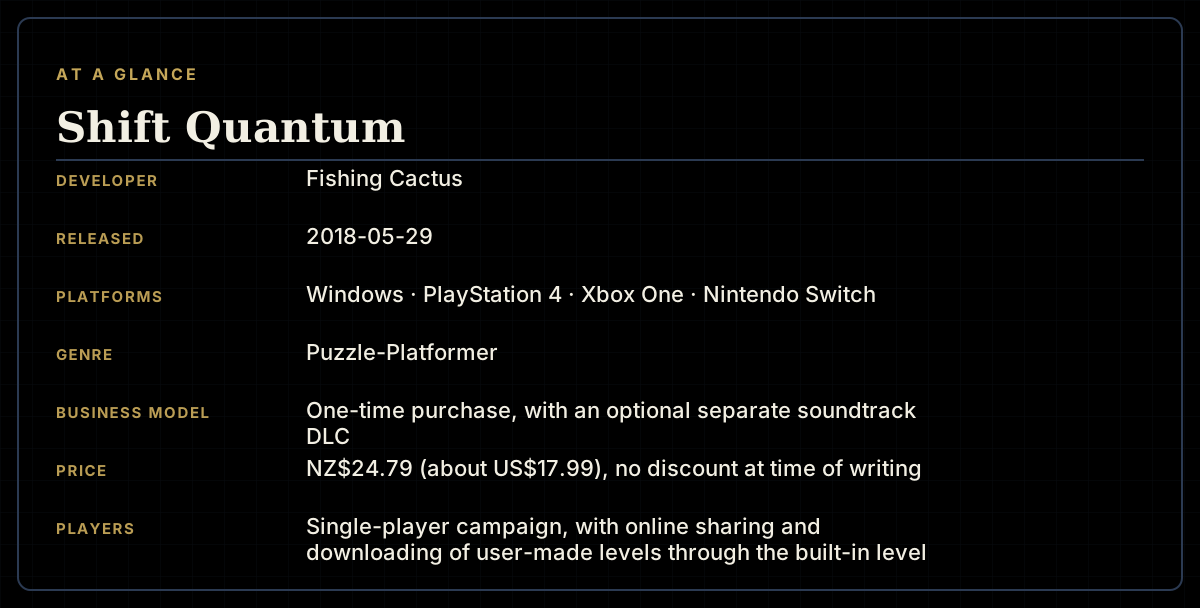
- Developer
- Fishing Cactus
- Publisher
- Fishing Cactus
- Released
- 29 May 2018
- Platforms
- Windows, PlayStation 4, Xbox One, Nintendo Switch
- Genre
- Puzzle-Platformer
- Monetisation
- One-time purchase, with an optional separate soundtrack DLC
- Players
- Single-player campaign, with online sharing and downloading of user-made levels through the built-in level editor
The short version
Shift Quantum takes a genuinely clever idea — swap between the black and white halves of a level and everything solid becomes empty and vice versa — and builds a whole cyber-noir puzzle game around it, with a difficulty curve that ramps up honestly rather than cheaply. The soundtrack is good enough to have its own DLC, and the level editor gives it a life well past the campaign.
It doesn't fully escape its Flash-game roots, though. The story is thin to the point of being forgettable even to people who liked everything else, a handful of players report crashes tied to the game's always-online level-sharing feature, and at close to NZ$25 for what several reviewers finished in under twenty hours, more than one recommends waiting for a sale rather than buying at full price.
Biggest strengths
- The shift mechanic is simple to explain and keeps generating new ideas across the campaign
- Difficulty builds fairly, introducing new rule twists before testing them properly
- Soundtrack by Volkor X and Simon Felix is strong enough to have its own DLC
Biggest weaknesses
- Story is thin and forgettable — several positive reviews call it out as the weak link
- A minority of players report launch crashes tied to the always-online level-sharing feature
- Full 100% completion requires multiple playthroughs, which only achievement hunters will do
Who it's for: Puzzle-platformer fans who like a mechanic that keeps escalating, people who grew up on Armor Games' original Shift series looking for a proper sequel, and anyone drawn to a good level editor with an active community pool to draw from.
Our recommendation: Worth it for puzzle-platformer fans, but wait for a sale — the campaign is on the short side for the asking price, and the connectivity issues a minority of players report are worth checking current patch notes for before buying at full price.
7.2 / 10
Introduction
Fishing Cactus's history with Shift goes back further than most sequels get to claim. When the Belgian studio started up in 2008, the original Flash game — created by Antony Lavelle and published by Armor Games — was their first project, and they went on to build the series' early non-Flash ports: Shift Extended for PlayStation Minis in 2011, then Shifting World and Shift DX for Nintendo 3DS. Ten years after that first Flash release, Shift Quantum is the studio's own full reinterpretation of the idea they'd been shepherding all along — a proper campaign, a cyber-noir setting, new mechanics layered onto the original rule, and a level editor to keep it going.
The core trick is unchanged and still good: press a button and the level inverts. Solid black becomes empty white and vice versa, walls become floors, floors become gaps, and your character stays put while the world flips around them. Shift Quantum's job is finding new ways to complicate that one idea without losing the reader, and going by both the achievement data and the review text, it mostly succeeds.
The shift mechanic and its difficulty curve
Steam's global achievement stats give an unusually clean read on how the difficulty actually lands. 70.6% of players who've touched the game have "Welcome to Negative Space," the shift tutorial achievement — a healthy, expected drop-off for any puzzle game's opening hour. From there the curve falls steadily rather than falling off a cliff: "You Are Not a Fakir" and "I'm Gonna Wake Up," both mid-campaign markers, sit in the low-to-mid 50s, and only late-game achievements like "I Hate Life" (14.5%) and "The Choice" (15.4%) drop into completionist territory. That's the shape of a game that teaches its twists before testing them, which lines up with what players say directly: a 985-minute reviewer calls it "an enjoyable puzzle platformer with a neat art style, some genuine headscratchers, and a great deal of replayability," while a 33-hour player writes it's "increasingly complex and frustrating puzzles... I admit I had to look up a YT vid on 2 puzzles, but the rest took time, patience, deep thought."
Fishing Cactus also adds real new material rather than just re-skinning the original four Flash games: reviewers who know the series call out pushable blocks that follow the same shift rules as the environment around them — solid in one state, open space in the other — as a genuinely new wrinkle the Flash originals never had. One reviewer, self-described as an old fan of the series, sums it up as "an excellent evolution of a classic puzzle platformer series... Platforming works well and isn't too floaty, puzzles are challenging but not to the point where I got frustrated."
Cyber-noir presentation and sound
The visual identity is 2.5D — flat black-and-white geometry with noir lighting and a sense of depth that a pure 2D platformer wouldn't have. It reads as a deliberate step up from four Flash games about geometric shapes, and reviewers generally credit it: one calls the level design and 2.5D animation "such a welcome detail." It's not universally loved — one longer review describes the game as having "a Mind-bending mechanic and bland atmosphere," suggesting the noir dressing works better as a coat of paint than as a story delivery system.
Where the presentation is closer to unanimous is the soundtrack. Composed by Volkor X and Simon Felix, it's good enough that Fishing Cactus sells it as standalone DLC, and it's one of the few things every kind of reviewer — fans of the old Flash games and newcomers alike — singles out without qualification: "the soundtrack is absolutely amazing," "the soundtrack is amazing too," "the visuals and theme tie together well. Even the menu system is part of the experience, not just a break in immersion."
Story: the weak link
Ask what actually happens in Shift Quantum and reviewers who otherwise recommend the game start hedging. "The story didn't make sense, and it was often unclear where you were supposed to go or what you were supposed to do," writes one recommending reviewer. Another, giving the game an explicit 8/10, still flags "bland atmosphere" on the narrative side even while praising everything mechanical. A third sums up the split cleanly: "it does occasionally take a break from actual puzzles to give you a linear 'story'/atmosphere segment (not that there's much [there])." The cyber- noir wrapper is atmospheric enough to set a mood, but nobody in the review sample treats the plot as a reason to play.
Level editor and replayability
The level editor is where Shift Quantum earns its long tail. Levels can be built, shared and downloaded through Steam, and several reviewers rank it as highly as the campaign itself: "I really love the level editor and smooth gameplay," and an 8/10 review calls the game "enjoyable... with a great deal of replayability courtesy of community levels." The catch is that full completion — all 28 achievements — requires more than one playthrough by design, which the achievement data backs up: completionist-flavoured achievements like "The Choice" and "Family Reunion" sit around 15%, against 70% for the tutorial achievement. As one reviewer puts it bluntly, "the only way to get 100% is to play the game through more than once, which only the most die hard achievement-hunter will do" — a fair trade for players who want a puzzle box to keep coming back to, less so for anyone just after the story.
Performance and connectivity
This is where the review sample's small size (27 English-language reviews at time of writing) still turns up a real, repeated pattern rather than noise. Steam's own system requirements note that "an online connection is required to share and download community levels," and three separate negative reviews tie their problems directly to that: one reports the game "crashes about a minute in if your wifi isn't turned off," another says several achievements were unobtainable "due to issues with connecting to servers online," and a third, in Indonesian, asks for a refund over persistent errors. None of this appears to affect the core single-player campaign once past launch — the positive reviews in the same sample, some logging 30+ hours, don't mention it — but it's a specific, fixable- sounding class of bug worth checking current patch notes for, particularly for anyone planning to play offline or with an unstable connection.
Value
At NZ$24.79 (roughly US$17.99), Shift Quantum sits at the upper end of what a puzzle-platformer without a marquee story usually asks. Reported playtimes in the review sample range widely — from a short "fast-paced, yet very short... buy it when it's on sale" campaign to a 100%-completion 17-hour run and a 48-hour outlier who kept going with the level editor — and more than one reviewer independently lands on the same advice, unprompted: wait for a discount. A reviewer buying at a regional price around US$9 called it worth it immediately; another paying the full US$17.99 called that "very expensive" for the genre. The game has had discounts historically, and given how consistently reviewers volunteer the "wait for a sale" advice without being asked, it's the sensible default here.
Final verdict
Shift Quantum earns a 7.2. The core shift mechanic is exactly as clever as its pedigree suggests — Fishing Cactus have been iterating on this idea since 2008, and it shows in how confidently the difficulty curve escalates without losing the player. The soundtrack, the level editor and the 2.5D noir presentation all clear the bar comfortably.
It lands short of higher marks because the story that's supposed to justify the noir setting doesn't land for almost anyone who mentions it, because a repeated (if minority) pattern of connectivity crashes points to a real rough edge around the level-sharing feature, and because the asking price is a stretch against campaign lengths reviewers themselves describe as short. Puzzle fans who value a mechanic over a story, and who'll get real mileage from the level editor's community levels, should buy this — ideally on a sale, alongside the soundtrack DLC that everyone who mentions it seems to love.
Pros and cons
Pros
- The shift mechanic is simple to explain and keeps generating new ideas across the campaign
- Difficulty builds fairly, introducing new rule twists before testing them properly
- Soundtrack by Volkor X and Simon Felix is strong enough to have its own DLC
- Level editor with online sharing gives it real replayability beyond the story campaign
- Full controller support plus accessibility options: text size, subtitles, keyboard-only play
Cons
- Story is thin and forgettable — several positive reviews call it out as the weak link
- A minority of players report launch crashes tied to the always-online level-sharing feature
- Full 100% completion requires multiple playthroughs, which only achievement hunters will do
- Around NZ$25 for a campaign several reviewers finished in well under twenty hours
Screenshots
-
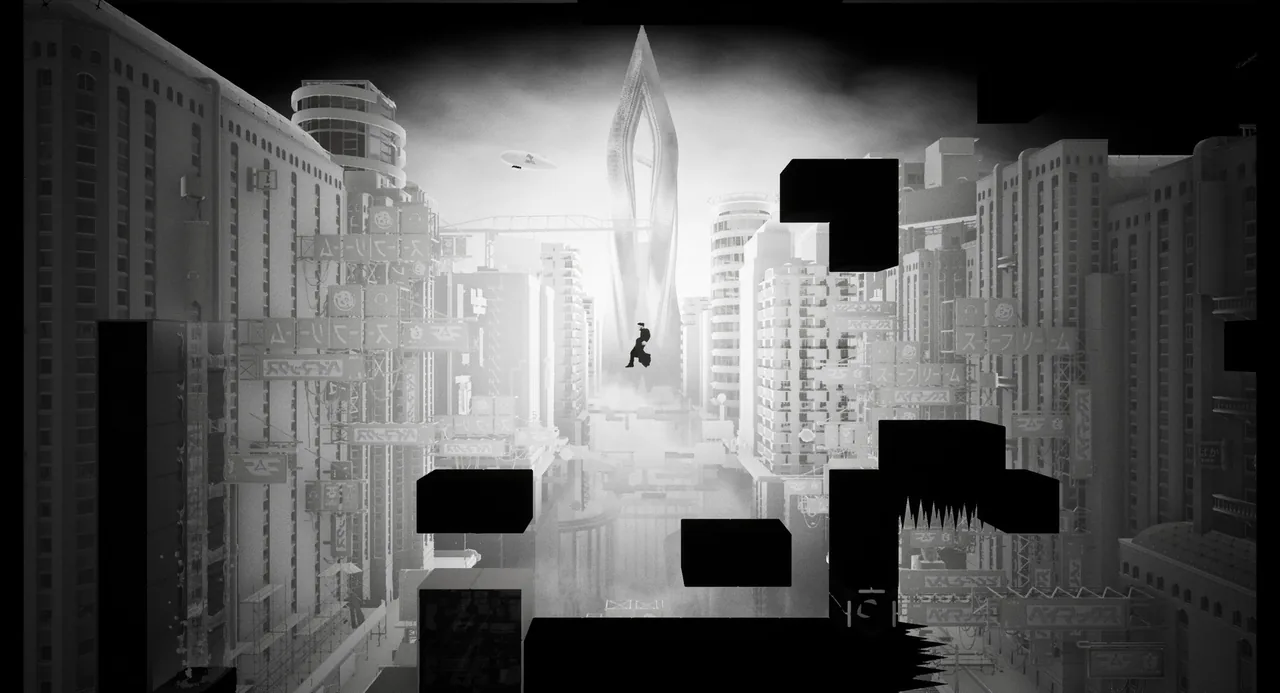
Shift Quantum - A Cyber Noir Puzzle PlatformerImage: Fishing Cactus via Steam -
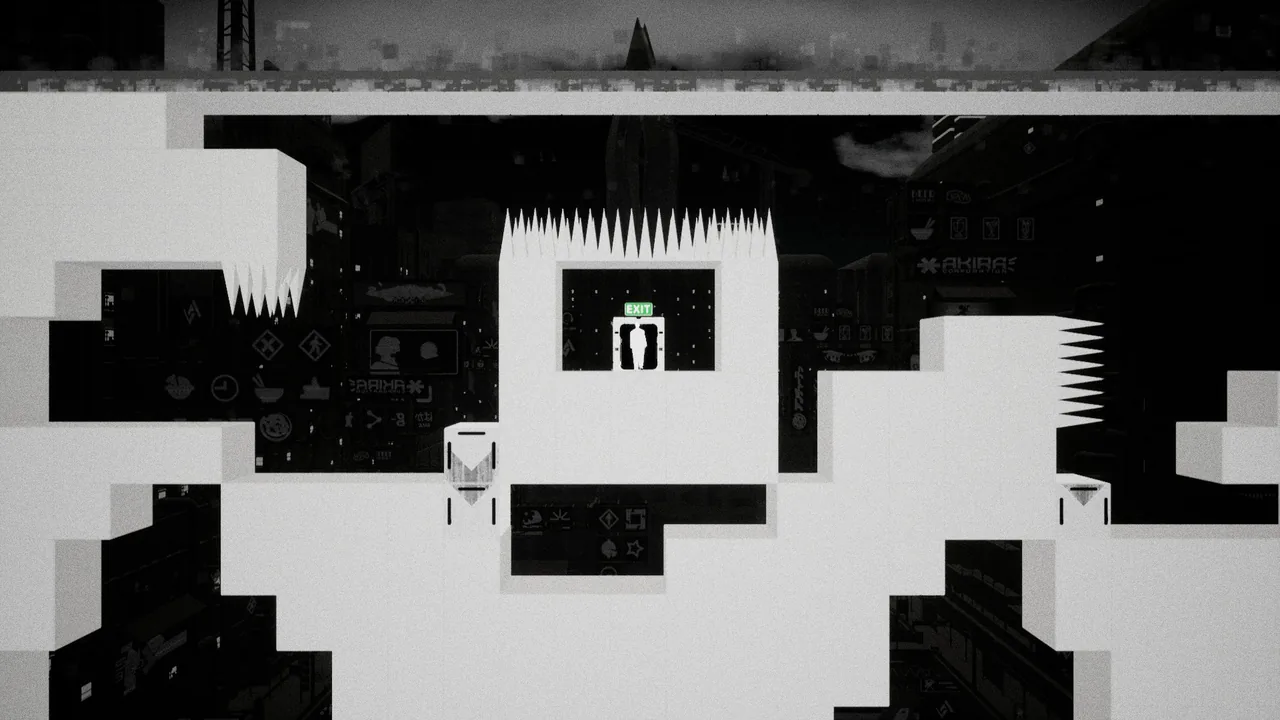
Shift Quantum - A Cyber Noir Puzzle PlatformerImage: Fishing Cactus via Steam -

Shift Quantum - A Cyber Noir Puzzle PlatformerImage: Fishing Cactus via Steam -
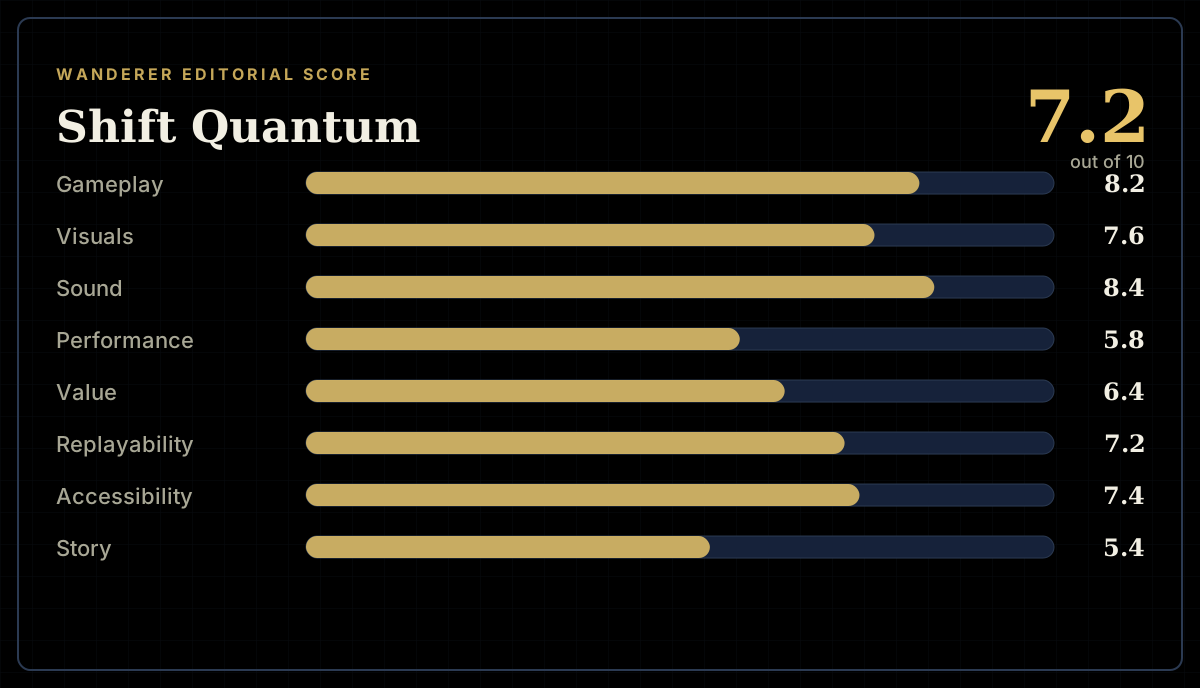
How the review scores each part of the gameWanderer Editorial -
Shift Quantum at a glanceWanderer Editorial -
The short versionWanderer Editorial