Game review
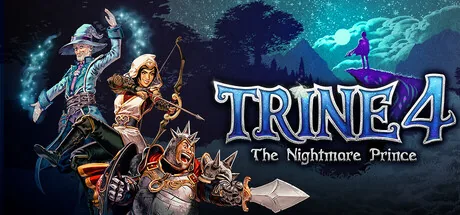
Trine 4: The Nightmare Prince
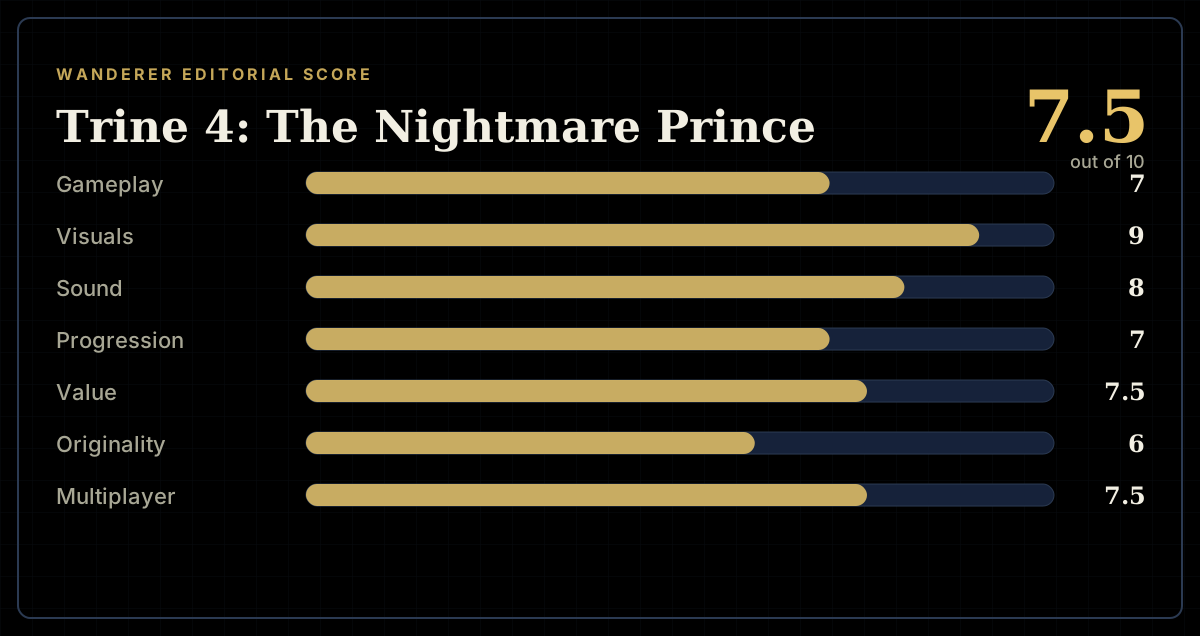
7.5 / 10
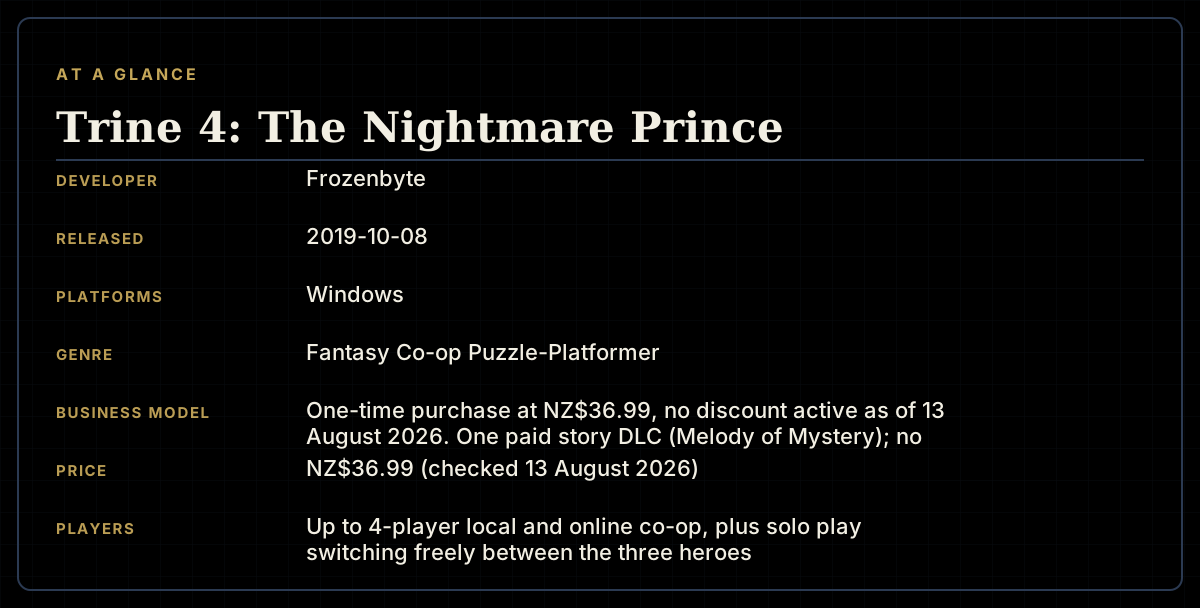
- Developer
- Frozenbyte
- Publisher
- Frozenbyte
- Released
- 8 October 2019
- Platforms
- Windows
- Genre
- Fantasy Co-op Puzzle-Platformer
- Monetisation
- One-time purchase at NZ$36.99, no discount active as of 13 August 2026. One paid story DLC (Melody of Mystery); no loot boxes or subscription.
- Players
- Up to 4-player local and online co-op, plus solo play switching freely between the three heroes
The short version
Trine 4: The Nightmare Prince is Frozenbyte's public apology for Trine 3, and it worked: after the third game's failed pivot to 3D open areas nearly killed the series, Trine 4 went straight back to the 2.5D physics-puzzle formula and the three original heroes -- wizard Amadeus, thief Zoya and knight Pontius -- that made the first two games beloved. Launch reviews called it exactly the refocusing the series needed (Metacritic 80-81), and Steam agrees seven years later at Very Positive, 88.7% of 14,284 reviews (92.9% of the 3,711 English-language reviews).
What hasn't changed since launch is the series' oldest and most consistent complaint: reviewers across every year since 2019 single out the combat as the weak link, often preferring the game would drop fighting altogether and lean fully into puzzles and platforming. A late-2025 update that bundled Steam-Epic crossplay for a free giveaway of the Trine Classic Collection also drew a small but pointed wave of complaints in December 2025-January 2026 about an unrequested Epic Online Services install -- notably milder than it sounds, since no Epic account or login is actually required to play.
Biggest strengths
- A genuine, deliberate return to form after Trine 3, restoring the three-hero puzzle-platforming structure and character progression the series was built on
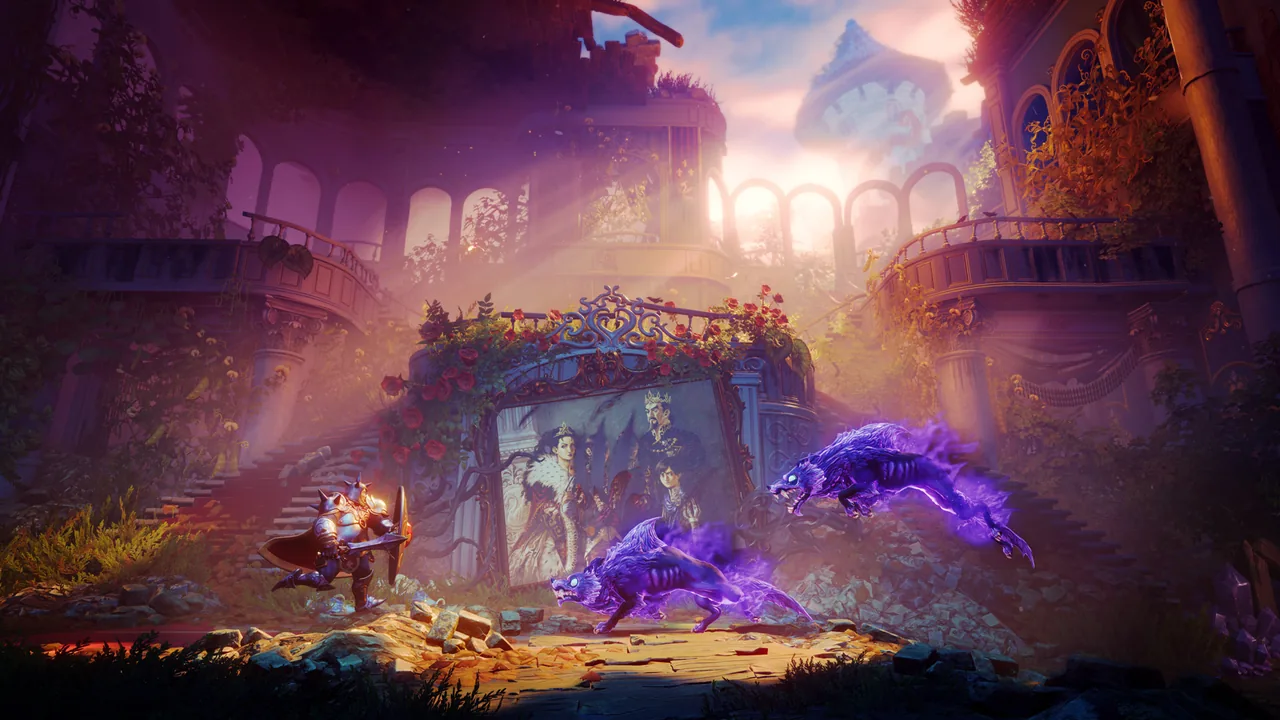
- Still visually one of the best-looking games in its genre -- painterly, fairytale-book art direction that draws consistent praise across the entire review history
- Physics puzzles that reward creative use of all three heroes' abilities together, especially in co-op where players can specialise
Biggest weaknesses
- Combat is the one part of the game reviewers have criticised consistently since 2019 -- repeatedly called clunky, repetitive or the game's weakest system, right through to 2025 reviews
- A handful of specific bugs have gone unfixed for years, including a co-op save issue where only the session host keeps collected items, raised as still-present more than six years after launch
- A December 2025 crossplay update installs Epic Online Services software on first launch, which a small but vocal set of recent reviews object to, even though no Epic account is required
Who it's for: Co-op players and Trine series fans who want a return to the puzzle-and-platforming formula of the first two games, played best with a second person on the couch or online rather than solo. Less suited to anyone hoping the combat has become a real strength, or who wants a substantial single sitting -- most reviewers finish it in one weekend.
Our recommendation: A safe, attractive recommendation for co-op, and the best Trine has been since the second game -- buy it for the puzzles, the visuals and a partner to play with, and go in expecting the fighting to be the part everyone, including this review, wishes was better.
7.5 / 10
Some sequels exist to build on a franchise. Trine 4: The Nightmare Prince exists to undo one. Trine 3: The Artifacts of Power had gambled the series' identity on an unfinished-feeling pivot to open 3D areas, dropped the character-progression system fans liked, and landed as a short, widely disliked misstep that put Frozenbyte's flagship series in real doubt. Trine 4 is the studio's answer: throw all of that out, go back to the 2.5D side-on physics-puzzle format of Trine and Trine 2, bring back the character-upgrade system, and let the three original heroes — wizard Amadeus, thief-archer Zoya and tank knight Pontius — carry a new fairytale story about a prince whose nightmares are leaking into the waking world.
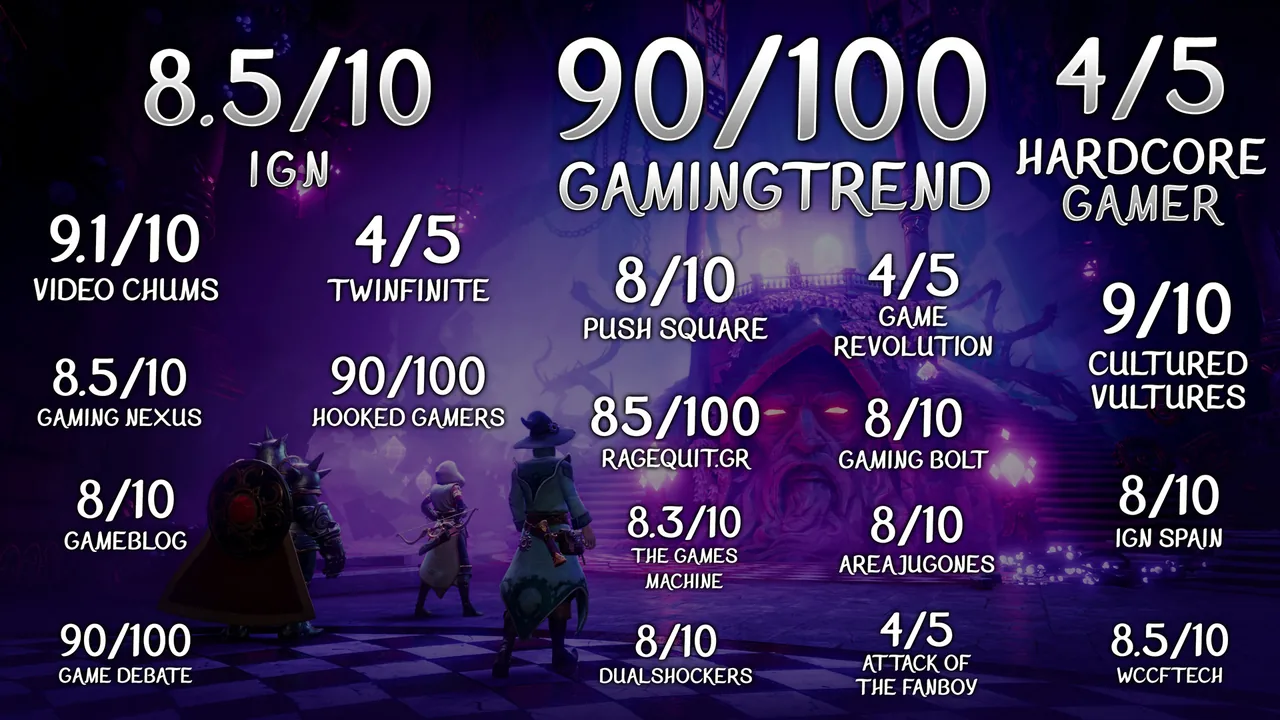
Launch critics agreed it worked. Metacritic settled at 80-81 across platforms, IGN called it "exactly the kind of refocusing that the Trine series needed" at 8.5/10, and Eurogamer's review was headlined with the game "finally" striking gold — all pointed, deliberate acknowledgements that this was a recovery story as much as a new game. Seven years on, Steam's lifetime numbers back that reading up: Very Positive at 88.7% of 14,284 reviews overall, and a stronger 92.9% across the 3,711 English-language reviews specifically — a healthy, stable score for a game this far past release, without the kind of steep recent decline that sometimes shows up when a well-liked older game runs into a distribution problem.
What actually got fixed
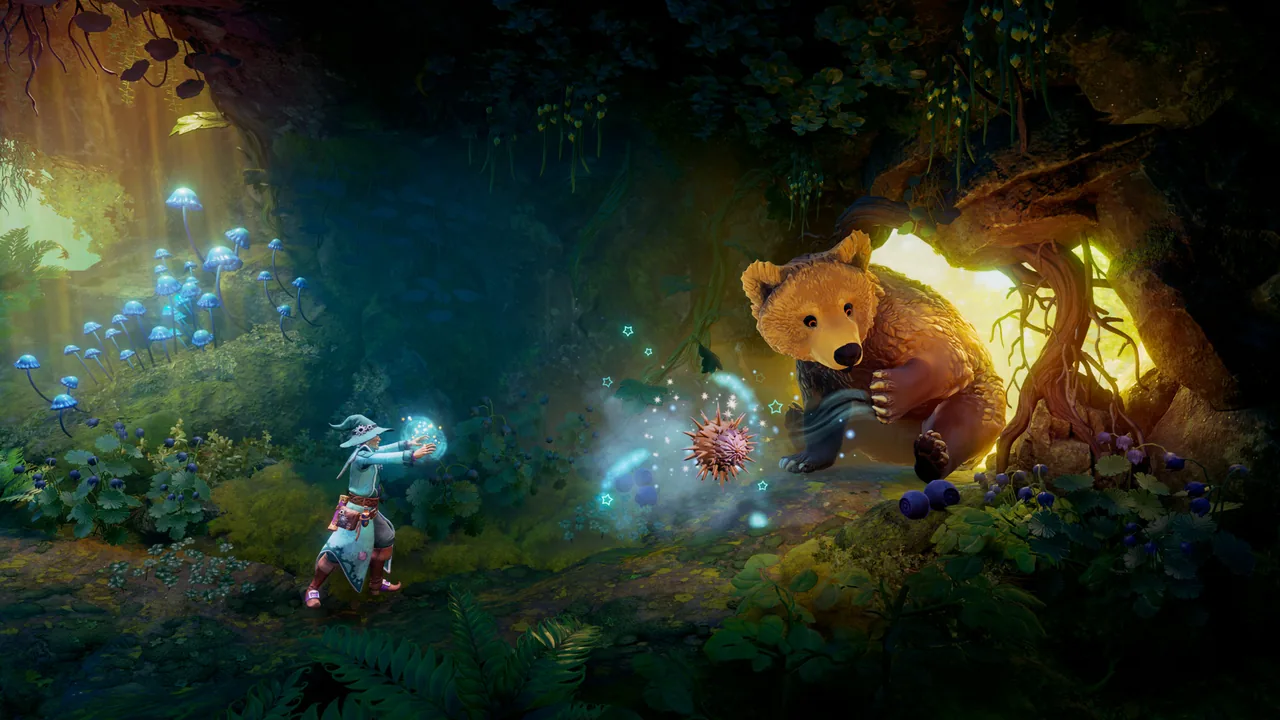
The core loop is unchanged from the series' best games, and that's the entire point. Each of the three heroes has a distinct toolkit — Amadeus can conjure and manipulate boxes and planks with magic, Zoya fires a grappling arrow and can create rope bridges, Pontius swings a sword and shield and can grow it to smash through obstacles — and every puzzle room is built to be solved by combining their abilities, whether that's one player switching between all three or up to three more players each taking a hero in co-op. Reviewers across the entire seven-year window consistently call this the game's strength: physics puzzles that reward lateral thinking, a genuine sense of discovery when a solution clicks, and art direction — painterly fairytale-book environments that have aged conspicuously well next to games with more conventional visual styles — that shows up as a compliment in nearly every review this piece checked, positive or negative. Character progression is back too: collected experience tokens buy new abilities and upgrades for each hero, giving solo players and co-op groups alike a reason to explore side paths rather than beeline the exit.
Where Trine 4 is more divided is combat, and this is the one part of the game where the complaint pattern hasn't shifted at all in seven years. Reviews from the month of launch and reviews from mid-2025 make an identical point in almost identical language: fighting feels clunky, enemies are repetitive damage sponges, and several reviewers say outright that they wish Frozenbyte had cut combat entirely and built the whole game around puzzles and platforming instead. "As with the rest of the series, the combat is the worst part, and the game would be immeasurably better if they got rid of it," reads one representative 2025 review — a sentiment that could have been lifted from a 2019 review with no changes needed. This is a genuinely consistent, cross-generational complaint rather than a fad or a single bad patch, which makes it worth taking seriously as a real design limitation rather than a fixable bug: Frozenbyte's puzzle design has clearly stayed sharp across four mainline games, but the combat has never been the series' strength and Trine 4 doesn't solve that, it just surrounds it with enough good puzzling that most reviewers forgive it.
A second, smaller but persistent complaint concerns difficulty spikes, most often around the final boss — multiple reviews across different years describe getting stuck there specifically, on occasion even on easy difficulty, which reads as a genuine late-game balance issue rather than scattered skill-issue complaints given how narrowly it's targeted at one specific fight rather than the game broadly.
A co-op bug that's been open for years, and a giveaway that unsettled some players
Two more specific, dateable issues show up in the negative sample worth calling out plainly. The first is a long-standing co-op bug: several reviews, including one from April 2025, report that in online co-op only the session host retains collected items and progression, a problem the reviewer notes has gone unaddressed "for over 6 years." That's a real, specific, still-current complaint about a game whose main appeal is co-op play, and it's worth knowing about before organising a group session around it.
The second is more recent and more easily misread. In December 2025, Frozenbyte gave the Trine Classic Collection (the first four games, including this one) away free on the Epic Games Store, paired with an update adding cross-platform co-op between Epic and Steam owners. That update installs an Epic Online Services runtime on first launch, and a cluster of reviews from late December 2025 through January 2026 register genuine surprise and irritation at unrequested Epic software appearing on their system — "why is it trying to install epic launcher???" reads one, and another blames the same update for temporarily breaking a friend's controller support. It's worth being precise here rather than piling on: unlike some other older Steam games that have recently added hard Epic account requirements, Trine 4 does not require an Epic account or login to play solo or in Steam-only co-op — the runtime install enables optional Steam-Epic crossplay and nothing more. The complaint is real and the surprise install is a legitimate annoyance worth disclosing, but it's a materially smaller issue than a login wall, and it hasn't moved the game's lifetime Steam score in any visible way the way a harder DRM change would.
How it's held up
The achievement data tells a consistent story about how people actually play Trine 4. The first four levels clear at 82.8%, 79.7%, 77.8% and 67.3% respectively — a normal, gradual drop-off for a game most buyers see a good way into — while full-completion achievements for collectibles (letters, treasures, experience orbs) sit down at 5.6-6.4%. That's the shape of a game people play through once for the story and puzzles, mostly in co-op, and don't return to for 100% completion — consistent with the "we finished it in a weekend" framing that shows up across several reviews, and not a red flag on its own, just a sign the collectible-hunting layer is a minority pursuit rather than the main draw.
At NZ$36.99 with no discount currently running, and one modest story DLC (Melody of Mystery) available separately, the base package remains reasonably priced for a five-to-eight-hour co-op campaign with a decent amount of side content for completionists who want it.
Verdict
Trine 4: The Nightmare Prince did what it needed to: it took a series that had badly stumbled and put it back on solid ground by returning to what made the first two games work, without pretending the fighting had ever been the appeal. Seven years of Steam reviews back that up with real consistency — the same praise for puzzles and visuals, the same complaint about combat, appearing in reviews written months apart across the entire span since launch, which is about as strong a signal as user review data gets that a game's actual strengths and weaknesses were correctly identified at launch and haven't shifted since. A long-standing co-op item-sync bug and a clumsily-communicated (if largely harmless) Epic runtime install are the two legitimate dents in an otherwise stable, still-recommendable co-op puzzler.
7.5 out of 10. Buy it for the puzzles, the co-op and some of the best fairytale art in the genre — and go in already knowing the fighting is the one part of the series Frozenbyte still hasn't cracked.
Pros and cons
Pros
- A genuine, deliberate return to form after Trine 3, restoring the three-hero puzzle-platforming structure and character progression the series was built on
- Still visually one of the best-looking games in its genre -- painterly, fairytale-book art direction that draws consistent praise across the entire review history
- Physics puzzles that reward creative use of all three heroes' abilities together, especially in co-op where players can specialise
- Launch-critic consensus (Metacritic 80-81, IGN 8.5/10) that the series' course correction actually worked, backed up by a stable Very Positive Steam score seven years on
Cons
- Combat is the one part of the game reviewers have criticised consistently since 2019 -- repeatedly called clunky, repetitive or the game's weakest system, right through to 2025 reviews
- A handful of specific bugs have gone unfixed for years, including a co-op save issue where only the session host keeps collected items, raised as still-present more than six years after launch
- A December 2025 crossplay update installs Epic Online Services software on first launch, which a small but vocal set of recent reviews object to, even though no Epic account is required
- Full completion (all collectibles, letters and treasures) sits at just 5.6-6.4% by the global achievement data, versus 67-83% for the first four levels -- a game most people play through once rather than fully clean up
Screenshots
-
Trine 4: The Nightmare PrinceImage: Frozenbyte via Steam -
Trine 4: The Nightmare PrinceImage: Frozenbyte via Steam -
Trine 4: The Nightmare PrinceImage: Frozenbyte via Steam -
How the review scores each part of the gameWanderer Editorial -
The essentialsWanderer Editorial -
The short versionWanderer Editorial