
Game review
Shambles: Sons of Apocalypse
6.5 / 10
- Developer
- EXLIX
- Publisher
- GRAVITY
- Released
- 26 June 2025
- Platforms
- Windows
- Genre
- Adventure, Indie, RPG, Strategy
- Monetisation
- paid
- Players
- false
The short version
Biggest strengths
- A genuinely deep, branching narrative structure, with reviewers repeatedly praising specific questlines, multiple endings per storyline, and worldbuilding several called unusually credible for the genre
- A large roster of ten playable characters and twenty starting decks, each with distinct playstyles, plus a lengthy tail of unlockable content reviewers say keeps surfacing new events even after 40+ hours
- Fully unlockable progression with no microtransactions, letting every character, deck, and cosmetic be earned through play
Biggest weaknesses
- A widely corroborated complaint, echoed independently across multiple positive and negative reviews, that the higher-difficulty 'curse' system applies punishing debuffs and buffs that a player's deck often cannot interact with or counter at all, undermining the game's own deckbuilding logic
- Repeated reports of bugged and mistranslated card text and abilities, described by more than one reviewer as a genuine source of confusion mid-run, not just a cosmetic localization slip
- No way to sell, dismantle, or otherwise remove unwanted cards from a run's collection, a gap multiple reviewers flagged as a missing basic deckbuilder convenience
Who it's for: Deckbuilding roguelite fans who want a genuinely story-driven wrapper around their card battles, and who are willing to tolerate some rough difficulty spikes and translation bugs to get it
Our recommendation: recommended
6.5 / 10
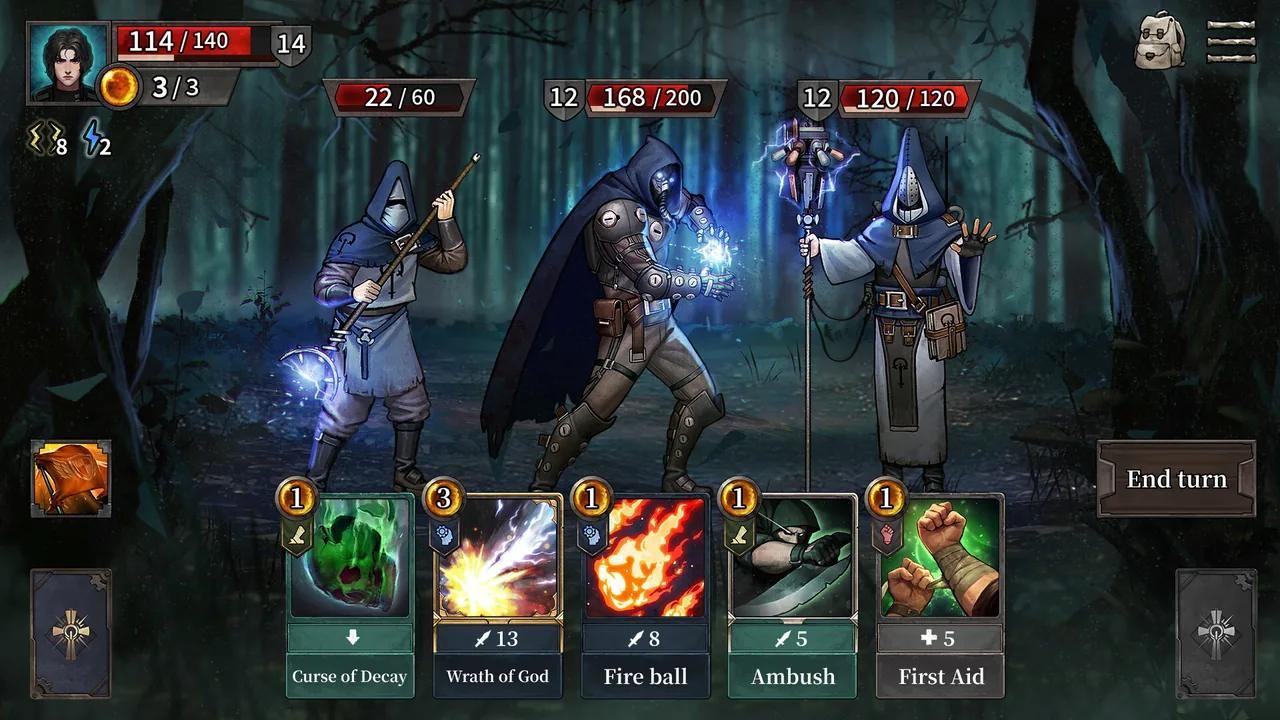
Shambles: Sons of Apocalypse launched on Steam on June 26, 2025, a $19.99 fusion of choose-your-own-adventure storytelling, roguelite deckbuilding, and turn-based card combat from developer EXLIX, published by GRAVITY. Five hundred years after humanity fled underground to survive a global catastrophe, players take the role of an explorer sent back to the surface to map a changed world, deciding through branching narrative choices and deck-driven battles whether that world heads toward doom or peace. It sits at a Positive rating, 41 to 3 across 44 English reviews, a smaller but consistently favorable sample built on genuine strengths in writing and structure that are meaningfully undercut by how the game handles its own difficulty systems.
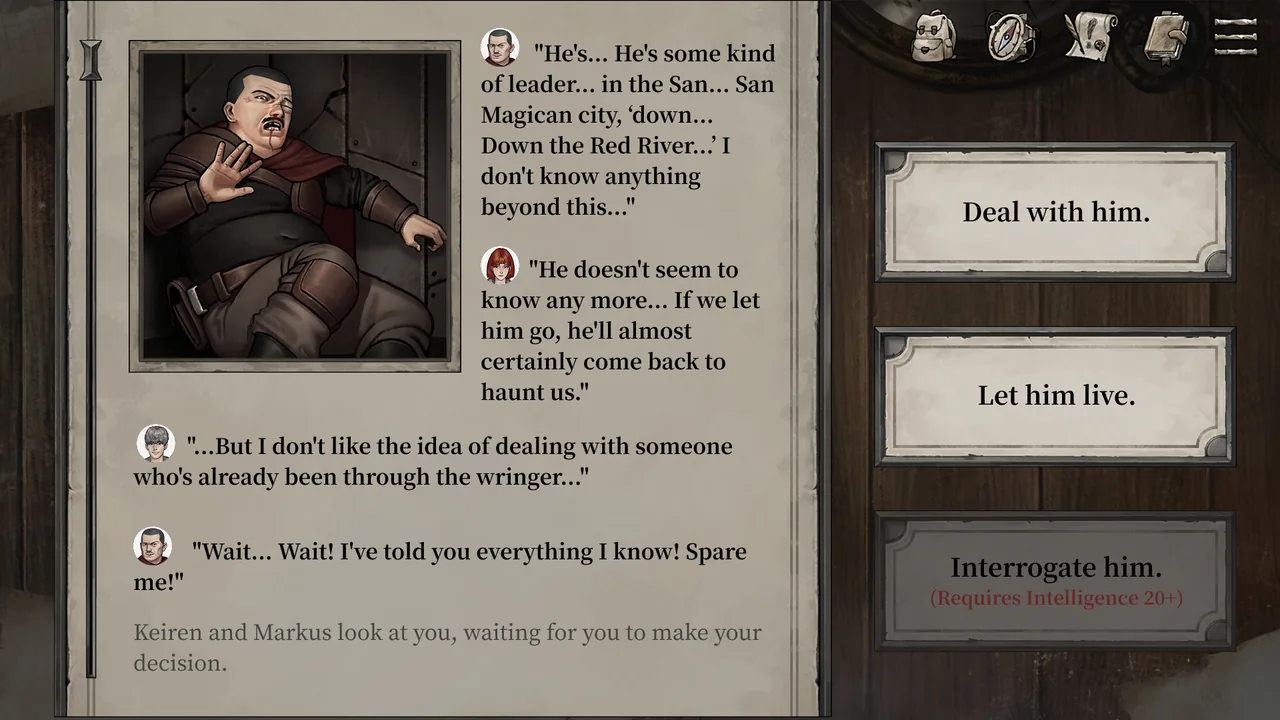
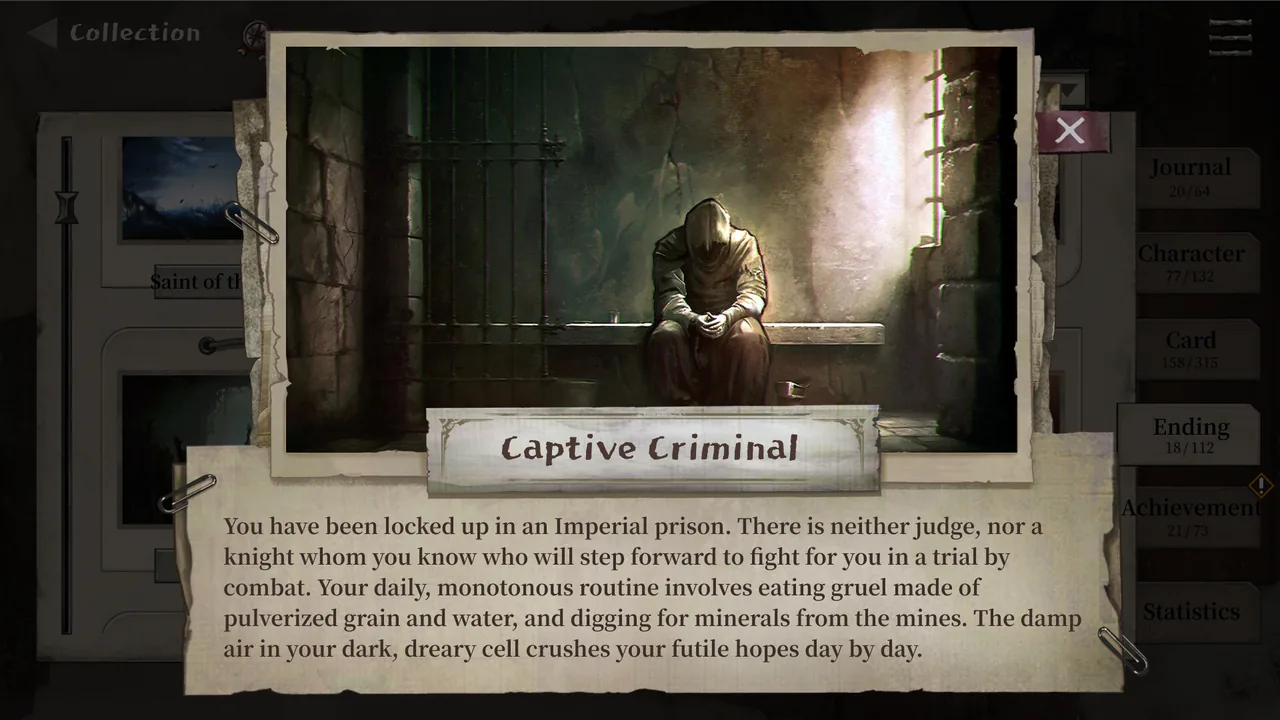
The clearest, most consistently credited strength across the review pool is the writing and branching structure itself. One reviewer called it "an ambitious blend of narrative RPG, roguelike progression, deckbuilding, and turn-based strategy that succeeds in delivering a memorable post-apocalyptic adventure," crediting the world for introducing "new societies, competing factions, forgotten technologies, and political conflicts" rather than a generic wasteland. Another, writing after 159 hours, singled out "fantastic writing" and "top notch moral and ethical puzzles constructed in a way that really draws you in," making the decision-making sections feel as demanding as combat itself. A third reviewer with 40 hours logged specifically praised how "even after 40 hours, there are still 'new' events popping out even in the starting regions," and multiple reviewers independently described the branching quest chains as offering four or more distinct outcomes depending on player choice. This isn't vague praise repeated by low-effort reviews; it's specific, recurring, and comes from reviewers with widely varied playtime, which gives it real weight.
The character and deck variety draws similar, if slightly less effusive, praise. Ten playable characters and twenty starting decks are cited repeatedly as giving genuinely different builds and starting regions, and several reviewers highlighted the fully play-earned unlock system, no microtransactions, currency earned through runs, as a meaningful point in the game's favor. One reviewer called it "genuinely perhaps my favorite deck builder of all time," while another compared the structure to "Slay the Spire with FFX node level up system," noting that three runs so far had each played out "vastly different."
Set against that praise, the single most corroborated complaint in the pool concerns the game's higher-difficulty "curse" system, and it's raised independently by reviewers on both sides of the recommendation line. The most detailed negative review, written after 15 hours and following a balance patch, laid out the problem precisely: certain curses inflict debuffs or buffs on a fixed timer that the player's own deck simply cannot interact with, meaning "cards that work under debuffs and buffs... cannot interact with the curse's debuffs and buffs that they inflict upon the enemy or player," turning entire fights one-sided regardless of deck quality. A separate, clearly positive 65-hour review reached almost the identical conclusion in gentler terms, noting that "higher difficulties are a bit more frustrating than fun due to the way the curses work often reducing the rewards for properly building your deck." A third reviewer, at 43 hours, added that curse selection is forced "every single battle" on harder settings and "also causes a lot of hang and makes battles take longer." That three separate reviewers, spanning both recommendation sides and different playtime brackets, independently zeroed in on the exact same system is a strong signal the curse mechanic is a genuine design flaw rather than a minority gripe about difficulty in general.
A second, distinct thread of complaints concerns technical polish and localization. Multiple reviewers reported "bugged / mistranslated cards and abilities" causing real confusion about what a card actually does mid-run, a complaint echoed independently by a different reviewer who flagged the translations as "a bit spotty" without prompting from the first. Neither reviewer was complaining about a single typo; both described enough instances to affect how they built and played their decks. A further recurring structural complaint is that despite an enormous total event count, "the majority of map tiles are just a pool of the same chunk of events," creating repetition specifically in the later stages of longer runs, and several reviewers separately noted there's no way to sell or otherwise dismantle unwanted cards picked up during a run, a basic convenience genre veterans expect. One negative review also took issue with tonal consistency, arguing the game "pretends to be" a cohesive post-apocalyptic story but reads more like disconnected "gotcha stories," and criticized close-up art quality as "amateurish" compared to the trailers, though this view was a minority one relative to the broadly positive art and writing praise elsewhere in the pool.
On value, one detailed 131-hour review put it plainly: "I would say this is more of a $15 game," even while praising the depth of individual quest chains, a fair characterization given the repetition complaints and the fact that further content is explicitly gated behind planned DLC that several reviewers noted is already advertised in-map ahead of release.
Shambles: Sons of Apocalypse earns its Positive standing on the strength of writing and structure that reviewers, across dramatically different playtime totals, keep independently praising in specific, credible terms. But its curse-based difficulty system is a real, widely corroborated flaw that actively works against the deckbuilding fantasy the rest of the game sells so well, and translation bugs add friction that shouldn't exist in a card game where reading your own cards correctly is the whole point. Worth it for players drawn to branching, choice-driven storytelling who can tolerate an unfair fight now and then; a harder sell for anyone expecting a tightly balanced deckbuilder first and a story second.
Pros and cons
Pros
- A genuinely deep, branching narrative structure, with reviewers repeatedly praising specific questlines, multiple endings per storyline, and worldbuilding several called unusually credible for the genre
- A large roster of ten playable characters and twenty starting decks, each with distinct playstyles, plus a lengthy tail of unlockable content reviewers say keeps surfacing new events even after 40+ hours
- Fully unlockable progression with no microtransactions, letting every character, deck, and cosmetic be earned through play
- A combat system reviewers across the board found satisfying and strategically deep once its systems click, layering positional and deckbuilding choices on top of the turn-based card battles
Cons
- A widely corroborated complaint, echoed independently across multiple positive and negative reviews, that the higher-difficulty 'curse' system applies punishing debuffs and buffs that a player's deck often cannot interact with or counter at all, undermining the game's own deckbuilding logic
- Repeated reports of bugged and mistranslated card text and abilities, described by more than one reviewer as a genuine source of confusion mid-run, not just a cosmetic localization slip
- No way to sell, dismantle, or otherwise remove unwanted cards from a run's collection, a gap multiple reviewers flagged as a missing basic deckbuilder convenience
- Repetitive later-game map encounters, with reviewers noting that despite an enormous total event count, many map tiles late in a run draw from the same recycled pool of events
Screenshots
-
Shambles: Sons of ApocalypseImage: GRAVITY via Steam -
Shambles: Sons of ApocalypseImage: GRAVITY via Steam -
Shambles: Sons of ApocalypseImage: GRAVITY via Steam