
Game review
Serious Sam: Shatterverse
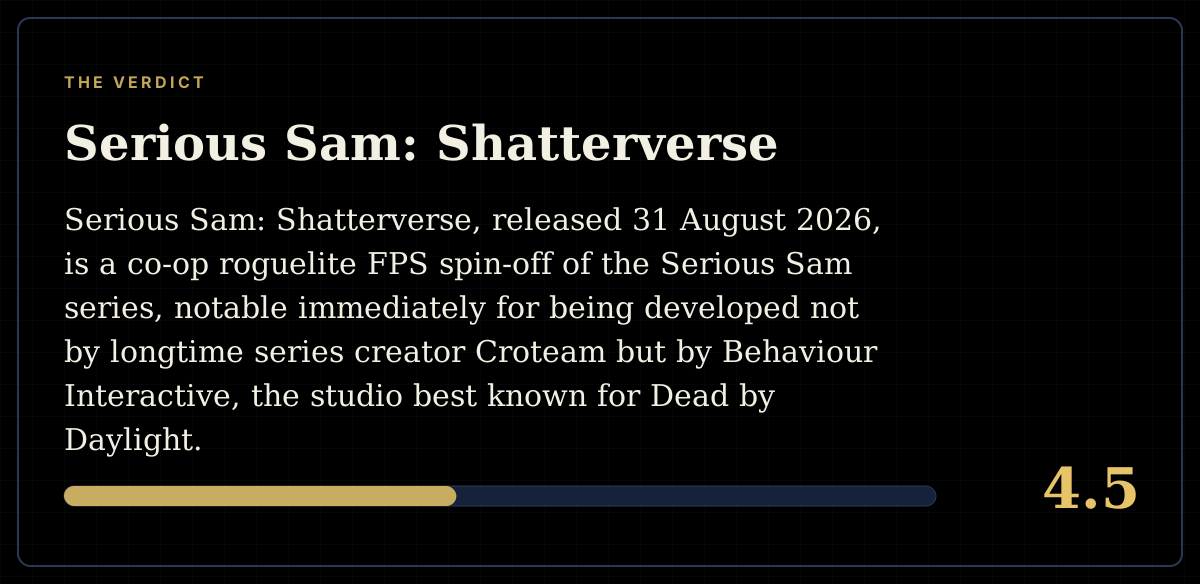
4.5 / 10
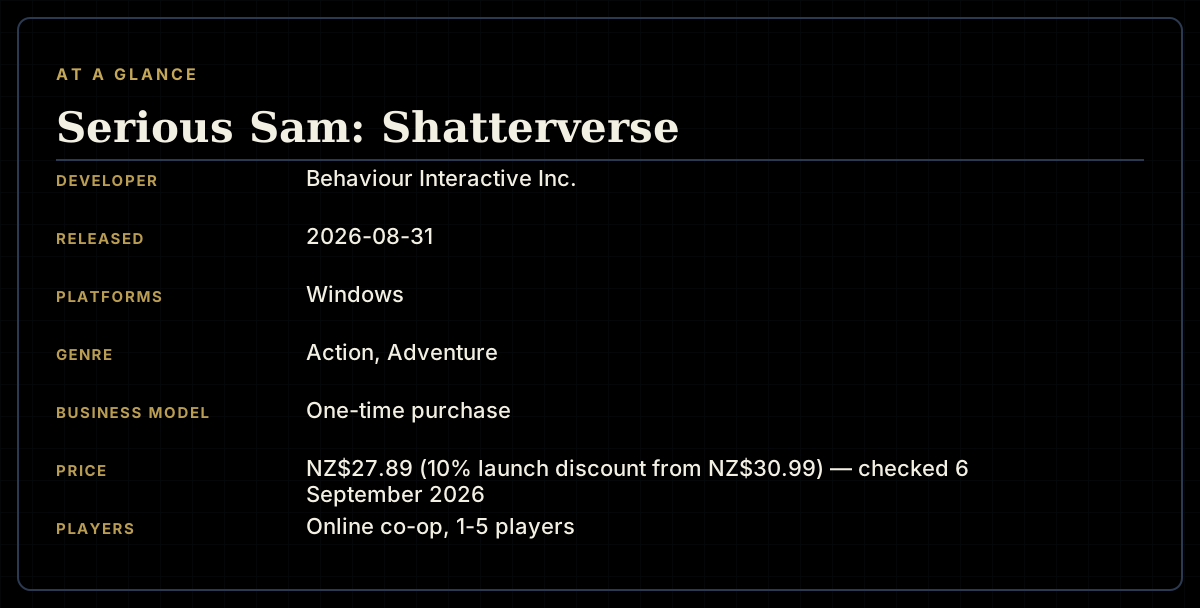
- Developer
- Behaviour Interactive Inc.
- Publisher
- Devolver Digital
- Released
- 31 August 2026
- Platforms
- Windows
- Genre
- Action, Adventure
- Monetisation
- One-time purchase
- Players
- Online co-op, 1-5 players
The short version
Serious Sam: Shatterverse, released 31 August 2026, is a co-op roguelite FPS spin-off of the Serious Sam series, notable immediately for being developed not by longtime series creator Croteam but by Behaviour Interactive, the studio best known for Dead by Daylight. It sits Mixed with a substantial sample of 505 reviews, and reading through a wide cross-section makes clear this is a genuinely contested release rather than a simple thumbs-down. The dominant, most detailed complaint is one of identity: a large number of longtime fans report the game simply doesn't feel like Serious Sam, citing shortened level design, an underpowered and slow weapon unlock structure, and stylistic choices several reviewers compare unfavourably to Fortnite or generic looter-shooters. Layered underneath that are specific, repeated technical complaints — forced open mic with no push-to-talk option, host/client desync and crashes, and a shader compilation stutter on first launch. Complicating a simple verdict, several detailed positive reviews, including from self-described lifelong franchise fans, argue the core shooting is genuinely fun once judged as a spin-off rather than a mainline entry, and at least two reviewers specifically raise the possibility that some of the negative sentiment has been amplified by YouTuber-driven review-bombing rather than organic play experience.
Biggest strengths
- Multiple detailed reviewers, including self-described lifelong Serious Sam fans with well over a thousand hours across the mainline series, report the core shooting is genuinely fun once the game is judged as a co-op spin-off rather than a mainline entry
- The higher difficulty tiers specifically draw praise for delivering the horde-based, overwhelming enemy swarms the series built its reputation on, with more than one reviewer describing the third difficulty as a genuine, satisfying return to form
- The modest asking price is repeatedly cited favourably, with multiple reviewers framing it as fair, mindless fun for the cost even when they have other, larger criticisms of the design
Biggest weaknesses
- The single most repeated complaint, made by a large number of detailed reviewers, is that the game doesn't feel like a Serious Sam game at all, citing shortened, corridor-heavy level design, a modern-live-service visual style, and pacing that rushes players into boss encounters within minutes rather than building through the series' traditional exploration-then-horde structure
- Weapon progression is described by multiple reviewers as slow and largely inconsequential: players report using the same starting handful of weapons for hours because unlocks arrive too slowly and offer too little meaningful upgrade to justify switching
- Specific, repeated technical complaints include forced open microphone with no push-to-talk setting, host/client desync and crashes in multiplayer sessions, unskippable legal screens on every launch, and a first-run shader compilation stutter multiple reviewers say a modern game shouldn't still ship with
Who it's for: Existing Serious Sam fans willing to judge this specifically as a lower-stakes co-op spin-off rather than a mainline entry, and roguelite-FPS players looking for a simple, mindless horde-shooting loop at a modest price.
Our recommendation: Approach with tempered expectations if you're a longtime franchise fan; as a standalone, inexpensive co-op shooter it has real fans among reviewers willing to judge it on its own terms, but the weapon-progression grind and launch-week technical issues are real and specific enough to wait for patches or a further discount.
4.5 / 10
Introduction
Serious Sam: Shatterverse, released 31 August 2026, takes the long-running boomer-shooter series into co-op roguelite territory for one to five players, blasting through shifting arenas, stacking run modifiers, and hunting down the series' recurring villain, Mental. What immediately sets it apart from every prior mainline entry is who made it: not Croteam, the Serious Sam series' creator since 2001, but Behaviour Interactive, the studio best known for Dead by Daylight. It sits Mixed with a substantial sample of 505 reviews, and reading widely across that sample turns up a genuinely contested release — a game with real, detailed defenders, set against an unusually intense and specific backlash from the franchise's existing fanbase.
A spin-off that doesn't feel like the series it's named after
The single most repeated theme across critical reviews is one of identity. Longtime fans report, often at length, that Shatterverse simply doesn't play or feel like a Serious Sam game outside its surface-level visuals. Multiple reviewers describe the traditional formula — long, open levels that build toward a massive horde encounter and a boss — replaced here with shortened, corridor-heavy arenas that rush players into boss fights within the first ten minutes. Several reviewers make the same specific comparison independently: that the tone, pacing and presentation feel closer to Fortnite or a generic looter-shooter than to any prior Serious Sam release, down to complaints about character roster presentation and a live-service visual language the series has never used before. One especially detailed reviewer, self-identifying as a fan with roughly 1,400 hours across the mainline series, settles on a blunt "4-5/10, generic" verdict after conceding the game does have some things going for it, which this review takes as a useful anchor for how contested even sympathetic critical opinion is here.
A grindy, inconsequential weapon system
Independent of the tonal complaint, several detailed reviewers single out weapon progression as a specific, mechanical weak point. Multiple reports describe using the same small handful of starting weapons — a pistol, a shotgun, a tommy gun — for hours at a time, because new unlocks arrive too slowly and, once acquired, offer too little meaningful differentiation to justify switching away from an established loadout. One reviewer notes this runs directly against what they consider a core pillar of the Serious Sam formula: constant, escalating weapon variety as the primary tool for handling ever-larger enemy hordes. Level-up upgrades draw a similar complaint, with more than one reviewer describing them as underwhelming, frequently amounting to simple health or armor restoration rather than the build-altering choices roguelite fans expect from the genre.
Specific, repeated technical problems at launch
Beyond questions of tone and design, this review found a cluster of concrete technical complaints repeated by multiple independent reviewers. Voice chat defaults to an open microphone with no push-to-take setting, a specific and easily fixable annoyance several reviewers flag by name. Multiplayer sessions are reported to suffer host/client desync and outright crashes, and at least one reviewer reports falling through the floor while interacting with a portal. A first-launch shader compilation stutter draws pointed criticism from a reviewer who notes the technique for avoiding it — precompiling shaders ahead of time — has been standard practice in PC releases for years. Several reviewers connect these persistent issues directly to an earlier invite-only playtest period, reporting that the same bugs and balance complaints raised during testing carried through unchanged into the final release, suggesting feedback wasn't meaningfully acted on.
A counter-narrative: defenders, and a review-bombing question
It would be inaccurate to characterise this review's research as uniformly negative. Several detailed positive reviews, including from reviewers who explicitly describe long personal histories with the franchise, argue the core shooting holds up well once judged specifically as a co-op spin-off rather than a replacement for Croteam's mainline formula. More than one specifically praises the third and highest difficulty tier for finally delivering the overwhelming, horde-based combat the series is known for. Notably, at least two reviewers go further and raise a specific, pointed claim: that some of the negative review volume appears to have been driven by YouTuber commentary rather than organic dissatisfaction, with one directly warning potential buyers not to take the current review score entirely at face value for that reason. This review cannot verify that claim independently, but reports it as a genuinely held, specific position among a minority of reviewers, standing in real tension with the far larger volume of detailed, specific critical reviews that make no mention of the phenomenon at all.
Whether this counts as a fair test of the franchise
One useful way to read this split is to ask what standard reviewers are actually applying. The harshest reviews consistently measure Shatterverse against mainline Serious Sam and Croteam's own prior spin-offs, and by that yardstick the complaints about shortened levels, foreign tone and thin weapon variety land as specific, earned criticism rather than reflexive negativity. The more forgiving reviews explicitly reject that yardstick, arguing a co-op roguelite spin-off from a different studio was never going to replicate the mainline formula and shouldn't be scored as if it tried to. Both readings are internally consistent; this review's own position is that a game carrying the Serious Sam name invites the harsher comparison whether or not that's entirely fair to the developer, and that the volume and specificity of fans making that exact complaint is itself meaningful evidence about how the game actually plays, not just about who's doing the judging.
Final Verdict
Serious Sam: Shatterverse is a case where a studio switch is felt immediately and specifically by the audience it was made for — a large, detailed body of critical reviews describes a tonal and mechanical departure from what Serious Sam has always been, compounded by a slow, inconsequential weapon-progression system and a specific set of launch-week technical problems that should have been caught during an invite-only playtest period reviewers say went largely unaddressed. Against that, a real minority of reviewers, including self-identified lifelong fans, make a credible case that the core shooting works once judged on its own terms as a lower-stakes spin-off, and specific claims of review-bombing complicate a simple reading of the current score. Worth a look at its modest price if you can set mainline-series expectations aside; approach with real caution if what you want is another Serious Sam game in the tradition Croteam built.
Pros and cons
Pros
- Multiple detailed reviewers, including self-described lifelong Serious Sam fans with well over a thousand hours across the mainline series, report the core shooting is genuinely fun once the game is judged as a co-op spin-off rather than a mainline entry
- The higher difficulty tiers specifically draw praise for delivering the horde-based, overwhelming enemy swarms the series built its reputation on, with more than one reviewer describing the third difficulty as a genuine, satisfying return to form
- The modest asking price is repeatedly cited favourably, with multiple reviewers framing it as fair, mindless fun for the cost even when they have other, larger criticisms of the design
- At least two detailed reviewers specifically flag credible signs that some of the negative review volume was driven by YouTuber-led review-bombing rather than organic dissatisfaction, a nuance this review found worth reporting rather than dismissing outright
Cons
- The single most repeated complaint, made by a large number of detailed reviewers, is that the game doesn't feel like a Serious Sam game at all, citing shortened, corridor-heavy level design, a modern-live-service visual style, and pacing that rushes players into boss encounters within minutes rather than building through the series' traditional exploration-then-horde structure
- Weapon progression is described by multiple reviewers as slow and largely inconsequential: players report using the same starting handful of weapons for hours because unlocks arrive too slowly and offer too little meaningful upgrade to justify switching
- Specific, repeated technical complaints include forced open microphone with no push-to-talk setting, host/client desync and crashes in multiplayer sessions, unskippable legal screens on every launch, and a first-run shader compilation stutter multiple reviewers say a modern game shouldn't still ship with
- Multiple reviewers report that feedback submitted during the game's earlier invite-only playtests was largely unaddressed, with the same bugs and design issues persisting unchanged into the final release
- Several reviewers specifically object to the developer switch from series creator Croteam to Behaviour Interactive, framing the studio's mismatched pedigree as central to why the game's tone and design choices feel foreign to the franchise
Screenshots
-
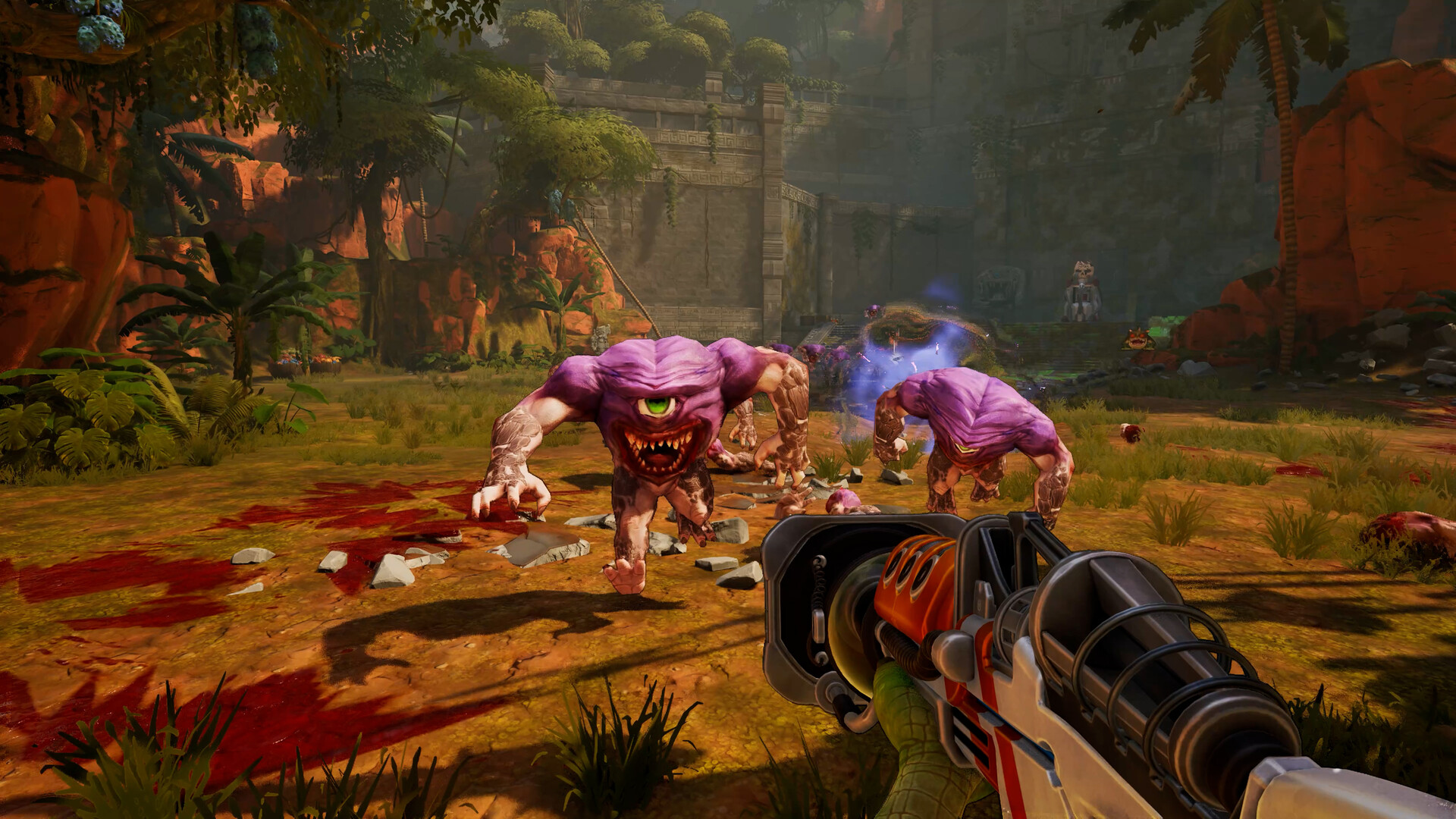
Serious Sam ShatterverseImage: Devolver Digital via Steam -
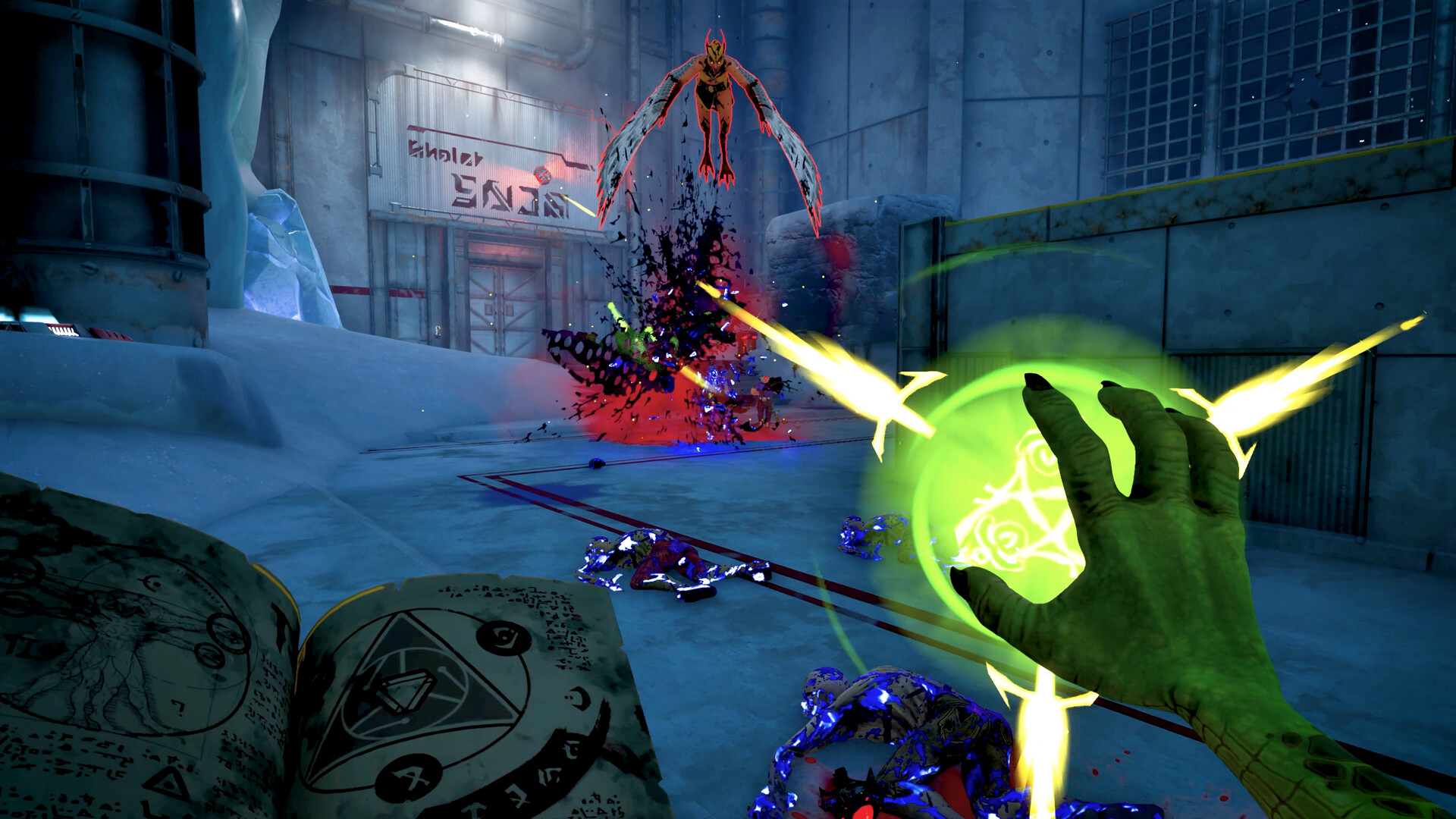
Serious Sam ShatterverseImage: Devolver Digital via Steam -
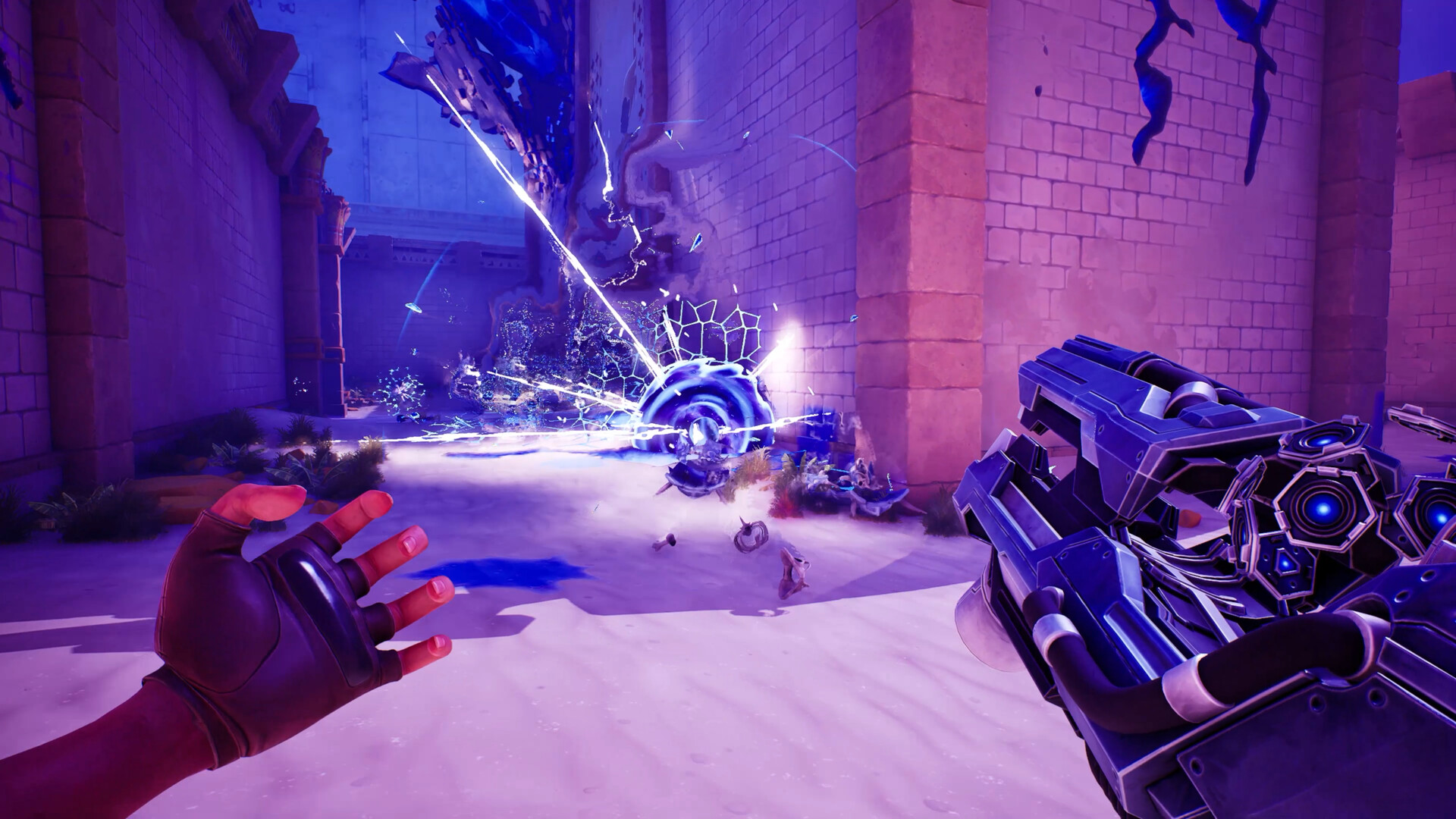
Serious Sam ShatterverseImage: Devolver Digital via Steam -
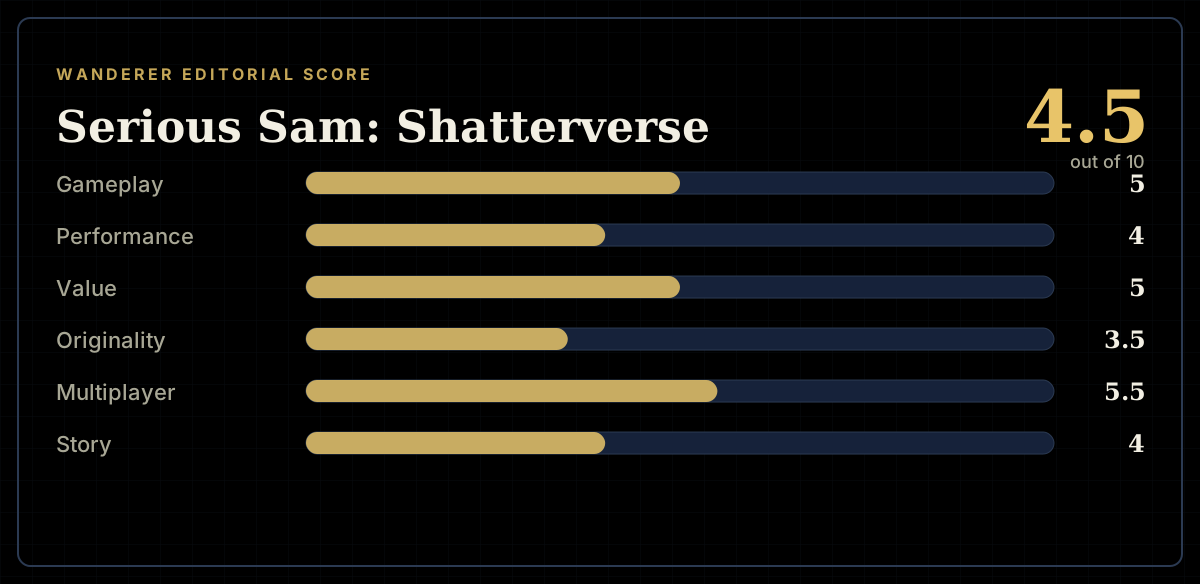
How the review scores each part of the gameWanderer Editorial -
The essentials at a glanceWanderer Editorial -
The short versionWanderer Editorial