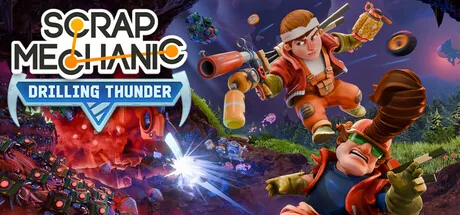
Game review
Scrap Mechanic
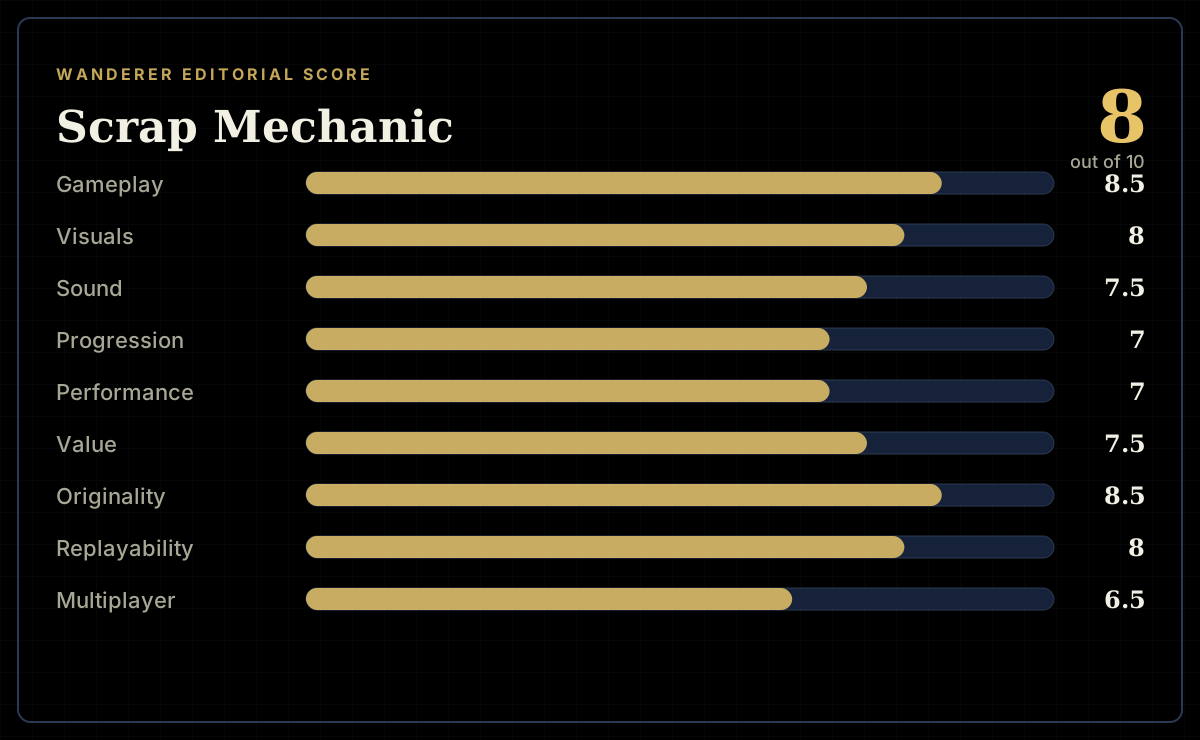
8 / 10
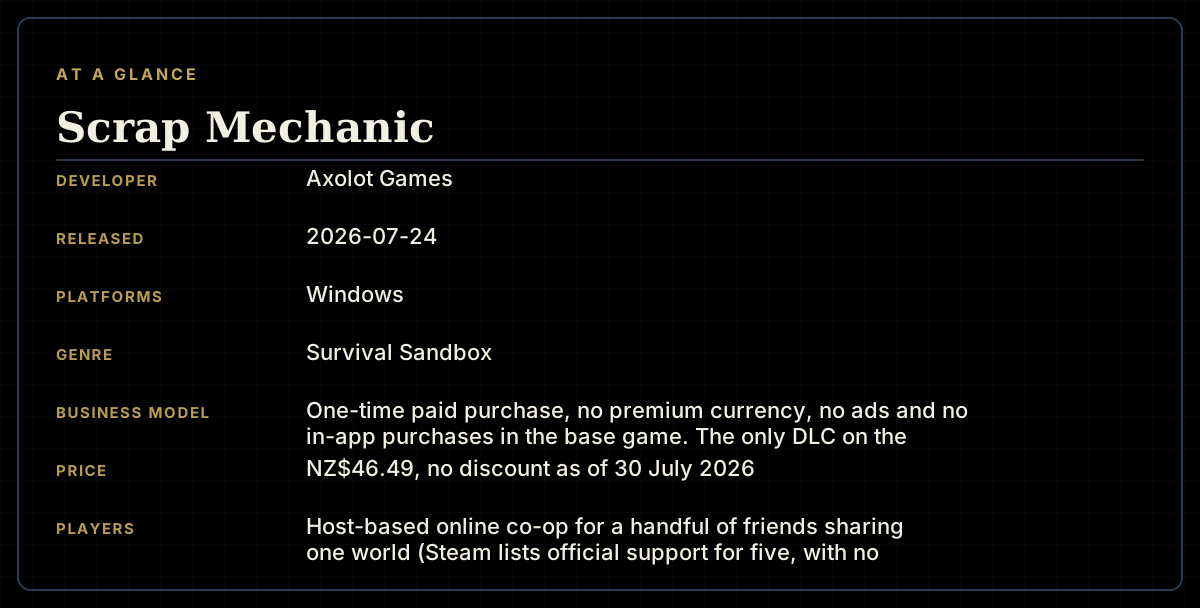
- Developer
- Axolot Games
- Publisher
- Axolot Games
- Released
- 24 July 2026
- Platforms
- Windows
- Genre
- Survival Sandbox
- Monetisation
- One-time paid purchase, no premium currency, no ads and no in-app purchases in the base game. The only DLC on the store page, the Scrap Mechanic - Fan Pack, is a cosmetic-only clothing set (14 outfit pieces, no gameplay effect) sold separately for NZ$23.49. The base game's price itself rose when Early Access ended, so buying now means paying the higher, permanent 1.0 price rather than the long-standing Early Access one.
- Players
- Host-based online co-op for a handful of friends sharing one world (Steam lists official support for five, with no hard cap enforced). One player opens the Survival or Creative save and everyone else joins through Steam; there is still no dedicated server option, so the world only exists while its host is online. Drilling Thunder improves netcode responsiveness but does not change that underlying structure.
The short version
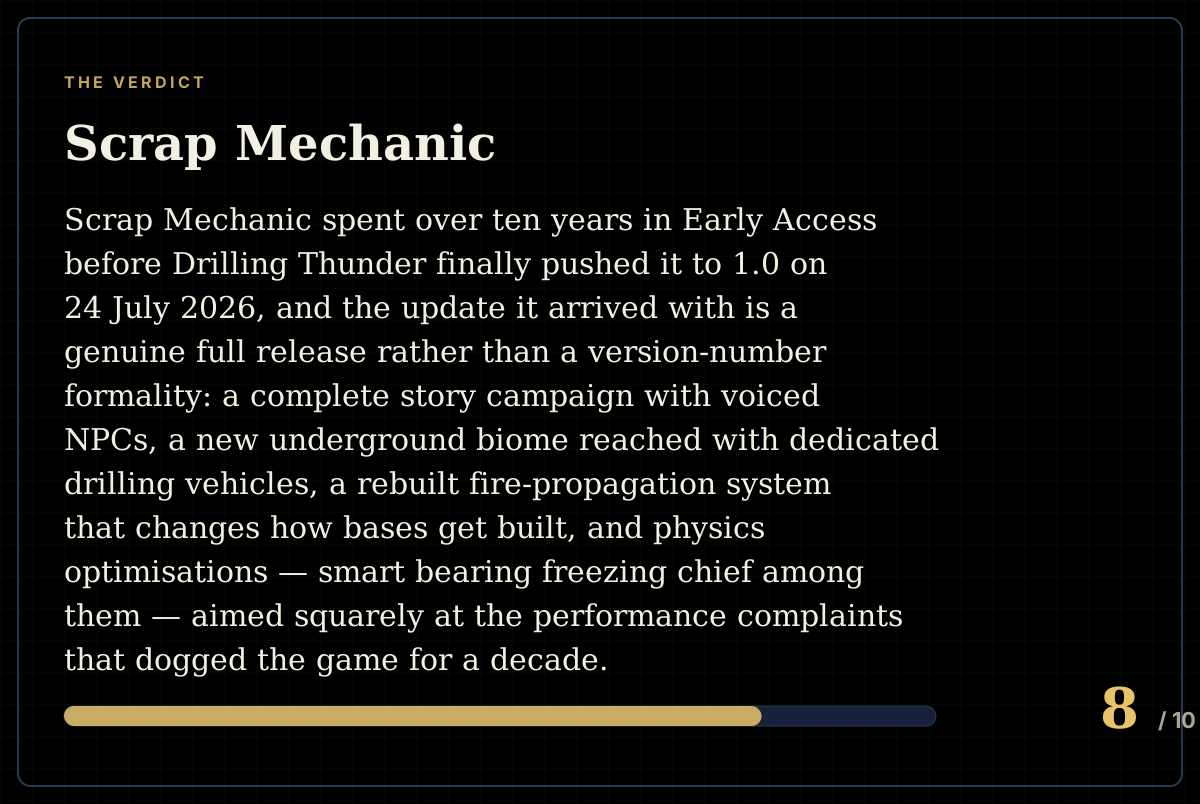
Scrap Mechanic spent over ten years in Early Access before Drilling Thunder finally pushed it to 1.0 on 24 July 2026, and the update it arrived with is a genuine full release rather than a version-number formality: a complete story campaign with voiced NPCs, a new underground biome reached with dedicated drilling vehicles, a rebuilt fire-propagation system that changes how bases get built, and physics optimisations — smart bearing freezing chief among them — aimed squarely at the performance complaints that dogged the game for a decade. The building system underneath all of it remains the reason 120,000-plus Steam reviews land at 92% positive: a sandbox built from physical bearings, pistons and logic gates rather than abstracted blueprints, where a working vehicle is assembled out of parts that actually collide, flex and break.
The 1.0 launch itself has split neatly into two moods. Long-time owners who spent 2023 through 2025 fearing the game was quietly abandoned are, by and large, relieved and impressed — several say outright that the wait was worth it. A second, smaller wave of very recent reviews is frustrated by 1.0-specific stability problems: crashes that occasionally erase vehicles and progress, a new invincible "seekerbot" enemy players can't opt out of, and a survival melee combat system that still has no block button despite one existing in Creative mode. None of that erases what Drilling Thunder gets right, but it keeps a launch this significant from being a clean, trouble-free one.
Biggest strengths
- The core building system — bearings, pistons, logic gates and pieces that physically collide rather than snap to an invisible grid — is still the most distinctive thing about the game after a decade, and the 1.0 optimisation pass (smart bearing freezing, multi-core physics) makes large creations noticeably more stable than in the Early Access years
- Drilling Thunder adds a full story-driven Survival campaign with fully voiced NPCs for the first time, plus a genuinely new Underground biome reached with purpose-built drilling vehicles rather than reused surface content
- The new fire-propagation system is a real design addition, not a coat of paint — it forces players to think about material choice and compartmentalised base layouts instead of just stacking parts
Biggest weaknesses
- Multiplayer is still entirely host-dependent a decade on — one player's world, one player's PC, no dedicated server option — and Drilling Thunder's netcode improvements don't touch that structural limitation
- A meaningful slice of 1.0-launch reviews report crashes that cost real progress, including vehicles and bases vanishing from a save after a crash mid-session
- Survival melee combat has no block or parry despite Creative mode having one, and a new invincible "seekerbot" enemy introduced with the update is a recurring, specific complaint because players can't turn it off or fight back against it
Who it's for: Builders and physics-sandbox fans who want their creations to obey real mechanical rules rather than snap together from abstract blueprints, especially groups of two to four friends willing to nominate one person as the permanent host. Less suited to solo players chasing a tight, well-tutorialised survival loop, or to anyone who needs a dedicated server rather than a friend's PC to keep a world alive.
Our recommendation: Worth the current NZ$46.49 asking price for the building system and the new Drilling Thunder content alone, particularly in a small co-op group. Players sensitive to launch- week stability should give Axolot a patch cycle or two before jumping into Survival with hours of work on the line, and anyone who specifically wants dedicated-server multiplayer should look elsewhere or budget for third-party save-syncing tools.
8 / 10
Ten years is a long time to keep a promise
Scrap Mechanic launched into Steam Early Access on 20 January 2016 as a multiplayer building sandbox with a genuinely novel pitch: instead of snapping prefab blocks onto a grid, you'd bolt together bearings, pistons, wheels and logic gates into machines that obeyed real physics. It sold well from day one and kept selling for a decade, all while staying, technically, unfinished. On 24 July 2026, that finally changed. Drilling Thunder — the update that also serves as the game's 1.0 release — added a complete story-driven Survival campaign, a new Underground biome reached by purpose-built drilling vehicles, fully voiced NPCs for the first time, a fire-propagation system that changes how bases have to be designed, and a physics optimisation pass aimed at the exact performance complaints that shadowed the game for years.
That's an unusual amount of ground to cover in one update, and it's worth being upfront about why this review treats the story differently from most releases: the number that anchors it isn't a first-week Metacritic average, it's 120,141 Steam reviews accumulated across ten years, landing at 92% positive — "Very Positive" — the moment this review was written. A sample that size, spanning a full decade, tells you something a launch-week score can't: not just whether the game is good now, but whether it's been quietly good the whole time, and reading through a real cross-section of it — old reviews and new — turns up a much more specific and more useful story than the aggregate number alone.
The building system is still the whole point
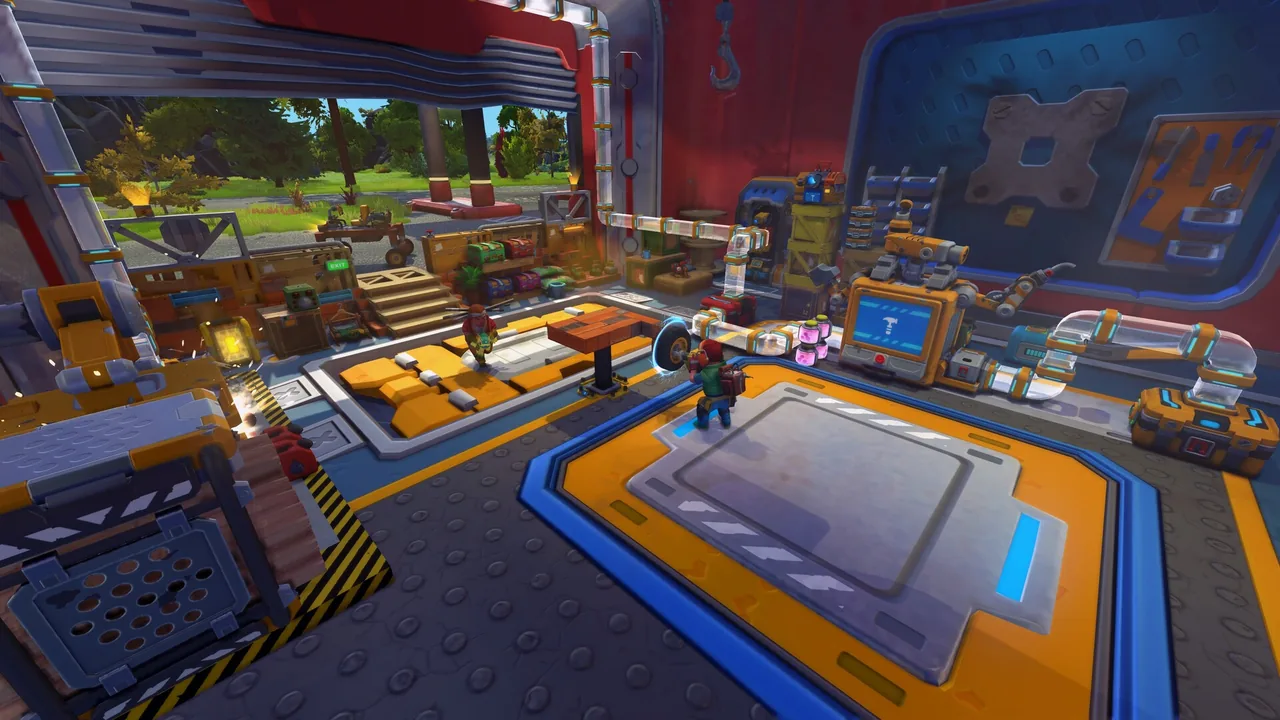
Everything Scrap Mechanic does well starts with the same thing: parts that behave like real mechanical objects rather than abstracted stat blocks. A wheel has actual suspension travel. A bearing actually rotates and can be geared, chained or driven by a motor. A piston actually pushes. Logic gates let you wire timers, sensors and switches into genuinely functional automation without needing a scripting language. None of that is new to 1.0 — it's the pitch that sold the game in 2016 and the reason it kept selling every year afterward — but it's still the single most consistent thread running through the entire ten-year review history. Long before Drilling Thunder, players were building working trains, transforming vehicles, flying aircraft carriers and elaborate Rube Goldberg contraptions, and the specific, recurring shape of the praise across that whole span is the same: people describing losing track of time. That's a rare kind of consistency for a review sample this large, and it's the clearest evidence that the building system itself was never the problem during the long Early Access years.
What was a real, recurring problem — and what 1.0's optimisation pass specifically targets — was what happened once a build got ambitious. Complex machines with hundreds of moving parts routinely tanked frame rates, and multiplayer sessions saw vehicles behaving differently between clients as physics desynced. Drilling Thunder's headline technical change is what's being called smart bearing freezing: inactive bearings stop constantly consuming processing power instead of running physics calculations they don't need, which lets large, mostly-static factories and vehicle collections exist without dragging the frame rate down. Physics work is also now spread across multiple CPU cores instead of loading onto one thread. The result, based on how recent 1.0 reviews describe it, is a real improvement rather than a marketing line — one detailed post-launch review reports a steady 130fps at max settings on a fully built-out base, something that would have been unimaginable in the Early Access years. It's not a complete fix, though: more than one recent review specifically notes that stacking a very large number of bearings onto a single creation still causes trouble, so the ceiling has moved rather than disappeared.
Drilling Thunder gives Survival an actual ending
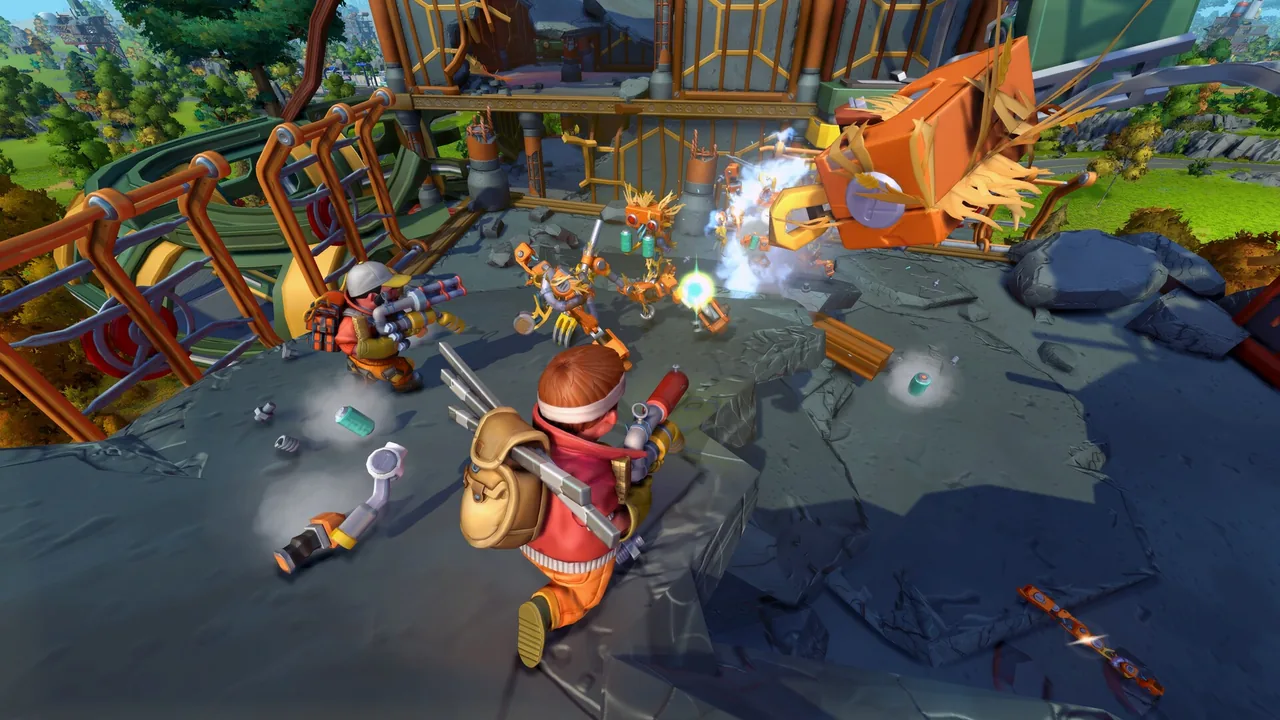
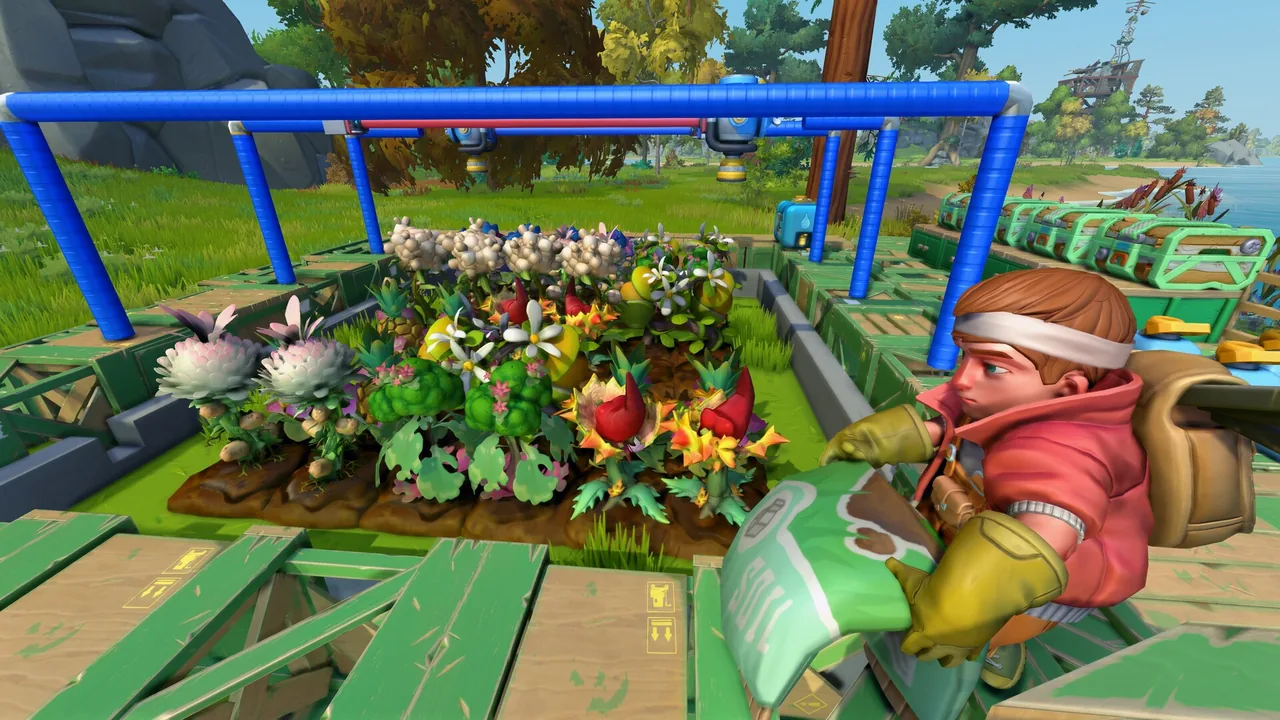
Survival mode existed well before 1.0, built around exploring a procedurally generated planet, farming and drilling for resources, and defending bases against waves of hostile Farmbots. What it never had, across years of updates, was a finished shape — a beginning, middle and end. Drilling Thunder changes that directly. The Underground is a new region reached with dedicated mining vehicles built around a Plasma Drill capable of boring through bedrock, and it comes wrapped in a full story campaign with fully voice-acted NPCs guiding you toward the planet's core — a first for a game that had, until now, told almost all of its story through environmental hints and item descriptions. Recent reviews describe genuinely enjoying the pacing of that campaign, several explicitly calling out specific quest beats like unlocking fertiliser crafting or reaching later "grow labs," and more than one reviewer notes they're still working through the new content days after launch, which is a meaningfully different kind of engagement than "I built something cool and moved on."
The other structurally new system is fire propagation, and it's a better piece of design than a throwaway visual effect deserves credit for. Fire now genuinely spreads across a base if it takes hold, which means material choice and layout suddenly matter in a way they didn't before — players are already describing the need to isolate flammable storage and think about fire-resistant building materials the same way they'd think about structural load. It's the kind of system that punishes players who built their bases the old, careless way and rewards anyone willing to relearn the game's rules, which is a legitimate thing to ask of a 1.0 release built on a decade of established habits, even if it will frustrate players who preferred not having to think about it.
Progression past the campaign's opening hours draws more mixed reactions. Several reviews are positive about the pacing once core recipes like fertiliser and better tools unlock, but a consistent secondary complaint is that resource requirements ramp up faster than the tools to meet them, and at least one detailed review calls the post-launch grind the "laziest way of game progression possible" — strong language, but not an isolated complaint. Combat against the Farmbots that give Survival its stakes is also a sticking point specific to 1.0: Creative mode has a working block mechanic, but Survival's melee combat still doesn't, which reads as an odd and frustrating omission to players fighting for their lives with no way to defend rather than dodge. Drilling Thunder also introduces a new "seekerbot" enemy that multiple reviews describe as functionally invincible and impossible to disable, seemingly added for a cinematic beat rather than as a tuned combat encounter — a small addition, but a genuinely disliked one, and one Axolot will likely need to patch or reconsider.
Co-op is still the best way to play it, and still tied to one PC
Ask the review sample how they actually play Scrap Mechanic and co-op comes up constantly, in both the decade of Early Access reviews and the fresh wave following 1.0. Watching a friend's ridiculous vehicle fail spectacularly, or dividing labour on a shared base between drilling, farming and building, is where a lot of players say the game earns its hours. What hasn't changed, despite ten years and a full-release update, is the underlying structure: one player hosts a Survival or Creative world from their own machine, and up to a handful of friends join through Steam — there's still no dedicated server option. That means the world only exists while its host is online, and groups without a consistently available host effectively can't maintain a shared save. Drilling Thunder does improve network responsiveness, and it's a real improvement — reduced rubber-banding and steadier sync during physics-heavy sessions are specifically mentioned in recent reviews — but it's a smoothing of the existing system, not a restructuring of it. Ten years was enough time to add a full story campaign, a new biome and a rewritten fire system; it wasn't enough time, evidently, to add the one multiplayer feature — dedicated, always-on hosting — that players have been asking for since long before 1.0 was on the roadmap.
What the decade of silence actually cost
It would be incomplete to review Scrap Mechanic's 1.0 launch without addressing the years that led up to it, because the review history makes the shape of that story unusually clear. The negative reviews written between roughly 2023 and late 2025 are strikingly consistent, and strikingly different in character from the negative reviews written this week. Almost none of them argue the game itself is bad — the recurring pattern, again and again, independently, is players saying some version of "I love this game, but," followed by frustration at long stretches with no meaningful communication from Axolot, fear that the game had been quietly abandoned, and a sense that Early Access had been used past the point of good faith. One widely-upvoted review from that period accused the studio of taking a decade to deliver features it had raised money to build years earlier. That's a different, more serious complaint than "the physics lag," and it left a visible scar on the aggregate score during those years even as the building system itself kept earning praise underneath it.
The 1.0 launch reads, by comparison, like a genuine release of pressure. A large share of the most recent reviews explicitly reference the wait — "worth it," "finally," "held out hope for 1.0" — and treat the update's scope as proof the silence was development time rather than neglect. That said, the newest wave isn't uniformly relieved: a distinct minority of post-launch reviews raise crash-related progress loss, describing a session ending mid-play with a partially or fully disappeared vehicle or base, which is a serious complaint for a game whose entire appeal is the hours invested in a build. Whether that's ordinary launch-week instability that patches will settle or a deeper problem isn't yet clear from the review sample alone, and it's worth any prospective buyer checking Steam's own recent-review filter before committing serious hours to a fresh Survival save.
Price, DLC and what you're actually paying for
Scrap Mechanic's price rose alongside its exit from Early Access, and NZ$46.49 for a decade-old game that used to be considerably cheaper during its beta years is a fair thing for returning players to notice — a small number of recent reviews call the increase out directly, arguing that a higher price should come with a correspondingly finished product. Whether that's fair depends entirely on how you weigh Drilling Thunder's content against the years of Early Access already priced in for anyone who bought earlier; for a new buyer picking the game up today, NZ$46.49 for a full story campaign, a new biome and the accumulated decade of building tools and community content underneath it is reasonable value against comparable survival-sandbox releases, even if it's no longer the bargain it once was.
The only DLC on the store page, the Scrap Mechanic - Fan Pack, is purely cosmetic — fourteen clothing pieces split across two outfit sets and a couple of standalone sweatshirts, with no effect on tools, parts or progression. It's an easy one to skip without missing anything, and its existence doesn't complicate the base game's otherwise clean, one-time-purchase monetisation.
Verdict
An 8 out of 10 for Scrap Mechanic's 1.0 release reflects what Drilling Thunder actually delivers: a genuinely substantial full-release update, not a version-number formality, built on top of a building system that a decade of players have independently and consistently described as something they can lose hours inside. The new Underground biome, the voiced story campaign and the fire-propagation system are real, well-received additions, and the bearing-freezing and multi-core physics work meaningfully improves the specific technical problem that dogged the game for years.
It stops short of a higher score because 1.0 didn't fix everything a decade should have been enough time to fix. Multiplayer is still tied to a single host's PC with no dedicated-server option, Survival melee combat is still missing a block button that Creative mode has had for years, and a real slice of launch-week reviews report crashes serious enough to cost hours of building work. None of those read as reasons to avoid the game — they read as the specific, fixable things standing between a genuinely good 1.0 and a great one, which is a much better problem than the "is this game even still being made" question the same review history was asking as recently as last year.
Buy it for the building system and Drilling Thunder's new content, especially with two or three friends willing to share hosting duties. Give it a patch cycle before trusting a long, uninterrupted Survival run with real stakes attached, and if dedicated-server multiplayer is a hard requirement, this still isn't the game for that.
Players who like building something persistent and watching it keep growing even when they're not actively pushing buttons might also enjoy Wanderer.
Pros and cons
Pros
- The core building system — bearings, pistons, logic gates and pieces that physically collide rather than snap to an invisible grid — is still the most distinctive thing about the game after a decade, and the 1.0 optimisation pass (smart bearing freezing, multi-core physics) makes large creations noticeably more stable than in the Early Access years
- Drilling Thunder adds a full story-driven Survival campaign with fully voiced NPCs for the first time, plus a genuinely new Underground biome reached with purpose-built drilling vehicles rather than reused surface content
- The new fire-propagation system is a real design addition, not a coat of paint — it forces players to think about material choice and compartmentalised base layouts instead of just stacking parts
- A large majority of the review sample, across both the Early Access years and the 1.0 launch, independently describes the same thing — losing track of time inside the creative tools — which is a rare kind of consistency for a sample this size
- A clean, one-time price with no premium currency, no ads and a cosmetic-only DLC that changes nothing about how the game plays
Cons
- Multiplayer is still entirely host-dependent a decade on — one player's world, one player's PC, no dedicated server option — and Drilling Thunder's netcode improvements don't touch that structural limitation
- A meaningful slice of 1.0-launch reviews report crashes that cost real progress, including vehicles and bases vanishing from a save after a crash mid-session
- Survival melee combat has no block or parry despite Creative mode having one, and a new invincible "seekerbot" enemy introduced with the update is a recurring, specific complaint because players can't turn it off or fight back against it
- New-player onboarding is thin even after 1.0: several launch-week reviews describe basic systems, like how to expand storage or that building isn't restricted to blueprint pads, going unexplained by the in-game tutorial
- The years of near-silence between major Early Access updates, especially 2023 through 2025, left a visible scar on the review history — a specific, recurring complaint about the pace of communication that 1.0 answers but can't retroactively undo
Screenshots
-
Scrap MechanicImage: Axolot Games via Steam -
Scrap MechanicImage: Axolot Games via Steam -
Scrap MechanicImage: Axolot Games via Steam -
How the review scores each part of the gameWanderer Editorial -
The game at a glanceWanderer Editorial -
The short versionWanderer Editorial