Game review
Runic Rampage - Action RPG
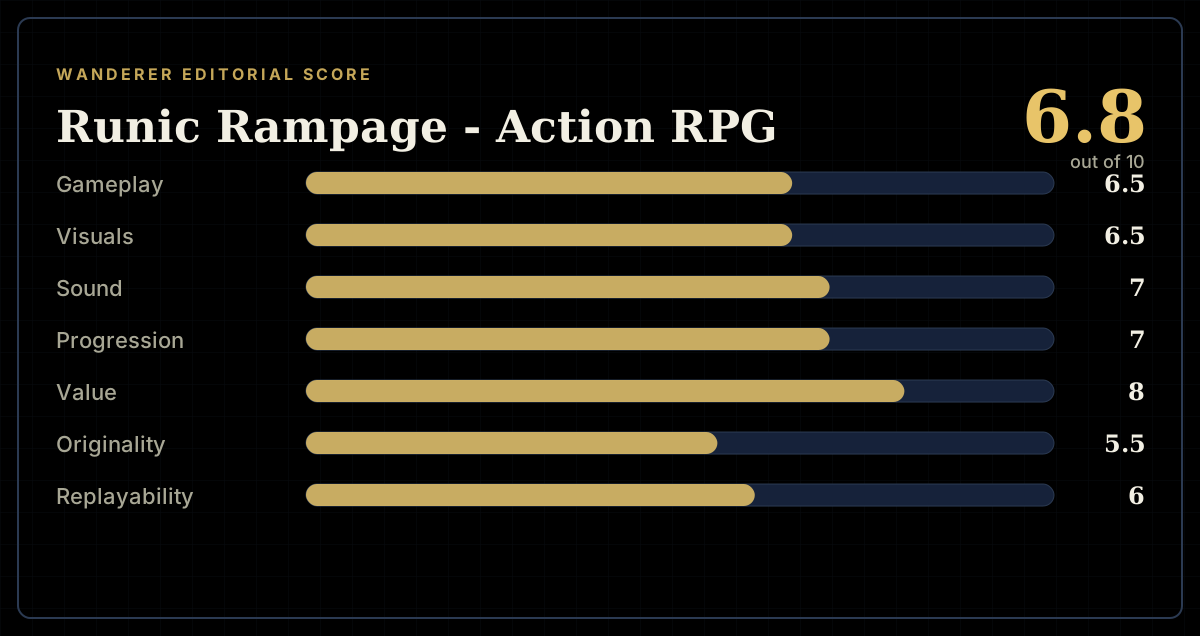
6.8 / 10
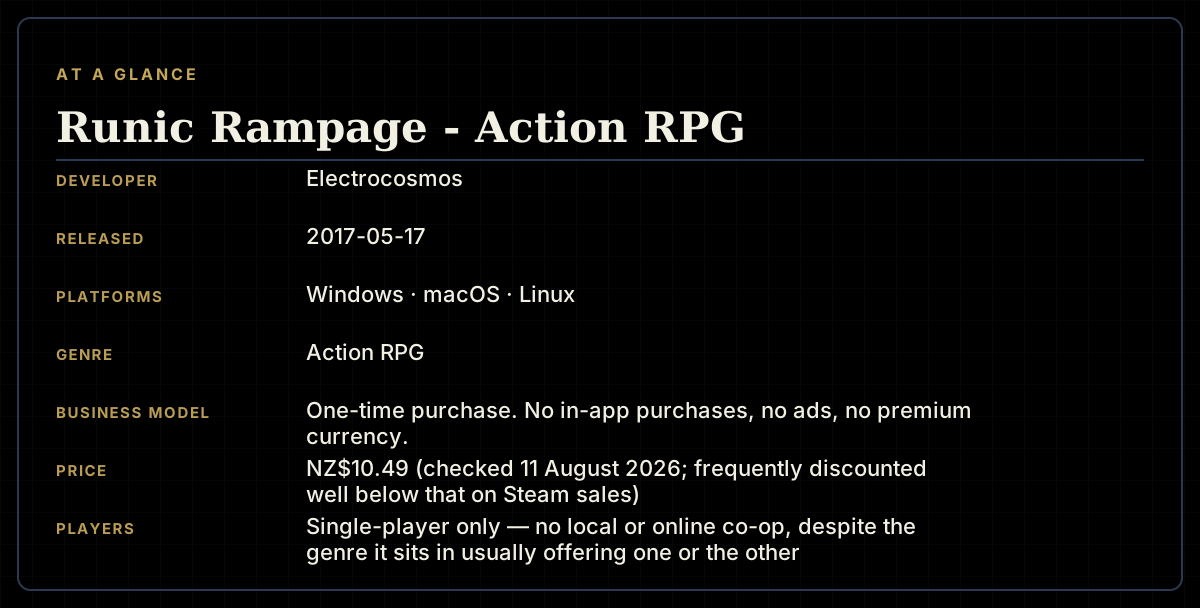
- Developer
- Electrocosmos
- Publisher
- Electrocosmos
- Released
- 17 May 2017
- Platforms
- Windows, macOS, Linux
- Genre
- Action RPG
- Monetisation
- One-time purchase. No in-app purchases, no ads, no premium currency.
- Players
- Single-player only — no local or online co-op, despite the genre it sits in usually offering one or the other
The short version
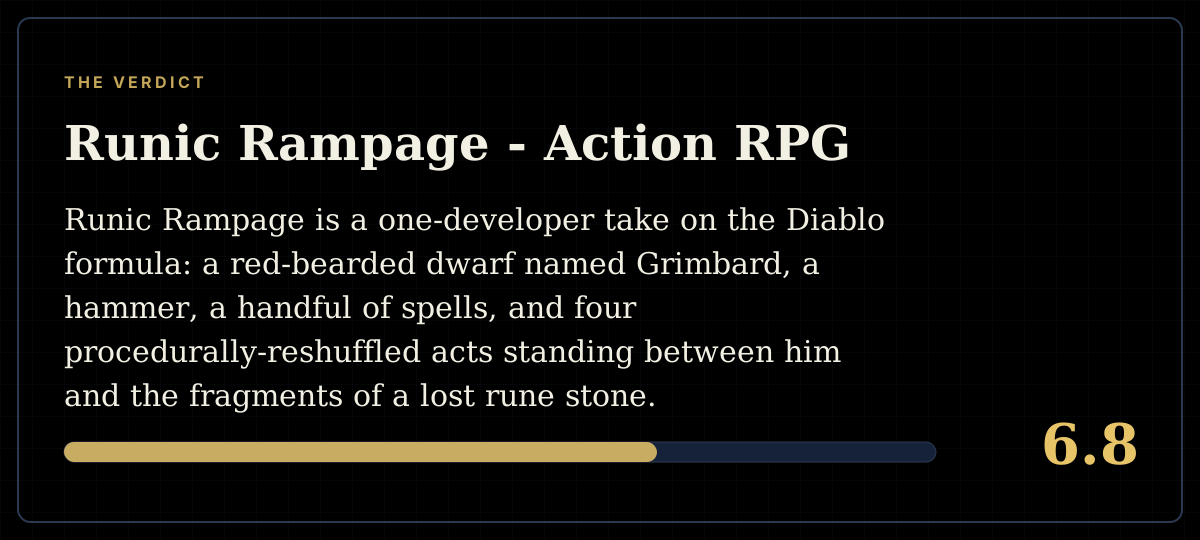
Runic Rampage is a one-developer take on the Diablo formula: a red-bearded dwarf named Grimbard, a hammer, a handful of spells, and four procedurally-reshuffled acts standing between him and the fragments of a lost rune stone. At roughly ten dollars for six to nine hours plus an endless post-game mode, the value case is easy, and nine years of Steam reviews back that up — 87% of 109 are positive.
What keeps it from reaching further is the moment-to-moment feel of hitting things. Attacks commit for a beat too long, the character will happily take a swing at a door instead of the monster next to it, and there's no lock-on to sort that out for you. It's a good budget brawler undercut by exactly the kind of friction a bigger studio would have caught in playtesting.
Biggest strengths
- The core combo system and boss fights are what reviewers keep singling out nine years on — "surprisingly fun for a budget hack n slash" is a common refrain
- Real value: a full six-to-nine-hour campaign plus a post-campaign endless/random-map mode for NZ$10.49, often discounted further
- Full controller support that reviewers rate above some AAA ARPGs' console ports — one review directly asks why Diablo III can't manage what this does
Biggest weaknesses
- Attacks commit for too long and continue past the point where the player tried to stop them, which several reviewers single out as the single biggest complaint
- No lock-on and no reliable target priority — the character will attack a door or a barrel over an adjacent enemy, a complaint that appears independently across multiple reviews
- No local or online co-op of any kind; this is strictly a single-player game
Who it's for: Genre veterans who want a short, cheap, single-player Diablo-style dungeon crawl to finish over a weekend, and players who specifically want a melee-only, hammer-and-spells build rather than a class-select RPG. Not for anyone shopping for co-op, or for players sensitive to input lag in their action combat.
Our recommendation: Worth it at full price for the length and polish on offer, and an easy buy on sale. Go in expecting a linear, six-to-nine-hour campaign rather than a long-tail loot chase, and expect the combat to reward patience with its timing over aggression.
6.8 / 10
A dwarf, a hammer, and a missing rune stone
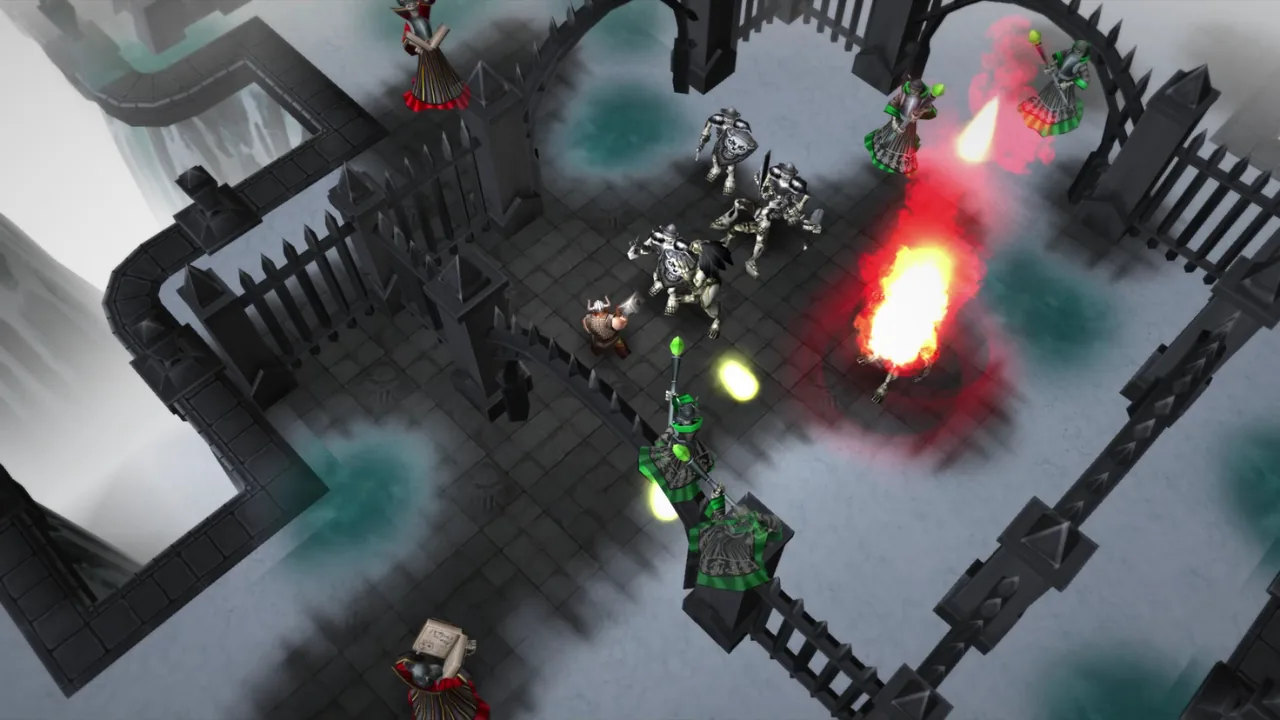
Runic Rampage's premise is exactly as much as an isometric brawler needs. Grimbard, last champion of a broken dwarven kingdom, sets out to recover the fragments of the rune stone that once protected his people, hacking through desert, forest, cave and frozen fortress along the way — four acts, each split into two procedurally-generated stages and a boss fight. Electrocosmos is the solo studio name of German developer Alexander Leps, who spent roughly five years on this before it shipped on Steam in May 2017 as his first release. The narration stays out of the way; the game's argument is made with the hammer, not the dialogue box.
The combat carries it — and occasionally trips over itself
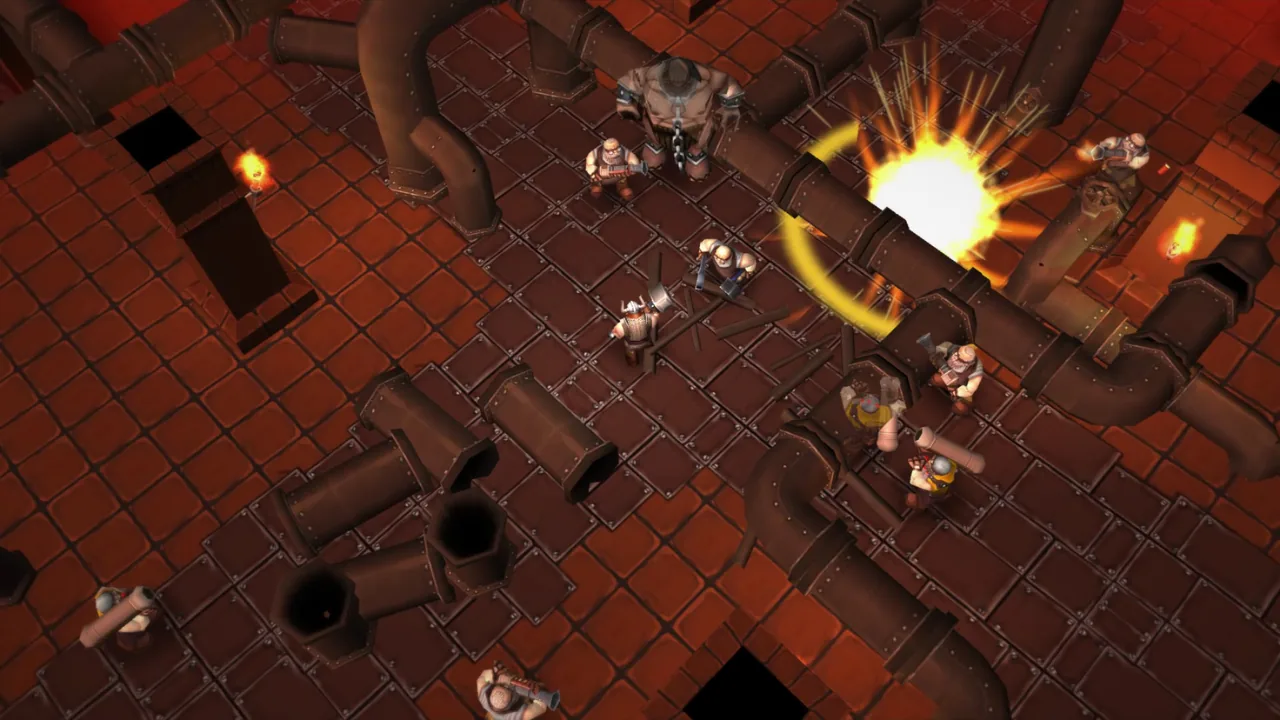
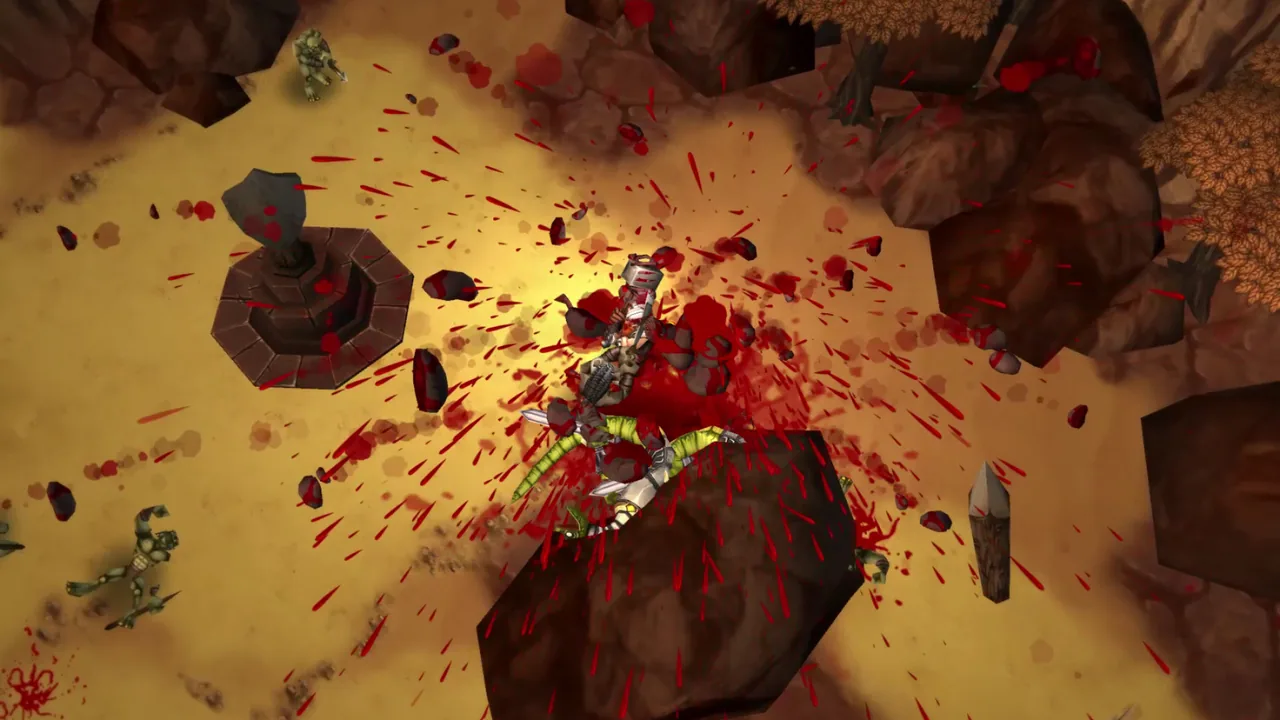
The reason Runic Rampage still pulls in "surprisingly fun" reviews nine years after release is its melee: fatal combos, a knockback-and-collision system where enemies can be smashed into each other, and a handful of spells layered on top of the swing-and-dodge loop. One reviewer, comparing it directly to a AAA release, writes that they "wish Diablo 3 could offer controller support like this" — and the full controller support, on a game this cheap, is a genuine point in its favour.
The friction shows up in the same place across a striking number of independent reviews: attack commitment. Strikes continue for a beat after the player releases the button, which reads as input lag even when it technically isn't, and there is no lock-on to fix the game's habit of aiming a swing at the nearest breakable door or barrel instead of the enemy standing next to it. None of that breaks the game — it's still winnable, still often described as satisfying — but it's the kind of rough edge a second pair of hands in QA tends to catch, and its absence is the clearest fingerprint of a one-person team.
Four acts, reshuffled each time
Progression is straightforward RPG furniture: levels, skill points, loot drops, and procedurally regenerated stage layouts so the same act doesn't look identical on a second pass. It mostly works, with two recurring caveats from players. Armour pieces, several reviewers note, change how Grimbard looks and not much else — the actual power comes from weapons and skill points, which makes gearing feel thinner than the loot drops suggest. And skill points hit a hard cap partway through the campaign, even as more keep dropping, which reads to some players as a soft difficulty wall rather than a design choice. The random map generator also has a known rough edge: a small number of reviews report scenery — a tree, a rock — spawning squarely in a chokepoint with no way around it, which for a paid single-player game is the kind of bug that should have been caught before launch.
No co-op, despite the neighbourhood it lives in
Dungeon-crawling ARPGs with a hack-and-slash focus and procedurally generated levels usually ship with some flavour of co-op — it's practically genre convention, from Diablo's online parties down to budget indies that bolt on local split-screen. Runic Rampage doesn't. Steam's own category list for the game shows single-player and full controller support, nothing more; there is no local or online multiplayer mode of any kind. It's worth being explicit about this up front, because the game invites the comparison to Diablo, Torchlight and — per more than one reviewer, reaching for an older touchstone — Gauntlet Legends and Golden Axe, all without matching the genre's most common shared-screen appeal. What's on offer here is a solo campaign, full stop, and it should be bought as one.
There's a secondary myth worth correcting too: a cluster of negative reviews describe the controls as feeling like "an obviously mobile port," blaming clunkiness on a phone-first design. The timeline runs the other way. Runic Rampage shipped on Steam in May 2017; the mobile edition, published through Crescent Moon Games, wasn't announced until that September. Whatever is causing the control friction, it isn't a downgrade from touchscreen design — it was built for mouse, keyboard and controller first, and the mobile version came after.
Nine years of Very Positive, with a clear grind wall
Steam's user-review verdict has held at "Very Positive" for nearly a decade: 95 of 109 reviews are thumbs-up, an 87% positive rate that includes reviews from launch year and reviews from the past few months alike, which is a reasonable proxy for a game that has aged fine rather than one riding launch-week goodwill. The achievement completion curve tells a matching story about how far most players actually go. Early-game achievements for reaching the second act or hitting a basic combo count sit in the 40–65% range; the streak-based achievements, which demand sustained hit or kill chains, bottom out under 5%. That's a normal shape for a linear ARPG — most owners finish or nearly finish the story, and only a committed minority chase the harder optional challenges — and it lines up with reviewers who report finishing the campaign in five to nine hours and treating full completion as a separate, much longer grind.
Verdict
Runic Rampage is a competent, occasionally clumsy budget ARPG that punches above its price without quite escaping the shadow of the much bigger games it's compared to. The combo system, the boss fights and the controller support earn it a loyal following nine years on; the attack-commitment and target-priority issues, the cosmetic-only armour, and the total absence of co-op keep it a tier below the games it invites comparison to. At ten dollars, or less on sale, for six-plus hours of dwarf-hammer brawling, that's still a fair trade — just go in knowing exactly what you're buying, and what you're not.
Pros and cons
Pros
- The core combo system and boss fights are what reviewers keep singling out nine years on — "surprisingly fun for a budget hack n slash" is a common refrain
- Real value: a full six-to-nine-hour campaign plus a post-campaign endless/random-map mode for NZ$10.49, often discounted further
- Full controller support that reviewers rate above some AAA ARPGs' console ports — one review directly asks why Diablo III can't manage what this does
- Procedurally generated level layouts give the two stages inside each of the four acts real variety across a playthrough
- A solo developer who visibly responds to feedback — one long-time reviewer credits a balance patch to a request they made directly
Cons
- Attacks commit for too long and continue past the point where the player tried to stop them, which several reviewers single out as the single biggest complaint
- No lock-on and no reliable target priority — the character will attack a door or a barrel over an adjacent enemy, a complaint that appears independently across multiple reviews
- No local or online co-op of any kind; this is strictly a single-player game
- Progression is thinner than it looks: armour pieces are cosmetic only, and a hard skill-point cap arrives mid-campaign regardless of level
- Short and fairly linear — several reviewers finish the story in five to seven hours and call the endless mode's replay value low
Screenshots
-
Runic Rampage - Action RPGImage: Electrocosmos via Steam -
Runic Rampage - Action RPGImage: Electrocosmos via Steam -
Runic Rampage - Action RPGImage: Electrocosmos via Steam -
How the review scores each part of the gameWanderer Editorial -
The game at a glanceWanderer Editorial -
The short versionWanderer Editorial