
Game review
Robot Hospice
8 / 10
- Developer
- dokogames
- Publisher
- dokogames
- Released
- 10 June 2026
- Platforms
- Windows
- Genre
- Adventure, Indie, Simulation, Free To Play
- Monetisation
- free
- Players
- false
The short version
Biggest strengths
- Genuinely moving, gentle writing about mortality, memory, and companionship that reviewers across the entire pool describe as emotionally devastating in the best way
- A distinctive, well-realized premise, a hospice for dying robots, that multiple reviewers praised for finding real philosophical weight without needing a large science-fiction universe to support it
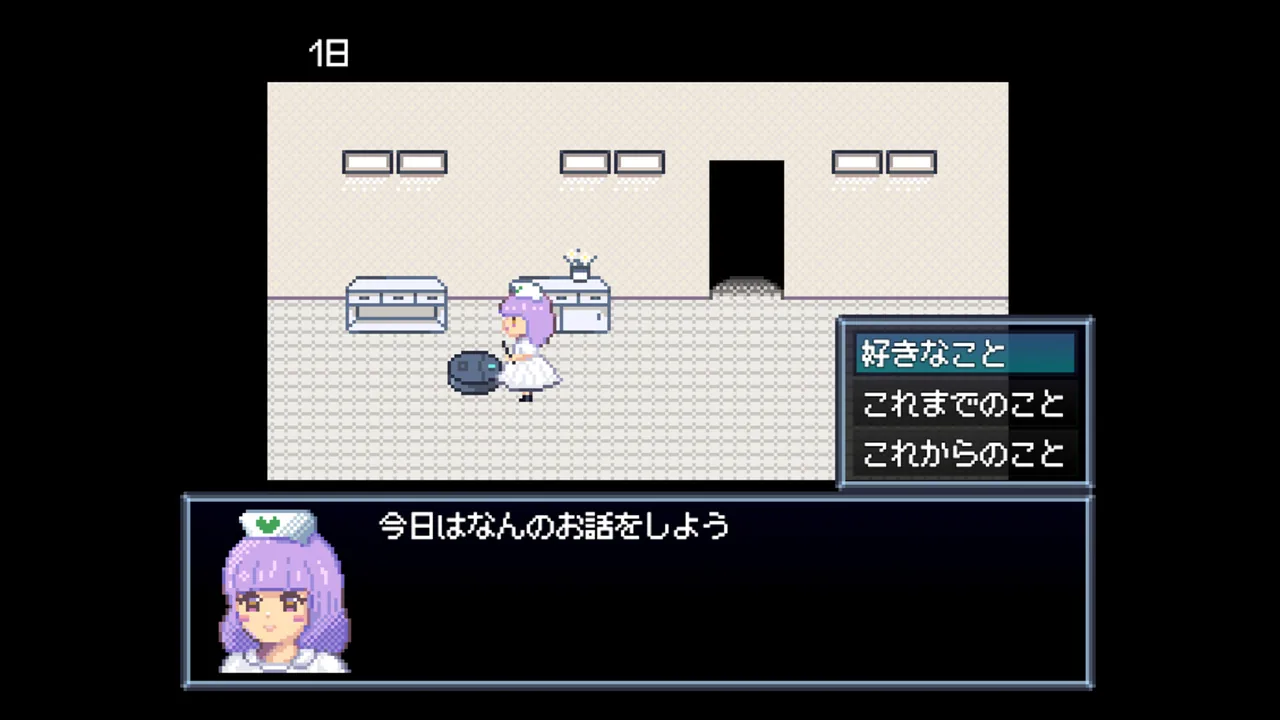
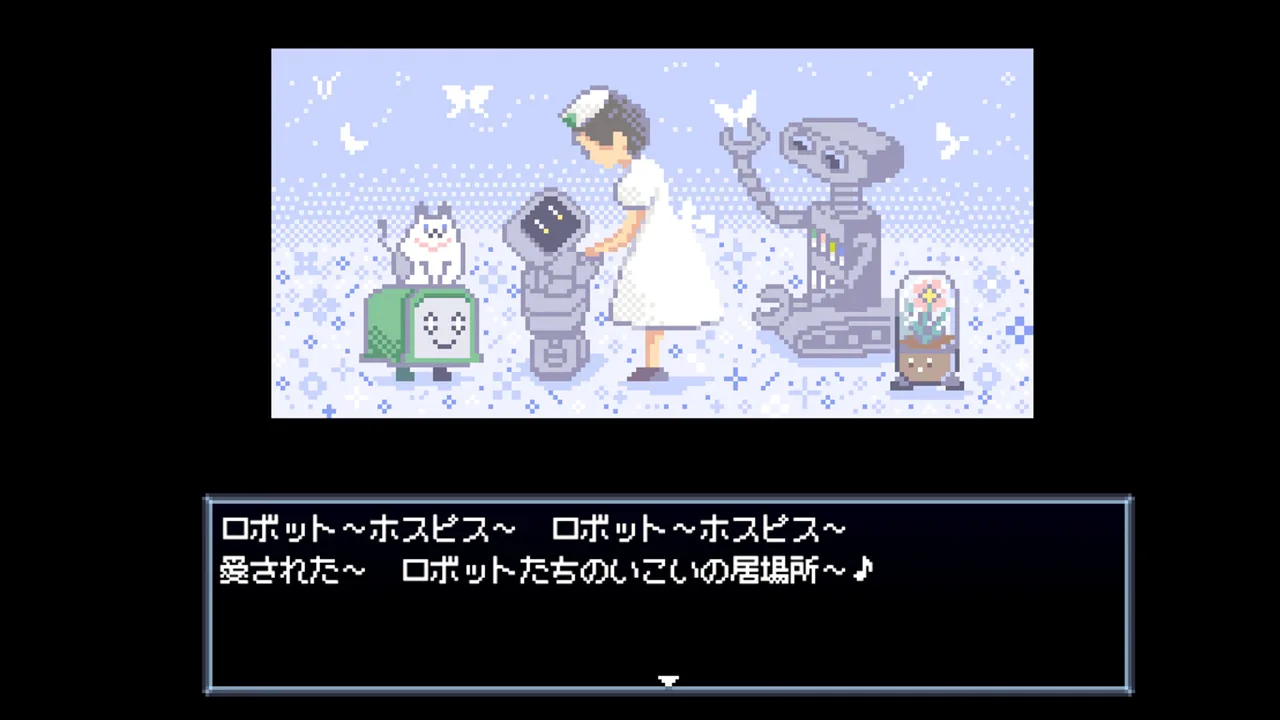
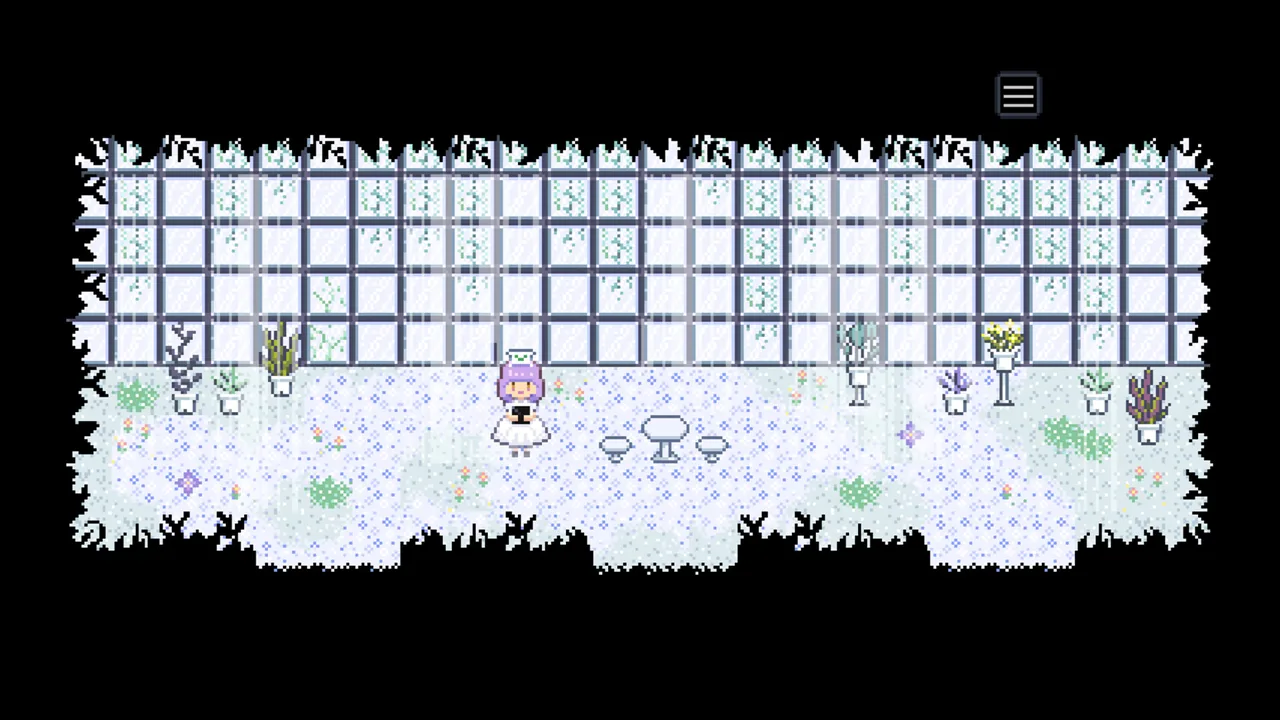
- Charming, nostalgic 2D pixel art paired with a Famicom-inspired soundtrack that reviewers consistently singled out for matching the story's intimate tone
Biggest weaknesses
- A launch-window text-rendering glitch that breaks the "ff" and "fi" letter combinations in parts of the translated text, independently reported by multiple reviewers
- A short one-to-two-hour runtime that some reviewers said left them wanting a longer campaign, even while crediting the brevity for keeping the story tightly focused
- Steam Deck support is officially "Playable" rather than "Verified," with some interface elements and controller prompts not fully optimized for handheld play
Who it's for: Anyone who enjoys short, character-driven narrative games about mortality and memory, and doesn't mind a brief runtime in exchange for genuinely affecting writing, at no cost
Our recommendation: recommended
8 / 10
A hospice, but for robots
Robot Hospice puts players in the role of Elis, a new staff member at a facility where aging, dying robots spend their final days. Rather than treating its mechanical cast as equipment or combatants, the game asks players to sit with five distinct robot residents, learn their histories, and help each one find as much peace as possible before their inevitable shutdown. It's an unusual premise for a game, and reviewers were struck by how effectively it lands. One detailed review put it plainly: "the game uses this unusual setting to explore mortality, memory, companionship, regret, and the importance of giving someone a dignified farewell," adding that the small cast has "enough individuality to make their situations meaningful."
Writing that reduces reviewers to tears, repeatedly
The single most consistent thread across the entire review pool, all 33 of which are positive, is how effectively the writing hits emotionally. Reviewer after reviewer describes crying, sometimes unexpectedly. "My heart is in absolute shambles! This game is so unbelievably gentle, moving and warm," wrote one. Another connected the story directly to their own life: "I cried through this entire game. I'm actively caring for my grandfather, who is on hospice with dementia, and this story hit painfully close to home over and over again. It reminded me that what we leave behind isn't our purpose, it's the love we've shared." A third reviewer, who expected to handle the material calmly, wrote, "Boy... I was completely wrong and I was in tears," going on to describe feelings of "helplessness, isolation, desolation, and ultimately, acceptance" running through the entire experience. That degree of consistent, specific emotional impact across an entire review pool, rather than isolated praise from one or two reviewers, is a strong signal the writing is doing exactly what it sets out to do.
Small setting, real philosophical weight
Beyond raw emotional impact, reviewers credited the game's premise for prompting genuine reflection about attachment and value. One wrote at length about how the game "got me thinking about my relation with long-time or beloved household objects... when you're with a piece of technology or a gadget for a long time, in a way it becomes an extension of yourself." The pool's longest and most analytical review made a similar point more broadly: the game "raises questions about attachment and whether memories can make an artificial being valuable beyond its original purpose," while noting it "does not need to provide definitive philosophical answers" to be effective, relying instead on "encouraging the player to consider these ideas while personally interacting with the residents."
Pixel art and Famicom nostalgia in service of the story
Presentation drew consistent, specific praise as well, with reviewers repeatedly noting how well the retro aesthetic suits the subject matter. One wrote, "the pixel art is divine, the music is nostalgic 8-bit magic and the dialogue and writing spins a spell that will surely pull all your heartstrings." The pool's most detailed review framed the choice as a deliberate contrast: "Robots normally represent technological progress and the future, yet here they are presented through deliberately old-fashioned graphics and music while confronting age, deterioration, and memories of their past. The combination gives the game an identity that feels more thoughtful than its modest production values initially suggest."
A real, if minor, launch bug
Despite the near-unanimous praise, a specific technical issue surfaces independently across multiple reviews: a text-rendering glitch affecting certain letter combinations. One reviewer noted, "there is a weird glitch that makes the characters 'ff' and 'fi' appear blank in the text," while another described the same issue from a translation angle: "The letter 'f' in most of the translated text was messed up but it didn't affect the legibility of the game at all." A third reviewer, reviewing via video, summarized it as the game having "got a few issues with text and translation but it's a deeply emotional experience." The consistency of this specific, narrow bug report across multiple independent reviewers makes it worth flagging plainly, even though none of the reviewers who mentioned it considered it a dealbreaker.
Short by design, and free because of it
Robot Hospice's estimated one-to-two-hour runtime is a deliberate choice reflected consistently in reviewer feedback. The game's longest review noted that "the limited runtime prevents the premise from becoming unnecessarily stretched, although players looking for a substantial campaign may find the experience too brief," while also observing that "the game also benefits from being free to play, making its short length much easier to accept." Several shorter reviews echoed the same framing, consistently describing the game as "short but memorable" or "short and sweet" rather than treating brevity as a flaw. Given that Robot Hospice costs nothing to play, the runtime concern that would otherwise weigh against a paid narrative game largely evaporates here; there's no purchase risk to weigh against a two-hour experience.
A disclosed use of generative AI in production
Per Steam's official AI Generated Content Disclosure for this title, the developer states that AI was used for "generation of in-game scripts" and "translation of the Steam store page into English and Simplified Chinese." This is a first-party, developer-confirmed disclosure rather than a reviewer allegation, and it's worth noting plainly for players who weigh development methods when deciding what to support, alongside the game's otherwise near-universally praised writing quality.
Verdict
Robot Hospice is a small, focused narrative experience that earns its emotional impact honestly, pairing a genuinely inventive premise with pixel art and music that consistently reinforce its gentle, contemplative tone. A minor launch text glitch and a deliberately short runtime are the only real friction points in an otherwise unanimously positive review pool, and with the game free to play, there's essentially no downside to spending an evening with it. Highly recommended for anyone drawn to short, character-driven stories about mortality, memory, and saying goodbye well.
Pros and cons
Pros
- Genuinely moving, gentle writing about mortality, memory, and companionship that reviewers across the entire pool describe as emotionally devastating in the best way
- A distinctive, well-realized premise, a hospice for dying robots, that multiple reviewers praised for finding real philosophical weight without needing a large science-fiction universe to support it
- Charming, nostalgic 2D pixel art paired with a Famicom-inspired soundtrack that reviewers consistently singled out for matching the story's intimate tone
- Completely free, which multiple reviewers explicitly credited as making the short runtime an easy, no-risk recommendation
Cons
- A launch-window text-rendering glitch that breaks the "ff" and "fi" letter combinations in parts of the translated text, independently reported by multiple reviewers
- A short one-to-two-hour runtime that some reviewers said left them wanting a longer campaign, even while crediting the brevity for keeping the story tightly focused
- Steam Deck support is officially "Playable" rather than "Verified," with some interface elements and controller prompts not fully optimized for handheld play
- The developer discloses generative AI use for in-game script generation and certain store-page translation work, per Steam's official AI Generated Content Disclosure
Screenshots
-
Robot HospiceImage: dokogames via Steam -
Robot HospiceImage: dokogames via Steam -
Robot HospiceImage: dokogames via Steam