Game review
Pyre
7.5 / 10
- Developer
- Supergiant Games
- Publisher
- Supergiant Games
- Released
- 25 July 2017
- Platforms
- Windows, macOS, Linux
- Genre
- Fantasy RPG
- Monetisation
- One-time purchase. No DLC, no in-app purchases.
- Players
- Local and online head-to-head Versus mode, separate from the single-player campaign
The short version
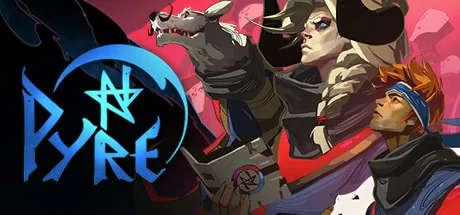
Pyre is the game Supergiant Games made between Transistor and Hades, and it is the one that splits its own fanbase down the middle. The premise is unmistakably theirs -- exiled outcasts, gorgeous hand-painted art, a soundtrack doing enormous emotional work -- but the way you actually play it is a three-on-three "ritual" where your characters lob a fiery orb at the other side's pyre, half basketball and half territory control, wrapped around branching visual-novel dialogue that decides who stays exiled and who goes free. Steam's aggregate sits at Very Positive, 87% of just over 6,100 English-language reviews (90% including every language), and Metacritic's critic score landed at 82 -- strong numbers by any measure. Read past the aggregate, though, and the negative sample is unusually articulate and unusually fond of the game it's criticising: reviewers who plainly love Bastion and Transistor calling Pyre "70-75% reading" with a sports minigame bolted on, several saying outright they never finished it despite wanting to.
The clearest single line for what Pyre actually is comes from one of its own most-upvoted positive reviews, written years after launch: "Supergiant's worst game, but their best piece of art." That is not really a contradiction once you've read enough of both sides -- it's the most accurate one-sentence summary of a game whose ambition and whose commercial gameplay hook pull in genuinely different directions.
Biggest strengths
- A genuinely distinctive concept -- a branching, choice-driven fantasy narrative delivered through repeated "ritual" matches rather than combat or dialogue trees alone
- Widely and consistently praised music and art direction, even inside otherwise negative reviews
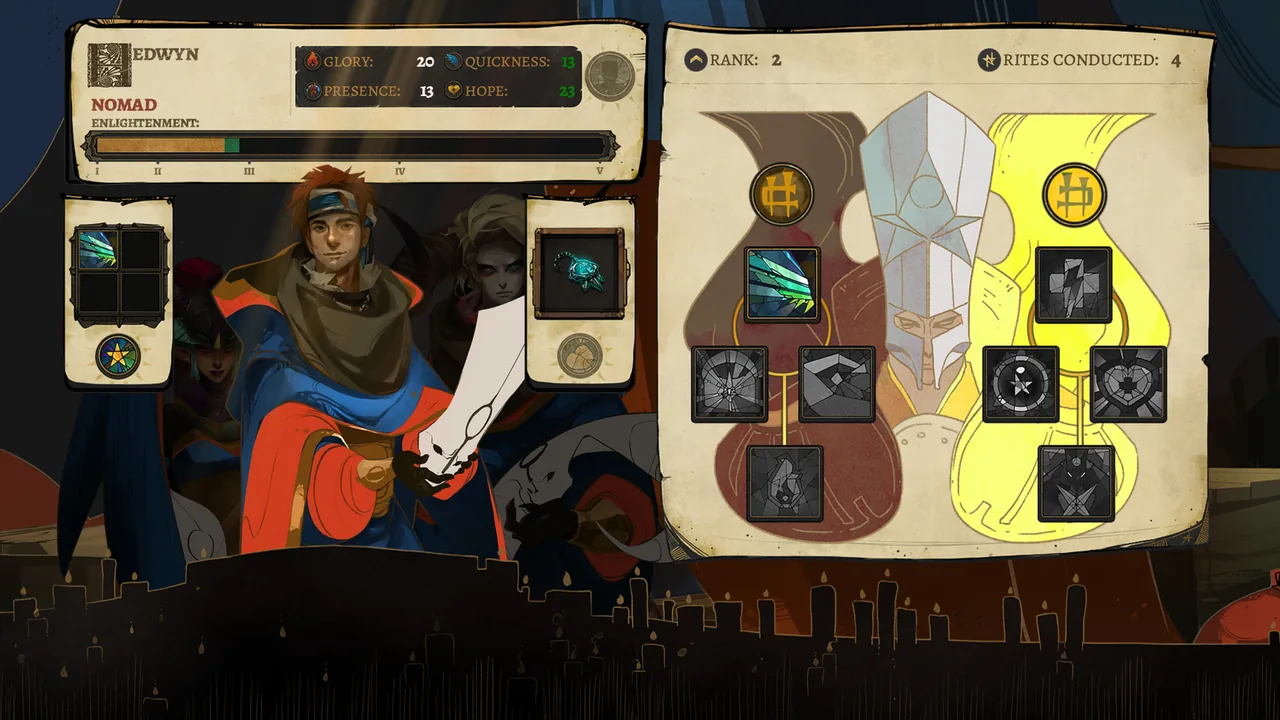
- A non-linear structure where your choices about who earns their freedom carry real, remembered weight across a full campaign
Biggest weaknesses
- The core gameplay loop -- a stylised 3-on-3 sport -- is the single most common complaint in the negative review sample, described repeatedly as thin, repetitive or a poor fit for players who came for an RPG
- A dialogue- and narration-heavy structure that several reviewers estimate at "70-75% reading," which some found beautifully written and others found a bait-and-switch on the RPG framing
- Versus mode is barely touched by the wider playerbase -- most PvP-specific global achievements sit around 2% completion, against 60-80% for early campaign milestones
Who it's for: Fans of Supergiant's writing, art and music who are willing to accept a genuinely unusual core loop instead of another Bastion or Hades. Not for anyone expecting a conventional RPG battle system, or anyone who bounces off games that are, by design, mostly text.
Our recommendation: Worth playing for the story, presentation and one of Supergiant's best soundtracks, but go in knowing the "gameplay" is a stylised 3-on-3 sport and budget patience for a slow, reading-heavy opening. If Bastion and Transistor's combat is what you actually want from Supergiant, this is their one outlier, not a lesser version of the same thing.
7.5 / 10
The pitch
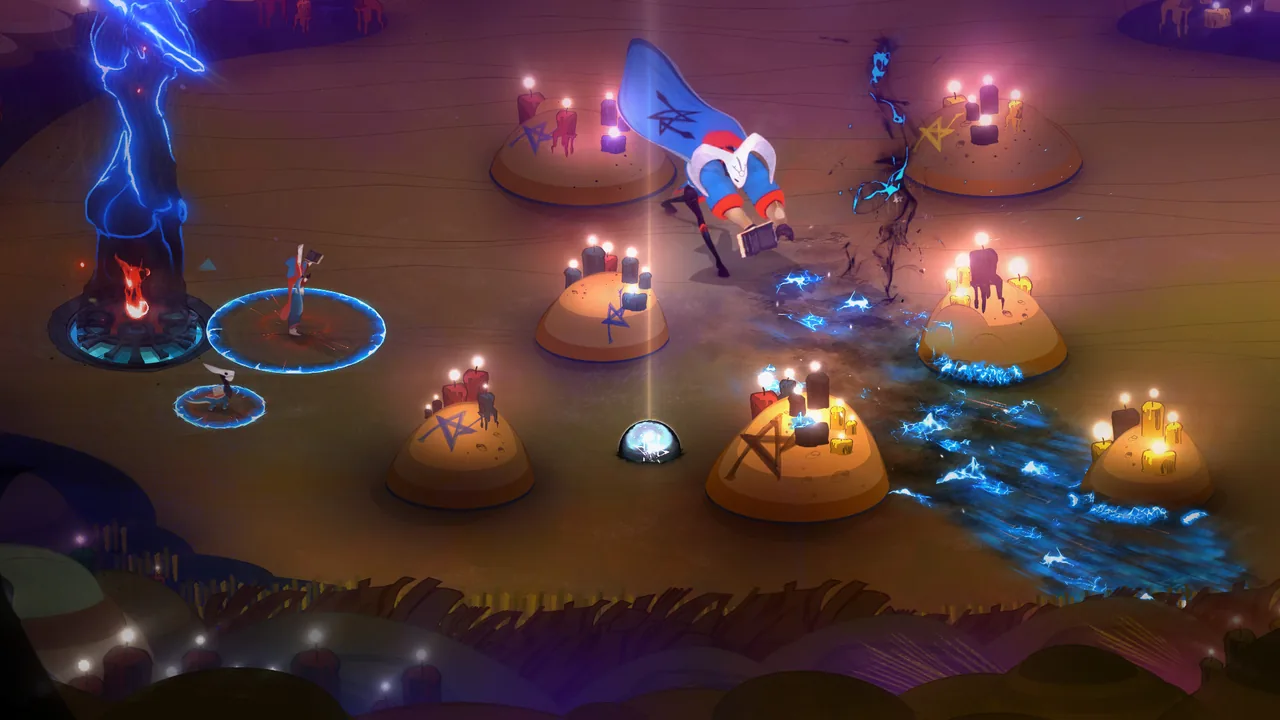
Pyre came out two years after Transistor, from a studio that by 2017 had already built a reputation on two very different but equally beloved games: Bastion's narrated action-RPG and Transistor's stylish tactical combat. Pyre keeps the ingredients that made both of those work -- hand-painted art, a soundtrack doing as much storytelling as the script, a cast of exiled outcasts with real personalities -- and puts them around something neither previous game attempted: a three-on-three "ritual," where your team of three carries and hurls a fiery orb toward the opposing side's pyre while trying to keep the other team from doing the same to yours. Win rituals, and members of your caravan of exiles earn back their freedom and leave the story. Lose too often, and the campaign keeps going regardless -- there's no fail state in the usual sense, just consequences that ripple through who is still around for the rest of the journey.
It's built by Supergiant, published by Supergiant, with no external publisher layered on top, and it launched as a full release on 25 July 2017 -- no Early Access period, no staged rollout. There is a separate Versus mode, local or online, for two humans to run the same ritual against each other head-to-head, but the game's actual identity is the single-player campaign.
A game people love arguing about
Pyre's Steam numbers are genuinely strong: Very Positive, 87% positive across a bit over 6,100 English-language reviews, 90% once every language is counted, and a Metacritic critic score of
- By the usual shorthand, that's a clear success. What's unusual is how much the negative side
of that number actively likes the game it's criticising. Reading the hundred most recent English-language negative reviews turns up remarkably few reviewers who simply disliked Supergiant's writing, art or music -- the praise for those elements shows up almost as often in the negative sample as the positive one. What splits people is the ritual itself.
The most common shape of a negative Pyre review is some version of: loved Bastion, loved Transistor, bought this on the strength of both, and found the actual moment-to-moment play a disappointing fit for what they wanted. One reviewer estimates the game at "75% reading" with occasional matches breaking it up; another calls it "a sports game pretending to be an RPG." Several explicitly say they never finished it, including one who describes trying across three years before giving up. None of that reads as hostility toward Supergiant -- it reads as disappointment from people who specifically wanted more of what the studio had done before, and got something structurally different instead.
The positive side tells basically the same story from the other direction. One of the most-quoted lines in the review corpus -- "Supergiant's worst game, but their best piece of art" -- comes from a reviewer who is unambiguously recommending it. Another calls it "a complicated middle child," sandwiched between Bastion and Transistor on one side and the studio's later, much bigger hit Hades on the other. Several reviewers say outright that Pyre is their personal favourite Supergiant release specifically because of what makes it hardest to recommend broadly -- its refusal to be a conventional battle system dressed up in fantasy trappings.
What the ritual actually is, and why it divides people
The ritual itself is a real, learnable system: three characters with different movement speed, size and special abilities, a field with lanes and obstacles, and a scoring pyre at each end that takes more or less damage depending on which character is carrying the orb when it lands. It has genuine depth once you're several hours in -- team composition and positioning matter, and later opponents force real tactical adjustments. The complaint isn't usually that it's badly designed in isolation; it's that Supergiant packaged a fantasy RPG's worth of narrative ambition around a minigame that most players spend more time approaching through cutscenes and dialogue than actually playing. A negative reviewer's line -- "cool sports game -boring as heck if you are not expecting a visual novel with occasional gameplay" -- is representative of a specific, recurring expectation mismatch rather than a complaint about execution.
The Versus mode exists partly to answer this directly, letting two players run the ritual against each other without any of the story wrapped around it, full controller support and cross-platform Remote Play Together included. Global achievement data suggests almost nobody actually plays it that way: most of the PvP-specific achievements -- winning against particular monster types in Versus, or sweeping a full match -- sit around 2% completion, against 60-80% for the game's early campaign milestones. For a mode explicitly built to let the ritual stand on its own, that gap is telling: whatever holds people in Pyre, it isn't the sport by itself.
Story, presentation and the thing nearly everyone agrees on
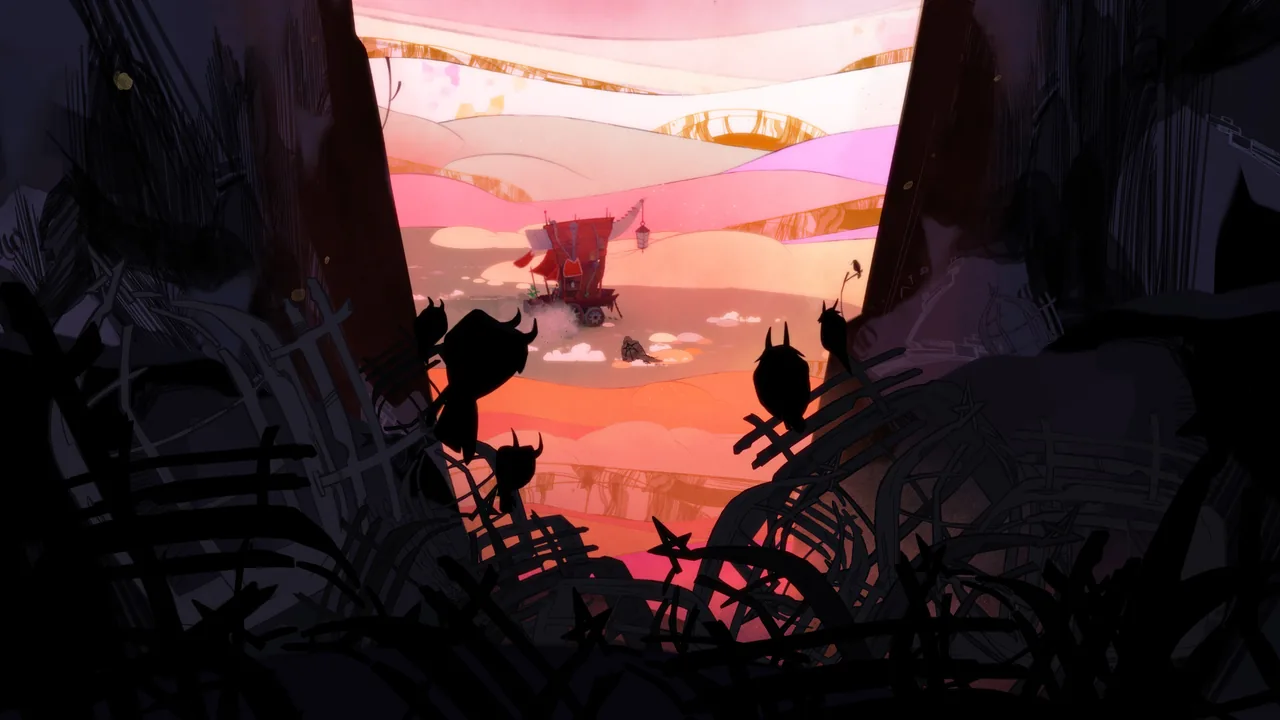
Where the review corpus essentially stops disagreeing is presentation. The hand-painted environments, the character portraits, and above all the score -- built around a heavily percussion-and-choral sound that composer Darren Korb had already made a Supergiant signature with Bastion and Transistor -- get singled out by name across positive and negative reviews alike. The narration-driven writing, delivered by an unseen "Reader" character who comments on your choices as the story unfolds, is the connective tissue that made Bastion distinctive, reused here to different effect: rather than narrating combat, it narrates a slower, more melancholy story about exile, freedom and what winning actually costs the people who get to leave. Reviewers who bounce off the ritual and reviewers who love the whole package both tend to credit this half of the game as excellent -- it's specifically the mechanical wrapper around it that divides opinion.
Value and where it sits nine years on
At NZ$28.99 with no discount active at the time of checking, Pyre isn't a large game by hour count -- most reviews put a full campaign somewhere in the 10-15 hour range, with genuine reasons to replay given the branching structure, though the negative sample suggests a meaningful share of buyers don't get that far. It has had no post-launch expansions or DLC, which is unusual for a Supergiant title but consistent with the studio's pattern of finishing a game and moving to the next rather than running one as a live product. Coming to it today, after Hades made Supergiant a much bigger name, Pyre reads less as "the new game from the Bastion people" and more as the deliberate structural experiment it always was -- worth knowing that going in, because it explains both why its fans are so attached to it and why its detractors feel specifically let down rather than simply unimpressed.
Verdict
Pyre earns its Very Positive aggregate honestly, but the number undersells how much genuine disagreement sits underneath it. The writing, art and music are close to universally praised, in negative reviews as often as positive ones. The ritual itself is a real, deliberately unconventional system that a meaningful share of players never warm to, and the Versus mode built to let it stand alone barely gets touched, going by achievement completion. None of that makes Pyre a bad game -- it makes it a specific one, built by a studio willing to risk exactly this kind of split reaction rather than repeat what had already worked. Go in knowing the "gameplay" is a stylised sport wrapped in a visual novel, not a Bastion-style action RPG, and the odds are good you land with the fans who call it their favourite Supergiant release rather than the crowd still wishing it played differently.
Pros and cons
Pros
- A genuinely distinctive concept -- a branching, choice-driven fantasy narrative delivered through repeated "ritual" matches rather than combat or dialogue trees alone
- Widely and consistently praised music and art direction, even inside otherwise negative reviews
- A non-linear structure where your choices about who earns their freedom carry real, remembered weight across a full campaign
- Full controller support and cross-platform Remote Play Together, making the couch co-op angle of Versus mode easy to set up
Cons
- The core gameplay loop -- a stylised 3-on-3 sport -- is the single most common complaint in the negative review sample, described repeatedly as thin, repetitive or a poor fit for players who came for an RPG
- A dialogue- and narration-heavy structure that several reviewers estimate at "70-75% reading," which some found beautifully written and others found a bait-and-switch on the RPG framing
- Versus mode is barely touched by the wider playerbase -- most PvP-specific global achievements sit around 2% completion, against 60-80% for early campaign milestones
- A slow, low-stakes opening that a meaningful share of the negative sample cites as the point where they stopped playing, sometimes after multiple attempts over several years
Screenshots
-
PyreImage: Supergiant Games via Steam -
PyreImage: Supergiant Games via Steam -
PyreImage: Supergiant Games via Steam -
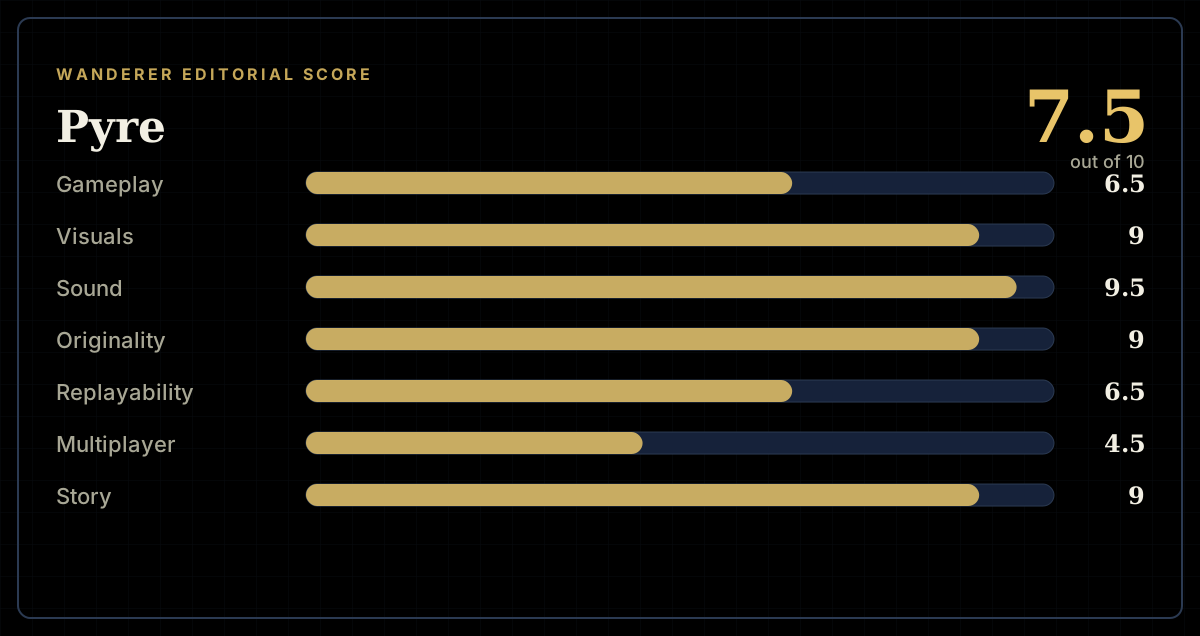
How the review scores each part of the gameWanderer Editorial -
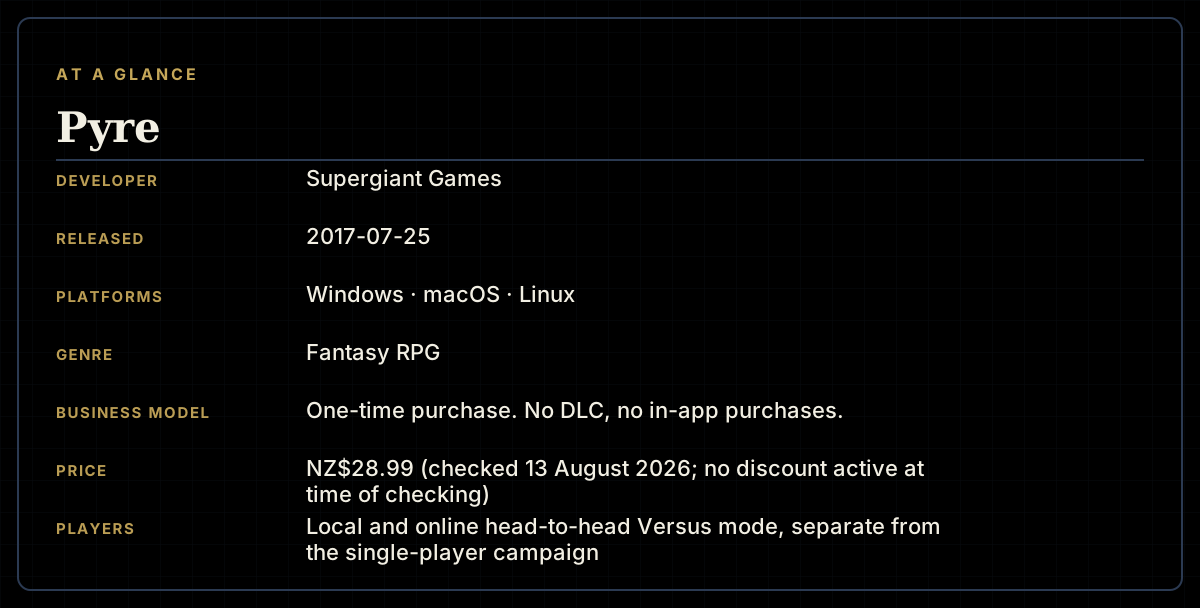
Pyre at a glanceWanderer Editorial -
The short versionWanderer Editorial