Game review
Puzzle Loot Review
6 / 10
- Developer
- Abejo Games
- Publisher
- Abejo Games
- Released
- 21 August 2026
- Platforms
- ["Windows"]
- Genre
- RPG
A Twenty-Fourth Consecutive Launch Without a Single Review
Puzzle Loot released on Steam on 21 August 2026 and has zero user reviews at the time of writing, extending this stretch's run of unreviewed launches to twenty-four — exactly a month since release for a game that pitches itself, in its own words, as "easy to pick up, deep enough to master." That combination of accessible core loop and stated depth is exactly the kind of pitch that tends to travel fast through casual and puzzle-RPG communities, so a full month of silence is a genuine surprise. This review is built entirely from the developer's own store page description, not from verified play.
Tap the Grid, Fell the Monster
The core loop fuses two genres that don't often meet: a 7×7 tap puzzle grid is the entire combat interface, with players clearing blocks and chaining combos to defeat monsters rather than selecting attacks from a menu or watching automated numbers tick down. That's a meaningfully different structure from most puzzle-RPG hybrids, which usually bolt a match-three board onto a separate turn-based combat screen — here the puzzle grid appears to be the fight itself, which raises the interesting design question of how monster variety and difficulty scaling get expressed through block-clearing alone rather than through distinct enemy movesets or attack patterns. Controls are described as "just a tap," which suggests a genuinely low entry barrier, with the promised depth coming from everything layered on top of that simple input rather than from execution complexity in the puzzle itself.
Twenty-Five Classes, One Grid
Character build variety comes from a roster of 25 classes spanning familiar archetypes (Warriors, Mages, Thieves, Priests) up through "advanced classes unlocked through play," each with distinct skills and stat leanings. That's an unusually large class count for a game built around a single shared puzzle interface, and it puts real weight on whether 25 classes actually feel meaningfully different when the underlying combat action — tapping blocks on a 7×7 grid — stays constant across all of them; the differentiation has to come entirely from skills, stat leanings, and gear rather than from any change to the core interaction. Gear dropped from defeated monsters can be evolved, engraved, and enhanced for sub-stats at a blacksmith, giving itemization a genuine crafting loop rather than simple stat-stick replacement, and letting a player's favourite weapon grow alongside their chosen class rather than being discarded for the next numerically bigger drop.
Reincarnation, Wanted Levels, and an Endless Tower
Beyond a single clear, New Game+ lets players "reincarnate" repeatedly, carrying growth into tougher subsequent cycles with the promise that "the view changes a little more each time around" — a structure that rewards long-term investment in a single save rather than treating a clear as a hard endpoint. A "Wanted Level" system tracks in-game crimes and draws bounty hunters as it rises, while also shifting class traits based on that same Wanted Level, effectively turning morality into a live mechanical dial rather than a simple alignment label; that's a distinctive touch for a puzzle-RPG, layering consequence onto play choices well beyond typical "good or evil" dialogue branches. Separately, an Endless Tower mode offers a pure difficulty-scaling challenge with a global Steam leaderboard, giving the game a competitive endgame alongside the story-driven New Game+ cycle for players who want a different kind of long-term goal.
That's a genuinely dense feature list for a game whose core interaction is intentionally simple, and it's worth asking directly whether that much systemic layering — 25 classes, gear forging, New Game+ reincarnation, a Wanted Level dial, and a separate leaderboard tower — risks overwhelming a puzzle loop that's supposed to stay accessible, or whether it successfully keeps the tap-based grid easy while making everything built around it as deep as the store page claims. Multiple save slots are explicitly supported specifically so players can "grow different builds side by side," which suggests the developer expects players to want to compare classes against each other rather than commit to just one, a reasonable answer to that density concern but not a full one.
A Focused, Accessible Package
Puzzle Loot is Windows-only, supports thirteen languages including English, Japanese, Korean, and both Chinese variants, and carries a notably accessibility-conscious feature list for a puzzle-RPG: colour alternatives, a mouse-only control option, narrated game menus, save-anytime support, and an explicit "playable at your own pace" tag alongside playable-without-timed-input support. That's a stronger accessibility showing than most titles in this zero-review stretch, and it fits the game's own "easy to pick up" framing — a puzzle-RPG that wants a genuinely wide audience benefits more from mouse-only and narrated-menu support than most action-heavy competitors would. No in-app-purchase category is listed on the store page, so gear forging and class progression appear to run entirely on in-run drops rather than any real-money shortcut. At NZ$14.25 with no discount at the time of writing, it sits at a reasonable mid-range price for the genre.
Verdict
Puzzle Loot pairs a genuinely novel combat interface — clearing a 7×7 tap grid in place of conventional attack menus — with an unusually dense RPG scaffold layered on top: 25 classes, gear forging with sub-stat enhancement, New Game+ reincarnation, a Wanted Level system that shifts class traits, and a separate leaderboard-driven Endless Tower. The idea of building that much systemic depth around a deliberately simple tap-based core is the game's most interesting bet, and also its biggest open question — whether the puzzle grid stays engaging once 25 classes and repeated New Game+ cycles are layered on top, or whether the shared core interaction starts to feel repetitive faster than the surrounding systems can compensate for. A full month without a single review leaves that question, and the accessibility-conscious feature list's real-world payoff, entirely untested by outside voices; this assessment rests entirely on the developer's own description rather than anyone's actual playthrough.
Screenshots
-
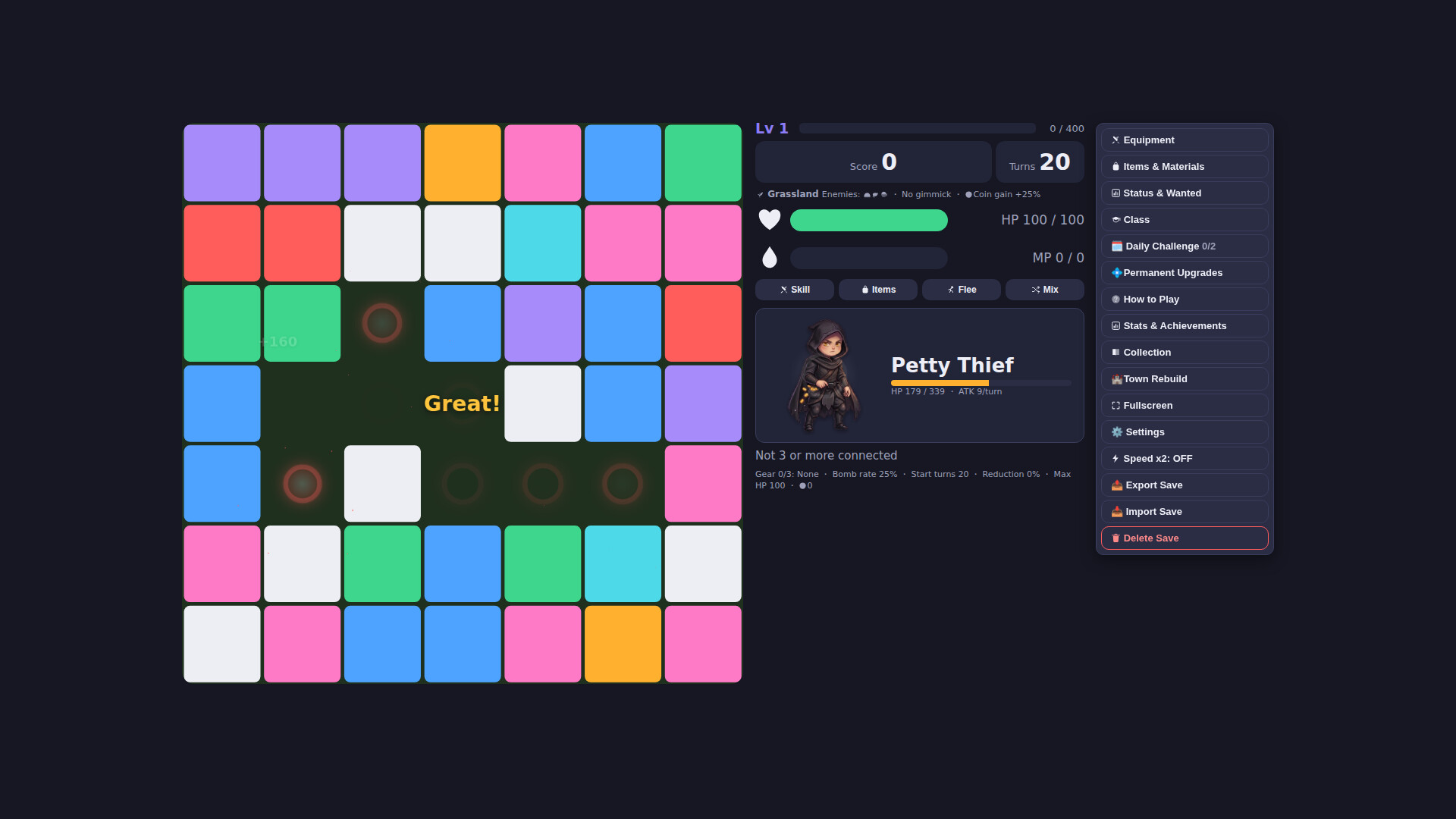
The core puzzle-combat screen, clearing coloured blocks on a 7x7 grid to damage a Petty Thief enemy while tracking HP, MP and remaining turnsImage: Abejo Games via Steam -
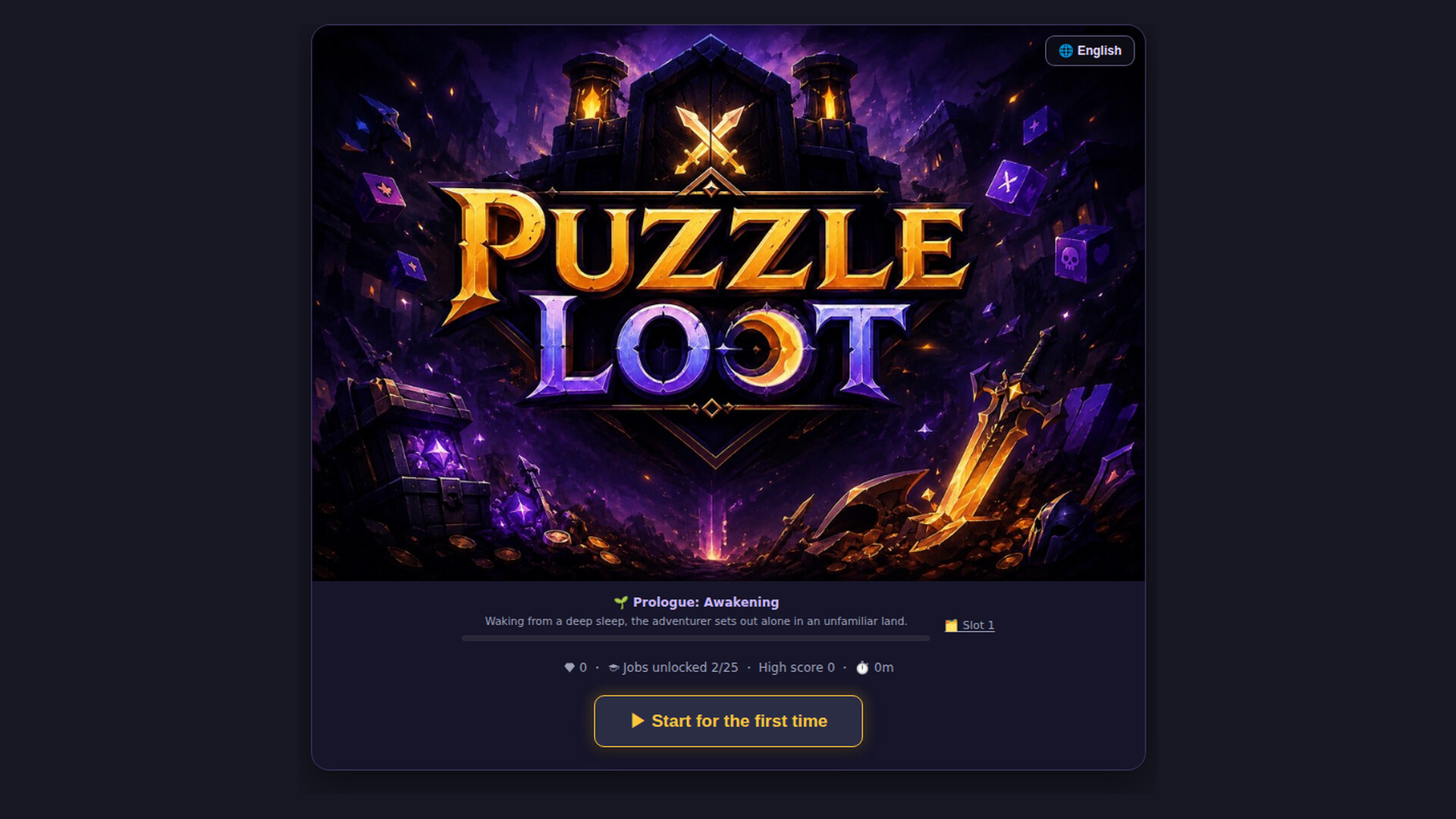
The title screen ahead of a first run, tracking how many of the game's 25 classes have been unlocked so farImage: Abejo Games via Steam -
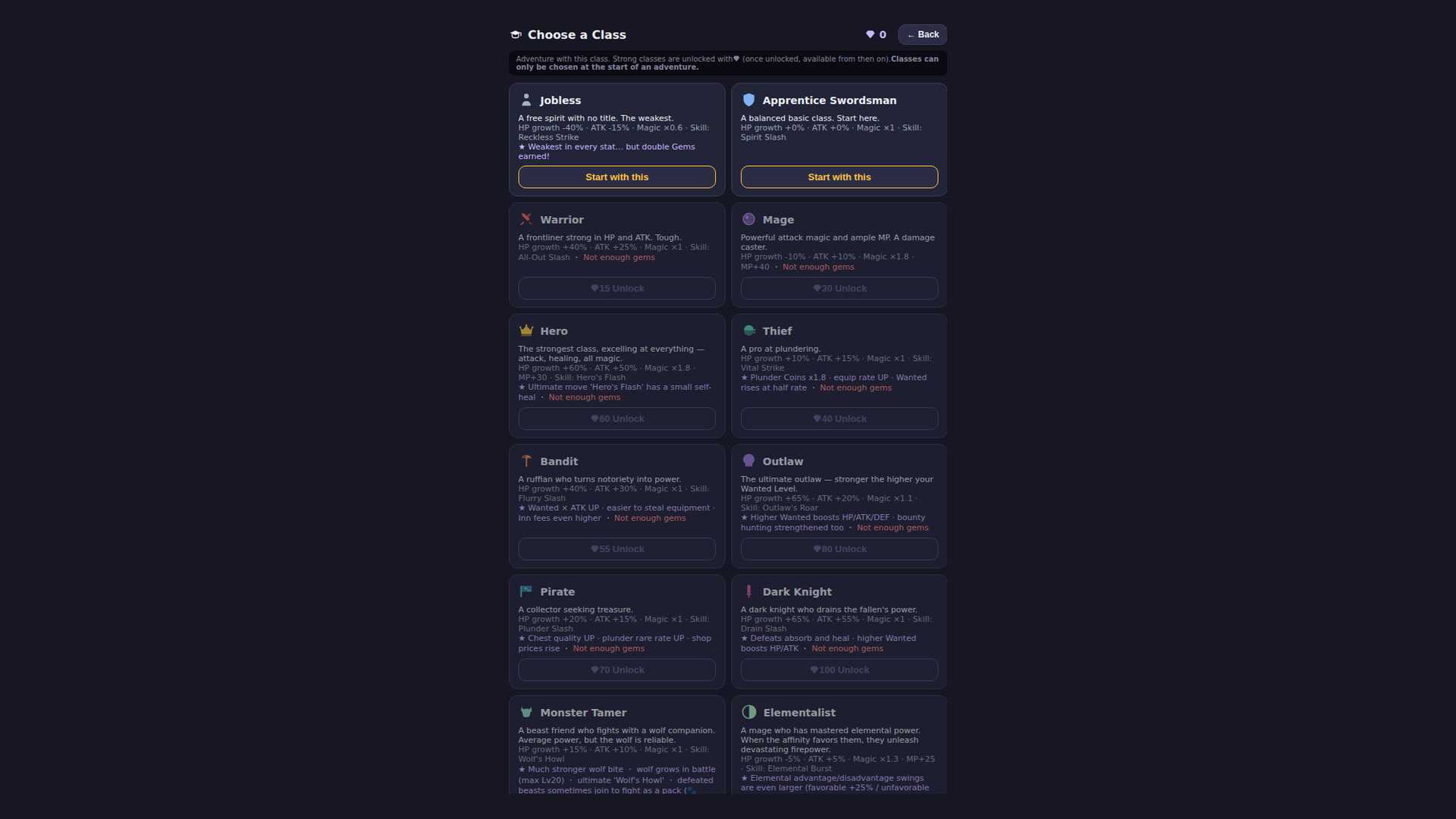
The class-select screen, showing a fraction of the game's 25 classes alongside their stat leanings and gem unlock costsImage: Abejo Games via Steam