Game review
Project: Gorgon
7.5 / 10
- Developer
- Elder Game, LLC
- Publisher
- Elder Game, LLC
- Released
- 28 January 2026
- Platforms
- Windows, macOS, Linux
- Genre
- MMORPG
- Monetisation
- Buy to play, with an optional VIP subscription for storage and convenience perks
- Players
- Persistent shared world with grouping, player trading and a modest but tightly-knit population
The short version
Project: Gorgon spent nearly eight years in Early Access proving that a tiny team can sustain a genuinely deep, genuinely strange MMORPG without a publisher pushing it toward the genre's usual shortcuts. The classless skill system, the ability to catch a curse from a monster and spend the next hour as a cow, and a crafting web with real interlocking depth are still unlike anything else on the market. What 1.0 mostly changes is polish: new character models, a levelled-up capital city, and the confidence of no longer wearing an "Early Access" label.
It's still rough where it's always been rough — the presentation is dated and the skill system's freedom comes with real bookkeeping. But nothing else scratches this particular itch, and the community built around it is one of the healthiest in the genre.
Biggest strengths
- The skill system lets you pair any two active combat skills and dozens of passive ones, so two players who look similar on paper can play completely differently
- Turning into a cow, a wolf, a spider or worse isn't a gimmick skin — it's a real, mechanically distinct playstyle with its own skill tree and drawbacks
- Crafting professions interlock instead of sitting in isolated silos, so cooking, alchemy and combat all lean on each other
Biggest weaknesses
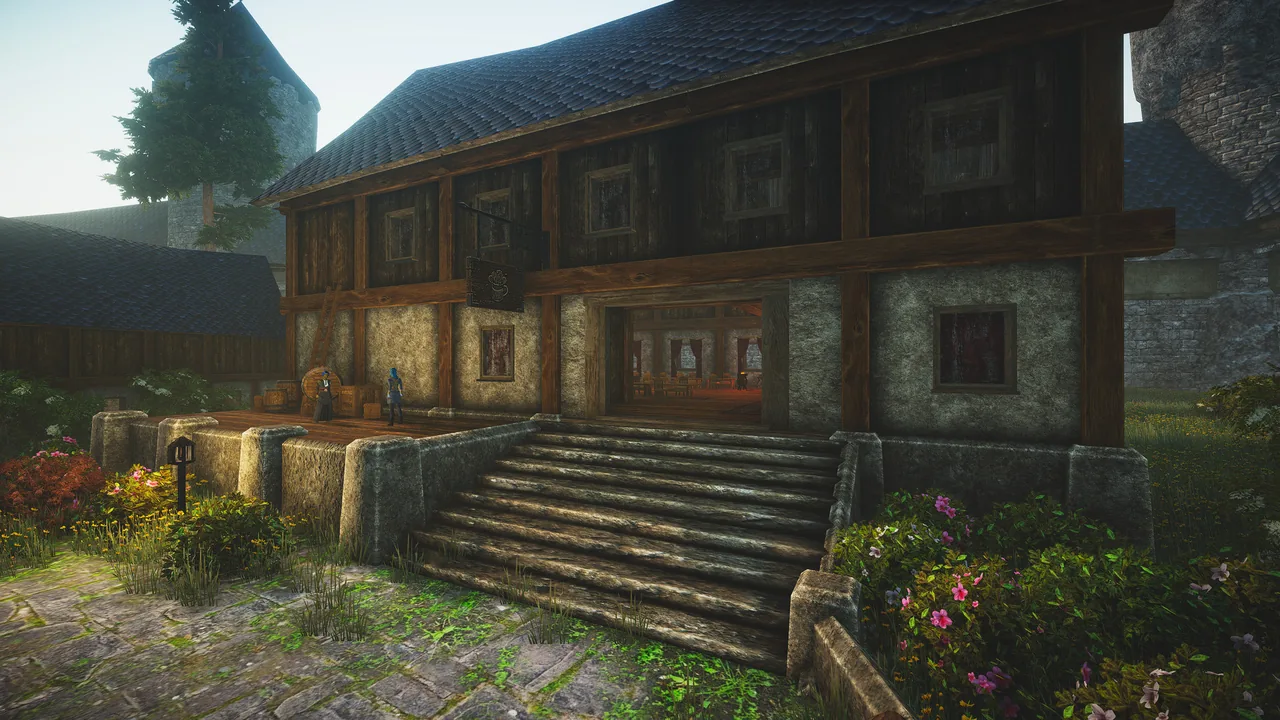
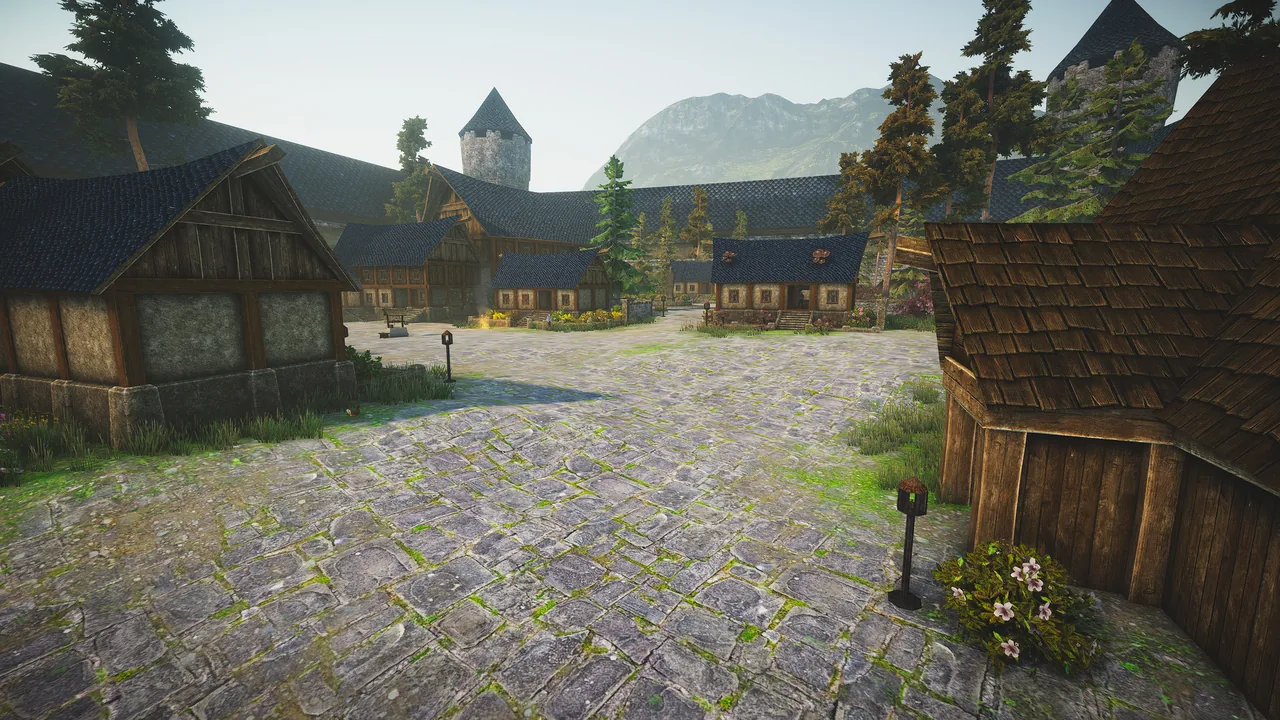
- Character models and environment art still look like a game built by a two-person studio in the 2010s, 1.0 visual pass or not
- The balance rule that locks higher-level abilities when two active skills drift more than 25 levels apart adds bookkeeping most MMOs don't ask of players
- Combat animations rarely communicate danger clearly, so a lot of early fights are won or lost by numbers you can't see rather than reads you can make
Who it's for: Sandbox and skill-system fans who liked the idea of RuneScape's build freedom applied to a full 3D persistent world, and players who want an MMORPG that rewards curiosity over following a class guide.
Our recommendation: Buy it if the idea of experimental builds and a slower, denser world appeals to you — skip it if you need modern production values or fast, legible combat feedback.
7.5 / 10
Nearly a decade in Early Access, and it still doesn't play like anything else
Project: Gorgon has spent so long as "that weird MMO where you can turn into a cow" that it's easy to forget how rare its actual premise is. Elder Game, a studio that has never numbered more than a handful of people, first tried to crowdfund the game in 2014, failed, retooled the pitch, and raised enough through a second pledge drive in 2015 to keep building. Early Access opened on Steam in 2018. The game finally hit 1.0 on January 28, 2026 — a launch date that arrived roughly eight years after most players' first character, and the thing it proves isn't that Project: Gorgon has become a slicker game. It's that a classless, skill-driven sandbox MMORPG can be sustained for a decade by a studio too small to staff a modern raid team, and still end up more mechanically interesting than most releases with a hundred times the budget.
That's the frame this review has to use, because Project: Gorgon isn't chasing the same things as the MMOs it gets compared to. It isn't trying to be prettier than World of Warcraft or more frictionless than Guild Wars 2. It's trying to be the game where your build is actually yours, where a strange curse you picked up from a swamp monster can become your main combat rotation, and where the answer to "what's the best class" is "there isn't one, go find out." For a specific kind of player — the one who reads a skill tooltip and immediately starts theorycrafting combinations — that's still one of the most interesting pitches in the genre.
No classes, just a very large box of parts
The headline system is the one the game is built around: there are no classes. Instead there are around 130 skills, split between combat skills, crafting and trade skills, and beast skills, and you can train nearly all of them on one character. The catch that keeps this from becoming a min-maxed mess is the balance rule on active combat skills — you can dual-wield any two active combat skills at once, but if one is more than 25 levels ahead of the other, its higher-tier abilities lock out until the gap closes. It's a soft leash rather than a hard rule, and it does exactly what it's meant to: it nudges you toward genuinely pairing skills (say, Sword and Unarmed, or Fire Magic and Staff) rather than power-levelling one to the ceiling and treating the second as a shelf decoration.
The result is a build space that's wide in a way few MMOs bother with anymore. Two level-40 characters can look nothing alike in practice, because "level 40" isn't a single number — it's the sum of dozens of independently levelled skills, each learned from a trainer, a book, a quest reward, or a monster encounter. Skills advance through use, which means the fastest way to get good at Staff combat is to fight with a staff, not to grind a separate currency and buy the skill off a vendor. It's an old-school approach — closer to a tabletop skill sheet than a modern talent tree — and it asks more of the player than a class picker does. There's no build guide the game hands you at character creation; you're expected to go find out what works by actually trying things, which is either the best part of the game or the first thing that scares newcomers off, depending on temperament.
The monster is the tutorial
The system that gets Project: Gorgon talked about, though, is the one where the world itself teaches you new ways to play. Certain monsters and hazards don't just deal damage — they inflict conditions that fundamentally change what you can do. Get cursed by the wrong creature in the Crystal Cavern and you become a cow, with its own skill tree built around grazing, headbutting and surviving as prey. Drink the wrong potion and you're a pig. Get bitten during a full moon and lycanthropy sticks around permanently, with its own combat kit and a monthly forced transformation you can't opt out of. These aren't costume changes. Beast forms stack, come with real restrictions (a cow can't hold a sword), and in several cases have to be deliberately cured rather than toggled off, which means the game occasionally punishes curiosity with several real minutes of inconvenience before it rewards it with a skill tree nobody else in the room has bothered to learn.
It's a genuinely rare piece of design: a progression system sourced from exploration and misfortune rather than a quest log. It also means Project: Gorgon's most memorable stories aren't about loot drops, they're about the time a swamp bog turned an entire group into rabbits mid-fight. No other MMORPG currently shipping treats "cursed into livestock" as a legitimate character build, and that alone justifies a chunk of this game's cult following.
Crafting that actually depends on other crafting
The trade skills follow the same philosophy as combat: nothing sits in isolation. Cooking wants ingredients that come out of Farming and Animal Handling. Alchemy wants reagents that Cooking and Foraging produce. Combat performance leans on gear that Blacksmithing, Carpentry or Outfitting produced from materials other skills gathered. It's the kind of interlocking economy that a lot of sandbox MMORPGs promise and then quietly abandon once the loot treadmill takes over — Project: Gorgon keeps it, in large part because there isn't a treadmill pulling players away from it. With 48 trade skills on offer, there's enough here that most players will never fully explore every profession on one character, which is very much the point: this is a game built to be played differently by everyone who plays it, not one with a single optimal path players race each other down.
What 1.0 actually changed
For a launch that closed out nearly eight years of development, 1.0 is conservative about what it touches. The headline additions are a full visual overhaul of the character models — long-promised, and the single most requested change from the Early Access community — along with expanded content around Statehelm, the game's capital, and the general quality-of-life polish you'd expect from a studio using its full-release milestone to tidy up rather than reinvent. The classless skill system, the beast forms, the interlocking crafting web: none of it needed reworking, and Elder Game wisely didn't touch it. What 1.0 buys the game is legitimacy — it's no longer an experiment players have to caveat with "it's still in Early Access" — and a jumping-on point for players who'd been waiting for the "finished" label before committing.
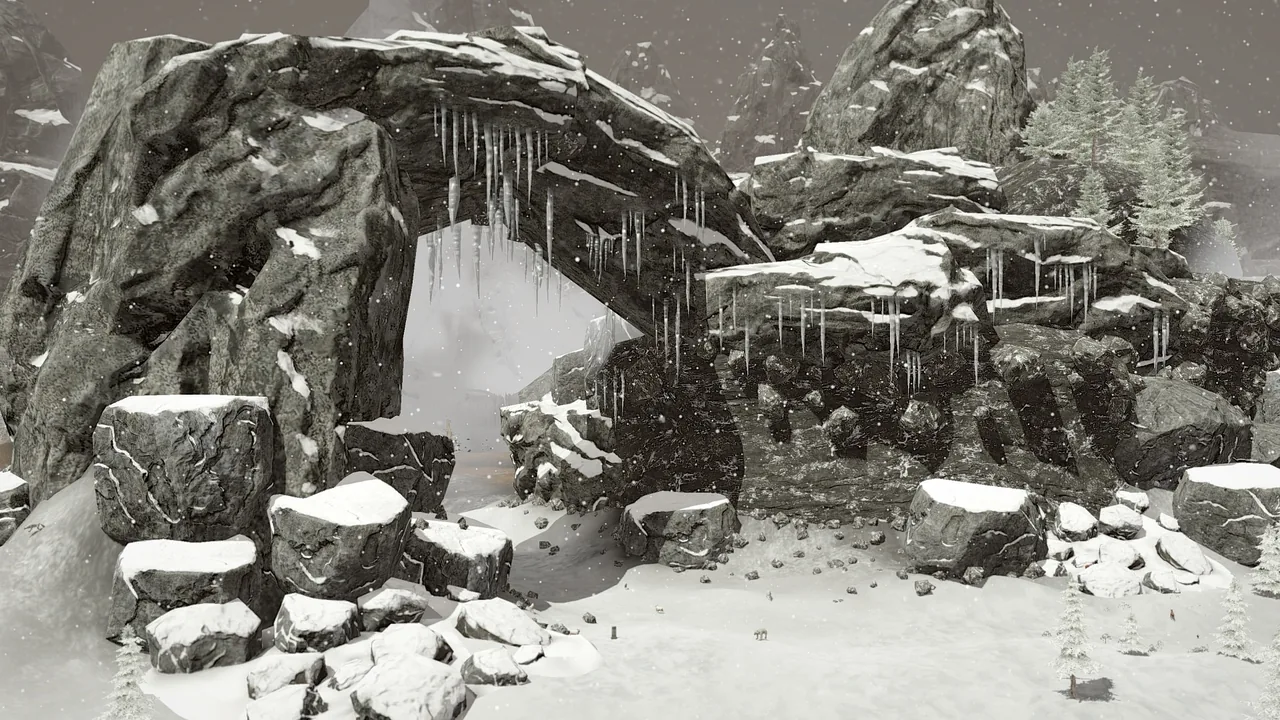
That caution is also the honest limit of this review. A decade of Early Access patches built a genuinely deep game one skill and one zone at a time, but it also means the presentation never caught up to the systems underneath it. Environments can feel sparse, animations are simple, and combat rarely telegraphs danger the way a modern action-RPG would. None of that is new at 1.0, and none of it seems likely to change soon — this is still fundamentally a two-person studio's game, just a finished one.
Where the friction actually is
The freeform build system is Project: Gorgon's best idea and its most consistent source of complaint, and both things are true for the same reason: it refuses to hold your hand. Some combat skills are simply weaker than others in practice, and the game won't tell you which — you find out by grinding one for twenty hours and comparing notes with veterans, or by reading the wiki, which functions as the build guide the game deliberately doesn't provide in-client. The 25-level balance rule that keeps skill pairing honest also means players have to actively manage two skill levels in tandem rather than just pouring resources into whichever one feels strongest, which is a real layer of bookkeeping on top of an already dense skill list.
The population is the other honest limitation. This was never going to be a hundred-server MMO, and it isn't — 1.0 hasn't turned Project: Gorgon into a crowded world. Group content, certain dungeons and some of the more niche skills can go quiet outside of peak hours, and the shared-world promise that anchors the genre works better in some corners of the map than others. What the community lacks in size it makes up in temperament: this is consistently described as one of the friendlier player bases in the MMORPG space, with veterans actively teaching rather than hoarding knowledge, which softens the learning curve a class-based MMO wouldn't need to smooth over in the first place.
Monetisation, briefly
Project: Gorgon is buy-to-play with an optional VIP subscription layered on top for storage space and convenience perks, and there's no premium currency, loot box or pay-to-win system anywhere in the shop. For a persistent-world MMORPG that's an unusually clean model, and it matches the studio's whole approach: charge once for the game, offer a subscription for people who want more bank space, and don't touch the actual progression systems with a price tag. Players who don't subscribe aren't locked out of anything meaningful — they just manage inventory more carefully, which in a game this dense with materials is a real but minor tax rather than a wall.
Final verdict
Project: Gorgon earns its score from originality and depth, not from polish. The classless skill system, the monster-sourced beast forms, and a crafting web that genuinely depends on itself are still unmatched anywhere else in the genre, and a decade of steady, unhurried development has given all three the time to mature properly rather than ship half-finished. That's a rare thing for a studio this small to pull off, and 1.0 is a fair reward for the players who stuck with it.
It's not a recommendation for everyone. The visuals haven't caught up with the systems, combat rarely tells you what's dangerous until it's too late, and the build freedom that makes this game special also means you're on your own figuring out what's good. Players who want an MMORPG that respects experimentation over efficiency, and who don't mind a small, friendly population over a crowded one, will find one of the most distinctive worlds currently available. Players looking for modern combat feedback or a big, bustling server should look elsewhere.
Anyone drawn to the idea of a progression system built entirely around player curiosity, rather than a quest log telling you what to do next, may also want to look at Wanderer's own take on letting a world keep moving while you're away from it.
Pros and cons
Pros
- The skill system lets you pair any two active combat skills and dozens of passive ones, so two players who look similar on paper can play completely differently
- Turning into a cow, a wolf, a spider or worse isn't a gimmick skin — it's a real, mechanically distinct playstyle with its own skill tree and drawbacks
- Crafting professions interlock instead of sitting in isolated silos, so cooking, alchemy and combat all lean on each other
- No loot boxes, no premium currency and no pay-to-win systems anywhere in the cash shop
- The player community is unusually welcoming, with veteran players actively mentoring newcomers rather than gatekeeping them
Cons
- Character models and environment art still look like a game built by a two-person studio in the 2010s, 1.0 visual pass or not
- The balance rule that locks higher-level abilities when two active skills drift more than 25 levels apart adds bookkeeping most MMOs don't ask of players
- Combat animations rarely communicate danger clearly, so a lot of early fights are won or lost by numbers you can't see rather than reads you can make
- Some trade and combat skills are considerably weaker than others, and the game doesn't tell you which until you've sunk hours in
- The population is small enough that certain skills, dungeons and group content can go quiet outside peak hours
Screenshots
-
Project: GorgonImage: Elder Game, LLC via Steam -
Project: GorgonImage: Elder Game, LLC via Steam -
Project: GorgonImage: Elder Game, LLC via Steam -
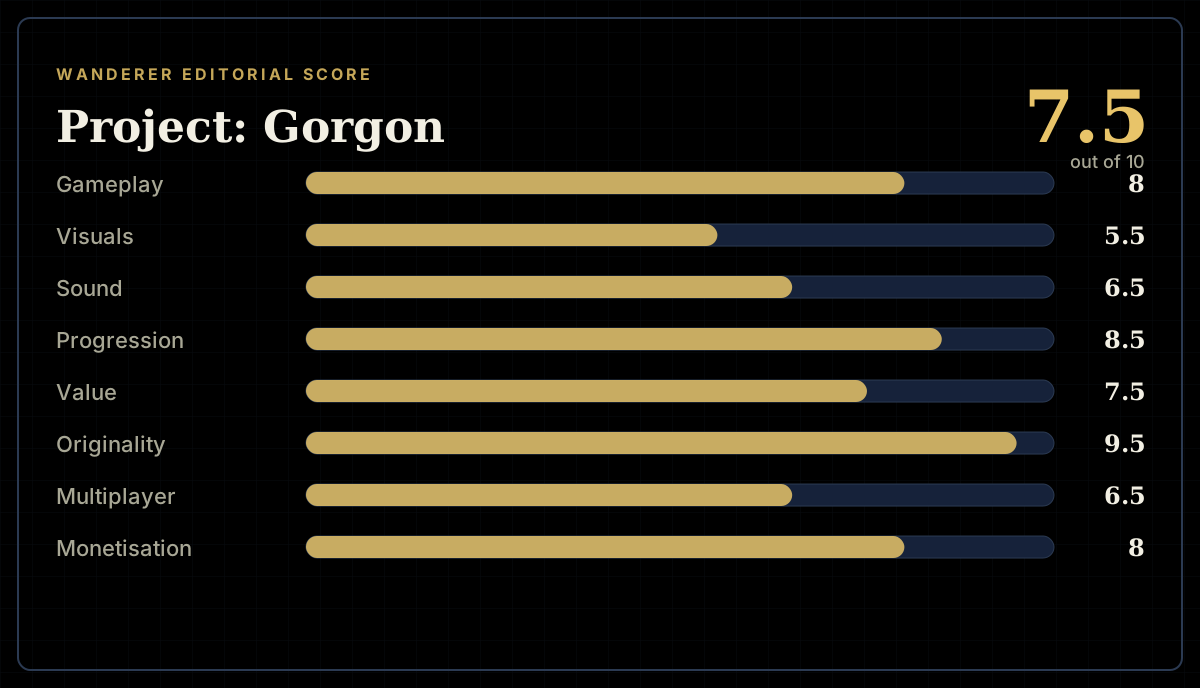
How the review scores each part of the gameWanderer Editorial -
The short versionWanderer Editorial