Game review
Brighter Shores
6 / 10
- Developer
- Fen Research Ltd
- Publisher
- Fen Research Ltd
- Released
- 6 November 2024
- Platforms
- Windows, macOS
- Genre
- MMORPG
- Monetisation
- Free to play with an optional Premium Pass subscription; no microtransactions, loot boxes or premium currency
- Players
- Persistent shared world with player trading, but concurrent population has collapsed since launch
The short version
Brighter Shores is a smart, fussily-designed skilling game wearing an MMO's clothes it can no longer fill. The professions are deep, the monetisation is honestly one of the fairest in the genre, and Fen Research ships small updates constantly. But the population that made the "M" in MMO meaningful has all but evaporated, the promised episodes have barely moved in over a year, and the per-episode reset still costs new players real momentum the moment they're having fun.
Worth trying because it costs nothing. Hard to recommend as anyone's main game.
Biggest strengths
- No microtransactions, loot boxes or pay-to-win systems anywhere in the shop
- Professions like Fishing, Blacksmithing and Alchemy are genuinely well-tuned, tactile busywork
- The Knowledge system lets XP earned in one episode's skill carry into another episode's version of it, which meaningfully softens the reset it was built to answer
Biggest weaknesses
- Concurrent players have fallen from a launch peak above 17,000 to roughly 120 as of mid-2026, which undercuts the shared-world pitch on sight
- Only four episodes exist twenty months after launch, and two of them sit behind the same paywall they launched behind in November 2024
- Combat is shallow enough that several professions feel more purposeful than actually fighting anything
Who it's for: RuneScape veterans nostalgic for methodical, click-driven skilling, and anyone who wants a low-stakes, ad-free, pay-to-win-free game to level up passively in the background.
Our recommendation: Try the free episodes before paying for anything — Premium Pass content has barely grown since launch.
6 / 10
An MMO that ran out of players before it ran out of ideas
Andrew Gower spent eight years building Brighter Shores after leaving the company he co-founded to make RuneScape, and it shows in the parts that work. The professions are carefully paced, the world has a dry sense of humour, and the whole thing runs without a single microtransaction — a genuinely rare stance for a free-to-play MMO in 2026. The trouble is everything Fen Research got right about the systems sits inside a world that has almost nobody left in it, and twenty months of Early Access haven't done much to change either fact. This is a review of the game as it stands today, not the one that launched to a fanbase primed to compare it, item for item, against RuneScape.
Rooms, not a world
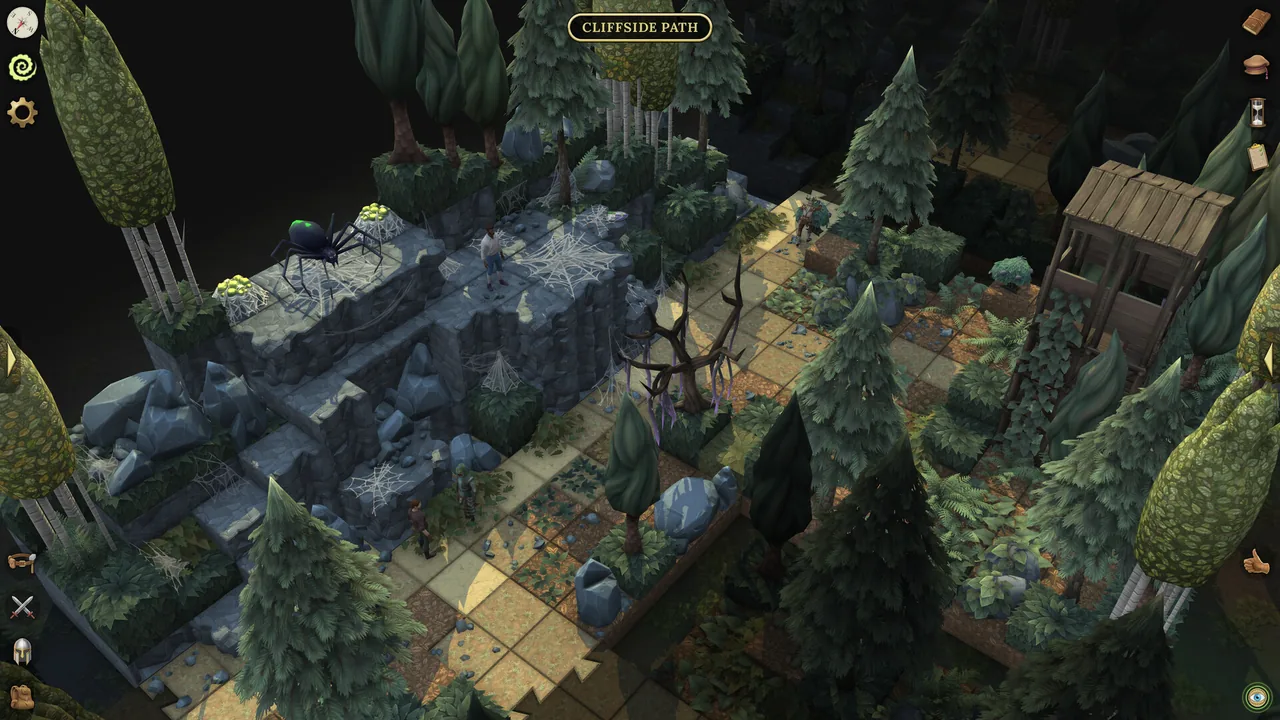
Brighter Shores doesn't have an open world in any sense OSRS or RuneScape players would recognise. The map is built from discrete rooms — a mine, a market square, a stretch of forest — connected by doors and short corridors, each one streamed in on its own. Individual professions are usually tied to a single room: you don't wander into good fishing spots, you walk to the fishing room and stay there. It's a sensible engineering choice for a small studio building an ambitious game gradually, and it does keep each space legible and purposeful. What it doesn't do is generate the kind of incidental discovery that makes an MMO's map feel like a place rather than a menu. Players routinely describe the game as feeling "disconnected," and that's the accurate word for it — Hopeport doesn't open onto Hopeforest so much as hand you off to it.
The episode reset, and the fix that actually helped
The most notorious decision at launch was that combat levels reset with every new episode. Arrive in Hopeforest and your Guard combat profession from Hopeport is gone, replaced by a fresh level-zero Scout profession specific to that episode. Non-combat professions carry over more gently, but the headline mechanic — start a new region, start fighting from scratch — was exactly the kind of thing that reads as contempt for a player's time, and the launch backlash over it was loud and justified.
What's changed is the Knowledge system, which now lets XP earned levelling a skill in one episode be spent to instantly raise the equivalent skill in another episode. It's not a perfect fix — you still feel the seam when you cross into new content, and newer players don't have a backlog of Knowledge to spend — but it's a real answer to a real complaint, not a cosmetic patch. Gower has been unusually open about the reasoning: the reset exists to keep every episode's content meaningful rather than leaving early regions as dead weight once players outlevel them. It's a defensible design philosophy. It's just also one that a huge number of players never forgave, and the Knowledge system arrived too late to change the story most of them tell about the game.
Professions that reward patience, combat that mostly doesn't
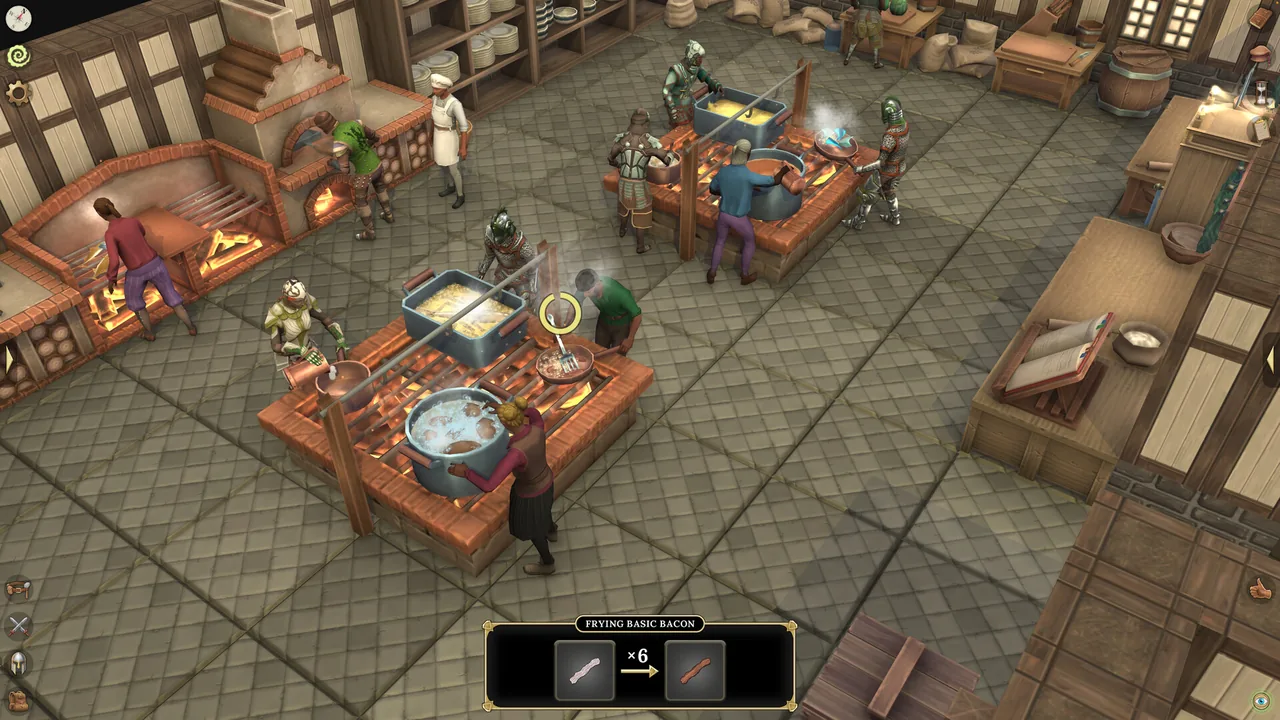
Where Brighter Shores earns its keep is in the professions. Fishing, Blacksmithing, Alchemy, Cooking and the rest are built with the same click-and-wait rhythm RuneScape popularised, but with noticeably more texture in the individual actions — recipes, upgrades and profession-specific mechanics that give even simple gathering loops a bit of shape. It's a game that rewards sitting down and working through a skill methodically, and the sense that a designer actually thought about each profession rather than reskinning one system twelve times is real.
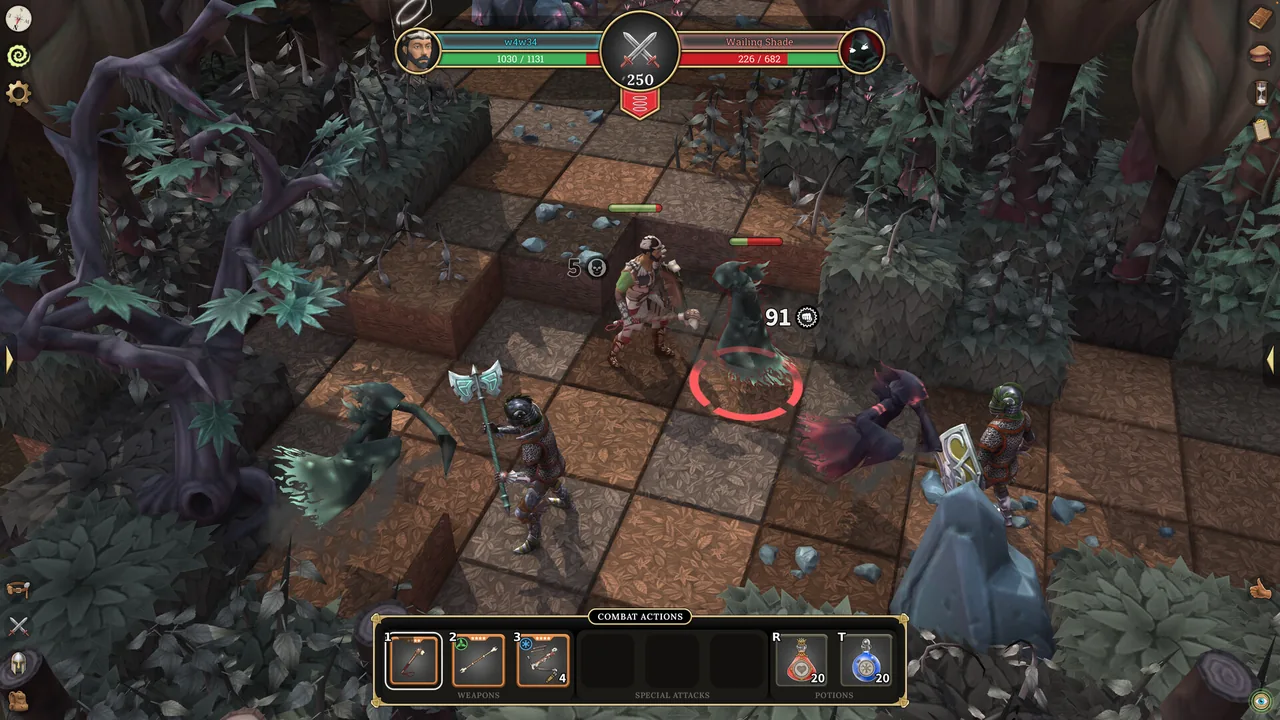
Combat is the weaker half. The three classes — Cryoknight, Guardian and Hammermage — form a tidy rock-paper-scissors triangle around ice, nature and lightning magic, and the idea is sound. In practice, fights rarely ask much of you, and several of the game's own professions feel more considered than its monster encounters do. Brighter Shores plays like a game designed by someone who is far more interested in the economy and the crafting chains than in what happens when you hit something, and that imbalance is obvious the moment you compare how much design attention each side of the game has received.
The population problem is the review
It would be possible to write around this, but it's the single fact that shapes everything else about recommending the game. Brighter Shores peaked above 17,000 concurrent Steam players in its opening weekend in November 2024. By December that had fallen below 2,500. A year later it was hovering around 250. As of mid-2026, Steam's own charts put the average closer to 120 concurrent players — a decline of roughly 99% from launch. Sampling the game's most recent user reviews shows sentiment split close to even, noticeably rougher than the roughly two-thirds-positive score the lifetime total suggests, and a recurring theme in them is exactly this: players logging in, finding a near-empty room, and wondering what the shared world is actually for. One recent review put it bluntly — paying for content on a game with under a hundred people active is a hard sell regardless of how good that content is.
This matters more for Brighter Shores than it would for most single-player-shaped games, because the game keeps insisting, through trading, shared rooms and its own marketing, that it's a persistent multiplayer world. Right now it's closer to a solo skilling game where other players occasionally walk past. Trading itself only opens up once you've reached Crenopolis — behind the Premium Pass and a multi-step quest chain — so the free tier, which is most people's actual experience of the game, has essentially no player economy at all. There's no auction house even for paying players; every deal is a face-to-face trade, either at the bank or in a dedicated market room, which is a defensible economy design in theory and close to inert in a world this sparsely populated.
Premium Pass: the fairest paywall that still isn't moving
Credit where it's due: the monetisation itself is close to a model citizen. There is no cash shop, no cosmetic gacha, no energy timer nudging you toward a purchase. The Premium Pass — £4.99 for 30 days, or cheaper per-day on the 90-day and annual options — simply unlocks episodes three and four, Mine of Mantuban and Crenopolis, along with a couple of quality-of-life perks like a name without a discriminator tag and cosmetic dyes. That's an honest transaction: pay, get more of the same well-made game. Nothing about it pressures you mid-session the way loot boxes or premium currencies do.
The problem is what you're actually buying. Episodes three and four are the same two regions that were behind the paywall on launch day in November 2024. A fifth episode, Stonemaw Hill, has been announced in patch notes for a long time without shipping, and Gower himself has said the original "six months in Early Access" estimate was too optimistic by a wide margin as the studio works on growing the team to speed things up. In the meantime, updates arrive constantly — new bounties, talismans, side quests, seasonal events — several times a week, which is a genuinely good sign for a studio still actively supporting its game. None of it, though, is the kind of new-region content that a Premium Pass subscriber is actually paying to reach. You're subscribing to a trickle of polish on content you've already paid to unlock, not to forward momentum.
Presentation carries more weight than it should have to
The isometric art style is a clear strength — a warm, storybook palette that gives Hopeport's streets and Hopeforest's canopy distinct identities, with environmental transitions that read as deliberate rather than tile-swapped. The soundtrack does real work too, shifting tempo and mood as you move between exploration, combat and town scenes rather than looping one ambient track indefinitely. Neither element is technically ambitious in the way a big-budget MMO's would be, but both are consistent, purpose-built and better than the game strictly needed to be at this budget. It's presentation doing some of the emotional labour that thin combat and an empty world can't.
Where this leaves it next to RuneScape
The comparison to Gower's earlier games is unavoidable and worth being precise about. Old School RuneScape and RuneScape both offer an actual open world, a functioning player-driven economy with a Grand Exchange, and combat systems with real depth once you're past the early levels — all running on top of a population that, whatever its ups and downs, has never come close to evaporating. Brighter Shores borrows RuneScape's best idea — patient, structured skilling as the core loop — and executes several individual professions better than either of those games ever did. What it hasn't replicated is the thing that made those worlds feel alive: a population large enough that the world state, the economy and other players are load-bearing parts of the experience rather than background noise. Until Brighter Shores solves that, or stops billing itself as an MMO, it's fair to judge it against that promise and find it wanting.
Final verdict
Brighter Shores is free, honestly monetised, and built by people who clearly still care about it — that's worth acknowledging in an industry full of live-service games that quietly stop trying. Individual professions are well-crafted, the Knowledge system is a real answer to the launch backlash over resets, and the constant small patches are evidence of a studio still working the game rather than one that's checked out. None of that changes the fact that the population has collapsed by roughly 99% from its launch peak, that only two new-to-paying-players episodes have existed the entire time the game has been in Early Access, and that combat still lags well behind the professions built around it. It's worth a look precisely because it costs nothing to try the first two episodes — just go in expecting a solitary, well-made skilling game rather than the persistent shared world it's still selling itself as.
Pros and cons
Pros
- No microtransactions, loot boxes or pay-to-win systems anywhere in the shop
- Professions like Fishing, Blacksmithing and Alchemy are genuinely well-tuned, tactile busywork
- The Knowledge system lets XP earned in one episode's skill carry into another episode's version of it, which meaningfully softens the reset it was built to answer
- Frequent small patches (bounties, talismans, quests) show a developer still actively working the game
- Distinct isometric art direction and a dynamic soundtrack that actually reacts to what's happening on screen
Cons
- Concurrent players have fallen from a launch peak above 17,000 to roughly 120 as of mid-2026, which undercuts the shared-world pitch on sight
- Only four episodes exist twenty months after launch, and two of them sit behind the same paywall they launched behind in November 2024
- Combat is shallow enough that several professions feel more purposeful than actually fighting anything
- Rooms are small and separately loaded rather than an open world, so exploration rarely produces the sense of discovery the genre promises
- Player trading only unlocks deep into paid content, so the free tier has almost no player economy to speak of
Screenshots
-
Brighter ShoresImage: Fen Research Ltd via Steam -
Brighter ShoresImage: Fen Research Ltd via Steam -
Brighter ShoresImage: Fen Research Ltd via Steam -
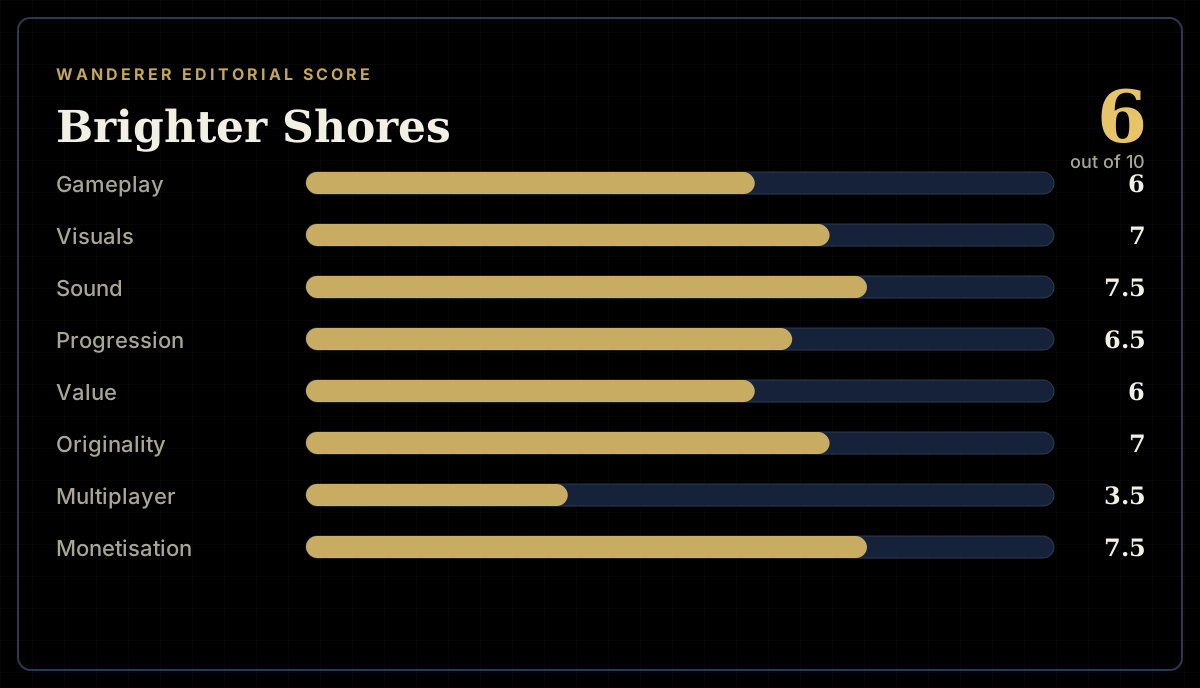
How the review scores each part of the gameWanderer Editorial -
The short versionWanderer Editorial