
Game review
Potion Shop Simulator
5.5 / 10
- Developer
- Pebbles Games
- Publisher
- Pebbles Games
- Released
- 5 March 2025
- Platforms
- [Windows]
- Genre
- Simulation
- Monetisation
- Paid
- Players
- Single-player and online co-op
The short version
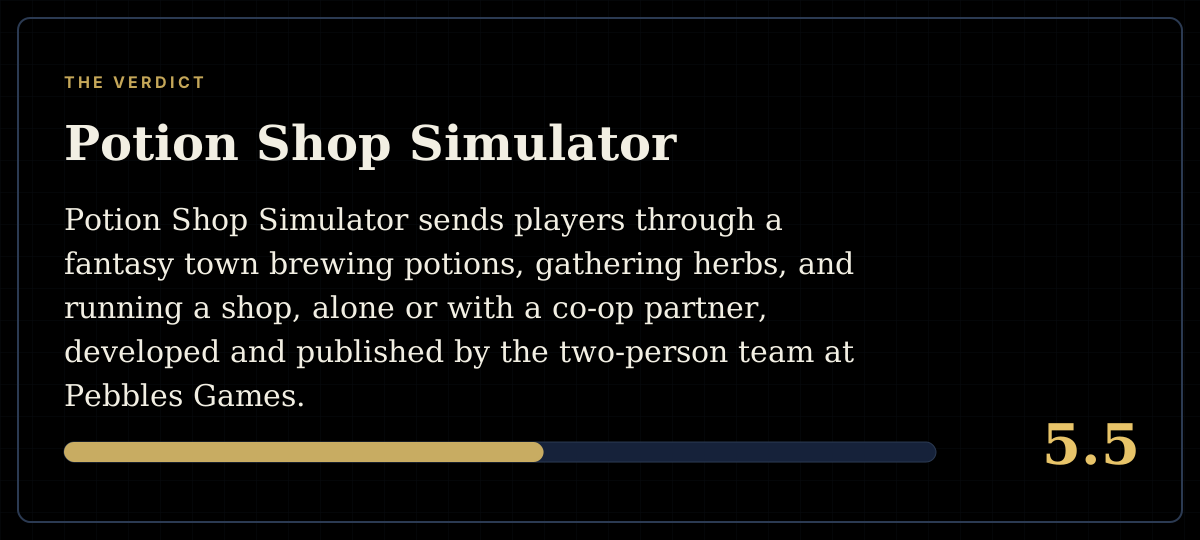
Potion Shop Simulator sends players through a fantasy town brewing potions, gathering herbs, and running a shop, alone or with a co-op partner, developed and published by the two-person team at Pebbles Games. At 77% positive across 57 reviews, reception leans favourable, and the reviewers who liked it liked it a lot — the ingredient-ratio discovery system and the appeal of splitting brewing and selling duties with a friend both draw genuine, specific praise. But the negative reviews are just as specific, pointing to a rough launch state: quest progress that desyncs in co-op, a single-item inventory that makes basic tasks tedious, and a content pool several reviewers say runs out well before the appeal does. It's a game with real charm and an unusually responsive developer, let down at launch by exactly the kind of rough edges that made more than one reviewer wish it had simply come out in Early Access.
Biggest strengths
- The ingredient-ratio potion discovery system draws consistent praise as a genuinely fun, puzzle-like hook rather than simple recipe-following
- Co-op is repeatedly singled out as the best way to play, with reviewers enjoying the division of labour between brewing and running the counter
- Multiple reviewers specifically praise the developer's fast, hands-on responses to bug reports and feedback on Discord
Biggest weaknesses
- Multiple reviewers report co-op-specific bugs, especially quest progress and inventory desyncing between players
- A single-item, small-crate inventory system is repeatedly called tedious, forcing repeated trips for basic gathering and stocking tasks
- Several reviewers say the game's content — capped around level 20 — runs out after roughly fifteen to twenty hours, well before the core loop stops being enjoyable
Who it's for: Fans of cozy shop-management sims looking specifically for a co-op experience, and anyone drawn to alchemy/crafting games with a puzzle-like ingredient-discovery hook.
Our recommendation: Worth it for players who have a co-op partner lined up and can tolerate some launch-window bugs; more of a gamble solo, where the repetitive endgame and interface friction are harder to overlook.
5.5 / 10
Running a Fantasy Alchemy Shop, Solo or With a Friend
Potion Shop Simulator puts players in the boots of a graduate from a fantasy wizarding school, taking over an alchemy shop in a storybook medieval town. The loop is straightforward on paper: gather herbs and ingredients around the map, experiment with ratios to discover and brew potions, then sell them to a rotating cast of townsfolk while completing quests and upgrading the shop, developed and published by the small two-person team at Pebbles Games. It supports both solo play and online co-op, and that second option turns out to be central to how the game's audience actually experiences it.
Reception sits at 77% positive across 57 total reviews, and an English-language sample pulled for this piece (38 reviews: 30 positive, 8 negative) tracks closely with that split. It's a smaller review base than many titles in this genre, but the reviews themselves are unusually detailed on both sides, painting a clear and consistent picture of what the game gets right and where it still needs work.
What Reviewers Actually Enjoy
The single most consistent praise across the positive sample is for the potion-brewing system itself. Rather than simply following printed recipes, players discover potions by experimenting with ingredient ratios, and multiple reviewers describe this process as a genuinely satisfying puzzle rather than rote crafting — one reviewer called the search for "the best ways to get the most potent mixes" a real highlight of the early hours. That sense of discovery pairs with a shop-upgrade and quest structure that reviewers say gives a strong feeling of progression, at least until the available content is exhausted.
Co-op comes up constantly, and almost always favourably. Reviewers describe splitting duties naturally — one partner focused on brewing while the other handles customers and gathering — and several say the game is meaningfully better with a second player than playing solo. One reviewer went as far as to say the game could jump from a "6/10 to an 8/10" with a second cauldron added specifically for co-op partners, a small but telling detail about how central that shared-labour dynamic is to the game's appeal. The developer's responsiveness also earns specific, repeated praise: multiple reviewers describe getting fast, personal replies to bug reports on the game's Discord, with fixes turned around in minutes in at least one case — an unusually direct and well-documented point of goodwill for a small studio.
Bugs, Inventory Friction, and a Content Pool That Runs Dry
The negative reviews in the sample are consistent enough to read as a real pattern rather than isolated bad luck. Co-op-specific bugs come up repeatedly: quest logs desyncing between players, progress not carrying over correctly, and one reviewer describing multiplayer sessions becoming "badly broken" over time. A separate, very specific complaint concerns the inventory system — players can only carry a single item or a small crate at a time, turning basic gathering and restocking into repeated back-and-forth trips that several reviewers found needlessly tedious given the town's spread-out layout. One reviewer, comparing the game directly against several competing shop-sim titles, said the lack of a proper player inventory made "almost every action" feel slower than it needed to be.
A recurring structural criticism is that the game's content simply doesn't last. With a level cap around 20 and a finite set of quests and unlocks, several reviewers estimated the core experience at roughly fifteen to twenty hours before the loop starts repeating without much new to discover — notable given more than one reviewer specifically wanted more to do once they'd reached that point rather than losing interest in the underlying mechanics. Multiple reviewers explicitly framed the game's overall rough edges — the bugs, the missing quality-of-life features, the sense of unfinished polish — as characteristic of an Early Access release rather than a 1.0 launch, with one writing plainly that they'd have recommended it in that state but couldn't at full release. A smaller but specific complaint noted that control remapping doesn't function correctly, leaving left-handed players unable to switch off WASD despite the option existing in the settings menu.
A Fair Trade for the Right Audience
At just over NZ$20, the price sits noticeably higher than many games in this genre, and value opinions split largely along the same lines as the broader review sentiment: reviewers who got a full co-op session or two out of it, particularly with a regular partner, tended to feel it delivered good value for a relaxed evening activity, with one describing an after-work routine of logging in for an hour "to some brews and weekly events." Reviewers who ran into the bug-heavy multiplayer issues or exhausted the content solo were considerably less forgiving of the asking price, and the comparison to cheaper, more polished competitors in the same genre came up more than once as a mark against it.
Verdict
Potion Shop Simulator has a real, well-liked core — a puzzle-like potion-discovery system and a co-op dynamic that reviewers consistently say is worth building an evening around, backed by a developer who reviewers describe as unusually quick to listen and patch. What holds it back from an easy recommendation across the board is launch-state friction that hasn't fully gone away in the reviews sampled here: co-op sync bugs, a needlessly restrictive inventory system, and a content pool that a meaningful share of reviewers say runs out before the appeal does. For players with a co-op partner and some patience for early-access-style rough edges in a full-release package, it's a charming, worthwhile pick; playing solo or expecting a fully polished experience, the reviews suggest tempering expectations.
Pros and cons
Pros
- The ingredient-ratio potion discovery system draws consistent praise as a genuinely fun, puzzle-like hook rather than simple recipe-following
- Co-op is repeatedly singled out as the best way to play, with reviewers enjoying the division of labour between brewing and running the counter
- Multiple reviewers specifically praise the developer's fast, hands-on responses to bug reports and feedback on Discord
- A cozy, storybook fantasy-town art style that reviewers consistently call charming
- A structured quest and shop-upgrade progression system that gives early hours a clear sense of forward motion
Cons
- Multiple reviewers report co-op-specific bugs, especially quest progress and inventory desyncing between players
- A single-item, small-crate inventory system is repeatedly called tedious, forcing repeated trips for basic gathering and stocking tasks
- Several reviewers say the game's content — capped around level 20 — runs out after roughly fifteen to twenty hours, well before the core loop stops being enjoyable
- More than one reviewer explicitly says the game's bug count and missing features made it feel like it should have launched in Early Access
- A specific complaint that the game's control-remapping options don't work, leaving left-handed players stuck with WASD
Screenshots
-
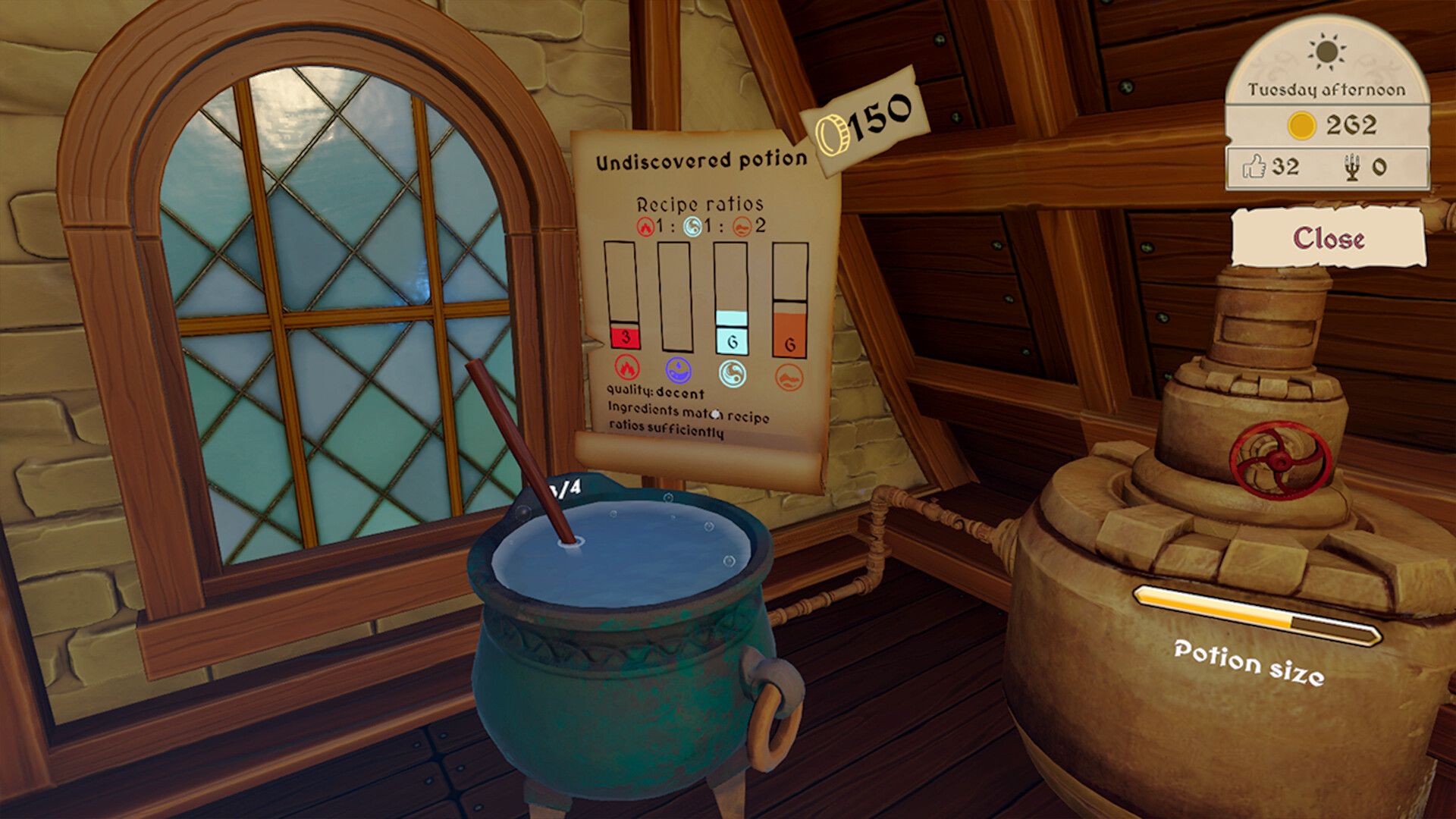
The ratio-based brewing puzzle reviewers single out as the game's best ideaPebbles Games -
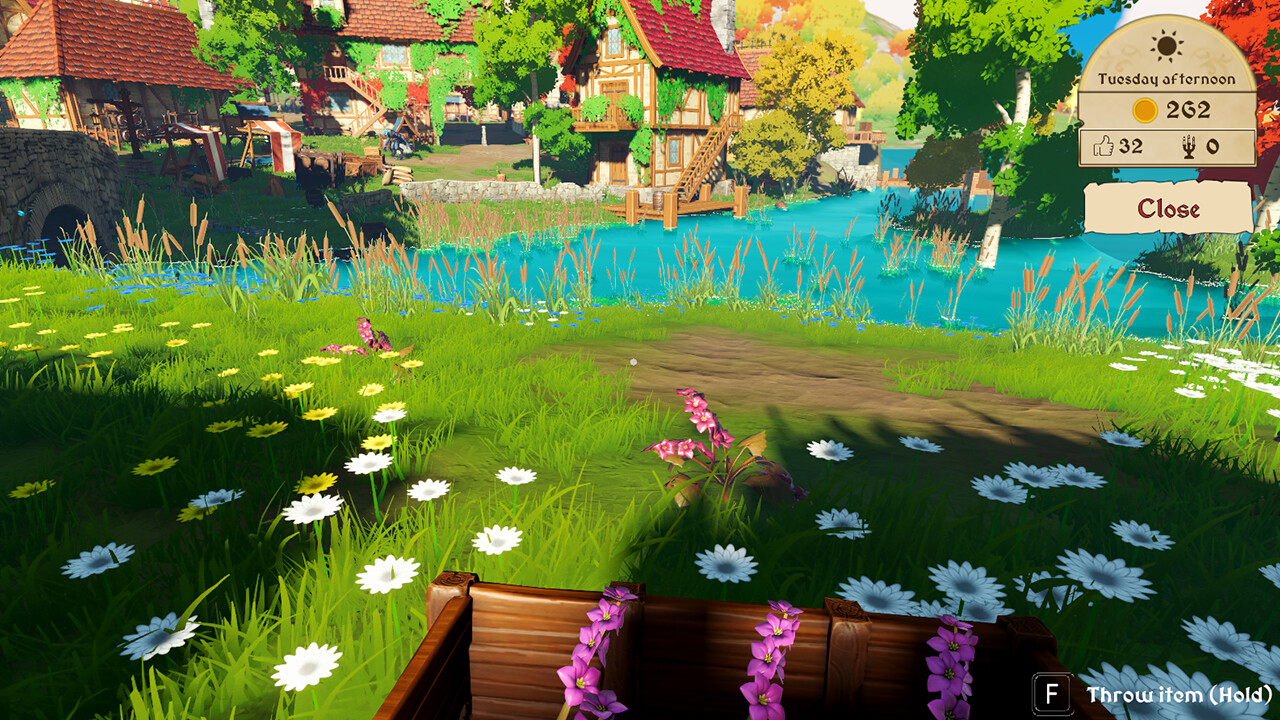
Gathering ingredients around the storybook fantasy townPebbles Games -
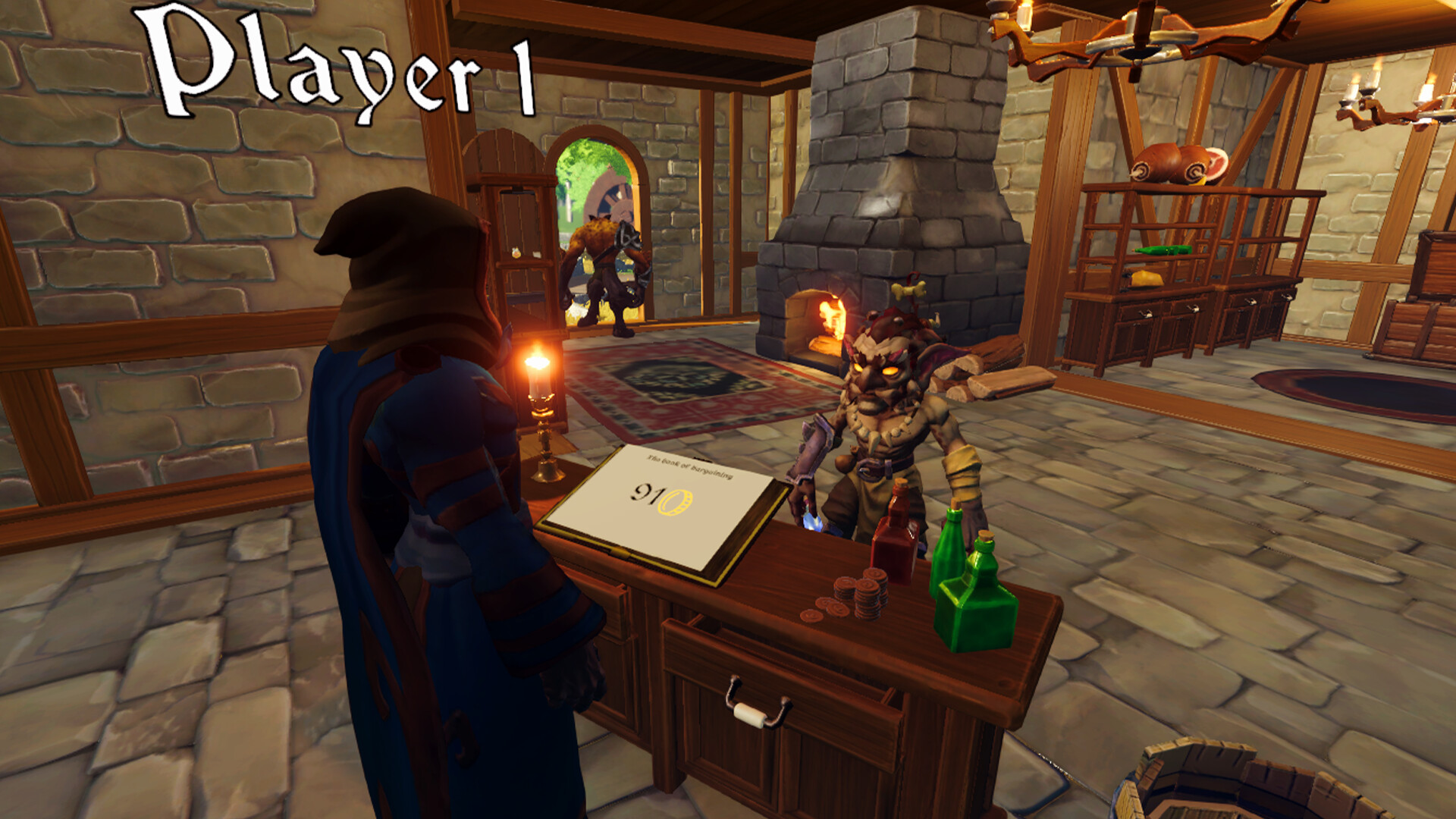
The shop-counter side of the co-op split that reviewers say makes the game clickPebbles Games -
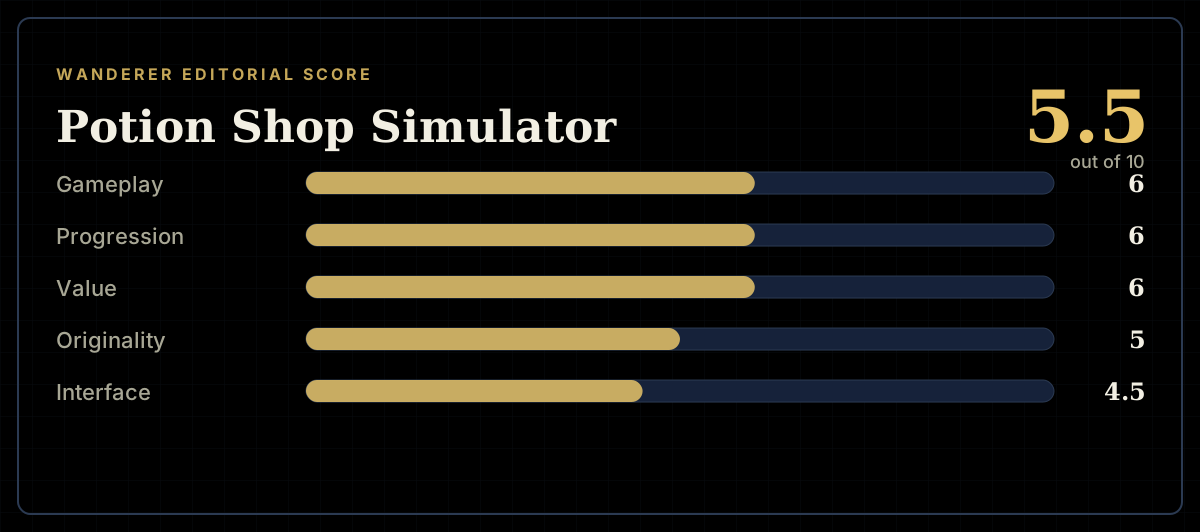
How the review scores each part of the gameWanderer Editorial -
The short versionWanderer Editorial