
Game review
PlateUp!
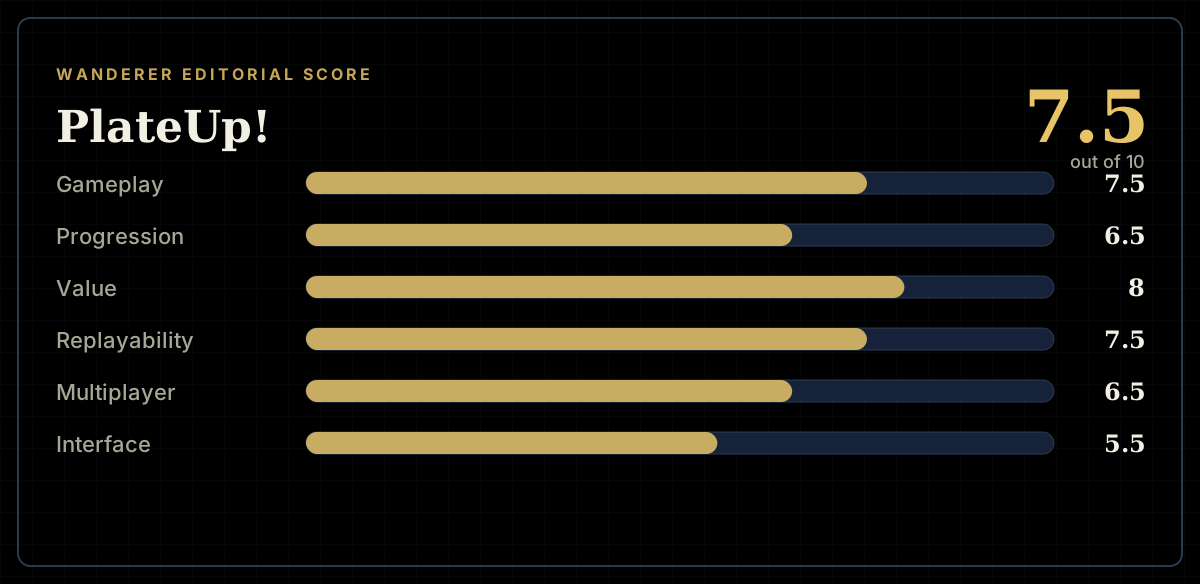
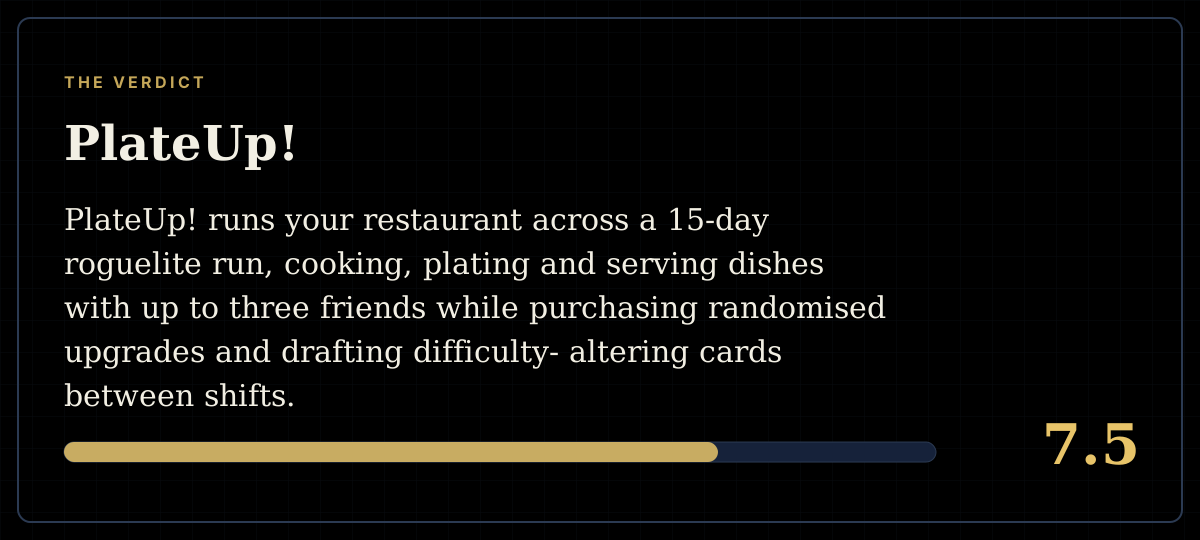
7.5 / 10
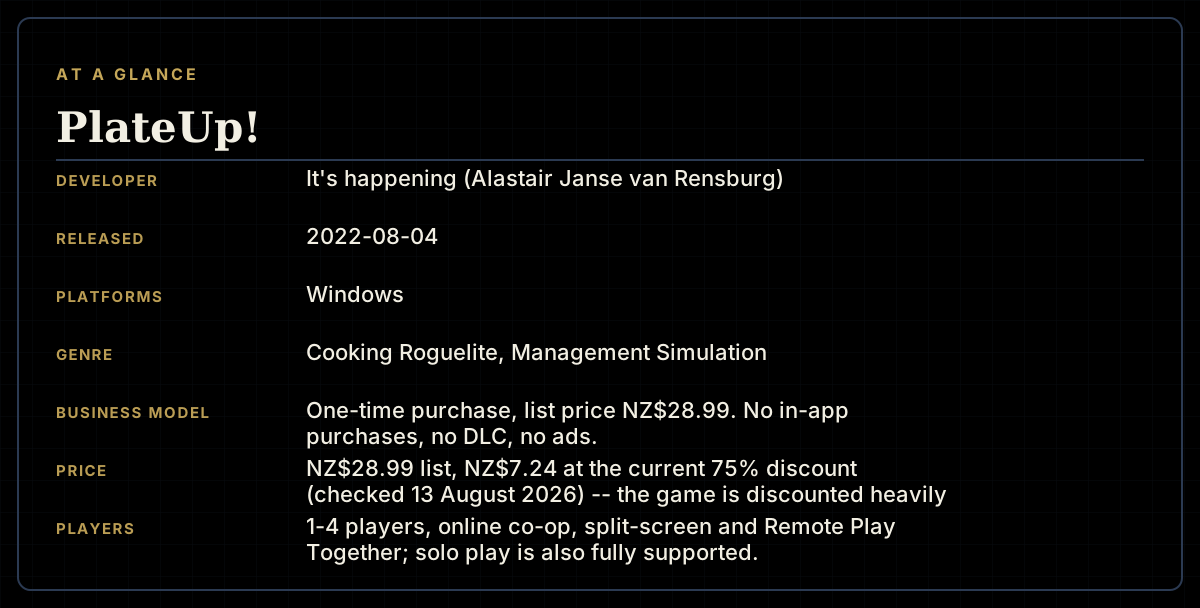
- Developer
- It's happening (Alastair Janse van Rensburg)
- Publisher
- Yogscast Games, Gamersky Games
- Released
- 4 August 2022
- Platforms
- Windows
- Genre
- Cooking Roguelite, Management Simulation
- Monetisation
- One-time purchase, list price NZ$28.99. No in-app purchases, no DLC, no ads.
- Players
- 1-4 players, online co-op, split-screen and Remote Play Together; solo play is also fully supported.
The short version
PlateUp! runs your restaurant across a 15-day roguelite run, cooking, plating and serving dishes with up to three friends while purchasing randomised upgrades and drafting difficulty- altering cards between shifts. It was built entirely by one person -- a former cybersecurity researcher making his first game during COVID lockdowns -- and went on to sell over 1.5 million copies on Steam, a genuinely remarkable outcome for a solo restaurant-management roguelite.
It sits at Very Positive, and OpenCritic's aggregate of professional reviews lands at 73/100 with 82% recommending it -- both scores tracking a consistent split in the feedback: praise for the collaborative chaos and the permanent meta-progression between runs, against specific, repeated frustrations with "imprecise" controls, cluttered interface elements, laggy online netcode, and upgrade rolls that can hand you ingredients or equipment your current kitchen has no use for.
Biggest strengths
- A genuinely chaotic, well-tuned co-op cooking loop that groups of friends return to repeatedly, backed up by a remarkable 1.5 million-plus Steam sales figure for a solo-developed game
- Real permanent meta-progression between runs -- unlockable equipment, cosmetics and difficulty-altering cards -- that gives the roguelite structure actual weight
- No microtransactions, DLC or ads on top of a one-time purchase that's frequently available at a steep discount
Biggest weaknesses
- Randomised between-run upgrade offers can hand you ingredients or equipment your current kitchen layout has no use for, a frustration reviewers raise consistently across years of feedback
- Online multiplayer has a recurring, specific complaint history around laggy netcode and connection issues, and there's no Steam/Epic crossplay
- Professional critics and Steam reviewers both describe the controls as imprecise and parts of the interface as cluttered, particularly under the time pressure the game is built around
Who it's for: Overcooked fans looking for a version with real roguelite structure and permanent progression, and groups of two to four who want a co-op game that gets genuinely stressful in the right way. Solo players and anyone sensitive to unreliable online netcode should temper expectations.
Our recommendation: An easy recommendation at its frequent discount price for anyone with friends to play it with -- the core loop earns its massive sales figures. Play it co-op if you can; the solo experience is real but noticeably less compelling, and online multiplayer specifically has a documented history of connection problems worth knowing about before committing to a group session.
7.5 / 10
There's a specific kind of video-game success story that's genuinely rare, and PlateUp! is one of them. It was built by a single person -- Alastair Janse van Rensburg, a former cybersecurity researcher making his first game -- who started the project during COVID lockdowns because he and his friends wanted a cooperative game to play together. It shipped in August 2022, published by Yogscast Games, and went on to sell more than 1.5 million copies on Steam alone. That's not a modest indie success; that's a genre-defining outcome for a solo developer, and it's worth grounding this review in that fact before getting into where the game still shows its seams.
Chaos with a permanent spine
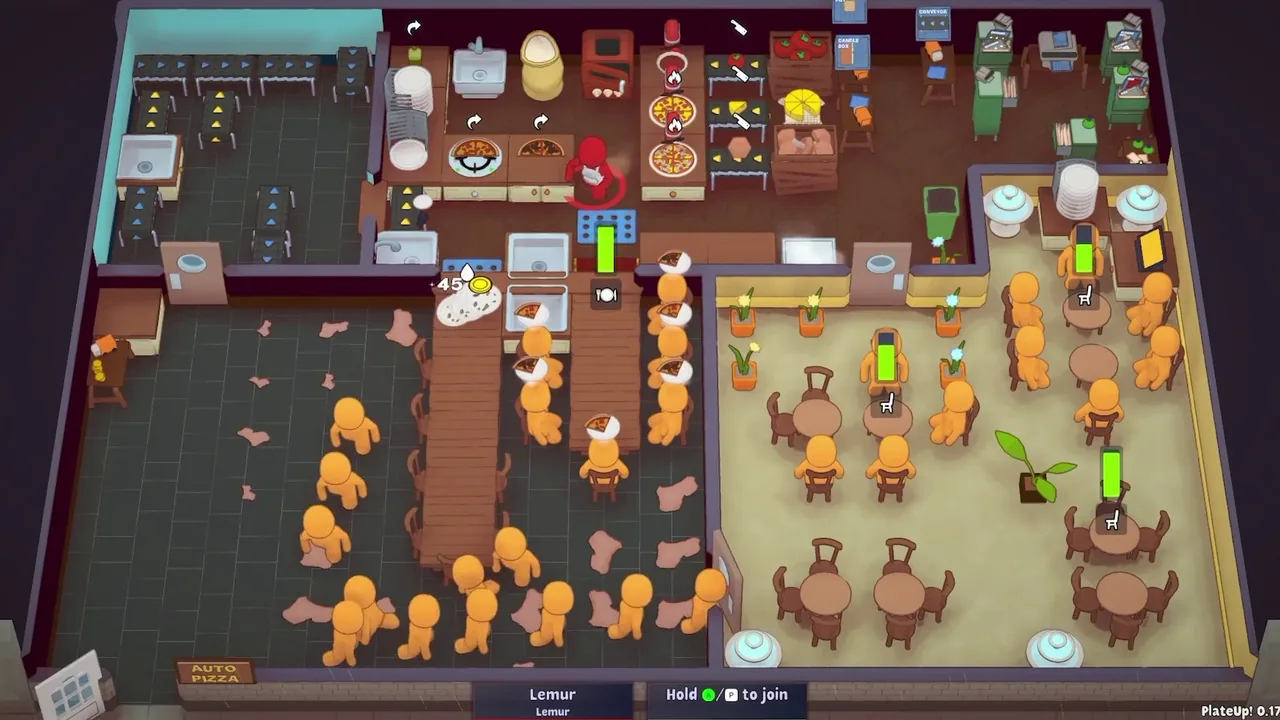
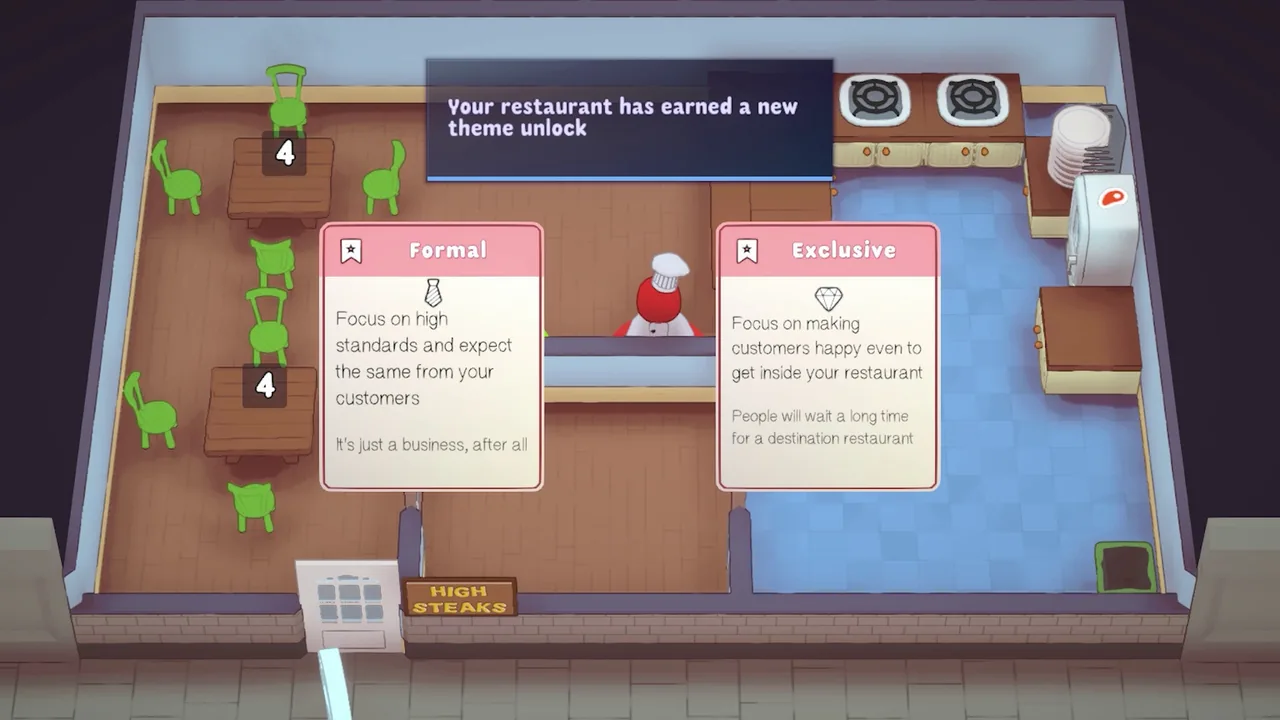
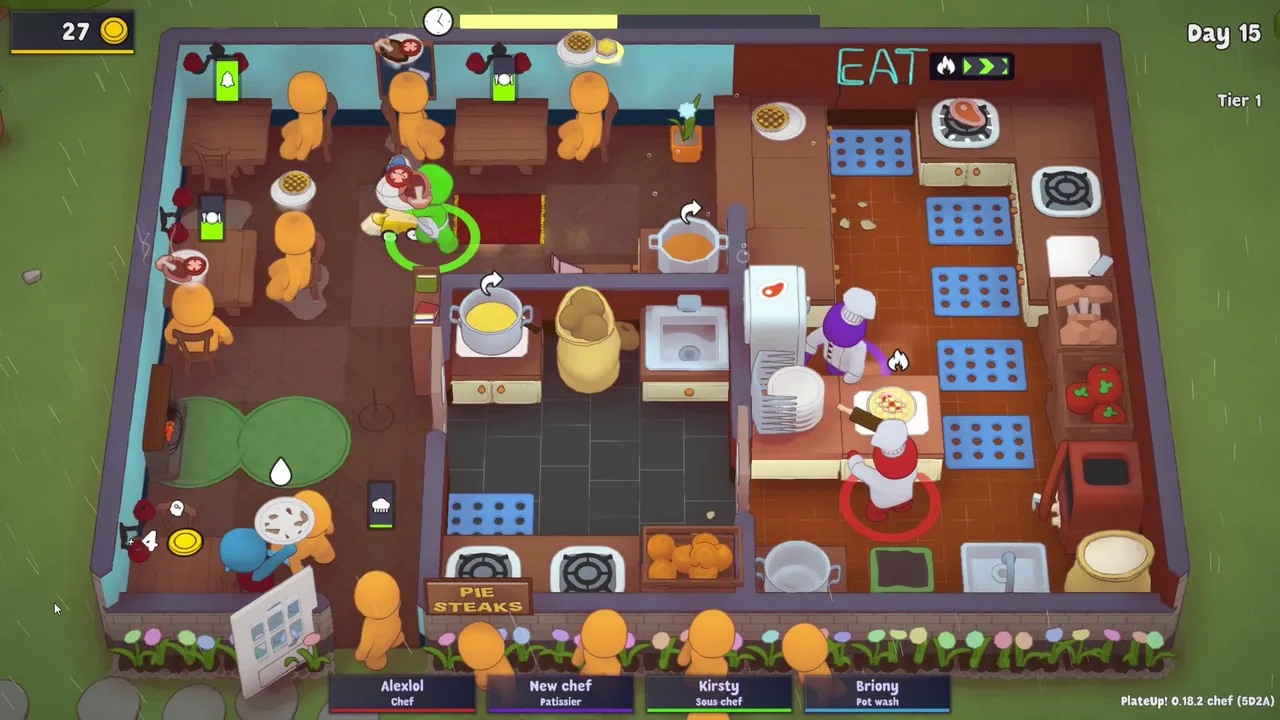
The pitch is straightforward if you've played Overcooked: you and up to three friends run a restaurant, taking orders, cooking, plating, serving and cleaning up, all under mounting time pressure as customers pile in. What separates PlateUp! from its obvious inspiration is structure -- runs last 15 days, and between each day you spend earned currency on randomised equipment and layout upgrades, then draft a card that permanently alters the run's rules and menu complexity going forward. Unlike Overcooked's level-to-level format, mistakes and choices here compound: a kitchen you build badly on day three is a kitchen you're still fighting on day twelve. It's a genuinely smart structural upgrade on the formula, and it's the single thing reviewers across both professional outlets and Steam agree is the game's strongest idea.
Layered on top of that is real permanent meta-progression -- unlocks, cosmetics and new difficulty-altering cards that persist between runs and give failure some long-term value rather than just resetting you to zero. It's the kind of system that turns "we lost, let's go again" into an easy, low-friction loop, and it's a big part of why so many reviewers describe playing in long, repeated sessions with the same group of friends.
Where the rough edges actually are
The complaints aren't scattered noise -- they cluster around a small number of specific, repeated issues, and they show up in almost identical language whether the source is a professional outlet or a Steam review posted years apart. OpenCritic's 73/100 aggregate is built on reviews that consistently praise the co-op chaos and progression while criticizing "imprecise" controls and a "cluttered" interface, and the Steam negative sample says almost exactly the same thing in plainer language: "Controls are jank and gameplay is unintuitive," reads one from August 2026; another describes failing an early tutorial step because "instead of picking up the steak from the stove it took it from the fridge next to it, the targeting is really" imprecise. Under the time pressure the whole game is built around, small interaction failures like that land harder than they would in a slower game, and it's a fair criticism that's persisted across years of patches rather than being a launch-week rough patch.
The other consistent complaint is about the randomised upgrade offers between days. "You cannot control your rolls at all," reads one representative review. "'Oh yes. The thing my Bakery needs, is Spaghetti or Fajitas.' It's stupid." Another, with nearly 6,000 hours logged, puts it almost identically: "every time I want to upgrade to a fancy table it gives me bar table or metal table... unbelievable." This is a real design tension familiar to roguelite fans generally -- randomised offers are supposed to create interesting constraints, but when the offers are consistently unusable for your specific run, "interesting constraint" starts reading as "wasted currency" instead. It's worth noting one reviewer specifically flagged that a major update shortly before their review "adds some aspect of permanent progression among other things," suggesting the developer has continued iterating on exactly this kind of feedback well after launch.
Weighing the trade-off against its genre peers
It's worth being explicit about why PlateUp!'s structural ambition is worth the friction it introduces, rather than just cataloguing both sides. Overcooked 2 and Moving Out, the two games most people will compare this to, are built around discrete, hand-authored levels you either clear or don't -- skill expression resets every stage, and a bad run costs you a few minutes. PlateUp! asks for something harder and more interesting: your decisions on day three are still shaping your options on day twelve, which means a run can go wrong gradually, in ways you have to diagnose rather than just retry. That's a genuinely higher-skill-ceiling design, and it's why long-time players describe sessions in the thousands of minutes rather than treating the game as a party-game curiosity. The RNG complaints are real, but they're the cost of a system that's trying to do something Overcooked never attempted -- give failure a shape you can learn from instead of a timer you can just beat again.
That trade-off does help explain where the polish complaints come from, though. This is a single developer's design running at a scope closer to a small studio's output, and the console version -- originally targeted for 2023 -- ended up delayed twice before finally landing in February 2024, seven months later than announced. A slipping console port isn't itself a flaw in the PC version reviewed here, but it's a useful data point: it suggests a team stretched thin enough that the imprecise targeting and netcode issues Steam reviewers describe are plausibly a capacity problem rather than a priorities problem. Knowing that doesn't fix the jank, but it does change how much weight it should carry against a project this ambitious for its team size.
Multiplayer: the star feature, imperfectly delivered
Given that co-op is the entire reason most people buy PlateUp!, its multiplayer reliability matters more than it would for a solo game, and the negative sample raises real, specific problems here too. "Seems like a good game but sadly I couldn't test it much since it's absolutely unplayably laggy in multiplayer," reads one review, and a second independently describes "terrible netcode for online play. Inputs of keys stop being detected randomly every round." There's also no crossplay between Steam and Epic Games Store versions, which splits the potential player pool for anyone trying to play with friends on a different storefront. None of this appears to be universal -- plenty of positive reviews describe smooth sessions with friends -- but it's a frequent enough pattern across different time periods that it reads as a real, ongoing reliability gap rather than isolated bad luck.
Solo play, and the long run
PlateUp! works solo, but multiple reviewers are candid that it's the weaker way to experience the game: "playing this singleplayer is not fun... it's just stress without much gratification," reads one, and another calls an early solo session "like Overcooked with all the fun stuff taken out." The game's own achievement data backs up a related point about difficulty: only about 6% of players have ever reached day 30 of a run, and just over 10% have reached day 25, meaning the overwhelming majority of the people who own this game never see its later, harder stretches. That's not necessarily a design failure -- a lot of roguelites are built around most runs ending early -- but it's useful context for anyone wondering whether the late-game content they've read about is something they'll realistically encounter.
Final verdict
PlateUp! earned its remarkable sales figures the honest way: a genuinely well-built co-op cooking loop with real structural ambition layered on top of the Overcooked formula, built by one person who clearly understood exactly what made that kind of chaos fun to share with friends. The complaints that keep it from a higher score are consistent and well-documented rather than vague -- imprecise controls under time pressure, randomised upgrades that can actively work against your run, and online netcode that a meaningful number of players describe as unreliable. None of those are dealbreakers for the audience this game is clearly built for, but they're real enough that anyone planning an online session with friends should go in with reasonable expectations rather than assuming a flawless experience.
7.5 out of 10. Strongly recommended for local or reliable-connection co-op groups, especially at its frequent discount price, and a fine solo pick-up-and-play too if you keep expectations modest about how far you'll get. One of the better cooking roguelites on the market, made remarkable by the fact that it was built by one person rather than a studio.
Pros and cons
Pros
- A genuinely chaotic, well-tuned co-op cooking loop that groups of friends return to repeatedly, backed up by a remarkable 1.5 million-plus Steam sales figure for a solo-developed game
- Real permanent meta-progression between runs -- unlockable equipment, cosmetics and difficulty-altering cards -- that gives the roguelite structure actual weight
- No microtransactions, DLC or ads on top of a one-time purchase that's frequently available at a steep discount
- Full cross-platform co-op options including split-screen, online and Remote Play Together, alongside Steam Workshop mod support
Cons
- Randomised between-run upgrade offers can hand you ingredients or equipment your current kitchen layout has no use for, a frustration reviewers raise consistently across years of feedback
- Online multiplayer has a recurring, specific complaint history around laggy netcode and connection issues, and there's no Steam/Epic crossplay
- Professional critics and Steam reviewers both describe the controls as imprecise and parts of the interface as cluttered, particularly under the time pressure the game is built around
- Solo play is meaningfully less compelling than co-op, and difficulty spikes noticeably in longer runs -- the game's own achievement data shows only about 6% of players have ever reached day 30
Screenshots
-
PlateUp!Image: Yogscast Games via Steam -
PlateUp!Image: Yogscast Games via Steam -
PlateUp!Image: Yogscast Games via Steam -
How the review scores each part of the gameWanderer Editorial -
The essentialsWanderer Editorial -
The final verdictWanderer Editorial