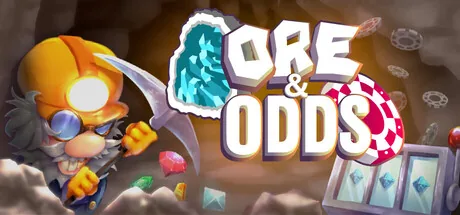
Game review
Ore & Odds
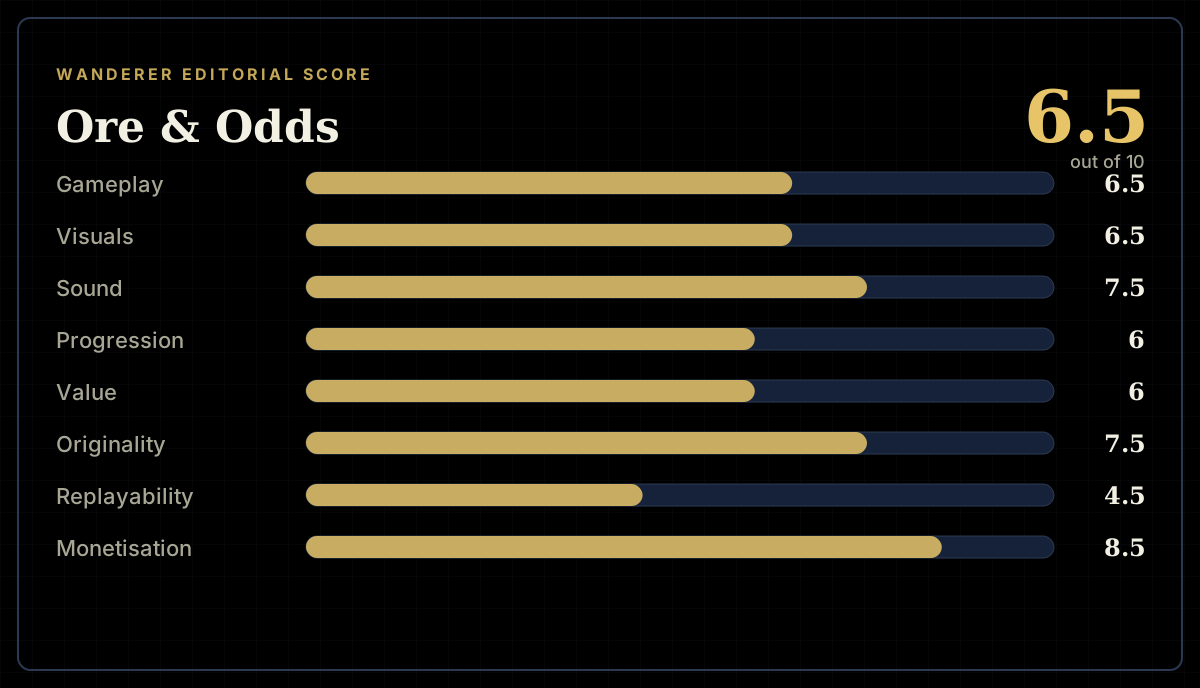
6.5 / 10
- Developer
- Funflower Studio
- Publisher
- Plastic Frog
- Released
- 1 August 2026
- Platforms
- Windows
- Genre
- Incremental
- Monetisation
- One-time purchase. One optional soundtrack DLC with no gameplay effect. No ads, no premium currency, no in-game purchases
- Players
- Single-player only
The short version
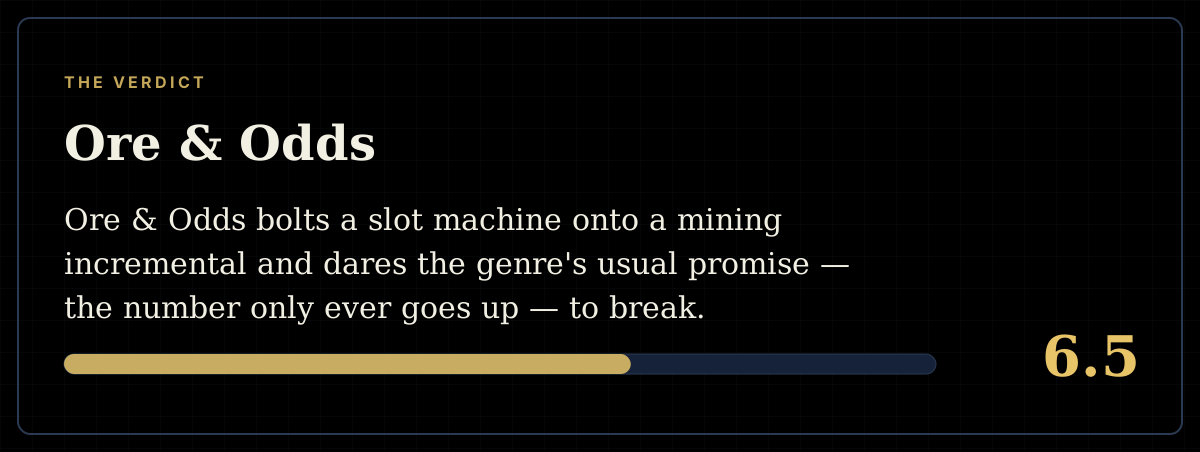
Ore & Odds bolts a slot machine onto a mining incremental and dares the genre's usual promise — the number only ever goes up — to break. You mine nine tiers of mineral across four biomes, spend the haul on more than 50 upgrades, and can also feed it into a slot machine that doubles your resources or, in the store page's own words, loses it all. That's a legitimately unusual idea for a genre built on never losing ground, and the developer's own press materials frame the whole thing as a tight, finite campaign — four mines and a final boss, roughly two to four hours start to finish, not an endless ladder.
What keeps the score in the middle rather than higher is how little of that idea is actually pinned down in public. Neither the store page nor the press kit says whether a lost spin wipes only the ore you staked or your whole current stockpile, and the game is barely a day old with four Steam reviews to its name — nowhere near enough to know how the odds actually feel once the opening biome wears off.
Biggest strengths
- The slot machine's per-mineral luck stat gives mining a second layer of consequence, since what you dig determines your odds at the table, not just the size of your bankroll
- A developer-stated two-to-four-hour campaign across four mines and a final boss gives the loop an actual finish line, rather than the open-ended grind incrementals usually default to
- A free demo has been public since May 2026, so anyone unsure about the gambling hook can try the exact core loop before paying NZ$7.99 for the full game
Biggest weaknesses
- Neither the store page nor the developer's own press kit says whether a bad spin forfeits only the ore staked in that spin or the entire current stockpile — a strange detail to leave undocumented in a game whose whole pitch is built around loss
- At a developer-stated two to four hours, NZ$7.99 buys noticeably less game than most incrementals at this price, even with the runtime honestly disclosed upfront
- Four fixed mines and one final boss read as a single authored path rather than a system built to be replayed, so there's little pull to start a second run once the campaign ends
Who it's for: Incremental players who like a defined ending rather than an infinite grind, and anyone curious what happens when a number-go-up genre lets a number go back down.
Our recommendation: A reasonable NZ$7.99 bet if a short, gambling-flavoured mining loop with a real final boss sounds appealing — helped by a free demo you can try first — but go in knowing this is a one-day-old release from a first-time studio with almost no outside track record yet.
6.5 / 10
Every incremental game makes the same quiet promise: the number goes up, and it never comes back down. That's more or less the whole appeal of the genre — a line on a graph that only points one direction, however slowly it climbs. Ore & Odds spends its entire store pitch picking a fight with that promise. "Numbers keep growing," the game tells you outright, "until chance takes it all away." For a genre whose entire comfort is never losing ground, that's a startling thing to say on the tin, and it's the one detail that makes a NZ$7.99 debut from a studio nobody has heard of worth more than a passing glance.
What the gamble actually stakes
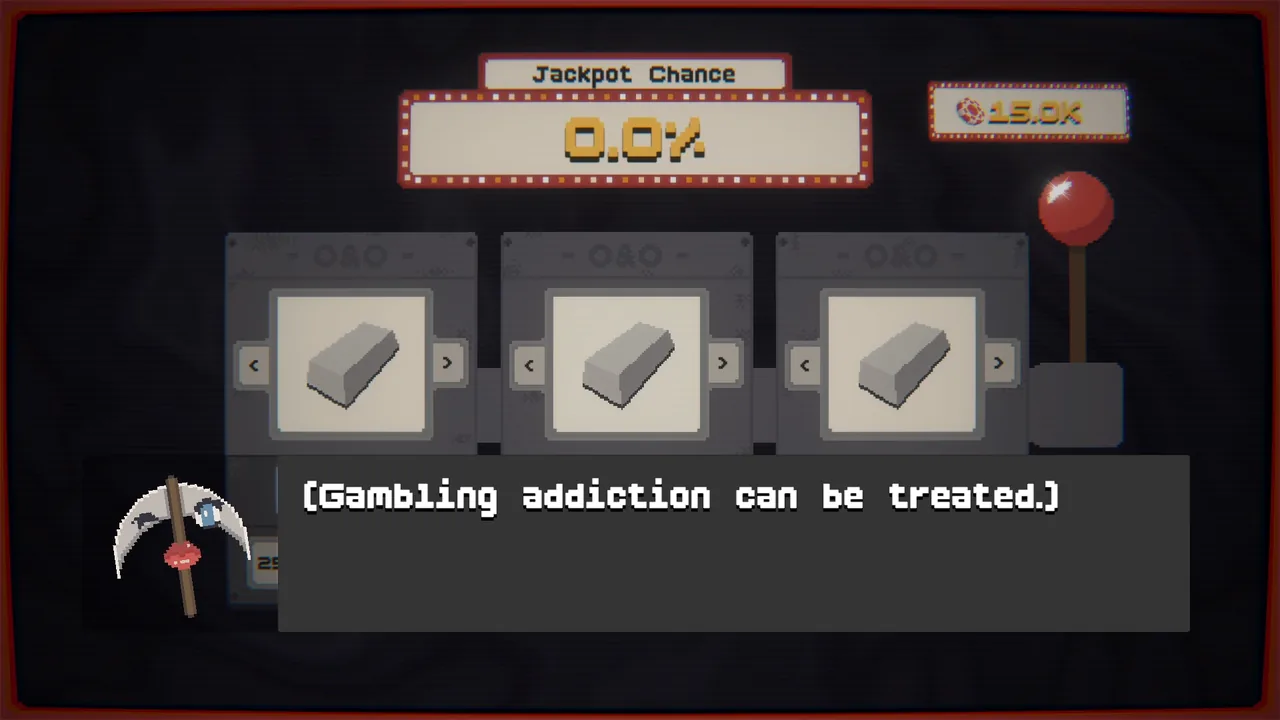
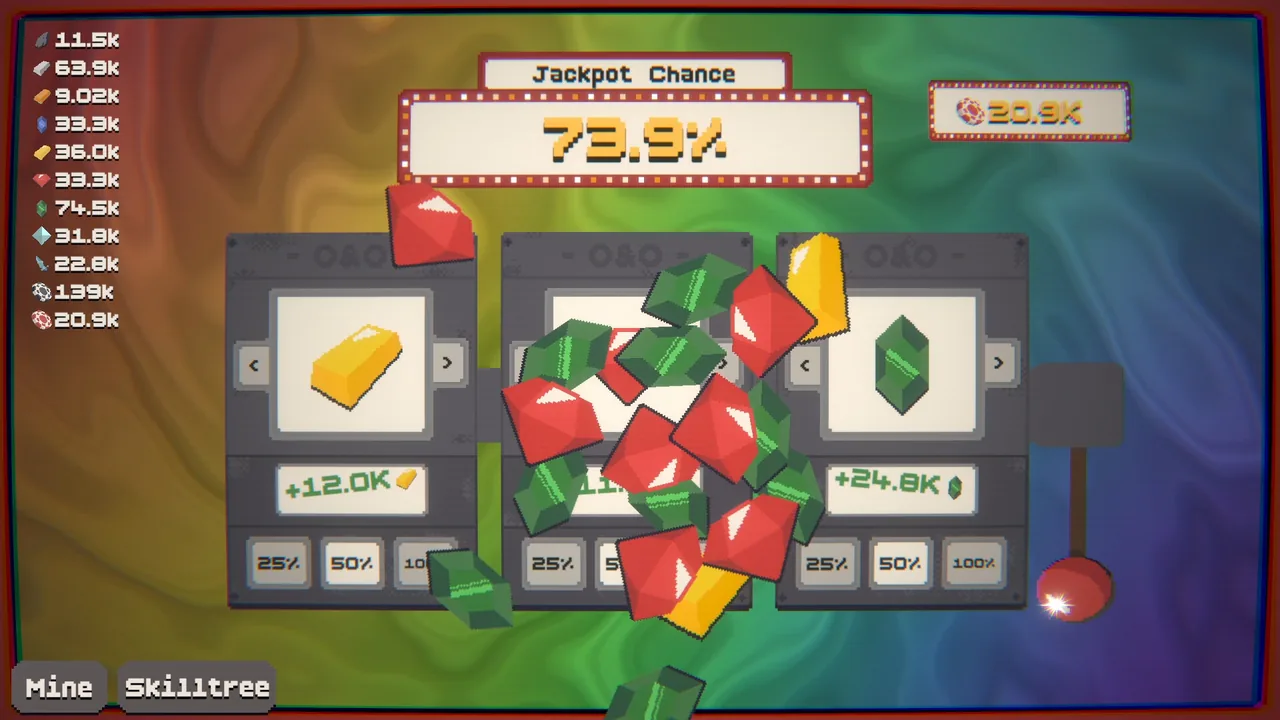
The mechanic itself is simple to describe: you mine ore across nine mineral tiers, spend it on upgrades, or feed it into a slot machine that can double your haul or, per the store page, lose it outright. The twist is that luck isn't a single flat percentage sitting behind the reels — the developer's own press materials describe each ore type as carrying its own luck stat, so the composition of what you've mined, not just how much of it, shapes your odds at the table. That's a genuinely clever way to tie a gambling loop back into the mining loop that feeds it, turning "what do I dig next" into a question with two answers instead of one.
Where the design gets harder to evaluate fairly is the part that matters most: what "lose it all" actually means. Does a bad spin forfeit only the ore you staked in that particular bet, leaving your broader stockpile and any upgrades you've already bought untouched? Or can it wipe your entire current resource pool in one unlucky pull, sending you back to grinding from close to zero? Those are two very different games hiding behind one marketing line, and neither the store page nor the developer's press kit draws the distinction. A run-scoped loss — you can lose today's takings, never your permanent progress — is the kind of tension that makes a risk mechanic satisfying rather than punishing. An unbounded loss that can erase hours of grinding in a single spin is a much harder sell, and it's the detail every incremental player should want answered before they buy, not after.
A four-mine campaign with a stated clock
Unlike most of the genre, Ore & Odds isn't chasing an open-ended number. The developer's own materials describe the game as four distinct mines plus a final boss stage, with an estimated completion time of two to four hours — a real ending, not a soft plateau where the numbers just get too big to feel like progress anymore. That estimate lines up with what little public feedback exists: one of the game's first Steam reviews describes finishing the full game in 2.1 hours after playing through the free demo first. A short, honestly bounded incremental is a different value proposition from an endless one, and it's worth judging Ore & Odds on those terms rather than docking it for not being a hundred-hour save file it was never trying to be.
That said, "different value proposition" still has to clear a price bar. At NZ$7.99 for a two-to-four-hour campaign, Ore & Odds sits in roughly the same bracket as Garbage Growth, another short, cheap, finish-it-in-a-sitting incremental — and comes out ahead on pure runtime, offering something closer to double the hours for a comparable asking price. It's a fairer deal than that comparison alone suggests, but it's still thin next to genre stalwarts built to run for weeks, and the fixed, four-stage structure means there's little reason to load the game back up once the final boss is down. Compare that with a mining incremental built for the long haul, like Diggin, and the difference in ambition is obvious — Ore & Odds isn't trying to be that kind of game, but buyers expecting a long-term save file rather than a single well-paced sitting should know that going in.
Presentation carries more than the mechanics do
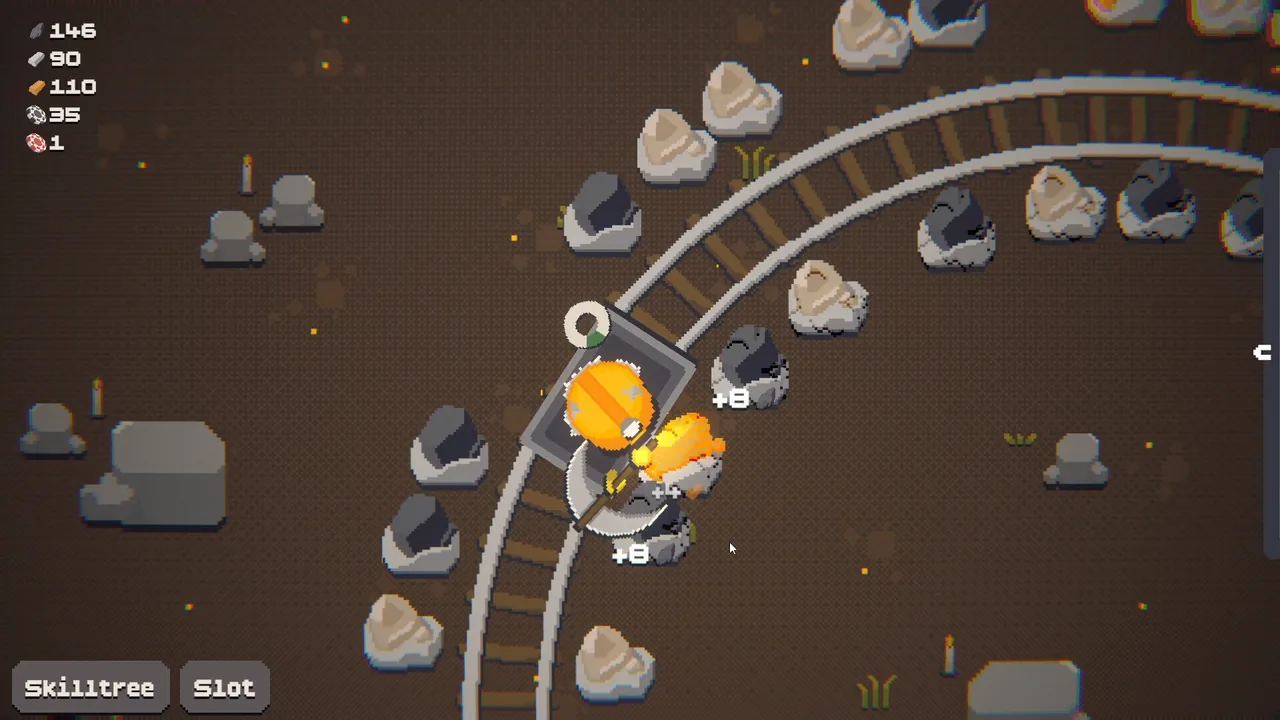
Visually, Ore & Odds is a fairly conventional pixel-art incremental — biome-themed mining scenes, readable upgrade icons, a slot-machine screen that's presumably doing a lot of the game's visual heavy lifting given how central it is to the pitch. What stands out more than the art is the audio. Every one of the handful of public reactions to the game singles out the music unprompted — "banger music" is how one of the four launch reviews put it — and Funflower Studio backed that up with a dedicated NZ$3 Original Soundtrack release on the same day as the main game, described in its own listing as built for "that zone you hit deep in the mine... numbers go up, reels spinning, pickaxe swinging on autopilot." For a first-time studio working with a low system-requirement budget, investing that visibly in the sound design is a smart call — it's the layer of an incremental that's actually on screen every second you're playing, gambling or not.
Price, DLC, and a demo that does its job
There's very little to fault on the business side. NZ$7.99 (currently 20% off a NZ$9.99 list price) buys the whole game outright, with the only additional purchase being that optional $3 soundtrack — pure music, no gameplay effect, nothing resembling a currency shop standing near the slot machine it might have been tempting to bolt one onto. A free demo has been public since 11 May 2026, months before launch, which means anyone nervous about a gambling mechanic sitting inside a game they'd otherwise buy blind can actually try the exact loop first. That's a meaningfully more honest approach than most games built around chance-based systems bother with, and it's worth crediting even before judging how the rest of the game holds up.
A one-day-old launch with almost nothing to compare it to
It's worth being direct about how little outside verification currently exists for any of this. Ore & Odds launched 1 August 2026 and carries exactly four Steam reviews at the time of writing, all of them positive, all of them posted within roughly two hours of release — which is a promising first impression, but nowhere near a sample size that says anything reliable about how the odds, pacing or that fourth mine feel once the novelty wears off. There's similarly no back catalogue to lean on for context: Plastic Frog, the publisher, describes itself as bringing "games from LATAM, to the world," and its only other release to date is an unrelated first-person horror title, not a second incremental to compare pacing or monetisation habits against. Funflower Studio, the developer, doesn't have a public track record beyond this one game either. None of that makes Ore & Odds a bad bet — plenty of good incrementals start exactly this way — but it does mean every claim here, including the developer's own two-to-four-hour estimate, is currently resting on a very small foundation.
Final verdict
Ore & Odds deserves credit for trying something the incremental genre mostly avoids: building loss directly into a loop that's supposed to only ever grow, and wrapping it around a mining economy clever enough that your resource mix genuinely changes your odds rather than just padding a bet size. A real ending, a fair price for the runtime it advertises, and a demo that lets you test the gambling hook before paying are all things more incrementals should do. It doesn't score higher because the single most important question the game raises — what a bad spin actually costs you — isn't answered anywhere public yet, and because a one-day-old release with four reviews and a first-time studio behind it hasn't had the chance to prove any of its numbers hold up past the opening mine. Try the demo, and don't assume the full campaign is guaranteed to be more forgiving than the pitch makes it sound.
Players who like the idea of a risk-and-reward economy but want a longer table to play at might also compare it with Gamblers Table, and anyone who'd rather their progress kept compounding without a slot machine anywhere near it might prefer Wanderer.
Pros and cons
Pros
- The slot machine's per-mineral luck stat gives mining a second layer of consequence, since what you dig determines your odds at the table, not just the size of your bankroll
- A developer-stated two-to-four-hour campaign across four mines and a final boss gives the loop an actual finish line, rather than the open-ended grind incrementals usually default to
- A free demo has been public since May 2026, so anyone unsure about the gambling hook can try the exact core loop before paying NZ$7.99 for the full game
- Every one of the game's handful of early player reactions singles out the music, and a dedicated NZ$3 soundtrack release backs up that the audio side got real attention on what reads as a shoestring debut budget
- A flat one-time price with a single optional, cosmetic-adjacent soundtrack DLC — no premium currency, no ads, no timer standing between mining and the slot machine
Cons
- Neither the store page nor the developer's own press kit says whether a bad spin forfeits only the ore staked in that spin or the entire current stockpile — a strange detail to leave undocumented in a game whose whole pitch is built around loss
- At a developer-stated two to four hours, NZ$7.99 buys noticeably less game than most incrementals at this price, even with the runtime honestly disclosed upfront
- Four fixed mines and one final boss read as a single authored path rather than a system built to be replayed, so there's little pull to start a second run once the campaign ends
- The public review sample sits at four, all posted within about two hours of the 1 August launch, so there's no track record yet of how the odds and pacing hold up past the opening biome
- Windows only, despite system requirements low enough that a Steam Deck or Linux build would likely have been straightforward
Screenshots
-
Ore & OddsImage: Plastic Frog via Steam -
Ore & OddsImage: Plastic Frog via Steam -
Ore & OddsImage: Plastic Frog via Steam -
How the review scores each part of the gameWanderer Editorial -
The short versionWanderer Editorial