
Game review
Orc Incremental Review
6 / 10
- Developer
- Nice Ride
- Publisher
- Playsaurus
- Released
- 8 September 2026
- Platforms
- ["Windows"]
- Genre
- RPG
An Old-School Warcraft Fantasy, Built to Run in the Background
Orc Incremental is exactly what it says on the tin: build an orc warband, set it loose against wave after wave of enemies, and watch the numbers climb. Developer Nice Ride and publisher Playsaurus (the studio behind several of the genre's better-known names) lean hard into a pixel-art, old-school Warcraft aesthetic, and reviewers consistently credit that presentation — one calls the sprites "war2 style" and says they "love" them, another compares the whole thing favourably to "pure Warcraft inspiration." It released as a full 1.0 title on 8 September 2026, with over 500 Steam reviews and a Mostly Positive score at the time of writing.
The pitch several reviewers land on independently is "a game I run on a second monitor while I do something else." That's not a backhanded compliment here — it's close to the developer's own framing, and it's the single most repeated sentiment across the review sample: this is built to be glanced at, not stared at. It's not entirely wordless, either — story beats arrive as illustrated cutscenes, with a demonic patron issuing the player's marching orders in one early panel: "Build me a horde worthy of my sigil and overwhelm the enemy, Orcmaster!"
Drafting, Formations, and Spells
The core loop is a card-drafting auto-battler layered on top of incremental math. Cards add units and totems to a growing warband; units come in different rarities and battlefield roles, while totems apply passive bonuses that can reshape how the whole army performs. Once a formation is set, the army fights on its own, and the player's real decisions happen between runs — reading the wall your build hit, and rethinking the draft to get past it. Spells (a Blizzard to stall a dangerous boss, a Fireball to finish a fight that's slipping away) add a layer of active intervention on top of the otherwise hands-off combat.
Ascending — branded in-game as "Dark Rebirth" — is the prestige layer: resetting a run in exchange for permanent bonuses to damage, health, and gold, plus new unit unlocks and challenges that weren't available before, with a chosen chieftain modifier making each new run distinct. Reviewers who stuck with the loop describe genuinely long engagement: one reports 190 hours and calls it a game that "made my autistic brain go zoom," and another with 60 hours calls it "one of the best Incrementals I've ever played — possibly THE best," specifically citing the sense of escalation across resets.
Where the Content Runs Out
The most consistent and most substantive complaint in the review sample is that Orc Incremental's content doesn't last. Multiple reviewers independently report reaching the effective end of the game within about five hours and fewer than ten resets — strikingly short for a genre built around long-tail engagement. One reviewer who unlocked every shop and unit in their first run puts it plainly: "you get stronger, but nothing about the game really changes like with better incremental games." Another describes finding an overtuned totem combination (three worgs, one dragon, two warriors, the rest into totems) that carried them to wave 200 "effortlessly" on repeat, and notes the developer's response — a boss nerf — didn't address the underlying totem-balance issue. A third reviewer who maxed the Dark Rebirth tree and completed nearly every trial sums up the ceiling bluntly: "What do I do now? 'Push Big Number'? Well, that turns out to be RNG simulator."
Unit variety draws related criticism — several reviewers count roughly five to eight total unit types, fewer than they expected from an "auto battler" framing, with one reviewer saying they expected "many different units and a good variety in general" and got something closer to a smaller-scope idle game instead. None of this reads as dishonest marketing so much as a mismatch between the genre's usual promise of near-endless scaling and what's actually here at 1.0 — several reviewers frame it as "a fun early version of a promising game" rather than a finished long-term incremental.
There's a more specific version of this complaint worth calling out: one reviewer argues the game "really feels like it wants to be more of a roguelike, but it doesn't have the depth or variety for repeated runs to feel all too exciting," pointing out that by the endgame only two viable strategies exist, and between them they use just three or four of the roughly eight available units. That's a useful way to understand the shape of the criticism as a whole — the drafting and prestige structure borrows roguelike bones, but the pool of meaningfully different builds sitting on top of that structure is thin enough that experienced players converge on the same one or two solutions rather than continuing to experiment.
Rough Edges: One Reported Crash Bug, a Real Design Debate
Reliability complaints are rarer but specific: one reviewer reports the game becoming "completely unplayable" — crashing within a few minutes of play — after the 1.0.6 update, while a separate reviewer describes offline progress as "broken or something," saying it left them relying on a single overpowered unit strategy to make any real headway. Both are individual reports rather than a broad pattern in this sample, but worth stating plainly rather than smoothing over, especially the crash report given how central "leave it running in the background" is to the game's own pitch.
On a more positive note, the store page states the game uses "handmade assets. No AI used!" — a small detail, but one some readers of this site will specifically want to know, and nothing in the review sample contradicts it.
Verdict
Orc Incremental nails the specific, narrow thing it's going for: a good-looking, Warcraft-flavoured auto-battler that's genuinely pleasant to run alongside something else, with a drafting-and-prestige loop that held some players for 60, even 190 hours. Where it falls down is the thing incremental fans care about most — depth of progression — with a consistent, credible chorus of reviewers saying there's simply not enough game here past the first few hours once the strongest totem synergies are found. At a roughly $10 asking price with no microtransactions, it's a reasonable buy for a relaxed afternoon or two; it's a harder sell for anyone hoping for the kind of months-long incremental grind this genre is often built around.
Screenshots
-
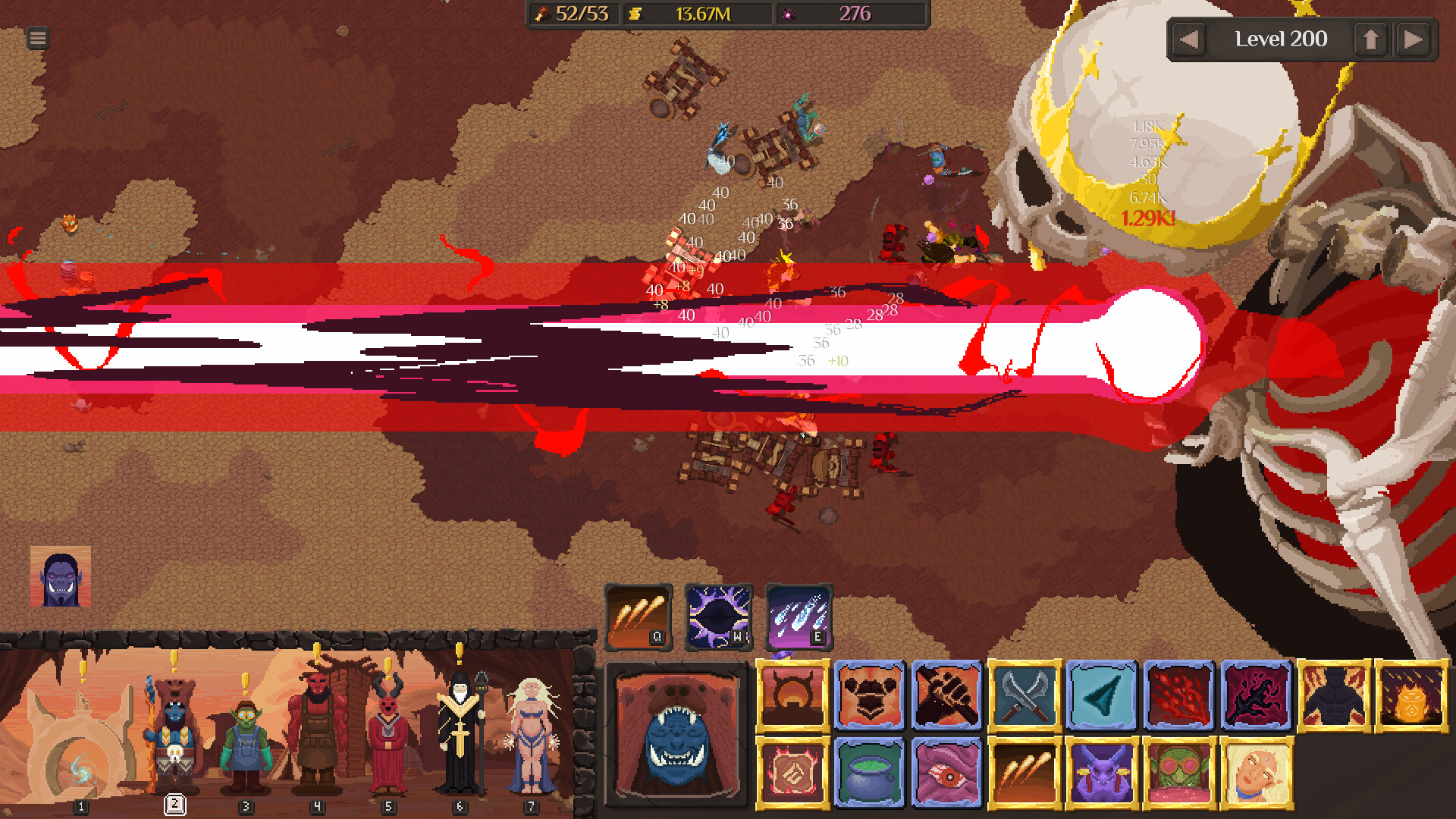
A Level 200 boss fight against a giant skeleton, with the warband's chieftain roster lined up along the bottomImage: Playsaurus via Steam -
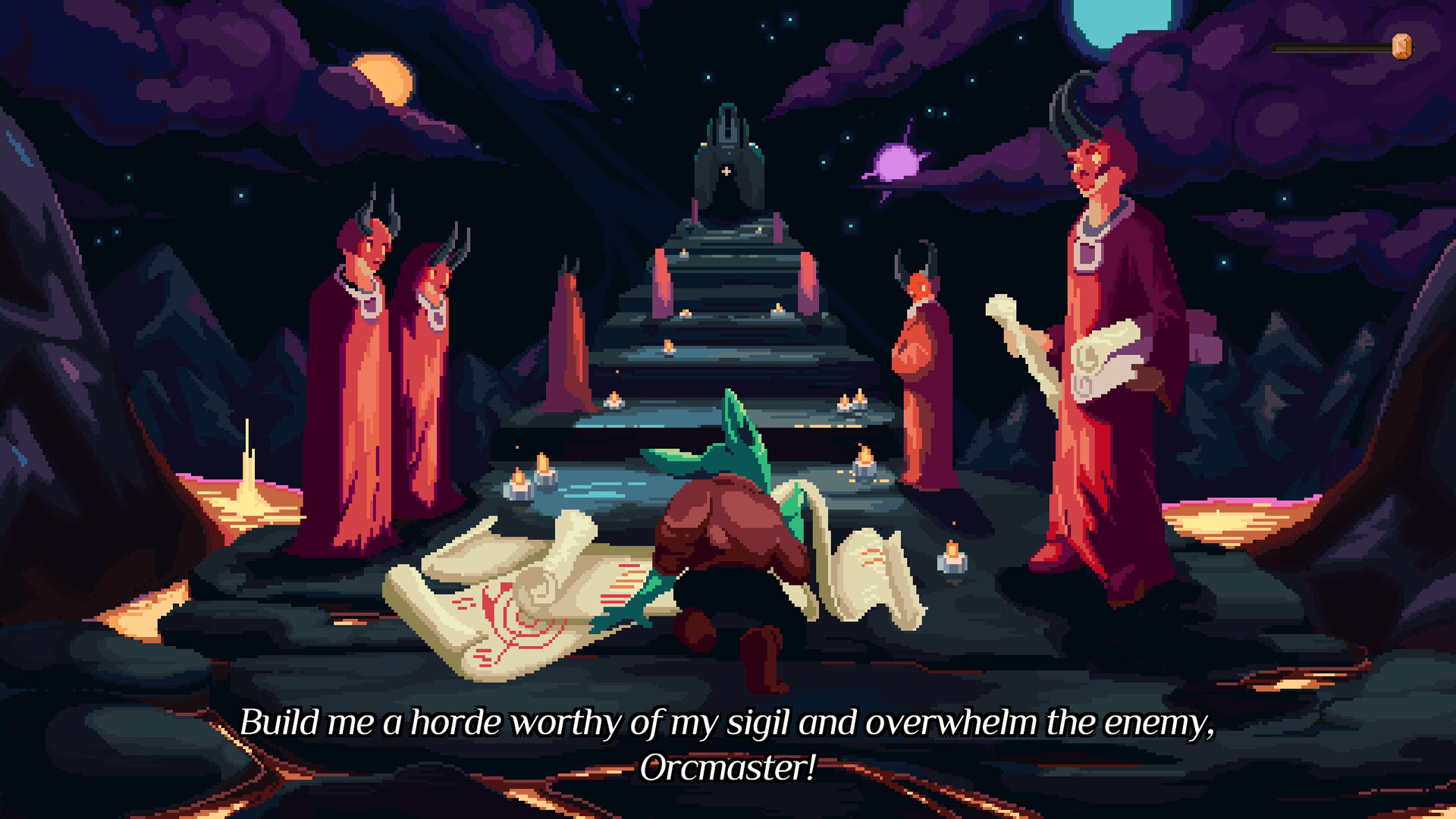
One of the game's narrative cutscenes, with a demonic patron commanding the player's orc to "build me a horde worthy of my sigil"Image: Playsaurus via Steam -
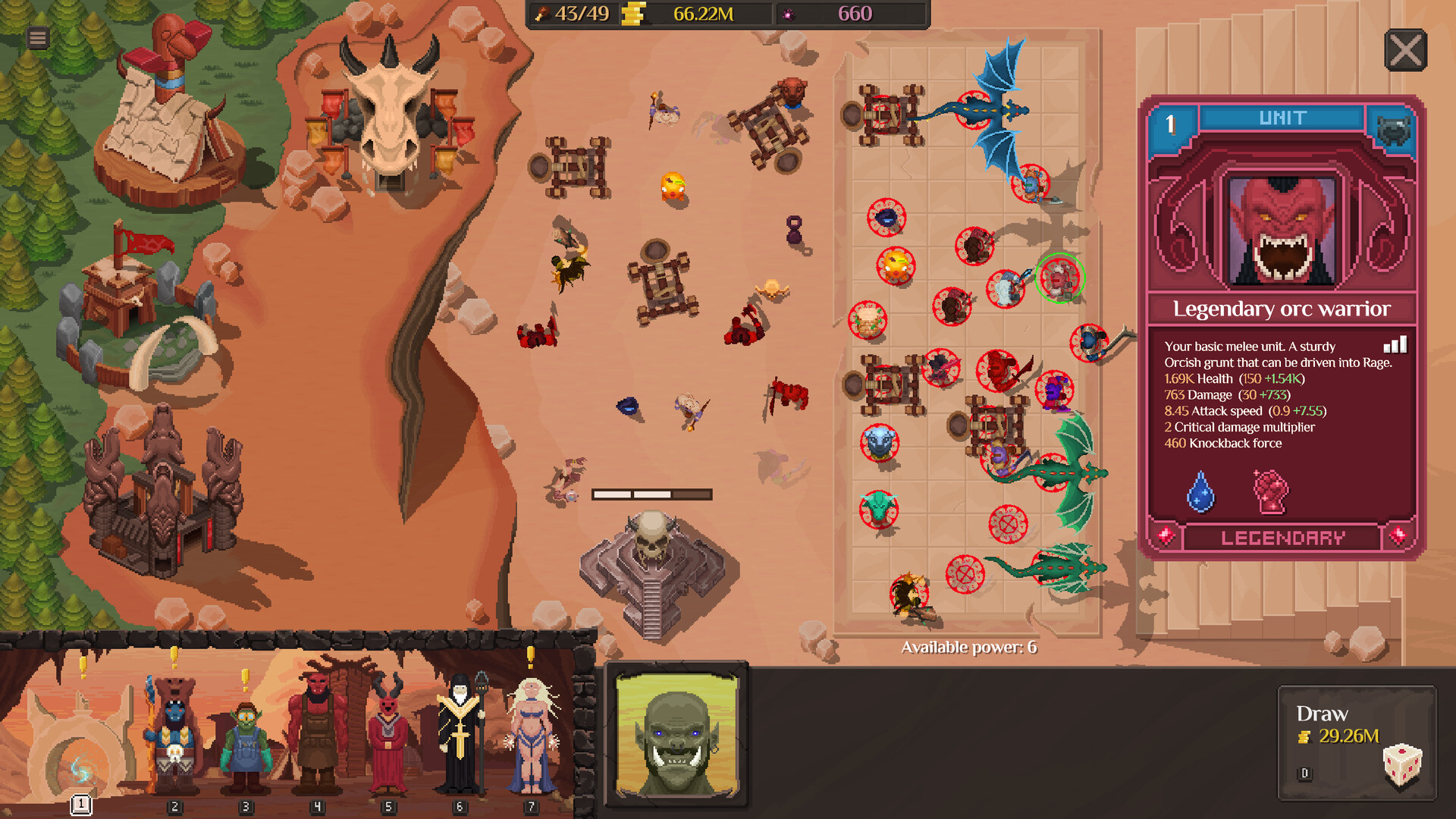
The drafting screen, with a Legendary-rarity unit's full stat card — health, damage, attack speed, and knockback — on displayImage: Playsaurus via Steam