Game review
Orbital Physics Simulator
5.5 / 10
- Developer
- Nathan Schmitt
- Publisher
- Blue Screen Studios
- Released
- 22 June 2026
- Platforms
- Windows
- Genre
- Simulation, Indie
- Monetisation
- free
- Players
- false
The short version
Biggest strengths
- Scientifically accurate relativistic physics, specifically praised by a self-described black hole researcher as precise in its treatment of Lorentz factors and relativistic effects
- A genuine sense of awe and scale, with multiple reviewers describing staring in wonder at orbiting Earth or attempting interplanetary trajectories for the first time
- Impressively polished for a first release from a small team, according to several reviewers, despite acknowledged rough edges
Biggest weaknesses
- A detailed negative review reported the game as effectively unplayable, citing unreadably tiny text that overlays and corrupts itself and a HUD the guide describes but that doesn't actually appear onscreen
- A separate negative review reported nothing but an unresponsive white screen, with no game visibly loading at all
- Multiple reviewers explicitly asked for a tutorial and finer control over ship rotation, describing the current controls as confusing enough that basic navigation is a struggle
Who it's for: Physics enthusiasts and space nerds who want a genuinely accurate relativistic orbital simulator and can tolerate rough, unfinished UI, not recommended for anyone wanting a guided, approachable experience or a stable first session
Our recommendation: recommended
5.5 / 10
Orbital Physics Simulator released in full on Steam on June 22, 2026, from developer Nathan Schmitt and publisher Blue Screen Studios, a free simulator that models relativistic orbital mechanics around planets and black holes, letting players plot trajectories, command a starship under constant propulsion, and experience effects like time dilation and length contraction firsthand. Its 16-review English pool sits at Positive (14 up, 2 down, 87.5%), and the reviews describe a scientifically ambitious, genuinely accurate simulation whose presentation and stability let it down badly for a meaningful minority of players.
The simulator's scientific accuracy draws the pool's single most credible and specific endorsement, from a reviewer with direct relevant expertise. That reviewer, identifying as "an IRL black hole researcher," wrote that the game "provides accurate description of radial and tangential velocities," adding "the Lorentz factors and relativistic effects are also quite precise," while noting they "fear for a general audience the software will feel overwhelming" given how unclear the motive or onboarding is "for layman." That combination, genuine scientific rigor paired with a real accessibility problem, echoes through much of the rest of the pool: reviewers repeatedly describe being awed by the simulation's fidelity while simultaneously struggling to understand what they're supposed to be doing.
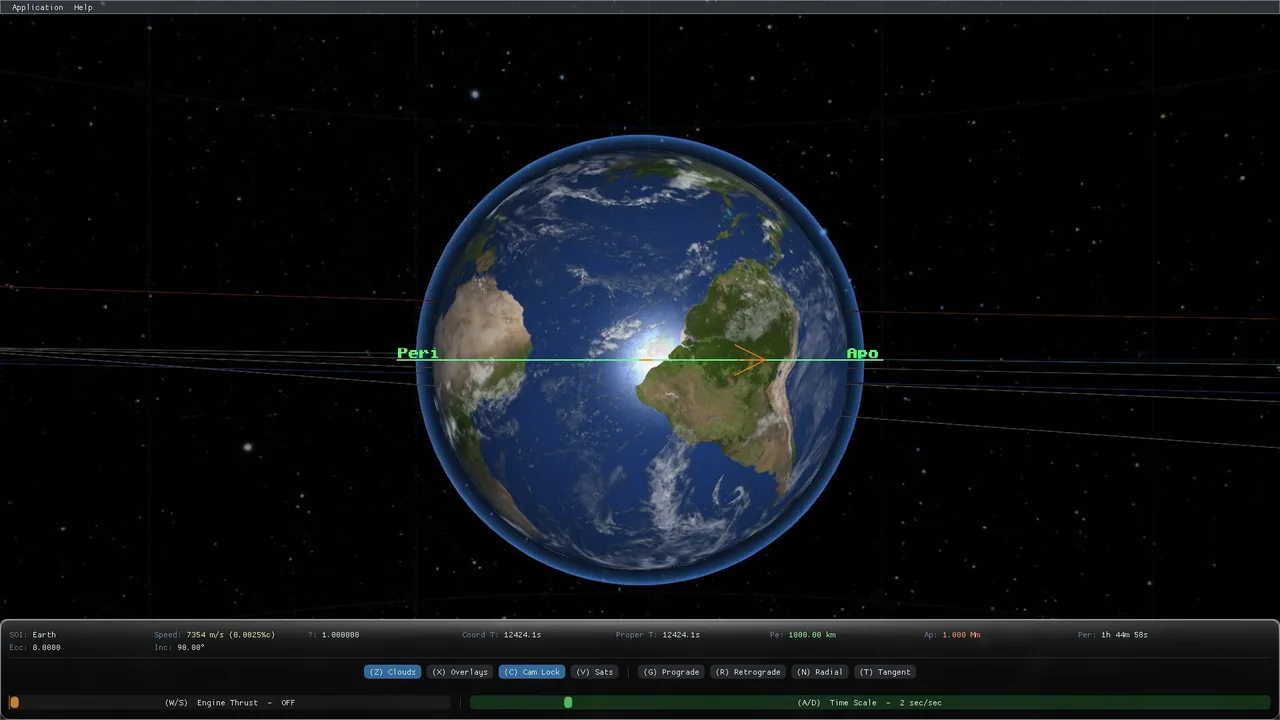
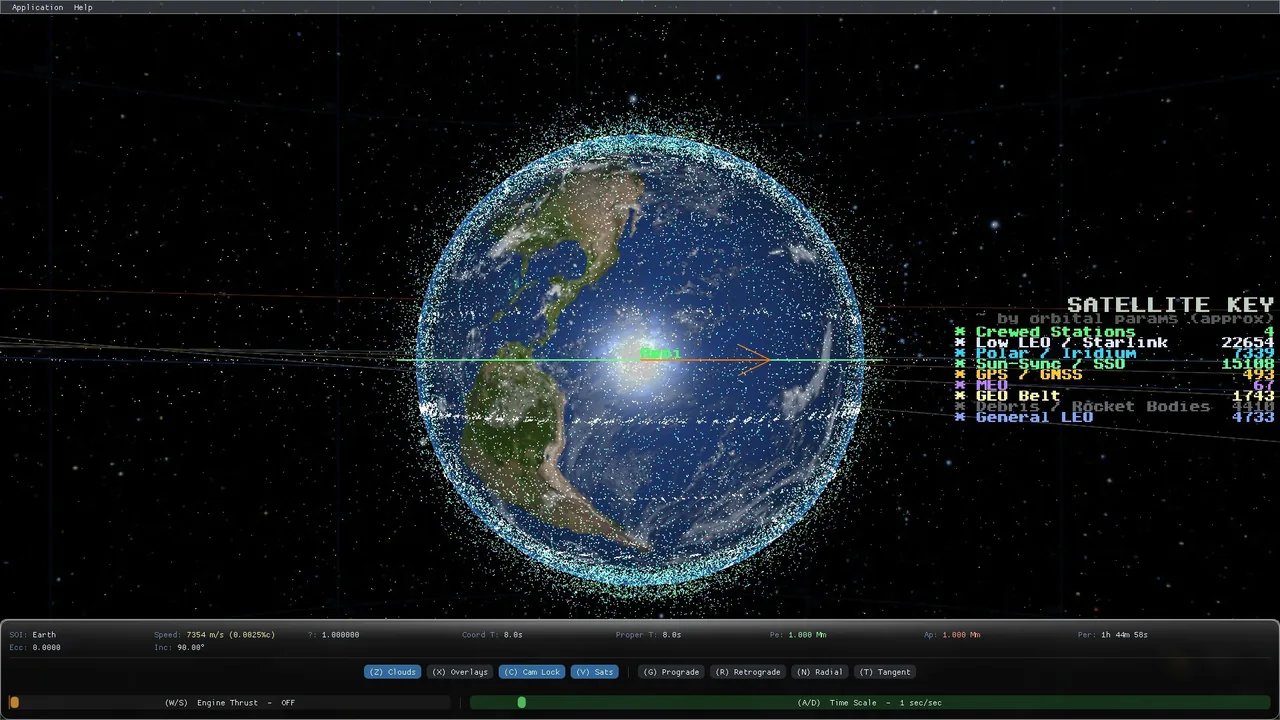
That sense of scale and wonder shows up repeatedly and specifically among the pool's positive reviews, often described through the lens of a player's own improvised experimentation rather than any guided objective. One reviewer described their first session: "first thing I did was complete my orbit of earth without doing a single thing simply staring in awe at the vastness of this game. Then I decided to shoot for the moon, okay way off course, time to figure out how to aim for Mars," before eventually "accidentally break[ing] the simulator by reaching the speed of light." Another reviewer wrote more simply, "does exactly what it says, Orbital Physics, it's fun if you enjoy the subject matter, and is a nice way to visualize some of the many satellites orbiting Earth." A separate reviewer called it "incredible" for "a first release," noting "a good bit of polish on things" while acknowledging it "still needs work."
Against that positive reception sit two specific, detailed negative reviews that describe the game as functionally broken for them, and both deserve to be reported in full given how concrete they are. One reviewer wrote flatly, "unfortunately unplayable," describing "unreadably tiny text which, nevertheless, manages to overwrite itself and becomes even more illegible by overlaying whatever else was on the screen previously," and reported that the guide references a HUD that simply isn't there: "there is no HUD, or anything else, at the top of the screen," concluding "I gave up at this point," while adding they'd be "happy to revisit this review if the text is ever fixed." A separate reviewer reported an even more basic failure, writing simply, "there is no game here, just an unresponsive white screen." Those aren't vague complaints about difficulty, they're specific, reproducible technical failures that any prospective player should weigh heavily before installing.
Control clarity and onboarding form the pool's other major, well-corroborated weakness, echoed even among reviewers who otherwise enjoyed the experience. One detailed reviewer wrote the game is "promising, but desperately needs a tutorial and finer control over rotation," adding "the struggle of getting to another body right now is just pointing at it enough." That same reviewer specifically noted the current build "deals with constant propulsion with unlimited fuel," which "makes every trip a straightish line," and suggested that being able to "see your orbit trajectory in interplanetary and interstellar space would be nice, so you could, you know, actually experience the orbital physics part of the game," a pointed critique that the simulation's marquee feature isn't yet fully exposed to the player during normal play. A separate reviewer put the same frustration more bluntly: "really cool but unfortunately im too stupid to understand how to do anything," before adding, half-joking, "10/10 would crash into brazil again."
Stability complaints round out the pool's technical concerns, with multiple reviewers independently reporting crashes beyond the two detailed unplayable reports above. One reviewer wrote simply, "its fun but it crashes a lot," while another described managing to crash the simulator specifically by "braking the laws of physics" at relativistic speeds, treating the instability as almost part of the experimental fun rather than a pure negative, though it's still a real, corroborated pattern worth flagging directly.
Even small quality-of-life issues drew specific, if good-humored, notice from reviewers who otherwise enjoyed the experience, a sign of how closely engaged the pool's positive voices were with the game's finer details. One reviewer flagged a minor but real polish issue, writing "the achievement for orbiting jupiter says obrit," a small typo that speaks to a game still catching up on basic proofreading even as its underlying physics model draws praise for genuine scientific rigor. That combination, a simulation core good enough to impress a real physicist alongside launch-level rough edges as small as a misspelled achievement name, captures the overall picture fairly well: this is software built by people who clearly prioritized getting the science right first and everything else second.
Taken together, Orbital Physics Simulator is a scientifically serious, genuinely ambitious free simulation that clearly delivers real relativistic physics accuracy for players equipped to appreciate it, validated by at least one reviewer with direct domain expertise. But it's also, by its own reviewers' accounts, a rough, occasionally broken first release: unreadable UI text, a missing HUD, crashes, and a near-total lack of onboarding are all specific, corroborated complaints rather than vague pickiness. For physics enthusiasts willing to tolerate real instability in exchange for a rare, rigorous relativistic sandbox, it's a fair, free recommendation; for anyone wanting a smooth first session, it's worth waiting for a more polished patch.
Pros and cons
Pros
- Scientifically accurate relativistic physics, specifically praised by a self-described black hole researcher as precise in its treatment of Lorentz factors and relativistic effects
- A genuine sense of awe and scale, with multiple reviewers describing staring in wonder at orbiting Earth or attempting interplanetary trajectories for the first time
- Impressively polished for a first release from a small team, according to several reviewers, despite acknowledged rough edges
- Completely free with real experimental depth, letting players freely attempt to break physics, reach relativistic speeds, and explore consequences most games never model
Cons
- A detailed negative review reported the game as effectively unplayable, citing unreadably tiny text that overlays and corrupts itself and a HUD the guide describes but that doesn't actually appear onscreen
- A separate negative review reported nothing but an unresponsive white screen, with no game visibly loading at all
- Multiple reviewers explicitly asked for a tutorial and finer control over ship rotation, describing the current controls as confusing enough that basic navigation is a struggle
- Reports of frequent crashes from more than one reviewer, including one who specifically noted the game 'crashes a lot'
Screenshots
-
Orbital Physics SimulatorImage: Blue Screen Studios via Steam -
Orbital Physics SimulatorImage: Blue Screen Studios via Steam -
Orbital Physics SimulatorImage: Blue Screen Studios via Steam