
Game review
Noxcode Review
6 / 10
- Developer
- Glitch Squirrel
- Publisher
- Glitch Squirrel
- Released
- 17 September 2026
- Platforms
- ["Windows"]
- Genre
- Action
Wake Up, Keep Moving, Don't Overthink It
Noxcode is a solo-developer movement game with a premise so minimal it barely needs a story: wake up at the bottom of a procedurally generated tower, then run, jump, climb, glide, fly, or fall your way toward the exit by whatever means work. The game's own description leans into that looseness on purpose — "no wrong ways, only dumber or cooler ones" — and frames itself less as a puzzle-platformer with correct solutions and more as an improvisational climbing toy where the only real rule is to keep moving. Developer Glitch Squirrel launched Noxcode into Early Access on May 17, 2026, and spent the following four months publishing an unusually dense, almost diary-like stream of patch notes — weapons, mods, AI guards, branching route maps, a crystal-based augment economy, gamepad support, and eight-language localization all arrived in small, frequent updates — before graduating to a 1.0 release on September 17 at a budget-friendly $7.99. That's a genuinely fast, communicative Early Access cycle by indie standards, and the patch log itself reads like the most honest marketing material the game has: a developer visibly building the thing in public, in real time, with the community watching every version number tick up.
A Tower That Keeps Changing Its Mind
By the time Noxcode hit 1.0, the "just climb up" pitch had accumulated a surprising amount of scaffolding around it. Procedural labyrinths mean every ascent generates a new layout, but the run economy layered on top is what actually gives Noxcode its identity: crates and "!" markers hand out random challenges and mutator-style mods mid-climb, a run-scoped currency called Crystals feeds an augment workbench where players hand-pick upgrades rather than rolling for them, and a branching route map lets you choose between paths that throw different modifiers and hazards at you as you go, so no two climbs shape up quite the same way. Combat entered the picture gradually too — premade weapons, an AI Guard enemy, a Roller mob, and a Laser Turret all got bolted onto what started as a pure-movement game, alongside alternate modes like Radio Tower (a narrow, mob-free vertical climb) and Arena (a flat combat space instead of a tower). It's an ambitious amount of system-stacking for a game that opens on the promise of just running and jumping, and the honest patch-note history shows a developer iterating in response to player feedback in real time rather than shipping a fixed vision — 0.4.5 exists specifically because the mod system broke meta progression after a ten-win streak, and the developer says so plainly.
What Three Early Reviewers Actually Think
Noxcode's review base is tiny and split — three total reviews, two positive and one negative, landing at a Mixed-to-Positive 67%. The two positive reviews single out different strengths: one calls the movement itself "great," praises a soundtrack that "slaps," and singles out the sound design as "really nice," while also floating a suggestion for a dedicated dodge-only mode that strips out the shooting entirely — a request that says something about how much that reviewer preferred the pure-movement fantasy over the combat systems layered on top of it later. The other positive review, written back during Early Access, frames the game plainly as a budget-priced curiosity — "parkouring on a Jenga tower with Minecraft blocks that's randomly generated" — and comes away recommending it at its discounted price point specifically. The negative review is far less forgiving, scoring the level generation itself at "3/10" and arguing the procedural system can produce towers that are less about skill and more about "slap everything in and hope one of the paths gets you to your goal." That same reviewer flags controller support as close to nonexistent beyond a "press any key to start" prompt, and calls out the stamina system as a source of dead, waiting time rather than tension. Three reviews is nowhere near enough to call a verdict, but the split itself maps cleanly onto Noxcode's core risk: a procedural generator that produces both genuinely satisfying improvisational climbs and, at least sometimes, towers that feel more like an obstacle course thrown together than one designed with intent.
The Cost of Moving Fast
Noxcode's rapid, transparent Early Access cadence is a real asset, but it's also visibly left rough edges that a slower, more deliberate production cycle might have caught. Controller support arrived relatively late in the cycle and, per the one detailed critical review, still isn't especially robust at 1.0. The sheer number of systems bolted onto the original pure-movement concept — weapons, mods, augments, branching maps, alternate game modes — risks diluting the thing that made the pitch appealing in the first place, and it's notable that the strongest positive review is the one specifically asking for a way to strip combat back out. Workshop support and custom level-code sharing are present but were still described as "awful" UI-wise as recently as a June patch note, and it's unclear from the public record whether that's been meaningfully polished since. None of this is disqualifying for a $7.99 solo release, but buyers should go in expecting a game that's still finding its final shape rather than one that arrived at 1.0 with every system fully sanded down.
Verdict
Noxcode is an ambitious, fast-moving Early Access success story on a technical level — a solo developer who shipped weekly-to-biweekly updates for four straight months, visibly responded to feedback in public, and landed at 1.0 with a genuinely large feature set for the price. Whether that feature set coheres into a satisfying whole depends heavily on which system you land on: reviewers who focus on the core climbing feel and the soundtrack come away enthusiastic, while at least one reviewer who ran into a rough procedural generation and thin controller support came away far less impressed. At $7.99, Noxcode is a reasonable, low-risk pickup for players drawn to loose, improvisational movement games who are willing to tolerate some unevenness in exactly how "designed" any given climb feels — just don't go in expecting the polish of a longer, quieter development cycle.
Screenshots
-
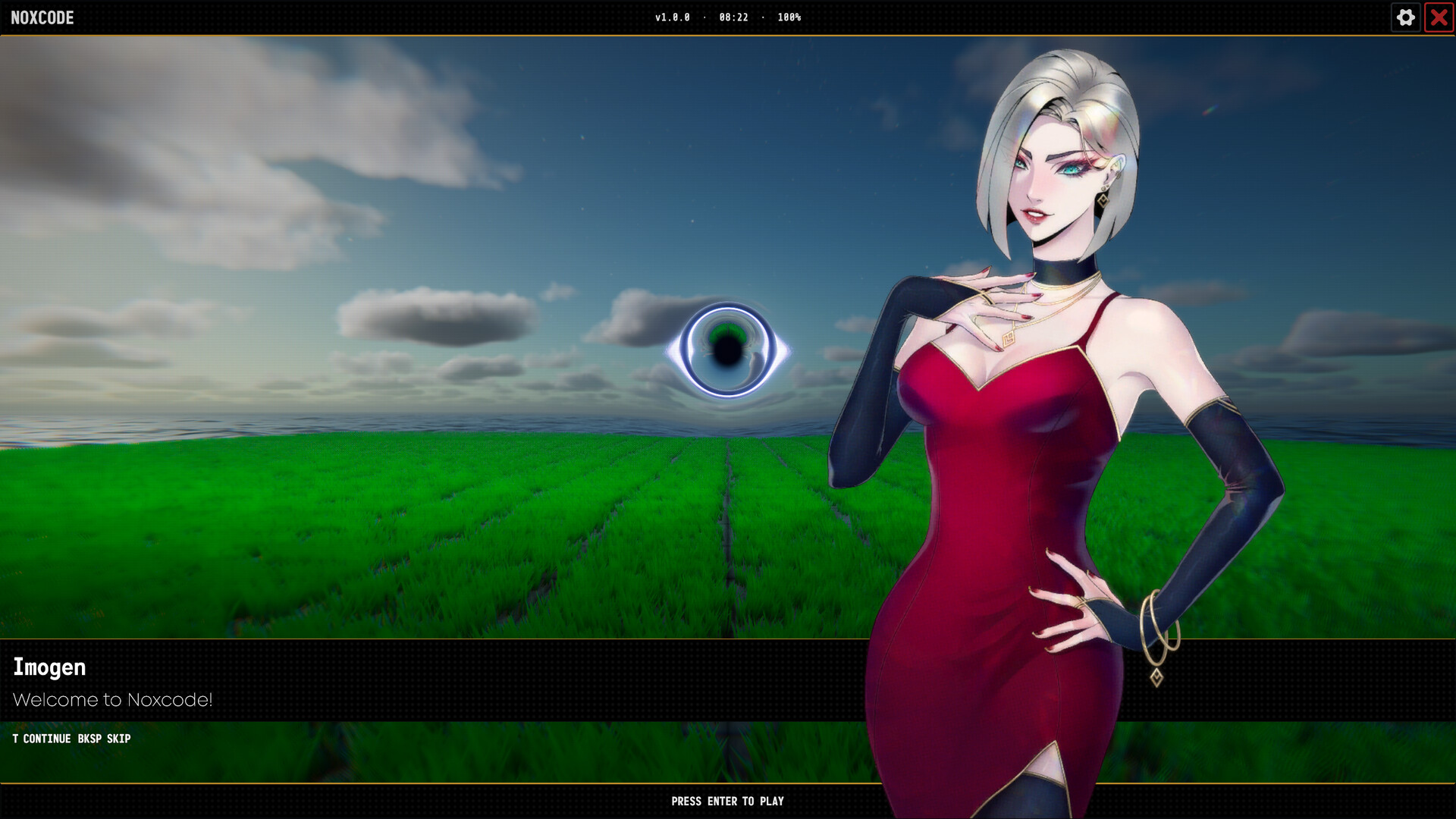
Guide character Imogen narrates from the main menu, framing the climb as a show she's mostly just watching.Image: Glitch Squirrel via Steam -
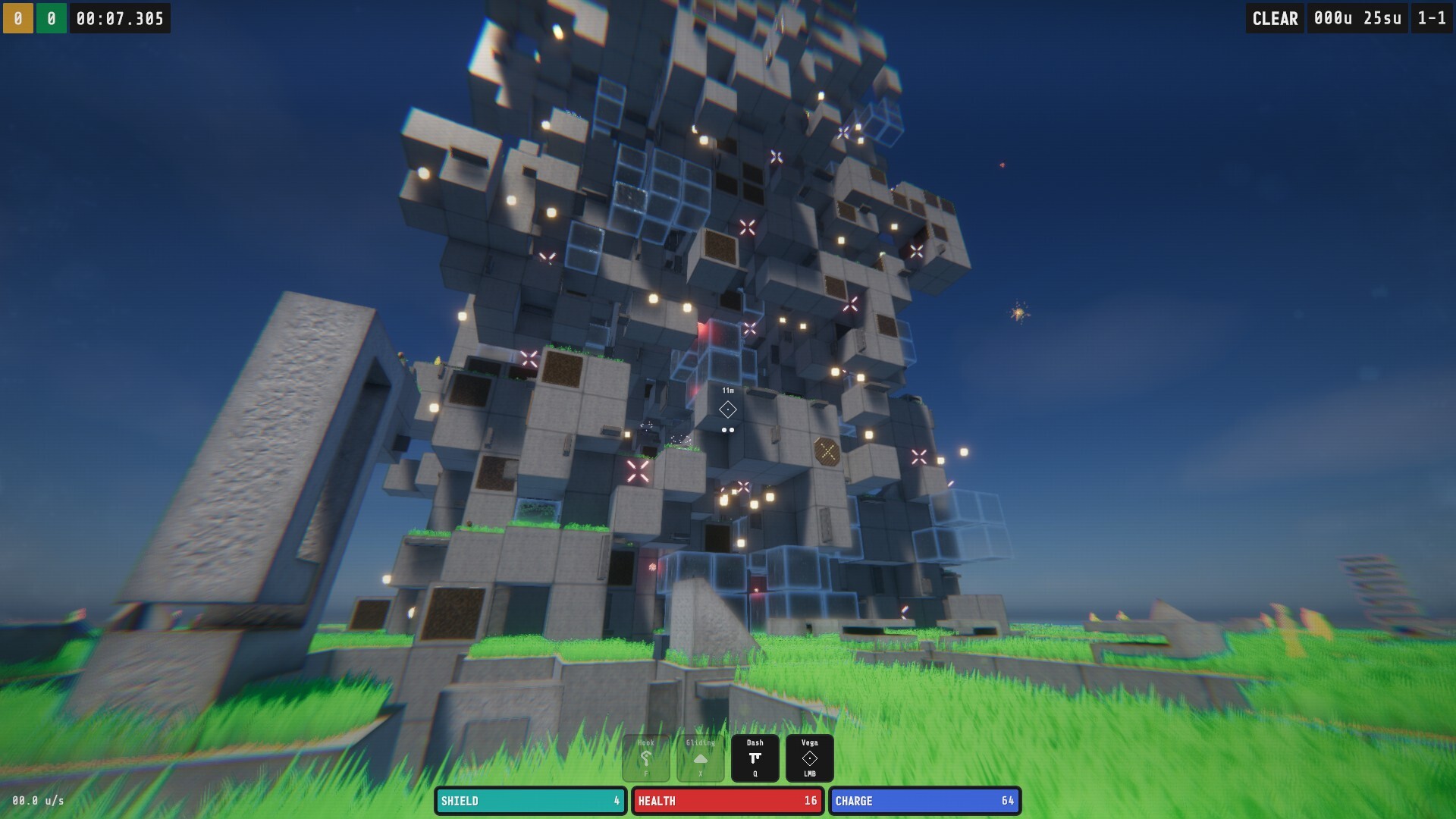
Every ascent is a freshly generated stack of blocks, with hook, glide, and dash abilities mapped to the bottom bar.Image: Glitch Squirrel via Steam -
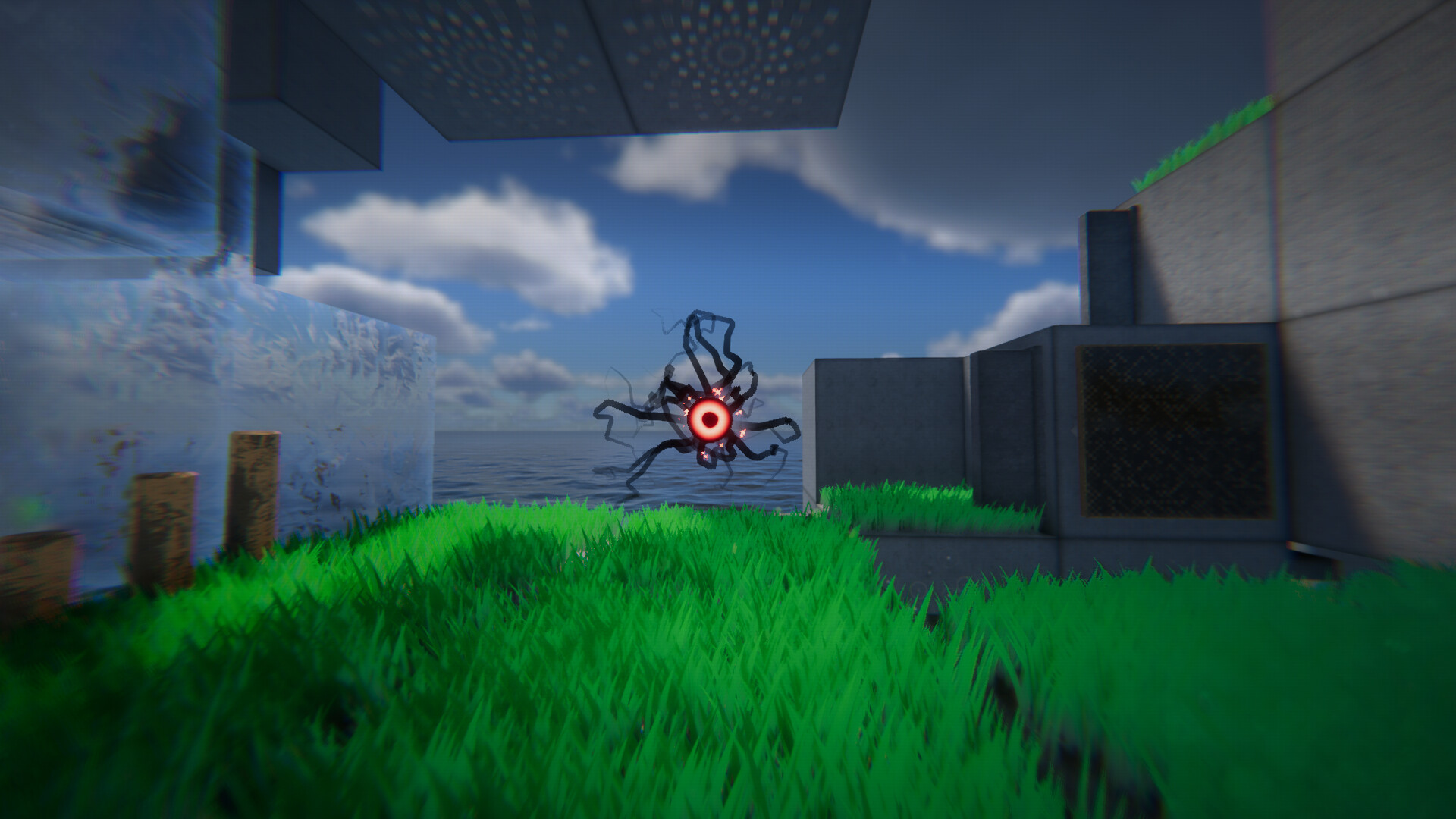
Combat crept into Noxcode gradually during Early Access, adding enemies like this one on top of the original pure-movement pitch.Image: Glitch Squirrel via Steam