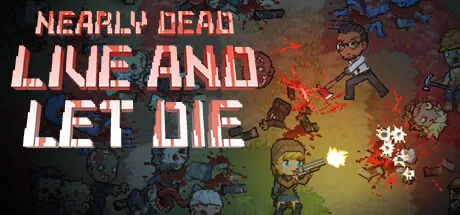
Game review
Nearly Dead - Live and Let Die
6 / 10
- Developer
- Mono Software, Inc.
- Publisher
- Mono Software, Inc.
- Released
- 24 February 2023
- Platforms
- Windows
- Genre
- Co-op Survival Roguelite
- Monetisation
- One-time purchase. No in-app purchases, ads or premium currency.
- Players
- Online co-op, up to several players; no public matchmaking for randoms -- co-op requires coordinating with people you already know
The short version
Nearly Dead - Live and Let Die is a small, budget-priced roguelite from Korean solo-ish studio Mono Software: survivors explore zombie-overrun regions by day to scavenge roughly 300 kinds of randomly-dropped items, then defend a hideout against escalating hordes by night, with online co-op as the intended way to play. Reviews are modest in volume -- 116 total across all languages, split fairly evenly between English (17 of 23 positive, 73.9%) and Korean (22 of 26 positive, 84.6%) -- but consistent in what they praise and what they flag.
Most reviewers who played with friends describe a genuinely fun, replayable time for the asking price; several who tried it solo first say it only clicked once they brought someone along. Set against that is a specific, repeated set of multiplayer bugs -- a language setting that some reviewers say randomly and irreversibly flips to English mid-session, a host-only ammo exploit, and reports that different players in the same session don't always see the same enemies -- plus the absence of any public matchmaking to find co-op partners in the first place.
Biggest strengths
- Consistently described as genuinely fun in co-op specifically, with several reviewers noting their opinion of the game improved substantially once they brought a friend along
- Cheap at NZ$10.49, and multiple reviewers explicitly say it's well worth that price despite acknowledging its bugs and rough edges
- Real post-launch content additions reported by returning reviewers, including new tech trees and weapon trees added after the initial 1.0 release
Biggest weaknesses
- Real, specific multiplayer bugs recur across independent reviews: a language setting that can flip to English mid-session with no way back, an exploit where only the session host has limited ammo, and reports that different players don't always see the same enemies on screen
- No public matchmaking for co-op -- multiplayer, the mode most reviewers say the game is built for, requires already having people to play with
- Ranged enemies are singled out by at least one detailed reviewer as a specific early-to-mid-game balance problem, described as making some stretches "almost unplayable"
Who it's for: Small groups of friends looking for a cheap, disposable co-op roguelite to run through together over a few sessions. A poor fit for solo players, or anyone without a existing group to play with, given the lack of public matchmaking.
Our recommendation: A reasonable pickup at its low price if you already have people to play it with -- several reviewers explicitly call it "well worth" the cost despite its rough edges. Skip it if you're hoping to play solo or find teammates in-game, since neither is well supported.
6 / 10
A cheap co-op roguelite, built for playing with someone else
Nearly Dead - Live and Let Die follows a familiar day/night survival structure: by day, a small group explores procedurally-varied, zombie-overrun regions to gather resources from a pool of around 300 item types; by night, they defend a shared hideout against escalating waves. It's a spin-off of an earlier, browser-and-itch.io release by the same Korean developer, rebuilt as a dedicated co-op roguelite for Steam, beginning Early Access on 24 February 2023 and exiting to a full 1.0 release that November — both dates fall in 2023, so there's no ambiguity about which year's release this is. The review base is modest: 116 total reviews across all languages by the time of this piece, split close to evenly between English and Korean audiences, both landing at Mostly Positive.
What comes through clearly, even from a small sample, is that this is a game whose appeal is specifically tied to playing it with other people. "Its normal solo game but for co-op its bad," reads one mixed take that nonetheless kept playing 46 hours; more common is the reverse experience — "at first I play alone and think this game too bad. but now when i play with my friend it very very fun," reads a representative positive review. Several others echo the same arc: an underwhelming solo first impression followed by a much better time once a friend joined. For the price — NZ$10.49, with no in-app purchases or premium currency of any kind — reviewers who played it as intended are broadly positive: "well worth the low price," "quite fun with friends," "10/10 great game with friends" are typical of the sample.
The bugs that keep showing up
Set against that, a specific cluster of multiplayer-related bugs recurs often enough across independent reviewers, spanning different months, to be worth taking seriously rather than dismissing as isolated bad luck. One reviewer describes the game's language setting randomly flipping to English mid-session with no way to switch it back, even after reinstalling. Another describes an ammo-tracking bug specific to multiplayer, where only the session host experiences limited ammunition. A third, more serious for a game built around co-op specifically, reports that "the multiplayer is so poorly coded that other players don't see the same enemies as you" — an enemy-sync problem that would undermine the core selling point if it's a persistent, general issue rather than a one-off. None of these reports come with enough independent corroboration in the available sample to call them universal, but their specificity and spread across different reviewers and different months make them worth flagging plainly to anyone considering a purchase for the co-op experience the store page leads with.
Compounding this, there's no public matchmaking to find co-op partners inside the game — a meaningful limitation for a title several reviewers say is markedly better with company, since finding that company has to happen entirely outside the game itself. A further, more specific complaint from a detailed positive review flags ranged enemies as a genuine early-to-mid-game balance problem, calling that particular enemy type "by FAR the worst thing about this game."
Crafting and durability: a divisive system
One further point of disagreement is worth flagging on its own, since it splits reviewers rather than converging on a single verdict: the crafting and item-durability systems that sit underneath the roughly 300 randomly-dropped item types. One early Early Access reviewer argues the game would be better without a crafting system at all — "just let us pick weapons or randomly drop them and upgrade them like in Vampire Survivors... item durability was never a fun feature. Running out of ammo was never a fun feature," they write, comparing it unfavourably to the more streamlined, automatic pickup systems common in the survivors-like genre it's adjacent to. Others take the opposite view, specifically asking for more depth rather than less: "more in-depth crafting and upgrading system would be awesome," reads a positive review from a few months later. That the same system draws both "remove it" and "expand it" reactions suggests Mono Software struck a middle ground that satisfies neither camp fully — a fair thing to know before buying if crafting depth (or its absence) is what draws you to a survival roguelite in the first place.
What the numbers can and can't tell you
Achievement data offers a small amount of independent signal: 34% of players who own the game clear its Normal difficulty, a respectable completion rate for a roguelite, falling to a still-meaningful 12.2% on Very Hard — a curve that suggests the difficulty scaling itself is reasonably tuned rather than needlessly punishing. Full-exploration completionist achievements sit under 1%, which is unremarkable for a genre built around repeat runs rather than 100%-style completion. Given how small the overall review count is, this review leans more heavily than usual on that quantitative signal alongside the qualitative reports above — worth keeping in mind as a caveat on everything in this piece rather than treating any single number as decisive.
Verdict
Nearly Dead - Live and Let Die is a small, honestly-priced co-op roguelite that does what it sets out to do for the audience it's built for — reviewers who played it with friends consistently call it a fun, worthwhile way to spend a cheap evening or several. What holds it back from a stronger recommendation is concrete rather than vague: real, independently-reported multiplayer bugs, no in-game way to find co-op partners, and a review base thin enough that this assessment should be read with real caution attached. If you already have people to play it with and the price feels low-risk, it's a reasonable pickup; if you're hoping to find a crowd or play solo, look elsewhere first.
Pros and cons
Pros
- Consistently described as genuinely fun in co-op specifically, with several reviewers noting their opinion of the game improved substantially once they brought a friend along
- Cheap at NZ$10.49, and multiple reviewers explicitly say it's well worth that price despite acknowledging its bugs and rough edges
- Real post-launch content additions reported by returning reviewers, including new tech trees and weapon trees added after the initial 1.0 release
- A workable difficulty curve backed by achievement data -- 34% of players clear Normal mode, falling to a still-substantial 12.2% on Very Hard, suggesting the escalating difficulty is tuned reasonably rather than walling most players out immediately
Cons
- Real, specific multiplayer bugs recur across independent reviews: a language setting that can flip to English mid-session with no way back, an exploit where only the session host has limited ammo, and reports that different players don't always see the same enemies on screen
- No public matchmaking for co-op -- multiplayer, the mode most reviewers say the game is built for, requires already having people to play with
- Ranged enemies are singled out by at least one detailed reviewer as a specific early-to-mid-game balance problem, described as making some stretches "almost unplayable"
- The review base is small even for a budget indie title -- 116 total reviews across all languages, meaning conclusions here rest on a genuinely thin sample and should be weighed accordingly
- Some early reviewers reported incomplete translation at launch; the current listing supports eight languages, but this review could not independently verify how complete each is today
Screenshots
-
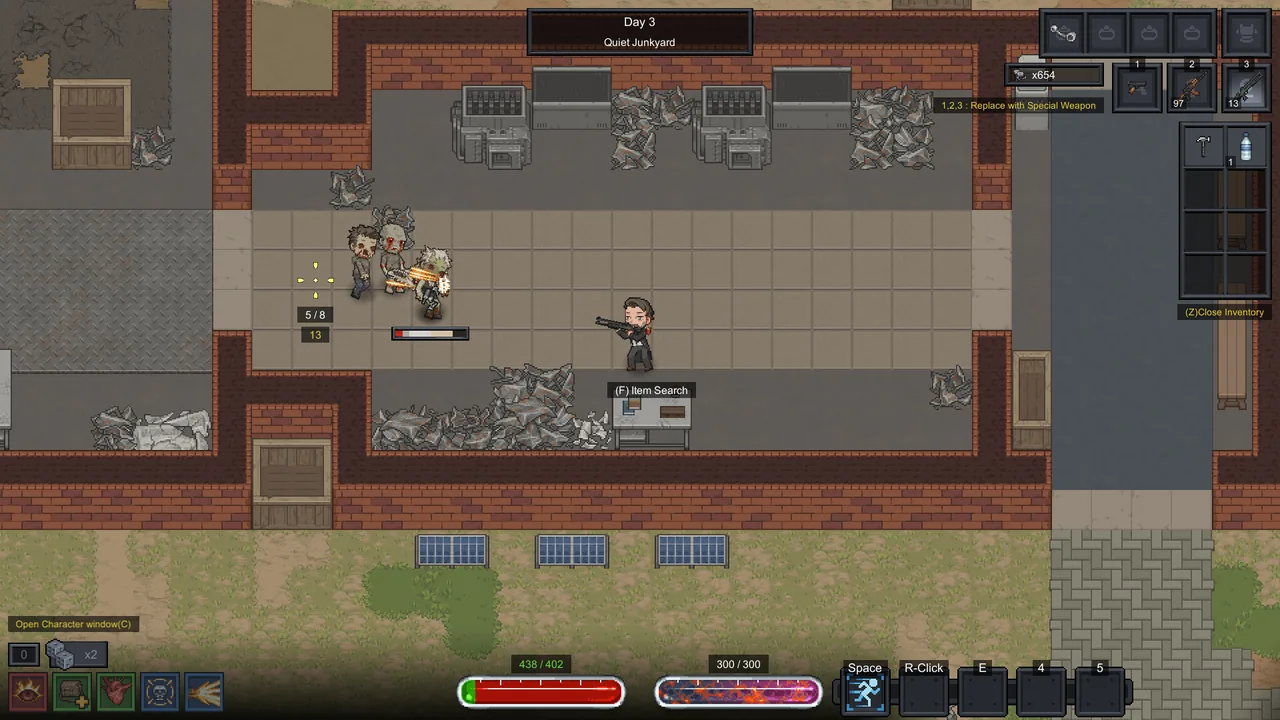
Nearly Dead - Live and Let DieImage: Mono Software, Inc. via Steam -
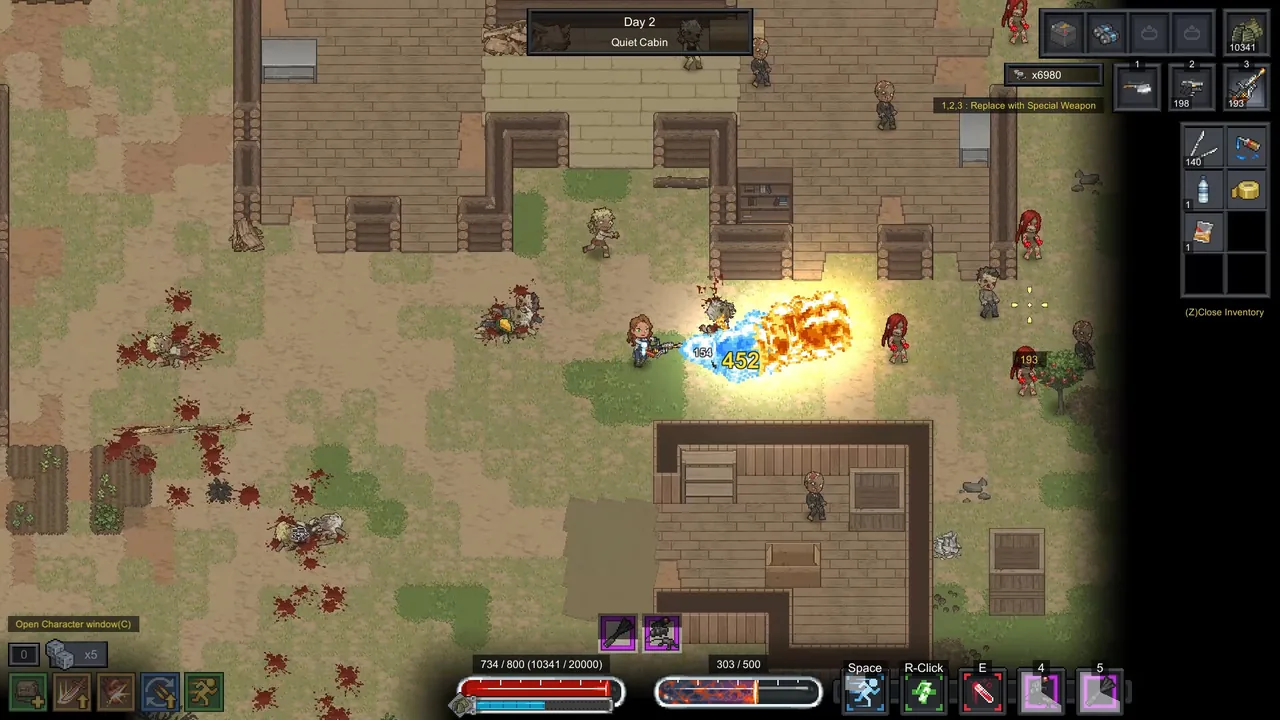
Nearly Dead - Live and Let DieImage: Mono Software, Inc. via Steam -
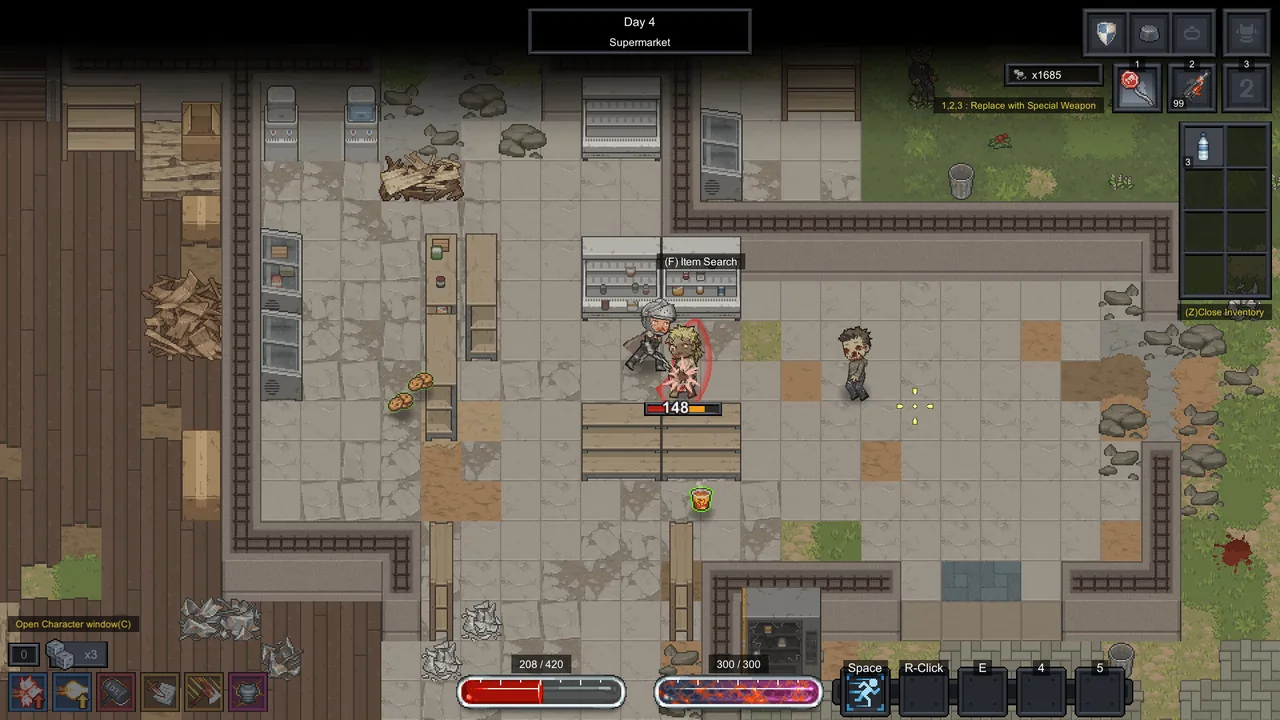
Nearly Dead - Live and Let DieImage: Mono Software, Inc. via Steam -
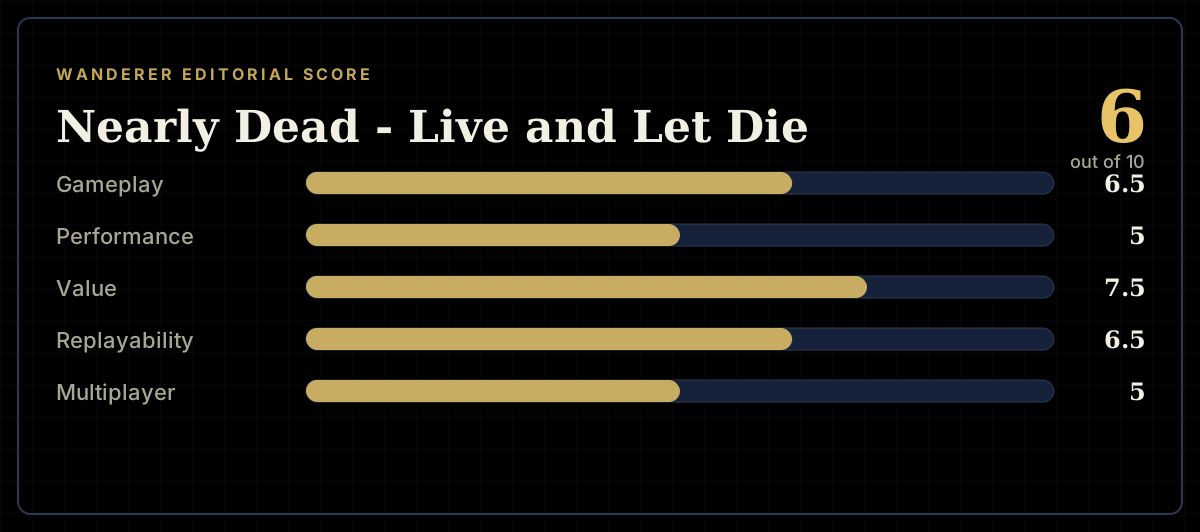
How the review scores each part of the gameWanderer Editorial -
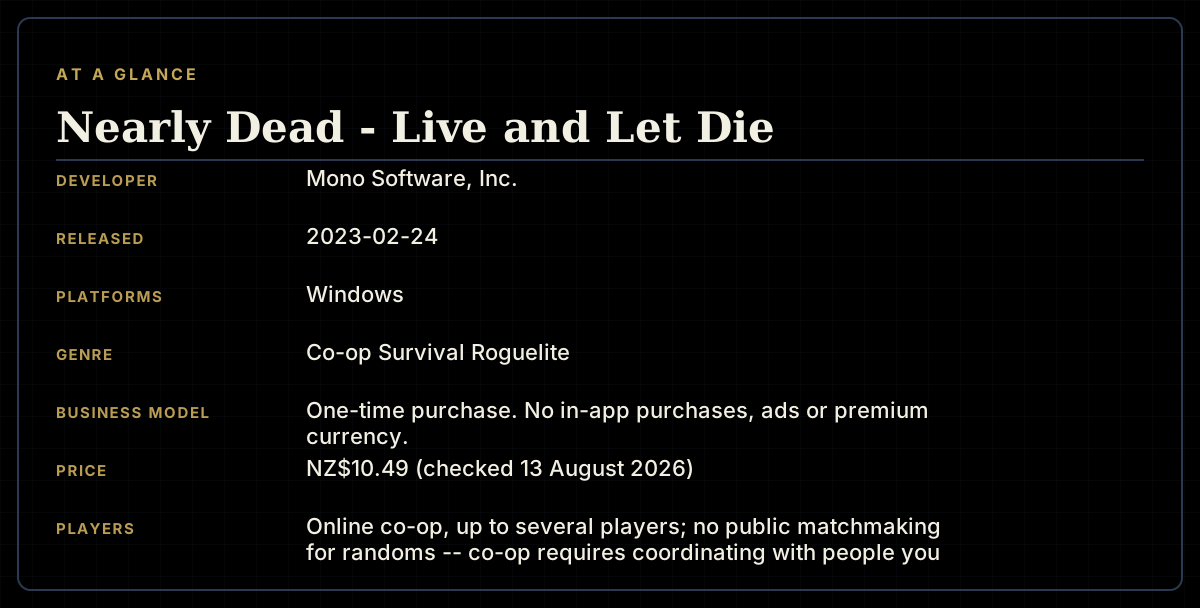
The essentials at a glanceWanderer Editorial -
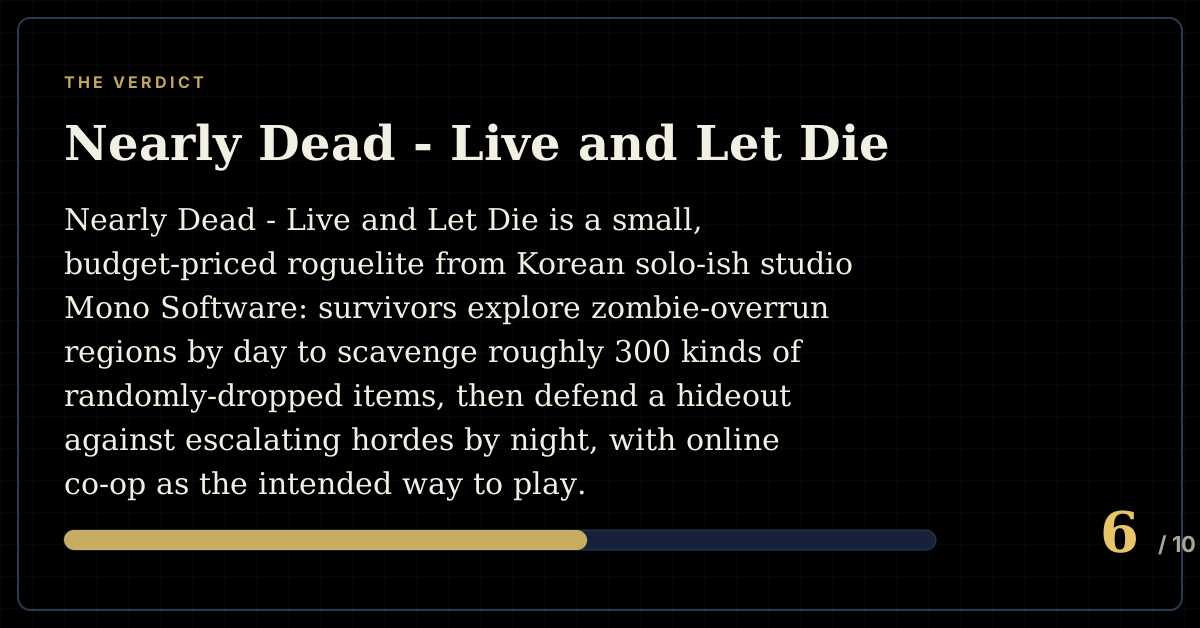
The final verdictWanderer Editorial