
Game review
My Little Spider
6.5 / 10
- Developer
- 9FingerGames, Fatal Fawn Games
- Publisher
- 9FingerGames, Fatal Fawn Games
- Released
- 7 November 2025
- Platforms
- Windows, Linux
- Genre
- Idle, Casual, Simulation
- Monetisation
- One-time purchase, no DLC or in-game currency
- Players
- Single-player
The short version
My Little Spider adopts you a pet spider that lives permanently on your desktop, spinning a web that overlays your other windows and catching more than 50 real, correctly-illustrated bug species while you work, study or otherwise get on with your day. It's a close cousin to the reactive desktop-pet niche occupied by games like Bit Buddy, but built around a bugopedia-collecting loop instead of input-reactive animations, and the review corpus contains a striking, recurring theme: multiple reviewers with a genuine, sometimes clinically diagnosed fear of spiders specifically credit the game with making that fear feel manageable, even charming, through sustained daily exposure to a spider they've come to love. Set against that unusually warm reception are three specific, repeated technical complaints — a missing Steam Cloud save option that has already cost at least one player their progress after a hardware failure, a broken transparency overlay on Linux, and a sell-your-bugs interruption loop that several reviewers say undercuts the passive, idle nature the game is supposed to offer.
Biggest strengths
- A specific, recurring and unusually personal theme runs through the review corpus of players with a real fear of spiders describing the game as genuinely therapeutic, crediting daily exposure to a spider they've grown fond of with making the fear feel more manageable
- The bug collection is built from more than 50 real insect and arachnid species, correctly illustrated and specific enough that at least one self-identified entomophile reviewer praises the accuracy, with certain bugs only appearing at specific in-game times of day to encourage return visits
- The spider and web are described consistently as charming and responsive, sitting transparently on top of other windows and programs so the companion stays visible regardless of what else is running on the desktop
Biggest weaknesses
- Steam Cloud support is absent, and at least one reviewer reports losing all of their save progress after a hardware failure as a direct result, a serious and avoidable risk for a game designed to be left running for very long stretches
- The game's transparency and click-through overlay is reported broken on Linux, with the intended transparent web area instead rendering as a solid green background that one reviewer says makes the Linux build essentially unusable despite technically launching
- Multiple reviewers describe a sell-your-bugs mechanic that periodically interrupts the player with prominent on-screen prompts once storage fills up, arguing this breaks the passive, glanceable idle experience the game otherwise promises by demanding active attention during work or study sessions
Who it's for: Anyone who wants a cute, low-effort desktop companion for long work or study sessions, particularly players with a mild fear of spiders looking for gentle, gamified exposure, and entomology-curious players who'll appreciate the game's use of real, correctly-identified insect species. Less of a fit for players who want a genuinely hands-off idle experience without periodic interruption.
Our recommendation: A charming, cheap pickup for Windows users specifically drawn to its desktop-companion premise or its accidental exposure-therapy angle, but back up your save manually given the lack of Steam Cloud support, and Linux users should wait for the transparency bug to be fixed before buying.
6.5 / 10
A web that lives on your desktop
My Little Spider commits to a simple, well-executed pitch: adopt a small pet spider that lives permanently overlaid on your desktop, its web catching insects while you work, study, or just leave your computer running. It sits in the same general desktop-companion niche as games like Bit Buddy, but where that game reacts to your keyboard and mouse input, My Little Spider instead builds its loop around a bugopedia — more than 50 distinct, correctly-illustrated real insect and arachnid species, some of which only appear at specific times in the game's own day-night cycle, encouraging players to check back at different hours rather than treating the game as a one-time novelty.
Accidental exposure therapy
The single most distinctive and specific thread running through this game's review corpus has nothing to do with mechanics at all. Multiple reviewers independently describe having a genuine, sometimes long-standing fear of spiders — one recounts a specific, medication-induced hallucination involving spiders that reinforced childhood arachnophobia — and credit the game with making that fear feel more manageable through sustained, low-stakes daily exposure to a spider they've come to find charming rather than frightening. That's a remarkably consistent, specific and personal pattern to see recur across independently-written reviews, and it speaks to a genuine, if presumably unintended, strength of the desktop-companion format: a spider that's cute, responsive, and impossible to avoid because it sits on your screen all day turns out to be a gentler form of repeated exposure than most people would seek out deliberately.
Real bugs, correctly drawn
Beyond the emotional angle, the bug-collecting core loop draws specific praise for its factual grounding. At least one self-identified entomophile reviewer praises the game for using real, correctly identified species rather than invented fantasy creatures, going so far as to note the spider itself is drawn with six legs rather than eight — technically inaccurate for an arachnid, but a small enough detail that it reads as an intentional stylistic choice for readability and charm rather than a research failure elsewhere in the bug roster. Standout individual species, like the Luna Moth and Silk Moth, draw specific delight from reviewers discovering them for the first time, suggesting the art team put real, appreciable care into a system that could easily have been generic.
Where the "idle" promise breaks down
The most consistent structural complaint concerns how passive the experience actually is in practice. Several reviewers describe a mechanic where collected bugs fill a storage capacity that must be sold off manually, triggering a prominent on-screen interruption once it's full — precisely the kind of demand for active attention that runs against what most players expect from an "idle" companion meant to run quietly in the background during focused work. Related requests recur for basic quality-of-life tools, including the ability to lock specific favourite or achievement-relevant bugs from being accidentally sold in bulk, and an auto-sell option that would let the loop continue without demanding manual babysitting. None of these complaints suggest the underlying idea is broken, but they do suggest the execution hasn't fully delivered on the "glance at it during a break" promise the game's own marketing makes.
What the achievement data shows
Steam's global achievement percentages back up a specific, gradual difficulty curve rather than a flat one. The earliest achievements, tied to basic bug discovery and completing the main quest line, sit above 95% completion, while the rarest bug-collection achievements — tied to large storage capacities, shiny variants, and specific species like the lantern nymph — sit in the 17-22% range. That's a meaningful but not extreme drop-off, consistent with a completionist-friendly structure where most players who start the game see the bulk of its content, but full 100% completion demands the kind of patient, long-term engagement only a smaller committed subset pursue.
A performance cost the developer should address
One more specific technical complaint deserves attention on its own, separate from the interruption-loop critique above: at least one reviewer with a mid-to-high-end gaming PC reports a measurable, tested drop in the refresh rate of other applications, including a code editor and a web browser, while My Little Spider runs in the background, even with the game's own performance mode enabled. That's a specific, tested claim rather than a vague impression — the reviewer describes comparing scroll smoothness with and without the game running — and it cuts directly against the core value proposition of a desktop companion meant to sit unobtrusively alongside whatever else you're doing. A background tool that measurably degrades the performance of the actual work or browsing it's meant to accompany is a real practical concern for exactly the audience this genre is built for, and it's worth knowing before leaving the game running through a demanding work session.
A close cousin to Bit Buddy, a different kind of charm
It's worth briefly placing this game alongside Bit Buddy, another desktop-companion idle game reviewed around the same time and covered elsewhere on this site. Where Bit Buddy ties its charm to input-reactive animation and a large item-collecting economy, My Little Spider ties its charm to patient observation and factual, real-world bug variety, plus that unusually strong emotional thread around arachnophobia relief. Neither approach is objectively better; they appeal to different instincts — one rewards active interaction with your own typing and clicking, the other rewards quiet, periodic attention to a small living world happening at the edge of your screen. Players deciding between the two might reasonably pick based on which framing, reactive companion or observed pet, sounds more appealing rather than assuming either fully supersedes the other.
The verdict
My Little Spider succeeds at its core emotional pitch more thoroughly than most games in this niche manage, with a specific, recurring and genuinely moving thread of players describing real relief from arachnophobia through sustained exposure to a spider they've grown to love. The bug-collecting content built around that spider is well-researched and charming in its own right. What holds the package back from a stronger recommendation are avoidable technical gaps — no Steam Cloud support risking real save loss, a broken Linux overlay, and an interruption-heavy sell loop that undercuts the passive experience the format promises. Buy it on Windows for the desktop-companion charm and the surprisingly earnest bug science behind it, back up your save manually in the meantime, and hold off if you're on Linux until the transparency issue is fixed.
Pros and cons
Pros
- A specific, recurring and unusually personal theme runs through the review corpus of players with a real fear of spiders describing the game as genuinely therapeutic, crediting daily exposure to a spider they've grown fond of with making the fear feel more manageable
- The bug collection is built from more than 50 real insect and arachnid species, correctly illustrated and specific enough that at least one self-identified entomophile reviewer praises the accuracy, with certain bugs only appearing at specific in-game times of day to encourage return visits
- The spider and web are described consistently as charming and responsive, sitting transparently on top of other windows and programs so the companion stays visible regardless of what else is running on the desktop
- Accessibility options including mouse-only play, colour alternatives, and no timed-input requirements are built in from launch, a thoughtful inclusion for a low-stakes desktop companion genre that doesn't always prioritise this
- At least one reviewer reports the game running continuously for so long that the in-game clock overflowed, a lighthearted but genuine signal of the kind of long-term, always-on engagement the desktop-companion format is specifically designed to sustain
Cons
- Steam Cloud support is absent, and at least one reviewer reports losing all of their save progress after a hardware failure as a direct result, a serious and avoidable risk for a game designed to be left running for very long stretches
- The game's transparency and click-through overlay is reported broken on Linux, with the intended transparent web area instead rendering as a solid green background that one reviewer says makes the Linux build essentially unusable despite technically launching
- Multiple reviewers describe a sell-your-bugs mechanic that periodically interrupts the player with prominent on-screen prompts once storage fills up, arguing this breaks the passive, glanceable idle experience the game otherwise promises by demanding active attention during work or study sessions
- Several reviewers request basic quality-of-life features that remain absent, including the ability to lock specific bugs from being accidentally sold in bulk and an auto-sell option to reduce how often the game demands manual attention
- At least one reviewer reports the game measurably reducing the frame rate or refresh rate of other applications running alongside it, including everyday tools like a code editor or web browser, a performance cost that undercuts the appeal of a background companion meant to run unobtrusively
Screenshots
-

My Little SpiderImage: 9FingerGames via Steam -

My Little SpiderImage: 9FingerGames via Steam -

My Little SpiderImage: 9FingerGames via Steam -
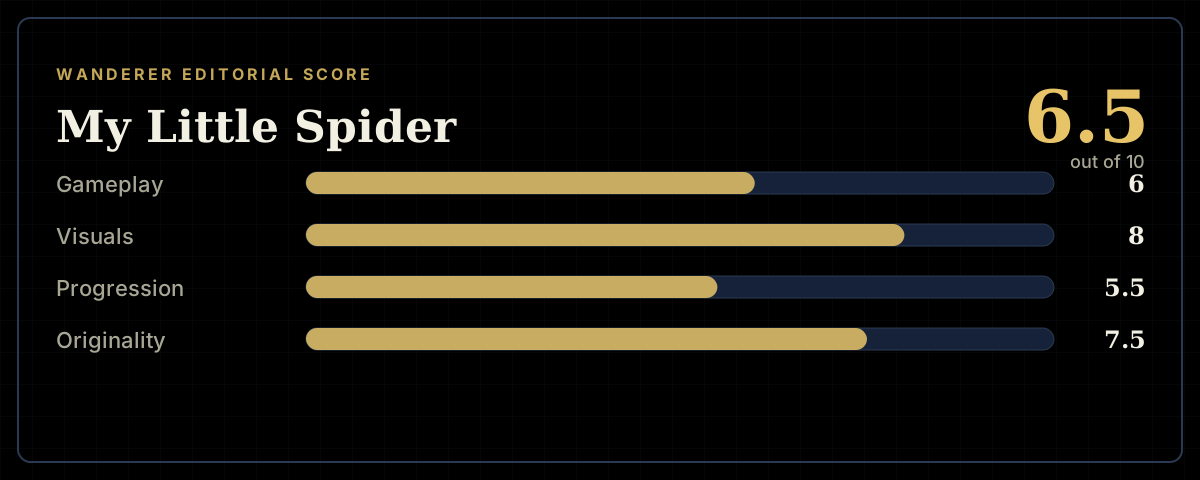
How the review scores each part of the gameWanderer Editorial -

The short versionWanderer Editorial