Game review
My Little Blacksmith Shop
5.1 / 10
- Developer
- Dasius
- Publisher
- Noble Games Studio
- Released
- 9 February 2025
- Platforms
- [Windows]
- Genre
- Simulation
- Monetisation
- Paid
- Players
- Single-player
The short version
My Little Blacksmith Shop, developed by Dasius and published by Noble Games Studio, casts players as a medieval blacksmith who mines ore, smelts it, and physically hammers out weapons, tools, and armour to sell to a small fantasy town. Its origins stretch back to an early itch.io release roughly a decade ago, and the version now sitting as a full release on Steam, at NZ$12.39, carries the weight of that entire history. Reception across 815 reviews sits at Mixed (68% positive), and a large English-language sample pulled for this piece (100 reviews: 46 positive, 54 negative) shows exactly why: a genuinely distinctive, physics-driven forging loop that plenty of players still enjoy, sitting inside a game many longtime supporters say has been rebuilt, re-rebuilt, and left rougher than they remember, with bugs and a broken tutorial turning away newcomers before they ever reach the parts people love.
Biggest strengths
- The physics-based forging loop, hammering, shaping, and assembling ingots into weapons, tools, and armour by hand, is repeatedly praised as a genuinely unique idea few other games attempt
- Putting the player in the blacksmith's shop rather than the hero's boots is a distinct, appealing angle that reviewers say scratches an itch no other Steam game currently fills
- A wide range of hidden items, schematics, puzzles, and NPC interactions gives explorative players more to find than the crafting loop alone
Biggest weaknesses
- The tutorial is the single most repeated complaint in the sample, with reviewers reporting it hard-softlocking, refusing to register store customers, or failing the "place ingots on the anvil" step entirely, sometimes across several restarts
- Persistent bugs recur across settings resets, inventory glitches, items disappearing or clipping through geometry, and poor performance including frame drops during weather effects
- A significant portion of the negative sample comes from longtime fans who followed the game since its early itch.io days and feel a later engine transition changed or lost what made the original version special
Who it's for: Players drawn to a genuinely unusual, hands-on crafting sim who can tolerate real Early-Access-grade bugs in a finished release, and returning itch.io-era fans willing to accept the game has changed.
Our recommendation: Worth a look for the forging concept alone at this price, but go in expecting rough edges, a shaky tutorial, and a game that has clearly been through a long, difficult development.
5.1 / 10
A Long, Winding Road From Itch.io to Steam
My Little Blacksmith Shop, developed by Dasius and published by Noble Games Studio, is a semi-realistic fantasy sandbox simulator that puts players behind the anvil rather than at the sharp end of a sword. The pitch is straightforward and genuinely uncommon: mine ore, smelt it, and physically shape it into weapons, tools, shields, and armour using hands-on, physics-based forging, then sell the results to a small medieval town's worth of customers while exploring for hidden schematics and secrets along the way. The game's roots go back roughly a decade to an early, much simpler itch.io release, and it arrives on Steam as a full release (there is no Early Access tag on the store page) at NZ$12.39. Reception currently sits at Mixed across 815 total reviews (68% positive). A large English-language sample pulled for this piece (100 reviews: 46 positive, 54 negative) makes clear why the aggregate lands right in the middle: the core idea still has real fans, but a long and visibly difficult development history has left plenty of scar tissue in the review section.
The Core Forging Loop Still Has Real Charm
Where the game succeeds, it succeeds on a genuinely distinctive premise. Reviewers across both the positive and negative sample consistently single out the physics-based crafting itself, placing ingots on the anvil, hammering them into shape, and assembling the pieces into finished weapons and armour, as something few other games attempt, let alone pull off with this much tactile detail. Several reviewers frame the appeal specifically in terms of what it isn't: rather than another game about swinging the sword, this is a game about making the sword, and that reframing draws real enthusiasm from players tired of always playing the hero. Beyond the forge itself, the town setting offers a decent amount to dig into, hidden items and schematics, small puzzles, and NPCs worth talking to for unique unlocks, which several longtime players say gives the game more depth than its simple premise suggests. The low-poly, slightly blocky art style is repeatedly called charming and well-suited to the relaxed pace the game is going for, and more than one returning player specifically credits it with making the game a comfortable one to unwind with, bugs notwithstanding. At NZ$12.39, even many critical reviewers concede the amount of content, systems, and hours on offer feels fair for the asking price.
A Troubled Transition Casts a Long Shadow Over the 1.0 Release
The single biggest thread running through the negative side of the sample isn't a specific bug so much as a sense of history and loss. A large number of reviewers describe having played the game years ago, often back on itch.io or in its earliest Steam Early Access form, and say the version they loved has since been substantially rebuilt, with some specifically pointing to an engine transition as the moment the game's original "charm" or feel started slipping away. Several reviewers say a planned overhaul or "2.0" version has effectively stalled, describing the game as abandoned in practice even though it continues receiving updates, and at least one reviewer cites a developer community post promising continued access to an older, more stable branch while the newer version remains in flux. This isn't a fringe complaint, it recurs across reviewers with wildly different playtimes, including some with tens of thousands of minutes logged, and it colours a meaningful share of the sample's otherwise-positive reviews too, several players who ultimately recommend the game still open with some version of "it's not what it used to be." For a game that has now been publicly developed and iterated on for close to a decade, that sense of drift is clearly a sore point for its most invested audience.
Bugs, Broken Tutorials, and Performance Problems Frustrate Many Players
Sitting alongside that history-driven frustration is a very concrete, very repeated set of technical complaints. By far the most common single issue in the negative sample is the tutorial itself: reviewers describe it hard-softlocking, failing to register that a customer has entered the shop, or simply refusing to accept ingots snapped onto the anvil, sometimes after several restarts and multiple save files, ending the experience for new players before it properly begins. Beyond onboarding, reviewers report a wide spread of ongoing issues: settings resetting after loading into a world, items and tools disappearing from inventories, frame rate collapsing during weather effects or on lower-end hardware, audio dropping out entirely for some players, and crashes tied to specific actions like unboxing or attaching parts. Progression draws its own specific criticism: because higher-tier ore generally requires a pickaxe of that same or better tier to mine, several reviewers describe advancement as more of a straightforward purchase gate than an earned skill, with one describing it as trivially speedrunnable by simply buying up through the tiers rather than engaging with mining meaningfully. None of these complaints are especially rare or isolated; taken together, they paint a picture of a game whose ambitions have consistently outpaced its polish across most of its public life.
Verdict
My Little Blacksmith Shop has one of the more genuinely original hooks on Steam right now, a hands-on, physics-driven forging loop that puts players in the blacksmith's shop rather than the adventurer's boots, and that idea clearly still works for a meaningful chunk of its audience even after nearly a decade of development. But this 1.0 release carries real baggage: a tutorial that fails outright for a significant number of players, a long list of ongoing bugs and performance issues, and a vocal, invested base of longtime fans who feel the game changed for the worse somewhere along the way from its itch.io roots to where it stands today. At NZ$12.39 the content on offer is hard to argue with on value alone, and curious players who go in with patience for jank may well find the forge as charming as its fans do. But anyone hoping for a smooth, fully realized experience matching a decade of visible work should treat the Mixed rating as an accurate warning rather than an overcautious one.
Pros and cons
Pros
- The physics-based forging loop, hammering, shaping, and assembling ingots into weapons, tools, and armour by hand, is repeatedly praised as a genuinely unique idea few other games attempt
- Putting the player in the blacksmith's shop rather than the hero's boots is a distinct, appealing angle that reviewers say scratches an itch no other Steam game currently fills
- A wide range of hidden items, schematics, puzzles, and NPC interactions gives explorative players more to find than the crafting loop alone
- At NZ$12.39, most reviewers, even critical ones, describe the amount of content on offer as fair or generous for the price
- The low-poly art style and relaxed, chill pacing are consistently called charming, and several longtime players say it holds up well for unwinding
Cons
- The tutorial is the single most repeated complaint in the sample, with reviewers reporting it hard-softlocking, refusing to register store customers, or failing the "place ingots on the anvil" step entirely, sometimes across several restarts
- Persistent bugs recur across settings resets, inventory glitches, items disappearing or clipping through geometry, and poor performance including frame drops during weather effects
- A significant portion of the negative sample comes from longtime fans who followed the game since its early itch.io days and feel a later engine transition changed or lost what made the original version special
- Progression is criticized as restrictive, since higher-tier ore generally requires an already-upgraded pickaxe, leaving mining feeling more like a paywall between purchases than an active skill
- Several reviewers describe the game's long, winding development history, including community reports of a planned overhaul stalling, as reason for real caution before buying in
Screenshots
-
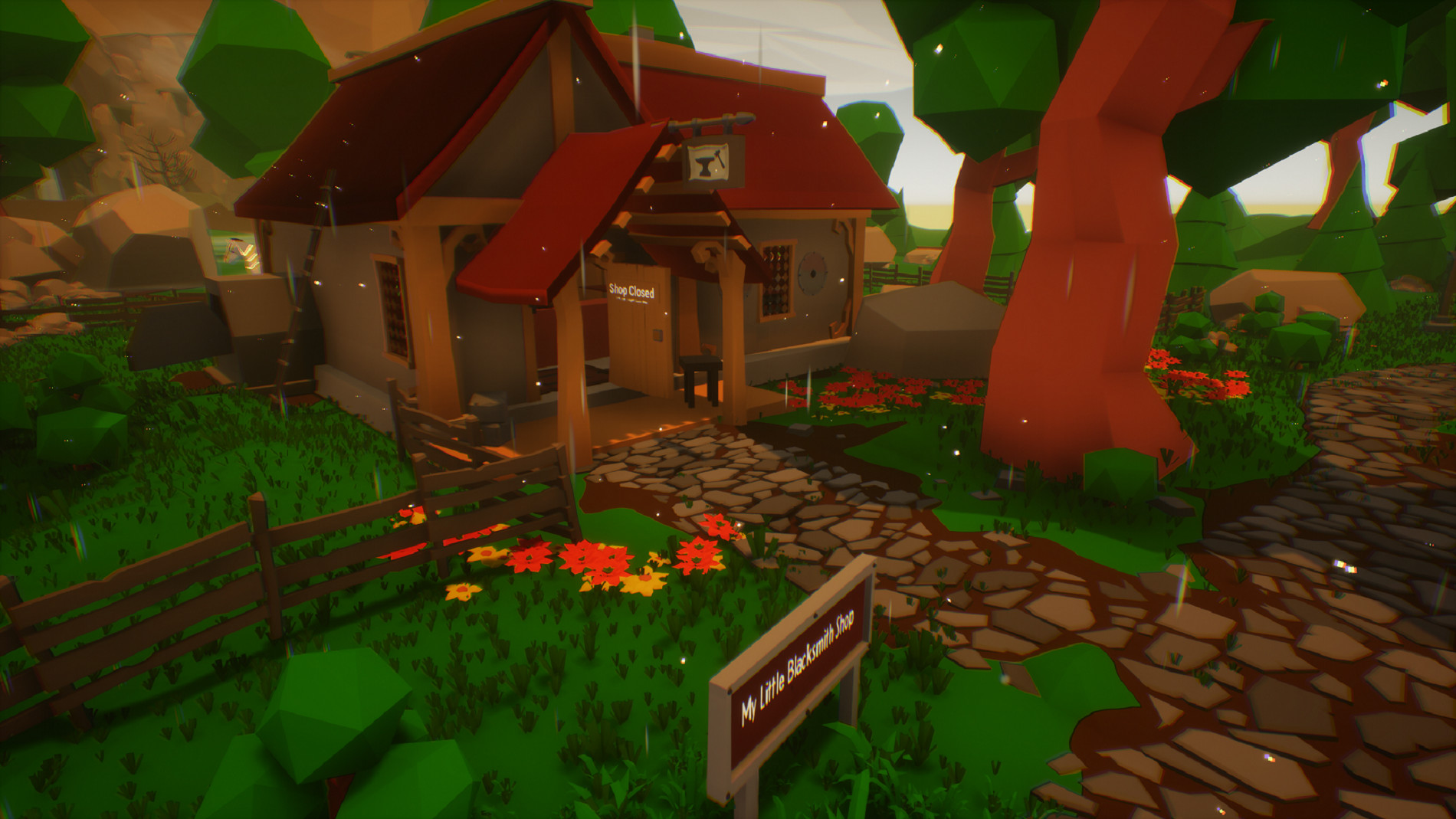
The cozy, low-poly shop exterior reviewers repeatedly call charming and relaxingNoble Games Studio -
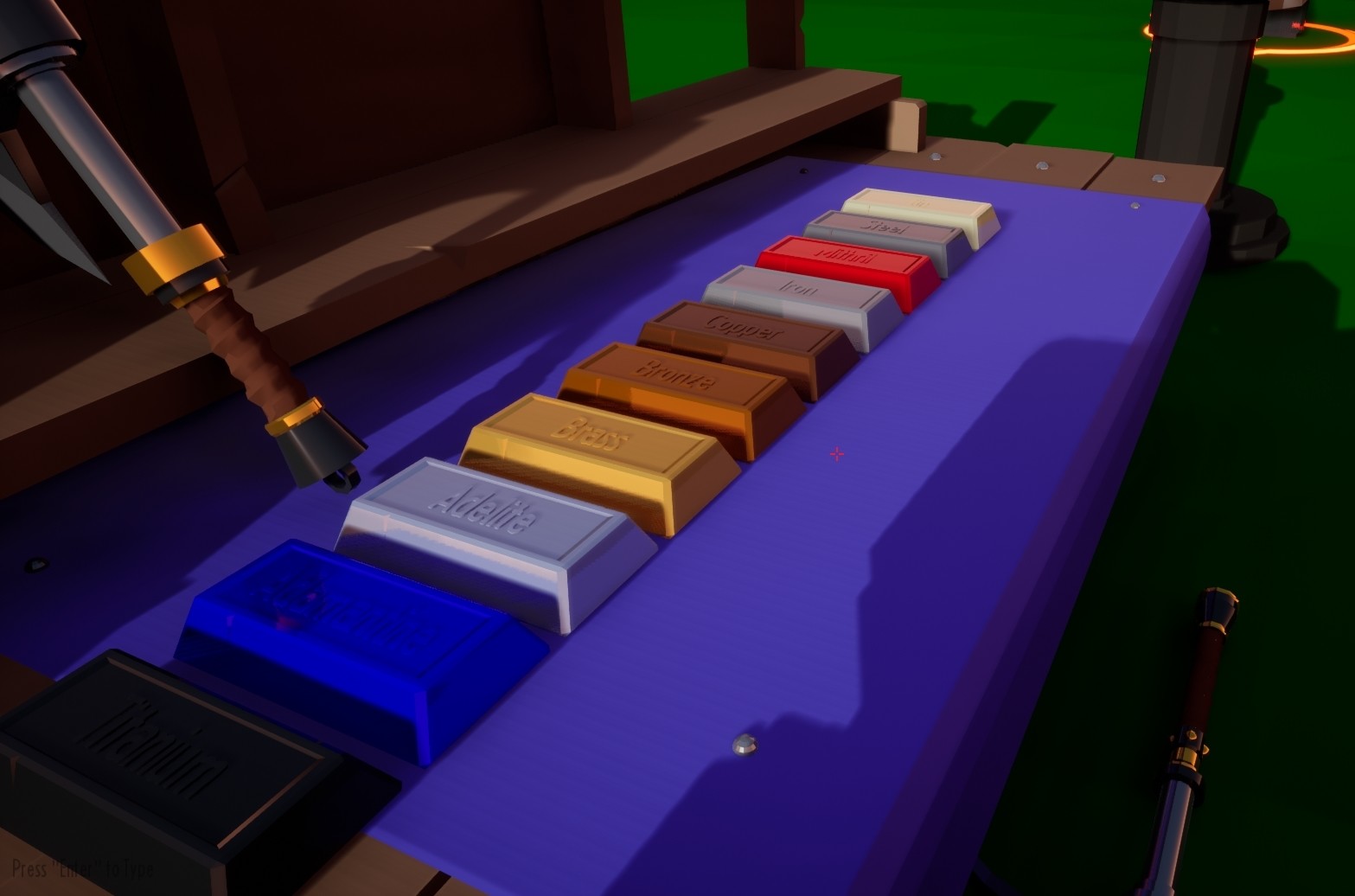
The material tier ladder behind the mining and pickaxe-upgrade progression several reviewers call restrictiveNoble Games Studio -
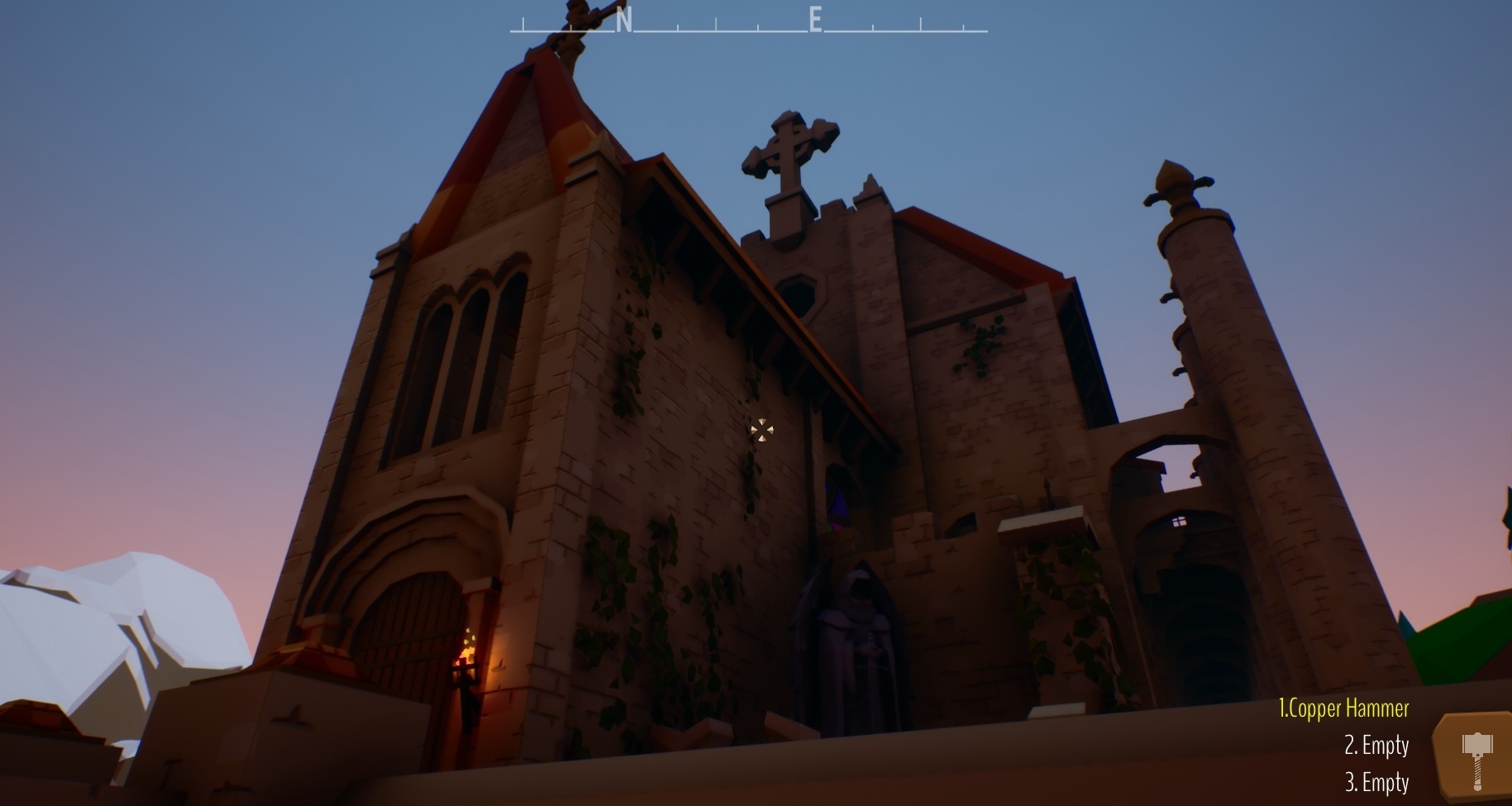
One of the town's explorable points of interest, part of the hidden-item and puzzle content players praiseNoble Games Studio -
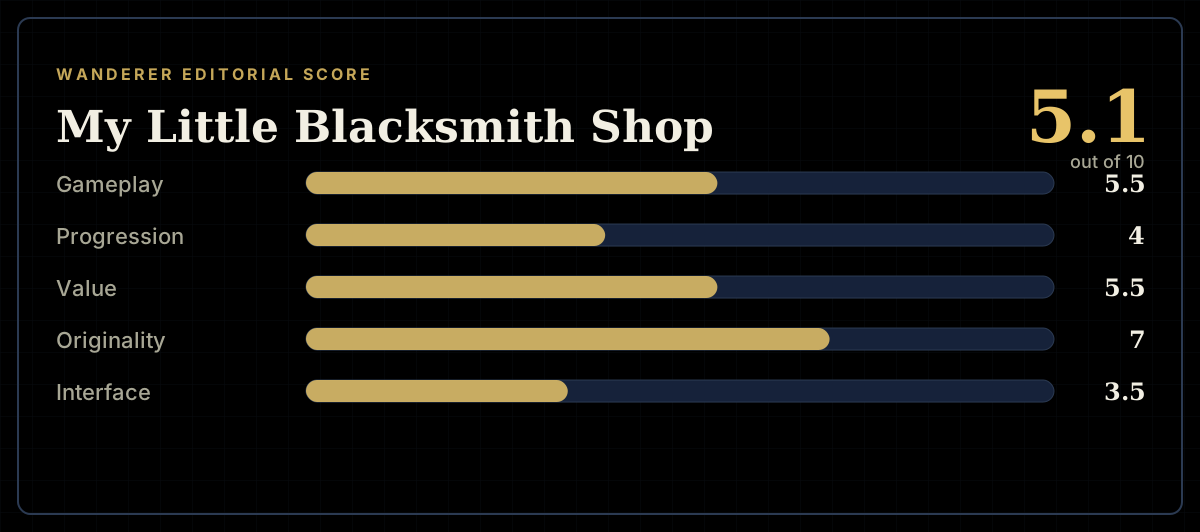
How the review scores each part of the gameWanderer Editorial -
The short versionWanderer Editorial