Game review
Blacksmith Shop Simulator
5 / 10
- Developer
- Dual Cluster Studios
- Publisher
- Dual Cluster Studios
- Released
- 25 July 2025
- Platforms
- [Windows]
- Genre
- Simulation
- Monetisation
- Paid
- Players
- Single-player only
The short version
Blacksmith Shop Simulator has a genuinely relaxing core idea — heat the metal, shape it, sell it to a queue of waiting customers — and a price so low that most reviewers extend it real goodwill. But that goodwill is tested by a shop loop most players say they've fully unlocked and completed within ninety minutes, a customer-dismissal penalty several reviewers call punishing out of proportion, and a string of small interface annoyances around material pickup and order visibility that a first patch or two could meaningfully fix.
Biggest strengths
- A genuinely satisfying core forging loop — heating, shaping, and timing hits on a moving bar — that several reviewers single out as the game's strongest, most tactile feature
- Extremely low asking price relative to its scope, which multiple reviewers cite as the main reason they still recommend it despite the game's thinness
- Simple, low-stress pacing that never punishes players for taking their time with an individual order, only for refusing customers outright
Biggest weaknesses
- Most reviewers report reaching 100% of the game's achievements and exhausting its content within roughly one to two hours
- Dismissing a customer costs several hundred experience points — described by multiple reviewers as wildly disproportionate to the amount earned from completing an order
- Materials must be picked up individually from the ground rather than going straight to inventory, a repetitive extra step reviewers describe as tedious over a full shift
Who it's for: Fans of short, cheap shop-management sims who want a low-stakes, single-sitting crafting loop rather than a long-term business builder.
Our recommendation: Mixed
5 / 10
Heat, Shape, Sell, Repeat
Blacksmith Shop Simulator puts players behind the counter and the forge of a small weapon-and-armour shop, working through a simple loop: a customer arrives with a request, the player buys the needed materials from a merchant stationed outside, then heads to the forge to actually craft the item before returning to sell it. The forging step is the game's clearest highlight across the review sample — a timing minigame where players tap a button as a moving indicator passes through a green zone on a bar, missing doesn't fail the item outright but does lower its quality and the money and experience it earns. One reviewer walks through the loop approvingly, noting that "customers will never request something you have not learned to craft," a small but appreciated design choice that keeps the early game from feeling unfair even to newcomers still learning the ropes.
That straightforwardness extends to the shop's economy: there are only six material types and six crafting categories (armour, axes, shields, and similar), and the player serves one customer at a time while others queue patiently. For a game priced at roughly NZ$4.51 (several reviewers reference the US$3 list price directly), reviewers broadly agree the core loop is pleasant enough while it lasts — "relaxing and interesting at the same time," as one review puts it, praising the detailed multi-step forging process of heating, shaping, and quality-checking each item before it goes up for sale. A few smaller oddities come up more than once, though: the materials merchant stands outside the shop rather than inside it, which one reviewer calls an odd layout choice, and player movement is described by another as feeling faintly "tipsy" — minor, but the kind of detail that chips away at the sense of polish the low price already puts under some pressure.
Reception toward the developer is a genuinely mixed signal in the sample. One critical review explicitly notes "no developer response to feedback (at time of review)," while a separate review posted the same week mentions the game carrying a "developer has responded to this review" tag and describes learning via Discord that it's a solo-developed project — suggesting the developer engages selectively rather than uniformly, which is a reasonable posture for a single-person team but one that leaves some reviewers feeling unheard.
A Punishing Penalty for Saying No
The one mechanic reviewers return to again and again, almost always critically, is the cost of dismissing a customer. Turning away an order costs the player's experience level rather than money, and multiple reviewers describe the penalty as wildly out of step with the game's normal economy — one reviewer estimates it takes "500+ experience to dismiss one person and that's about half of what you can make in a day," while another reports requesting a refund specifically because "the penalty for dismissing shouldn't be 100x more than what you get when completing a order." Because customers must eventually be either served or refused, and refusing is so costly, players are effectively locked into keeping pace with whatever the queue demands rather than being able to manage their shop at a comfortable rhythm — a design choice that runs against the otherwise relaxed, no-fail tone the crafting loop is going for.
Short Enough That "Finished" Comes Fast
The most consistent complaint in the sample isn't about any single mechanic but about how quickly the game runs out of things to do. Several reviewers report reaching 100% of the achievement list in well under two hours — one clocks it at 87 minutes, another at 72 — and more than one draws the comparison directly to a demo rather than a full release. "It's more like a demo than a full-fledged game," reads one typically blunt assessment, while a more detailed critical review notes that shop features like storage and display shelves go essentially unused, since the day's structure gives players no downtime to actually fill them without falling behind on the customer queue. At the same time, the low price keeps that criticism from tipping into outright hostility in most reviews — several reviewers who otherwise found the game thin still recommend it explicitly because it delivers a complete, if brief, experience for the cost of a coffee.
Small Frictions That Add Up
Beyond the dismissal penalty and short length, reviewers flag a consistent list of quality-of-life gaps that make the moment-to-moment loop feel clunkier than it needs to be. Purchased materials drop onto the ground rather than going straight into inventory, requiring players to manually pick each one up — described by one reviewer as "exhausting" when repeated across dozens of orders in a shift. There's also no interface showing what materials an order will need beyond the customer currently being served, which several reviewers say forces either guesswork or constant menu-checking rather than letting players plan ahead. One especially detailed review lists a string of specific fixes it would like to see — ingots going directly to inventory, the crafting menu reopening automatically after each item finishes, and the ability to end a shift by simply stopping new customers rather than being cut off instantly at 6pm — the kind of concrete, achievable feedback that suggests these are fixable rough edges rather than fundamental design flaws, provided the solo developer continues supporting the game.
Verdict
Blacksmith Shop Simulator gets real credit from its reviewers for what it does well: a satisfying, tactile forging minigame wrapped in a genuinely relaxed shop-management loop, sold at a price low enough that even reviewers who found it thin still call it worth a try. But an overly harsh customer-dismissal penalty, a string of small interface frictions around material handling, and a length that most players clear in well under two hours mean it currently plays more like a solid prototype than a fully realised simulation game. Worth a look if the price tag matches the expectations, but not a game to go in expecting much beyond a single relaxed sitting.
Pros and cons
Pros
- A genuinely satisfying core forging loop — heating, shaping, and timing hits on a moving bar — that several reviewers single out as the game's strongest, most tactile feature
- Extremely low asking price relative to its scope, which multiple reviewers cite as the main reason they still recommend it despite the game's thinness
- Simple, low-stress pacing that never punishes players for taking their time with an individual order, only for refusing customers outright
- A solo developer visibly present and responding to at least some player feedback via Steam reviews and Discord, according to reviewers who mention direct contact
Cons
- Most reviewers report reaching 100% of the game's achievements and exhausting its content within roughly one to two hours
- Dismissing a customer costs several hundred experience points — described by multiple reviewers as wildly disproportionate to the amount earned from completing an order
- Materials must be picked up individually from the ground rather than going straight to inventory, a repetitive extra step reviewers describe as tedious over a full shift
- No in-game display of which materials an order requires beyond the customer currently at the counter, forcing guesswork or constant menu-checking
- Shop features like storage and display shelves go largely unused because the day-to-day pace leaves no downtime to actually stock them
Screenshots
-
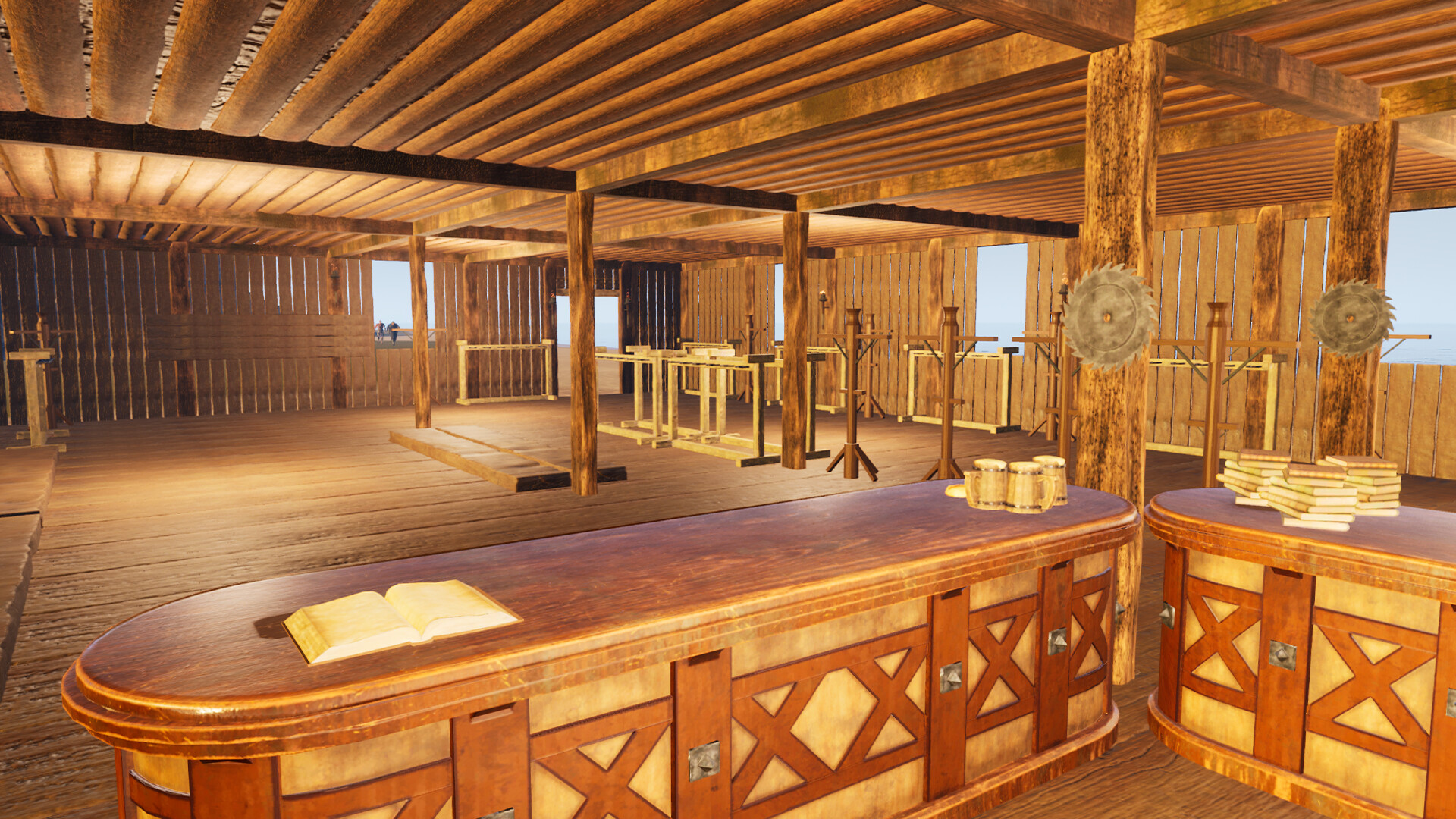
The shop counter, where finished wares are sold and the day's orders are trackedDual Cluster Studios -
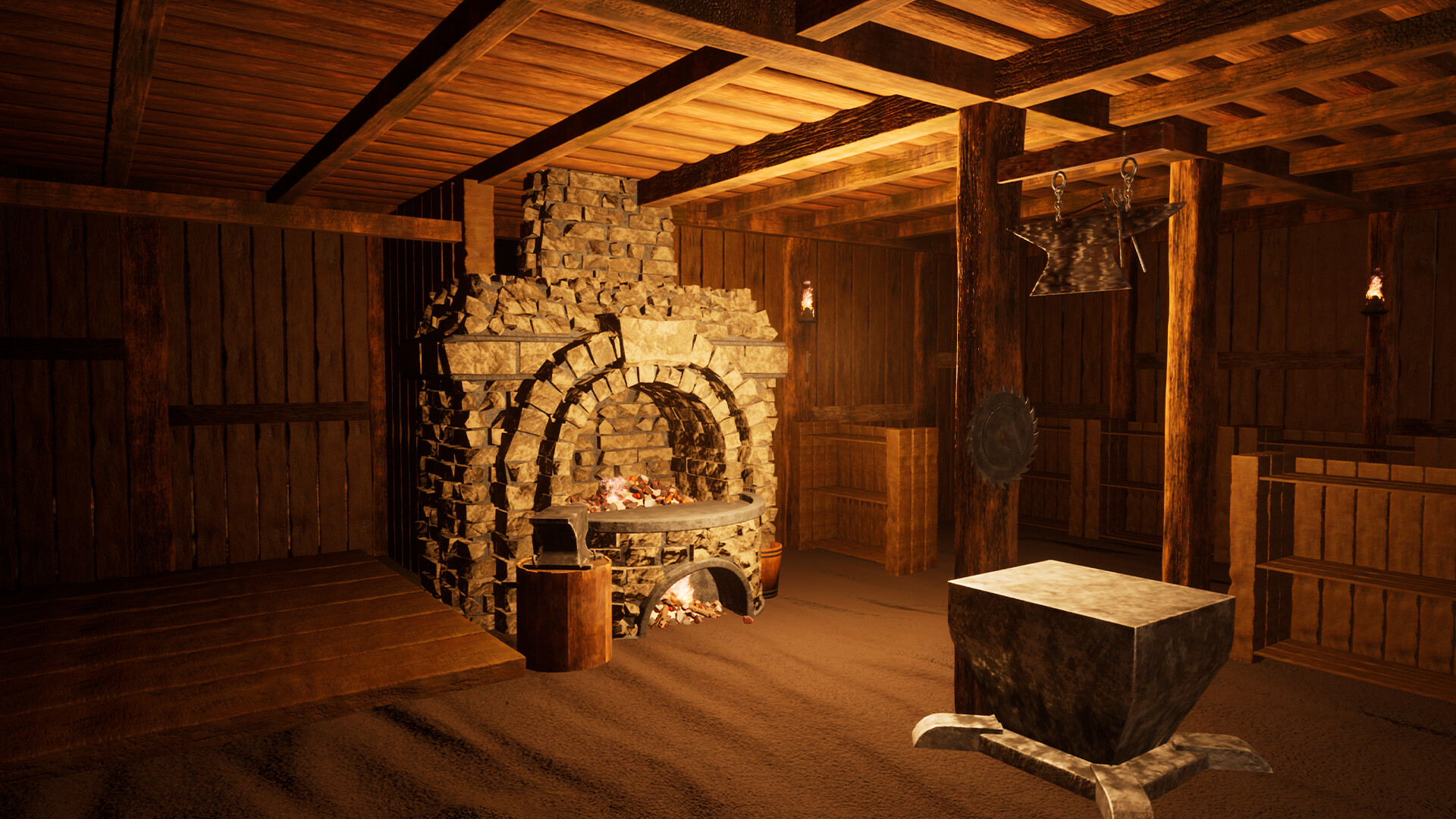
The forge, where the game's timing-based crafting minigame plays outDual Cluster Studios -
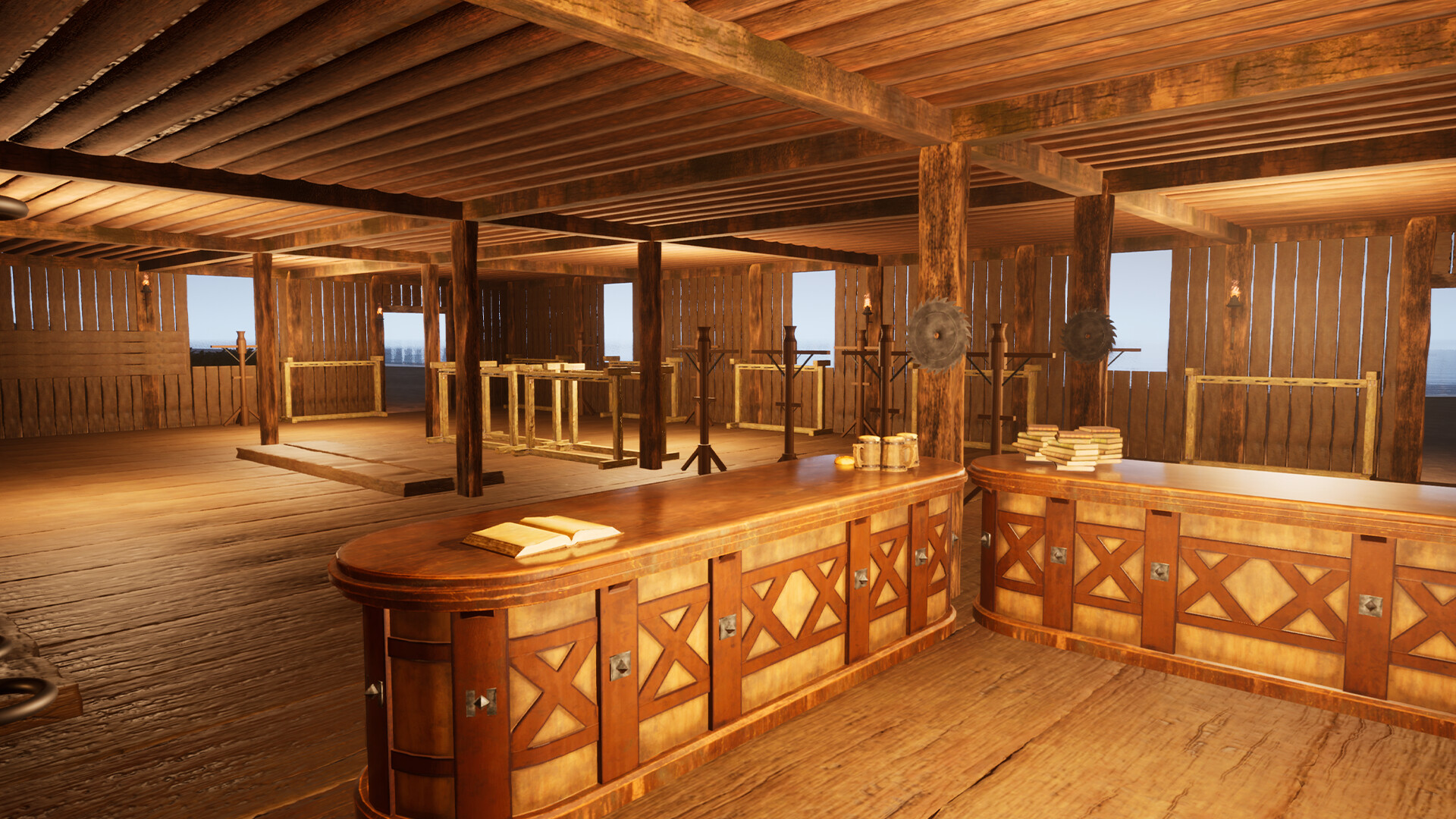
The shop's wooden interior, with plenty of unused floor space reviewers say there's rarely time to fillDual Cluster Studios -
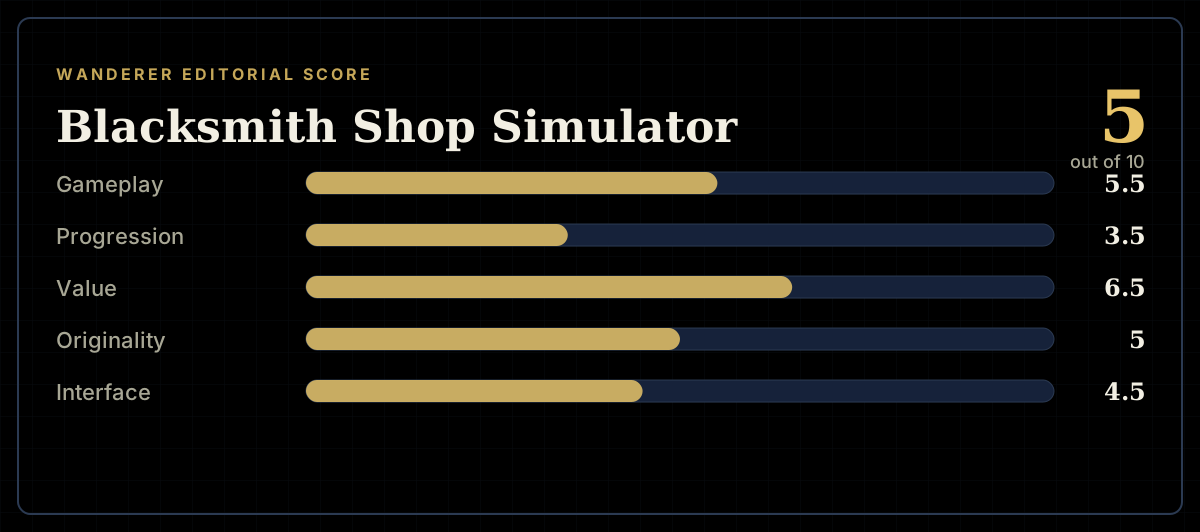
How the review scores each part of the gameWanderer Editorial -
The short versionWanderer Editorial