
Game review
Mothiary Review
7.5 / 10
- Developer
- Denver
- Publisher
- Denver
- Released
- 27 July 2026
- Platforms
- ["Windows", "macOS", "Linux"]
- Genre
- Idle Sim
A Solo Developer's Idle Game About Real Moths
Mothiary released on Steam on July 27, 2026, from solo developer and publisher Denver, for $5.99, following a free demo that had been available since December 2025. It's an idle collector game built around a single, specific hook: every moth you attract and catalog is modeled on a real species, complete with a short educational blurb that unlocks as you fill out your terrariums. The response has been unanimously positive, with all 15 of 15 reviews recommending it, an unusually clean record for any release, let alone a first game from a developer several reviewers describe as clearly new to the craft. What comes through consistently in the sample isn't that Mothiary is an ambitious or deep game, it's that it commits fully to a small, well-chosen idea and executes the core hook well enough that reviewers are happy to forgive the rough edges around it.
Real Species Are the Reason This Sticks
The single most-repeated praise in the sample is for the moth roster itself. Reviewers consistently call out that the moths aren't generic fantasy critters but real-life species, each with hand-drawn art and a genuine biology blurb attached, and multiple reviews frame learning those facts as a meaningful part of why they kept playing rather than a throwaway flavor feature. One reviewer with nearly 24 hours logged describes fully enjoying "collecting the moths and curating the terrariums," language that shows up again and again across the sample regardless of how much time a given player put in. For a niche built on an insect most games treat as background texture at best, reviewers are near-unanimous that Denver's choice to lean into real entomology rather than invent a generic creature-collector skin is the game's clearest asset.
The Idle Loop Is Simple, Slow, and Occasionally Generous
Mechanically, Mothiary asks little of the player: enclosures attract moths passively over time, income accumulates, and you spend it unlocking new terrariums and, eventually, new zones. Reviewers describe the pacing as legitimately slow, particularly the stretch between affording one enclosure and the next, and more than one review explicitly names this as the moment "idle" starts meaning "walk away and check back later" rather than active play. A few reviewers single out a random golden moth event that pays out a larger lump sum as a genuine highlight of the early game, describing it as a welcome accelerant precisely because the base economy is otherwise so gradual. Playtimes in the sample range enormously, from under two hours to one review logging over 180 hours, which is itself a data point in the loop's favor: whatever friction exists in the pacing, it isn't stopping committed players from settling in for the long haul.
Decoration Requests Outnumber Actual Complaints
Tellingly, very little of the sample reads as frustration. The closest thing to a recurring wish list is requests for more terrarium decorations and background variety, reviewers specifically ask for items like a lamp decoration and more visual variance between enclosures, framing these as additions they'd like to see rather than flaws holding the game back. That tone, wanting more of a thing you already enjoy rather than fixing something broken, runs through nearly the entire positive sample and suggests the core loop is landing even for players who'd like a longer content runway ahead of them.
Rough UI and a Few Bugs Give Away a First-Time Developer
The sample is honest about where Mothiary shows its inexperience. Multiple reviewers describe UI elements as unpolished or occasionally buggy, one review states plainly that "the way it's designed makes it clear the gamedev is quite new to being a gamedev," while still recommending the game on the strength of the moth content alone. Another reviewer flags wanting more depth to the per-species information screens, suggesting the current blurbs, while appreciated, leave room to go further. None of this reads as game-breaking in the sample, but it's a consistent enough thread that anyone expecting AAA-level interface polish for $5.99 should adjust expectations accordingly; what's here works, it just doesn't always feel fully finished.
A Fast, Visible Patch Cadence Since Launch
Denver's post-launch record backs up the goodwill in the reviews. Three patches, including a dedicated localization update, landed within the first two weeks after the July 27 launch, on top of the roughly seven-month public demo period that let players test the core loop well before release. That's a solid track record for a solo first-time release, and it lines up with reviewers who explicitly say they're "hoping to see more content added" rather than assuming the game is finished evolving. It also matters for a game this small: a single developer who ships a localization pass and bug fixes within two weeks of launch is sending a clear signal that Mothiary is a supported, ongoing project rather than a one-and-done release, which goes a long way toward justifying the goodwill running through even the more critical corners of the sample.
Verdict
Mothiary is a small, unpretentious idle game that succeeds almost entirely because it picked one good idea, real, illustrated moth species with genuine biology attached, and built everything else around supporting it. The pacing is slow, the UI shows a first-time developer's rough edges, and the roster of requests is mostly "please add more" rather than "please fix this," which is itself a strong signal. With a perfect 15-for-15 recommendation record and a solo developer already three patches into supporting the game, Mothiary is an easy, low-stakes recommendation at $5.99 for anyone who likes idle collectors, cozy hooks, or, frankly, moths.
Screenshots
-
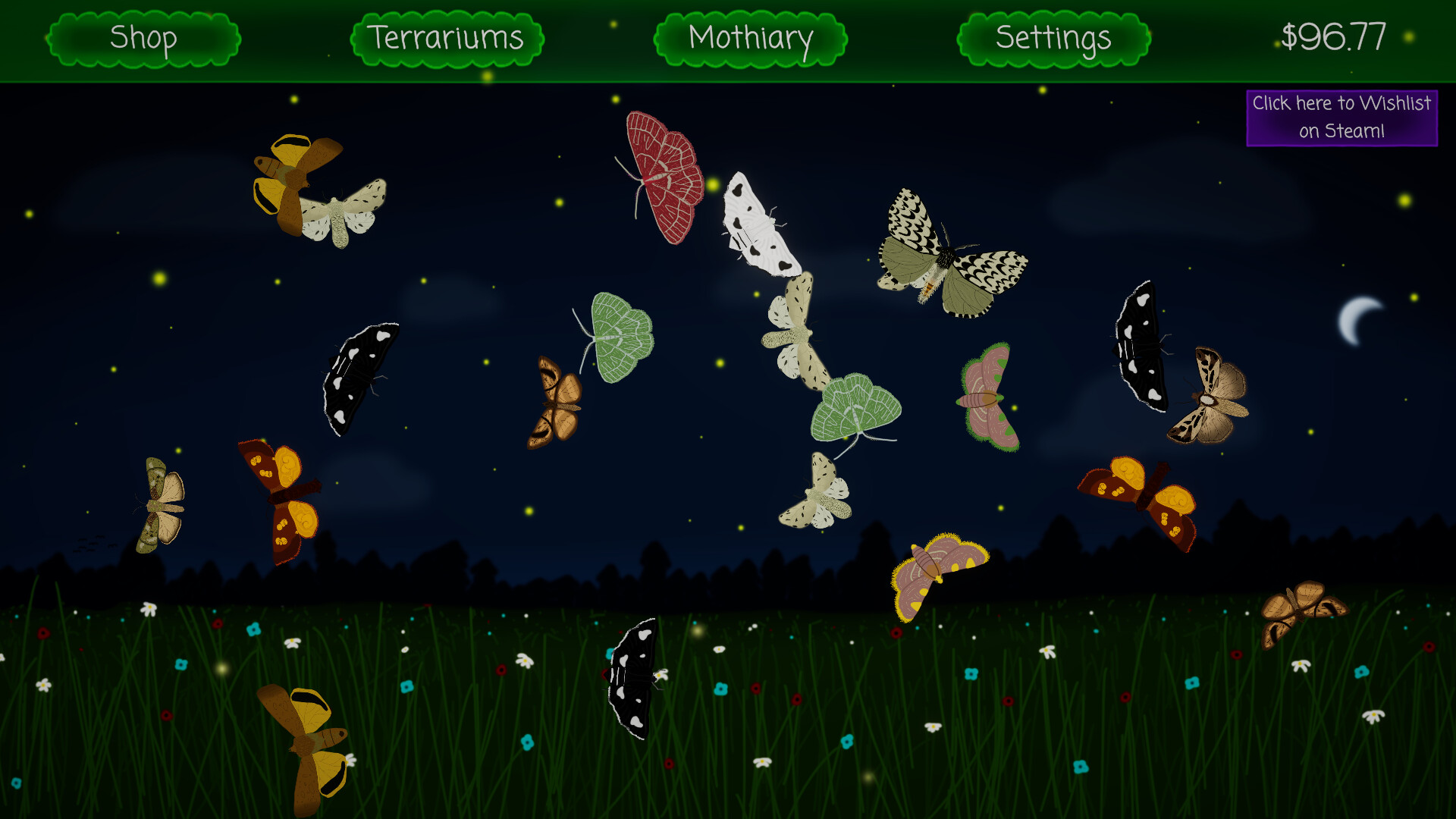
The early game, when $96.77 still means something and every moth on screen is a small windfall.Image: Denver via Steam -
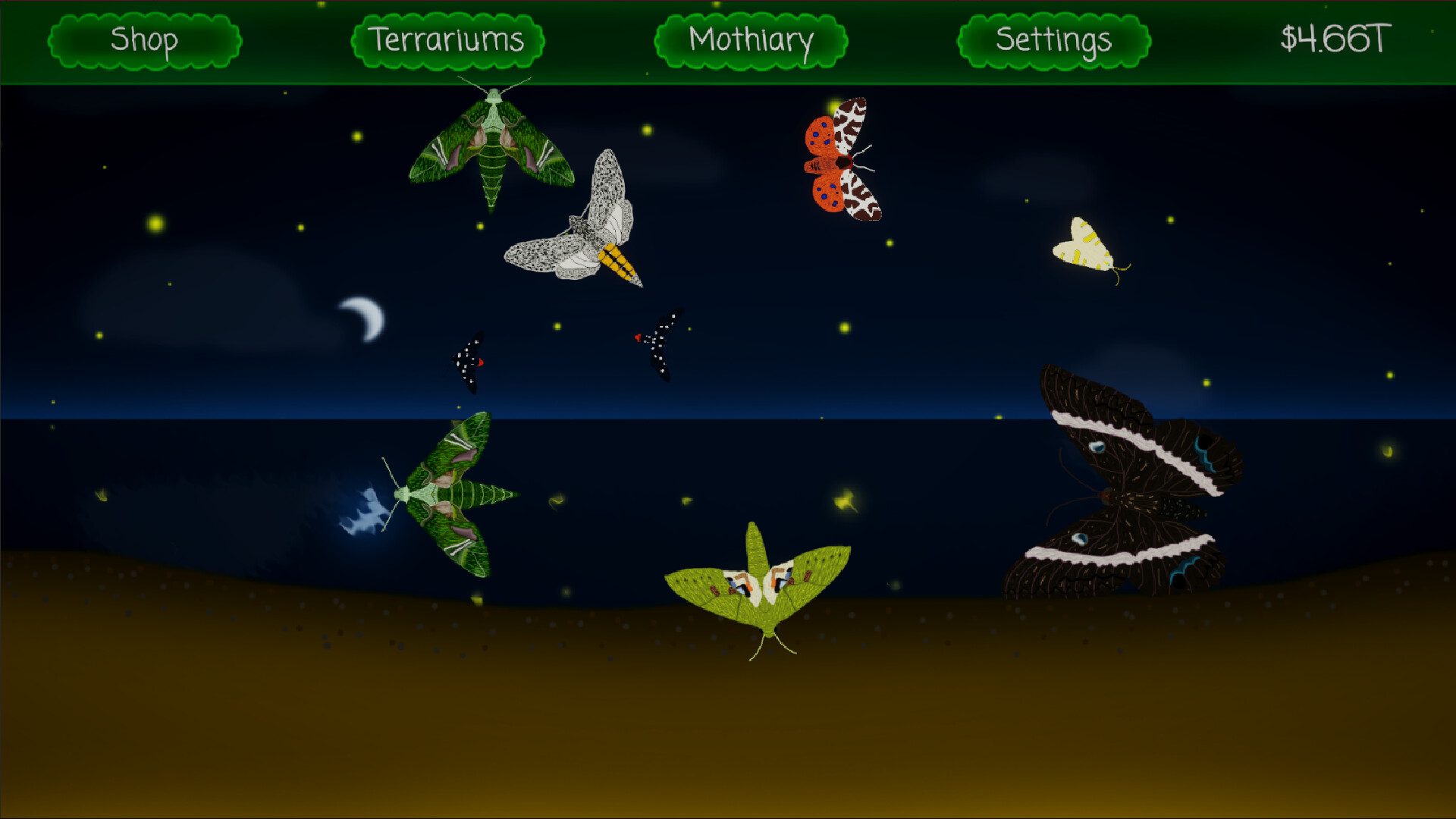
The idle economy scaling into the trillions, the long-haul payoff reviewers with 100+ hours describe chasing.Image: Denver via Steam -
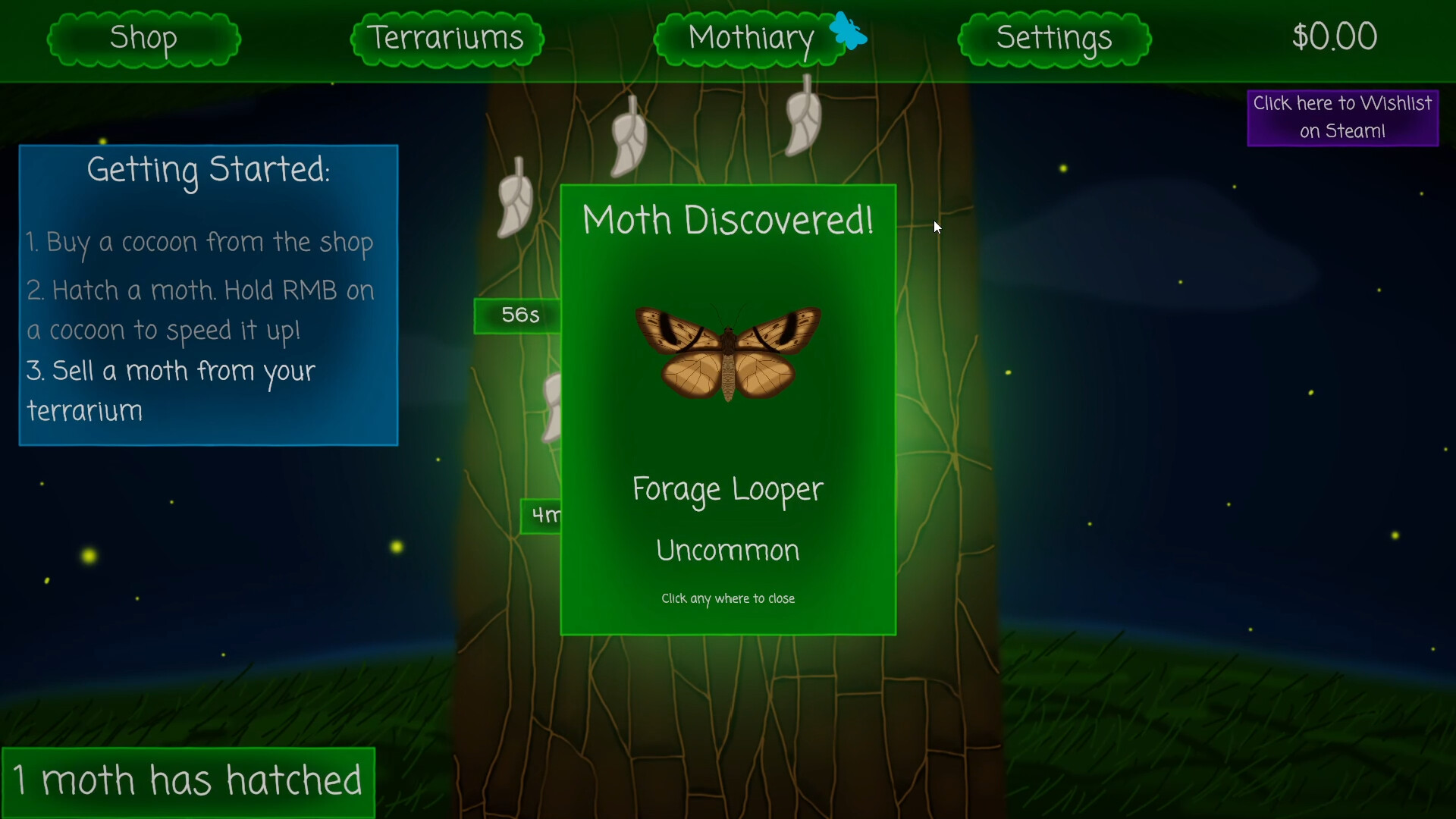
A fresh moth discovery, the small dopamine hit that keeps the slow early hours moving.Image: Denver via Steam