
Game review
Pegfinity Review
5.5 / 10
- Developer
- Fragment Ventures AS
- Publisher
- Fragment Ventures AS
- Released
- 14 August 2026
- Platforms
- ["Windows", "macOS", "Linux"]
- Genre
- Pachinko Incremental
Launch Balls, Hit Pegs, Watch the Numbers Go Wild
Pegfinity, a $6.99 pachinko-inspired incremental from Norwegian solo studio Fragment Ventures AS, launched on Steam August 14, 2026 after a public demo that ran from late May through launch week. The pitch is exactly as advertised: hold down the mouse button to charge a launcher, release to drop a ball down a pegboard, and spend the money each run generates on an upgrade tree that adds new peg types, new ball variants, and increasingly chaotic multipliers. At 323 English reviews and 77% positive ("Mostly Positive"), the review pool is remarkably consistent about both what the game gets right and exactly where it runs out of ideas.
Peggle Genes, Balatro Dressing, Cookie Clicker Bones
The positive half of the review pool describes a genuinely well-crafted little toy. Reviewers repeatedly praise the pixel art and sound design, specifically the satisfying "boop, bonk, bing" of balls cascading through an increasingly crowded board, and the visual escalation as multipliers stack into screen-filling chaos gets compared favorably to Balatro's own number-inflation spectacle. Several reviewers who came in expecting a Peggle-style aiming game instead describe something closer to Cookie Clicker's completionist loop wrapped in a pachinko skin, and say that reframing is what let them enjoy it: there's an upgrade tree, achievements, and a real sense of the board transforming from a handful of pegs into a screen-covering machine. More than one reviewer specifically credits Fragment Ventures for shipping something polished and largely bug-free for a solo-developer debut, and the game picked up Steam Deck Verified status within a few weeks of launch.
One Button, Held for Three to Six Hours
Set against that praise, the single most repeated criticism in this review pool is that the moment-to-moment interaction never changes. Reviewers across dozens of reviews describe the entire gameplay loop as holding the mouse button to charge a power meter and releasing it at the same spot, run after run, with no aiming, no meaningful upgrade choices (several say the correct strategy is simply "buy everything"), and no failure state to create tension. A significant number of reviewers say this forces their attention onto a small power-meter readout in the corner of the screen rather than the pegboard chaos the game is actually selling, which more than one calls a design flaw that undercuts the game's own best asset. Multiple reviewers independently request an auto-launcher upgrade specifically to let them watch the visual spectacle instead of babysitting the charge meter, a suggestion that comes up often enough to read as the review pool's single clearest piece of shared feedback for the developer.
A Short Game That Still Manages to Drag
The other heavily corroborated complaint concerns pacing: dozens of reviewers report completing everything the game has to offer, every upgrade and every achievement, in windows ranging from two to six hours, and a large number of those same reviewers say the final third of that run drags noticeably as upgrade costs scale up faster than the money-generation upgrades that are supposed to offset them. Several reviewers explicitly call out the lack of any prestige or replay-loop system, standard in the incremental genre, as a missed opportunity that would have given the game a reason to return to after finishing the tree once. A cluster of reviewers also flag specific rough edges: one widely-cited pricing bug where a late-game upgrade costs ten times what its stated price implies, a "New Game" button with no confirmation prompt that has wiped at least two reviewers' completed saves, and an "Apply" settings button sitting directly next to an equally sized "Delete Save" button.
Verdict
Pegfinity is a handsomely made, genuinely satisfying toy for the two to five hours it takes to see everything it has, and the review pool's warmest reactions describe exactly the kind of "brain go quiet, numbers go up" comfort game that's built an entire subgenre around it. The trouble is that the review pool's harshest reactions are describing the same design from the opposite angle: a single, unchanging interaction repeated for hours, propped up by visual spectacle you're rarely even looking at because you're staring at a power meter instead.
At $6.99 for a self-contained few-hour session with no ongoing subscription or grind beyond what you choose to finish, Pegfinity is a low-risk purchase for anyone who already knows they like this specific flavor of incremental, and its Steam Deck support and near-total absence of major bugs speak well of a solo debut. Anyone hoping for the deeper strategic layer the genre's best entries offer, or a reason to come back once the tree is cleared, should treat the demo (still available on the store page) as a genuinely representative preview of the entire experience before buying, because what you see in those first twenty minutes is, almost without exception, what the rest of the game gives you as well.
What's striking about this particular review pool is how rarely the two camps actually disagree on facts. Reviewers giving Pegfinity a thumbs-up and reviewers giving it a thumbs-down describe the identical power-meter interaction, the identical two-to-six-hour runtime, and the identical late-game cost spike; the split comes down almost entirely to whether a player walked in wanting a toy to zone out with or a game to think through. That's a genuinely useful signal for a buyer trying to decide in advance, since it means the loudest five-star and one-star reviews aren't describing different games so much as different expectations for the same one, and a few minutes with the free demo will tell you which camp you're going to land in faster than any review, this one included, ever could.
Screenshots
-
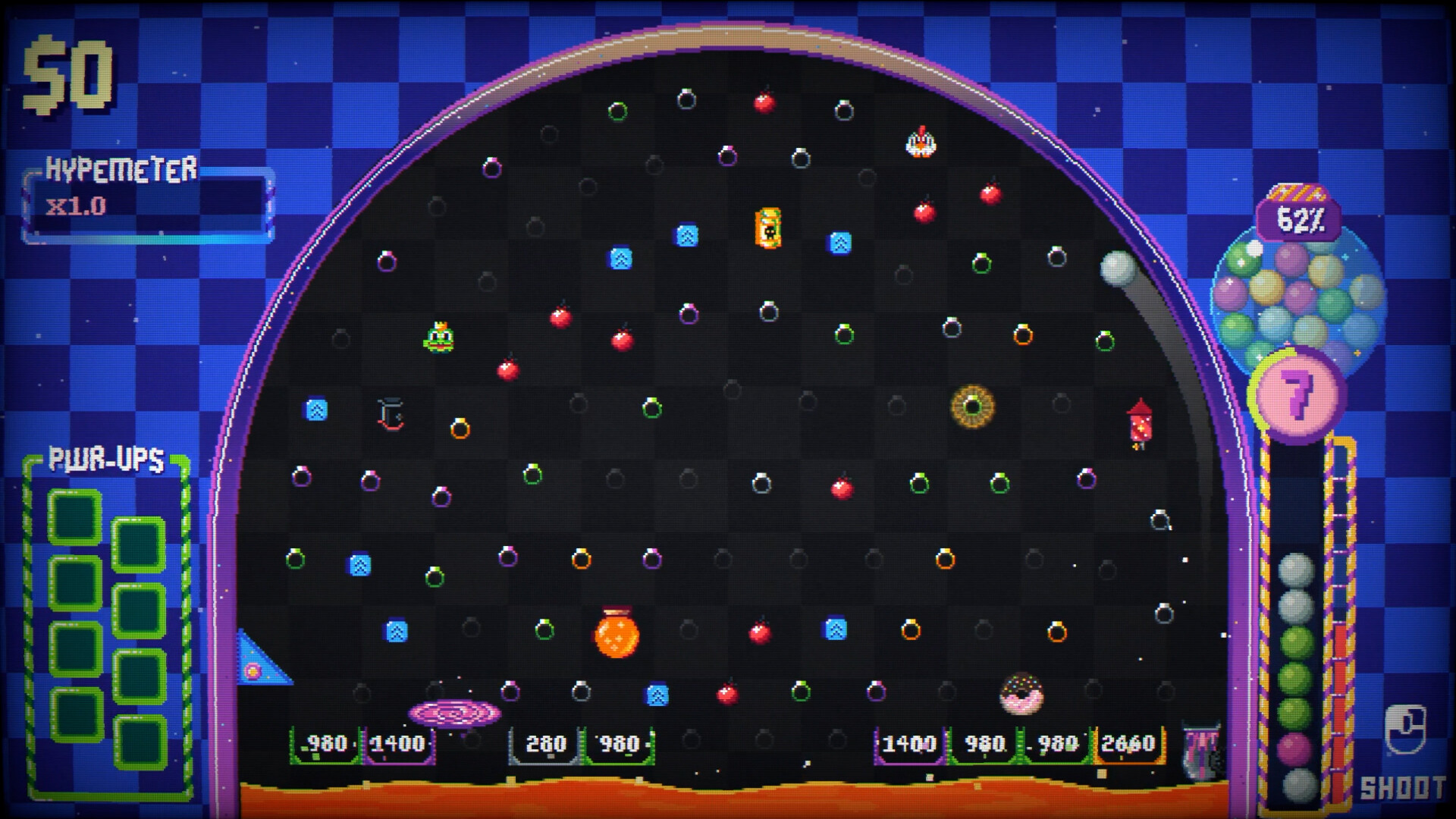
An early run, with the board still mostly empty and the hype meter reset to its baseline multiplier.Image: Fragment Ventures AS via Steam -
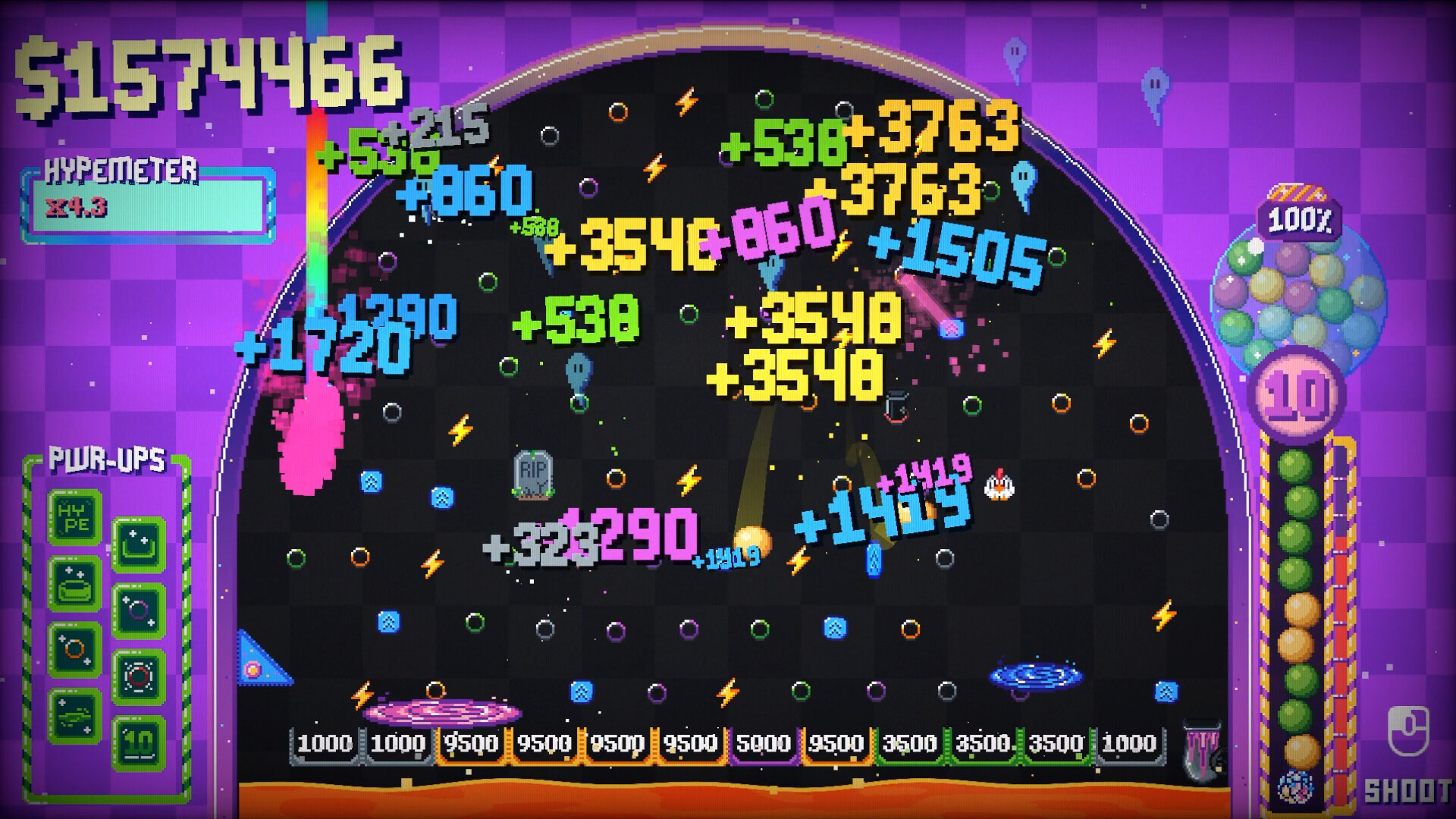
The screen-filling number chaos reviewers compare to Balatro, once the hype meter and upgrade tree are both maxed out.Image: Fragment Ventures AS via Steam -
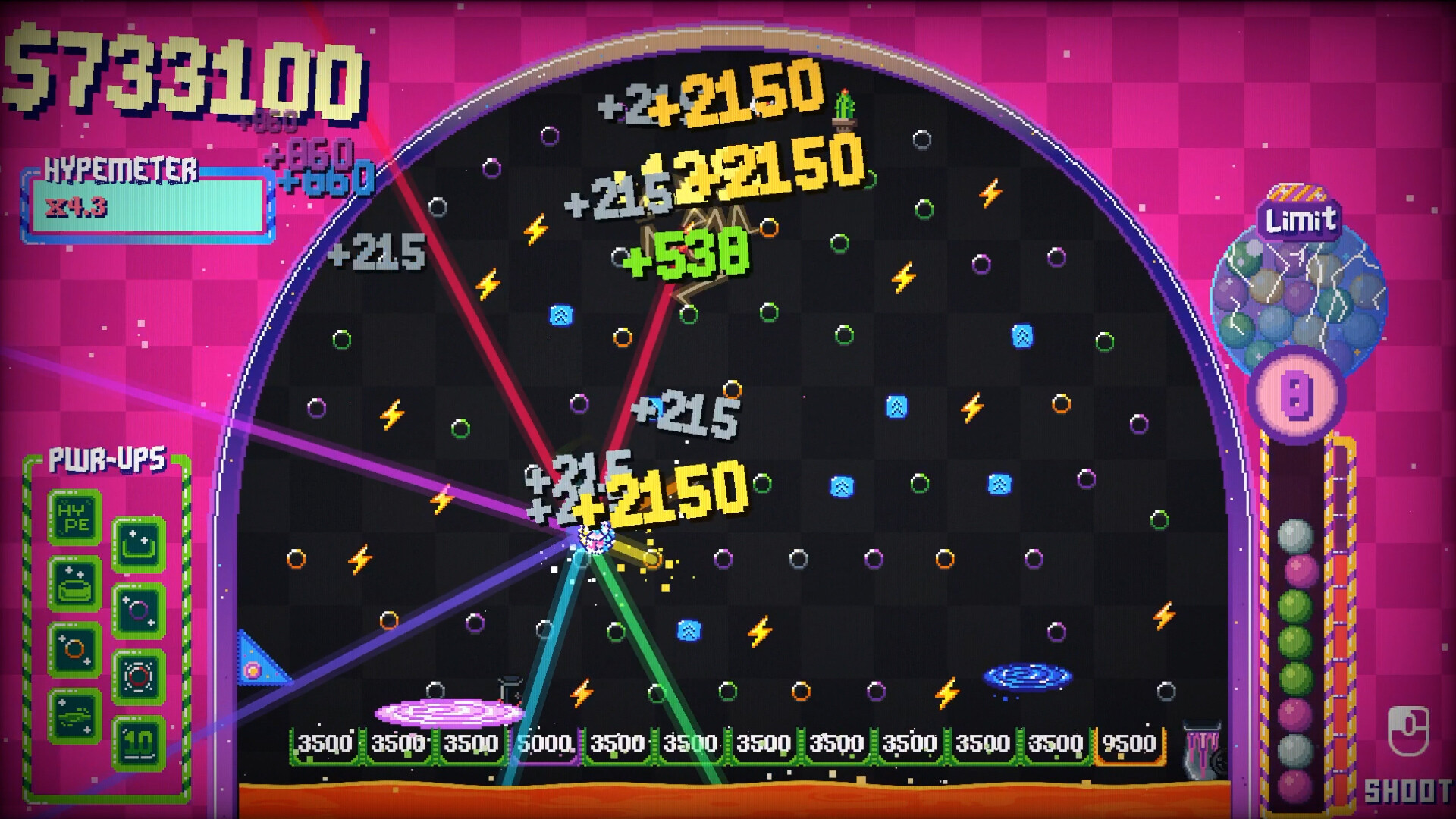
A different late-game board skin, showing the trajectory-tracing lines and stacked multipliers that show up once every upgrade is unlocked.Image: Fragment Ventures AS via Steam