Game review
Medieval Decklords Review
6.5 / 10
- Developer
- Oba Games
- Publisher
- Oba Games
- Released
- 28 August 2026
- Platforms
- ["Windows"]
- Genre
- Strategy
A Poker Hand Dressed Up as a Card Battler
Medieval Decklords launched August 28, 2026, the work of solo studio Oba Games, and its hook is unusually specific for a genre this crowded: it's a card duel decided by poker hands rather than the more familiar mana-and-minions template. One reviewer nailed the comparison in a single line: "Fun indie card game. It's like a mix of Marvel Snap and poker. It took me just under 2 hours to beat all the tournaments." At review time it had a small but perfect record, 11 positive reviews against zero negative, a 100 percent "Positive" score built on a tiny sample that hasn't had time to accumulate much dissent yet, but which is worth taking seriously precisely because every reviewer who bothered to write something found the core idea worked for them.
Three Lanes, Three Cards, and the Hand You Can Actually Make
The structure is tight and easy to explain: matches unfold across a Left Flank, Center, and Right Flank, each lane judged independently, and each lane is settled by exactly three cards drawn from a 40-card deck using standard suits and numbers one through ten. Four turns, and it's over. That poker framing gives the game a different rhythm than typical lane-based card battlers, where the question isn't just what to play but what hand you're trying to build: a straight, a pair, three of a kind, and so on, mapped onto a battlefield rather than a card table. One reviewer who doesn't normally gravitate toward the genre put it simply: "I don't usually play deckbuilders, but I really enjoyed this one." Another was more specific about what clicked: "A very enjoyable and engaging game, I really like the mode where you can upgrade cards and the field effects, they can turn around a match that seems lost. I appreciate the logic and strategic thinking involved, very well done."
A Short Loop Built Around Seasons and Silver
Progression runs on silver coins earned from match results, spent to upgrade individual cards in the 40-card deck, with each card upgradeable once per season. Those upgrades reset when a new season begins, though the store page notes that top-ranked players retain a limited number of their improvements into the next cycle, giving the ladder some long-term stakes beyond a single season's grind. Multiple reviewers commented on how approachable the whole loop is for a card game: "such a great game! easy to understand and fun to play. would recommend!!" wrote one, while another admitted going in with low expectations: "wow it looked very simple and I didn't have much hope but it's pretty funny. I'll advice to my friend too for playing together. You should give a chance." That last point matters given the category listing includes multiplayer, PvP, and online PvP alongside the single-player tournament mode reviewers describe finishing in under two hours.
The One Substantive Flag: A Possible Dominant Strategy
With a review pool this small, there isn't yet a broad chorus of complaints to draw from, but one detailed review raises a genuine design concern worth flagging rather than ignoring. Having played enough to develop an actual strategy, the reviewer wrote: "pro tip to save your life: stop trying to play regular hands and literally just slam down your biggest number cards. the game basically multiplies your total card numbers by your poker hand style, so hoarding high numbers is an instant win code." If that reading holds up, it suggests the scoring formula, hand quality multiplied by card totals, can be beaten by simply stacking high numbers rather than engaging with the poker-hand logic the game is built around, which would undercut the exact strategic layer other reviewers praised as the game's hook. It's a single data point rather than a corroborated pattern, and Oba Games has already shipped two post-launch update passes since release, so it's entirely possible this gets tuned. Still, for a game whose entire identity rests on poker-hand strategy actually mattering, a reachable "just play your biggest numbers" strategy is the kind of thing worth watching closely as the review pool grows.
A Solo Developer Keeping Pace After Launch
Medieval Decklords' public history is compact: a January 2026 Steam page announcement, a demo later that same month, and then a seven-month gap before the actual August 28 launch, a reasonable runway for a solo developer to keep iterating on a systems-heavy card game before committing to a release date. Update notes followed quickly, three days after launch and again roughly two weeks later, suggesting Oba Games is actively watching how the small early audience is playing and responding to feedback rather than treating launch as a finish line. That's a meaningfully different posture than a game that ships and goes quiet, and it's the kind of signal worth factoring into a purchase decision for a release this new.
Medieval Dressing on a Genuinely Different Card Game
The medieval theming, knights, coats of arms, and the general trapping of a card-table duel between rival lords, is more skin than substance, and none of the review pool singles out the presentation as a major draw one way or the other. What reviewers actually talk about, consistently, is the mechanical hook: a three-lane board that turns poker hands into a battlefield decision rather than a card table one, wrapped in a short, clearly explained loop that several reviewers explicitly credit for getting them to try a genre they don't normally play. At $7.99, that's a fair trade for a tight few hours of matches and a ranked ladder to return to each season, assuming the strategic depth holds up as more players find the same edges the more analytical reviewers are already probing.
Verdict
Medieval Decklords earns its perfect early record by doing something genuinely different with a familiar genre: deciding card duels with poker hands across three independently judged lanes, wrapped in an approachable, quickly-learned loop that reviewers with no deckbuilder background found themselves enjoying anyway. The catch is that the review pool is still small enough that the game hasn't been stress-tested by a wide audience, and the one detailed critical account raises a real question about whether the poker-hand scoring can be short-circuited by simply hoarding high-value cards, a concern that would matter a great deal if borne out, given how central hand-building is to the pitch. At $7.99, with a solo developer already patching twice since launch, it's a reasonable bet for card-game fans curious about the poker angle, but it's early enough in the game's life that the final verdict on its strategic depth is still being written by its own small community.
Screenshots
-
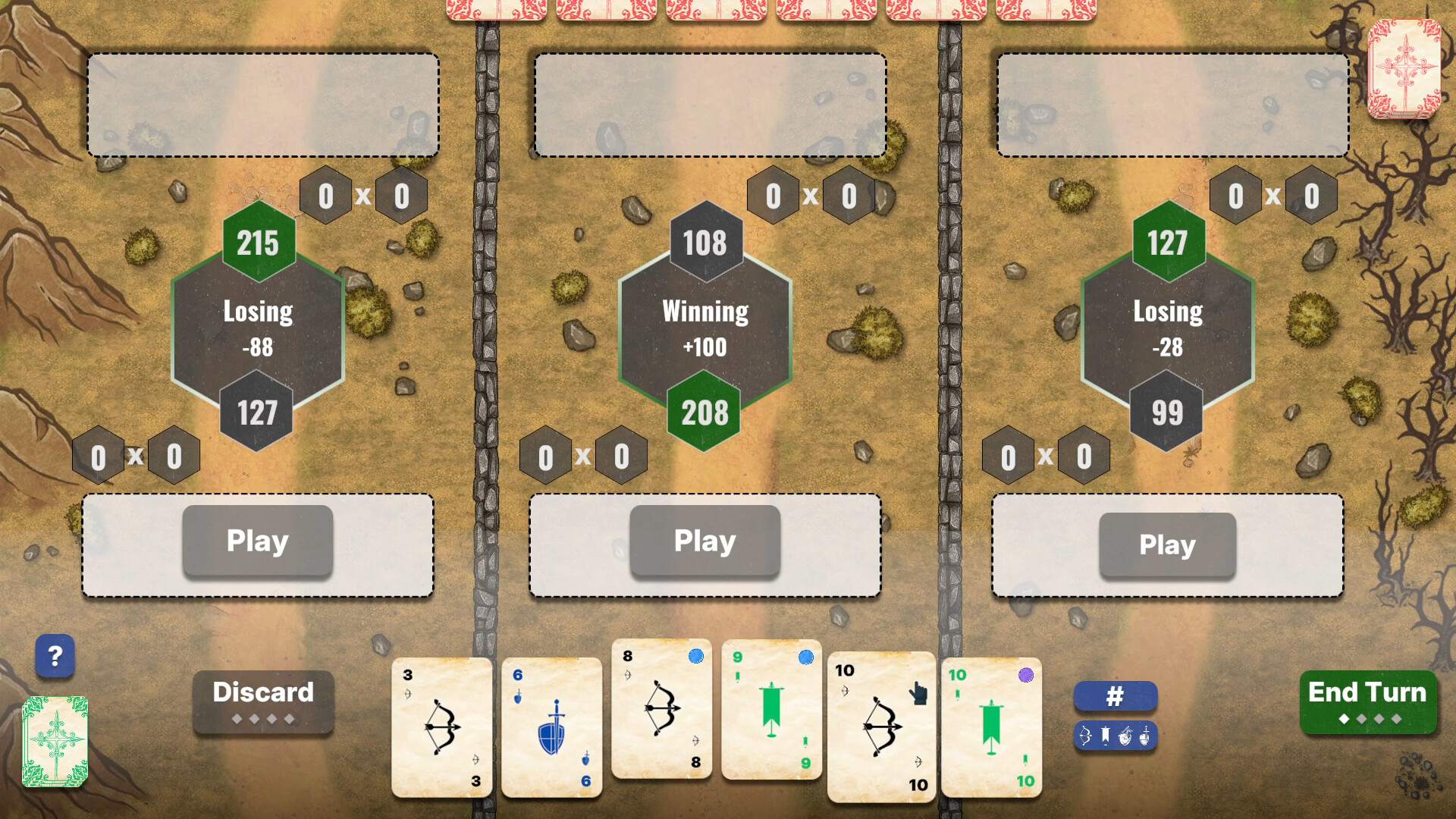
The three-lane board mid-match, each lane tallying its own poker-hand total to decide whether that flank is winning or losing.Image: Oba Games via Steam -
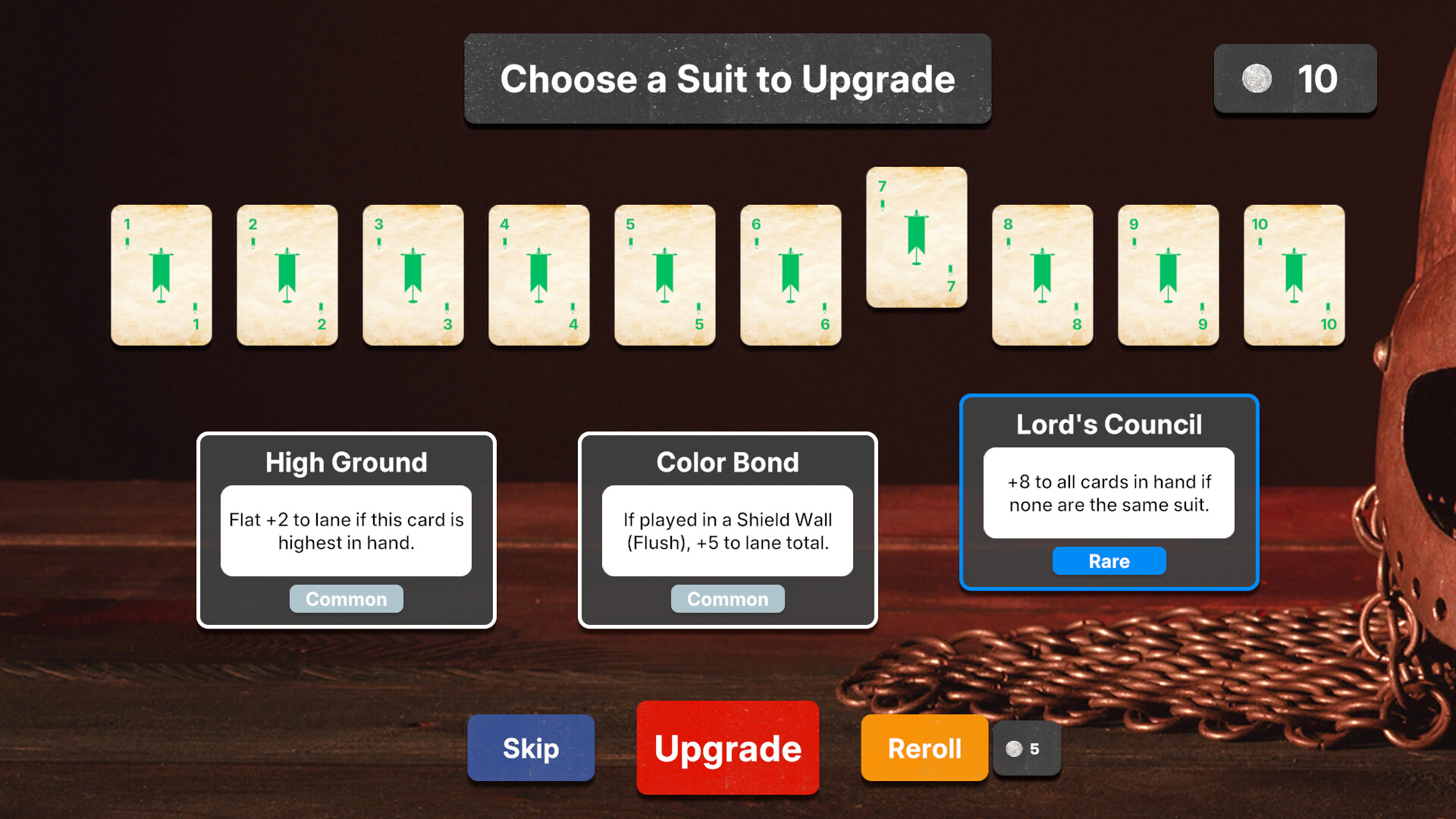
Spending silver coins on a seasonal card upgrade, choosing between effects like Color Bond and the rare Lord's Council.Image: Oba Games via Steam -
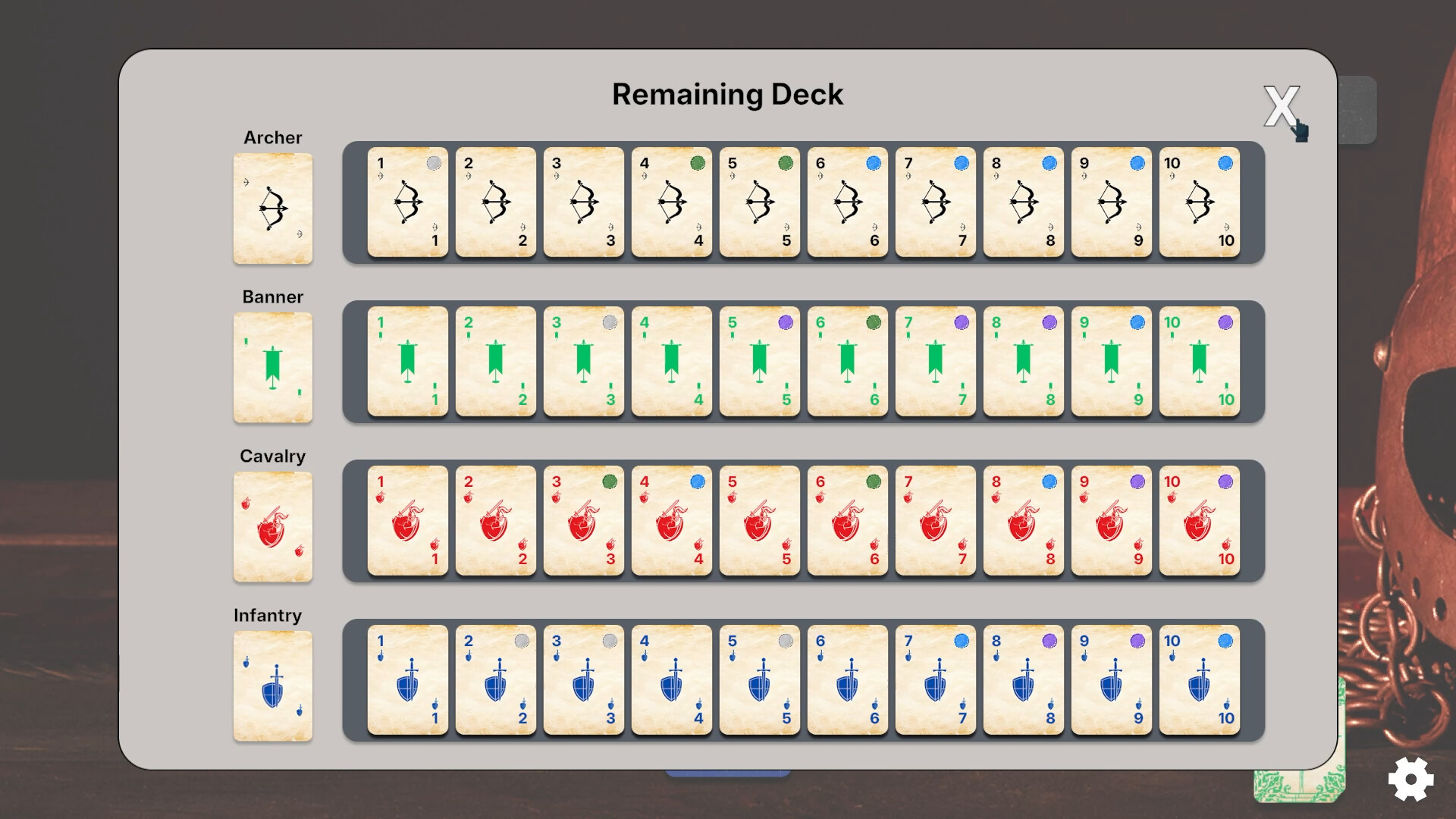
The full 40-card deck laid out by suit, the Archer, Banner, Cavalry, and Infantry cards numbered one through ten that make up every poker hand.Image: Oba Games via Steam