Game review
MarginCall
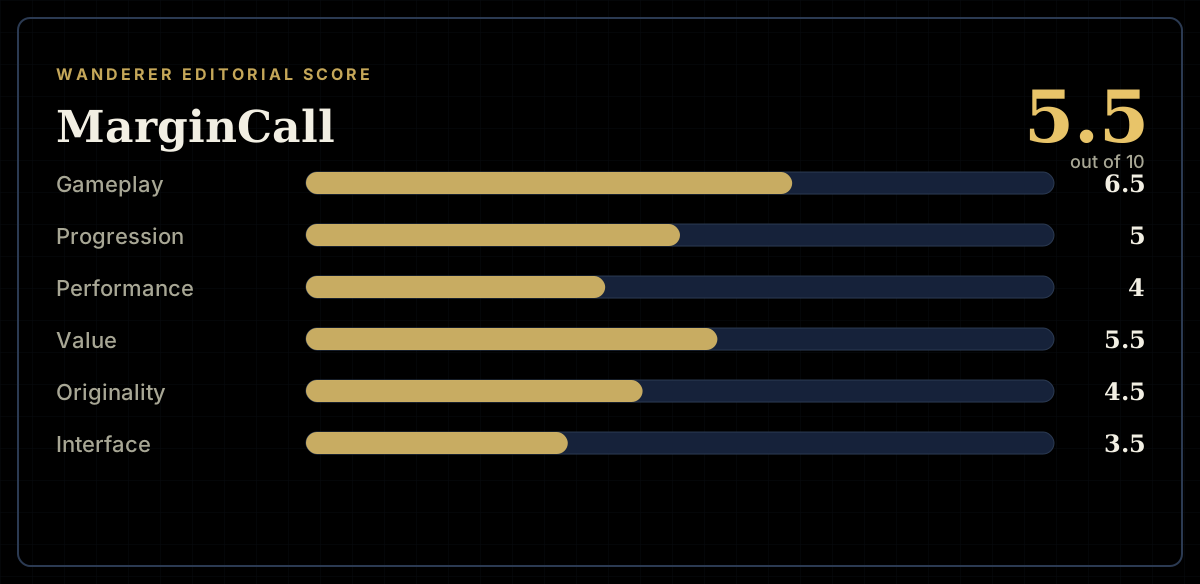
5.5 / 10
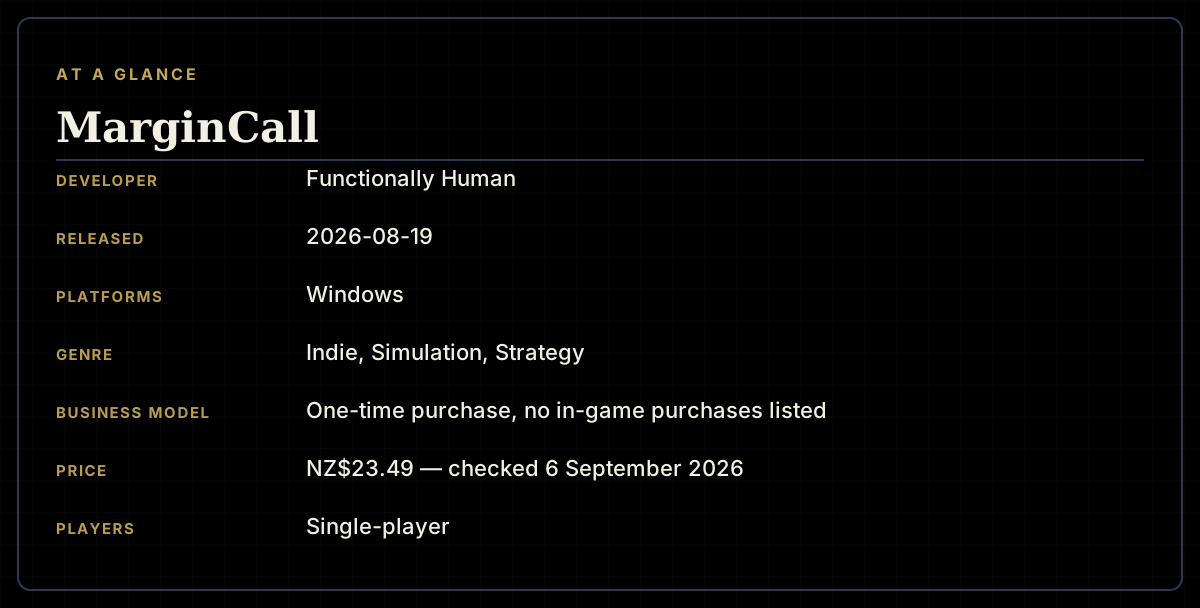
- Developer
- Functionally Human
- Publisher
- Functionally Human
- Released
- 19 August 2026
- Platforms
- Windows
- Genre
- Indie, Simulation, Strategy
- Monetisation
- One-time purchase, no in-game purchases listed
- Players
- Single-player
The short version
MarginCall, released 19 August 2026 by Functionally Human, is a market simulation with no scripted prices — hundreds of independent AI traders, each with their own capital and behaviour, set real order-book prices inside a fully simulated economy the player can trade, invest in, or attempt to dominate. It sits Mostly Positive with a sample of 63 reviews, and reading through the full range makes the split unusually specific: this review found genuine, detailed praise for the simulation's underlying depth from reviewers who identify themselves as finance professionals, alongside an equally specific, repeated set of complaints about broken UI elements, a reportedly non-functional order-execution system for some players, and a beginner experience several reviewers describe as confusing to the point of being unplayable without outside knowledge. Separately, at least one detailed reviewer raises a specific originality concern this review found worth reporting directly: that a free browser game with the same name and a very similar concept has reportedly been publicly available since March 2026, months before this paid release.
Biggest strengths
- Reviewers who self-identify as finance professionals — including a quant researcher and an asset manager — specifically praise the simulation's depth and educational value, with one calling the underlying design genuinely impressive from a professional standpoint
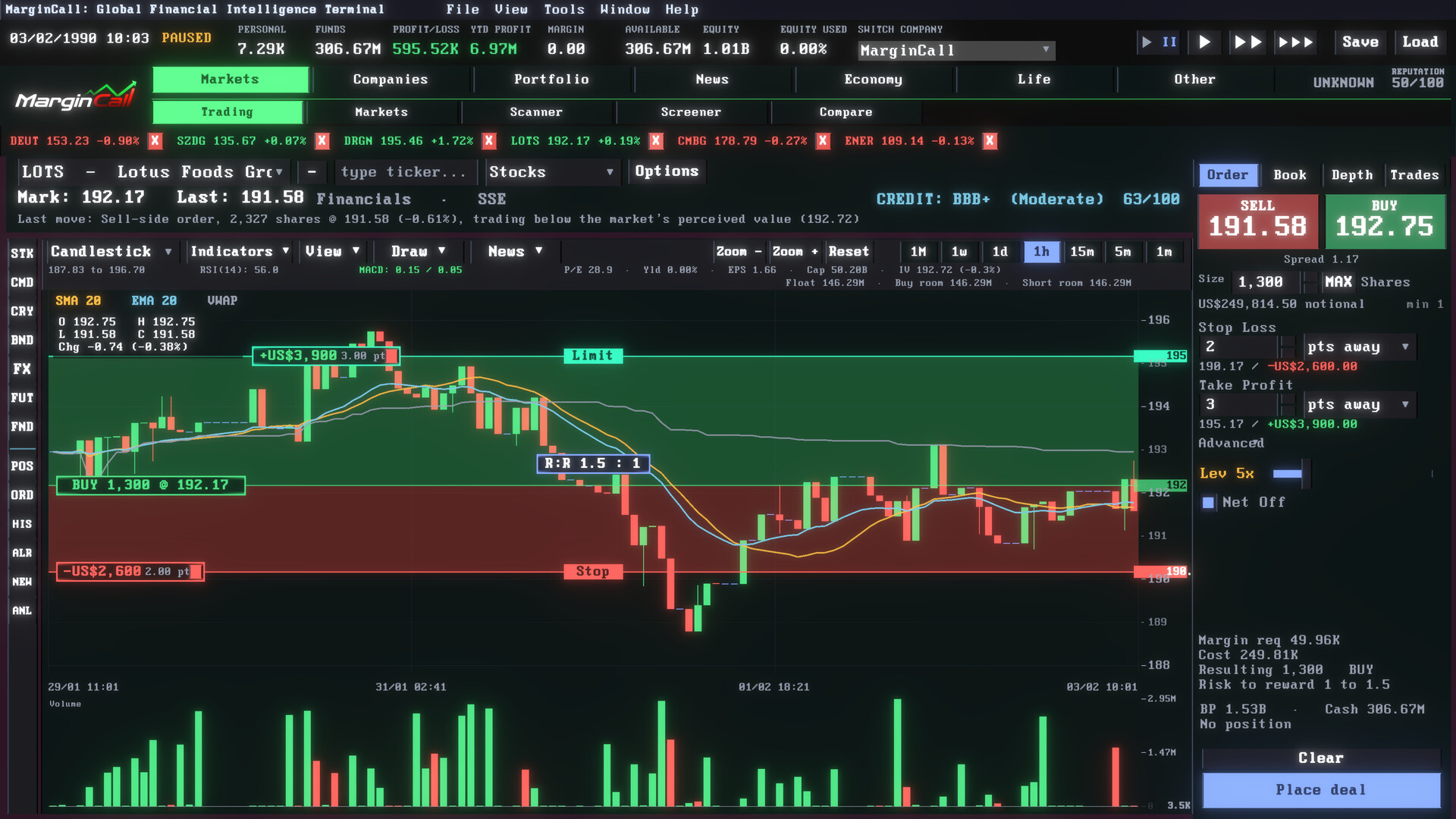
- The game supports an unusually wide range of trading strategies within one simulation, including short-selling entire currencies, long-term value investing, hostile corporate takeovers, and full options chains, all cited specifically by reviewers as functioning as described
- Multiple reviewers highlight strong tooltip and onboarding coverage for individual buttons and mechanics, describing it as approachable for people with only passing familiarity with real trading concepts
Biggest weaknesses
- The order-execution system is reported broken or unreliable by multiple detailed reviewers, with at least one professional-background reviewer specifically refunding the game after reporting core trading actions rendered it effectively unplayable
- Widespread, specific interface bugs are reported repeatedly: duplicated UI elements including a news feed appearing in multiple places, overlapping fonts, unexplained values, and an in-game "coach" help feature that reviewers say updates too infrequently to be useful
- Multiple reviewers state the game feels released too early, citing daily hotfixes since launch and arguing basic trading functions are not easily navigable even after patches, with one reviewer stating outright the game should currently be in Early Access rather than a full release
Who it's for: Players with an existing interest in finance, trading or economics who want a genuinely deep, unscripted market simulation and are willing to push through real UI friction and a steep learning curve to get it.
Our recommendation: Worth it for finance-curious players patient enough to fight through launch-week roughness, given the specific praise from reviewers who work in the field; newcomers expecting a polished, guided experience should wait for further patches given how many detailed reviewers report core functions like order placement not working reliably.
5.5 / 10
Introduction
MarginCall, released 19 August 2026 by Functionally Human, pitches itself as a market with no scripted prices: hundreds of independent traders, each with their own money and their own behaviour, set a real order-book price inside a fully simulated economy the player can trade within, invest in, or attempt to control outright. It sits Mostly Positive with a sample of 63 reviews, and reading through that full range turns up something specific and useful: a simulation with real, professionally-recognised depth, wrapped in a launch-week technical state several reviewers say wasn't ready for a full release.
Depth that draws real professional respect
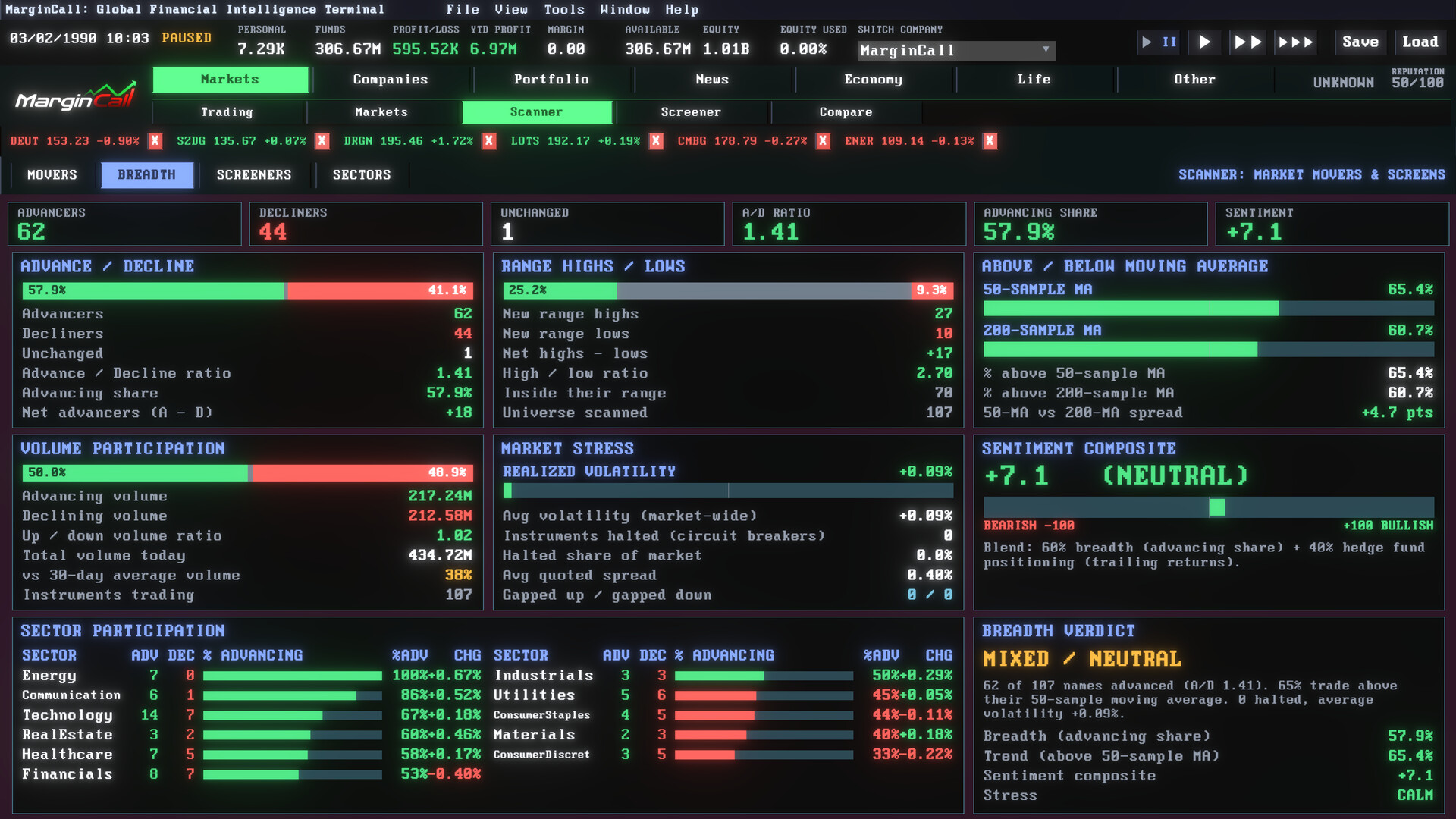
The clearest, most credible praise in this sample comes from reviewers who identify themselves as working in finance. A self-described quant researcher calls the game "well designed and educational," and specifically asks for portfolio beta risk management in a future update — a request that only makes sense from someone evaluating the simulation on genuinely technical terms. A separate reviewer working in asset management independently reports being impressed by the simulation's depth before ultimately refunding over the execution bugs described below. Beyond finance professionals, multiple reviewers highlight the sheer range of viable strategies: shorting an entire national currency, building a long-term value portfolio around dividends, executing a hostile corporate takeover, and trading full options chains are all cited as functioning features rather than marketing promises, giving the "unscripted" pitch real substance.
A specific, repeated complaint: the trading itself is broken
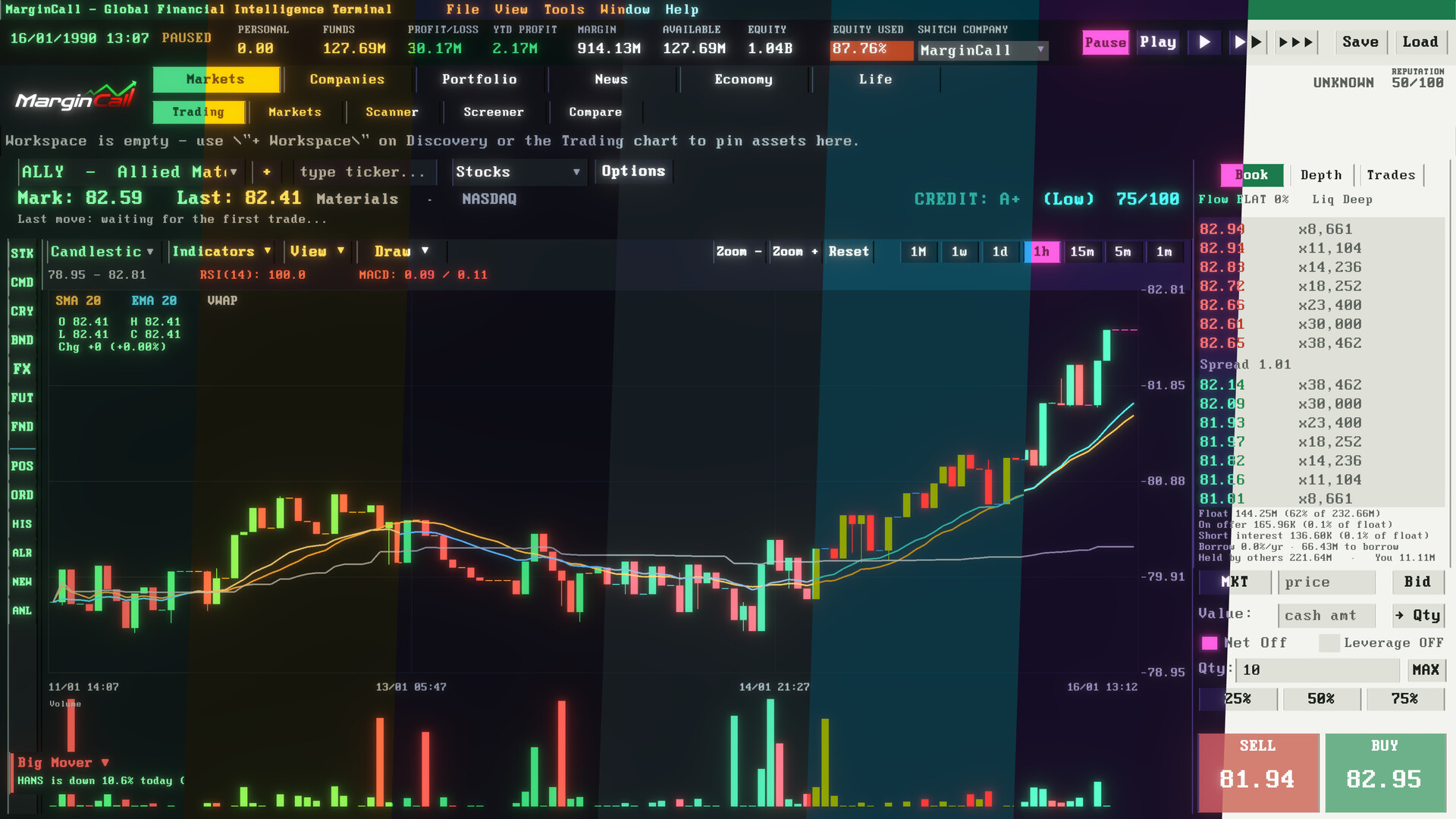
Set directly against that praise is a cluster of reports describing the game's actual core interaction — placing and executing trades — as unreliable. The same asset-management-background reviewer who praised the simulation's depth reports the order function as "completely broken, rendering the game unplayable," leading to a refund with an explicit intention to check back after patches. Other reviewers separately confirm specific, concrete interface problems: duplicated UI elements including a news feed appearing in more than one place at once, overlapping and inconsistently sized fonts, unexplained values with no supporting documentation, and an in-game help "coach" feature reviewers say doesn't update frequently enough to be useful for a beginner lost in the interface.
Released too early, by its own community's account
A recurring, specific judgment across multiple detailed reviews is that MarginCall shipped before it was ready. One reviewer with over 700 hours logged states plainly the game is "NOT ready for full release," citing daily hotfixes since launch and describing basic trading actions as still not easily navigable eleven hours in. A separate reviewer makes the same point more bluntly, arguing the initial in-game screen stating the game is still in development sits oddly alongside its status as a fully released, paid product rather than an Early Access title. This review found this complaint distinct from ordinary launch-week grumbling: it's raised specifically and repeatedly by reviewers who otherwise engage seriously and favourably with the underlying simulation, not by players dismissing the concept itself.
A prior-art concern worth reporting directly
One further specific claim stood out in this review's research: a detailed reviewer states that a free browser game sharing this game's name and a very similar core trading concept has reportedly been publicly available since around March 2026, months ahead of this paid Steam release, and describes that free alternative as having a notably better interface. This review has not independently verified the existence or quality of that alternative and reports it here only as a specific, named claim raised in the review sample, not as a confirmed fact — but it's a concrete enough allegation that a prospective buyer weighing the asking price may want to investigate it directly before purchasing.
A steep, sometimes uneven learning curve
Beyond the technical complaints, this review found a genuine split in how reviewers describe the onboarding experience itself, and it's worth reporting both sides rather than picking one. Several reviewers praise the tooltip coverage specifically, describing nearly every button and mechanic as individually explained well enough for someone with only a passing interest in trading to follow along, with one comparing the eventual sense of mastery to an old economic strategy game they loved for exactly this kind of steadily unlocked complexity. Against that, other reviewers report the tutorial itself breaking on a first attempt and offering no meaningful help on a second, with one describing being told to buy shares without ever being shown how, leading directly to a refund. A third group of reviewers occupies a middle position, arguing the game deliberately withholds an easy, false sense of mastery in a way they respect precisely because real trading doesn't offer that comfort either. Taken together, this reads less like a single design failure than an onboarding system whose quality is currently inconsistent from player to player, likely tied to the same underlying UI bugs already covered above rather than a single, universal problem.
A curious touch: company names that don't match their sector
One smaller but specific quirk drew independent comment from more than one reviewer: company names generated within the simulated economy sometimes bear no relationship to the sector they actually operate in, with one reviewer citing a company with "pharmaceuticals" in its name that turned out to manufacture microchips. It's a minor issue compared to the execution and interface bugs covered above, but it's the kind of detail that undercuts the sense of a coherent, believable simulated world the game is otherwise trying hard to build, and more than one reviewer flags it as an easy, low-effort fix that would meaningfully improve immersion.
Final Verdict
MarginCall's underlying market simulation earns real, specific respect from reviewers with genuine professional finance backgrounds, and the range of strategies it supports — from options trading to hostile takeovers to currency shorts — gives real substance to its unscripted-economy pitch. What holds this score down is that a meaningful share of this same review sample reports the core act of placing and executing a trade as unreliable or outright broken, wrapped in a specific, repeated verdict that the game released before it was ready, plus an unresolved question about a free predecessor sharing its name and concept. Worth it for finance-curious players prepared to tolerate real friction in exchange for genuine depth; newcomers wanting a smooth, guided experience should wait for the patches this game's own community says it still needs.
Pros and cons
Pros
- Reviewers who self-identify as finance professionals — including a quant researcher and an asset manager — specifically praise the simulation's depth and educational value, with one calling the underlying design genuinely impressive from a professional standpoint
- The game supports an unusually wide range of trading strategies within one simulation, including short-selling entire currencies, long-term value investing, hostile corporate takeovers, and full options chains, all cited specifically by reviewers as functioning as described
- Multiple reviewers highlight strong tooltip and onboarding coverage for individual buttons and mechanics, describing it as approachable for people with only passing familiarity with real trading concepts
- Several reviewers describe the core loop as "addicting" and report losing significant time to it despite having limited prior knowledge of stocks, options or futures markets
Cons
- The order-execution system is reported broken or unreliable by multiple detailed reviewers, with at least one professional-background reviewer specifically refunding the game after reporting core trading actions rendered it effectively unplayable
- Widespread, specific interface bugs are reported repeatedly: duplicated UI elements including a news feed appearing in multiple places, overlapping fonts, unexplained values, and an in-game "coach" help feature that reviewers say updates too infrequently to be useful
- Multiple reviewers state the game feels released too early, citing daily hotfixes since launch and arguing basic trading functions are not easily navigable even after patches, with one reviewer stating outright the game should currently be in Early Access rather than a full release
- At least one detailed reviewer specifically raises a prior-art concern: a free game reportedly sharing this game's name and a very similar core concept has been publicly available online since roughly March 2026, months ahead of this release; this review has not independently verified that claim but reports it as a specific, named concern raised in the review sample
- More than one reviewer describes the documentation and in-game text as reading like AI-generated content, and separately reports noticeable performance stutter that worsens as a playthrough progresses; this review has not verified the AI-authorship claim and reports it only as reviewers' stated, unconfirmed suspicion
Screenshots
-
MarginCallImage: Functionally Human via Steam -
MarginCallImage: Functionally Human via Steam -
MarginCallImage: Functionally Human via Steam -
How the review scores each part of the gameWanderer Editorial -
The essentials at a glanceWanderer Editorial -
The short versionWanderer Editorial