
Game review
Magicka
4.5 / 10
- Developer
- Arrowhead Game Studios
- Publisher
- Paradox Interactive
- Released
- 25 January 2011
- Platforms
- Windows
- Genre
- Co-op Action RPG
- Monetisation
- Paid, one-time purchase, plus numerous DLC packs released over the years covering additional content and cosmetics.
- Players
- Up to four-player co-op is the game's central pitch; multiple recent reviews report multiplayer specifically crashing or failing to connect.
The short version
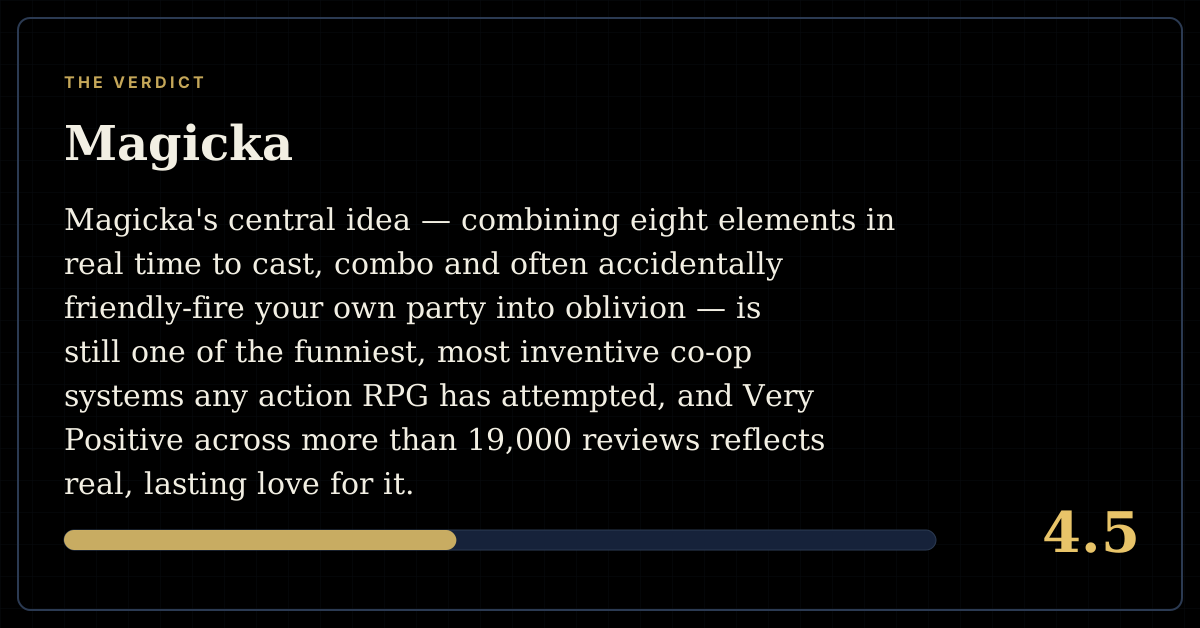
Magicka's central idea — combining eight elements in real time to cast, combo and often accidentally friendly-fire your own party into oblivion — is still one of the funniest, most inventive co-op systems any action RPG has attempted, and Very Positive across more than 19,000 reviews reflects real, lasting love for it. What that overall badge doesn't convey is how overwhelmingly recent reviews describe the game as functionally broken: checking a sample of recent negative reviews, nine in ten describe frequent, often session-ending crashes on modern hardware, and the game's last substantive official patch dates to November 2018. Even Arrowhead's own current leadership has publicly acknowledged the problem, and outside press coverage syndicated to the game's own Steam page states outright that it "only remains playable thanks to a fan."
Biggest strengths
- A genuinely inventive spellcasting system — combining eight elements across QWER/ASDF keys to create dozens of distinct spell effects — that few action RPGs before or since have matched for creative depth.
- Sharp, self-aware fantasy satire and genuinely funny writing that reviewers across a decade and a half consistently single out.
- Four-player co-op chaos, including deliberate and accidental friendly fire, remains a specific, beloved highlight when it actually works.
Biggest weaknesses
- An overwhelming, heavily corroborated recent complaint: the game crashes frequently on modern PCs, described by a large majority of sampled negative reviews from 2018 through 2026 as making it borderline or fully unplayable.
- Official support effectively ended with a November 2018 patch, leaving persistent, well-documented crash issues unaddressed for over seven years.
- Multiplayer specifically is reported broken or unreliable by multiple recent reviewers, undermining the co-op experience the game is built around.
Who it's for: Fans of chaotic, inventive co-op RPGs who are specifically prepared to hunt down community-made stability fixes before playing, rather than expecting the Steam release to work reliably out of the box.
Our recommendation: The design is worth experiencing, but install unofficial community fixes before attempting co-op, and set expectations for frequent crashes even after doing so.
4.5 / 10
A spellcasting system nothing else has fully matched
Magicka's core mechanic remains one of the more inventive ideas any action RPG has attempted: eight elements, mapped to QWER and ASDF, combined in real time to create spells on the fly rather than selecting from a fixed ability list. The store page's own framing — "a satirical action-adventure game set in a rich fantasy world based on Norse mythology" — undersells how mechanically deep that combination system gets in practice. Official screenshots show it directly: a combat scene with a character channelling a beam attack while a full eight-icon element wheel sits in the corner of the screen, ready to be recombined into something entirely different the moment the situation calls for it. Multiple long-form reviews describe this system with real enthusiasm even years later — one 2022 review breaks down "8 buttons for elements, 4 ways to cast (self, target, area, weapon) and additional combinations locked away" as evidence of just how much depth the combination system offers beneath its slapstick presentation. Combined with genuinely funny, self-aware fantasy satire, it's easy to see why this became a cult favourite, and why it's remembered today as the clear creative ancestor of the chaotic, systems-driven co-op design that made Helldivers and Helldivers 2 into massive successes for the same studio years later.
An overwhelming, current stability crisis
What makes this review necessary rather than a straightforward nostalgia piece is how consistently recent reviews describe the game as functionally broken on modern hardware. Checking a sample of thirty recent negative reviews, twenty-seven raise the same specific problem: frequent, often session-ending crashes. "Huge fan of this game, unfortunately crashes more than it doesn't nowadays. needs support," reads a May 2024 review. A February 2026 review is blunt about the practical result: "it crashes so frequently on modern PCs I can't recommend it. There are some fixes that you can apply that do not work 100% for your hardware." An April 2026 review's title says it plainly: "One of the best games you cannot play anymore." Several reviewers specifically distinguish this from the game's original, more forgivable jank — a January 2026 review notes "the original version 10 years ago wasn't the most stable piece of software, but usually you could actually play it for the most part. But at some point, some update... broke it further" — describing a game that's gotten measurably worse over time rather than simply aging in place. Multiplayer specifically draws its own cluster of complaints, with one November 2024 review reporting the co-op mode "crashes to desktop every 3 minutes" after a Paradox-side update, directly undermining the feature the game is built around.
Even the developer's current leadership agrees
This isn't a complaint this review has to take purely on faith from anonymous reviewers. Press coverage syndicated directly to the game's own Steam news feed corroborates the pattern from outside sources. A March 2024 PC Gamer piece, posted to the game's own page, is titled "More than a decade before Helldivers 2, Arrowhead made one of my favourite co-op games, which only remains playable thanks to a fan" — describing an unofficial, community-made fix as the only reason the game still functions at all for many players. A September 2025 piece goes further, quoting Arrowhead's current Chief Creative Officer, Johan Pilestedt, saying plainly that "Magicka scares me," attributed to the game having been built when the studio was much smaller and less experienced, while noting he'd still like to revisit the series "at some point." That's a remarkable admission to have surfaced on the game's own official Steam page rather than buried in an interview elsewhere, and it corroborates, from the studio's own current leadership, exactly what the review sample independently describes.
Weighing a paid game's stability against its price
It's worth being specific about what "frequently discounted to a few dollars" actually changes about this calculation, since Magicka's low sale price is sometimes treated as an excuse to overlook technical problems that would sink a full-price release. A three-dollar purchase price does lower the financial stakes of trying it, and several reviewers explicitly frame their recommendation that way — the September 2024 review that calls it "one of my favorite games of all time" while acknowledging it's "been broken" still leans toward trying it at a steep discount. But a low price doesn't change what a buyer is actually being sold: a product whose own store page doesn't disclose the crash rate documented across dozens of specific, dated reviews, and whose functional stability now depends on a fix the developer didn't make. Cheap and broken is still broken, and this review treats the discount as a mitigating factor for the size of the financial risk, not as an excuse for the underlying technical failure or a reason to grade it on a curve.
Final verdict
Magicka's design remains genuinely brilliant, inventive enough that its DNA is visible in one of the biggest co-op games of the current decade, and this review doesn't want that buried under the technical story. But a prospective buyer deserves to know, plainly, what an overwhelming and strikingly recent share of the review sample says: this is a game that, as officially sold today, is reported to crash frequently enough to make both solo and co-op play a real gamble, with no official fix in over seven years and outside press confirming the game now depends on unofficial community patches to function reliably at all. Track down those community fixes before attempting co-op with friends, and go in with tempered expectations regardless — the score here reflects a genuinely excellent design let down badly by its current, largely unaddressed technical state.
Pros and cons
Pros
- A genuinely inventive spellcasting system — combining eight elements across QWER/ASDF keys to create dozens of distinct spell effects — that few action RPGs before or since have matched for creative depth.
- Sharp, self-aware fantasy satire and genuinely funny writing that reviewers across a decade and a half consistently single out.
- Four-player co-op chaos, including deliberate and accidental friendly fire, remains a specific, beloved highlight when it actually works.
- Historically significant as Arrowhead Game Studios' first release, offering a clear look at the creative DNA that led to Helldivers and Helldivers 2.
Cons
- An overwhelming, heavily corroborated recent complaint: the game crashes frequently on modern PCs, described by a large majority of sampled negative reviews from 2018 through 2026 as making it borderline or fully unplayable.
- Official support effectively ended with a November 2018 patch, leaving persistent, well-documented crash issues unaddressed for over seven years.
- Multiplayer specifically is reported broken or unreliable by multiple recent reviewers, undermining the co-op experience the game is built around.
- Press coverage syndicated to the game's own Steam news feed states the game currently depends on an unofficial, fan-made fix to remain playable at all.
Screenshots
-

MagickaImage: Paradox Interactive via Steam -

MagickaImage: Paradox Interactive via Steam -

MagickaImage: Paradox Interactive via Steam -
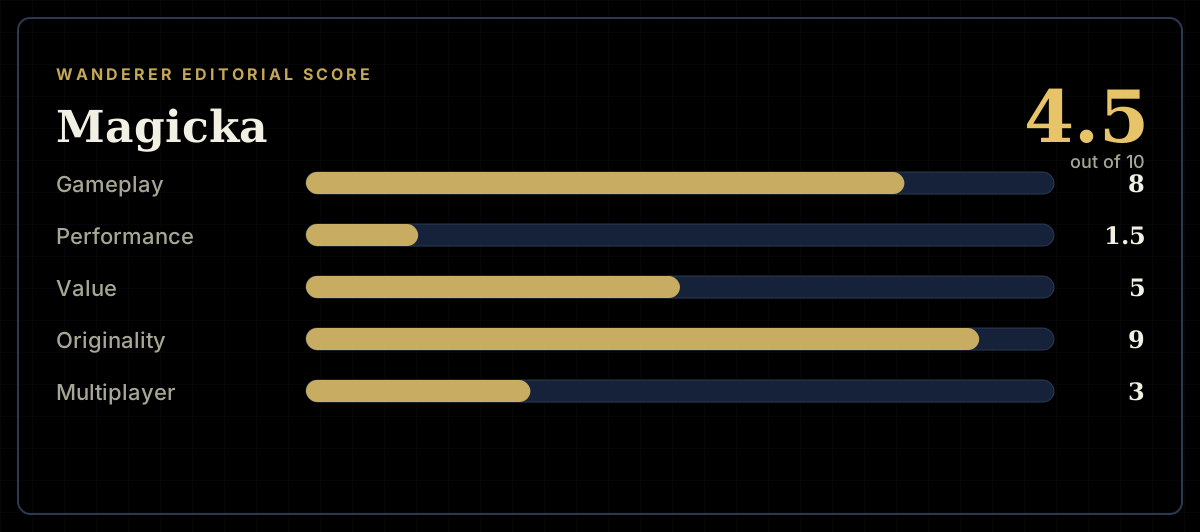
How the review scores each part of the gameWanderer Editorial -
The short versionWanderer Editorial