Game review
Lootun
7.5 / 10
- Developer
- ArrowSoftGames
- Publisher
- ArrowSoftGames
- Released
- 14 May 2024
- Platforms
- Windows
- Genre
- Semi-Idle RPG
- Monetisation
- One-time premium purchase; no ads, in-game currency, loot boxes or subscriptions found
- Players
- Single-player only; no online, co-op or PvP modes
The short version
Lootun sends up to three adventurers off to clear dungeons without you, and spends its actual playtime on the part most semi-idle RPGs treat as filler: deciding what to salvage, what to enchant, and what to hand off to the next fight. For six dollars that's an enormous amount of system to dig into — four classes, twelve ascendancy variants, 500-plus pieces of gear and dozens of bosses.
The catch is that the same density that makes the early hours compelling turns into a steady grind of sorting and re-equipping once the novelty of a new class wears off, and a recurring thread in player feedback describes the developer answering discovered strategies with nerfs rather than new content to chase. It's a genuinely deep gear-hunting loop that asks a lot of patience for its price.
Biggest strengths
- Four classes each split into three ascendancy paths give real build identity rather than one flavour of the same class
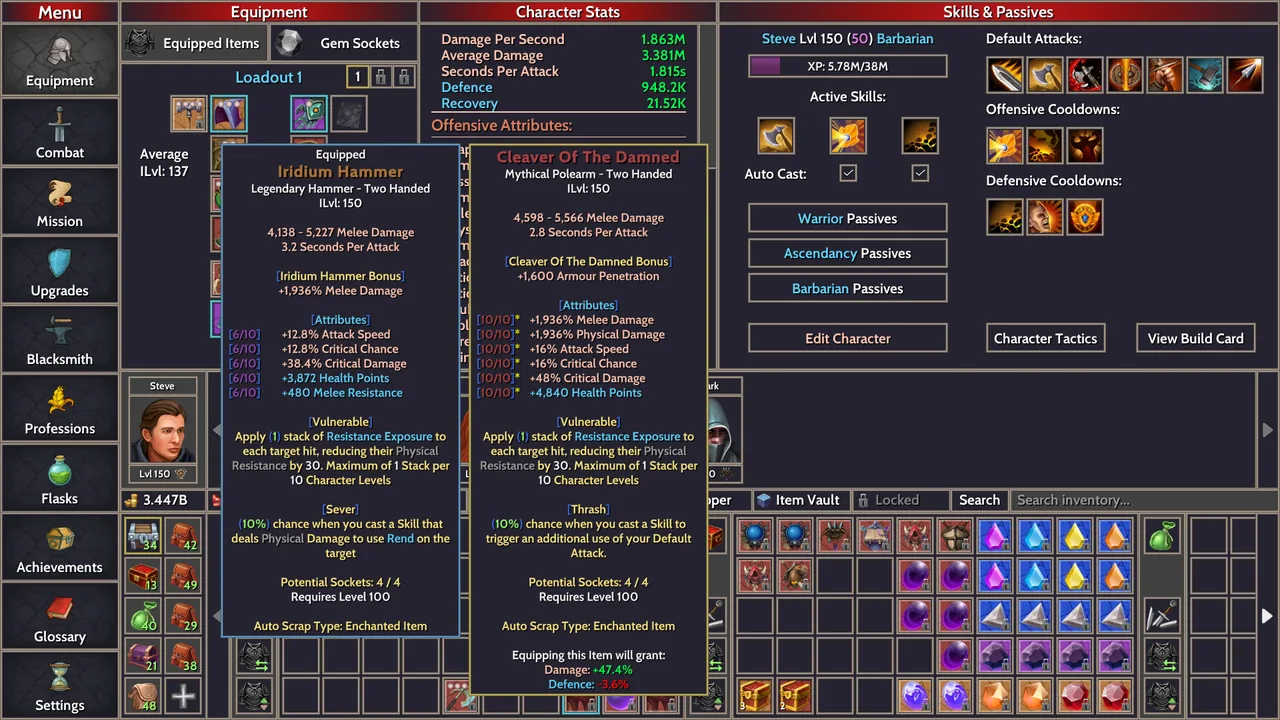
- 500-plus equipment pieces and 50-plus endgame enchants back up the itemization focus with genuine volume for a budget release
- Auto-salvage and automatic ability casting let a dungeon run play out unattended without switching progression off entirely
Biggest weaknesses
- Players who land on an effective build describe the response as a nerf rather than new content, which undercuts the exact progression the game is selling
- Managing salvage, upgrades and re-equips across three adventurers at once turns into constant menu upkeep rather than a break between fights
- The moment-to-moment loop of send, wait, scrap, re-gear repeats with little structural variation once the opening classes stop feeling new
Who it's for: Players who enjoy the itemization half of an ARPG more than the combat half, and who are happy running missions in the background while they do the actual work of theory-crafting a build between sessions. Anyone allergic to inventory management, or hoping for a game that meaningfully evolves its systems update to update, should look elsewhere first.
Our recommendation: Worth the asking price for the amount of content on offer, provided you go in knowing the loop repeats more than it reinvents and that the developer leans on rebalancing existing builds rather than adding new ones to chase.
7.5 / 10
Most idle RPGs treat gear management as busywork between the parts you actually watch happen. Lootun flips that arrangement almost entirely. Your three-adventurer team clears its dungeons on its own, off-screen, while the actual game — deciding what to keep, what to salvage, what to enchant, and what your next run needs — happens in the menus around that automation. For a solo release asking less than seven New Zealand dollars, that's an unusually deep system to hand a player, and it's exactly why a devoted slice of its audience keeps coming back to it.
It's also a game whose biggest strength and biggest weakness are the same decision. Building the entire experience around gear sorting means the hours spent actually deciding something are genuinely satisfying. It also means there's very little else propping up the hours in between.
Sending a team out is the easy part
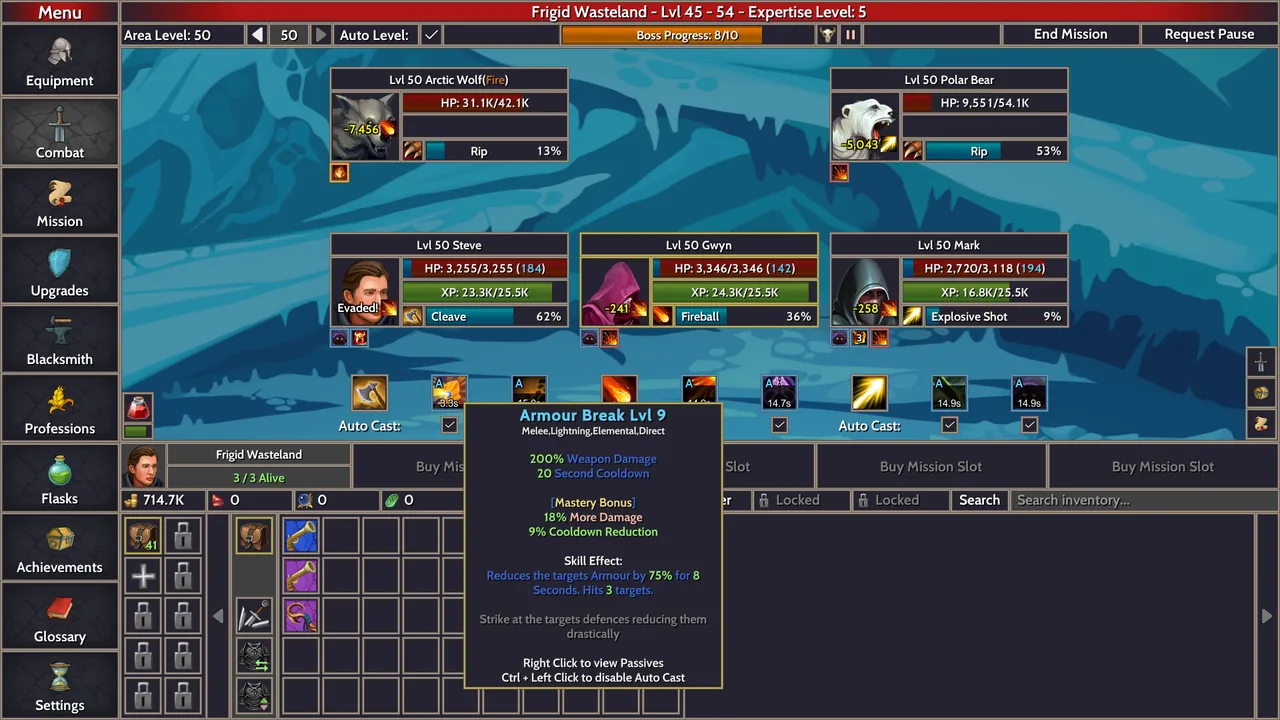
The core loop is simple to describe: assemble a team of up to three adventurers, send them into a dungeon, and let them fight their way through automatically while you handle logistics back at base. There's no manual positioning or combat input during a run — the game bills itself as "semi-idle" rather than idle because you're actively steering builds and gear between runs even though the runs themselves play out hands-off. That framing matters. Lootun isn't asking you to watch numbers climb on a timer; it's asking you to keep making decisions about equipment fast enough that the automated fighting stays worth watching return.
Where that starts to strain is exactly where player feedback consistently lands: once a route and loadout are working, sending a team out and coming back to scrap "almost everything" they found becomes the entire rhythm of play. One recurring description in user reviews calls the loop "a visualized spreadsheet" — adjust the equipment, let it run, discard the loot, repeat. That's not an unfair read of a game this committed to itemization as its main verb; it's a direct consequence of the design, and whether it reads as meditative or monotonous will depend entirely on how much a given player enjoys spreadsheet-adjacent decision-making in the first place.
Four classes, twelve identities
Character building is where Lootun earns its density. Four base classes each branch into three ascendancy options, effectively tripling the number of distinct builds available before a single piece of gear gets factored in. Layered on top are 28 default skills and 28 cooldown-based abilities, each with eight passive variants, which is a genuinely large skill space for a game this small and this cheap. Eighteen unlockable character slots mean the game expects players to run several builds in parallel rather than settling on one favourite and grinding it exclusively, and that structure rewards exactly the kind of theory-crafting that itemization-focused players show up for.
The equipment side backs that up with real volume: over 500 individual items, 14 craftable flasks, and more than 50 endgame enchants to layer onto a build once the base campaign stops being the priority. A hundred-plus monster types and over 50 bosses give that gear somewhere to prove itself. On paper, this is a lot more system than most six-dollar releases attempt, and it's the single biggest reason the game has built a loyal following rather than fading into the crowded semi-idle shelf on Steam.
Balance by subtraction
The clearest, most specific criticism running through negative and mixed feedback isn't about difficulty or bugs — it's about how the developer responds when players find something that works. Multiple reviews describe discovering an effective build or strategy only to see it patched down rather than joined by new content that might compete with it or make it feel less mandatory. One recurring phrasing frames it plainly: the developer fights the player-discovered meta with nerfs instead of creating alternatives, which reads to a meaningful chunk of the audience as punishment for engaging with the system as designed rather than ordinary balance upkeep.
This matters more in Lootun than it would in a combat-first RPG, because build discovery is the actual product here. A player who spends hours assembling gear and skills around a strategy that gets specifically nerfed afterward isn't losing a shortcut — they're losing the exact reward the whole itemization loop promised them. It's a legitimate ongoing update, and it's worth treating separately from the more common post-launch complaint of "the game got harder." Reviewers aren't describing rising difficulty; they're describing the game removing the payoff for having solved it.
Automation that respects the premise, mostly
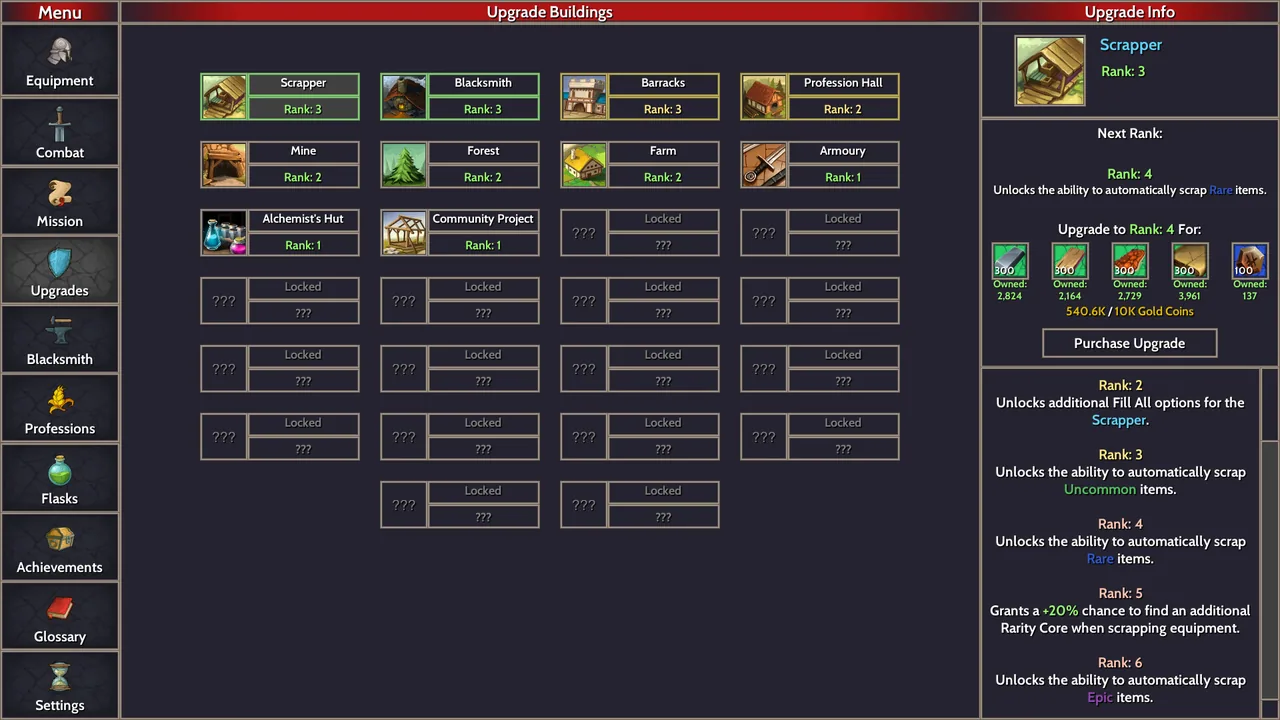
The automation features earn real credit. Auto-salvage and automatic ability casting mean a dungeon run can proceed without babysitting every fight, which is the right call for a game whose actual content lives in the menus rather than the combat log. That's the same design bet Wanderer makes with its own gathering and away-progression systems: automation should remove tedium without switching player agency off, and Lootun's version of that trade mostly holds up. Where it wobbles is volume rather than concept — with 500-plus items in circulation and a salvage pass required after nearly every run, the sheer quantity of decisions can outpace how many of them are actually meaningful, and inventory management becomes the dominant daily activity rather than an occasional chore.
Endgame and staying power
Six-character raid content sits at the top of the progression ladder, alongside 145 achievements that give completionists a long tail of goals beyond the core class unlocks. That's a reasonable endgame shape for the genre, offering somewhere for a maxed-out build to go rather than ending the moment the campaign does. Whether it holds a player's attention long-term is a harder question, and it circles back to the same tension raised above: the systems supporting the raid content are the same ones the balance pattern keeps rebalancing, so a build that clears the endgame today isn't guaranteed to still be the strongest option after the next patch.
Platform, reliability and price
Lootun is Windows-only, with no controller support listed on its store page, which narrows the audience to desktop mouse-and-keyboard players specifically — a reasonable scope for a solo-developed release, but worth knowing before buying if you were hoping to play it from a couch. There's no widespread pattern of crashes or stability complaints in circulation, and the game's modest system requirements make it an easy fit for older hardware. At roughly seven New Zealand dollars, with no in-app purchases, ads, or premium currency of any kind, the monetisation model is about as clean as this genre gets: you pay once, and everything — 500-plus items, dozens of bosses, twelve build identities — is already included. For the amount of content on offer, that's a genuinely strong value proposition regardless of how the design itself is judged.
Verdict
Lootun does something a lot of semi-idle RPGs only pretend to do: it makes the itemization loop the actual game rather than the wallpaper around automated combat, and it backs that idea with enough classes, skills and gear to reward players who like optimizing a build more than piloting one. That alone makes it worth its very low asking price. What keeps it from scoring higher is that the same density that makes the opening hours compelling settles into a repetitive salvage-and-re-equip rhythm once the initial classes stop being novel, and a recurring pattern of nerfing discovered strategies instead of adding new ones to chase undercuts the long-term trust a build-focused game depends on. A 7.5 reflects a genuinely deep, fairly priced gear-hunting system that hasn't yet found enough new things to say to the players who stick with it longest.
Pricing and platform details checked 1 August 2026.
Pros and cons
Pros
- Four classes each split into three ascendancy paths give real build identity rather than one flavour of the same class
- 500-plus equipment pieces and 50-plus endgame enchants back up the itemization focus with genuine volume for a budget release
- Auto-salvage and automatic ability casting let a dungeon run play out unattended without switching progression off entirely
- Eighteen unlockable character slots and six-character raids give committed players a reason to keep building past the story classes
- Priced well under most premium RPGs, with 145 achievements and a free demo lowering the risk of trying it
Cons
- Players who land on an effective build describe the response as a nerf rather than new content, which undercuts the exact progression the game is selling
- Managing salvage, upgrades and re-equips across three adventurers at once turns into constant menu upkeep rather than a break between fights
- The moment-to-moment loop of send, wait, scrap, re-gear repeats with little structural variation once the opening classes stop feeling new
- Windows-only with no controller support listed, keeping it to a fairly narrow mouse-and-keyboard audience
- The sheer volume of gear dropped can outpace what's actually needed to progress, leaving sorting rather than deciding as the dominant activity
Screenshots
-
LootunImage: ArrowSoftGames via Steam -
LootunImage: ArrowSoftGames via Steam -
LootunImage: ArrowSoftGames via Steam -
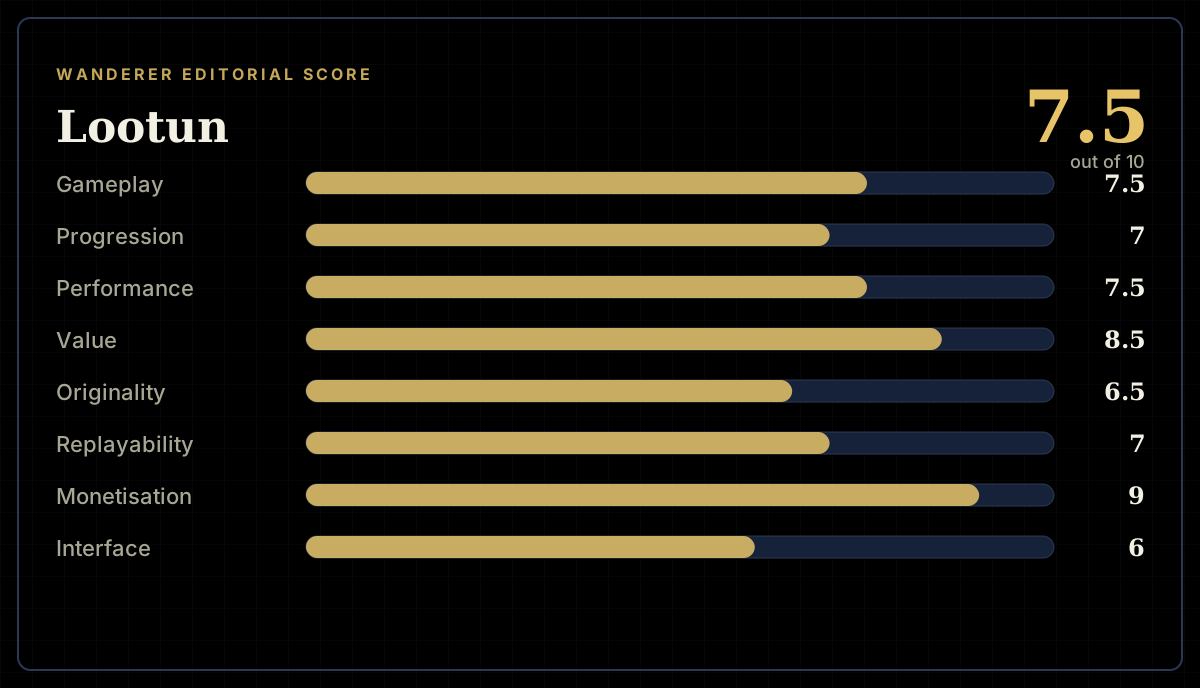
How the review scores each part of the gameWanderer Editorial -
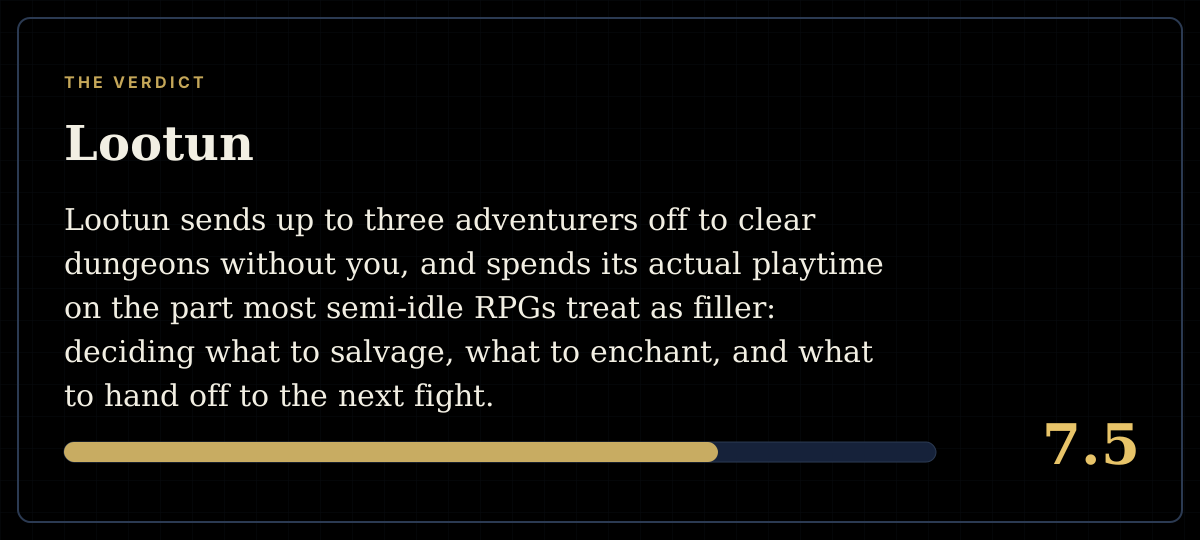
The short versionWanderer Editorial