Game review
Loot Frog
5.7 / 10
- Developer
- Clumsy Dog
- Publisher
- Clumsy Dog
- Released
- 24 August 2026
- Platforms
- Windows, Mac
- Genre
- Action Incremental / Bullet Hell
- Monetisation
- Premium
- Players
- Single-player
The short version
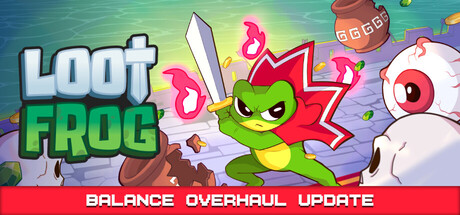
Loot Frog pairs pot-smashing bullet-hell combat with an incremental upgrade loop, sending a pixel-art frog through swampy, increasingly chaotic biomes to fight an evil cult. Its launch build drew a wave of criticism for grindy, oddly weightless progression, with players complaining that new zones reset earned currency to zero and that upgrades barely moved the needle against escalating bullet patterns. A fast balance overhaul from the two-person team pulled the game much closer together, and reviewers who came back after the patch generally describe a short, tightly designed bullet-hell with satisfying ability interactions, even if a few now find the reworked version too easy and the whole experience still quite brief for its price.
Biggest strengths
- Fluid, well-designed ability interactions that let players chain dashes, jumps, and elemental attacks in satisfying combos
- A responsive two-person development team that shipped a significant balance overhaul quickly after launch based on player feedback
- Distinctive pixel-art swamp aesthetic and an original soundtrack that reviewers single out as a highlight
Biggest weaknesses
- Launch-build progression was widely criticised as grindy and unrewarding, with each new zone resetting currency and upgrades to near-zero
- Even after the balance patch, some reviewers feel the incremental upgrade system doesn't deliver a real sense of getting overpowered
- A short campaign, with most reviewers finishing in two to five hours, that several feel is thin for the asking price
Who it's for: Bullet-hell fans who enjoy incremental progression systems and don't mind a short runtime
Our recommendation: Conditional Recommend
5.7 / 10
A Rocky Launch, Patched Into Shape
Loot Frog casts players as a small, determined frog working through swampy, cult-infested biomes, smashing pots and gunning down waves of enemies to collect gems and unlock new gear. The premise is simple and the pixel-art presentation is charming, but the story that dominates the review sample isn't about the frog's quest so much as the game's own journey after launch. Multiple reviewers describe the original build as punishingly grindy, with one calling it "putting a new coat of paint on the same treadmill" after discovering that emeralds earned in one zone became worthless the moment a new zone introduced its own separate currency. That specific complaint, of currency resets erasing a sense of progress, shows up again and again in the earliest reviews, several of which are explicitly marked "Not Recommended" for that reason alone.
What sets Loot Frog apart from a lot of small indie launches is what happened next. A detailed, points-based review in the sample documents playing an early balance-overhauled version, 1.1.0, and crediting the two-person team with listening to feedback "really quickly" and meaningfully fixing the pacing that had driven away earlier players. Several more recent reviews, dated well after launch, back this up, describing a game that is "not that grindy," well-balanced, and "getting better" compared to the version those same players first tried. It's a genuinely unusual arc for a small premium release: a rough opening reception followed by a visible, reviewer-acknowledged course correction rather than silence from the developer.
Bullet-Hell Backbone
Strip away the incremental currency systems and Loot Frog's core combat holds up well. The loop asks players to survive timed stages, killing enough enemies or smashing enough pots to summon a mini-boss, all while dodging increasingly dense bullet patterns that reviewers consistently praise for being well-designed and readable even at their busiest. Ability interactions come in for particular praise: chaining a dash into a bouncing spiky ball, or a high jump into a flame-based area attack, is the kind of small systemic depth that keeps combat feeling fluid rather than repetitive across the game's short runtime. One reviewer draws a direct line to genre touchstones like Astro Prospector, calling the DPS sources and enemy design familiar but distinct enough to stand on their own, alongside a passing nod to Hollow Knight in its visual language.
The other side of that same coin is difficulty balance, which reviewers are split on even post-patch. Some found the reworked version well-tuned, with a final boss fight against an enemy named Vaelith singled out as a genuine highlight that "caught me by surprise." Others found the rebalanced game swung too far toward easy, with one player noting they finished the entire campaign in under five hours at 100% completion without ever feeling seriously challenged. For a bullet-hell built around escalating bullet density, that's a meaningful trade-off between accessibility and tension. Opinion on the soundtrack itself is more consistent: most reviewers who mention it call it a genuine highlight that reinforces the game's arcade-swamp atmosphere, though one player who otherwise enjoyed the combat felt the sound design was the one area still lagging behind everything else.
Short Sprint, Not a Marathon
Almost every review in the sample, positive or negative, agrees on one thing: Loot Frog is short. Most players report finishing in two to five hours, occasionally faster for those chasing 100% achievement completion, which several reviewers note isn't particularly grindy or missable in itself. At NZ$11.09, most reviewers who enjoyed the combat consider that an acceptable trade for a tightly-scoped, well-polished experience rather than a padded one, but it isn't a universal view. At least one review explicitly flags the runtime-to-price ratio as poor, arguing that a couple of hours of gameplay isn't worth the asking price regardless of how well those hours are put together. Given how much of the launch-period criticism centred on artificial grind for grind's sake, a short, honest runtime is arguably the more defensible design choice, even if it won't satisfy players looking for a long-term incremental to sink dozens of hours into.
Built to Be Played by Everyone
Loot Frog's accessibility options are a quiet strength that doesn't come up much in the review sample directly but is worth flagging for anyone weighing a purchase. The game ships with adjustable difficulty, colour alternatives, full controller support including DualShock and DualSense-specific options, and a keyboard-only control scheme, alongside Steam Cloud saves and achievements. Combined with the shorter, focused runtime, it makes Loot Frog a reasonably approachable entry point into bullet-hell games for players who might bounce off a longer, harder genre staple, provided they go in with the post-patch balance changes in mind rather than the rougher launch-week experience some of the negative reviews describe.
Worth Jumping In?
Loot Frog is a genuinely awkward game to score, because a meaningful portion of its negative reviews describe a version of the game that reviewers themselves say no longer exists. Taken as it plays today, after Clumsy Dog's balance overhaul, it's a short, visually distinctive bullet-hell with satisfying ability combos and a soundtrack reviewers are quick to praise, let down mainly by an incremental progression layer that still doesn't fully deliver the power fantasy the genre usually promises, and a runtime that some will find too slim for the price. Bullet-hell fans drawn in by the pixel-art frog and willing to look past its rocky first impression will likely get a satisfying few hours out of it; those specifically chasing a deep, long-haul incremental grind should look elsewhere.
Pros and cons
Pros
- Fluid, well-designed ability interactions that let players chain dashes, jumps, and elemental attacks in satisfying combos
- A responsive two-person development team that shipped a significant balance overhaul quickly after launch based on player feedback
- Distinctive pixel-art swamp aesthetic and an original soundtrack that reviewers single out as a highlight
- Solid accessibility options, including adjustable difficulty, colour alternatives, and a keyboard-only control option
Cons
- Launch-build progression was widely criticised as grindy and unrewarding, with each new zone resetting currency and upgrades to near-zero
- Even after the balance patch, some reviewers feel the incremental upgrade system doesn't deliver a real sense of getting overpowered
- A short campaign, with most reviewers finishing in two to five hours, that several feel is thin for the asking price
- Post-patch difficulty swings the other way for some players, who now find bosses too easy to pose a real bullet-hell challenge
Screenshots
-
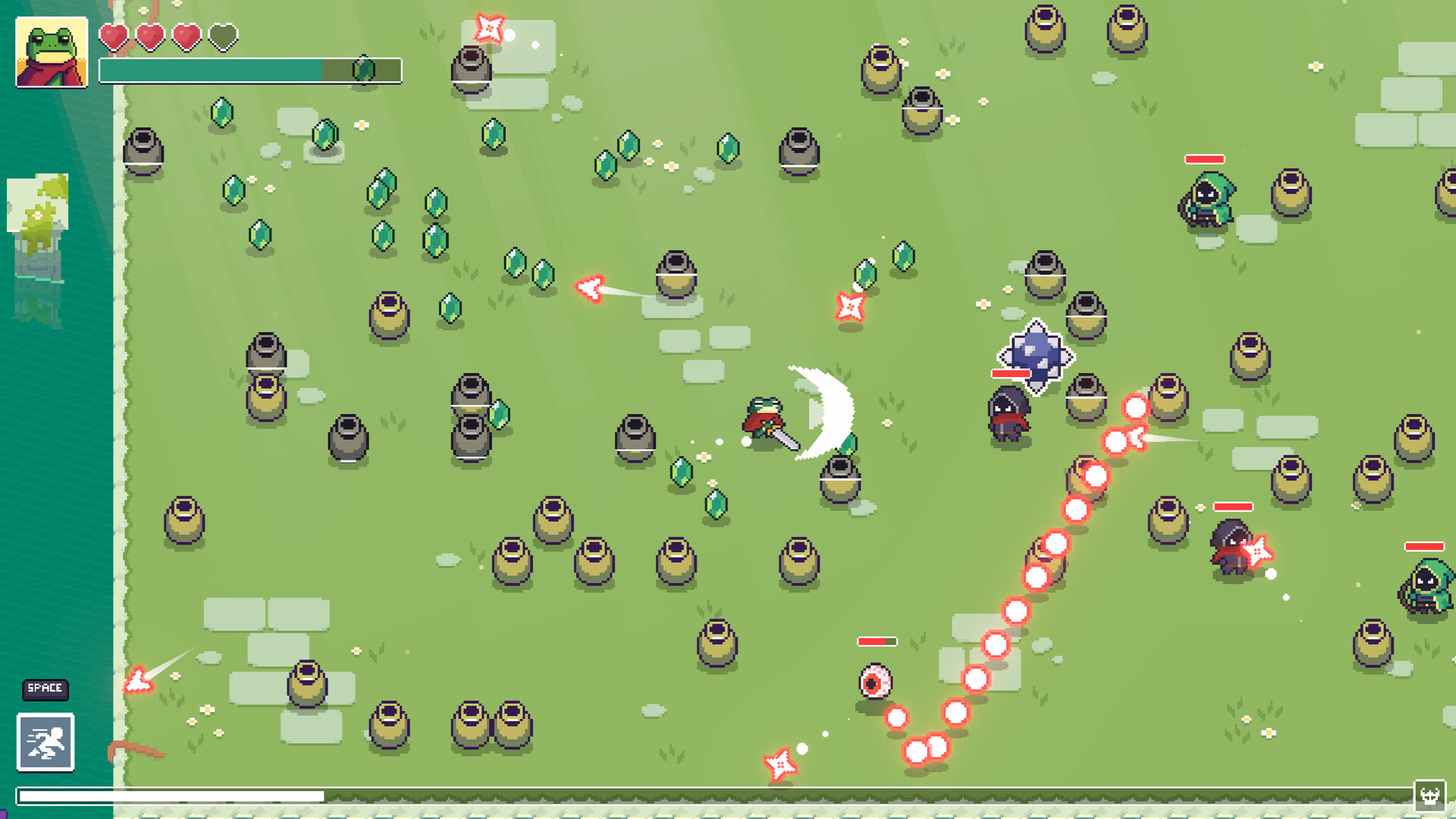
Combat mixes pot-smashing with reactive bullet-hell dodging, the ability interactions reviewers praise mostClumsy Dog -
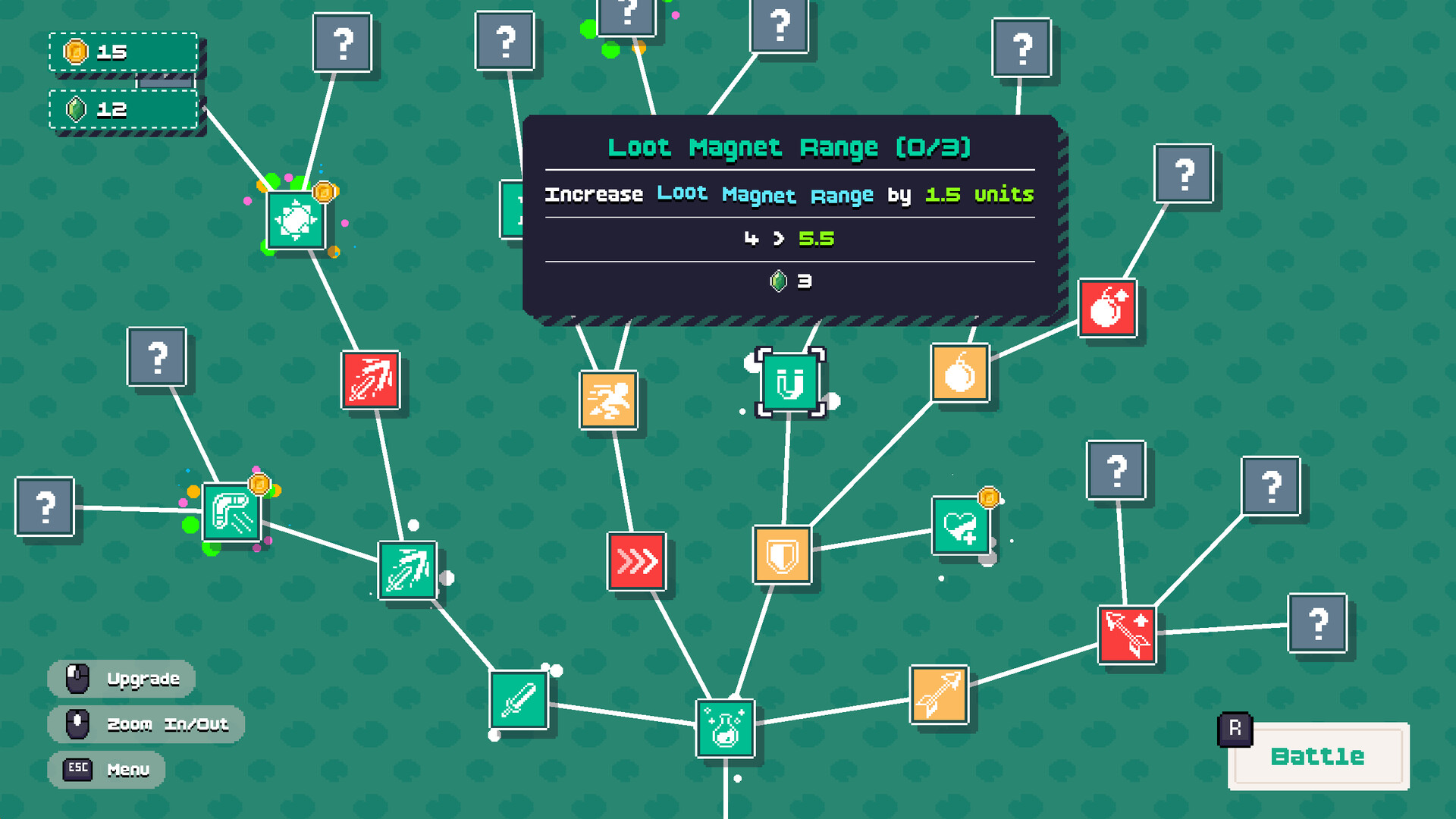
The much-debated skill tree, reworked in a post-launch balance patch after early reviewers called its progression grindyClumsy Dog -
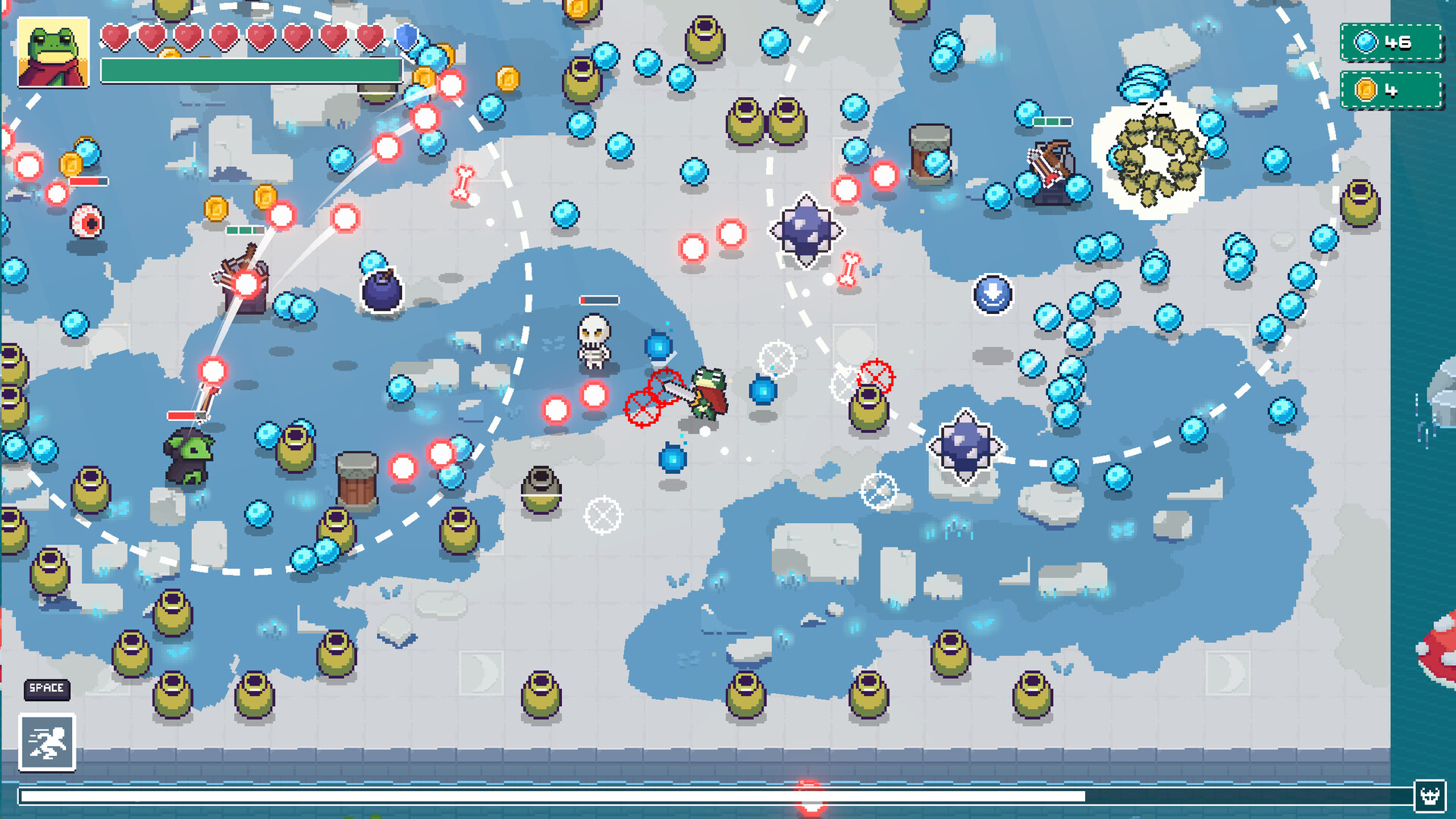
Later biomes raise the bullet density and enemy variety considerably compared to the opening swamp stagesClumsy Dog -
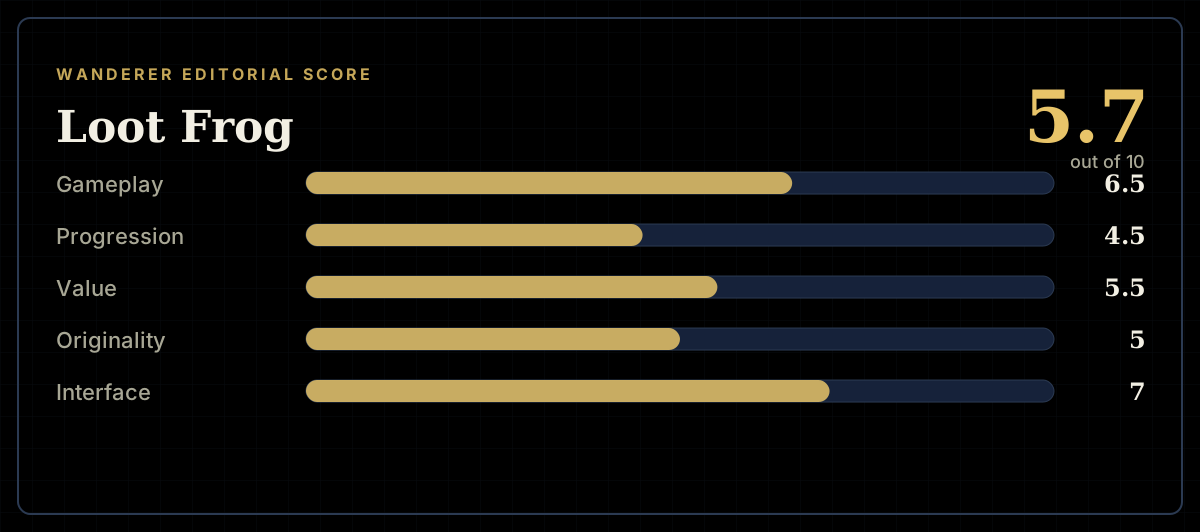
How the review scores each part of the gameWanderer Editorial -
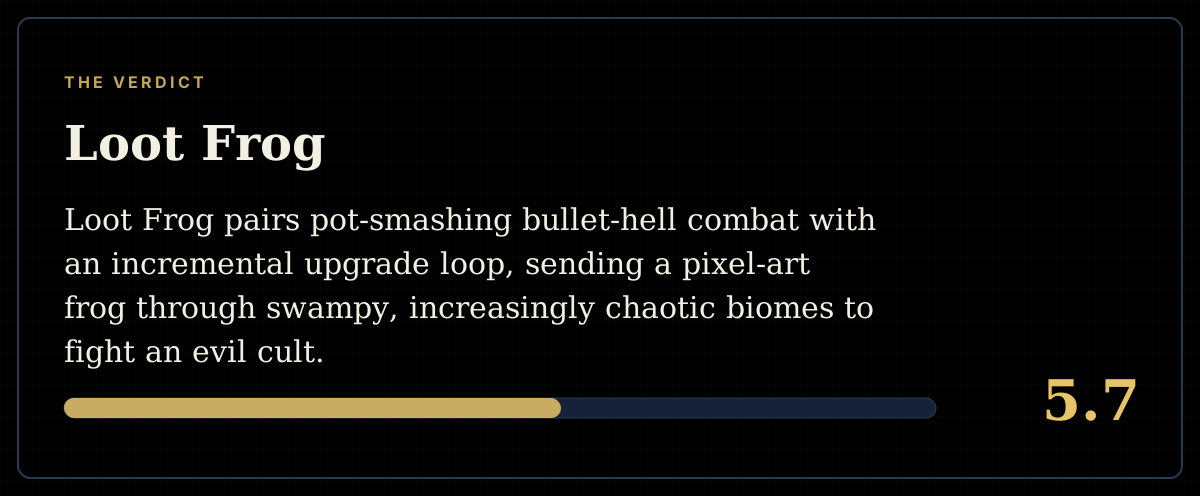
The short versionWanderer Editorial