Game review
Legends of Wasteland
6 / 10
- Developer
- Qingyou Studio (清友工作室)
- Publisher
- Qingyou Studio (清友工作室)
- Released
- 29 April 2026
- Platforms
- Windows
- Genre
- Idle Action RPG
- Monetisation
- One-off premium purchase, no DLC, no in-app purchases and no premium currency
- Players
- None. Single-player only, with no leaderboard, co-op or shared-progress feature
The short version
Legends of Wasteland takes a genuinely interesting swing: transplant a Path of Exile-style sprawling talent tree — over 1,700 nodes, 100-plus class-agnostic skills, and a support-gem system for modifying how those skills behave — onto an idle RPG's auto-battle, walk-away progression. Several reviewers describe it as filling a real gap in the genre, a "mini Path of Exile" for players who want deep build theorycrafting without needing to babysit combat. Steam's own rating calls it Mixed at 63.5% across 315 reviews, and the negative sample is unusually substantive rather than reflexively hostile: translation quality is criticised so consistently, by both English and native Chinese-speaking reviewers alike, that it reads as a genuine structural problem rather than launch-week rough edges, and a pattern of frequent, aggressive nerfs to whatever build becomes strong draws pointed frustration in a single-player game with no competitive stakes to justify the caution. The developer's patch cadence is genuinely impressive — multiple updates a week, months after launch — and several reviewers who initially left negative feedback have since updated their verdicts as specific bugs got fixed.
Biggest strengths
- A genuinely distinctive core idea — a sprawling, Path of Exile-inspired talent tree and support-gem system layered onto idle auto-battle progression — that reviewers describe as filling a real gap between deep-build ARPGs and typical idle games
- Extremely low price for the scope of systems on offer: six classes with multiple promotion branches, over 1,700 talent nodes, and 100-plus class-agnostic skills
- A remarkably fast, sustained patch cadence — multiple updates most weeks for months after launch — with several reviewers explicitly updating negative reviews to positive as specific bugs and balance issues got addressed
Biggest weaknesses
- Translation and tooltip quality draw remarkably consistent criticism from both English and native Chinese-speaking reviewers, with stat descriptions inconsistent between different parts of the game and formatting errors that make it genuinely difficult to tell whether a modifier helps or hurts a build
- A recurring, pointed complaint describes frequent, aggressive nerfs to whichever build becomes strong, frustrating players who've invested real time into a specific setup in a single-player game with no PvP or leaderboard to justify defensive balancing
- The pet-breeding and equipment-crafting systems are criticised as confusingly explained, heavily RNG-dependent, and capable of wasting significant player investment without clear warning
Who it's for: Idle-RPG fans specifically drawn to deep, Path of Exile-style build customisation who can tolerate real translation and UX rough edges in exchange for a very low price and an actively, rapidly patching developer.
Our recommendation: A cheap, genuinely promising idle RPG worth a look for build-crafting enthusiasts willing to be patient with its current rough edges, though newcomers to the genre or anyone sensitive to unclear tooltips should wait for further polish.
6 / 10
The idle RPG genre has no shortage of talent trees, but most are shallow by design — a handful of percentage bonuses to click through rather than genuine build decisions. Legends of Wasteland, from the small studio Qingyou Studio, takes a more ambitious swing: import the sprawling, Path-of-Exile-style theorycrafting depth of a full action RPG skill tree — over 1,700 nodes, more than 100 skills usable by any class, dozens of support gems that transform how a skill behaves — and layer it onto idle, auto-battling progression. Since its 29 April 2026 release, that ambition has earned a Mixed 63.5% rating across 315 Steam reviews, and unlike a lot of Mixed-rated games, the negative side of that split reads as substantive, specific criticism from players who clearly wanted to love the game rather than reflexive dismissal.
A genuinely interesting idea, recognised as such
The core pitch lands with real force for the specific audience it's aimed at. "Interesting idle game inspired by games like PoE. Good for people who don't have too much time to grind but can leave it afk to progress," one review states. Another, more effusive: "I like odd games. Especially games focused on logic puzzles, stats, character building, theorycrafting, and 'number go up' progression. This game fits that niche very well." A third frames the appeal precisely against a common frustration with traditional action RPGs: "I like action RPGs, but I usually end up dropping them once the farming starts to feel too repetitive. This game solves that problem by mixing action RPG gameplay with idle mechanics. The repetitive farming is automated." For players who specifically want deep build customisation without the time investment a full ARPG demands, Legends of Wasteland is clearly delivering something real — six classes with multiple promotion branches, freely mixable skills across those classes, and support gems that meaningfully change how a given ability functions rather than just boosting a number.
A translation problem too consistent to dismiss
What keeps this review from simply celebrating that ambition is a specific, remarkably consistent complaint that shows up across language barriers in a way that's hard to write off as ordinary launch friction. English-language reviewers describe tooltips that are close to unreadable: "the game makes no sense and is hard to understand with such things as 'projectile speed increase decrease % damage of projectiles multiply (more) by the absolute value of the projectile modifier,'" one review states, "with no explanation to what this means." A detailed, high-playtime review makes the same point with more precision, describing the likely root cause: "Things like 'Increase Area of Effect (Less) 50%' instead of 'Reduces Area of Effect by 50%.' I'm assuming this is an issue in how they are handling translations where they are just replacing words in Chinese with English equivalents but ignoring the need to change the format."
What makes this a genuinely unusual case rather than a typical "bad English localisation" story is that native Chinese-speaking reviewers raise close to identical complaints about the game's own original-language text. One detailed Simplified Chinese review states, translated: the same stat — critical hit rate — is described with a fixed numeric value in one place and a multiplicative Path-of-Exile-style modifier in another, forcing players to effectively translate the game's Chinese back into clearer Chinese to understand it. Another specifically criticises the pet breeding system's tutorial for failing to explain trait inheritance clearly enough to avoid wasting real player investment on a confusing RNG outcome. When a game's terminology confuses even players reading it in its original language, that's a stronger signal of a genuine writing and design communication problem than a simple translation-quality complaint would be on its own.
A build-nerfing pattern that frustrates without a competitive justification
A second, separate thread of criticism concerns balance philosophy rather than translation. Several Chinese-language reviews describe a pattern of frequent, reactive nerfs targeting whichever build becomes strong, in terms sharp enough to be worth quoting carefully in translation: one reviewer states that whatever build currently deals the most damage gets aggressively cut down, describing the practice as wasting days of a player's own crafting effort just to force them into building something else. Another, more measured English-language review frames the same underlying issue without the same edge: "Balance feels off — the majority of fights are either too easy or too hard and imo it's a bit too hard to find the sweet spot of where progression will be challenging but rewarding." What makes the sharper complaints land with some real force is the structural point underneath them: this is a single-player game with no leaderboard, no PvP and no reason for balance to be defensively cautious the way a competitive multiplayer title's would need to be — a build being unusually strong in a purely solo, idle experience arguably isn't a problem that needs fixing at all.
Genuine, fast improvement in progress
To Qingyou Studio's real credit, the patch cadence since launch has been genuinely unusual for a small indie team: numbered updates arriving multiple times most weeks, climbing from 1.1.x through 1.2.7 by early August 2026, alongside a substantial "The Hunt" content update. Several reviewers have explicitly revised their own verdicts as a direct result. "Changing review to positive. Some of the more annoying issues I was having with the game hasn't been happening for a bit now," one review states. A longer, previously critical review, updated after extended further play, confirms "many of the early issues have been resolved in terms of character creation, a variety of stat bugs, several broken skills and balance issues" — while still noting the talent-tree search function and translation formatting remain genuinely difficult to use. That combination — real, acknowledged progress on bugs and balance, alongside persistent structural translation and UX issues that a faster bug-fix cadence doesn't automatically resolve — is a fair summary of where the game currently stands.
Where this leaves a buyer
At NZ$10.49, Legends of Wasteland is a low-risk way to try a genuinely distinctive idea: deep, Path of Exile-inspired build theorycrafting without the time commitment a full action RPG demands. Players specifically drawn to that pitch, and willing to tolerate real, currently unresolved translation and interface rough edges while a clearly active developer keeps iterating, are likely to find something worth their patience — several reviewers explicitly hope the developer doesn't get discouraged by the Mixed rating, describing a game that's "really fun and unique once you get the hang of it" beneath its current friction. Players who are put off by unclear tooltips, erratic balance, or an idle RPG that doesn't yet explain its own systems clearly should wait for further polish before buying in.
Pros and cons
Pros
- A genuinely distinctive core idea — a sprawling, Path of Exile-inspired talent tree and support-gem system layered onto idle auto-battle progression — that reviewers describe as filling a real gap between deep-build ARPGs and typical idle games
- Extremely low price for the scope of systems on offer: six classes with multiple promotion branches, over 1,700 talent nodes, and 100-plus class-agnostic skills
- A remarkably fast, sustained patch cadence — multiple updates most weeks for months after launch — with several reviewers explicitly updating negative reviews to positive as specific bugs and balance issues got addressed
- Genuine build diversity in principle, letting players freely mix skills and talent branches across classes rather than being locked into a single archetype
Cons
- Translation and tooltip quality draw remarkably consistent criticism from both English and native Chinese-speaking reviewers, with stat descriptions inconsistent between different parts of the game and formatting errors that make it genuinely difficult to tell whether a modifier helps or hurts a build
- A recurring, pointed complaint describes frequent, aggressive nerfs to whichever build becomes strong, frustrating players who've invested real time into a specific setup in a single-player game with no PvP or leaderboard to justify defensive balancing
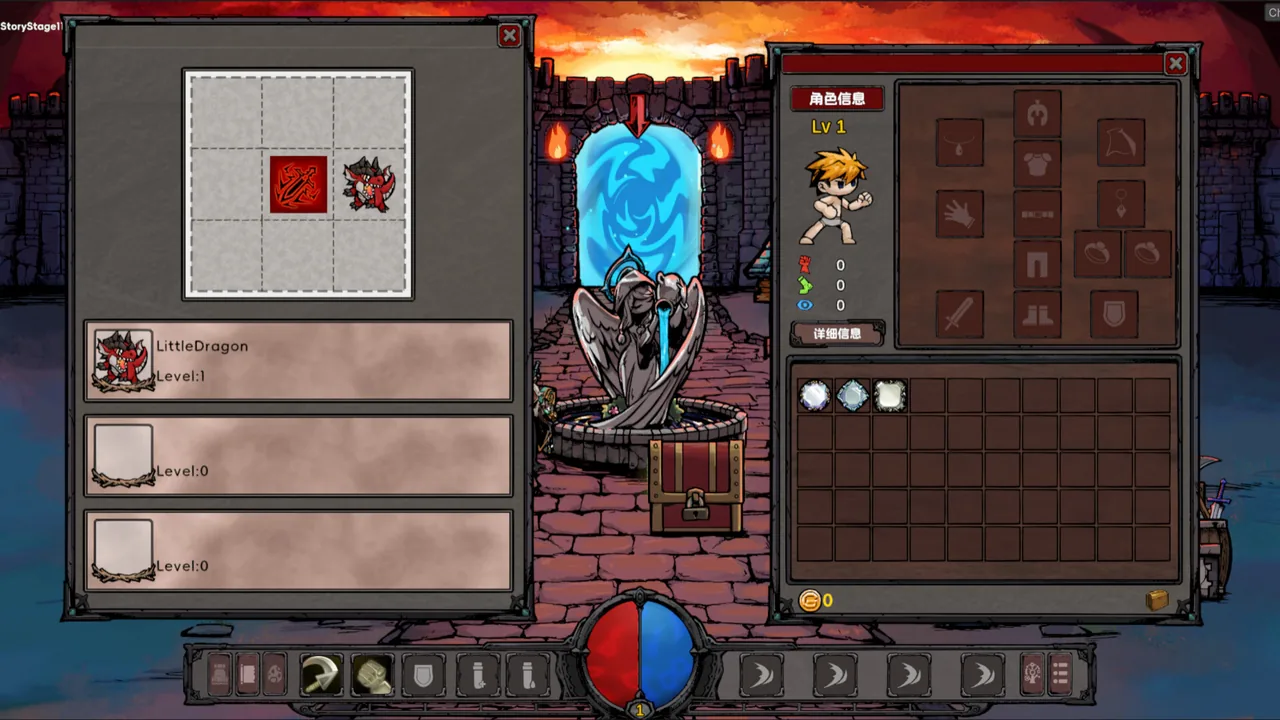
- The pet-breeding and equipment-crafting systems are criticised as confusingly explained, heavily RNG-dependent, and capable of wasting significant player investment without clear warning
- UI limitations — an inability to change gear or spend talent points at any time, a small inventory with no bulk-sell option, and a talent-tree search function several reviewers describe as unintuitive — compound the translation problems into a genuinely rough overall experience
Screenshots
-
Legends of WastelandImage: 清友工作室 via Steam -
Legends of WastelandImage: 清友工作室 via Steam -
Legends of WastelandImage: 清友工作室 via Steam -
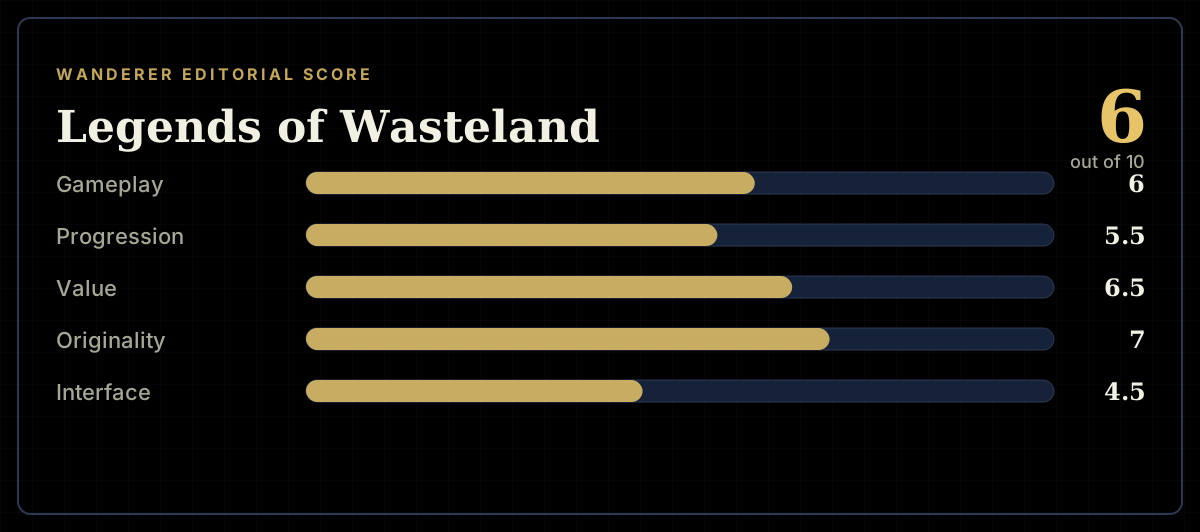
How the review scores each part of the gameWanderer Editorial -
The short versionWanderer Editorial