
Game review
Legends of Dragaea: Idle Dungeons
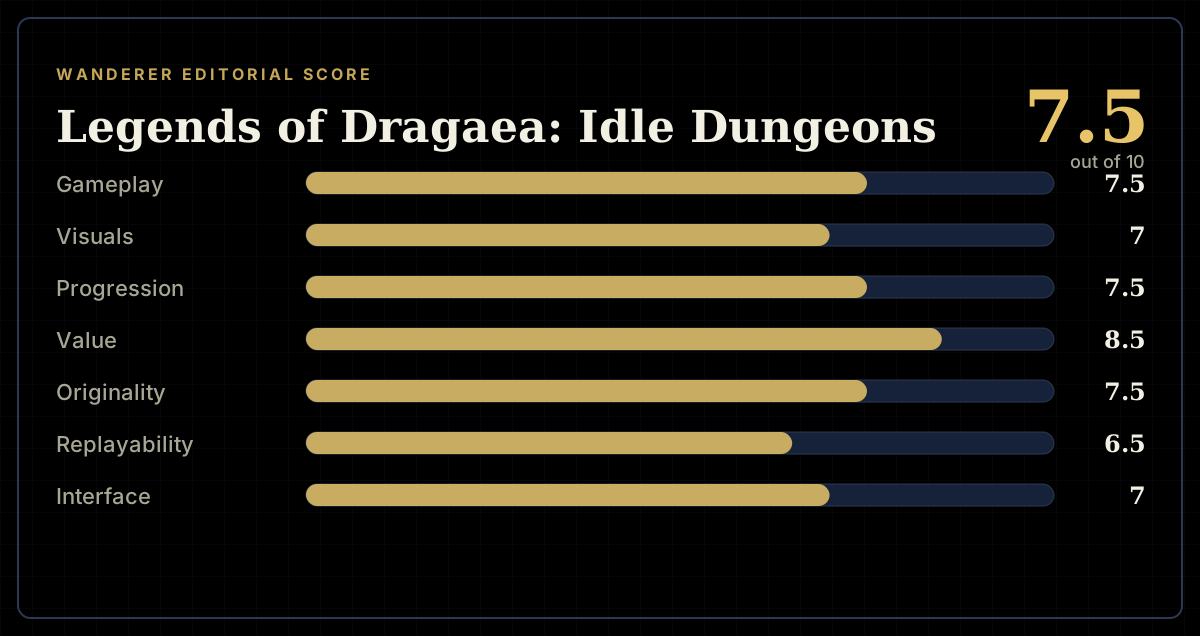
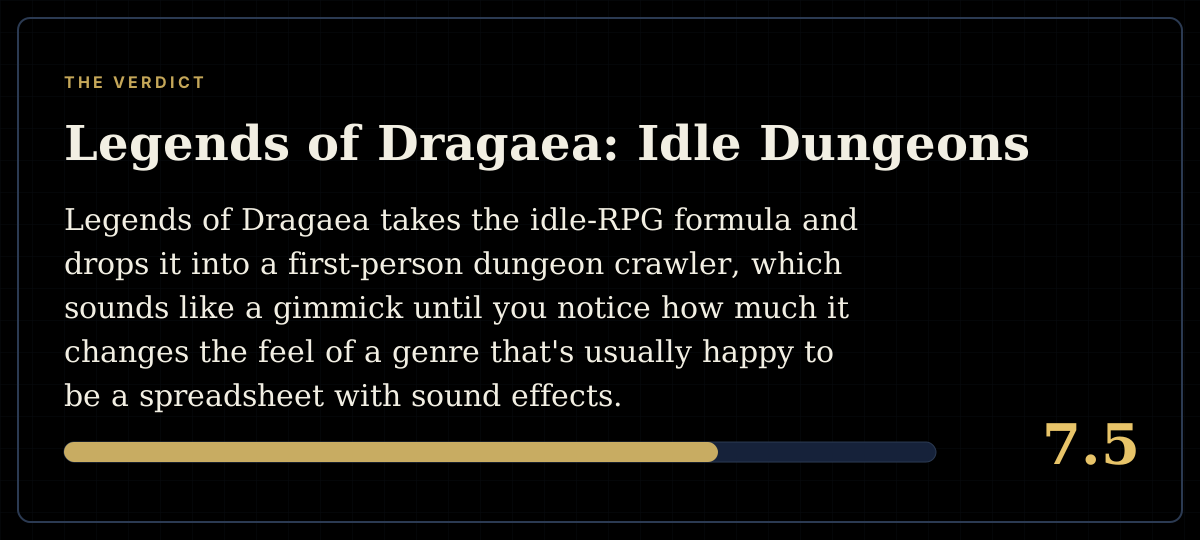
7.5 / 10
- Developer
- Blast Programming
- Publisher
- GIGATANK 3000
- Released
- 3 November 2025
- Platforms
- Windows, Linux
- Genre
- Idle RPG
- Monetisation
- One-time purchase, no in-app purchases, no ads. A separate optional soundtrack DLC is available at low cost and adds nothing to gameplay
- Players
- Single-player. Guilds and expeditions are personal management systems, not shared or social spaces — there is no co-op or PvP
The short version
Legends of Dragaea takes the idle-RPG formula and drops it into a first-person dungeon crawler, which sounds like a gimmick until you notice how much it changes the feel of a genre that's usually happy to be a spreadsheet with sound effects. Building a nine-race roster around a classless skill system, then sending three-person teams into dungeons you can actually see, gives the numbers somewhere to live.
Where it stumbles is the thing its own subtitle promises: offline expeditions are real, but they're consistently the weaker way to spend your heroes' time next to sitting down and playing actively, which is an odd trade-off for a game selling itself on idle progression. It's still a generous, honestly priced game with nothing to buy after the initial purchase, and that alone puts it ahead of most of its genre.
Biggest strengths
- A classless skill system built from 22-plus abilities, with each hero equipping any five, makes party building a real puzzle rather than a fixed class picker
- Nine playable races give meaningful build variety without forcing you into a single "best" starting choice
- No in-app purchases, no ads, no premium currency — the NZ$14.75 asking price is the entire business model
Biggest weaknesses
- Offline expeditions, the game's headline idle feature, consistently return less value than active play, which undercuts the pitch that this is a game you can walk away from
- Reaching full bestiary completion and pushing a hero toward the level-1000 mark leans hard on repetitive grinding once the early content is exhausted
- Positional combat rewards knowing which side draws enemy attention, and the game explains this tactical detail poorly compared to how much it matters
Who it's for: Idle and incremental fans who want their numbers attached to an actual dungeon crawler rather than an abstract screen, and who don't mind that the best results come from paying attention rather than walking away.
Our recommendation: Worth the asking price without hesitation. Just go in knowing that closing the game is the fallback plan here, not the main event.
7.5 / 10
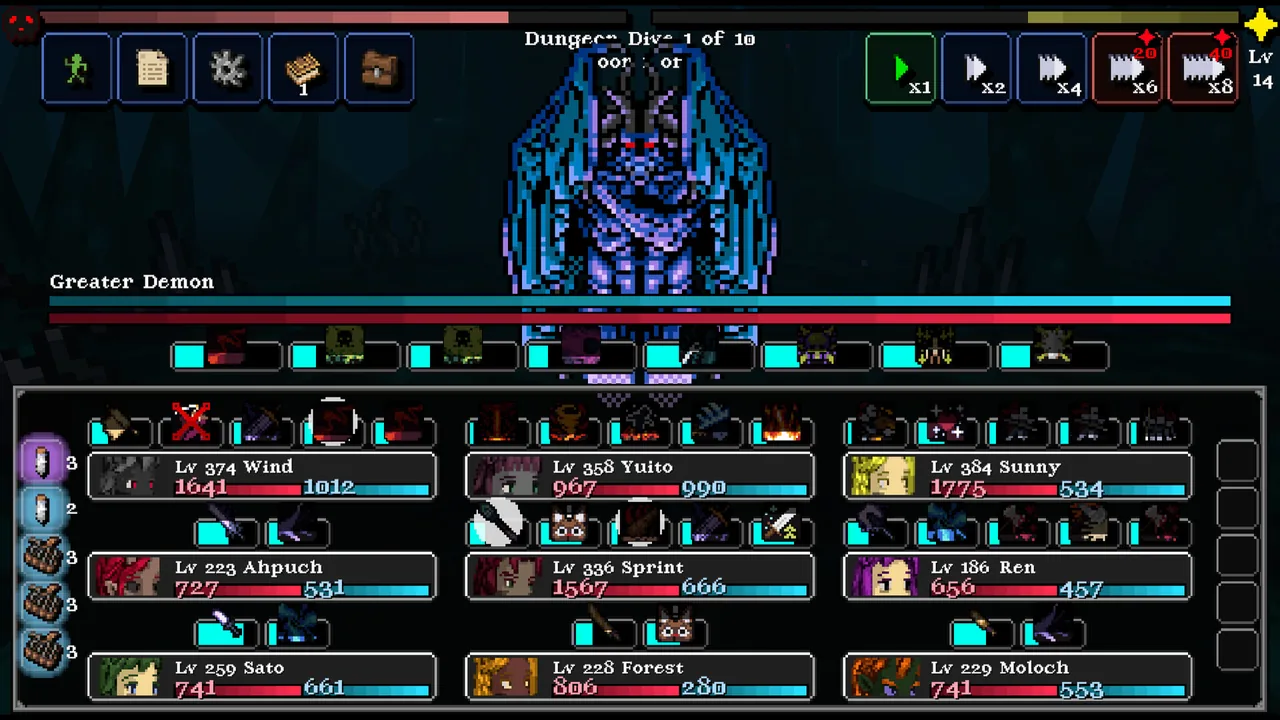
Idle RPGs mostly live behind a menu. You watch numbers climb, tap upgrade buttons, and the "dungeon" your heroes are supposedly fighting through is a progress bar with a monster icon next to it. Legends of Dragaea: Idle Dungeons throws that convention out by putting you in first person, walking your party through actual rooms toward an actual boss, and it's the single decision that makes the rest of the game feel less like spreadsheet management and more like a crawler that happens to run itself when you're not looking.
A classless system that earns the word
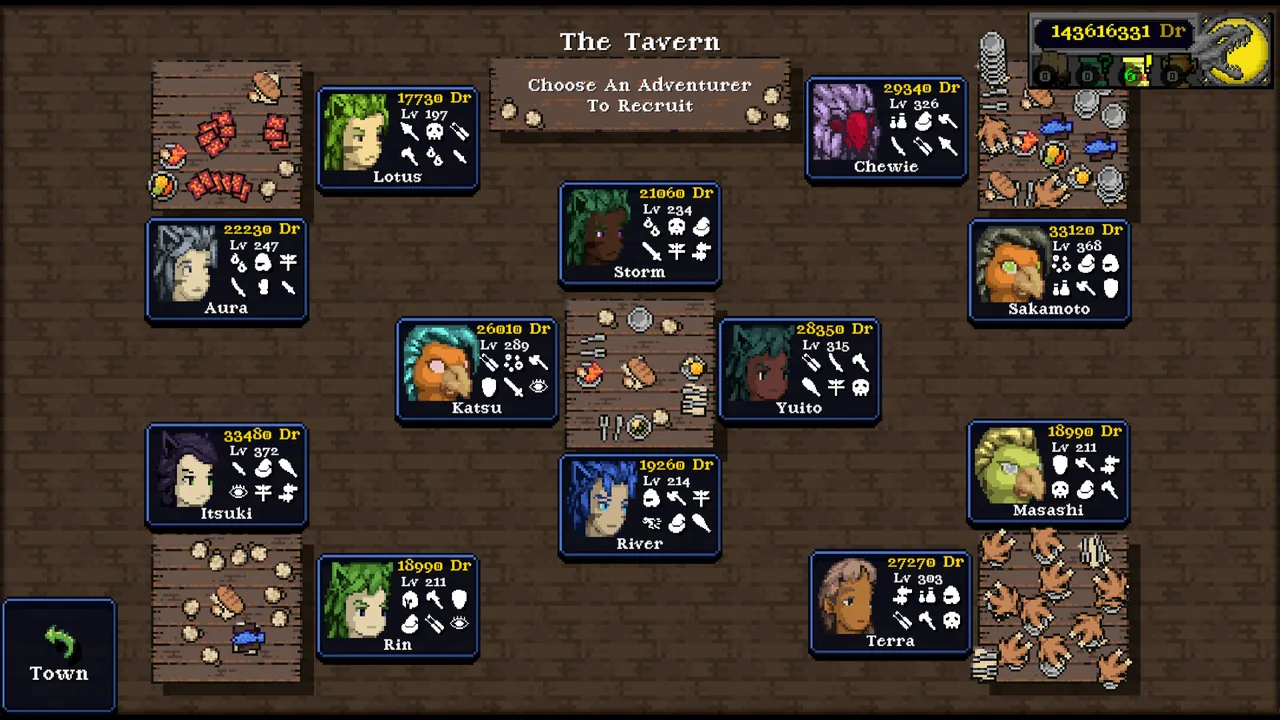
Dragaea's skill system is the game's best idea. Instead of locking heroes into fixed classes, every character draws from a shared pool of more than twenty combat and utility skills and equips any five of them at a time. Combined with nine playable races, each with its own leanings, that turns party construction into a genuine build problem rather than a "pick the tank, pick the healer" checklist. You can build a hero who leans support early and pivots toward damage once you've farmed the right gear, without starting a new character to do it.
Combat runs largely on its own once a party is assigned to a dungeon, but it isn't purely passive: enemy aggro leans toward whichever side of your formation is exposed, which means positioning your tankier heroes correctly actually matters. The game is not particularly good at telling you this — it's the kind of mechanic you either work out by watching a few fights closely or pick up from other players — but once you know it, formation stops being an afterthought.
Guilds, expeditions, and the idle promise that doesn't quite land
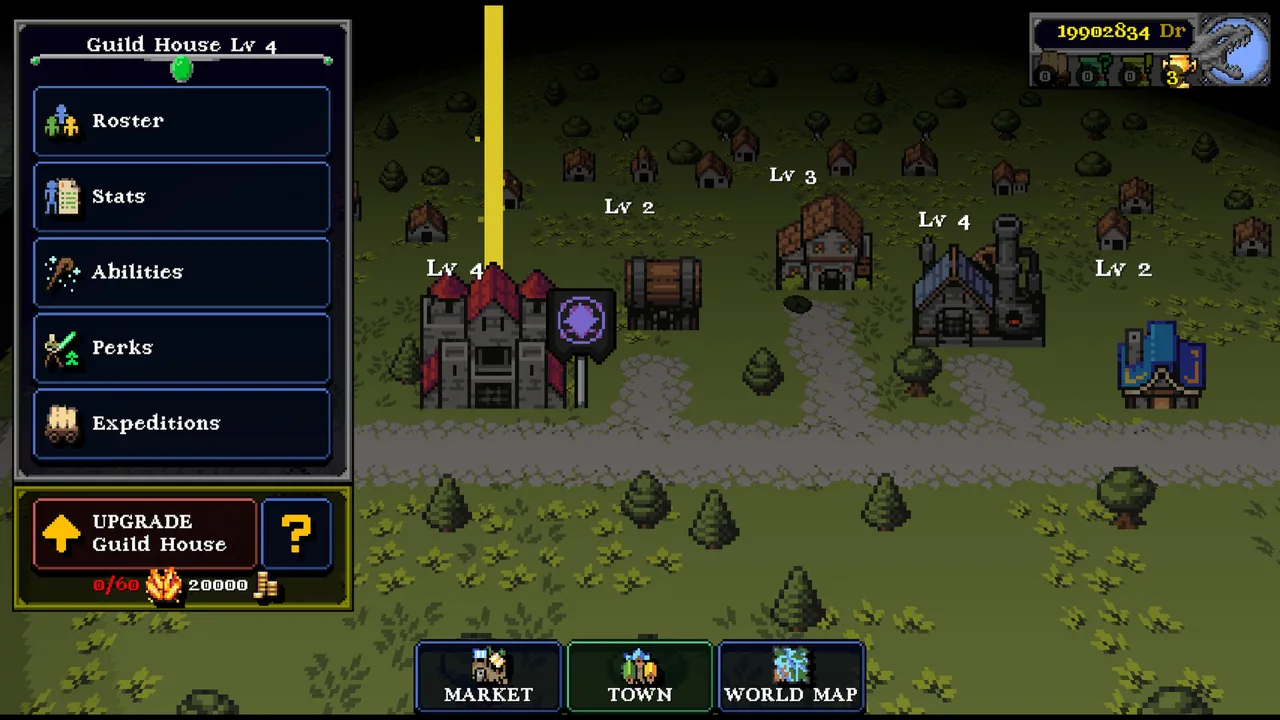
The guild layer is where Dragaea tries to justify its "idle" billing. Building up your guild's town unlocks a bigger roster, better shops, and eventually the ability to send teams on expeditions that keep earning loot while the game is closed. It's a well-built system on paper, and it does exactly what it says: come back after a day or two away and there's real progress waiting.
The catch is that expeditions are consistently the worse option compared to sitting down and playing. A long offline run returns less than the same stretch of time spent actively managing teams and clearing dungeons yourself, which is a strange design choice for a game whose whole subtitle promises idle progression. It isn't a broken system — it's a genuinely useful way to keep earning while you're away — but anyone coming in expecting a true walk-away idler, in the Melvor or Cookie Clicker sense, will find the active game is quietly the intended one.
The grind shows up right when the story runs out
The moment-to-moment loop of exploring dungeons, filling out the bestiary, and gearing up from a pool of over 200 weapons, armour pieces, accessories, and consumables holds up well for a long stretch. Where it strains is at the far end: completing the full bestiary and pushing a hero toward the level-1000 mark both demand a volume of repeated fighting that has little left to teach you by that point. It's the familiar idle-genre trade-off — a satisfying curve up front, a flatter one once you're chasing the last few percentage points of completion — and Dragaea doesn't solve it so much as accept it.
Presentation and value
Visually, Dragaea won't be mistaken for a AAA dungeon crawler, and it isn't trying to be. The first-person dungeons do their job of making the game's systems feel physical rather than abstract, even if the environments themselves aren't the reason to play. Where the game earns real credit is its business model: one purchase, no microtransactions, no energy timers, no premium currency nudging you toward a wallet. A separate soundtrack is available for a couple of dollars and changes nothing about play. At roughly NZ$15, with 58 achievements and Steam Workshop support attached, that's a straightforward, honest price for what's here — a rarer thing in this genre than it should be.
Final verdict
Legends of Dragaea: Idle Dungeons earns its Very Positive standing by taking a formula that's usually content to sit behind a menu screen and giving it an actual first-person dungeon to live in, backed by a skill system flexible enough to reward real build planning. It loses half a point for a genuinely odd tension at its core — an idle game whose idle mode is consistently the weaker way to play — and for an endgame grind that outlasts its own content.
That's still a strong recommendation for anyone who wants their idle numbers attached to something they can walk through, especially at a price with nothing else waiting behind it. Players looking for a true set-and-forget idler should adjust their expectations accordingly; players who want an idle RPG they're allowed to actually play will get their money's worth several times over.
Price and monetisation checked 31 July 2026.
Players who'd rather their offline progress matched their active progress, rather than trailing behind it, might also want to look at Wanderer.
Pros and cons
Pros
- A classless skill system built from 22-plus abilities, with each hero equipping any five, makes party building a real puzzle rather than a fixed class picker
- Nine playable races give meaningful build variety without forcing you into a single "best" starting choice
- No in-app purchases, no ads, no premium currency — the NZ$14.75 asking price is the entire business model
- A bestiary system that rewards fighting a wide range of enemies rather than farming the same one, giving completionists a reason to travel rather than grind in place
- First-person presentation of dungeons and boss fights gives the genre's usual numbers a sense of place that most idle games never bother with
Cons
- Offline expeditions, the game's headline idle feature, consistently return less value than active play, which undercuts the pitch that this is a game you can walk away from
- Reaching full bestiary completion and pushing a hero toward the level-1000 mark leans hard on repetitive grinding once the early content is exhausted
- Positional combat rewards knowing which side draws enemy attention, and the game explains this tactical detail poorly compared to how much it matters
- Visual variety across dungeons is solid but not a highlight next to the mechanical depth underneath it
Screenshots
-
Legends of Dragaea: Idle DungeonsImage: GIGATANK 3000 via Steam -
Legends of Dragaea: Idle DungeonsImage: GIGATANK 3000 via Steam -
Legends of Dragaea: Idle DungeonsImage: GIGATANK 3000 via Steam -
How the review scores each part of the gameWanderer Editorial -
The short versionWanderer Editorial