
Game review
KuloNiku: Bowl Up!
7 / 10
- Developer
- Gambir Studio
- Publisher
- Raw Fury
- Released
- 7 April 2026
- Platforms
- Windows
- Genre
- Casual, Indie, Simulation
- Monetisation
- One-time purchase
- Players
- Single-player
The short version
KuloNiku: Bowl Up!, released 7 April 2026, casts the player as the new proprietor of a family noodle restaurant in a small Indonesian-inspired town, cooking custom orders for quirky locals by day and building friendships through visual-novel-style hangouts by night. Its review sample is Overwhelmingly Positive, praising the charming art, genuine cultural specificity, and warm writing, but a very consistent secondary thread, echoed even in many glowing reviews, agrees the cooking itself becomes repetitive and the deliberately convoluted customer orders grow tiresome well before the story concludes.
Biggest strengths
- A distinctly Indonesian setting and menu, featuring dishes like meatball soup and satay, comes through as genuinely specific and well-researched rather than generic, with reviewers, including Indonesian players, praising authentic cultural detail down to item flavour text
- A warm, slice-of-life visual novel structure built around a colourful cast of returning characters and their individual stories earns consistent praise for its charm, humour, and a relaxed "cozy mode" that removes time pressure entirely
- Distinctive, well-animated art and character design, along with restaurant customization and a turn-based cooking-tournament system layered on top of the core loop, give completionist players a genuine amount of content for the price
Biggest weaknesses
- The single most consistently repeated complaint across the sample concerns the deliberately convoluted customer orders, deep into the game, nearly every request demands a heavily modified version of a menu item rather than the item itself, which many reviewers describe as tedious "gotcha" busywork rather than satisfying cooking challenge
- A large number of reviewers, including many who otherwise recommend the game, report the core cooking loop becomes noticeably repetitive well before the story concludes, with several noting all recipes and upgrades are unlocked long before the credits roll
- The game leans heavily into visual-novel-style dialogue and daily cutscenes, which a significant minority of reviewers found disproportionate to the cooking they expected from the game's marketing, describing entire early hours as mostly story with limited actual cooking
Who it's for: Fans of narrative-driven cooking sims like Good Pizza, Great Pizza or Cook, Serve, Delicious, and slice-of-life visual novel fans looking for a gentle restaurant-management wrapper around character relationships.
Our recommendation: A genuinely charming, culturally specific cooking-and-friendship game that's easy to enjoy in shorter sessions, but players hoping for deep or escalating cooking challenge, rather than a story-first experience with cooking as connective tissue, should adjust expectations.
7 / 10
KuloNiku: Bowl Up! hands the player their grandmother's noodle restaurant in a small, Indonesian-inspired coastal town, tasking them with cooking custom bowls for a colourful cast of regulars by day and deepening friendships through visual-novel-style hangouts by night. Released 7 April 2026 by Indonesian studio Gambir Studio and published by Raw Fury, it arrives with genuine cultural specificity and evident craft, and its Overwhelmingly Positive review sample makes clear the art, writing, and setting have connected strongly with players. That warmth is matched, though, by a consistent and specific set of complaints about the game's core cooking loop that shows up across a striking number of otherwise glowing reviews.
A cooking game with genuine cultural identity
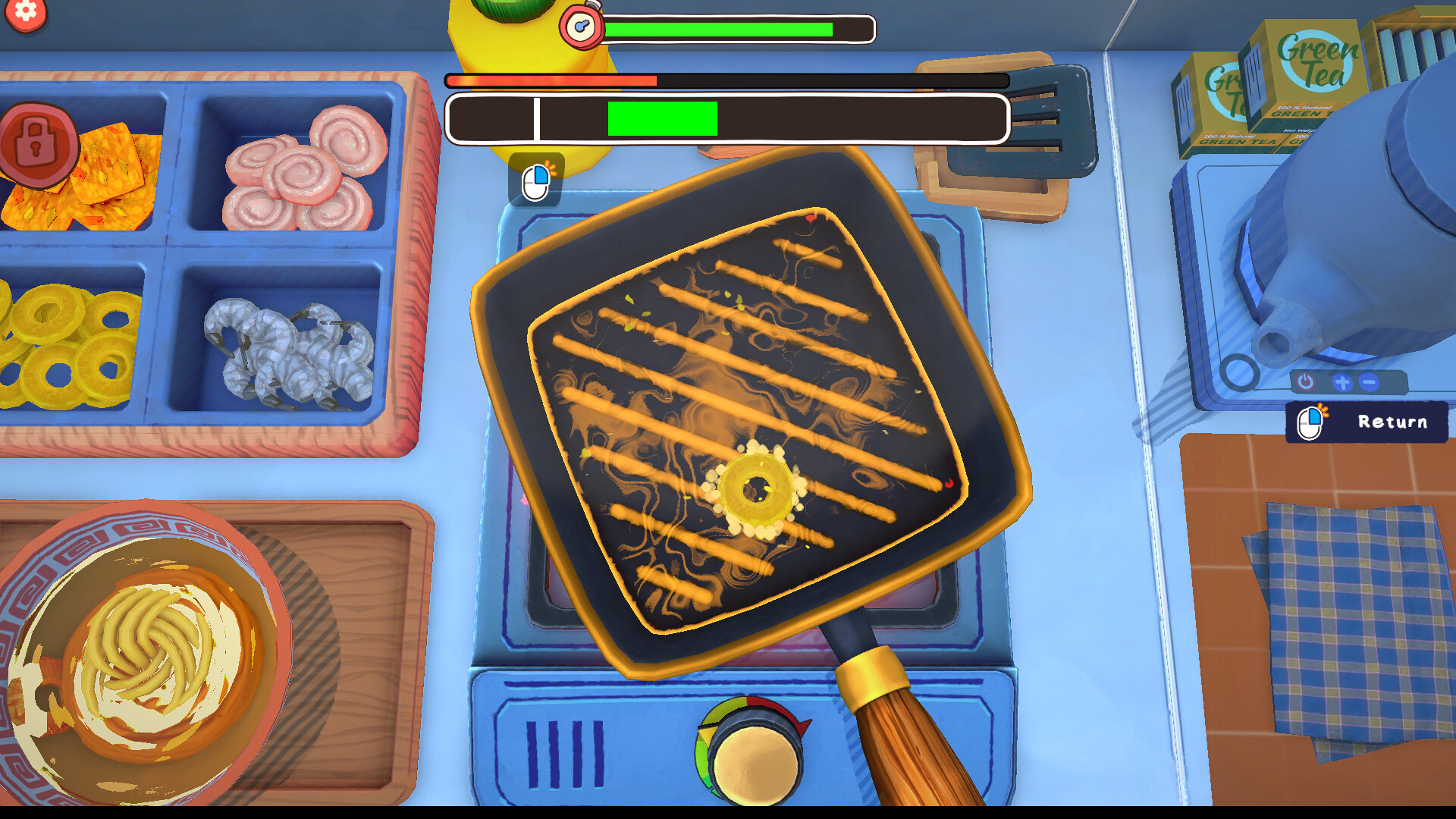
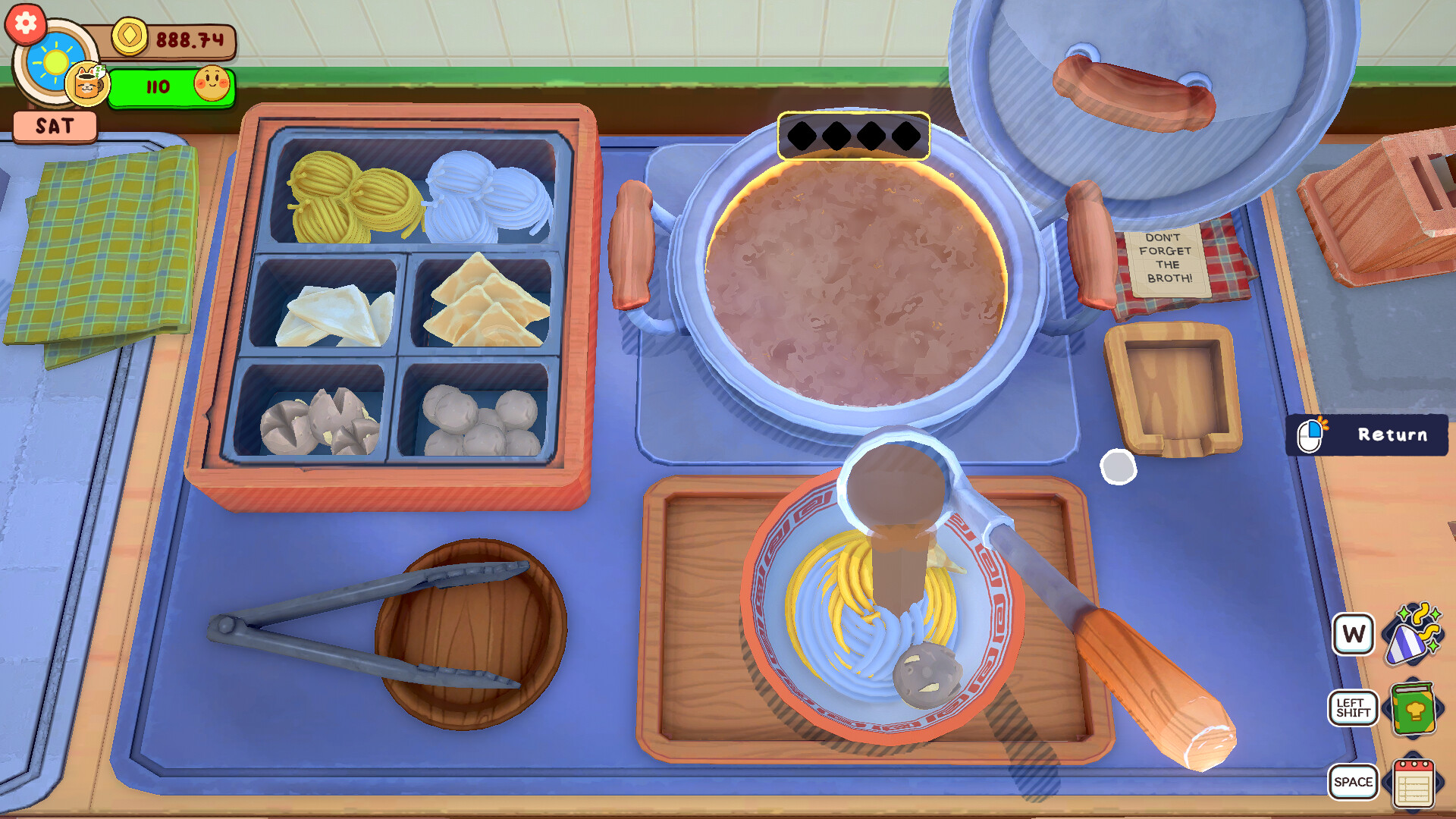
What sets KuloNiku apart in its review sample isn't just its Cooking Mama-adjacent structure, it's how specifically and lovingly it's rooted in Indonesian food and culture. Reviewers, including several writing as Indonesian players themselves, single out the accuracy and warmth of the game's menu, from meatball soup to satay to local juices, and praise small touches like item flavour text built from real regional sayings and idioms. That specificity extends to the writing more broadly: a colourful cast of returning characters, each with a distinct personality and slowly unfolding backstory, earns consistent praise for genuine charm and humour, and the game's "cozy mode," which removes all time pressure from cooking entirely, draws repeated gratitude from reviewers looking for a low-stress experience, including several who describe using the game specifically to unwind during illness, grief, or burnout.
Orders designed to trip you up
The single most consistently repeated complaint in this review sample, showing up in critical and glowing reviews alike, concerns how customer orders are constructed. Rather than simply ordering menu items, and often even soon after the tutorial, customers request heavily modified versions: a meatball soup with no meatballs, a spicy dish made "not spicy," an item with a core ingredient removed but its flavour somehow preserved. Reviewers repeatedly describe this less as satisfying culinary puzzle-solving and more as a "reading comprehension" exercise designed to catch players out, with several drawing unflattering comparisons to over-engineered coffee-shop order memes. It's clearly intentional, and plenty of reviewers do find the resulting absurdity funny rather than frustrating, one highlights "protecting my sanity from culinary war criminals" as a genuine highlight, but the sheer consistency with which reviewers across the spectrum single out this exact mechanic makes it the game's most notable design risk.
A loop that runs out of new things to teach you
A closely related and equally consistent complaint concerns pacing and repetition. Many reviewers, including a significant number who otherwise recommend the game enthusiastically, report unlocking all available recipes, ingredients, and kitchen upgrades well before the story concludes, leaving a final stretch of hours where the cooking loop has nothing new to offer and simply repeats with longer, more elaborate orders layered on top. Several detailed reviews suggest specific fixes the developers could consider, an auto-dishwasher upgrade, the ability to skip days once content is exhausted, or an order-simplifying upgrade, framing the issue less as a fundamental flaw than as a pacing problem the developers left unaddressed at launch. A smaller but real complaint from several long-time genre fans concerns difficulty: with no way to increase challenge beyond the default setting, more experienced cooking-sim players describe the minigames themselves as close to trivial throughout.
More visual novel than some expected
A meaningful minority of the review sample pushes back specifically on how the game was marketed, expecting a cooking-forward experience closer to the Papa's or Cook, Serve, Delicious series and instead finding a game where dialogue, cutscenes, and relationship-building occupy roughly as much time as actual cooking, particularly in the opening hours. Several reviewers describe feeling like they were still effectively in tutorial territory an hour or more into the game, with genuine mechanical freedom arriving only gradually. This isn't universally a complaint, many reviewers explicitly praise the visual-novel structure as the game's real strength, but it's worth flagging clearly for anyone whose primary interest is fast, mechanically dense cooking gameplay rather than a slower, story-led pace.
A cast worth getting to know, with a few gaps
Beyond the headline cooking complaints, the review sample has plenty to say about the game's relationship system specifically. Several reviewers praise the writing for individual characters as genuinely more mature and detailed than the genre typically offers, giving each regular a specific backstory, set of goals, and personality rather than a single defining trait. That said, a handful of reviewers flag real gaps: one detailed review notes a frustrating lack of male characters available to befriend in the opening hours despite an evidently large female cast, while another points out that end-game friendship grinding can become oddly arbitrary, since which character appears outside the shop on a given evening is partly randomized rather than prioritized toward relationships the player hasn't yet completed, turning the last stretch of a completionist run into repetitive waiting rather than deliberate choice. A smaller number of reviewers also wish for more character customization options, noting the fixed protagonist models limit how personally players can project themselves into the story, a detail that matters more in a game leaning this heavily on its cast and its player-insert framing.
Final Verdict
KuloNiku: Bowl Up! is a warm, culturally specific, and clearly heartfelt game that earns its Overwhelmingly Positive reception through genuine charm, distinctive art, and a setting that feels lived-in rather than generic. Its central tension, and one its own review sample is remarkably consistent about, is that the cooking loop meant to anchor all that charm doesn't hold up to sustained play as well as the writing and characters around it, growing repetitive and reliant on deliberately confusing orders rather than escalating skill-based challenge. For players drawn primarily to the story, the setting, and a genuinely relaxed cozy mode, that's an easy trade. For players hoping for a deep, ever-escalating cooking sim, it's worth tempering expectations before diving in.
Pros and cons
Pros
- A distinctly Indonesian setting and menu, featuring dishes like meatball soup and satay, comes through as genuinely specific and well-researched rather than generic, with reviewers, including Indonesian players, praising authentic cultural detail down to item flavour text
- A warm, slice-of-life visual novel structure built around a colourful cast of returning characters and their individual stories earns consistent praise for its charm, humour, and a relaxed "cozy mode" that removes time pressure entirely
- Distinctive, well-animated art and character design, along with restaurant customization and a turn-based cooking-tournament system layered on top of the core loop, give completionist players a genuine amount of content for the price
Cons
- The single most consistently repeated complaint across the sample concerns the deliberately convoluted customer orders, deep into the game, nearly every request demands a heavily modified version of a menu item rather than the item itself, which many reviewers describe as tedious "gotcha" busywork rather than satisfying cooking challenge
- A large number of reviewers, including many who otherwise recommend the game, report the core cooking loop becomes noticeably repetitive well before the story concludes, with several noting all recipes and upgrades are unlocked long before the credits roll
- The game leans heavily into visual-novel-style dialogue and daily cutscenes, which a significant minority of reviewers found disproportionate to the cooking they expected from the game's marketing, describing entire early hours as mostly story with limited actual cooking
- A handful of reviewers report specific technical and accessibility issues, including a locked game cursor with no unlock option that blocks screen-reader and OCR accessibility tools, and at least one report of lost save progress after reinstalling from a demo
Screenshots
-
KuloNiku: Bowl Up!Image: Raw Fury via Steam -

KuloNiku: Bowl Up!Image: Raw Fury via Steam -
KuloNiku: Bowl Up!Image: Raw Fury via Steam