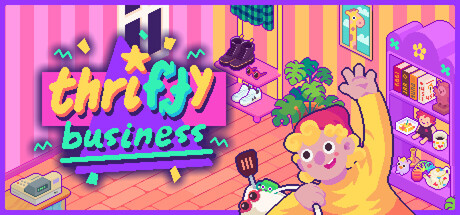
Game review
Thrifty Business
6.5 / 10
- Developer
- Spellgarden Games
- Publisher
- Spellgarden Games
- Released
- 18 May 2026
- Platforms
- Windows
- Genre
- Casual, Simulation
- Monetisation
- One-time purchase
- Players
- Single-player
The short version
Thrifty Business, released 18 May 2026, casts the player as the proprietor of a secondhand shop, unpacking mystery boxes of donated goods and arranging them into themed displays for a cast of regular customers. Its review sample is overwhelmingly warm, praising the art, the inclusive customer stories, and a genuinely addictive "just one more day" loop, but a very consistent secondary thread agrees the game is thin: most players report finishing all the content within five to fifteen hours, after which the shop stops asking anything new of them, and there is almost no actual shopkeeping, no pricing, no risk, no way to lose, underneath the decorating.
Biggest strengths
- A relaxing, tactile unpacking-and-organizing loop, opening mystery boxes of secondhand goods and slotting them into shelves, earns consistent comparisons to Unpacking and is repeatedly described as genuinely addictive, with many reviewers reporting long, unplanned sessions
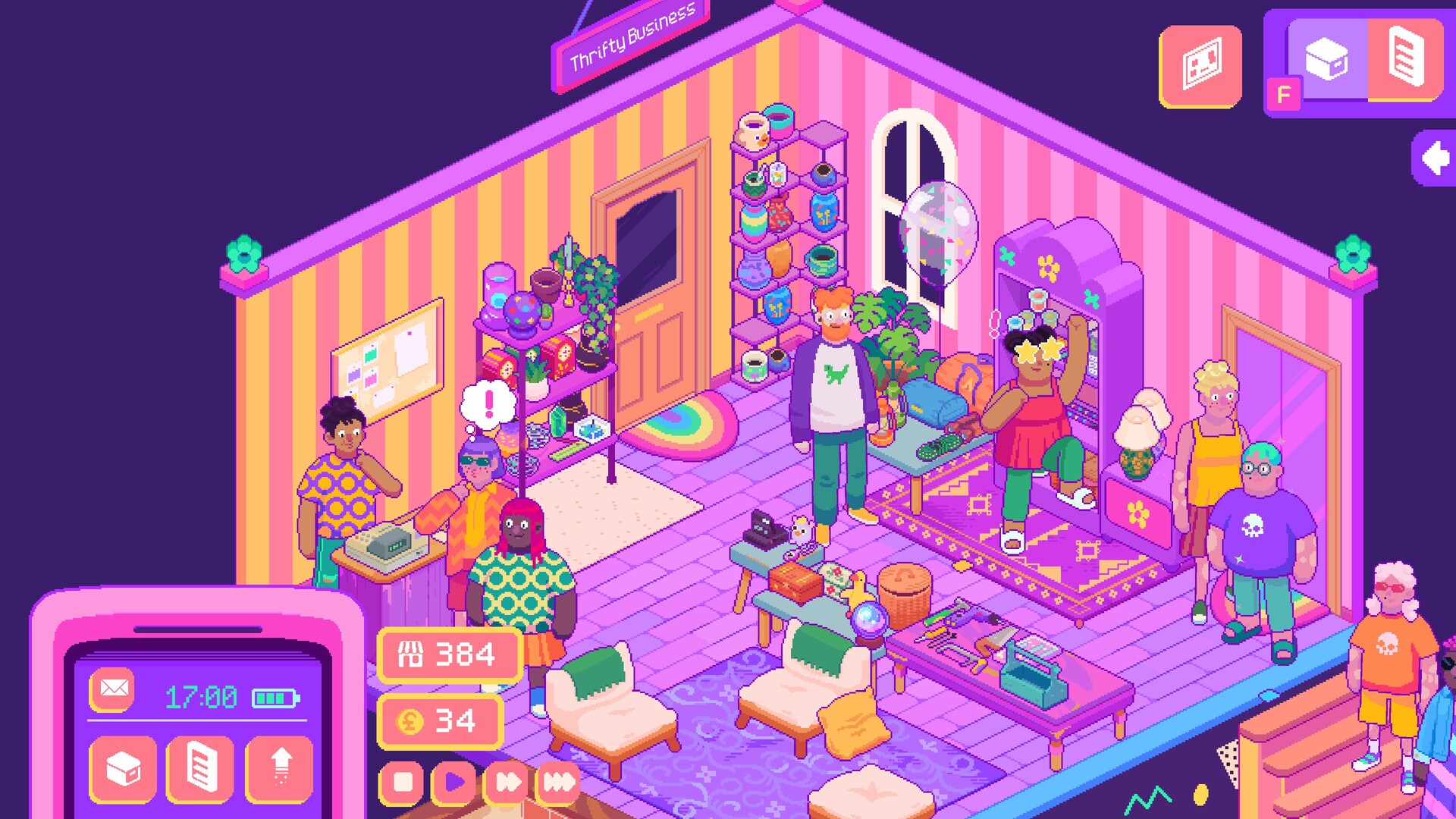
- A diverse, low-stakes cast of regular customers with short, heartfelt personal stories, and the ability to host themed community events that unlock new decor, draws consistent praise for its warmth and inclusivity, including explicit LGBTQ+ representation
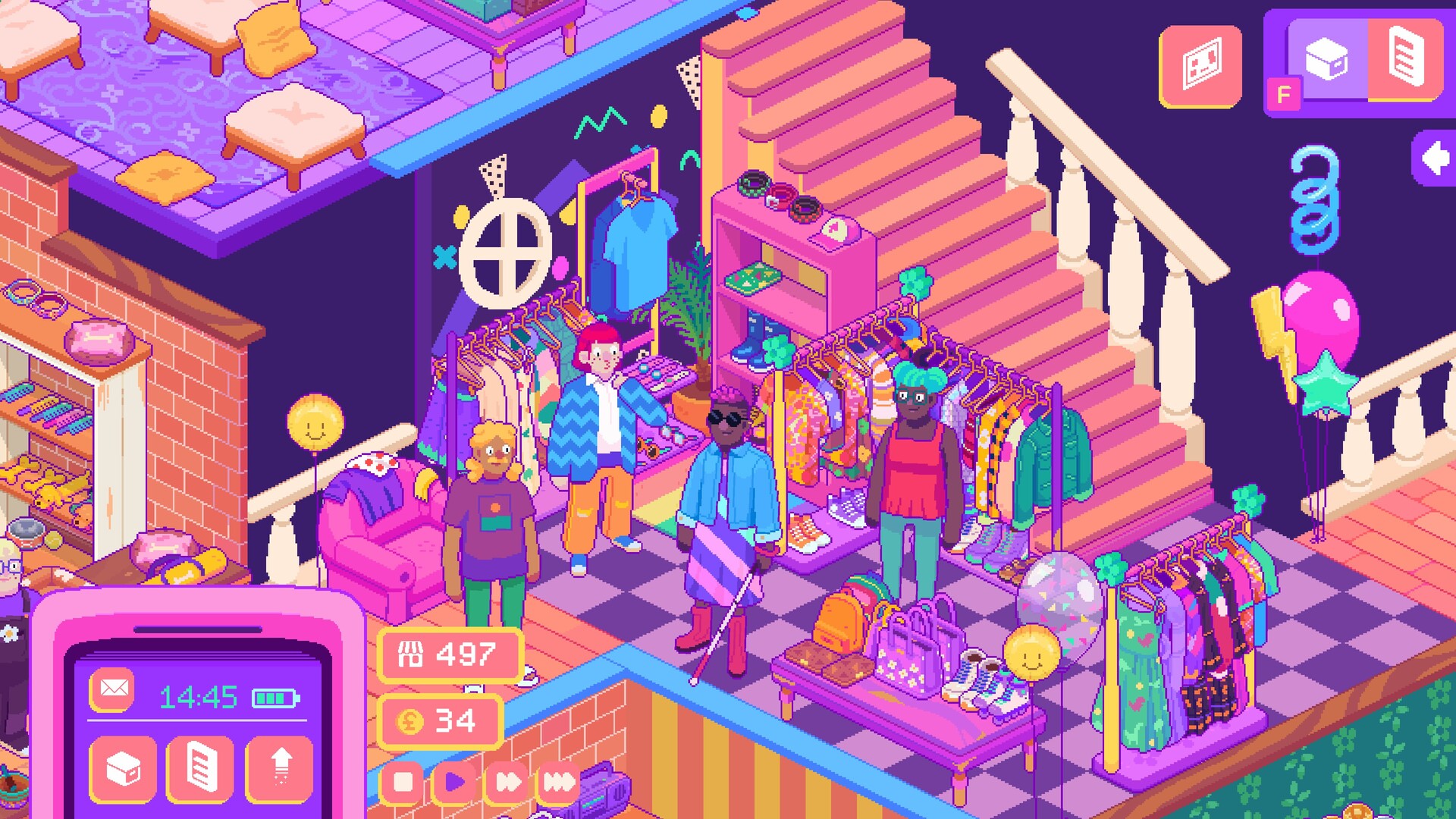
- Extensive shop customization, hundreds of nostalgic items, multiple furniture themes, adjustable wallpaper and flooring, and a colour-saturation accessibility slider, gives decorating-focused players a lot of room to make a space genuinely their own
Biggest weaknesses
- The overwhelming majority of the sample, across both positive and negative reviews, reports that once character stories are finished, commonly within five to fifteen hours, there is nothing new left to do beyond restocking the same random item pool indefinitely
- There is essentially no shop management to speak of: prices are fixed automatically, customers never get upset, and there is no way to fail or lose money, which several reviewers found made the "business" framing feel hollow next to genre peers like Tiny Bookshop
- Items arrive in random blind boxes with no way to request specific categories, making it difficult to intentionally curate a themed section of the shop, and several reviewers report the same item types recurring far more often than others
Who it's for: Fans of Unpacking-style organizing games and Spellgarden's earlier Sticky Business who want a low-stakes decorating loop, rather than players looking for a genuine shop management challenge.
Our recommendation: A lovely, low-pressure decorating game that's easy to fall into for a weekend, but buyers expecting real shopkeeping depth, or more than about ten hours of fresh content, should temper expectations before paying full price.
6.5 / 10
Thrifty Business puts the player behind the counter of a secondhand shop, unpacking mystery boxes of donated goods and arranging them into shelves and displays for a small, close-knit cast of regular customers. Released 18 May 2026 by Spellgarden Games, the studio behind Sticky Business, it wears its influences openly: equal parts Unpacking's tactile item-sorting and Sticky Business's cozy, character-driven storefront management. Its review sample is genuinely glowing, but a very consistent secondary chorus, showing up in both critical and enthusiastic reviews alike, agrees on exactly where the game falls short.
An addictive, tactile unpacking loop
The core appeal, buying a box of secondhand goods sight-unseen and pulling items out one at a time to shelve, sell, or display, is described across dozens of reviews as immediately satisfying and hard to put down. Reviewers repeatedly invoke the "just one more day" feeling, several reporting they sat down for a quick session and looked up hours later. The pixel art is singled out constantly for its charm and specificity: hundreds of distinct, often very funny nostalgic items, a knockoff Elmo plushy tagged as "witchy," rows of fanny packs and banker's lamps, that reward players who enjoy simply looking closely at what they've bought. A colour-saturation slider and a "clean font" accessibility option also draw specific, appreciative mentions from reviewers who found the game's default vibrant palette overwhelming.
Warm, inclusive customer stories
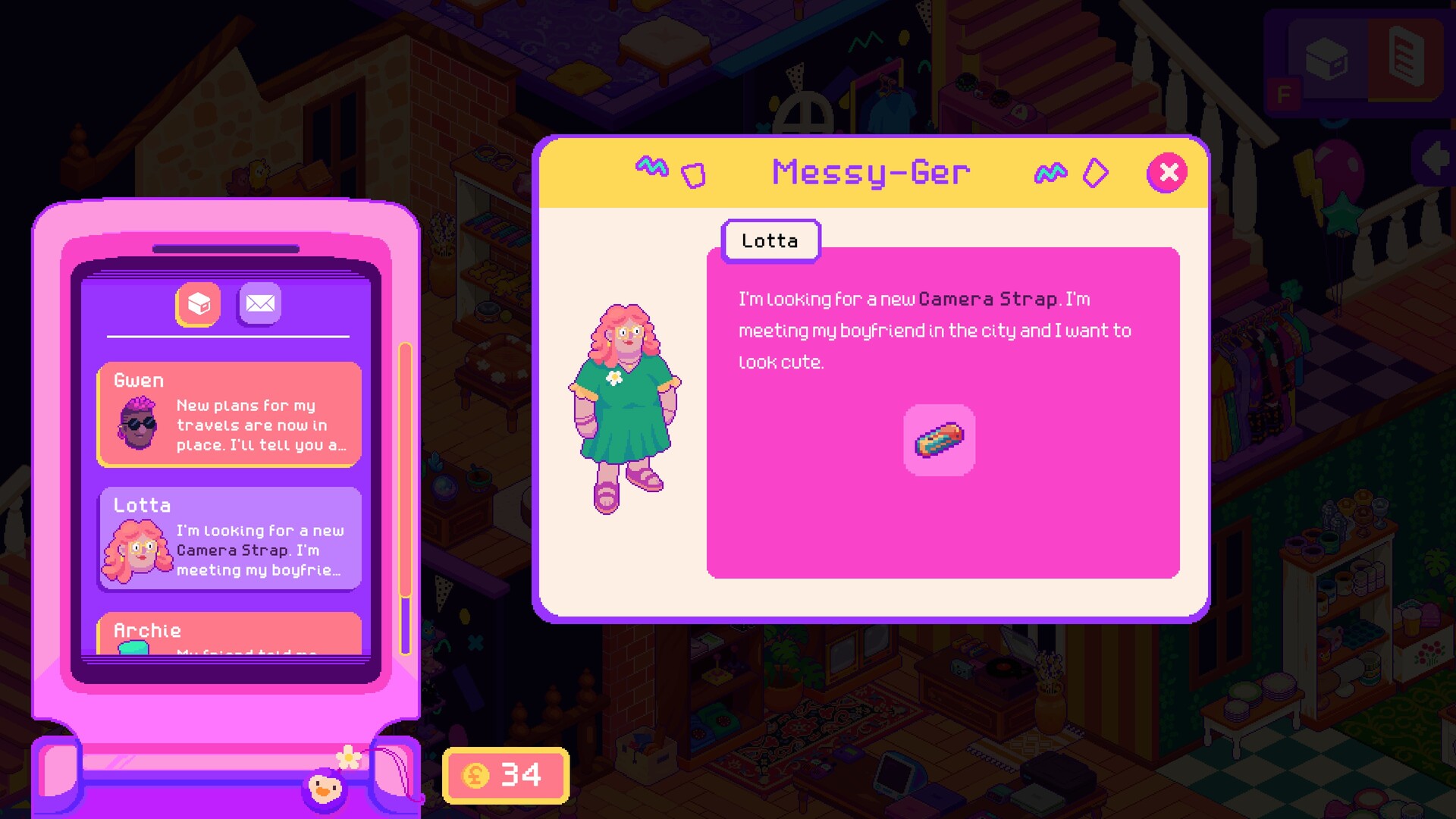
Thrifty Business leans heavily into a cast of returning customers, each with a short personal story that unfolds as the player fulfils their item requests and hosts themed community events, a queer date night, a grief support group, a book club. This drew consistent, often emotional praise across the sample, with reviewers repeatedly highlighting the game's LGBTQ+ representation, diverse character designs, and general sense that the shop functions as a genuine community hub rather than just a backdrop. Several reviewers explicitly credit this element, alongside the game's accessibility options, with making the whole experience feel unusually welcoming. It's not without critics, though: a handful of reviewers who otherwise enjoyed the game found the dialogue itself thin or "corporate," arguing that big themes like grief and found family deserved more than the brief, skippable text boxes the game gives them.
Content that runs out faster than the enthusiasm does
The single most consistently repeated criticism in this review sample, echoed even by many five-star reviews, is how quickly the game's content is exhausted. Reviewers commonly report finishing every customer's story, unlocking every room, and running out of new decorations somewhere between five and fifteen hours in, after which the loop becomes restocking the same random item pool with nothing new to work toward. Several detailed reviews describe this transition explicitly: one player who tracked their own playtime found themselves with every story complete, every shop point spent, and several hours left simply refilling shelves because there was nothing else to do. This isn't a universal complaint, plenty of reviewers are happy to keep decorating indefinitely purely for its own sake, but as a piece of consistently repeated feedback across an Overwhelmingly Positive sample, it's a real signal about the game's shelf life relative to its asking price.
Barely any actual "business"
A closely related complaint concerns the game's framing as a management sim, which a significant number of reviewers argue it doesn't really earn. Prices are set automatically with no player input, customers never leave unhappy or complain about wait times, and there is no way to lose money, run out of stock entirely, or otherwise fail at anything. Several reviewers make direct, specific comparisons to genre peers like Tiny Bookshop or Supermarket Simulator, arguing those games retain at least some sense of stakes or active decision-making that Thrifty Business strips out entirely in favour of pure, consequence-free decorating. One especially blunt review describes the entire "business" layer as functionally an idle clicker wrapped around an organizing game. None of this makes the decorating itself less pleasant, but it does mean players hoping for genuine shopkeeping challenge are likely to be disappointed by what's actually here.
Random boxes and an unexplained progression system
Beyond content length, two more specific mechanical complaints recur often enough to be worth flagging. First, items arrive purely through random "blind box" purchases with no way to request a particular category, which several reviewers say makes it frustratingly difficult to intentionally build out a themed section of the store, one reviewer trying to curate a gothic aesthetic reported being constantly flooded with unrelated items instead. Second, the game's core progression mechanic, a "category tag" system that rewards grouping similar items together with community points used to unlock new decor, is never explained in-game. Multiple detailed reviews describe spending hours trying to reverse-engineer the placement rules from vague community-hub explanations, with one extensive review noting the game never clarifies concepts like an item's effective "radius" or how many tiles apart grouped items can be and still count. A smaller cluster of reviews also report scattered bugs: one player's tutorial became stuck in a permanently unresolvable glitch, and another noted checkout totals occasionally appearing reversed.
Final Verdict
Thrifty Business succeeds completely at what it sets out to do in its first several hours: a warm, beautifully illustrated, genuinely addictive unpacking-and-decorating loop wrapped around a diverse, likeable cast of customers. Where it comes up short, and its own overwhelmingly positive review sample agrees on this almost unanimously, is in depth and longevity. There's no real shopkeeping challenge underneath the decorating, item drops are frustratingly random for anyone trying to curate a specific look, and the content itself is reliably exhausted well before most players are ready to stop. Worth picking up for a cozy weekend or two, especially for fans of Unpacking or the developer's earlier Sticky Business, but it's a shorter, shallower experience than its glowing review score might suggest.
Pros and cons
Pros
- A relaxing, tactile unpacking-and-organizing loop, opening mystery boxes of secondhand goods and slotting them into shelves, earns consistent comparisons to Unpacking and is repeatedly described as genuinely addictive, with many reviewers reporting long, unplanned sessions
- A diverse, low-stakes cast of regular customers with short, heartfelt personal stories, and the ability to host themed community events that unlock new decor, draws consistent praise for its warmth and inclusivity, including explicit LGBTQ+ representation
- Extensive shop customization, hundreds of nostalgic items, multiple furniture themes, adjustable wallpaper and flooring, and a colour-saturation accessibility slider, gives decorating-focused players a lot of room to make a space genuinely their own
Cons
- The overwhelming majority of the sample, across both positive and negative reviews, reports that once character stories are finished, commonly within five to fifteen hours, there is nothing new left to do beyond restocking the same random item pool indefinitely
- There is essentially no shop management to speak of: prices are fixed automatically, customers never get upset, and there is no way to fail or lose money, which several reviewers found made the "business" framing feel hollow next to genre peers like Tiny Bookshop
- Items arrive in random blind boxes with no way to request specific categories, making it difficult to intentionally curate a themed section of the shop, and several reviewers report the same item types recurring far more often than others
- Multiple reviewers report the store's progression system, a "category tag" mechanic that unlocks decorations, is never explained in-game and requires reverse-engineering an undocumented placement formula from the community hub
Screenshots
-
Thrifty BusinessImage: Spellgarden Games via Steam -
Thrifty BusinessImage: Spellgarden Games via Steam -
Thrifty BusinessImage: Spellgarden Games via Steam