Game review
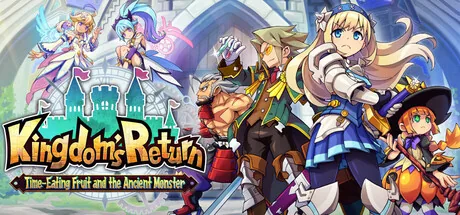
Kingdom's Return: Time-Eating Fruit and the Ancient Monster
5.1 / 10
- Developer
- INTI CREATES CO., LTD.
- Publisher
- INTI CREATES CO., LTD.
- Released
- 23 April 2026
- Platforms
- [Windows]
- Genre
- Action RPG
- Monetisation
- Premium
- Players
- false
The short version
Kingdom's Return looks every bit the INTI Creates game, gorgeous sprite work and tight boss fights, but stiff combat, a shallow kingdom-building layer, and a runtime some players clear in a single sitting have made it a genuinely divisive entry in the studio's catalogue.
Biggest strengths
- Gorgeous sprite art and pixel animation, universally praised even by the review sample's harshest critics
- Genuinely fun, well-honed boss fights across all four playable classes
- Pleasant, consistently upbeat music and sound design
Biggest weaknesses
- Stiff, unresponsive combat with no motion-cancelling, criticized repeatedly even by otherwise positive reviewers
- A shallow kingdom-building layer that amounts to placing buildings for flat stat bonuses rather than a real management system
- A short runtime, most reviewers report four to eight hours to a true ending, undercut further by frequent interrupting results screens between short segments
Who it's for: INTI Creates completionists and fans of short, casual mission-based action RPGs who don't need much depth from the systems around the combat.
Our recommendation: Recommended with reservations
5.1 / 10
A fallen kingdom, a mission board, and a fairy who owes you time
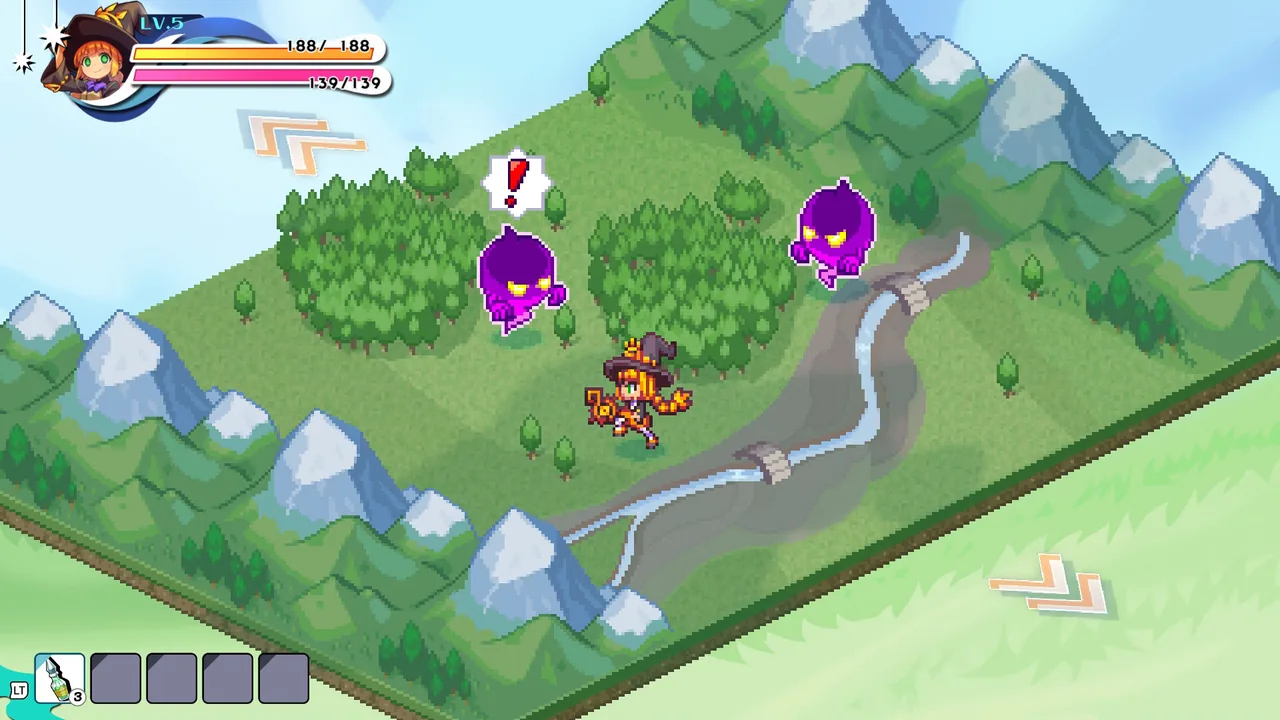
Kingdom's Return: Time-Eating Fruit and the Ancient Monster, developed and self-published by INTI Creates, launched April 23, 2026 (a few hours later than planned after a Valve-side backend delay). Its structure alternates between two loops: 2D side-scrolling mission stages where you fight through short dungeon segments as one of four classes, and a town-building layer where the materials collected in those stages get spent constructing buildings that boost your kingdom's stats. It's the studio best known for Azure Striker Gunvolt and Dragon Marked for Death applying its signature pixel-art action to a lighter, more accessible RPG hybrid, and the Dragon Marked for Death comparison comes up constantly in the review sample, several reviewers explicitly call this "Dragon Marked for Death, but single-player." It launched to a Mixed reception, 97 reviews split almost exactly down the middle at roughly 51%, one of the more genuinely divided scores this lane has covered.
The art carries the game
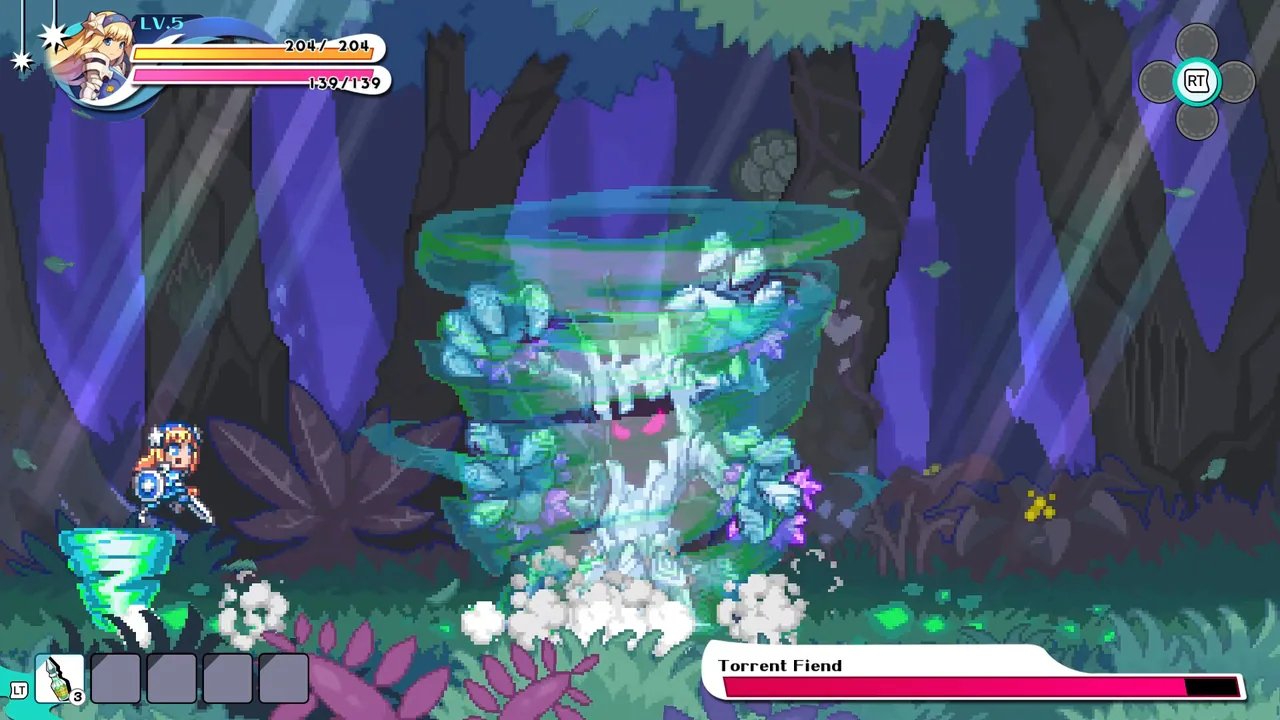
If there's one point of near-total consensus in the review sample, it's the presentation. Even the harshest negative reviews concede the sprite work, character art, and music are excellent, one reviewer who calls it possibly "Inti Creates' first outright bad game" still credits "the Inti staple of gorgeous sprite art" as the game's one clear strength. Boss fights in particular draw consistent praise across both positive and negative reviews, described as tight, varied by class, and genuinely well-designed even by reviewers who otherwise recommend against buying.
Combat that fights back against itself
The core complaint that appears most often, in English, Japanese, Chinese, and Korean reviews alike, is how stiff the combat feels. Multiple reviewers specifically call out the lack of motion-cancelling, meaning attack animations lock you in place with no way to dash or jump out partway through, a frustrating limitation in what's otherwise an action game built around dodging and repositioning. One Korean reviewer, having cleared the game with every character, singles this out as the single biggest complaint: "why does this action game not let you cancel moves with a dash or jump?" Enemy variety is also thin, several reviewers describe fighting the same small handful of enemy types across most of the game's runtime, which compounds the repetitiveness once the initial novelty of each class wears off.
A kingdom that's mostly a spreadsheet
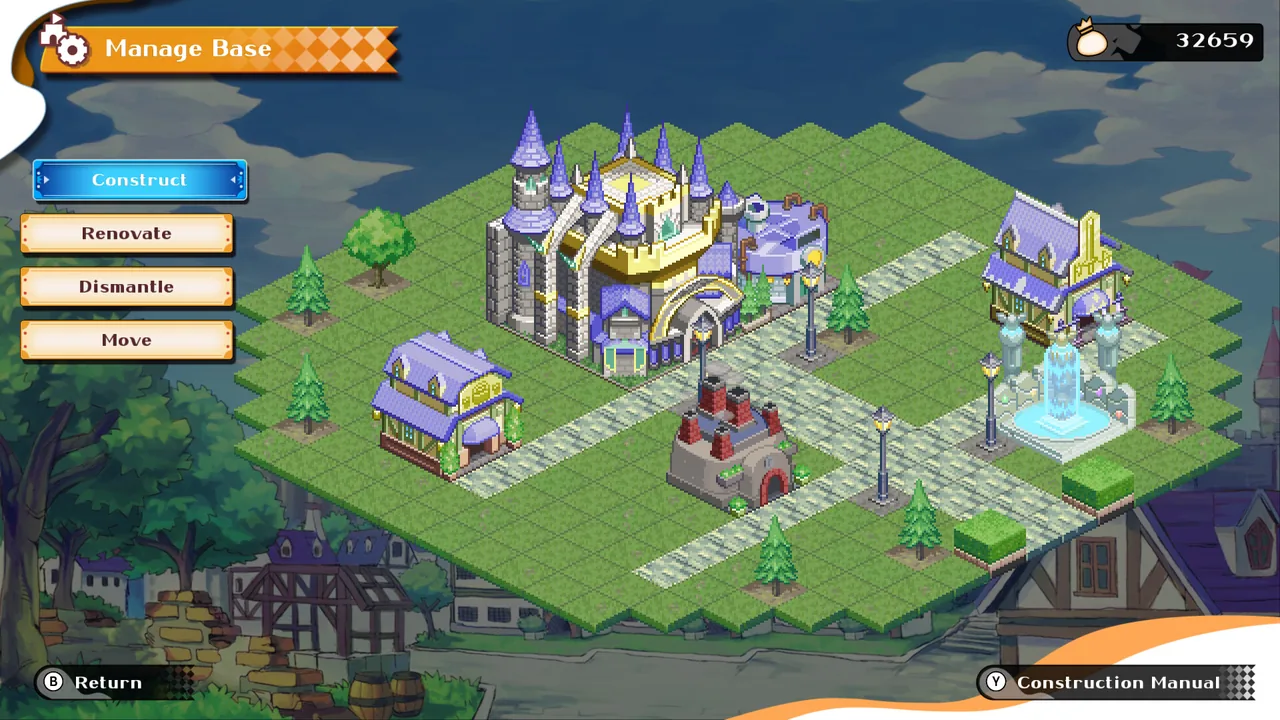
The town-building half of the pitch draws the most consistently disappointed reviews. Rather than a real management system, building placement functions almost entirely as a flat stat-boost mechanic, you place a building, a number goes up, and there's little visual or strategic feedback beyond that. Several reviewers note diminishing returns for building duplicates and confusing limits on how many stat-granting structures you can place per tier, with one Korean reviewer describing spending real time trying to find a way to "enter" the shops before realizing they're purely passive stat objects. It's a system that sounds more ambitious in the store description than it plays, and it's the single most-cited reason reviewers give for scoring the game down despite liking the combat itself.
Short, and stretched thinner than it should be
Runtime estimates cluster tightly, most reviewers report reaching a "normal" ending in four to six hours and a true ending in six to nine, including a full achievement clear. At $14.99 (frequently discounted at launch), several reviewers explicitly do the math and find it wanting, one calls it "50 minutes of content stretched to four hours" by repetition, and multiple reviews single out the frequency of interrupting results screens between short dungeon segments as actively working against the pacing rather than supporting it. Reviewers who bought all four classes for extra playthroughs note levels aren't shared between characters, turning a repeat run into a near-total restart rather than a genuine alternate-build experience.
Balance that swings hard between classes
Class balance draws sharp, specific criticism from players who tried more than one. The Zipango (rogue-adjacent) and Wizard classes are repeatedly described as trivializing entire encounters through spammable high-damage abilities, while other classes, particularly early-game melee options, feel comparatively weak and tedious by comparison. It's the kind of imbalance that colors the whole experience differently depending purely on which class a given player happened to pick up first, several less enthusiastic reviews specifically mention struggling with an underpowered starting class before switching to a stronger one and enjoying the game considerably more.
Where it lands for existing fans
A recurring thread among more positive reviews is that this reads as a minor, budget-scale INTI Creates release rather than a flagship, several reviewers frame their recommendation in terms of expectations, "for $15 you can't expect that much," "built and scaled like a $20 DS or PSP game... and I respect that." That framing softens the criticism considerably for genre veterans and existing fans of the studio's catalogue, while doing little to win over reviewers hoping for something closer to the depth of Dragon Marked for Death.
The verdict
Kingdom's Return delivers exactly the sprite art and boss-fight polish INTI Creates fans expect, wrapped around combat and kingdom-building systems that feel notably thinner and stiffer than the studio's stronger work. It's a genuinely mixed release, short, uneven in balance, and light on systems depth, that's earning its fans mostly among players willing to treat it as a casual, budget-scale side project rather than a must-play entry in the developer's library.
Pros and cons
Pros
- Gorgeous sprite art and pixel animation, universally praised even by the review sample's harshest critics
- Genuinely fun, well-honed boss fights across all four playable classes
- Pleasant, consistently upbeat music and sound design
- An accessible, low-stakes difficulty curve that's easy to pick up in short sessions
Cons
- Stiff, unresponsive combat with no motion-cancelling, criticized repeatedly even by otherwise positive reviewers
- A shallow kingdom-building layer that amounts to placing buildings for flat stat bonuses rather than a real management system
- A short runtime, most reviewers report four to eight hours to a true ending, undercut further by frequent interrupting results screens between short segments
- Steep class balance issues, with a couple of classes trivializing content while others feel underpowered
Screenshots
-
Kingdom's Return: Time-Eating Fruit and the Ancient MonsterImage: INTI CREATES CO., LTD. via Steam -
Kingdom's Return: Time-Eating Fruit and the Ancient MonsterImage: INTI CREATES CO., LTD. via Steam -
Kingdom's Return: Time-Eating Fruit and the Ancient MonsterImage: INTI CREATES CO., LTD. via Steam -
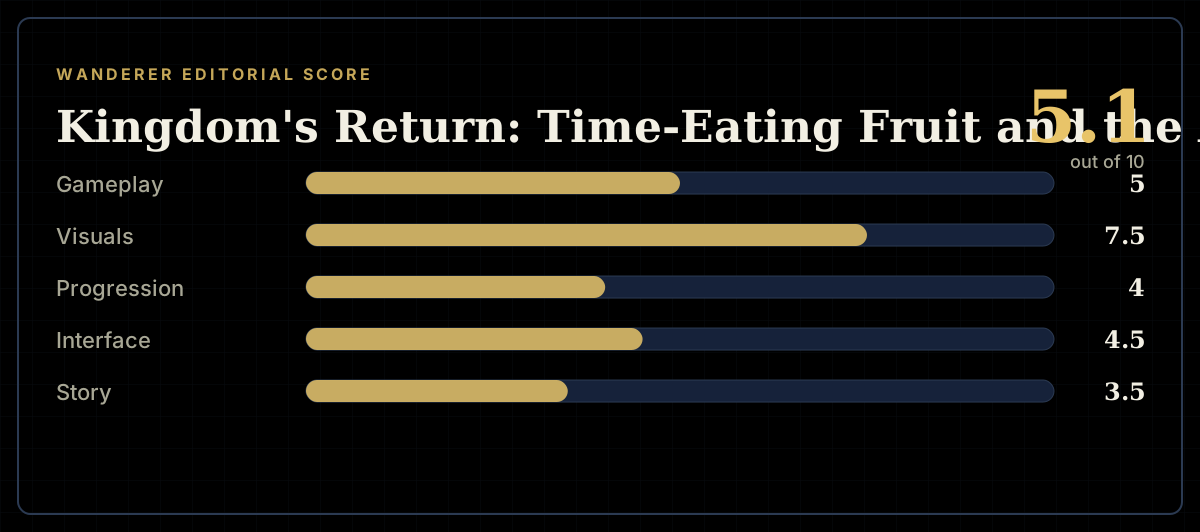
How the review scores each part of the gameWanderer Editorial -
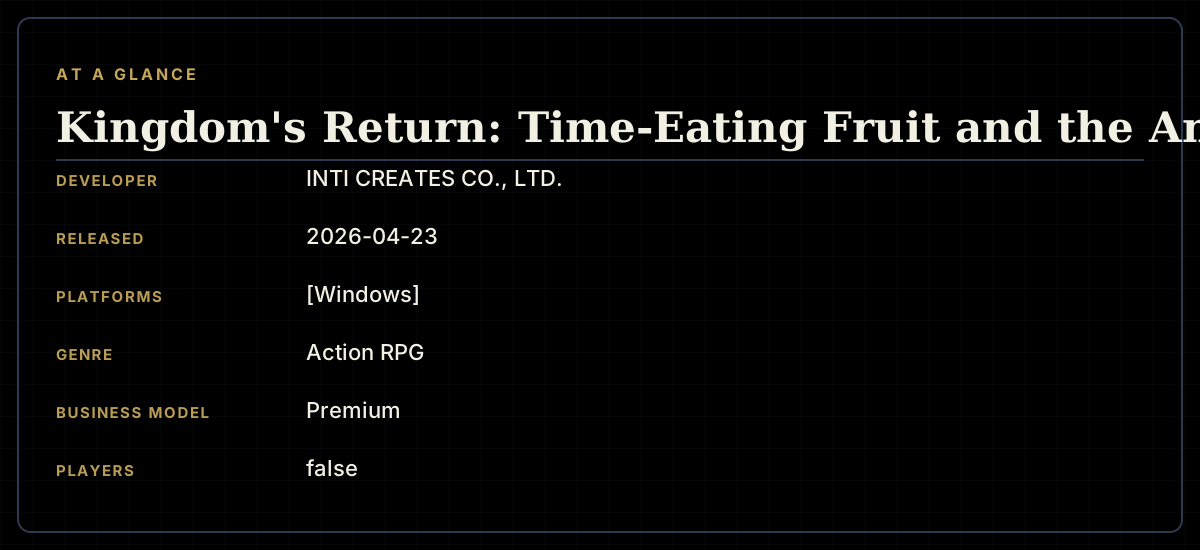
Key facts at a glanceWanderer Editorial -
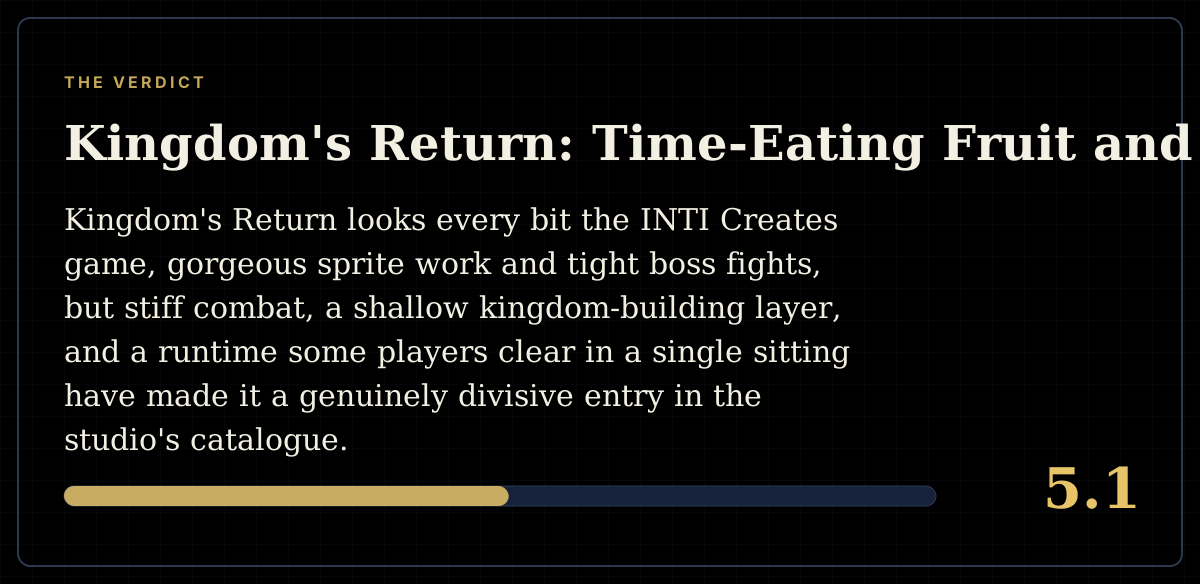
The short versionWanderer Editorial