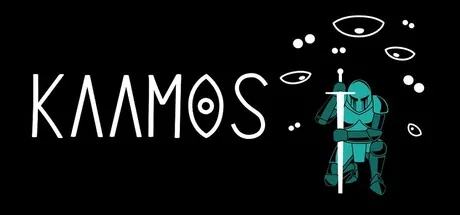
Game review
Kaamos: Puzzle Roguelike
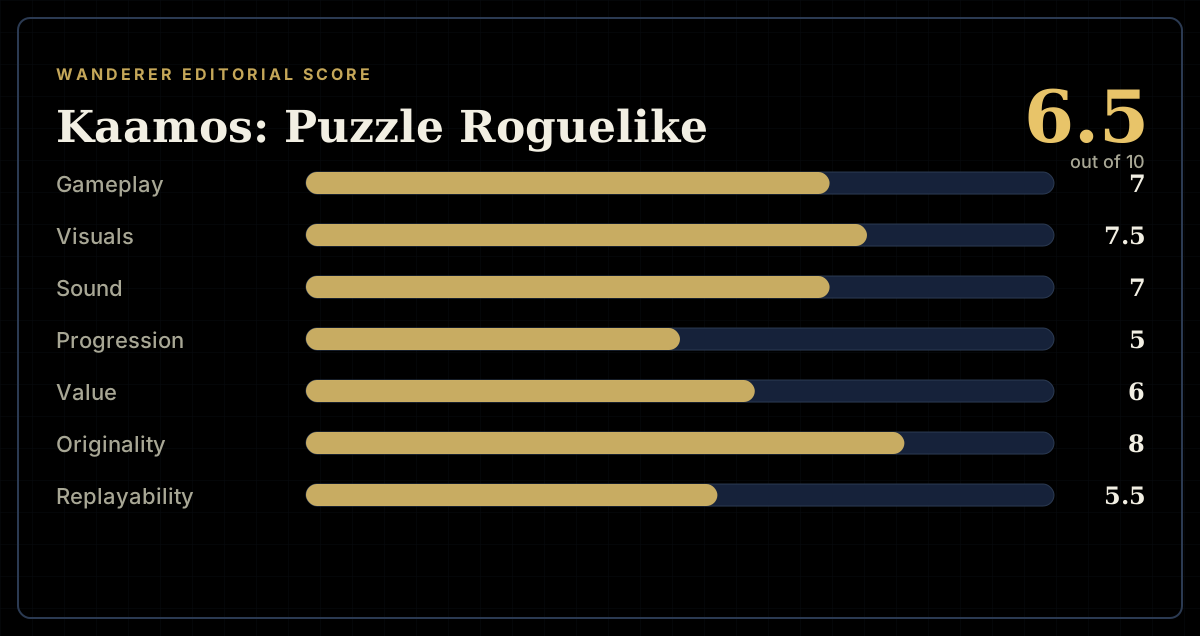
6.5 / 10
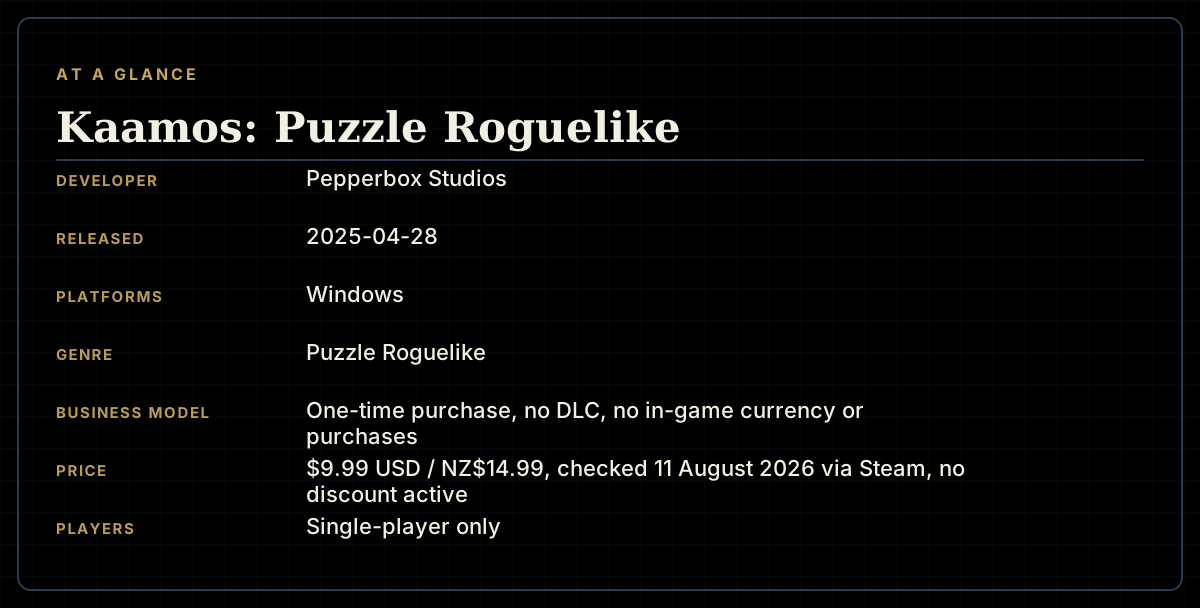
- Developer
- Pepperbox Studios
- Publisher
- indie.io
- Released
- 28 April 2025
- Platforms
- Windows
- Genre
- Puzzle Roguelike
- Monetisation
- One-time purchase, no DLC, no in-game currency or purchases
- Players
- Single-player only
The short version
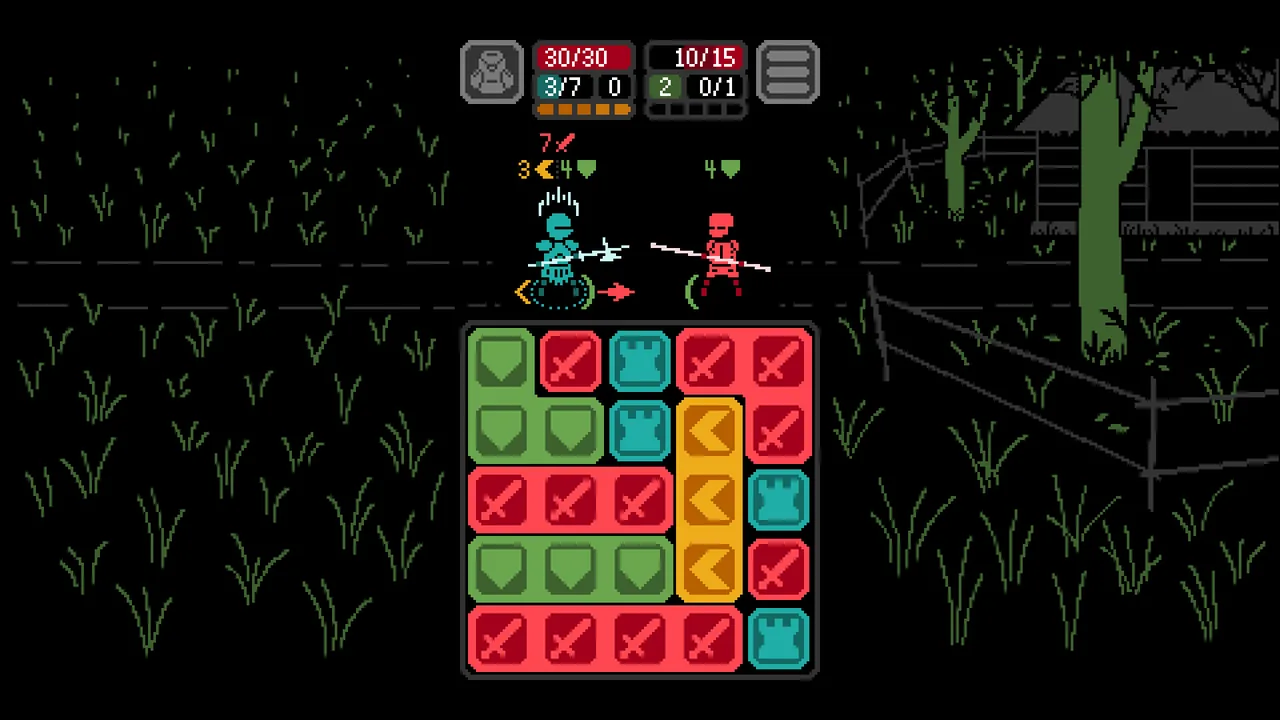
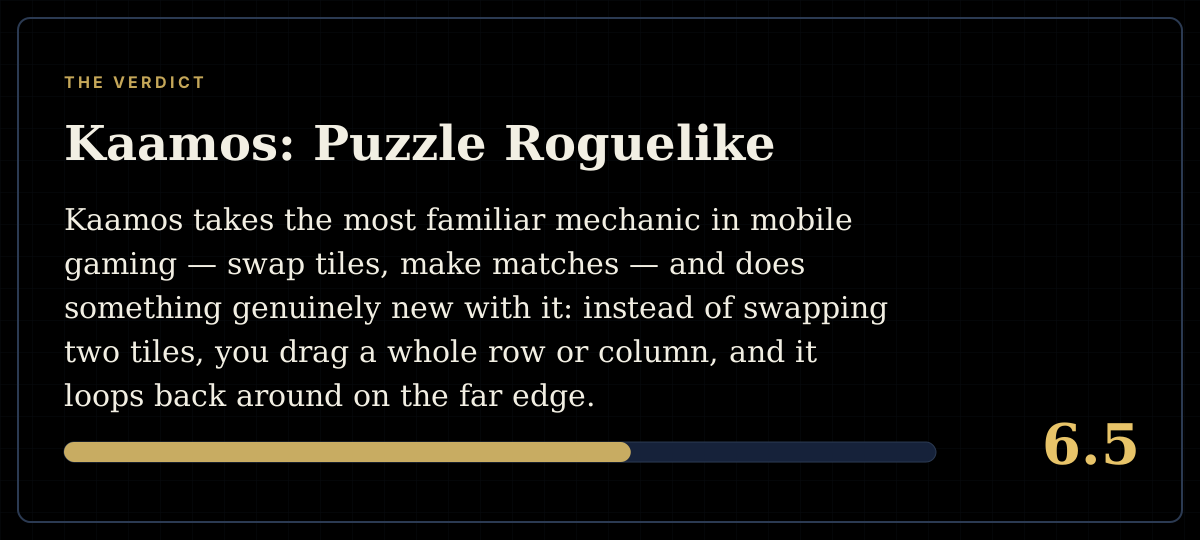
Kaamos takes the most familiar mechanic in mobile gaming — swap tiles, make matches — and does something genuinely new with it: instead of swapping two tiles, you drag a whole row or column, and it loops back around on the far edge. Reading that wraparound grid a beat ahead of an enemy you can already see coming is a real puzzle, and looted gear changes the tile pool itself rather than just your stats, so a build actually plays differently rather than just hitting bigger numbers.
What Kaamos hasn't solved is what happens once that idea has been seen a few times. Defence, armour and dodge stats can stack high enough on both sides that fights stall into a slow, attritional stand-off, five characters and three zones recycle the same handful of bosses at every checkpoint, and Steam's own achievement data shows the overwhelming majority of players never get past the first real difficulty wall. At $9.99 it's a fair asking price for what's here — the problem is how quickly "what's here" runs out.
Biggest strengths
- Dragging a full row or column that wraps around the board edge is a real, unusual twist on match-3 that rewards reading the grid a move ahead rather than reacting to it
- Equipment changes your available tile colours and match shapes, not just your numbers, so switching a two-handed weapon for a shield-and-dagger pair genuinely changes how a fight plays
- A stark, near-monochrome pixel art style and a quiet, atmospheric soundtrack sell the "the Sun never rose again" premise convincingly for a $9.99 game
Biggest weaknesses
- Defence, armour and dodge stats can stack on both sides until a fight becomes a slow attrition loop rather than a tactical one, a complaint that recurs across negative reviews from launch week through mid-2026
- Only five playable characters and three zones, each recycling the same boss at every checkpoint, so the 180-plus item count sits on a much smaller structural foundation than the number implies
- Global achievement data shows a steep cliff after the opening stretch — completion falls from around two-thirds to under a third, and the final story milestones sit under 2%
Who it's for: Puzzle players who want their match-3 to have actual stakes, and roguelike fans curious about a genuinely different spin on tile-matching combat. Less suited to anyone chasing a long campaign, a deep character roster, or matches that resolve quickly rather than grinding down to the last point of armour.
Our recommendation: Worth its low asking price for the core idea alone, best enjoyed in short bursts rather than as a long-haul roguelike — go in expecting a handful of hours of genuine cleverness rather than a system built to survive dozens of runs.
6.5 / 10
Steam's own pull-quote for Kaamos, credited to the outlet Qualbert, calls it "Bejewelled but make it Dark Souls." That's a better summary than most marketing copy manages, and it points at exactly what's interesting here: a puzzle mechanic everyone has already mastered, repurposed as the entire combat system of a grim, permadeath roguelike. Pepperbox Studios' bite-sized duel-roguelike, out since April 2025 from Finnish developers under publisher indie.io, spends its best ideas on the board itself and its weakest on everything that's supposed to keep you coming back to it.
A match-3 board that fights back
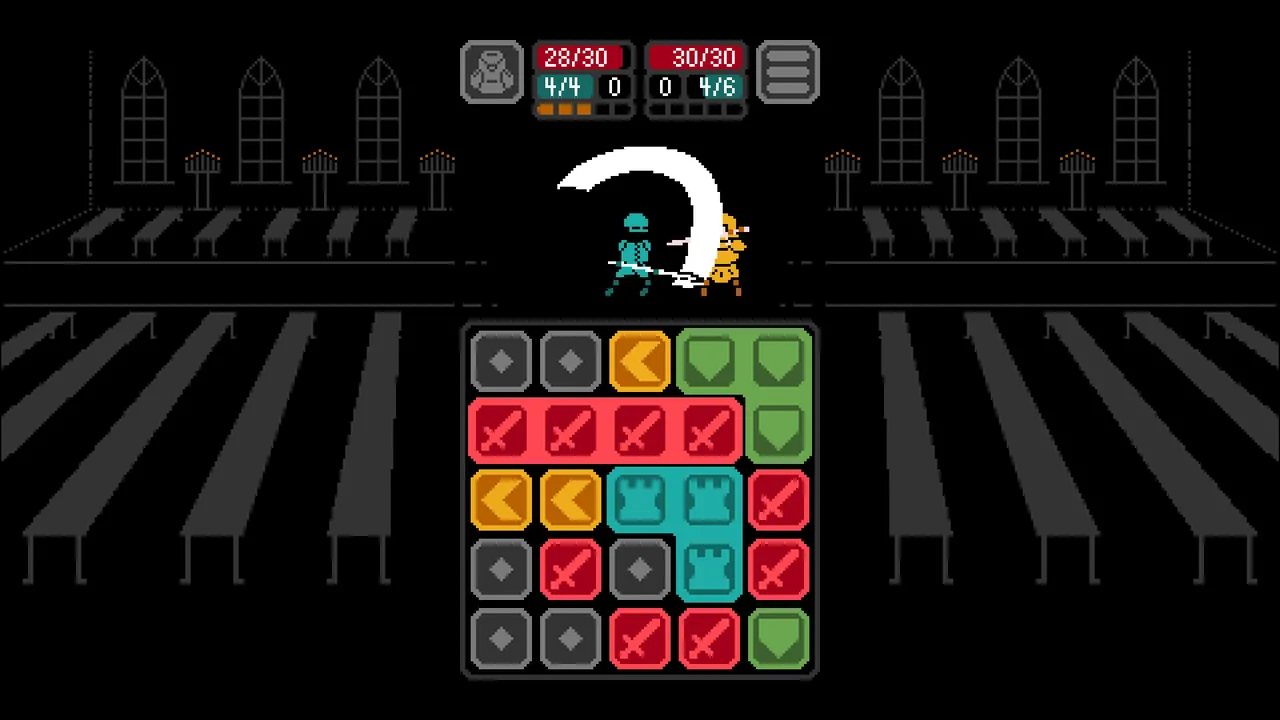
The core loop replaces the genre's usual tile-swap with something structurally different: instead of swapping two adjacent tiles, you drag an entire row or column, and it loops back around on the opposite edge like a conveyor belt. Matching same-coloured tiles resolves into attacks, blocks or dodges depending on which colour you've lined up, and because you can see the enemy's next move in advance, every drag is a response to a specific, telegraphed threat rather than a blind cascade chase. It's a genuinely different way to read a grid than swap-based match-3 asks for, closer to solving a sliding puzzle under a countdown than clearing gems for points, and it's the single best reason this game exists rather than being one more skin on a fifteen-year-old formula.
Equipment does real work on top of that board rather than sitting beside it as a stat sheet. Over 180 weapons, armour pieces and rings are described on the store page, and reviewers who've spent real time with the game back up that looting a new item changes which tile colours and shapes you're working with, not just the numbers attached to them. Swap from a heavy two-handed weapon into a dual-wielding, multi-strike build and the board itself starts behaving differently under your hands — a meaningfully different puzzle, not a re-skinned one. Three broad archetypes get name-checked across the marketing and the reviews that engage with build variety: a dual-wielding berserker stacking small, frequent matches; an evasive duelist leaning on dodge tiles; and a heavily armoured knight who can absorb hits the other two can't.
Where the puzzle turns into a slog
The trouble starts exactly where a defence-heavy build should feel rewarding. Kaamos gives both sides access to defence, armour and dodge stats that refresh in successive turns, and the negative-review corpus — seven reviews out of 65 total, spanning launch week in April 2025 through mid-2026, so this isn't a one-time launch complaint — converges on the same specific failure mode: building defensively, or facing an enemy who does, can lock a fight into what one reviewer called "a 1 damage/turn loop," where neither side can meaningfully progress the match. Another put it more bluntly: "the game turns out to become extremely slow paced because of the existence of multiple defensive stats you have to break through to actually do damage." The community's own workaround, repeated across several of those reviews independently, is to abandon defensive builds entirely and just maximise damage output — which is a reasonable strategy, but it means an entire stat category the game hands you is, in practice, a trap.
Steam's global achievement data backs this up with numbers rather than anecdotes. The first four milestones — reaching the early game, landing a big hit, encountering the first real threat, and a damage-focused clear — sit between 66% and 89% completion, showing the opening hours land well for almost everyone who buys in. From there the curve falls off a cliff: the next tier of achievements, several of them tied to defensive playstyles like "Defensive Entrance" and "Unyielding Defense," sit in the low-to-mid twenties, and the achievements gated behind actually finishing the game — "We Are Heroes," "Peerless Peasant" — sit at 1.8% and 1.7% respectively. That's not simply a hard game; it's a specific, measurable point where the design stops rewarding the strategy it spends its early tutorializing teaching you.
A small world for a big item list
The 180-item loot pool is real, but it's built on a noticeably small structural frame. Multiple reviewers converge on the same count: five playable characters and three short zones, each recycling the same handful of bosses at every checkpoint rather than introducing new ones as you progress. One reviewer with over 20 hours logged summed it up as being "bare, with only 5 characters and 3 short areas, each having the same exact boss per checkpoint." A separate, independent critical review made a related but distinct point: because the underlying stat pool attached to those 180 items is comparatively narrow, item variety reads as more cosmetic than structural once you've cleared a run or two, and the seven starting characters (across both versions of the roster reviewers describe) don't differentiate as sharply as their names suggest. For a genre built on replaying the same short loop dozens of times, a small map with recycled encounters is the one place content depth can't be faked by a big item count alone.
Presentation carries more weight than the mechanics alone
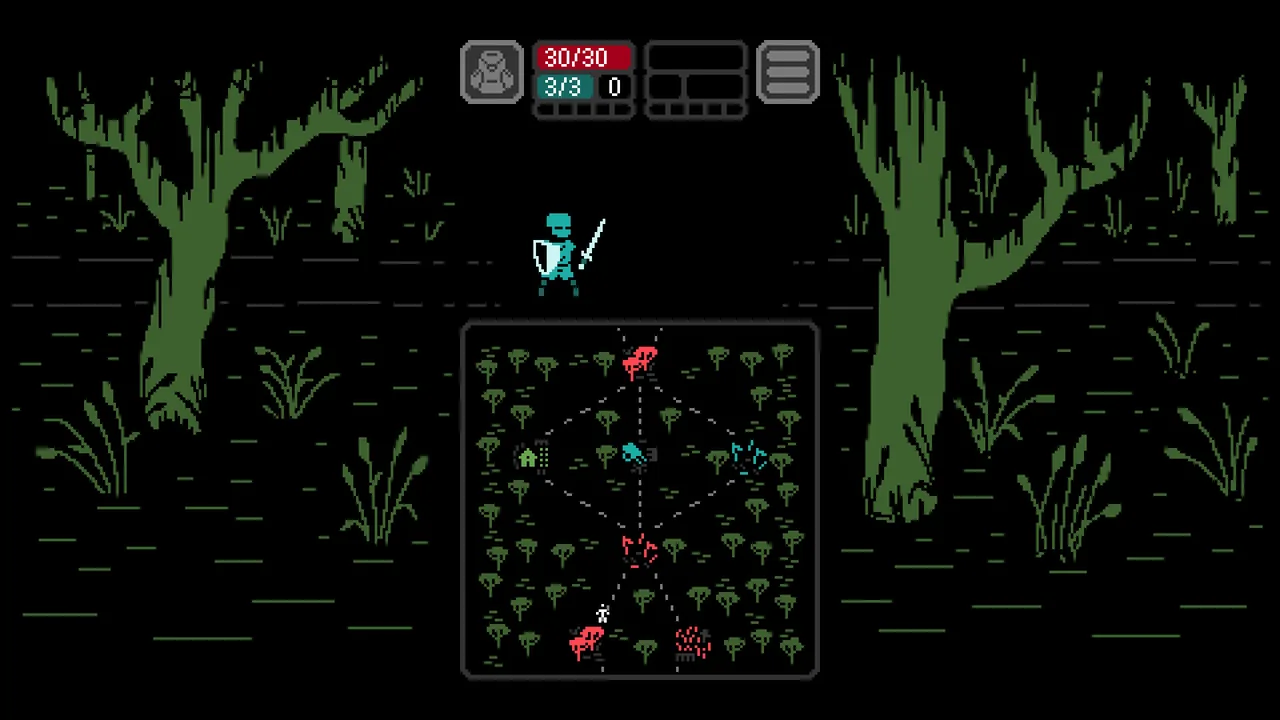
Where Kaamos consistently earns its praise is atmosphere. The pixel art commits to a stark, near-monochrome palette against black backgrounds — genre outlet The Geekly Grind, in a 7/10 review, called out the "two-color palette against black backgrounds" as doing real work to sell the "sunless medieval world" premise, and Inverse's coverage separately praised how convincingly the game "portrays a bare-bones journey aided with little more than a sword and shield." Several Steam reviewers single out the soundtrack unprompted as "surprisingly good at keeping you focused," which is a rarer compliment than art-style praise for a game this size. None of that fixes the pacing problem in the back half of a run, but it's a real reason the opening hours land as well as the achievement data says they do — the mood is doing genuine work, not just decorating a mechanic that would carry the game on its own regardless.
Price, platform and where the money goes
At $9.99 (NZ$14.99), Kaamos is priced honestly for what it delivers: a one-time purchase with no DLC, no in-game currency and nothing to buy once you've checked out. Several critical reviewers explicitly weigh the price against the amount of content rather than against the quality of the idea, and land on "a hard sell" or "too minimalistic on pretty much every front" rather than calling it overpriced outright — the complaint is thinness, not the number on the price tag. It's Windows only; Steam lists Linux system requirements on the store page but doesn't tick the Linux platform box, and there's no Mac build. With 65 total reviews at the time of writing and an 89% positive "Very Positive" tag, the sentiment is real but the sample is still small enough that it should read as encouraging rather than definitive.
The verdict
Kaamos found a genuinely clever new thing to do with a genre everyone assumed was fully explored, and the looping-grid combat is worth the price of admission by itself. What it hasn't found yet is enough content, or enough of a fix for its own defensive-stat stalemate, to keep that idea feeling fresh across a full roguelike's worth of runs. Play it for a handful of short, sharp sessions and it's one of the more interesting $9.99 puzzle games on Steam. Ask it to be a long-term roguelike and the cracks — three zones, five characters, and a wall most players never climb — show through fast.
Pros and cons
Pros
- Dragging a full row or column that wraps around the board edge is a real, unusual twist on match-3 that rewards reading the grid a move ahead rather than reacting to it
- Equipment changes your available tile colours and match shapes, not just your numbers, so switching a two-handed weapon for a shield-and-dagger pair genuinely changes how a fight plays
- A stark, near-monochrome pixel art style and a quiet, atmospheric soundtrack sell the "the Sun never rose again" premise convincingly for a $9.99 game
- Steam's own achievement curve shows the opening hours land well, with the first few milestones sitting at 66% or higher completion
- Clean, honest monetisation — one purchase, no DLC, no currency shop, nothing to buy after checkout
Cons
- Defence, armour and dodge stats can stack on both sides until a fight becomes a slow attrition loop rather than a tactical one, a complaint that recurs across negative reviews from launch week through mid-2026
- Only five playable characters and three zones, each recycling the same boss at every checkpoint, so the 180-plus item count sits on a much smaller structural foundation than the number implies
- Global achievement data shows a steep cliff after the opening stretch — completion falls from around two-thirds to under a third, and the final story milestones sit under 2%
- Windows only, with no Mac or Linux build despite Linux system requirements being listed alongside the Windows ones on the store page
- A small review base (65 total at time of writing) means the strong "Very Positive" tag is encouraging rather than conclusive
Screenshots
-
Kaamos: Puzzle RoguelikeImage: indie.io via Steam -
Kaamos: Puzzle RoguelikeImage: indie.io via Steam -
Kaamos: Puzzle RoguelikeImage: indie.io via Steam -
The game at a glanceWanderer Editorial -
How the review scores each part of the gameWanderer Editorial -
The short versionWanderer Editorial