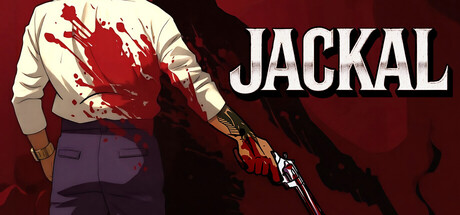
Game review
Jackal
5.5 / 10
- Developer
- Transhuman Design
- Publisher
- Transhuman Design
- Released
- 5 February 2026
- Platforms
- [Windows, macOS, Linux]
- Genre
- Action
- Monetisation
- Paid
- Players
- Single-player only
The short version
Jackal is a lurid, gonzo love letter to Hotline Miami dressed up in 1970s Las Vegas mob-casino neon, and its art direction, voice acting and soundtrack are consistently singled out as its strongest assets. The physics-driven combat underneath that presentation is a much more mixed bag — some players find it buttery and satisfying, others describe sluggish movement and enemy waves that undercut the tension. At roughly two hours to finish, and around NZ$22, it's a short, intense trip rather than a substantial one, best suited to genre fans who care more about vibe than depth.
Biggest strengths
- Striking, psychedelic art direction and a soundtrack repeatedly singled out as excellent
- Strong voice acting and dialogue that several players wished they could watch as a film
- Randomised level layouts and mutators give it some replay value beyond a single playthrough
Biggest weaknesses
- Multiple reviewers describe the core movement and combat as clunky or unresponsive
- Every level follows the same "clear enemies, then get swarmed by reinforcements who already know your position" pattern
- A full playthrough runs around 1.5 to 2 hours for many players, prompting some refund discussion
Who it's for: Fans of Hotline Miami, Ruiner and Anger Foot who want a short, story-heavy, drug-fuelled riff on the genre and don't mind some combat jank.
Our recommendation: Worth it at a discount, or if you specifically want a short, stylish top-down brawler with real narrative ambition — go in knowing it's over almost as soon as it starts.
5.5 / 10
A Drug-Fuelled Postcard From 1970s Las Vegas
Jackal casts players as a drug-empowered hitman working through the casino floors of a fictionalised 1970s Las Vegas mob scene, executing raids in physics-driven top-down combat while a surreal, hallucinatory story unfolds around him. The Hotline Miami comparison is unavoidable and openly invited by the game itself — reviewers reach for it constantly, alongside Ruiner, Anger Foot, DEADBOLT and Otxo, and several describe it outright as spiritual sequel material: "This is Hotline Miami 3," one review reads, while another frames it as "Fear and Loathing in Vegas with guns." What separates Jackal from a pure clone, in the reviews that liked it most, is its commitment to narrative and tone — a back-and-forth dialogue between two main characters, gonzo dark comedy, and a surreal, drug-hazed presentation that several reviewers describe as closer to an indie film than a typical arcade shooter.
That presentation is the game's most consistently praised element across the sample, regardless of how a given reviewer felt about the combat underneath it. The art style is repeatedly called gorgeous or striking, the voice acting is singled out by name as excellent, and the soundtrack draws unprompted enthusiasm — "get this NOW," one player wrote about it specifically.
Combat That Splits the Room
Where opinion diverges sharply is the actual moment-to-moment gameplay. A meaningful share of the sample praises the combat directly — "combat feels like butter," one reviewer wrote, and others describe it as magnetic or gorier than its influences — but an equally substantial group describes real friction: movement that feels sluggish in places and hyperactive in others, slides that don't connect the way they should, a kick that doesn't feel properly integrated, and shots that go wide of their intended target. One detailed critical review put it bluntly: "I love almost everything about this game... The one problem with this game: the gameplay," going on to describe wanting to skip the levels entirely just to watch the cutscenes.
A specific structural complaint recurs across several reviews: nearly every level follows the same pattern of clearing an initial wave of static enemies, only to immediately trigger reinforcements who already know exactly where the player is standing. Multiple reviewers flagged this as repetitive and frustrating, particularly because the randomised level layouts — intended to add replay value — were described by one player as working against tactical planning rather than supporting it, since "encounters feel less strategic" and players fall back on cheesing the system instead of engaging with it directly.
Genre comparisons in the sample go well beyond Hotline Miami, too — one reviewer places it alongside Midnight Fight Express, another invokes Moon Knight "on drugs," and a third specifically praises how it plays on Steam Deck with zero reported issues. That range of reference points is itself telling: reviewers agree on what Jackal is chasing tonally, even when they disagree sharply on whether the combat underneath actually gets there.
Short, Stylish, and Over Almost As Soon As It Starts
Length is the other recurring flashpoint. Several reviewers reported finishing Jackal in around 1.5 to 2 hours, and at least two explicitly weighed refunding it over the lack of content relative to its roughly NZ$22 asking price — one wrote they were "debating on refunding it because there's a lack of level content," while explicitly promising to switch their review to positive if more content arrived later. Others pushed back against that framing, with one reviewer specifically asking players not to refund a one-person project purely on length grounds, praising the sheer amount of craft packed into a short runtime. The single-use-per-level ability system compounds the pacing complaints — because players never know how many enemy waves are still coming, several described hoarding abilities defensively rather than using them offensively, which blunts a mechanic that was clearly meant to feel aggressive.
A Sourced Complaint Worth Noting: Generative AI Assets
A notable and recurring thread in the review sample, worth reporting because it's documented directly by players rather than assumed, is criticism of Jackal's apparent use of generative AI in some of its art assets. Multiple reviewers — independently, in reviews posted months apart — flagged what they identified as AI-generated material in the soundtrack's cover art, a specific cutscene, some background textures, and the game's achievement icons, calling it "AI slop" and "needlessly AI generated" given that the developer had clearly demonstrated the artistic skill to produce those assets by hand elsewhere in the game. Both of the detailed reviews raising this point still recommended the game overall, treating it as a disappointing blemish on an otherwise well-crafted presentation rather than a dealbreaker, but it's a consistent enough thread in the sample that prospective buyers who care about that distinction should know it's there.
Verdict
Jackal is easy to recommend on style alone — its art direction, voice work and soundtrack land with almost everyone who plays it, and its gonzo, drug-soaked take on the Hotline Miami formula gives it real personality. Where it struggles is underneath that presentation: combat that a meaningful chunk of players found clunky or unresponsive, a repetitive wave-based level structure, and a runtime short enough to spark genuine refund debate at its current price. It's a strong recommendation for genre fans chasing vibe and story over polish and depth, and a much harder sell for anyone expecting a lengthy, mechanically tight action game for their money.
Pros and cons
Pros
- Striking, psychedelic art direction and a soundtrack repeatedly singled out as excellent
- Strong voice acting and dialogue that several players wished they could watch as a film
- Randomised level layouts and mutators give it some replay value beyond a single playthrough
- Combat can feel genuinely satisfying once its rhythm clicks
Cons
- Multiple reviewers describe the core movement and combat as clunky or unresponsive
- Every level follows the same "clear enemies, then get swarmed by reinforcements who already know your position" pattern
- A full playthrough runs around 1.5 to 2 hours for many players, prompting some refund discussion
- Single-use-per-level abilities without a cooldown system leave players hoarding them rather than using them
Screenshots
-
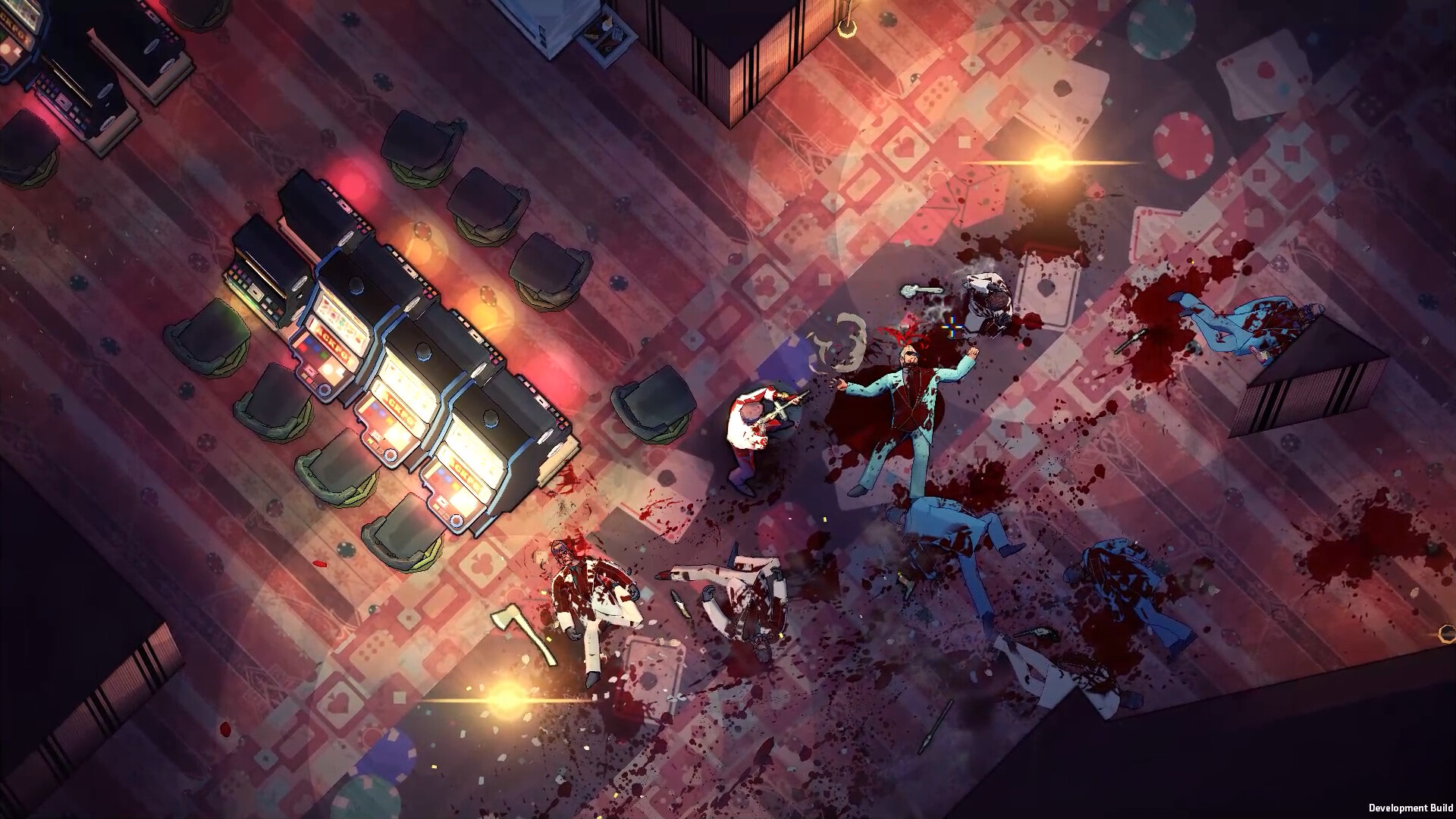
Casino raids play out as frantic, physics-driven top-down brawls, with gore and destructible scenery that reviewers repeatedly praised for styleTranshuman Design -
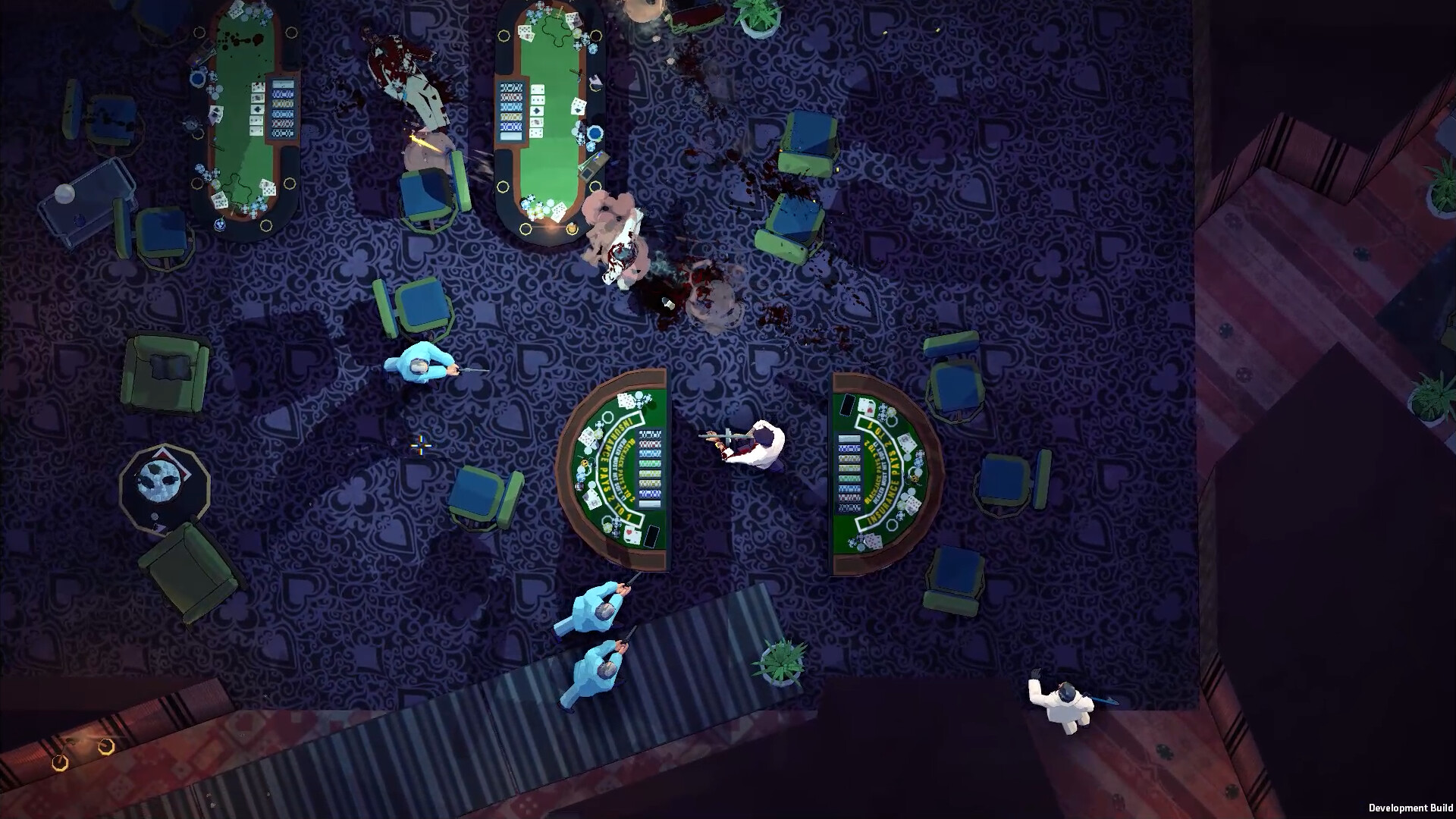
Level layouts are randomised between runs, a system meant to add replay value that some reviewers felt undercut tactical planning insteadTranshuman Design -
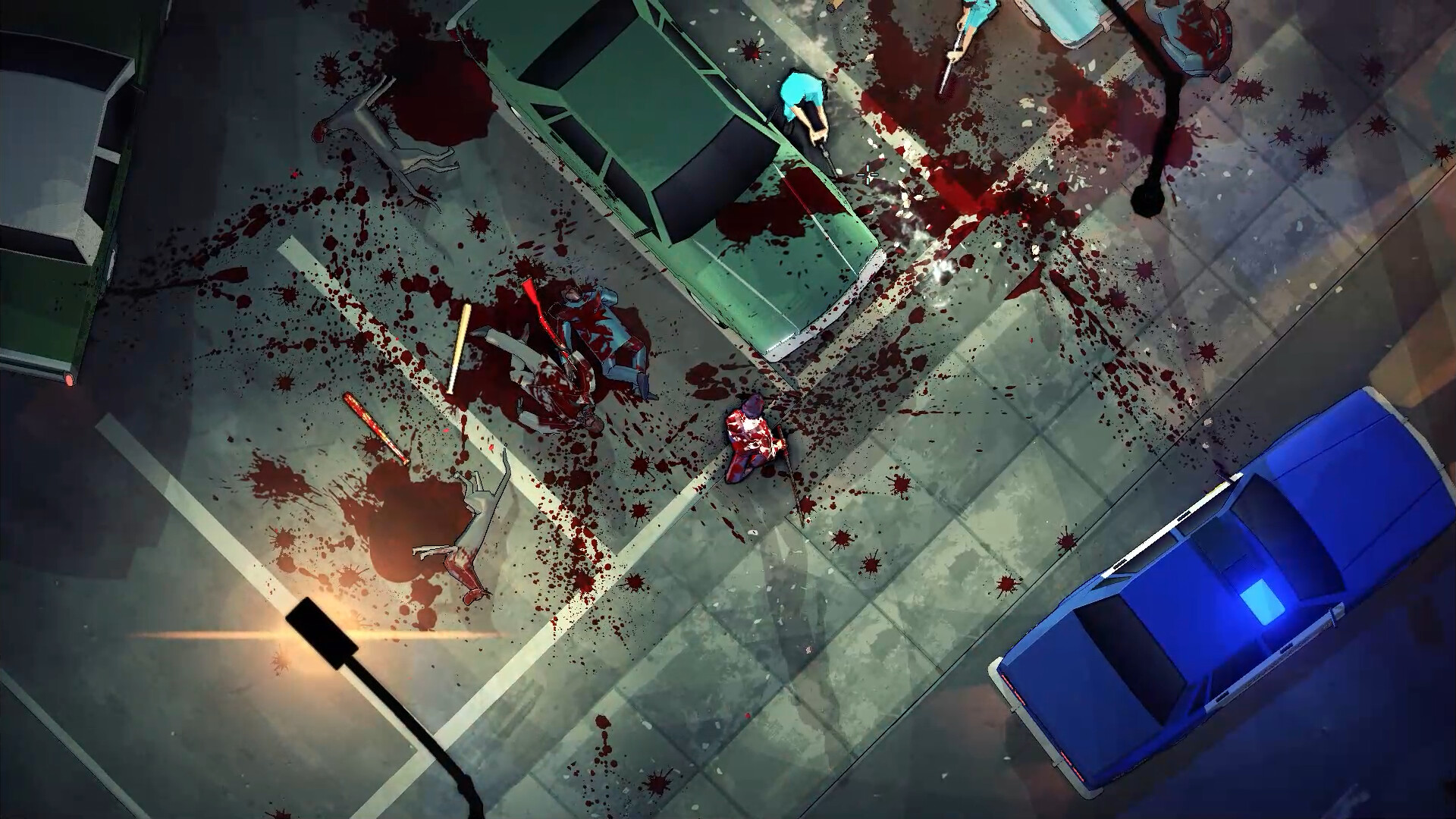
The aftermath of a street-level encounter, the kind of scene several reviewers said felt gorier and more stylish than it did mechanically tightTranshuman Design -
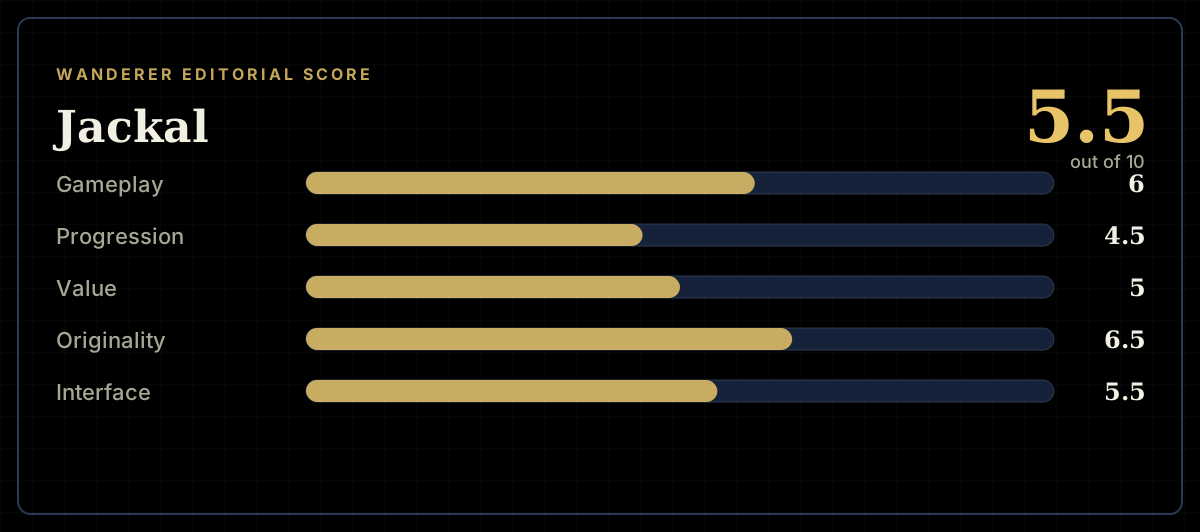
How the review scores each part of the gameWanderer Editorial -
The short versionWanderer Editorial