
Game review
Islets Defense Review: A Turn-Based Puzzle Wearing a Tower Defense Label
6.9 / 10
- Developer
- MiniGoof
- Publisher
- Nuntius Games, MiniGoof, Vsoo Games
- Released
- 18 June 2025
- Platforms
- ["PC"]
- Genre
- Strategy / Puzzle
- Monetisation
- Paid
- Players
- false
The short version
Islets Defense swaps real-time tower spam for a turn-based, card-ordered puzzle about village-building and resource timing, and reviewers who accept that swap describe a charming, genuinely inventive strategy game, while a smaller but vocal group argues the "tower defense" label is actively misleading for what's closer to a turn-based tactics puzzle.
Biggest strengths
- Reviewers repeatedly praise the turn-based, card-ordered action system as a genuinely unique spin on the genre, rewarding careful build-order planning over reflexes
- Multiple reviewers highlight the game's charm and craft, from quacking cannon towers to whimsical minigames in its desert region
- One long-time player calls it 'just the right amount of content for the very modest asking price,' praising how each of the game's five environments introduces new gameplay elements
Biggest weaknesses
- Several reviewers argue the 'tower defense' framing is misleading, describing the game as closer to a turn-based puzzle or resource-management title with a single tower type and limited enemy variety
- More than one reviewer flags a sharp difficulty spike partway through, going from forgiving early levels to punishing late-game mistakes that force full restarts
- A detailed review notes the main playthrough feels short and that non-randomized maps reward pre-planned optimization at the cost of long-term replayability
Who it's for: Turn-based strategy and puzzle fans who don't mind a slower, more cerebral pace than real-time tower defense, rather than players expecting classic tower-spam action.
Our recommendation: Worth playing if you go in expecting a turn-based resource puzzle rather than a conventional tower defense, with a difficulty curve that can spike sharply in the back half.
6.9 / 10
Islets Defense asks players to build a small village, gather resources, and hold off waves of enemies, but it does all of that through a turn-based card system rather than real-time tower placement. Sitting at 94% positive across 129 Steam reviews, it draws a strong and often enthusiastic response, alongside a smaller, specific strain of criticism arguing the genre label undersells what the game actually is. A sample of 19 English-language reviews, spanning its June 2025 launch through this year, captures both sides clearly.
A Card-Driven Twist on Tower Defense
Each turn in Islets Defense means choosing one of four available actions, arranged as cards whose position determines their strength, with the rightmost card offering the strongest effect before cycling back to the front of the queue after use. Reviewers describe this system as the game's defining hook: rather than spamming towers in real time, players plan build orders turn by turn, with one reviewer calling it "a very interesting take on the tower defense formula" precisely because the turn-based structure rewards repeatable, optimizable planning over reflexes.
Is It Even a Tower Defense?
That same turn-based structure is exactly what draws the sample's sharpest criticism. Several reviewers argue the genre tag is actively misleading: one flatly states "this is NOT a tower defense in any real shape," pointing to a single tower type and a single enemy type in the levels they played, and describing the experience as closer to "a puzzle strategy game." Another reviewer makes a nearly identical complaint about "misleading tags," suggesting "Puzzle" and "Turn-based Tactics" would fit better. It's a recurring enough objection across the sample that prospective buyers expecting classic tower-spam action should take it seriously before purchasing.
Charm and Craft Throughout
Where the sample agrees almost universally is on the game's presentation and personality. Reviewers single out small, whimsical touches like quacking cannon towers, and one long-time player who logged over 45 hours calls it "obvious it's a labor of love with many little fun details." Another reviewer specifically praises the desert region's minigames, and a third describes the game as having "a big heart that hasn't forgotten that at the end of the day games are supposed to be fun." Across a strategy genre often praised more for depth than warmth, that consistent charm stands out as a genuine differentiator.
A Difficulty Curve With a Sharp Spike
Multiple reviewers independently flag the same pacing issue: the game starts forgiving, almost too easy, before difficulty jumps sharply in later stages. One reviewer describes the shift as going from "do whatever and you win anyway" to "oops I made a mistake I need to restart," while another echoes the same whiplash, noting they never even attempted the game's separate hardcore mode because normal difficulty was already punishing enough. Compounding the frustration, at least one reviewer notes that failed late-game attempts require sitting through a relatively long, unskippable intro before retrying, turning a difficulty spike into a pacing one as well.
Replayability and Length
A detailed, moderately positive review raises a more structural concern: because the game's maps aren't randomized, players can explore in a pre-planned, optimized manner once they know the layout, which increases the potential for min-maxed high-score runs but limits the incentive to replay blind. The same reviewer frames this candidly as "both a strength and a weakness," useful for chasing optimal runs but a drag on long-term variety. That reviewer, and another with 45 hours logged, both describe the main playthrough as feeling short relative to the game's evident potential, with one writing that it "feels... a bit shallow," despite enjoying the core concept enough to recommend it anyway and calling for expansions or a follow-up rather than dismissing the game outright.
Where the Content Lands
Reviewers who play through the full game describe five distinct environments, each built from three levels that introduce new gameplay elements rather than simply reskinning earlier stages. One reviewer specifically praises this pacing, noting that even levels within the same environment differ meaningfully from each other, and that ten hours in, they still had a full final environment ahead of them. That structure appears to be enough content to satisfy most players without overstaying its welcome, even as a couple of reviewers wished for more once they reached the end.
Price and Value
At a discounted NZ$10.32 against a NZ$14.75 list price, Islets Defense sits toward the affordable end of the strategy genre, and reviewers who engage with its full length generally treat that as a fair or even generous exchange. One reviewer explicitly frames the asking price as "just the right amount of content," a sentiment echoed by others who cite dozens of hours logged for a comparatively small outlay, including several reviewers who crossed the 20-hour mark and one who logged nearly 46. For the more skeptical reviewers put off by the tower defense label, though, no price fully resolves the mismatch between expectation and what's actually on offer, and buyers who specifically want real-time tower combat should weigh that mismatch more heavily than the discount.
Final Verdict
Islets Defense earns its strong review score by committing fully to an unusual, turn-based, card-ordered spin on village-building and defense, and most reviewers who meet it on those terms come away charmed by its craft, its planning-heavy strategy layer, and its willingness to introduce something genuinely different into a crowded genre. The dissenting reviews aren't wrong so much as differently calibrated: if you want real-time tower spam against varied enemy waves, this isn't that game, and several reviewers say so plainly. But for players open to a slower, more puzzle-like strategy experience with real depth in its build-order planning, the sample suggests Islets Defense delivers a distinctive, well-loved take on familiar mechanics.
Pros and cons
Pros
- Reviewers repeatedly praise the turn-based, card-ordered action system as a genuinely unique spin on the genre, rewarding careful build-order planning over reflexes
- Multiple reviewers highlight the game's charm and craft, from quacking cannon towers to whimsical minigames in its desert region
- One long-time player calls it 'just the right amount of content for the very modest asking price,' praising how each of the game's five environments introduces new gameplay elements
Cons
- Several reviewers argue the 'tower defense' framing is misleading, describing the game as closer to a turn-based puzzle or resource-management title with a single tower type and limited enemy variety
- More than one reviewer flags a sharp difficulty spike partway through, going from forgiving early levels to punishing late-game mistakes that force full restarts
- A detailed review notes the main playthrough feels short and that non-randomized maps reward pre-planned optimization at the cost of long-term replayability
Screenshots
-
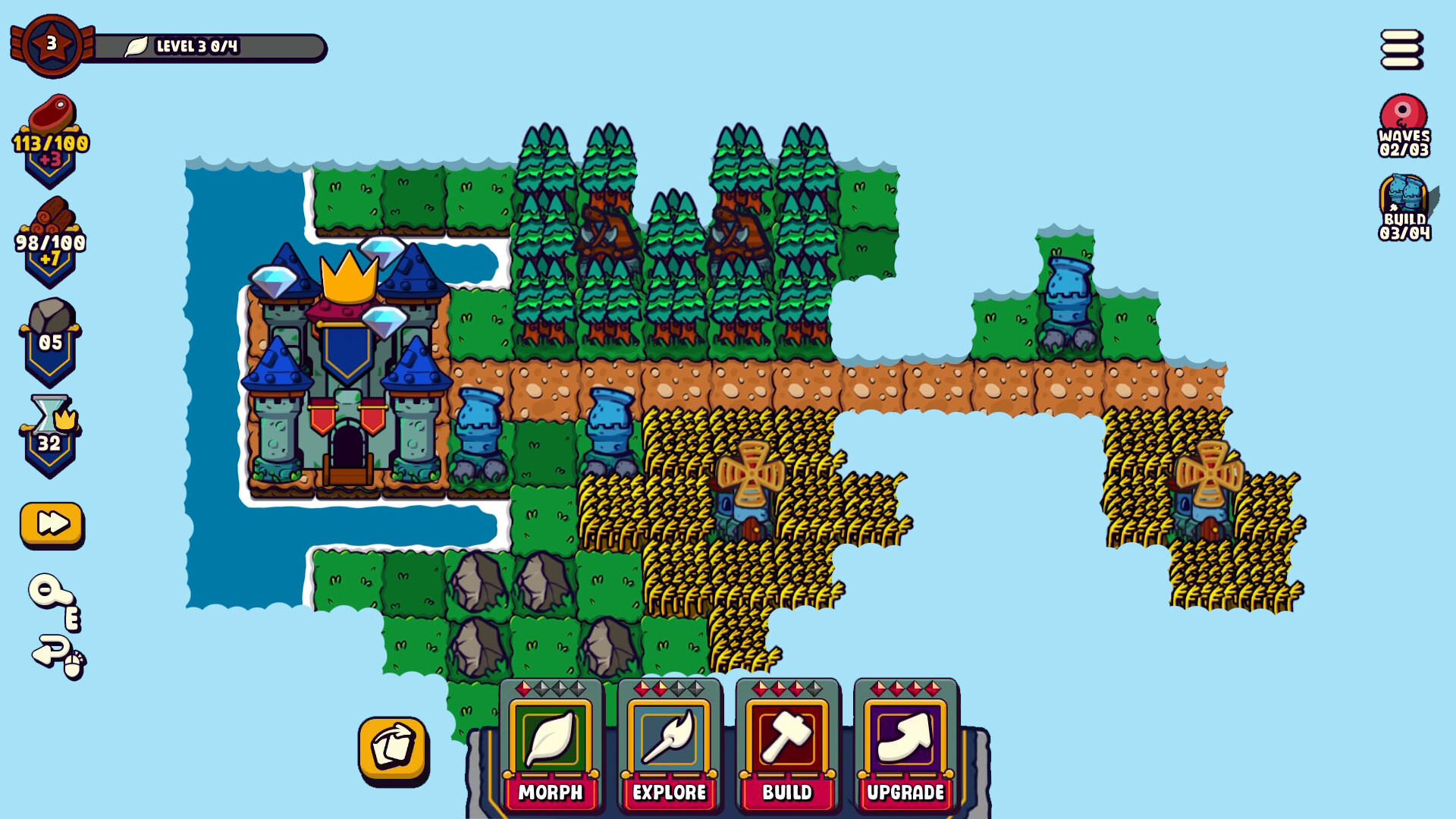
Turn-based exploration and building on the village's home isletNuntius Games -
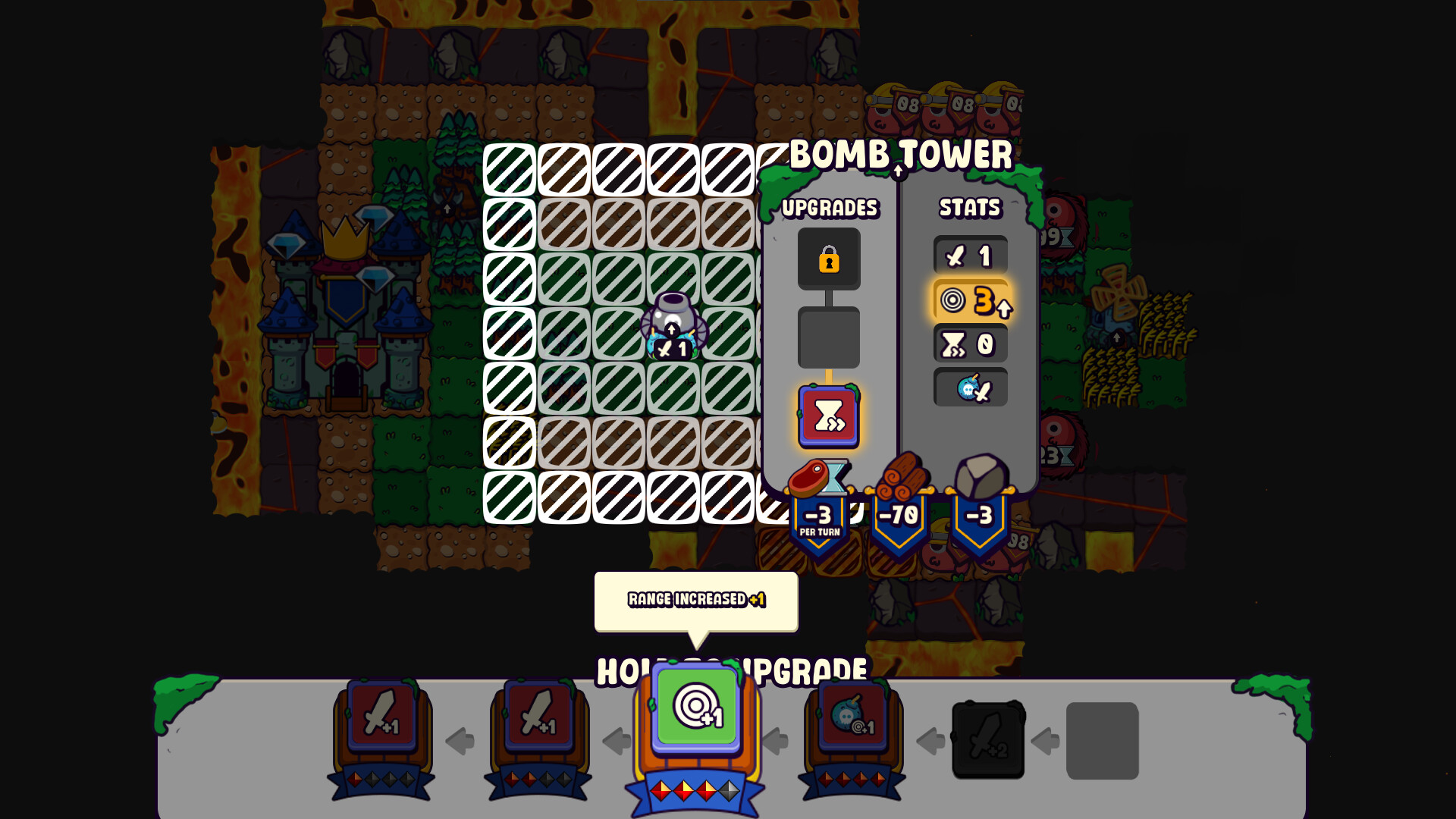
Upgrading a bomb tower mid-wave, with resource costs laid out in detailNuntius Games -

One of the game's more whimsical touches, a glowing eye-covered spellbookNuntius Games -
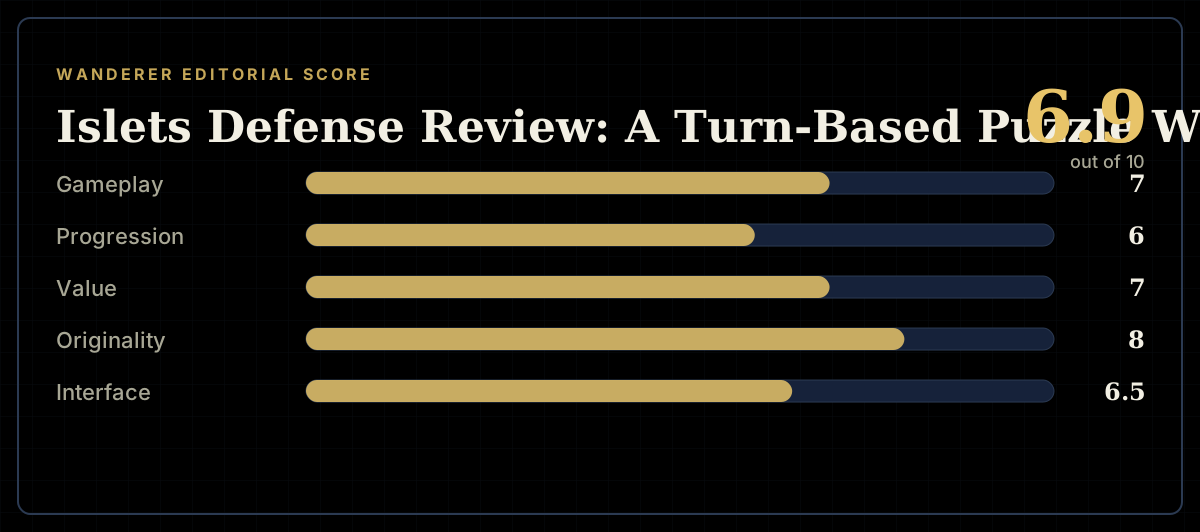
How the review scores each part of the gameWanderer Editorial -
The short versionWanderer Editorial