
Game review
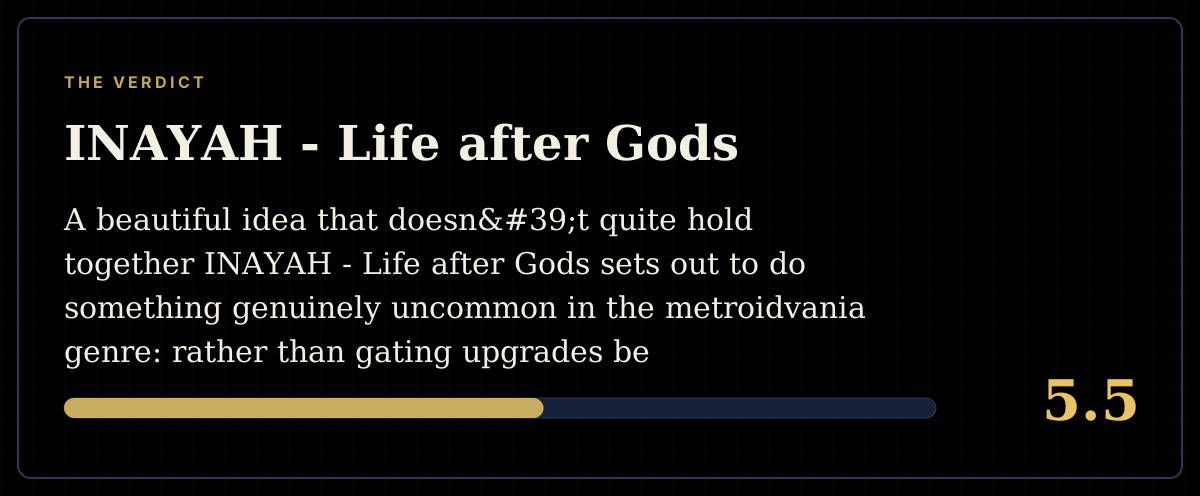
INAYAH - Life after Gods
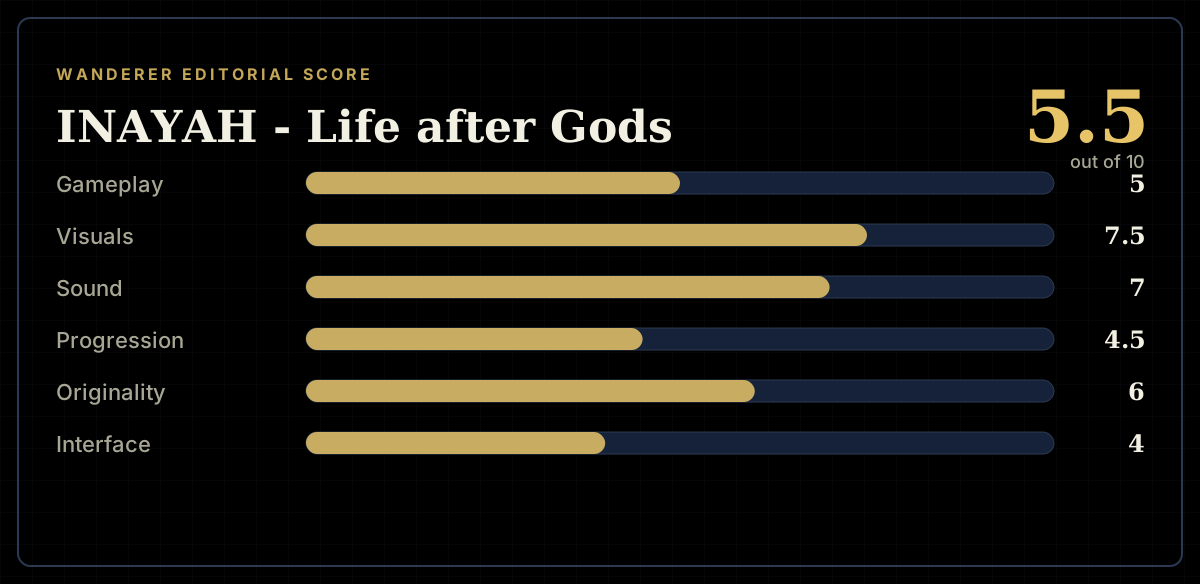
5.5 / 10
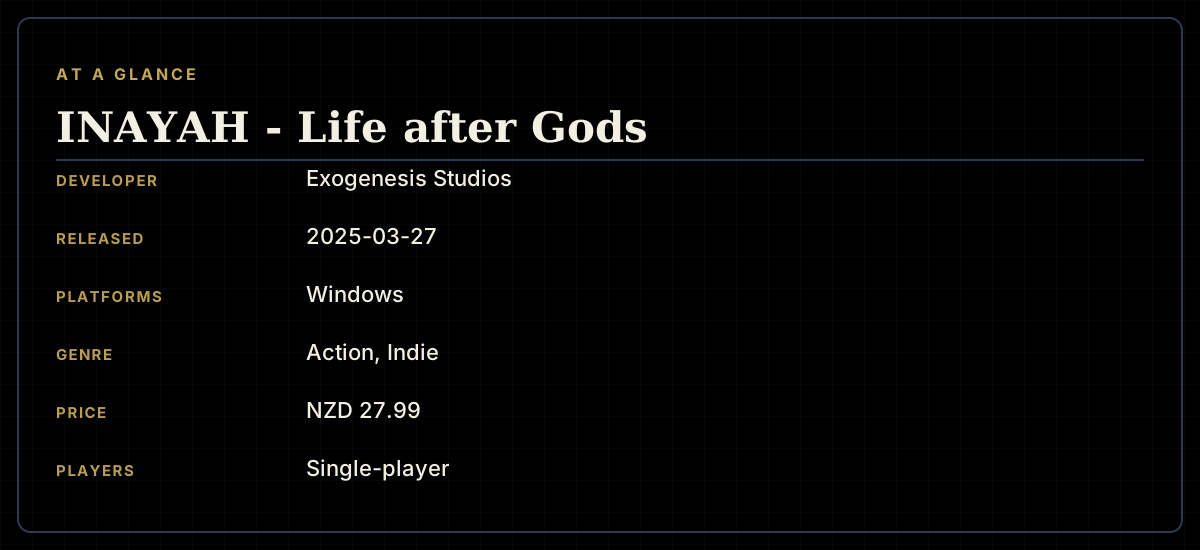
- Developer
- Exogenesis Studios
- Publisher
- Headup
- Released
- 27 March 2025
- Platforms
- Windows
- Genre
- Action, Indie
- Players
- Single-player
The short version
Biggest strengths
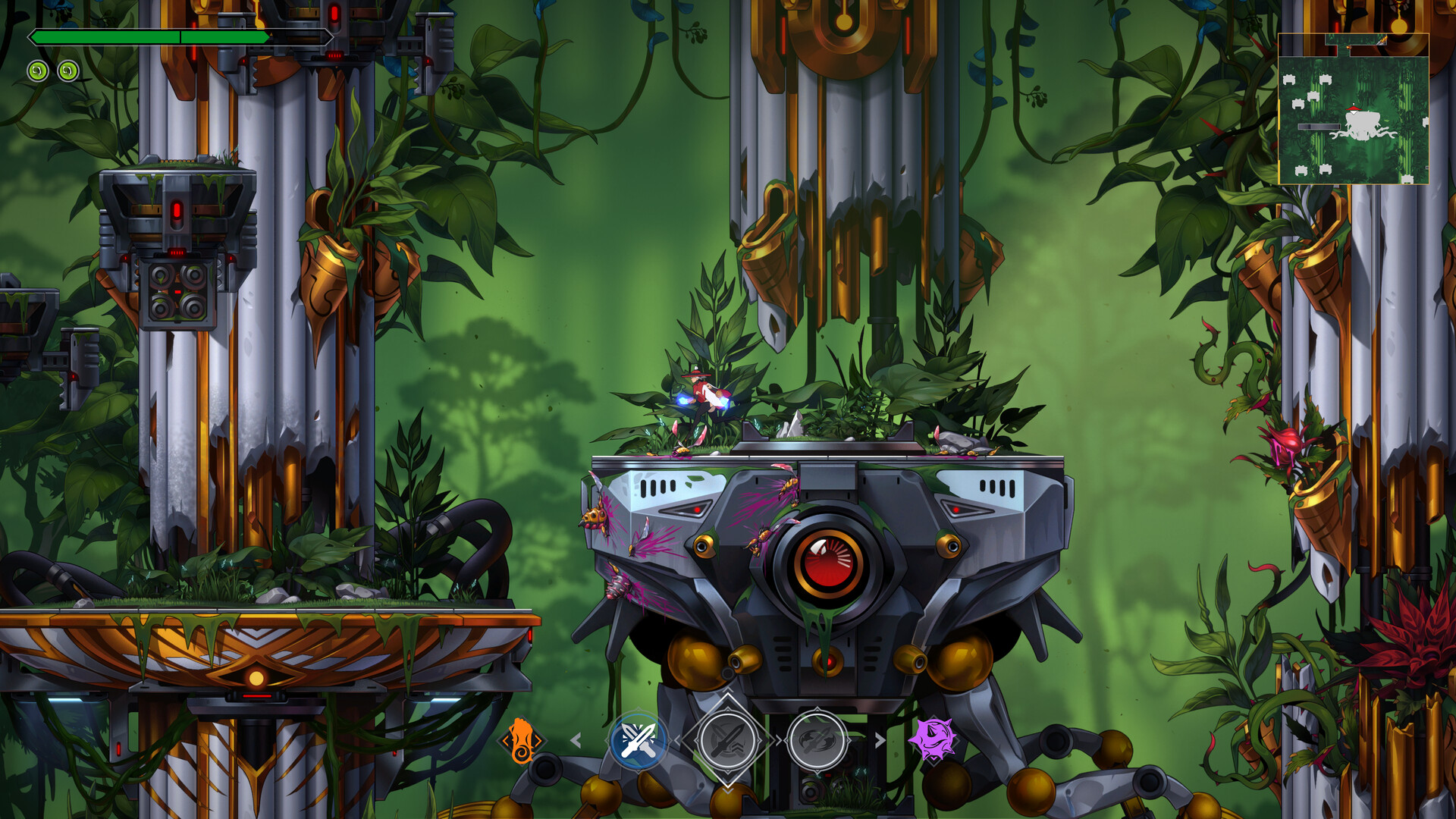
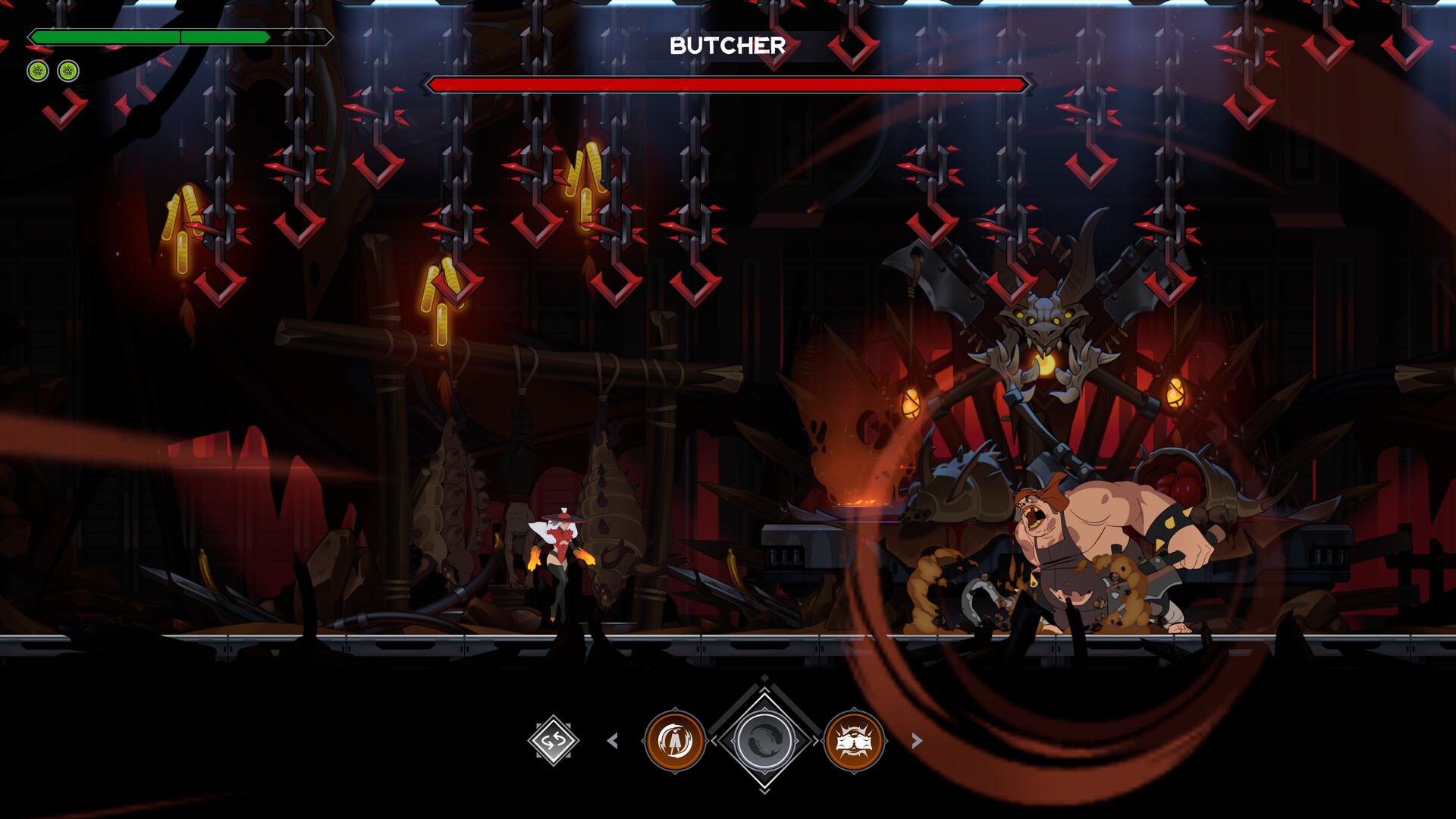
- Genuinely striking hand-drawn art and animation that both critics and fans agree is the game's clearest achievement
- Full voice acting and short animated cutscenes give the post-apocalyptic setting real narrative weight
- An ambitious structural idea — acquiring the game's upgrades in almost any order rather than a fixed sequence — that few metroidvanias attempt
Biggest weaknesses
- The signature any-order progression design is widely reported to have failed in practice, creating serious pacing and balance problems the developer has struggled to fully resolve even after multiple patches
- Combat and movement are repeatedly described as sluggish and imprecise, with noticeable input delay and inconsistent hit detection undermining the game's "difficult" encounter design
- Foreground and background elements are hard to visually distinguish, making platforms, hazards, and enemies difficult to read at a glance
5.5 / 10
A beautiful idea that doesn't quite hold together
INAYAH - Life after Gods sets out to do something genuinely uncommon in the metroidvania genre: rather than gating upgrades behind a mostly fixed sequence, it lets players acquire the bulk of its power-ups in almost any order they choose, letting exploration itself dictate the shape of a given playthrough. It's an ambitious structural bet, wrapped in genuinely striking hand-drawn art, full voice acting, and animated cutscenes that both fans and critics of the game single out as its clearest, least disputed strength. One review calls the presentation "very beautiful and clearly well crafted," a sentiment echoed almost universally even in otherwise harsh write-ups.
The trouble, according to a detailed and specific cluster of reviews, is that the central design experiment doesn't survive contact with actual play. "An experiment in metroidvania design that sadly failed completely," one reviewer writes bluntly, explaining that letting players sequence-break so freely creates serious pacing and difficulty problems — areas can be reached wildly under- or over-powered relative to their intended challenge, and the reviewer notes the developer has "done everything possible to try and salvage this" through patches without fully solving the underlying structural issue. That's a specific, mechanically-grounded critique rather than a vague complaint about difficulty, and it's corroborated by other reviewers independently describing the game as feeling unbalanced in ways that seem tied to sequencing rather than simple tuning.
Combat that fights the player as much as the enemies
A second major thread concerns the moment-to-moment feel of actually playing the game. Multiple reviewers describe the controls and combat as sticky, slow, and imprecise, with one detailed critique stating plainly that "everything has at least a half second delay and wonky hitboxes that makes tight sections veer into Bad Design territory," adding pointedly that "bad controls do not a hard game make." That's a meaningful distinction reviewers draw repeatedly — the criticism isn't that the game is too hard, it's that the difficulty feels unearned because the underlying controls don't respond precisely enough to support the encounter design being asked of them. A related, separately-reported complaint concerns visual clarity: foreground and background elements are hard to distinguish, and reviewers specifically flag deadly spikes and hazards that blend into the scenery, making avoidable damage feel like a readability failure rather than a fair challenge.
A world that resists being explored
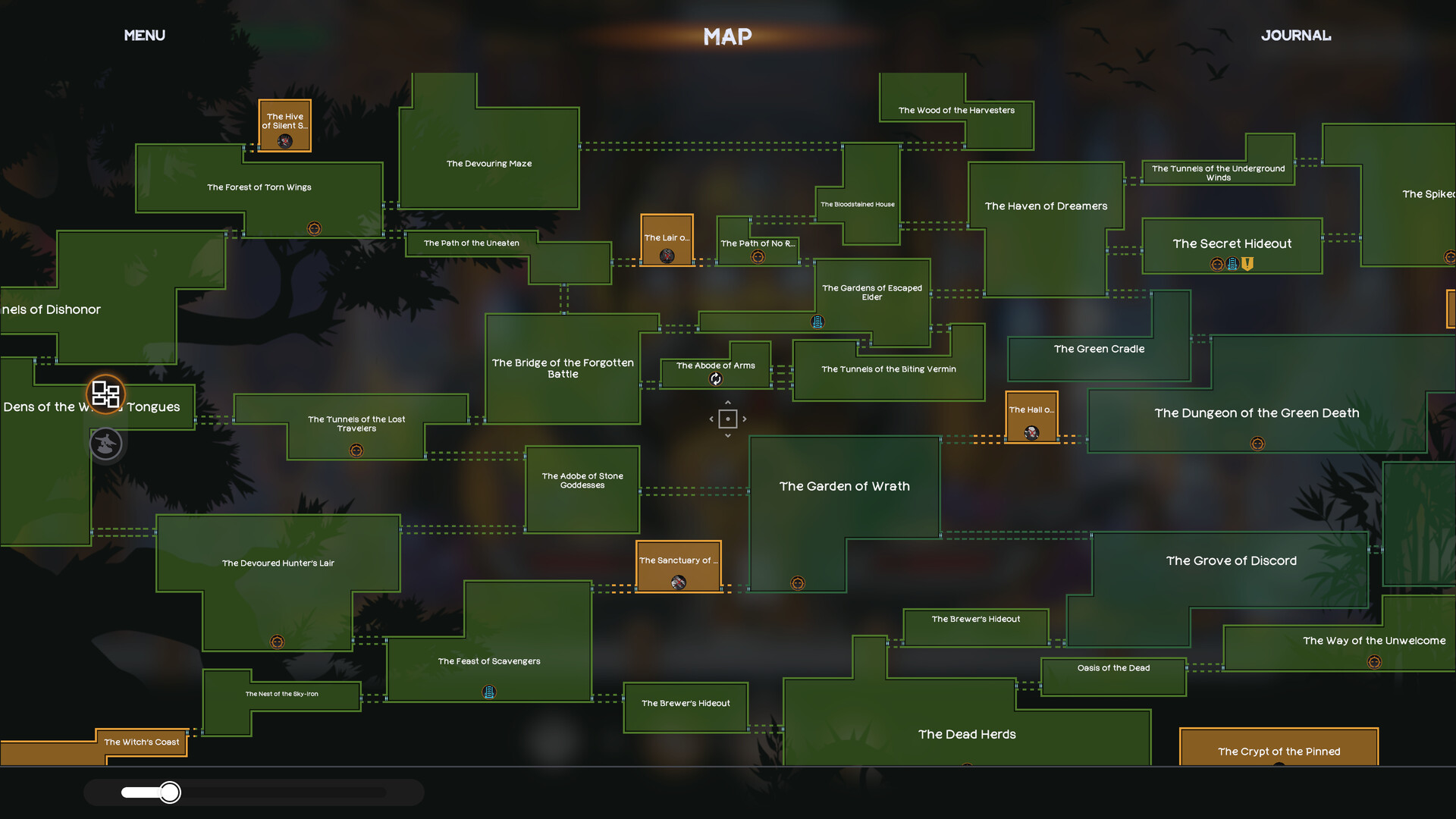
The third recurring criticism concerns the map itself. Reviewers describe a genuinely vast world let down by a shortage of fast-travel points and vertical shortcuts like lifts, turning the backtracking that any metroidvania demands into what one reviewer flatly calls "a chore." A separate, detailed review adds that the map interface itself lacks essential information — NPC and point-of-interest positions aren't clearly shown on the global view, forcing constant menu-switching just to orient. For a genre built around rewarding players for revisiting earlier areas with new abilities, friction at the map and navigation layer undercuts one of the format's core pleasures more directly than most other complaints in the sample.
A developer that was responsive, then went quiet
To its credit, the review record shows Exogenesis Studios was genuinely active after launch — the developer's own event history includes more than a dozen patch and hotfix posts between March and October 2025, several explicitly framed as responses to community feedback, alongside a public roadmap and an AMA session with players. That's a real, verifiable counterpoint to any blanket "abandoned at launch" narrative. However, one long-time reviewer reports that the developer's Discord has since gone quiet, describing unmoderated spam and an extended silence on the game's future — a claim this review can't independently verify beyond noting that the developer's own public event history does show a gap after its last recorded October 2025 update. Reported as one player's account rather than a confirmed fact, but consistent with what's publicly checkable.
What the achievement curve reveals about who sticks around
The completion data is useful here for separating "hard to enjoy" from "impossible to finish." The earliest story milestone, completing the prologue, sits at a healthy 85.0%, and rescuing an early companion character still holds at 68.0% — most buyers do get a real foothold in the game before deciding how they feel about it. From there the curve drops more steeply than a typical well-tuned metroidvania: finding and defeating the game's early-to-mid bosses each sit in the 35-39% range, and the vast majority of the 100 tracked achievements — including numerous late-game and secret-content unlocks — sit under 1%. That's a much sharper falloff after the opening act than the earlier positive reviews' praise for the setup would suggest, and it lines up precisely with the negative reviews' central claim: the game hooks people early, then loses a large share of them once the sequencing and combat problems start compounding in the mid-game.
That shape also offers a fairer way to read the review split overall. This isn't a game that's uniformly disliked or uniformly loved — it's one that lands well in its first few hours for nearly everyone, and then increasingly separates players by how much friction they're willing to tolerate from its more experimental systems once the training wheels come off.
Where this leaves it
INAYAH - Life after Gods is a genuinely ambitious, gorgeous-looking metroidvania whose most interesting idea — real freedom in upgrade sequencing — turns out to be the thing undermining it most, compounded by combat and navigation friction that keep the game's harder moments from feeling fair. The achievement data confirms there's substantial content here for players who push through, and the developer's early patch cadence shows real intent to fix what reviewers flagged. Worth considering for the art and the ambition of its central idea, but go in expecting a rougher, more frustrating ride than the presentation promises, and check recent reviews for the latest word on ongoing support before buying at full price.
Pros and cons
Pros
- Genuinely striking hand-drawn art and animation that both critics and fans agree is the game's clearest achievement
- Full voice acting and short animated cutscenes give the post-apocalyptic setting real narrative weight
- An ambitious structural idea — acquiring the game's upgrades in almost any order rather than a fixed sequence — that few metroidvanias attempt
- A wide, 100-achievement completion spread confirms real content depth and a long tail of optional challenges for players who push through the rough edges
Cons
- The signature any-order progression design is widely reported to have failed in practice, creating serious pacing and balance problems the developer has struggled to fully resolve even after multiple patches
- Combat and movement are repeatedly described as sluggish and imprecise, with noticeable input delay and inconsistent hit detection undermining the game's "difficult" encounter design
- Foreground and background elements are hard to visually distinguish, making platforms, hazards, and enemies difficult to read at a glance
- A sprawling world map criticized for too few fast-travel points and lift shortcuts, turning backtracking into a chore rather than an exploration reward
- At least one long-time player reports the developer's community channels have gone quiet for an extended period after a genuinely active post-launch patch cycle
Screenshots
-
INAYAH - Life after GodsImage: Headup via Steam -
INAYAH - Life after GodsImage: Headup via Steam -
INAYAH - Life after GodsImage: Headup via Steam -
How the review scores each part of the gameWanderer Editorial -
At a glanceWanderer Editorial -
The short versionWanderer Editorial