
Game review
Idle Taoist Mage Warrior 2
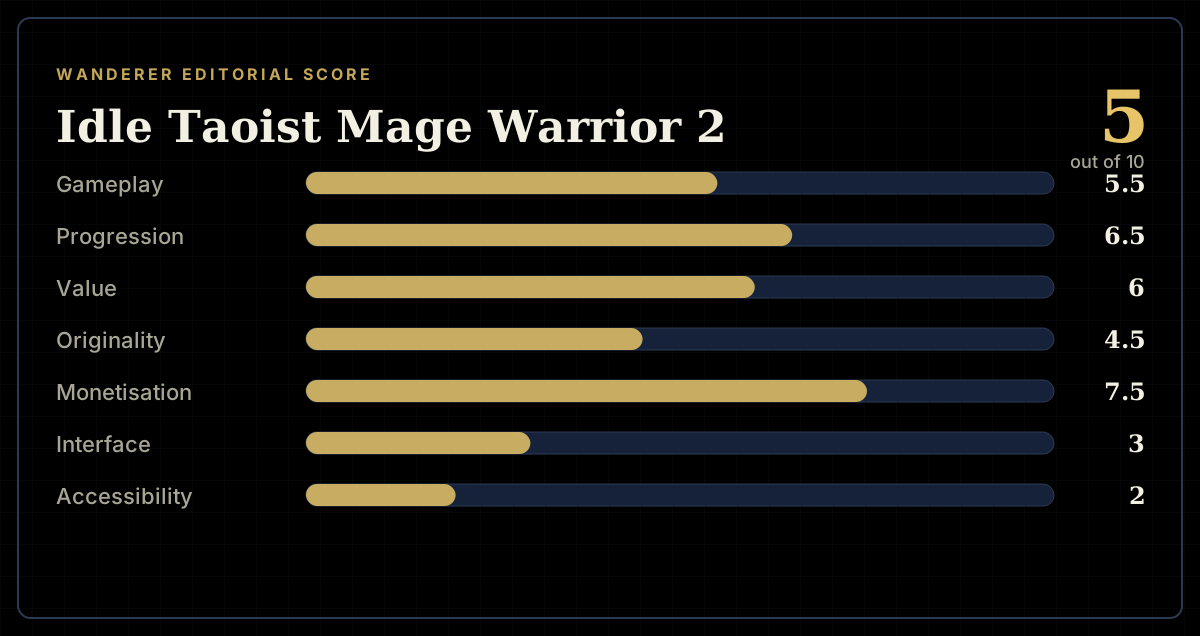
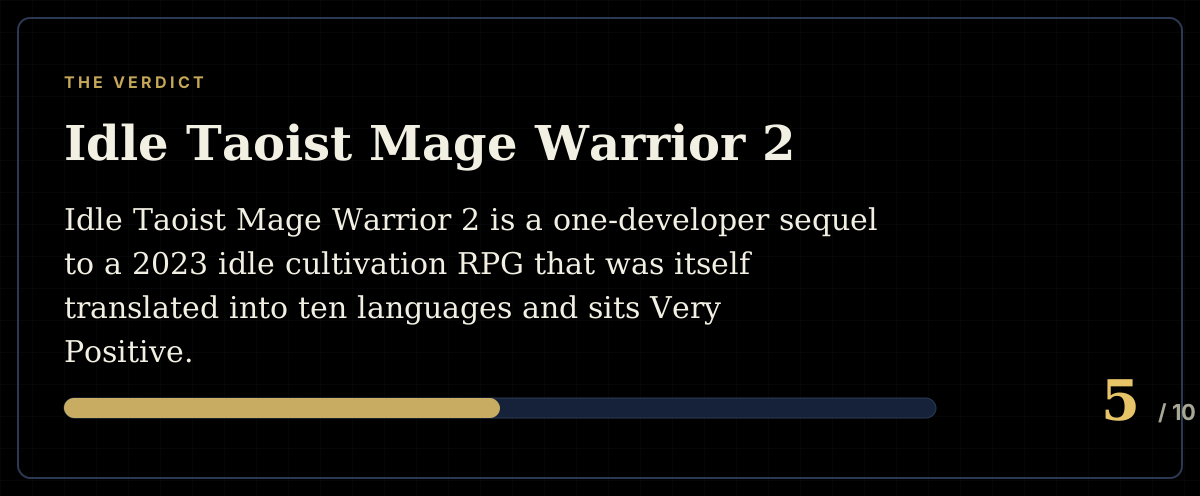
5 / 10
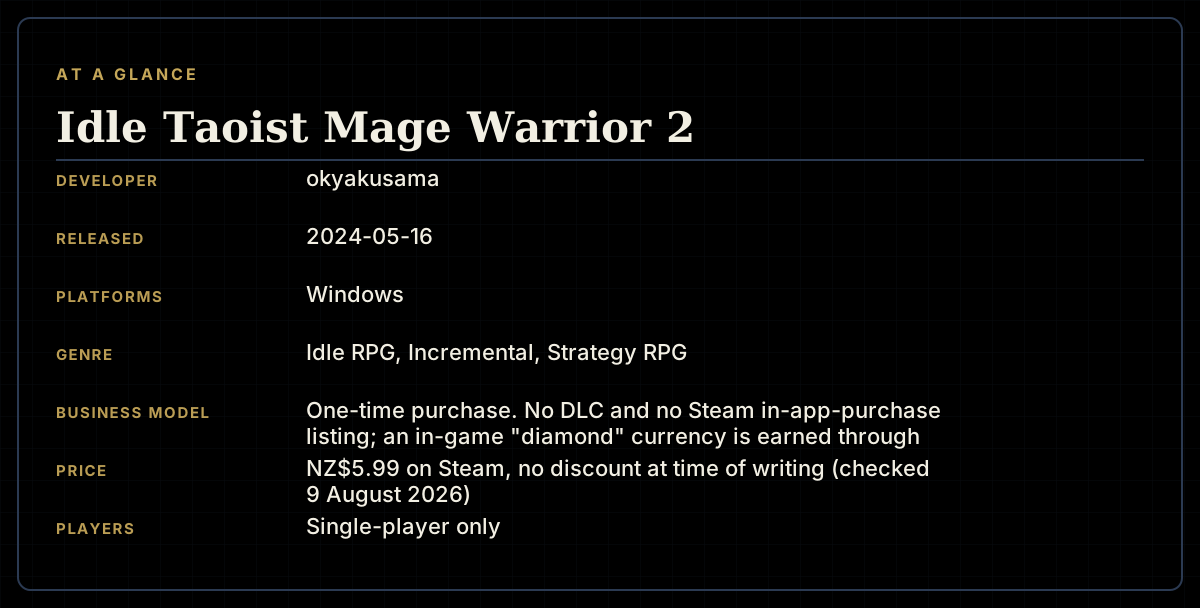
- Developer
- okyakusama
- Publisher
- okyakusama
- Released
- 16 May 2024
- Platforms
- Windows
- Genre
- Idle RPG, Incremental, Strategy RPG
- Monetisation
- One-time purchase. No DLC and no Steam in-app-purchase listing; an in-game "diamond" currency is earned through play rather than sold
- Players
- Single-player only
The short version
Idle Taoist Mage Warrior 2 is a one-developer sequel to a 2023 idle cultivation RPG that was itself translated into ten languages and sits Very Positive. The sequel keeps the three-class structure — warrior, mage, Taoist, all three deployed together rather than chosen between — layers in a rebirth ladder, a talent grid split into four schools including a dedicated "financial" branch, a stock-speculation side-game and a gacha-style prayer-bead pull, and then ships with Simplified Chinese as its only supported language. Steam's own interface table lists English as "Not supported," and of the 68 reviews the game has collected, only four are in English — including one that simply asks the developer to add the language back. The systems underneath are recognisably deeper than a template idler, but a reader judging by the Steam page alone would not know the interface doesn't exist in their language until after paying for it.
Biggest strengths
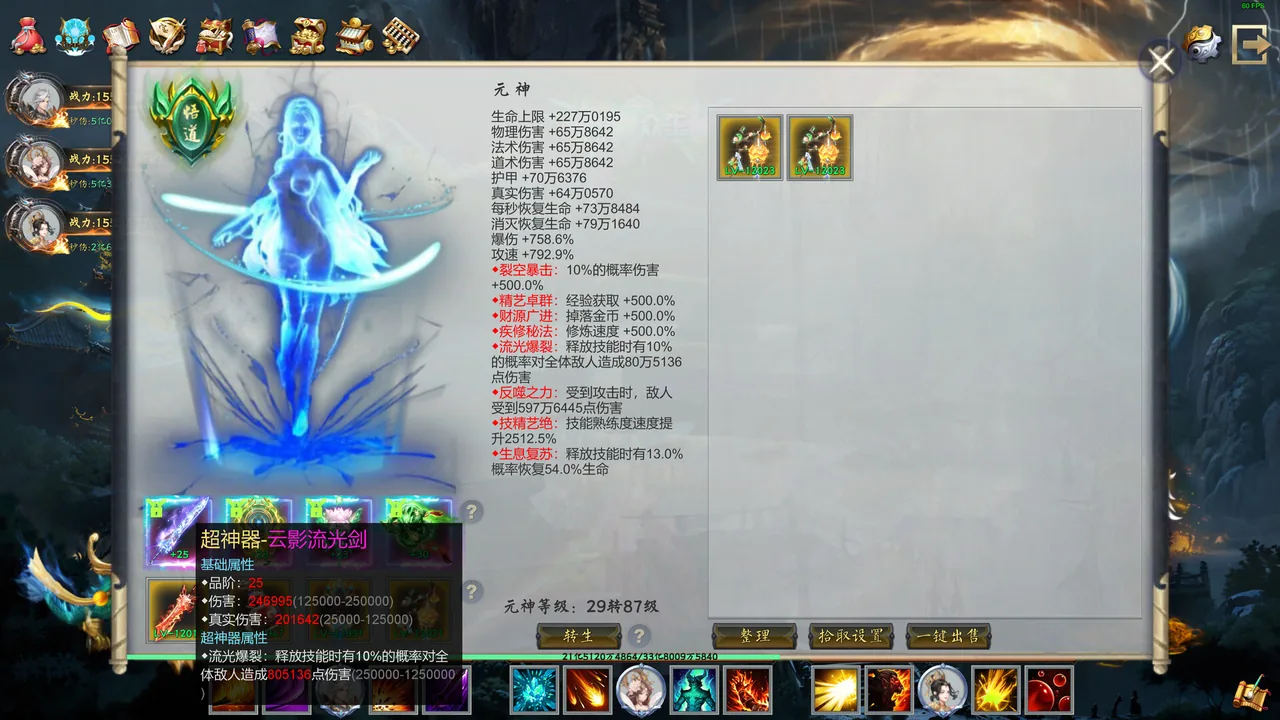
- A denser systems stack than the sequel's short Steam description lets on — three classes fielded as one squad, a rebirth ladder, a 64-slot combat/defence/support/finance talent grid, sequential equipment enhancement and ascension, and a Primordial Spirit (元神) layer with its own rebirth track, all visible directly in the developer's own screenshots
- Confirmed clean of real-money predation on the Steam side: no DLC, no in-app-purchase listing, and the only English reviews in the corpus — from players with 41 to 699 hours logged — describe grinding for the premium "diamond" currency rather than buying it
- Global achievement data shows real engagement rather than a quick bounce: roughly two thirds of the 32 achievements sit in a healthy 30-48% band that a majority of owners clear, not a cliff-edge drop after a tutorial step
Biggest weaknesses
- Steam's own language table lists English interface support as "Not supported," against Simplified Chinese for interface and subtitles. The short English store description and "About This Game" text are marketing copy, not evidence the client is playable in English — of 68 total reviews, exactly four are in English, and one of those four exists solely to ask for English support
- The predecessor, Idle Taoist Mage Warrior, shipped with ten interface languages including English and sits at 84% positive (Very Positive) across 137 reviews. The sequel dropped every language but Chinese and sits at 51.5% (Mixed) across 68 — a regression on both counts from the same solo developer, not a difficult trade-off forced by a bigger team
- The Simplified Chinese corpus's most detailed complaints single out a punishing early difficulty curve, equipment drop rates reviewers call "pure torture," and — twice, independently, from players with 280 and 300 hours logged — an anti-cheat system that blocks diamond purchases for accounts detected running speed-hack software, which idle players commonly use to fast-forward wait timers
Who it's for: Idle-RPG players specifically curious about a xianxia cultivation sequel, comfortable reading a Simplified Chinese interface or running their own translation overlay, and prepared for a grind curve its own community describes in the tens of thousands of hours to fully clear.
Our recommendation: Skip unless you already read Chinese or are willing to play through a translation tool for the whole game. Players who want the systems this review describes and need an English interface should look at the original Idle Taoist Mage Warrior instead, which ships in ten languages including English and holds a much healthier review score.
5 / 10
A sequel that quietly dropped nine languages
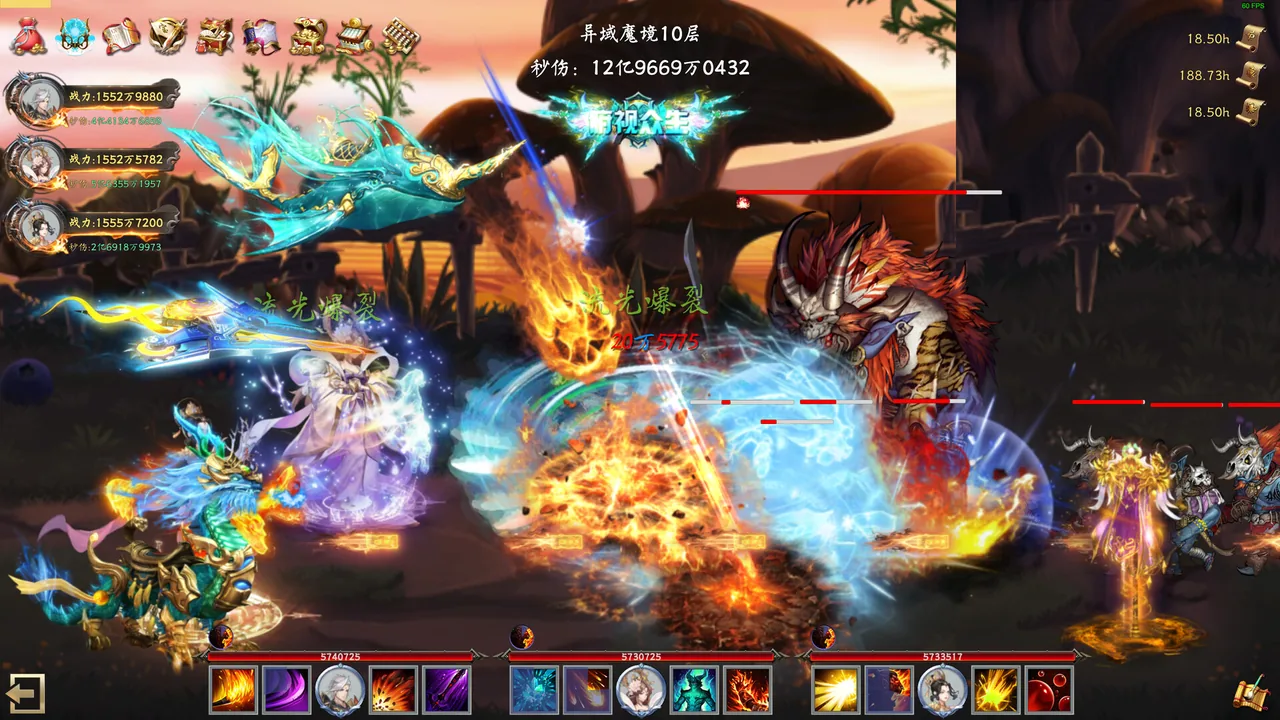
Idle Taoist Mage Warrior 2 arrives with a promise familiar from the genre: pick a warrior, a mage or a Taoist priest and grow them from a mortal fighter into something closer to a god. Its own storefront description frames this as a choice — "It's up to the player to decide whether to become a physically attacking warrior, a mage with powerful magic, or a Taoist who specializes in summoning and assisting." The developer's own screenshots tell a different story: all three classes are recruited and fielded as one squad from the start, fighting side by side rather than standing in for each other. That's not the review's central problem, though. The central problem is upstream of any mechanic, and it's stated plainly on the store page itself: "English language not supported. This product does not have support for your local language." Steam's own language table lists English as unsupported across interface, audio and subtitles alike, against Simplified Chinese for interface and subtitles. Of the 68 reviews this game has collected, four are in English — and one of those four exists purely to ask the developer to add the language in.
That matters more here than it might for a brand-new release, because this specific developer has already shipped an English interface once. Idle Taoist Mage Warrior, the 2023 original from the same one-person studio "okyakusama," lists ten supported languages on its own Steam page — English, French, Italian, German, Spanish, Russian, Japanese, and both Chinese scripts alongside Korean — and sits at 83.9% positive (Very Positive) across 137 reviews. The sequel, from the same developer, ships with exactly one interface language and sits at 51.5% (Mixed) across 68. That's a regression on both counts, from a solo developer who has already proven the localisation work is something they know how to do. It reads less like a resourcing shortfall on a bigger project and more like a smaller one that shipped before the translation pass caught up — and, per the news feed below, that pass never arrived.
What's actually under the hood
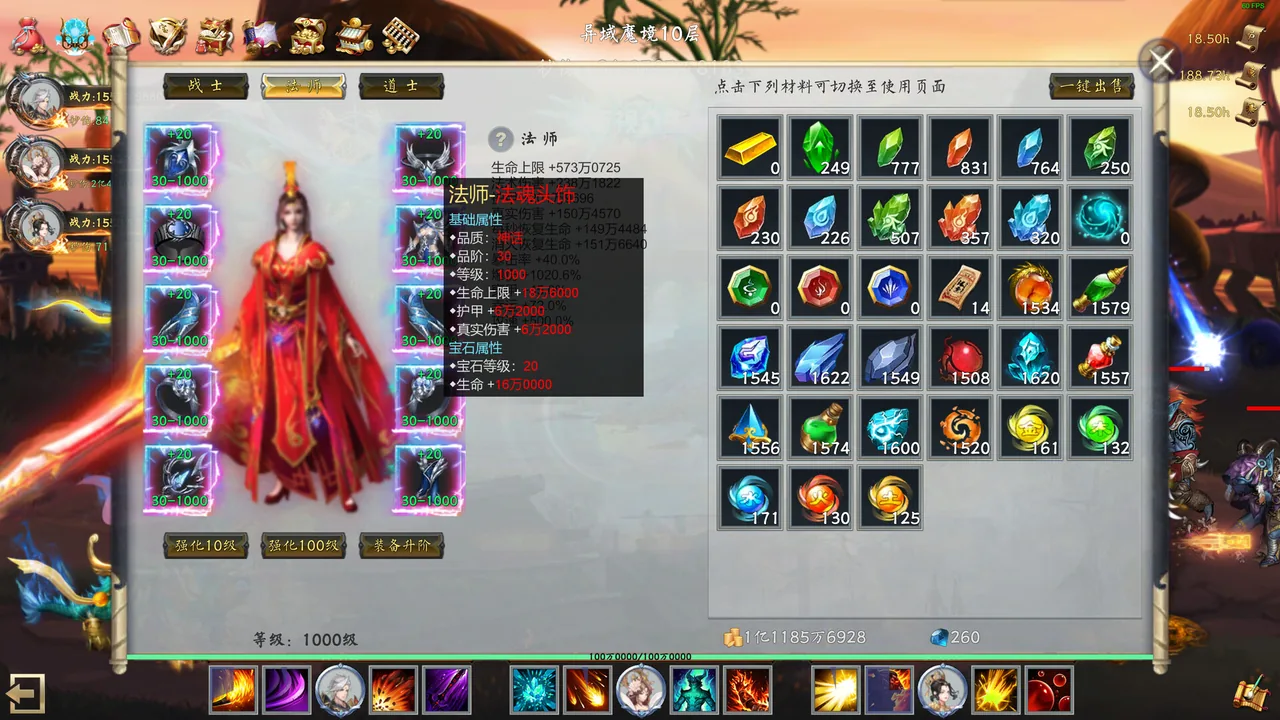
Steam's own promotional screenshots — all six of them, examined directly rather than taken on the store description's word — are considerably more informative than the "About This Game" text, which spends most of its space describing "diverse professions" and "unique skills" in the vague language every idle RPG uses. The client itself shows something denser. A three-character party carries individual power scores and per-second damage counters that run into the hundreds of millions and low billions by the mid-game — the expected hyperinflated numbers of the genre, not a red flag on their own. Underneath that surface sits a rebirth ("转生") ladder, a Primordial Spirit panel with its own separate rebirth track and its own high-value stat block, per-class equipment with tiered rarity, batch "strengthen ×10 / ×100" and "ascend" buttons for handling gear at scale, and a 64-slot talent grid split cleanly into four sixteen-slot schools: combat, defence, support, and — more unusually for the genre — a dedicated "gold" branch that the patch history calls "Financial Talent."
That finance branch isn't cosmetic. A title-showcase screen in the game's own screenshots displays a title called "BT之神" (roughly "the god of broken builds"), tracked against "100 profitable stock trades," alongside a separate title tracked against pulling a Mythic-tier item from a "prayer beads" gacha mechanic. Patch notes from the initial content-update run in May and June 2024 confirm both: a fixed bug in "lottery" reward payouts, and repeated "Financial Talent" balance passes. Between the rebirth ladder, the equipment ascension system, an in-game stock- speculation side-game and a gacha pull, this sequel is mechanically more ambitious than its short store description admits — a systems designer's game dressed in a marketing paragraph that barely mentions any of it. None of that reads as predatory on the evidence available: the diamond currency these systems draw on appears to be earned through gold conversion and a slow idle trickle rather than sold outright, Steam lists no DLC and no in-app-purchase category for this app, and the game's own screenshots show no shop screen, currency-purchase prompt or advertising banner anywhere in the sample.
What the Chinese-language corpus is actually arguing about
With 60 of 68 reviews written in Simplified Chinese, the substance of this game's reception lives in a language most of Wanderer's readers won't have access to without machine translation — so it's worth reporting what's actually being said rather than letting the 51.5% score stand in for it. Three complaints recur with enough detail to trust:
- Difficulty and drop-rate tuning. Several of the highest-voted negative reviews describe
monster health and damage scaling far ahead of early character power, one calling the pacing "pure torture" after 200-plus hours chasing rare equipment drops, and another describing two full days of idling for a single ability to land 600 damage against absurdly thick monster health pools. A detailed review with 300 hours logged states that fully maxing cultivation, by the game's own internal math, requires roughly 13,890 hours of accumulated time — or about 2,300 hours even with the fastest idle-speed multiplier active, which the reviewer works out to six real years of continuous idling. That's an extreme even by idle-genre standards, and it's a claim a shopper deserves to see stated plainly before buying.
- An anti-cheat system that penalises speed-hack tools. Two independent, detailed reviews —
from players with 280 and 300 hours logged — report that running a speed-adjustment tool (commonly used in the idle genre to fast-forward wait timers) gets an account flagged as cheating and blocked from purchasing the premium diamond currency, despite this being a single-player game with no leaderboard or PvP system at stake. A separate, longer positive review pushes back on this specific complaint, noting diamonds are also obtainable through ordinary idle income and gold conversion without any speed tool at all — so the system is real, but it isn't the only route to the currency it restricts.
- Comparisons to the original that don't favour the sequel. Multiple reviews reference "一代"
(the first game) directly, and not kindly — one calls this sequel "much worse" than its predecessor, citing a simplified skill selection (each class limited to two active skills at the outset) and a criticised gacha system; another describes the sequel's main-screen character art as blurrier and inconsistent with the separate art style used in combat, and characterises the whole release as a "stitched-together" reuse of assets from the developer's earlier catalogue. That reviewer says they'd already bought two of the developer's prior games and "can't even remember their names" — a pointed way of saying this feels like a template being run again rather than a considered sequel.
Against that, positive reviews in the sample describe genuine long-term investment: one player with 806.8 hours logged is deep into endgame Mythic-set itemisation and an Endless Tower mode; another with 397 hours complains specifically about mythic-gear drop rates being "pure torture" while still recommending the game; and a 116.8-hour review argues the NZ$5.99 (16 CNY) price point undercuts most of the free Chinese web-game alternatives the reviewer has tried, for comparable content depth. The achievement data backs up that a real portion of the audience gets properly invested rather than bouncing early: of 32 tracked achievements, roughly two-thirds sit in a 30-48% completion band — a healthy mid-game plateau, not a cliff after the tutorial — with a handful of much rarer unlocks (the lowest at 7.1%) presumably gated behind the RNG and multi- thousand-hour grinds the reviews above describe.
Monetisation and the AI-art disclosure
There's genuinely little to warn readers about on the direct-cost side. NZ$5.99 is the entire transaction: Steam's listing carries no DLC and no in-app-purchase category, and the only players who can speak to the premium currency directly — the four English-language reviewers — describe earning diamonds through play rather than paying for them, with one flatly recommending the game as "decent... for the price" once the early grind clears around rebirth 10. That's a genuinely clean result for a genre where gacha pulls and currency shops are common even in premium releases, and it's worth crediting plainly rather than assuming the worst because a lottery mechanic exists somewhere in the system.
One disclosure is worth quoting directly rather than characterising: the Steam page carries a formal AI Generated Content Disclosure, reading in full, "The developers describe how their game uses AI Generated Content like this: Some art resources are generated by AI." No reviewer in the 68-review sample raises this as a complaint, and this review takes no position on what that means for any specific asset — but a shopper checking a store page for that disclosure before buying should know it's there.
Final verdict
Idle Taoist Mage Warrior 2 has more going on mechanically than its own store page bothers to explain — a four-branch talent grid, a rebirth ladder stacked on top of a second Primordial Spirit rebirth track, an equipment-ascension system, and even a stock-speculation side-game, all visible in the developer's own screenshots and confirmed by a patch history that took the systems seriously for its first month. What keeps this out of a recommendation is not any single one of those systems; it's that the same solo developer already proved they could ship this exact game in ten languages once, and chose not to the second time. Steam's own interface table says English is "Not supported," the review corpus bears that out with only four English entries out of 68, and the predecessor's healthier 83.9% score against this sequel's 51.5% suggests the Chinese-reading audience that can actually judge it in its own language isn't entirely happy either — citing punishing difficulty tuning, an anti-cheat system that penalises common idle-genre workarounds, and a sequel that several long-time players read as a reskin of the developer's own back catalogue. Five out of ten reflects real systems buried under a real access problem: buy Idle Taoist Mage Warrior 2 today and, unless you already read Chinese, you're buying a game you cannot read.
Pros and cons
Pros
- A denser systems stack than the sequel's short Steam description lets on — three classes fielded as one squad, a rebirth ladder, a 64-slot combat/defence/support/finance talent grid, sequential equipment enhancement and ascension, and a Primordial Spirit (元神) layer with its own rebirth track, all visible directly in the developer's own screenshots
- Confirmed clean of real-money predation on the Steam side: no DLC, no in-app-purchase listing, and the only English reviews in the corpus — from players with 41 to 699 hours logged — describe grinding for the premium "diamond" currency rather than buying it
- Global achievement data shows real engagement rather than a quick bounce: roughly two thirds of the 32 achievements sit in a healthy 30-48% band that a majority of owners clear, not a cliff-edge drop after a tutorial step
- The developer's own screenshots are honest about the numbers: hundred-million and billion-point damage figures, a five-figure equipment enhancement counter and a stated 13,890-hour estimate (from a critical reviewer, corroborated by the game's own late-game numbers) to fully max cultivation are all things a shopper can weigh before buying
Cons
- Steam's own language table lists English interface support as "Not supported," against Simplified Chinese for interface and subtitles. The short English store description and "About This Game" text are marketing copy, not evidence the client is playable in English — of 68 total reviews, exactly four are in English, and one of those four exists solely to ask for English support
- The predecessor, Idle Taoist Mage Warrior, shipped with ten interface languages including English and sits at 84% positive (Very Positive) across 137 reviews. The sequel dropped every language but Chinese and sits at 51.5% (Mixed) across 68 — a regression on both counts from the same solo developer, not a difficult trade-off forced by a bigger team
- The Simplified Chinese corpus's most detailed complaints single out a punishing early difficulty curve, equipment drop rates reviewers call "pure torture," and — twice, independently, from players with 280 and 300 hours logged — an anti-cheat system that blocks diamond purchases for accounts detected running speed-hack software, which idle players commonly use to fast-forward wait timers
- The Steam page carries a formal AI Generated Content Disclosure stating "some art resources are generated by AI," worth knowing going in even though no reviewer in the sample raises it as a complaint
Screenshots
-
Idle Taoist Mage Warrior 2Image: okyakusama via Steam -
Idle Taoist Mage Warrior 2Image: okyakusama via Steam -
Idle Taoist Mage Warrior 2Image: okyakusama via Steam -
How the review scores each part of the gameWanderer Editorial -
The game at a glanceWanderer Editorial -
The short versionWanderer Editorial